
Pep版英语六年级上册全册配套练习六年级上册重点单词和句型练习
PEP小学英语六年级上册重点单词和句型练习
Unit 1:
by ( ) foot( ) bike( ) bus( ) train( ) how( )
go to school() traffic()traffic light()
traffic rule()stop()wait() get to()
Unit 2
library( ) post office( ) hospital( ) cinema( ) turn( ) bookstore( ) where( ) please( )
next to( ) right ( ) left( ) straight( )
then ( )
Unit 3
next week( ) this morning( ) this afternoon( )
this evening ( ) comic book( ) post card( ) newspaper( ) buy( )
Unit 4
hobby( ) ride a bike--riding a bike( ) dive--diving( ) play the violin—playing the violin( ) make kites—making kites( ) collect stamps—collecting stamps( ) live –lives( ) teach--teaches( ) go--goes( ) watch--watches( ) read--reads( ) does doesn’t=does not
Unit 5
singer( ) writer( ) actor( ) actress( )
artist( ) TV reporter( ) engineer( ) accountant( ) policeman( ) salesperson( ) cleaner( ) where() work()
Unit 6
rain( ) cloud ( ) sun( ) stream( ) come from( ) seed( ) soil( ) sprout ( ) plant( )
should ( ) then( )
Unit 1: ▁▁(经,乘) ▁▁(脚) ▁▁(自行车) ▁▁(公共汽车) ▁▁(火车) ▁▁(怎样) ▁▁▁▁(上学)▁▁▁▁(交通)▁▁▁▁▁▁(交通灯)
▁▁▁▁▁▁(交通规则)▁▁(停,停车站)▁▁(等待)▁▁▁▁(到达)
Unit 2 ▁▁▁▁(图书馆) ▁▁▁▁(邮局) ▁▁▁▁(医院) ▁▁▁▁(电影院) ▁▁(转弯) ▁▁▁▁(书店) ▁▁▁(在哪里,到哪里) ▁▁▁(请)
▁▁▁(与…相邻) ▁▁▁ (右边) ▁▁(左边) ▁▁▁(成直线地) ▁▁▁ (然后)
Unit 3 ▁▁▁▁▁(下周) ▁▁▁▁▁(今天上午) ▁▁▁▁▁(今天下午)
▁▁▁▁ (今天晚上) ▁▁▁▁(漫画书) ▁▁▁▁(明信片) ▁▁▁▁ (报纸) ▁▁▁(购买)
Unit 4▁▁▁(爱好) ▁▁▁▁▁--▁▁▁▁▁▁(骑自行车) ▁▁▁--▁▁▁(跳水) ▁▁▁▁▁▁—▁▁▁▁▁▁▁(拉小提琴) ▁▁▁▁▁—▁▁▁▁▁▁▁
(制作风筝) ▁▁▁▁▁▁—▁▁▁▁▁▁(集邮) ▁▁▁–▁▁▁(居住)
▁▁▁▁--▁▁▁▁(教) ▁▁--▁▁▁(去) ▁▁▁--▁▁▁(看)
▁▁--▁▁▁(读,看) does doesn’t=▁▁▁▁
Unit 5▁▁▁▁(歌唱家,歌手) ▁▁▁▁(作家) ▁▁▁▁(男演员) ▁▁▁▁(女演员) ▁▁▁▁(画家) ▁▁▁▁(电视台记者) ▁▁▁▁(工程师) ▁▁▁(会计) ▁▁▁▁(男警察) ▁▁▁▁▁▁(销售员) ▁▁▁(工作)
▁▁▁▁(清洁工) ▁▁▁▁(在哪里,到哪里)
Unit 6▁▁▁(雨) ▁▁▁ (云) ▁▁▁(太阳) ▁▁▁▁(河,溪) ▁▁▁▁(来自,从…来) ▁▁▁(种子) ▁▁▁(土壤) ▁▁▁ (苗,芽) ▁▁▁(植物,种植) ▁▁▁(应该) ▁▁▁▁(然后)
六年级上册四会句子
1.你是怎样去上学的?▁▁▁▁▁▁▁▁
2.通常我走路去上学。
▁▁▁▁▁▁▁
3.有时候我骑自行车去。
▁▁▁▁▁▁▁▁▁▁▁▁▁▁▁▁▁▁▁
4.我怎样能到达中山公园?▁▁▁▁▁▁▁▁▁
5.你可以乘十五路车去。
▁▁▁
6 电影院在哪里?▁▁▁▁▁▁▁▁▁
7 它在医院隔壁。
▁▁▁▁▁▁▁▁▁
8 邮局在哪里?▁▁▁▁▁▁▁▁▁
13 我打算去书店。
▁▁▁▁▁▁▁▁▁▁
9 在电影院往左弯,然后直走。
它就在左边。
▁▁▁▁▁▁▁▁▁▁▁▁▁▁
10 周末你打算去干什么?▁▁▁▁▁▁▁▁▁▁▁▁▁▁▁▁▁▁▁▁▁▁
11 这周末我打算去拜访我的祖父母。
▁▁▁▁▁▁▁▁▁▁▁▁▁▁▁▁▁▁
12 今天下午你打算去哪里?▁▁▁▁▁▁▁▁▁▁▁▁▁▁▁▁▁▁▁▁▁
14 你打算去买什么?▁▁▁▁▁▁▁▁▁▁▁▁▁▁▁▁▁▁
15 我打算去买一本漫画书。
▁▁▁▁▁▁▁▁▁▁▁▁▁▁▁▁▁▁
16 你的爱好是什么?▁▁▁▁▁▁▁▁
17 我喜欢集邮。
▁▁▁▁▁▁▁
18 他也喜欢集邮。
▁▁▁▁▁▁▁▁▁▁▁▁▁▁▁▁▁▁
19 她教英语吗?不,她不教。
▁▁▁▁▁▁▁▁▁▁▁▁▁▁▁▁▁▁
20 她教数学吗?是,她教的。
▁▁▁▁▁▁▁▁▁▁▁▁▁▁▁▁▁▁
21 你妈妈是做什么的?▁▁▁▁▁▁▁▁▁▁▁▁▁▁▁▁▁▁
22 她是一名电视台记者。
▁▁▁▁▁▁▁▁▁▁▁▁▁▁▁▁▁▁
23 她在哪里工作?▁▁▁▁▁▁▁▁▁
24 她怎样去工作的?▁▁▁▁▁▁▁
25 雨来自哪里?▁▁▁▁▁▁▁▁▁▁▁▁▁▁▁▁▁▁
26 它来自云。
▁▁▁▁▁▁▁▁▁▁▁▁▁▁▁▁▁▁
27 你怎么做呢?▁▁▁▁▁▁▁▁▁▁▁▁▁▁▁▁▁▁
28 然后你应该做什么?▁▁▁▁▁▁▁▁▁▁▁▁▁▁▁▁▁▁
六年级上册四会句子英译汉
1. How do you go to school ?▁▁▁▁▁▁▁▁
2. I usually go to school on foot.▁▁▁▁▁▁▁▁▁▁。
Pep版英语六年级上册全册配套练习Unit 4—Unit 5重点单词和句型
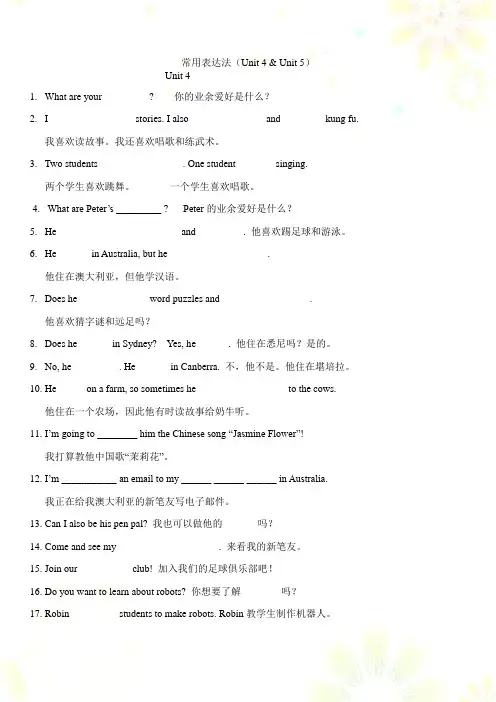
常用表达法(Unit 4 & Unit 5)Unit 41.What are your _________? 你的业余爱好是什么?2.I _______ _________ stories. I also ______ ________ and ________ kung fu.我喜欢读故事。
我还喜欢唱歌和练武术。
3.Two students ______ __________. One student _______ singing.两个学生喜欢跳舞。
一个学生喜欢唱歌。
4.What are Peter’s _________ ? Peter的业余爱好是什么?5.He _______ _______ _________ and _________. 他喜欢踢足球和游泳。
6.He ______ in Australia, but he _________ __________.他住在澳大利亚,但他学汉语。
7.Does he ______ _______ word puzzles and ________ _________.他喜欢猜字谜和远足吗?8.Does he ______ in Sydney? Yes, he ______. 他住在悉尼吗?是的。
9.No, he _________. He ______ in Canberra. 不,他不是。
他住在堪培拉。
10.He _____ on a farm, so sometimes he _______ __________ to the cows.他住在一个农场,因此他有时读故事给奶牛听。
11.I’m going to ________ him the Chinese song “Jasmine Flower”!我打算教他中国歌“茉莉花”。
12.I’m ___________ an email to my ______ ______ ______ in Australia.我正在给我澳大利亚的新笔友写电子邮件。
人教PEP版英语六年级上册 单词 短语句型默写专练(全册)
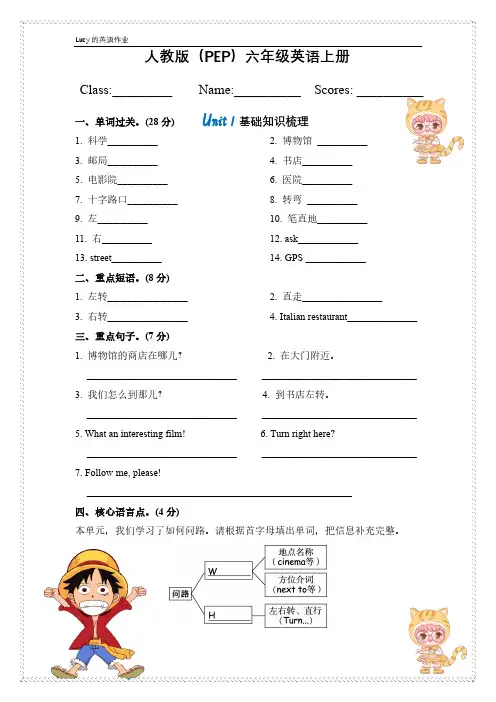
2. together__________
3. 电影__________
4. lesson__________
5. 旅行__________
6. space__________
7. 超市__________
8. half __________
9. 晚上;傍晚______
10. price__________
3. 数到十 ______________________4. wear warm clothes____________________
Lucy 的英语作业
人教版(PEP)六年级英语上册
Class:_________ Name:__________ Scores: __________
一、单词过关。(28 分) Unit 1 基础知识梳理
1. 科学__________
2. 博物馆 __________
3. 邮局__________
4. 书店__________
本单元我们学习了表达使用何种交通工具以及一些交通标志的含义。请根据 字母提示补全单词。
Lucy 的英语作业
人教版(PEP)六年级英语上册
Class:_________ Name:__________ Scores: __________
一、单词过关。(16 分) Unit 3 基础知识梳理
1. 拜访__________
_______________________________ __________________________________
5. 我们打算去电影院。
6. I am going to buy some word books.
______________________________ __________________________________
六年级上册英语专题练习-课本知识 人教pep(含答案)
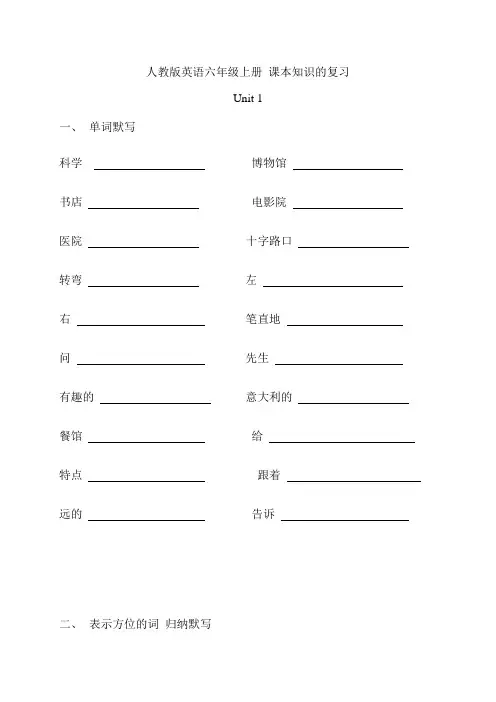
人教版英语六年级上册课本知识的复习Unit 1一、单词默写科学博物馆书店电影院医院十字路口转弯左右笔直地问先生有趣的意大利的餐馆给特点跟着远的告诉二、表示方位的词归纳默写在附近紧邻在…前面在…后面三、对方位词进行提问归纳1、方位词表示地点所以对其提问的提问词用句型为2、邮局在哪里?3、意大利饭店在哪里?4、博物馆商店在哪里?四、问路的句型指路的短语在…..右转在…左转在你的右边在他的左边直走1、我们怎么到达那里?2、他怎么到博物馆?3、你怎么去自然公园的?五、There be 句型考点归纳1、there be 句型表示某处有某物is + 单数/不可数名词2、be动词are + 复数名词Is there …….? Yes, there is./No, there isn’t.3、一般疑问句Are there…..? Yes, there are./No, there aren’t.4、在我的城市里有一个宠物医院。
这里有一家饭店。
六、感叹句1、多么棒的博物馆呀!2、多么有趣的电影呀!3、多么美的花呀!六、其他考点1、want 动词想要want to +动词原形想要做某事想要买想要寄想要走2、talk 谈话一个会说话的机器人3、第三人称单数罗宾有GPS。
我的新GPS 起作用了。
Unit 2一、单词步行乘公共汽车飞机出租汽车(大)船地铁火车雪橇轮渡(使)放慢速度;慢的快的减少,降低慢下来停下夫人早到的头盔必须戴;穿注意交通慕尼黑德国阿拉斯加州苏格兰二、短语by+交通工具乘地铁乘火车乘巴士乘飞机慢下来必须交通信号灯交通规则去上学到那里在红灯在绿灯好的锻炼许多照片来自望右过马路在那边不同的方式救生衣一个孩子许多孩子三、对交通方式提问提问词句型1、你怎样去上学?2、我怎样可以到复兴医院?3、我们怎样到达那里?4、你怎样从中国到美国?四、祈使句1、祈使句的定义表示请求、命令、建议、劝告或警告语气的句子。
通常省略主语you。
(完整word版)pep六年级上册英语-各单元知识点总结

Unit 1 How can I get there?一、重点单词和短语(1)science museum科学博物馆post office邮局bookstore书店cinema电影院hospital医院restaurant餐馆bank银行bus stop公交车站lake湖library图书馆crossing十字路口school学校park公园garden花园hotel旅馆zoo动物园(2)turn left向左转turn right向右转go straight直走near在…附近next to紧挨着/ 与…相邻far from 离…远behind在…后面in front of在…前面between…and…在…和…之间二、按要求写单词hot(反义词)cold cool(反义词)warm too(同音词)to/twosea(同音词)see can not(缩写)can't right(反词)left/wrongbuy(同音词)by/bye first(基数词)one four(序数词)fourthdid (原形)do /does three(序数词)third三、重点句型分析1. Where is the museum shop? 2。
It’s near the park.3。
How can we get there?询问“怎样去某地”Turn left at the bookstore. Then turn right at the hospital。
5。
Is the hospital far from here? Yes, it is。
/ No,it isn't。
Unit 2 Ways to go to school一、重点单词和短语on foot步行by bus =take a bus乘公交车by plane乘飞机by ship乘船by taxi 乘出租车by subway 乘地铁by train乘火车by bike骑自行车slow down 慢下来stop and wait停下来等pay attention to注意cross the road横穿马路traffic light通信号灯at home在家look right向右看look at朝…看play with和…一起玩二、按要求写单词go (反义词)come foot(复数)feet child(复数)childrenearly(反义词)late good(反义词)bad take(反义词)bringslow(反义词)quick/fast go(过去式)went do(过去式)diddo(第三人称单数) does go(第三人称单数)goessame 相同的(反义词)different不同的miss(过去式)missedwrong 错误(反义词)right正确can(否定形式)can’t三、重点句型分析1。
2020年PEP人教版英语六年级上册 各单元重点词汇句型归纳整理
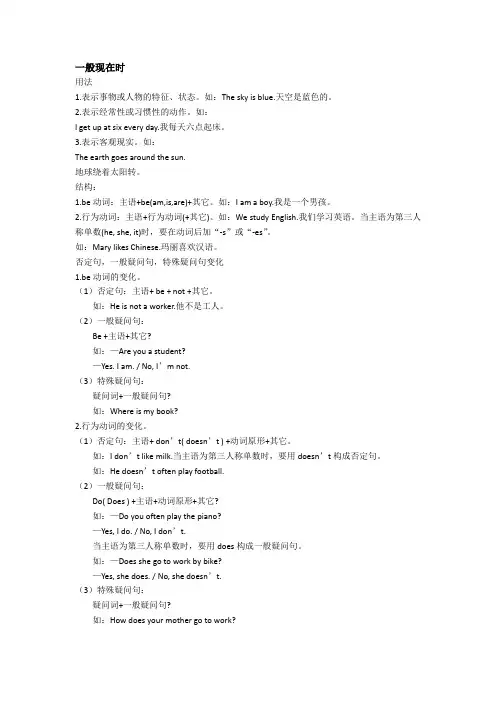
用法1.表示事物或人物的特征、状态。
如:The sky is blue.天空是蓝色的。
2.表示经常性或习惯性的动作。
如:I get up at six every day.我每天六点起床。
3.表示客观现实。
如:The earth goes around the sun.地球绕着太阳转。
结构:1.be动词:主语+be(am,is,are)+其它。
如:I am a boy.我是一个男孩。
2.行为动词:主语+行为动词(+其它)。
如:We study English.我们学习英语。
当主语为第三人称单数(he, she, it)时,要在动词后加“-s”或“-es”。
如:Mary likes Chinese.玛丽喜欢汉语。
否定句,一般疑问句,特殊疑问句变化1.be动词的变化。
(1)否定句:主语+ be + not +其它。
如:He is not a worker.他不是工人。
(2)一般疑问句:Be +主语+其它?如:—Are you a student?—Yes. I am. / No, I’m not.(3)特殊疑问句:疑问词+一般疑问句?如:Where is my book?2.行为动词的变化。
(1)否定句:主语+ don’t( doesn’t ) +动词原形+其它。
如:I don’t like milk.当主语为第三人称单数时,要用doesn’t构成否定句。
如:He doesn’t often play football.(2)一般疑问句:Do( Does ) +主语+动词原形+其它?如:—Do you often play the piano?—Yes, I do. / No, I don’t.当主语为第三人称单数时,要用does构成一般疑问句。
如:—Does she go to work by bike?—Yes, she does. / No, she doesn’t.(3)特殊疑问句:疑问词+一般疑问句?如:How does your mother go to work?一、一般过去时的概念一般过去时表示过去某个时间发生的动作或状态。
人教版PEP小学英语六年级上册重点句型及语法知识汇总
人教版PEP小学英语六年级上册重点句型及语法知识汇总Unit 1 How can I get there?重点单词XXX。
post office邮局,XXX。
XXX。
XXX。
crossing十字路口。
turn left左转。
turn right右转。
gostraight直走。
map地图。
compass指南针。
GPS全球定位系统。
stars星星。
XXX意大利餐厅。
getto到达。
重点句型1.---Where is the restaurant?餐厅在哪里?It’s next to the park on Dong fang Street.它在东方路,在公园附近。
2.---How can we get there?我们怎么去哪里?XXX left XXX.书店左转,然后病院右转。
3.He now has GPS.他现在有GPS。
4.What an interesting film!何等风趣的片子!方位词复:XXX紧挨着,near在。
邻近,XXX在。
背面,XXX在。
旁边,in front of在。
前面。
Unit 2 Ways to go to school重点单词on foot走路。
by bike骑车。
by bus乘公交。
by train乘火车。
XXX乘地铁。
by ship搭船。
by XXX乘飞机。
slow down 慢下来。
XXX交通灯。
traffic rules交通划定规矩。
go/come to school上学。
by sled坐雪橇。
byferry坐轮渡。
pay n to留意。
traffic lights交通灯。
and wait at a red light红灯停等一等。
slow downand。
at a yellow light黄灯减速并停下。
Go XXX。
重点句型1.---How do you come to school?你怎么上学?----Usually。
I come on foot.通常我走路来的。
【2021人教版英语六年级上册】六年级上册重点单词和句型练习
PEP小学英语六年级上册重点单词和句型练习Unit 1:by ( ) foot( ) bike( ) bus( ) train( ) how( )go to school()traffic()traffic light()traffic rule()stop()wait()get to()Unit 2library( ) post office( ) hospital( ) cinema( ) turn( ) bookstore( ) where( ) please ( )next to( ) right ( ) left( ) straight( )then ( )Unit 3next week( ) this morning( ) this afternoon( )this evening ( ) comic book( ) post card( )newspaper ( ) buy( )Unit 4hobby( ) ride a bike--riding a bike( ) dive--diving( )play the violin—playing the violin( ) make kites—making kites( ) collect stamps—collecting stamps( ) live –lives( ) teach--teaches( ) go--goes( ) watch--watches( ) read--reads( ) does doesn’t=does notUnit 5singer( ) writer( ) actor( ) actress( ) artist( ) TV reporter( ) engineer( ) accountant( ) policeman( )salesperson( ) cleaner( ) where()work()Unit 6rain( ) cloud ( ) sun( ) stream( ) come from( ) seed( ) soil( ) sprout ( ) plant( )should ( ) then( )Unit 1: ▁▁(经,乘) ▁▁(脚) ▁▁(自行车) ▁▁(公共汽车) ▁▁(火车)▁▁(怎样) ▁▁▁▁(上学)▁▁▁▁(交通)▁▁▁▁▁▁(交通灯)▁▁▁▁▁▁(交通规则)▁▁(停,停车站)▁▁(等待)▁▁▁▁(到达)Unit 2 ▁▁▁▁(图书馆) ▁▁▁▁(邮局) ▁▁▁▁(医院) ▁▁▁▁(电影院)▁▁(转弯) ▁▁▁▁(书店) ▁▁▁(在哪里,到哪里) ▁▁▁(请)▁▁▁(与…相邻) ▁▁▁ (右边) ▁▁(左边) ▁▁▁(成直线地) ▁▁▁ (然后)Unit 3 ▁▁▁▁▁(下周) ▁▁▁▁▁(今天上午) ▁▁▁▁▁(今天下午)▁▁▁▁(今天晚上) ▁▁▁▁(漫画书) ▁▁▁▁(明信片) ▁▁▁▁(报纸) ▁▁▁(购买)Unit 4▁▁▁(爱好) ▁▁▁▁▁--▁▁▁▁▁▁(骑自行车) ▁▁▁--▁▁▁(跳水) ▁▁▁▁▁▁—▁▁▁▁▁▁▁(拉小提琴) ▁▁▁▁▁—▁▁▁▁▁▁▁(制作风筝) ▁▁▁▁▁▁—▁▁▁▁▁▁(集邮) ▁▁▁–▁▁▁(居住)▁▁▁▁--▁▁▁▁(教) ▁▁--▁▁▁(去) ▁▁▁--▁▁▁(看)▁▁--▁▁▁(读,看) does doesn’t=▁▁▁▁Unit 5▁▁▁▁(歌唱家,歌手) ▁▁▁▁(作家) ▁▁▁▁(男演员) ▁▁▁▁(女演员) ▁▁▁▁(画家) ▁▁▁▁(电视台记者) ▁▁▁▁(工程师) ▁▁▁(会计) ▁▁▁▁(男警察) ▁▁▁▁▁▁(销售员) ▁▁▁(工作)▁▁▁▁(清洁工) ▁▁▁▁(在哪里,到哪里)Unit 6▁▁▁(雨) ▁▁▁ (云) ▁▁▁(太阳) ▁▁▁▁(河,溪) ▁▁▁▁(来自,从…来) ▁▁▁(种子) ▁▁▁(土壤) ▁▁▁(苗,芽) ▁▁▁(植物,种植) ▁▁▁(应该) ▁▁▁▁(然后)六年级上册四会句子1.你是怎样去上学的?▁▁▁▁▁▁▁▁2.通常我走路去上学。
人教PEP版小学英语六年级上册Unit1-6单元知识小结-全册完整版
Unit 3 My weekend planUnit 4 I have a pen palUnit 5 What does he do?Unit 6 How do you feel?Unit 1 How can I get there?Unit 2 Ways to go to schoolPEP小学英语六年级上册重点单词和句型练习一、重点单词Unit 1:by ( ) foot( ) bike( ) bus( ) train( ) how( ) go to school() traffic()traffic light()traffic rule()stop()wait() get to()Unit 2library( ) post office( ) hospital( ) cinema( ) turn( ) bookstore( ) where( ) please( )next to( ) right ( ) left( ) straight( )then ( )Unit 3next week( ) this morning( ) this afternoon( )this evening ( ) comic book( ) post card( )newspaper( ) buy( )Unit 4hobby( ) ride a bike--riding a bike( ) dive--diving( )play the violin—playing the violin( ) make kites—making kites( ) collect stamps—collecting stamps( ) live –lives( ) teach--teaches( ) go--goes( ) watch--watches( ) read--reads( ) does doesn’t=does not Unit 5singer( ) writer( ) actor( ) actress( ) artist( ) TV reporter( ) engineer( ) accountant( ) policeman( ) salesperson( )cleaner( ) where() work()Unit 6rain( ) cloud ( ) sun( ) stream( ) come from( ) seed( ) soil( ) sprout ( ) plant( )should ( ) then( )Unit 1: ▁▁(经,乘) ▁▁(脚) ▁▁(自行车) ▁▁(公共汽车) ▁▁(火车)▁▁(怎样) ▁▁▁▁(上学)▁▁▁▁(交通)▁▁▁▁▁▁(交通灯)▁▁▁▁▁▁(交通规则)▁▁(停,停车站)▁▁(等待)▁▁▁▁(到达)Unit 2 ▁▁▁▁(图书馆) ▁▁▁▁(邮局) ▁▁▁▁(医院) ▁▁▁▁(电影院)▁▁(转弯) ▁▁▁▁(书店) ▁▁▁(在哪里,到哪里) ▁▁▁(请)▁▁▁(与…相邻) ▁▁▁ (右边) ▁▁(左边) ▁▁▁(成直线地) ▁▁▁(然后)Unit 3 ▁▁▁▁▁(下周) ▁▁▁▁▁(今天上午) ▁▁▁▁▁(今天下午) ▁▁▁▁ (今天晚上) ▁▁▁▁(漫画书) ▁▁▁▁(明信片) ▁▁▁▁ (报纸) ▁▁▁(购买)Unit 4▁▁▁(爱好) ▁▁▁▁▁--▁▁▁▁▁▁(骑自行车) ▁▁▁--▁▁▁(跳水) ▁▁▁▁▁▁—▁▁▁▁▁▁▁(拉小提琴) ▁▁▁▁▁—▁▁▁▁▁▁▁(制作风筝) ▁▁▁▁▁▁—▁▁▁▁▁▁(集邮) ▁▁▁–▁▁▁(居住)▁▁▁▁--▁▁▁▁(教) ▁▁--▁▁▁(去) ▁▁▁--▁▁▁(看)▁▁--▁▁▁(读,看) does doesn’t=▁▁▁▁Unit 5▁▁▁▁(歌唱家,歌手) ▁▁▁▁(作家) ▁▁▁▁(男演员) ▁▁▁▁(女演员) ▁▁▁▁(画家) ▁▁▁▁(电视台记者) ▁▁▁▁(工程师) ▁▁▁(会计) ▁▁▁▁(男警察) ▁▁▁▁▁▁(销售员) ▁▁▁(工作)▁▁▁▁(清洁工) ▁▁▁▁(在哪里,到哪里)Unit 6▁▁▁(雨) ▁▁▁ (云) ▁▁▁(太阳) ▁▁▁▁(河,溪) ▁▁▁▁(来自,从…来) ▁▁▁(种子) ▁▁▁(土壤) ▁▁▁ (苗,芽) ▁▁▁(植物,种植) ▁▁▁(应该) ▁▁▁▁(然后)二、单词分类1)交通方式:by bus, by train, by subway, by ship, by plane, by car, on foot2)文具书籍:dictionary, newspaper, comic book, post card3)职业:singer, writer, TV reporter, actor, actress, engineer, accountant, salesperson, policeman, policewoman,artist, cleaner4)V-ing形式:riding a bike, collecting stamps, diving, making kites, playing the violin5)第三人称单数形式:lives,teaches, watches, goes, does, doesn’t6)公共场所:library,post office, cinema, hospital, science museum, bookstore7)方位:east, west, south, north, turn left, turn right, go straight8)交通灯; red light, yellow light, green light9)自然:sun, cloud, rain, vapour, stream六年级上册四会句子1.你是怎样去上学的?▁▁▁▁▁▁▁▁2.通常我走路去上学。
人教版(PEP)小学英语六年级上册全册知识点(含作文)
人教版(PEP)小学英语六年级上册全册知识点(含作文)人教版(PEP)小学英语总复习六年级上册知识点Unit 1 How can I get there ?一、主要单词:museum博物馆bookstore书店cinema电影院turn 转弯hospital医院left向左post office 邮局science科学right向右straight笔直地crossing十字路口二、习惯语搭配:post office邮局science museum科学博物馆pet hospital宠物医院Italian restaurant意大利餐馆Beihai Park北海公园Palace Museum故宫博物院go straight直走turn right/left右/左转next to挨着in front of...在...前面near the park在公园附近on Dongfang Street在东方大街上三、惯用表达式:Excuse me 打扰一下Follow me, please!请跟着我!四、公式化句型:1、问路的句型及其答语:问句:Where is the + 地点?···在哪儿?答语:It’s + 表示地点的词语。
它···。
next to the bookstore, near the hospital/post office, over there,on Dongfang Street, in front of the school...2、询问怎么到某地的句型及其答语:问句:How can +主语+ get (to)+地点?···怎么到···?同义句型:Can you tell me the way to +地点?Where is + 地点?Which is the way to +地点?答语:Turn +方向+表示地点的介词短语。
新版PEP小学英语六年级上册第四、五单元重点单词、句型
常用表达法(Unit 4 & Unit 5)Unit 4 1. What are your _________? 你的业余爱好是什么?你的业余爱好是什么?2. I _______ _________ stories. I also ______ ________ and ________ kung fu. 我喜欢读故事。
我还喜欢唱歌和练武术。
我喜欢读故事。
我还喜欢唱歌和练武术。
3. Two students ______ __________. One student _______ singing. 两个学生喜欢跳舞。
两个学生喜欢跳舞。
一个学生喜欢唱歌。
一个学生喜欢唱歌。
4. What are Peter’s _________ ? Peter 的业余爱好是什么?的业余爱好是什么?5. He _______ _______ _________ and _________. 他喜欢踢足球和游泳。
他喜欢踢足球和游泳。
6. He ______ in Australia, but he _________ __________. 他住在澳大利亚,但他学汉语。
他住在澳大利亚,但他学汉语。
7. Does he ______ _______ word puzzles and ________ _________. 他喜欢猜字谜和远足吗?他喜欢猜字谜和远足吗?8. Does he ______ in Sydney? Yes, he ______. 他住在悉尼吗?是的。
他住在悉尼吗?是的。
他住在悉尼吗?是的。
9. No, he _________. He ______ in Canberra. 不,他不是。
他住在堪培拉。
不,他不是。
他住在堪培拉。
10. H e _____ on a farm, so some mes he _______ __________ to the cows. 他住在一个农场,因此他有时读故事给奶牛听。