
新版新目标英语七年级下册各单元知识点汇总
8:50→eight-fifty
9:30→nine-thirty
10:15→ten-fifteen
7:45→seven forty-five
11:05→eleven-five
(3)非整点时间的分钟数不超过 30 分钟,也可用介词“past”。如:
6:10→ten past six
11:05→five past eleven
4.特殊疑问句:疑问词+can+主语+动词原形+其 他? 如:
What can I do for you?我能为你做点什么呢?
绿色通道:巧记不用冠词的几种情况:
下列情况不用冠,名词之前代词限。
复数名词表泛指,球类学科和三餐。
专有名词不可数,星期月份季节前。
交通手段和节日,习语称谓和头衔。
can 的用法歌诀 can 可用来表能力,但与实动不分离。 不管主语何变换,can 的模样永不变。 只要句中出现 can,动词原形后面站。 一般疑问 can 提前,否定 can 后 not 添。
a)
b) I often help him
his homework.
12. be good with... 与……相处得好;与……合得来
【考点聚焦】 1)同义词组:
2)注意与 be good...的其他词组意思的差别:
be good at 意为“擅长做某事”(常+动作);be good for 意为“对……有益处”(常+人)。
11:50→ten to twelve
7:31→twenty-nine to eight
9:45→a quarter to ten 或 fifteen to ten
12:59→one :
What is the time? 几点了?
What time is it by your watch? 你的手表几点了?
20. listen to the early morning news on radio 听电
7. leave home 离家
台早间新闻
8. take a shower = have a shower 洗淋浴澡
21. watch the early morning news on TV 看电视早
9. take the Number 17 bus to the Hotel 乘 17 路公
17. tell sb. about sth. 告诉某人某事
4. make breakfast 做早饭
18. know about sth. 知道某方面的情况
5. make a shower schedule 做一个洗澡的安排
19. love to do = like to do 喜欢干某事
6. practice guitar 练吉它
3. 关于一般现在时。(语法重点) (1)一般现在时态的意义是:①表示现在的特征或状态。如:He is at home today. 他今天在家。②表示经常性、 习惯性的动作。常和频率副词 always, often, usually 及 every day 等表示时间的短语连用。如:I go to school at 7:00 every day. 我每天 7 点钟去上学。③表示主语具备的性格或能力。如:She likes pears very much. 她非常喜欢梨子。They speak English. 他们讲英语。 (2)肯定陈述句:当主语是第一、二和第三人称复数时,谓语动词用原形。当主语是第三人称单数时,谓语动 词用第三人称单数形式。例如: ①They stay at home on Sundays. 他们星期天呆在家。 ②He does his homework in the evening. 他在晚上做作业。 (3)否定句:当主语是第一、二及第三人称复数时,否定句借助助动词 do+not,当主语是第三人称单数时,否 定句借用 does+not,并将动词第三人称单数还原。例如: ①They don’t stay at home on Sundays. 他们星期天不呆在家里。 ②He doesn’t do his homework in the evening. 他晚上不做作业。 (4)疑问句:当主语是第一、第二及第三人称复数时,疑问句在句首加 Do。当主语是第三人称单数时,疑问句 在句首加 Does,并把谓语第三人称单数还原。例如: ①Do they stay at home on Sundays? 他们星期天呆在家吗? ②Does he do his homework in the evening? 他晚上做作业吗?
10:15→ a quarter past ten 或 fifteen past ten
8:15→a quarter past eight 或 fifteen past eight
9:30→half past nine 或 thirty past nine
(4)非整点时间的分钟数超过 30 分钟,用介词 to。如:
1. Can you pl 2. 你会弹奏钢琴,吹喇叭,敲鼓,或者弹吉他吗? 【剖析】 此句为简单的选择疑问句,即提问者提供两种或两种以上情况,让对方从中作出选择的句子。它的
1/25
基本结构是:一般疑问句+or+一般疑问句(后一部分 与前一部分相同的成分常常省略)。or 连接的是两个并列
的成分,要求词性一致。
【拓展】 1)回答时,不用 yes 或 no,而是选择其中一种回答。
2)在读法上,or 的前一部分用升调,后一部分用降调。
“能”说“会”道的
【can 的才艺展示】
1.表示能力,通常指在体力或脑力方面的能力,意为“能;会”。如:
He can speak English.他会说英语。
2.表示许可,意为“可以”,这时可以和 may 通用,但是比 may 较正式。如:
Unit1 Can you play the guitar?
1. guitar 为一种乐器,注意 play 与表示乐器的名词连用时,名词前要加定冠词 the。 2. join 意为“参加(某个组织成为其成员)”,一般常和介词 in 连用。 3. have a swim 游泳;go swimming 去游泳 4. “下棋”用 play chess,而不用 play the chess。 5. Paint 派生词:painter n.画家 painting n.画 (注意与 draw 的区别:paint 指用颜料等绘画;而 draw 指用钢笔、
13. school show 学校公演
【考点聚焦】 show 在这里用作名词,注意下列搭配:fashion show 时装表演;a flower show 花展;game show
智力竞赛节目;chat show(电视台)现场采访节目
14. Can you play the guitar?你能弹吉他吗?
Can I use your pen?我可以用你的钢笔吗?
3.表示可能性,意为“可能”,这时常出现在否定句中。如:
It can’t be true.这不可能是真的。
4.表示提供帮助。如:
Can you help me?你可以帮助我吗?
【can 的个性展示】
1.与动词原形“形影不离
在句中,can 不能独立作谓语,必须与动词原形共同充当句子的谓语。
2/25
Unit2 What time do you go to school?
重点短语:
1. get up 起床
15. put on 穿衣服(反义词 take off)
2. get home 到达家中
16. do one’s homework 做家庭作业
3. get to work 到达工作岗位
He can’t play the piano.他不 会弹钢琴。
3.一般疑问句:Can+主语+动词原形+其他?肯定答语:Yes,主语+can.否定答语:No,主 语
如:
—Can you play chess?你会下象棋吗?
—Yes,I can.是的,我会。(肯定回答)
—No,I can’t.不,我不会。(否定回答)
2.没有人称和数的变化
当 can 与动词一起作句子的谓语时,无论主语是第几人称或单数、复数形式,can 仍然保持自己的风格,不会发生
任何变化。
【can 的句式表演】
1.肯定句:主语+can+动词原形+其他。如:
Mary can play the drums.玛丽会敲鼓。
2.否定句:主语+can’t+动词原形+其他。如:
3/25
2. what time 与 when what time 翻译为“几点”问的是具体的时间,一般回答要具体到小时。 What time do you go to school? 你什么时候/几点上学? 回答具体到点钟,且注意在几点前边的介词用 at。 when 也是对时间的提问,但与 what time 的区别是:用 when 提问,回答既可以是具体的时间,也可以是不具体
的时间,如:in the morning,last year,in 1998 等范围大的时间,例如:When does he take a shower?他什么时候洗 澡?
He takes a shower in the morning. 他在早上洗澡。 也可用具体时间:
I take a shower at 6 o’clock in the morning. 我早上六点洗澡。
It’s ten o’clock a. m. 现在是上午十点整。
(2)非整点时间可直接采取读数法。如:
It’s eight-thirty. 是八点三十分。
注意时间的表达方式:用数词。点与分钟之间用连字如:
七年级下册英语知识点复习完整版

新目标英语七年级下册知识点总结Unit 1 Can you play the guitar1,情态动词+V原 can do= be able to do2,Play+ the+ 乐器+球类,棋类3,join 参加社团、组织、团体4,4个说的区别:say+内容Speak+语言Talk 谈论 talk about sth talk with sb talk to sb Tell 告诉,讲述 tell sb notto do sthTell stories/ jokes5,want= would like +sbto do sth6,4个也的区别:too 肯定句末前面加逗号Either否定句末前面加逗号Also 行前be 后As well 口语中前面不加逗号7,be good at+ V-ing=do well in 擅长于be good for 对…有益 be bad for对…有害be good to 对…友好 good 可用friendly,nice,kind替换be good with和…相处好=get on/ along well with8,特殊疑问句的构成:疑问词+一般疑问句9,How/ what about+V-ing …怎么样10,表建议11,10,感官动词look, sound, taste, smell, feel+adj/ like11,选择疑问句:回答不能直接用Yes或者No,要从中选择一个回答12,students wanted for school showwanted表示招募,含有被动意义13,show sth to sb=show sb sth give sth to sb=give sb sth14,help sb todo sthHelp sb with sthWith sb’s help= with the help of sbHelp oneself to 随便享用15,be busy doing sth/ be busy with sth16,need to do sth17,be free= have time18,have friends= make friends19,call sb at +电话号码20,on the weekend= on weekends21,English-speaking students 说英语的学生带有连词符,有形容词性质22,do kung fu表演功夫Unit 2 What time do you go to school1,问时间用what time或者whenAt+钟点 at 7 o’clock at noon/ at nightduring/ in the dayOn+ 具体某天、星期、特指的一天 on April 1st on Sunday on a cold winter morningIn +年、月、上午、下午、晚上2,时间读法:顺读法逆读法:分钟≤30用past five past eight8:05 half past eight8:30分钟>30用to a quarter to ten9:45整点用…o’clock 7 o’clock7:003,3个穿的区别:wear 表状态,接服装、手套、眼镜、香水等Put on 表动作,接服装Dress 表动作,接sb/ oneself get dressed穿衣3,感叹句:How+adj+主谓How+adj+a/an +n单+主谓What+ a/an +adj+ n单+主谓What+ adj+ n复/ 不可数+主谓4,from…to…5,be/ arrive late for6,频度副词行前be 后Always usually often sometimes seldom hardly never7,一段时间前面要用介词for for half an hour for five minutes8,eat/ have… for breakfast/ lunch/ dinner/ supper9,either…or10,a lot of=lots of11,it is +adj+for sb +to do sth adj修饰to do sthIt is important for me to learn English.it is +adj+of sb +to do sth adj修饰sb It is kind/ friendly/ nice of you to help me.Unit 3 How do you get to school1,疑问词How 如何方式how long 多长时间答语常用“For/ about +时间段”how far多远距离答语常用“It’s +数词 +miles/ meters/ kilometers”how often多久一次频率答语常用“Always/ often/ every day/…”或“次数+时间”等表频率的状语How soon多快,多久以后,常用在将来时中;答语常用“in +时间段”how many多少接可数名词 how much接不可数名词why为什么原因 what什么 when何时who谁 whom谁宾格针对宾语提问也可用who whose谁的2,宾语从句要用陈述句语序3,Stop sb from doing sthStop to do 停下来去做其他事Stop doing 停止正在做的事4,what do you think of/ about…= how do you like…你认为…怎么样5,6,He is 11 years old.He is an 11-year-old boy.7,many students= many of the students8,be afraid of sth be afraid to do sth worry about be worried about 担心9,play with sb10,come true10,have to do sth11,he is like a father to me like像12,leave离开 leave for 出发前往某地13,cross 是动词 across是介词14,thanks for +n/ V-ingThanks for your help/ thanks for helping me.Thanks for your invitation/ thanks for inviting/ asking me.Thanks to幸亏,由于,因为15,4个花费:人+spend/ spends/ spent+时间/钱+indoing sth/ on sth人+pay/ pays/ paid +钱+for sthIt takes/ took sb +时间+to do sth物+cost/ costs/ cost +sb +钱16,交通方式●用介词;在句子中做方式状语;①by +交通工具名词中间无需任何修饰By bus/ bike/ car/ taxi/ ship/ boat/ plane/ subway/ train……②by +交通路线的位置By land/ water/ sea/ air③in/ on +冠词/物主代词/指示代词 +交通工具名词In a/ his/ the carOn a/ his/ the bus/ bike/ship/ train/ horse/ motorbike④on foot 步行●用动词;在句子中做谓语;①take + a/ the +交通工具名词take a bus/ plane/ ship/ trainride a bike②walk/ drive/ ride/ fly to……后面接here,there,home等地点副词时,省略介词to;如步行回家:walk home17,名词所有格一般情况加’s Tom’s pen以s结尾加’ the teachers’ office ten days’ holiday表示几个人共同拥有,在最后一个名词后加’s Mike and John’s desk表示每个人各自拥有,在每个名词后加’s Mike’s and John’s desksUnit 4 Don’t eat in class.1,祈使句变否定在句首+don’tBe型be +表语,否定形式:don’t + be +表语 Be quiet,please. Don’t be late Do型实义动词+其他,否定形式:don’t +实义动词+其他Come here,please. Don’t play football here.Let型let sb do sth,否定形式:don’t + let sb do sth或者let sb not do sthNo+n/ V-ing No photos /mobile;No parking/ smoking/ spitting/ talking/ picking of flowers2,in class在课堂上 in the classroom 在教室3,be on time准时4,listen to music5,have afight with sb7,eat outside8,Must 与have to1must 表示说话人主观上的看法,意为“必须”; have to 表示客观的需要或责任,意为“不得不,必须”,后接动词原词;2must没有人称,时态和数的变化Have to 有人称,数,时态的变化,其第三人称单数形式为 has to ,过去式为had to. 构成否定句或疑问句时借助动词do/ does;3have to的否定式是needn’t=don’t/ doesn’t have to 不必要;must的否定式是must not/ mustn’t一定不能,不允许;9,Some of…10,bring…to…11,practice doingsth12,wash/ do the dishes13,on school days/ nights14,break/ followobeythe rules15,Be strict with sb/ oneself be strict in sth对……严格;16,too many“太多”修饰可数名词复数too much“太多”修饰不可数名词much too“实在太”修饰形容词或副词17,make one’s/ the bed18,get to, arrive in/at, reach,到达如果后面接地点的副词home,here或there ,就不用介词in ,at, to19,remember/ forget+to do要做+doing做过20,have fun,enjoy oneself,have a good/ great/ wonderful time+V-ingUnit 5 Why do you like pandas1,回答why的提问要用because2,Kind of 相当于副词,修饰形容词或副词,意为“稍微,有点”,与a little/ bit 相近A kind of 意为“一种”,some kinds of 意为“几种”,all kinds of 意为“各种各样的”;这里的kind 是“种,类,属”的意思;3,Why not =Why don’t you+V原你为什么不…4,walk on one’s legs/ hands on 意为“用…方式行走”5,all day =the whole day整天6,来自be/ come from where do they come from=where are they from7,more than=over超过 less than 少于8,once twice three times9,be in great danger10,one of……之一 +名词复数11,get lost12,with/ without 有/ 没有介词13,a symbol of14,由…制造 be made of能看出原材料be made from 看不出原材料be made in+地点表产地15,cut down 砍到动副结构代词必须放中间,名词可放中间或者后面Unit 6 I’m watching TV.1,现在进行时其结构为be的现在式am, is, are+ 现在分词V-ing;否定形式在be后面加not,疑问式将be动词提前2,动词-ing形式的构成:一般情况+ing;以不发音的e结尾的,去e加ing;重读闭音节结尾,末尾只有一个辅音字母,双写辅音字母再加ing3,go to the movies4,join sb for sth与某人一起做某事 join us for dinner5,live with sb live in+地点6,other,another与the otherOther “其他的,另外的”,后接名词复数,有时other+n复数=othersAnother “又一个,另一个”,泛指总数为三个或三个以上中的任意一个,后接名词单数;The other“两者中的另一个”,常与one连用,“one…the other…”表示“一个…,另一个…”7,talk on the phone8,wish to do sth9,Here is+ n单 Here are+ n 复Unit 7 It’s raining1.询问天气的表达方式:How’s the weather It’s a raining/sunny day. It’s raining.What’s the weather like It’s windy.2,play computer games3,How’s it/ everything going=How have you been4,5,In/ at the park6,Take a message for sb 替人留言Leave a message to sb 给人留言7,call sb back8,right now,right away,at once,in a minute,in a moment,in no time 立刻,马上9,right now现在 just now刚刚用于一般过去式10,over and over again10,the answer to the question,a key to the door,a ticket to the ball game11,by the pool12,summer vacation13,go on a vacation去度假 be on a vacation在度假14,write a letterto sb15,反意疑问句陈述句+附加疑问句反意疑问句中,陈述句用的肯定,后面的附加疑问句就要用否定;相反,陈述句用的否定,附加疑问句就要用肯定;16,adj 以-ing结尾“令人…的”exciting,interesting,relaxing以-ed结尾“人感到…的”excited,interested,relaxed17,in the first picture18,dry干燥的 humid潮湿的Unit 8 Is there a post office near here1,There is +单数可数名词/不可数名词+ 地点状语.There are +复数名词+地点状语.谓语动词要与跟它最近的那个名词一致就近原则;There be句型的否定式在be后加上not或no即可;注意not和no的不同:not是副词,no 为形容词,not a/an/any + n. 相当于no+ n.There be句型的一般疑问句变化是把be动词调整到句首There be表示“某处存在某物或某人”;have表示“某人拥有某物/某人”2,问路:①Is/ Are there……near here/ around here/ in the neighborhood②Where is/ are……③How can I get to……④Could/Can you tell me the way to……⑤Which is the way to……3,Across,cross,through,overAcross是介词,“横过,在对面”表示从物体表面穿过Cross是动词,相当于go/ walk acrossThrough是介词,表示从物体中间或里面穿过 go through the doorOver是介词,“横过,越过”表示从物体上空越过,跨过 fly over4,ask for help/ advice5,in/ on the street6,在某条大街上习惯用介词on on Bridge Street7,across from,next to,between…and…,behind8,in front of在…外部的前面→behind在…后面 in the front of在…内部的前面9,be in town→be out of town10,be far from11,go/ walk along go straight go up/ down12,turn left/right13,on one’s/ the left14,at the first crossing/ turning15,sometimes 有时频度副词 sometime将来有朝一日,曾经某天Some times 几次,几倍 some time 一段时间前面用介词for16,free 空闲的 free time自由的 as free as a fish免费的 The best things in life are free.17,enjoy doing18,Time goes quickly.19,表“一些”在肯定句中用some. 在疑问句和否定句中用any;特殊用法:some可用于表示盼望得到对方肯定的答复或表示建议、委婉请求的疑问句中;any也可用于肯定句中,表示"任何的";Unit 9 What does he look like1,what does he look like 询问人长什么样,回答:①主语+be+形容词/ 介词短语he is tall/ of medium height;②主语+have/has+形容词+名词she has long hairwhat does sb like 询问某人喜欢什么2,多个形容词修饰名词多个形容词修饰名词,一般关系近的靠近名词;音节少的在前,音节多的在后;限定词+数词序前基后+描绘性形容词+大小、长短、高低+新旧+颜色+国籍+材料+名词3,May be 为情态动词+动词原形,在句子中做谓语,maybe是副词,表示可能,大概,一般放在句首;4,a little,little修饰不可数名词,a little表示一点点,little表示几乎没有a few,few修饰可数名词,a few表示一点点,few表示几乎没有5, Find 强调找到的结果,look for 强调寻找的过程.6,问职业:what do you do=what is your job7,the same as→be different8,long straight brown hair9,最后in the end表事情结局finally强调次序at last强调经多番努力终于达成By the end of 直到……为止At the end of在……末端/尽头Unit 10 I’d like some noodles.1,名词可分为可数名词和不可数名词不可数名词作主语,谓语动词用单数;可数名词又分单数和复数;错误!一般+s;错误!以-s,-x,-ch,sh结尾的名词+es;错误!辅音+y,把y变i,再+es;错误!以-o结尾的,有生命的+es negro—negroes;hero—heroes;tomato—tomatoes;potato—potatoes;无生命的+s;⑤以f,fe 结尾的名词,改f,fe为v+es leaf—leaves;knife—knives例外:roofs,chiefs⑥单复数同形:sheep,deer.不规则变化:man—men;woman—women;child—children;foot—feet;tooth—teeth等2,would like sth. 想要某物Would you like some …你想要一些……吗——Yes, please./ ——No, thanks.would like to do sth. “想要做某事”;Would you like to … 你愿意去做……吗—Yes, I’d like / love to./—I’d like/ love to. But I’m too busy.would like sb to do sth “想要某人做某事”;3,order:order food take/ have one’s orderIn order to为了In the order按顺序Order/ book a room 预定房间Order sbnotto do sth命令4,special和especialSpecial特别的人或事物,特别的,特殊的,specials特色菜;specially专门地,特地Especial特别的,突出的,especially特别,尤其5, the number of表示“……的数量”,后面接可数名词复数;做主语时,主语是number而不是of后面的名词复数,因此谓语动词要用单数;a number of表示“许多”,相当于many, 后面接可数名词复数,做主语时,主语不是number 而是of后面的名词复数,因此谓语动词要用复数;Number前可用large,great,small修饰,不能用little;6,仍然,还:still肯定句Yet疑问句、否定句7,one bowl of two bowls of8,what size+nwould you like Large/ medium/ small9,what kind of10,大:big 体格大、笨重→small,little 形容具体的人或物Huge物体体积巨大=very bigLarge物体面积、空间、范围、数量大→small 不修饰人Great重大事件或行为,伟大,具有感情色彩11,肯定句中表并列用and 否定句、疑问句中表并列用or12,around the world= all over the world13,make a wish 14,blow out15,in/ at one go 16,get popular17,cut up动副结构18,bring good luck to19,different kinds of20,be short of缺乏Unit 11 How was your school trip1,一般过去时基本结构:主语+动词过去式+其他;否定形式:①was / were + not; ②在行为动词前加didn't,同时还原动词;一般疑问句:①Was/Were+主语+其他②Did+主语+动词原形+其他2,动词过去式规则变化:直接加ed;以不发音e结尾的单词,直接加d;以辅音字母+y结尾的,变y为i加ed;以元音字母+y结尾的,直接加ed;以重读闭音节结尾的,双写最后的辅音字母+ed不规则变化的动词过去式见书本最后一页3,How was your school trip = what was your school trip like4,Go for a walk5,Milk a cow6,Ride a horse7,Quite a lot8,Show sb around9,并列谓语的时态和数必须一致;10,In the countryside11,after that12,come out13,go on school trip14,along the way15,buy/ get sb sth= buy/ get sth for sb16,all in all17,否定转移主语为第一人称I 或者we时think,believe,suppose18,be interested in +n/ v-ing19,not at all20,diary entry21,Something意为“某事,有些事”;anything意为“任何事,任何东西”;everything意为“每一件事”其后的谓语动词要用单数;nothing意为“没事,什么事都没有”;Unit 12 What did you do last weekend1,go+V-ing与do some +V-inggo+V-ing表示“去从事某种活动”一般指户外go shopping/ swimming/ skating/ dancing/ skiing/ climbing/ camping/ hiking……do some +V-ing 表示“从事某种活动”一般指室内do some writing/ washing/ cooking/ cleaning/ reading……2,go to the cinema3,camp by the lake4,study for a test study for the English test5,work as a guide6,living habits7,stay up late8,shout at sb 因生气或愤怒向某人吼叫;shout to sb 对某人大声叫喊,目的是让人听见9,run away10,fly a kite11,adj修饰不定代词 adj要放后面 something important,anything interesting12,take sb to…带某人去……13,put up tents14,make a fire15,on the first night16,each other17,get a terrible surprise18,finish doing19,look out of…从……朝外看window,door……look out at sth 向外眺望……look out for 留神、注意、小心、关心20,feel/ watch/ see/ hear sb do sth强调整个过程feel/ watch/ see/ hear sb doing sth强调动作正在进行21,jump up and down22,wake up23,so +adj +that +结果状语从句“如此……以致……”eg:I was so busy that I didn’t go to sleep for 3 days.The weather was so cold that they had to stay at home.The coat is so expensive that I don’t want to buy it.so that 引导目的状语从句,以便,为了in order toeg:they got up early so that they could catch the early bus.I raise my voice so that I can make myself heard.。
(完整版)新版新目标英语七年级下册各单元知识点汇总
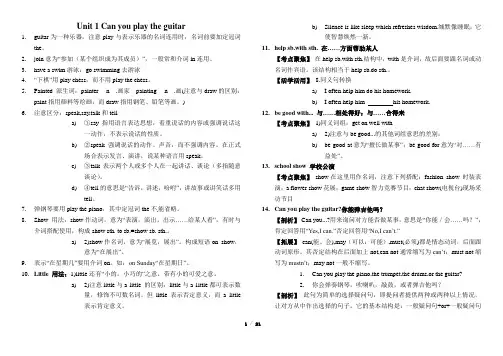
Unit 1 Can you play the guitar1.guitar为一种乐器,注意play与表示乐器的名词连用时,名词前要加定冠词the。
2.join意为“参加(某个组织成为其成员)”,一般常和介词in 连用。
3.have a swim游泳;go swimming 去游泳4.“下棋”用play chess,而不用play the chess 。
5.Painted 派生词:painter n.画家painting n.画(注意与draw的区别:paint指用颜料等绘画;而draw指用钢笔、铅笔等画。
)6.注意区分:speak,say,talk和tella)①say指用语言表达思想,着重说话的内容或强调说话这一动作,不表示说话的性质。
b)②speak强调说话的动作、声音,而不强调内容。
在正式场合表示发言、演讲,说某种语言用speak 。
c)③talk表示两个人或多个人在一起讲话、谈论(多指随意谈论)。
d)④tell的意思是“告诉,讲述,吩咐”,讲故事或讲笑话多用tell 。
7.弹钢琴要用play the piano,其中定冠词the 不能省略。
8.Show 用法:show作动词,意为“表演,演出,出示……给某人看”,有时与介词搭配使用,构成show sth. to sb.=show sb. sth.。
a)2)show作名词,意为“展览,展出”。
构成短语on show,意为“在展出”。
9.表示“在星期几”要用介词on。
如:on Sunday“在星期日”。
10.Little 用法:1)little还有“小的,小巧的”之意,带有小的可爱之意。
a)2)注意little与a little 的区别:little与a l ittle都可表示数量,修饰不可数名词。
但little表示否定意义,而a little表示肯定意义。
b)Silence is like sleep which refreshes wisdom.缄默像睡眠;它使智慧焕然一新。
人教版新目标七年级下册英语7——12单元知识点小结
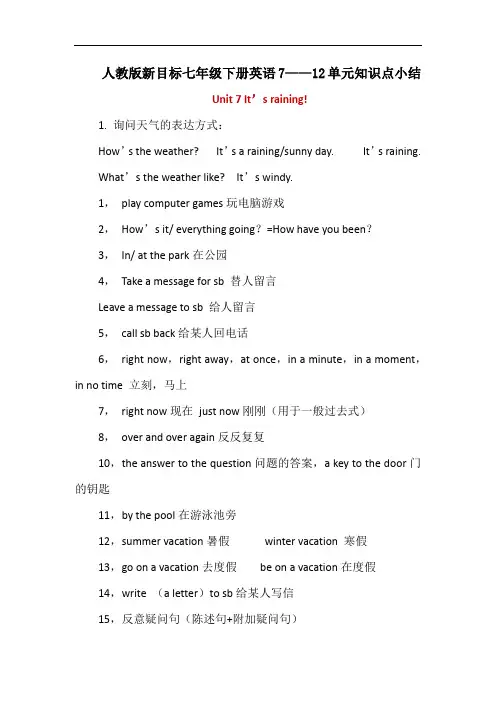
人教版新目标七年级下册英语7——12单元知识点小结Unit 7 It’s raining!1. 询问天气的表达方式:How’s the weather? It’s a raining/sunny day. It’s raining.What’s the weather like? It’s windy.1,play computer games玩电脑游戏2,How’s it/ everything going?=How have you been?3,In/ at the park在公园4,Take a message for sb 替人留言Leave a message to sb 给人留言5,call sb back给某人回电话6,right now,right away,at once,in a minute,in a moment,in no time 立刻,马上7,right now现在just now刚刚(用于一般过去式)8,over and over again反反复复10,the answer to the question问题的答案,a key to the door门的钥匙11,by the pool在游泳池旁12,summer vacation暑假winter vacation 寒假13,go on a vacation去度假be on a vacation在度假14,write (a letter)to sb给某人写信15,反意疑问句(陈述句+附加疑问句)反意疑问句中,陈述句用的肯定,后面的附加疑问句就要用否定;相反,陈述句用的否定,附加疑问句就要用肯定。
16,adj 以-ing结尾“令人…的”,主语是事物,或者修饰事物exciting,interesting,relaxing以-ed结尾“人感到…的”主语是人,excited,interested,relaxed 17,in the first picture在第一张照片里18,dry干燥的humid潮湿的人教版新目标英语七年级下册Unit 8 Is there a post office near here?1,There is +单数可数名词/不可数名词+ 地点状语. There are +复数名词+地点状语. 谓语动词要与跟它最近的那个名词一致(就近原则)。
七年级英语人教版(新目标)(最新版)下学期期末复习:知识点归纳
一、学习目标1。
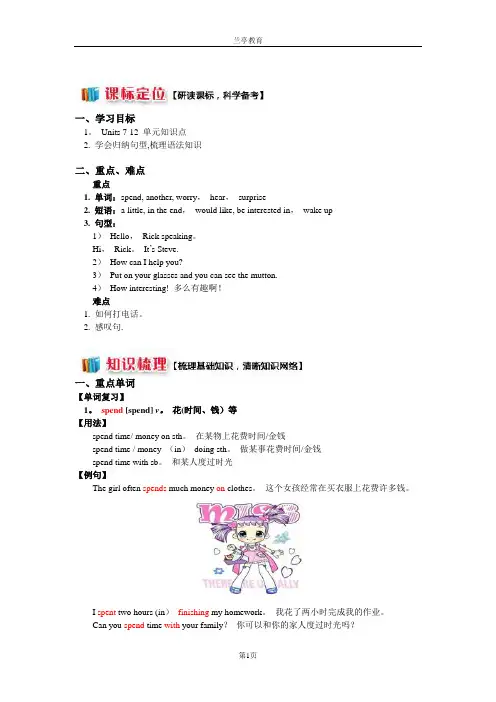
Units 7-12 单元知识点2. 学会归纳句型,梳理语法知识二、重点、难点重点1. 单词:spend, another, worry,hear,surprise2. 短语:a little, in the end,would like, be interested in,wake up3. 句型:1)Hello,Rick speaking。
Hi,Rick。
It’s Steve.2)How can I help you?3)Put on your glasses and you can see the mutton.4)How interesting! 多么有趣啊!难点1. 如何打电话。
2. 感叹句.一、重点单词【单词复习】1。
spend [spend] v。
花(时间、钱)等【用法】spend time/ money on sth。
在某物上花费时间/金钱spend time / money (in)doing sth。
做某事花费时间/金钱spend time with sb。
和某人度过时光【例句】The girl often spends much money on clothes。
这个女孩经常在买衣服上花费许多钱。
I spent two hours (in)finishing my homework。
我花了两小时完成我的作业。
Can you spend time with your family?你可以和你的家人度过时光吗?【拓展】(1) pay常用来表示“付款”,主语是人,其后用介词for。
sb。
pays money for sth. = sb。
spends money on/ doing sth。
(2)cost 表示“花钱”,主语为物。
sth。
costs sb. money. = sb. pays money for sth。
= sb。
spends money on/(in)doing sth。
新版新目标英语七年级下册知识点总结
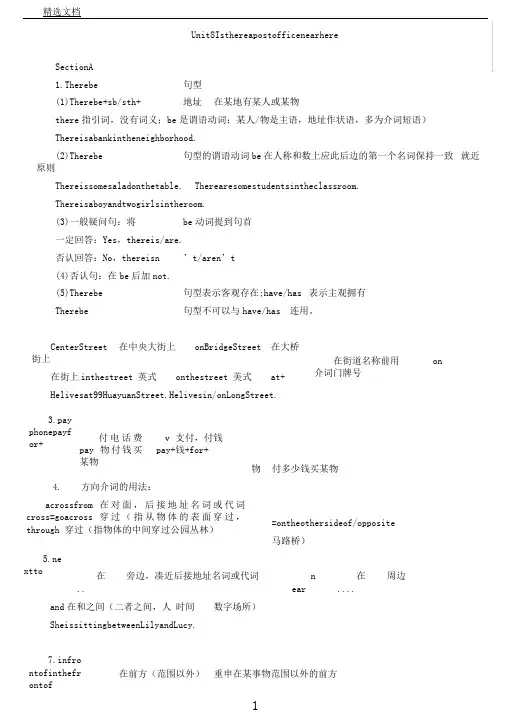
Unit8IsthereapostofficenearhereSectionA1.Therebe 句型(1)Therebe+sb/sth+ 地址在某地有某人或某物there指引词,没有词义;be是谓语动词;某人/物是主语,地址作状语,多为介词短语)Thereisabankintheneighborhood.(2)Therebe 句型的谓语动词be在人称和数上应此后边的第一个名词保持一致就近原则Thereissomesaladonthetable. Therearesomestudentsintheclassroom.Thereisaboyandtwogirlsintheroom.(3)一般疑问句:将be动词提到句首一定回答:Yes,thereis/are.否认回答:No,thereisn ’t/aren’t(4)否认句:在be后加not.(5)Therebe 句型表示客观存在;have/has 表示主观拥有Therebe 句型不可以与have/has 连用。
CenterStreet 在中央大街上onBridgeStreet 在大桥街上在街上inthestreet 英式onthestreet 美式at+ Helivesat99HuayuanStreet.Helivesin/onLongStreet.在街道名称前用介词门牌号on3.payphonepayf or+付电话费pay物付钱买某物v支付,付钱pay+钱+for+物付多少钱买某物4.方向介词的用法:acrossfrom在对面,后接地址名词或代词cross=goacross穿过(指从物体的表面穿过,through穿过(指物体的中间穿过公园丛林)=ontheothersideof/opposite马路桥)5.nextto在..旁边,凑近后接地址名词或代词near在....周边and在和之间(二者之间,人时间数字场所)SheissittingbetweenLilyandLucy.7.infrontofinthefrontof在前方(范围以外)重申在某事物范围以外的前方在..前方(范围以内)重申在某事物范围内的前方me打搅了,对不起屈驾因咨询事情,打搅他人而表示抱歉时的用语,常用在问路以前。
人教版新目标_go_for_it!七年级下册_英语__1-12单元知识点
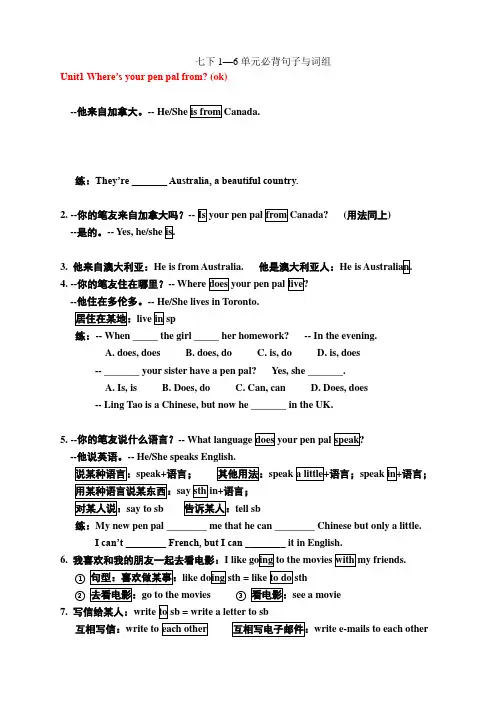
七下1—6单元必背句子与词组Unit1 Where’s your pen pal from? (ok)--他来自加拿大。
练:They’re _______ Australia, a beautiful country.2. --你的笔友来自加拿大吗?(用法同上)--是的。
3. 他来自澳大利亚:He is from Australia. 他是澳大利亚人:4. --你的笔友住在哪里?--他住在多伦多。
-- He/She lives in Toronto.练:-- When _____ the girl _____ her homework? -- In the evening.A. does, doesB. does, doC. is, doD. is, does-- _______ your sister have a pen pal? Yes, she _______.A. Is, isB. Does, doC. Can, canD. Does, does-- Ling Tao is a Chinese, but now he _______ in the UK.5. --你的笔友说什么语言?--他说英语。
-- He/She speaks English.speak+语言;语言;语言;语言;say to sb tell sb练:My new pen pal ________ me that he can ________ Chinese but only a little.I can’t ________ French, but I can ________ it in English.6. 我喜欢和我的朋友一起去看电影:①②go to the movies ③see a movie7. 写信给某人:互相写信:write e-mails to each other8.9. 告诉我关于你自己:讲故事给某人听:10.11. 相似单词比较:(1) 信:letter 一点:little (2) 法国:France 法语:French12. (1) like v. 喜欢;如:(2) like prep. 像;如:13. (1) country n. 国家;如:(2) country n.14. (1) from perp. 来自;如:(2) from prep. 从;如:Unit2 Where’s the post office? (ok)1. 问路:(1) Excuse me, how can I get to the post office?(2) Excuse me, can you tell me the way to the post office?2. --这儿附近有一个邮局吗?--是的。
新目标(Go for it)版七年级英语下册各单元知识点总结
新目标(Go for it)版七年级英语下册各单元知识点总结人教版初一英语下册各单元知识点总结Unit 1 Can you play the guitar?一、 单词与词组表示“参加,加入”,此处指参加社团或组织,成为其中的成员。
Join the army 参军 join the NBA 加入美国篮球协会Join the art/sports/music/English/chess club 参加体育/音乐/英语/象棋俱乐部play soccer/ basketball/volleyball/football/tennis/badminton / 篮球 / 排球 /英式足球,美式橄榄球/网球/羽毛球)Be good at+ sth./doing sth. 擅长做某事Be good with sb 与…相处得好Be good to sb …友好=be friendly toBe good for 对…有好处特指某一次的动作;like doing sth. 强调经常性的爱好。
两者都表示喜讲故事 tell sb. sth. /to do sth. /not to do sth.告诉某人某事/不要做某帮助某人做某事Help yourself/sb. (to sth.)把某物(尤其是指食物,饮料等)拿给自己/某人e.g. Call Mr.Brown at 293-7742意思是“回家”,“到家”。
前面不加介词。
这里的home 是e.g. 1)When do you go home every day?你每天什么时候回家? 2)He drives home after work.他下班的开车回家。
3)She often does some shopping on his way home. 她经常在回家途中买些东西。
2. at home 表示静态概念。
意思是“在家”。
这里的home 是名词,表示具体地点。
七年级下册英语语法点总结(新目标)
七年级下册英语语法点总结Unit 1 Where’s your pen pal from?一.短语:1 .be from = come from 来自于----2.live in 居住在---3.on weekends 在周末4 .write to sb = write a letter to sb 给某人写信;写信给某人5 .in the world 在世界上in China 在中国6.pen pal 笔友14 years old 14岁favorite subject 最喜欢的科目7.the United States 美国the United Kingdom 英国New York 纽约8.speak English 讲英语like and dislike 爱憎9.go to the movies 去看电影play sports 做运动二.重点句式:1 Where’s your pen pal from? = Where does your pen pal from/2 Where does he live?3 What language(s) does he speak?4 I want a pen pal in China.5 I can speak English and a little French.6 Please write and tell me about yourself.7 Can you write to me soon?8 I like going to the movies with my friends and playing sports.三.本单元的国家,人民、语言对应。
1 Canada---- Canadian---- English / French2 France------ French------French3 Japan------Japanese----Japanese4 Australia----Australian----- English5 the United States------ American---- English6 the United Kingdom---British----- EnghishUnit 2 Where’s the post offic e?一.Asking ways: (问路)1.Where is (the nearest) ……?(最近的)……在哪里?2.Can you tell me the way to ……?你能告诉我去……的路吗?3.How can I get to ……?我怎样到达……呢?4.Is there …… near here / in the neighborhood? 附近有……吗?5.Which is the way to ……?哪条是去……的路?二.Showing the ways: (指路)1. Go straight down / along this street. 沿着这条街一直走。
初中英语人教新目标七年级上下册必背短语汇总(分单元编排)
七年级英语上册必背短语Unit 1 My name’s Gina.1.my name 我的名字2.your name 你的名字3.her name 她的名字.4.his name 他的名字5.I’m ...我是……6.first name 名字st name/family name 姓氏8.Ms.Brown 布朗女士9.your school ID card 你的学生卡10.phone/telephone number 电话号码11.his ID card number 他的身份证号码12.my friend 我的朋友13.nice to meet you 很高兴见到你14.middle school 中学15.in China 在中国Unit2 This is my sister.1.an uncle/aunt 叔叔/阿姨2.his aunts and uncles 他的阿姨和叔叔们3.my four friends 我的四个朋友4.his parents 他的父母5.my family 我的家6.your brother/sister 你的兄弟/姐妹7.these two girls 这两个女孩8.in Picture 1/in the first picture在第一张图片里9.have a good day 过得愉快10.my family photo 我家的全家福11.a photo of my family 我家的一张照片12.the name of my dog 我的狗的名字13.in my family 在我家里14.two photos/pictures 两张照片Unit 3 Is this your pencil?1.your schoolbag 你的书包2.his green pen 他的绿色的钢笔3.Anna’s books 安娜的书4.her dictionary 她的字典5.ask the teacher for ...向老师要……6.thank you for ...因........而谢谢你puter games 电脑游戏8.in Classroom 7E 在7 E 教室里9.in the school library 在学校图书馆10.call me 给我打电话11.call me at 495-3539 拨4 9 5 -3 5 3 9打电话给我12.e-mail me at...用……给我发电子邮件13.my school ID card 我的学生卡14.a set of keys 一串钥匙15.some keys 一些钥匙Unit 4 Where’s my schoolbag?1.my pencil box 我的铅笔盒2.on the sofa 在沙发上3.in your schoolbag 在你的书包里4.under your bed 在你的床底下5.in your grandparents’ room 在你祖父母的房间里6.a tape player 一台录音机7.a model plane 一个飞机模型8.English books 英语书9.in the bookcase 在书柜里10.under the radio 在收音机下面11.on the teacher’s desk 在讲台上12.on your head 在你头上Unit 5 Do you have a soccer ball?1.have a volleyball 有一个排球2.play volleyball/tennis 打排球/网球3.have a ping-pong/table tennis 有一个乒乓球4.play ping-pong/table tennis 打乒乓球5.with our friends 和我们的朋友一起6.have a football/soccer ball 有一个足球7.play football/soccer 踢足球8.at school 在校,在上学9.play sports 做运动10.play computer games 玩电脑游戏11.watch TV 看电视12.in the same school 在同一所学校13.after class 下课后14.go to school 去上学Unit 6 Do you like bananas?1.John ’s birthday dinner 约翰的生日宴会2.vegetable salad 蔬菜沙拉3.two tomatoes 两个西红柿4.eat well 吃得营养5.think about 考虑6.eat/have breakfast/lunch/dinner 吃早/午/晚饭7.sports stars 体育明星8.the volleyball star 排球明星9.ask sb.about sth.问某人某事10.like hamburgers/ice-cream 喜欢汉堡包/冰淇淋11.like eating eggs 喜欢吃鸡蛋12.her eating habits 她的饮食习惯13.be (not) healthy (不)健康14.one last question 最后一个问题15.healthy food 健康食物16.after breakfast/lunch/dinner 早/午/晚饭后Unit 7 How much are these socks?1.these shorts 这些短裤2.what color 什么颜色3.a yellow sweater 一件黄色的毛衣4.twenty white skirts 20条白色的裙子5.a pair of brown trousers 一条棕色长裤6.thirteen pairs of sports shoes 13双运动鞋7.those long black pants 那些长的黑裤子8.seven dollars 7美元9.a short red T-shirt 一件短的红T恤10.a small black hat 一顶小的黑帽子11.at our great sale 在我们(店)大减价期间12.at a very good price/at very good prices 以非常优惠的价钱13.skirts in red 红颜色的裙子14.for boys/girls 对于男孩/女孩e to M r.Cool’s Clothes Store 来酷先生的服装店16.$ 2 for three pairs 三双2 美元17.buy sth.for sb.= buy sb.sth.买某物给某人18.sell sth.to sb./ sell sb.sth.把……卖给某人Unit 8 When is your birthday?1.my father’s birthday 我爸爸的生日2.happy birthday (to you) (祝你)生日快乐3.in August 在八月4.have a birthday party 举办一个生日派对5.have a book sale 举行一次书籍拍卖6.have an art festival 举办一次艺术节7.have an English party 举办一个英语派对8.have a basketball game 举办一场篮球赛9.School Day 学校开放日10.Teachers’ Day 教师节11.Mother’s Day 母亲节12.Women’s Day 妇女节13.Sports Day 体育节14.two ball games 两场球赛15.this term 这学期16.in the afternoon 在下午17.on the 12th 在12日那天18.next month 下个月19.in the school library 在学校图书馆20.have a good time 玩得开心Unit 9 My favorite subject is science.1.my favorite subject(s) 我最喜欢的科目2.have P.E./a P.E.lesson 上体育课3.play games with us 和我们一起玩游戏4.my science teacher 我的科学老师5.your favorite day 你最喜欢的一天6.the next day 第二天7.David’s favorite subject 戴维最喜欢的科目8.on FridayC morning/afternoon/evening) 在周五(上午/下午/晚上)9.at 8 :00 在8 点钟10.from 12:00 to 1:00 从1 2 :0 0 到(下午)1 :0 011.after that/class 自那以后/下课后12.great fun 非常有趣13.difficult but interesting 难但有趣14.be OK with sb.适合某人七年级英语下册重点短语Unit 1 Can you play the guitar?1.play the guitar 弹吉他2.play the piano 弹钢琴3.play the violin 拉小提琴4.play chess 下棋5.speak English 说英语6.like to do / doing sth 喜欢做某事7.what to do sth 想做某事8.let's join ...让我们加入......9.join the music club 加入音乐俱乐部10.the swimming club 游泳俱乐部11.a sports club 体育俱乐部12 the story telling club 讲故事俱乐部13.be good at telling stories 擅长讲故事14.tell sb stories 给某人讲故事15.be in the school music club 在学校音乐俱乐部16.match ...with 与……匹配17.sound good 听起来不错18.students wanted for School Show 学校演出招募学生19.talk to / with sb 跟某人谈话20.after school 放学后21.do kung fu 表演功夫;练功夫22.show sb sth =show sth to sb 把某物展示给某人23.play games with people 和人们做游戏24.help for old people 对老人的帮助25.be good with …和……相处得好,善于和……打交道26.be free / be busy 空闲的 / 忙的27.in July 在六月份28.make friends with sb 和某人交朋友29.call sb at ...给某人打电话……30.on the weekend 在周末37.help sb(to) do sth 帮助某人做某事32.help sb with sth 在某方面帮助某人33.English-speaking students 说英语的学生34.It is+adj +(for sb) to sth.做某事(对于某人来说)是…..35.need help to teach music需要帮助来做某事36.need sb to do sth 需要某人做某事37.teach sb to do sth 教某人做某事48.be in our school music festival参加我们学校的音乐节Unit 2 What time do you go to school?1.go to school 去上学2.get up 起床3.get dressed 穿衣服4.brush teeth 刷牙5.eat breakfast 吃早饭6.take a shower 洗澡7.what time 什么时间8.at six forty 在六点四十9.at half past six在六点半10.at about ten twenty 大约十点二十11.a quarter past three 三点过一刻(3:15)12.a quarter to ten 十点差一刻(9:45)13.a funny time 一个有趣的时间14.from ...to 从……到…..15.at night 在夜晚16.on weekends 在周末17.on school days 在上学日18.an interesting job 一个有趣的工作19.at the radio station 在广播电视台ually / always / often / sometimes / never经常 / 总是 / 经常 / 有时 / 从不21.your radio show 你的广播节目22.take exercise 锻炼23.be late for...因……迟到24.do (one's) homework做(某人的)家庭作业25.take a walk 散步26.go to bed 睡觉27.eat quickly 吃得快28.have much time 有许多时间29.half an hour 半个小时30.get home 到达家31.either ...or 或者…….或者......32.eat a good breakfast 好好吃顿早餐33.lots of = a lot of 许多34.be good for ...对…….有益35.taste good 尝起来好36.do her homework 做她的家庭作业37.have a healthy life 有一个健康的生活方式38.have dinner 吃晚饭Unit 3 How do you get to school?1.get to school 到达学校2.take the train 乘火车3.take the subway 乘地铁4.ride a bike 骑自行车5.walk / drive / fly to …步行 / 开车 / 坐飞机去….6.drive his car to work 开车去上班7.in his father's car 坐父亲的车8.cross the river 过河9.how far 多远10.how long 多长时间11.it takes sb some time to do sth 花费某人多长时间做某事12.ten minutes' walk / a ten-minute walk 10分钟的路13.about = around 大约14 10 kilometers 十公里15.one hundred and five 10516.every day 每天17.I'm not sure 我不敢确信18.what do you think of… = how do you like…你觉得……怎么样19.there is 有20.between … and …在……和……之间21.no = not any / not a 没有22.The river runs quickly.河水流得快。
新目标七年级英语下册各单元知识点总结
Ving
事。
乘火 感谢你(做)某
◆典句必背 1. How do you get to school I ride my bike. 2. How far is it from your home to school 3. How long does it take you to get to school 4. For many students, it is easy to get to school. 5. There is a very big river between their school and the village.
实现 15. have to
不得不 t去,离开去某地
18 . from …to …从……到……
19. most students 大多数学生
20. in other parts of the world
在世界的其他地方
21. be different from
3. When do students usually eat dinnerThey usually eat dinner at a quarter to seven in the evening.
4. In the evening, I either watch TV or play computer games.
Unit 3 How do you get to school
◆短语归纳
1. get to school
到达学校 2. take the subway
乘地铁 3. ride a bike/ ride bikes
骑自行车
4. how far 多远 ( 路程、距离 ) how long 多长(时间) 5. from home to school