
冀教版五年级同步英语下册Lesson9 The Palace Museum课件
Part 2 Let's do it!
Read part 1.Talk and write.
A: How old is the Palace Museum? B: It's about 600 yers old.
T: It's sunny today. The sky is blue. LiMing, Jenny and Danny are visiting the Palace Museum. The Palace Musum is red and yellow. It's beautiful! Jenny:.. Li Ming:.. Danny:..
助动词:帮助其他动词做各种形态的变化,无 实际意义 do/does/did be(am/is/are)
Exercise
is I see baby. He _____(be) crying.
There ____(be) a bus and two cars. is am I ____(be) students.
New Concepts
lesson hook
Who knows what the Palace Museum is? Who has been to see it? How old is it?
listening
Listen to the story and think about the following questions: Q1:What's the weather like today? It is sunny today.
Q2:What coulor is the palace? The palace is red and yellow. Q3:How old is the Palace Museum? It's about six hundred years old.
Be careful. 小心
Reading Important words and structures:
take
(拍照) May I take your pictures? He takes a bus to go to school.(乘坐) (买下) Danny is taking those apples.
be
Be ca 系动词 There is a pen on the desk.(存在) (助动词) They are playing on the playground.
Lesson 9 The Palace Museum
Reviewing
Tian'anmen Square is very ____. There big people here. Some people are many ______ a r e _ _ _taking _ _ _ _ pictures _______ on the flying ______. kites square.Some men are ______
easy Jenny thinks it is ______ to fly a kite. She can fly a kite very ______. high
Danny thinks it is ________ to fly a kite. difficult He can't fly a kite high. He feels very hurts his arms. sad, because he ______
don't run Danny, please __________(run).
_____ Do (do) you go to school tomorrow? does Li Ming _____(do) his homework after school.
Role play
Imagin you are a tour guide. Li Ming, Jenny, Danny are three visiters visiting the Palace Museum. Make a conversation.
五年级下册英语-Unit2 Lesson9 The Palace Museum 冀教版

五年级下册英语-Unit2 Lesson9 The Palace Museum 冀教版Part One: Pre-ReadingBefore we start reading the text, let’s get familiar with some background knowledge.The Palace MuseumThe Palace Museum, also known as the Forbidden City, was once the imperial palace of the Ming and Qing dynasties. It is located in the center of Beijing, the capital of China. The Palace Museum has a long history and rich cultural heritage, and it is a symbol of Chinese architecture and ancient civilization.The Palace Museum covers an area of 720,000 square meters and has more than 980 buildings. It has a collection of over 1.8 million works of art and cultural relics, including calligraphy, paintings, ceramics, jade, bronze, and other treasures. The Palace Museum is not only a museum but also a cultural and artistic treasure of China.The Ming and Qing DynastiesThe Ming Dynasty (1368-1644) was a period of great cultural and economic prosperity in China. The capital of the Ming Dynasty was Nanjing, and later Beijing. The Ming Dynasty was known for its achievements in architecture, literature, and art. The Forbidden City, as we know it today, was built during the Ming Dynasty.The Qing Dynasty (1644-1911) was the last imperial dynasty of China. It was also the most prosperous period of the Chinese empire. The Qing Dynasty was known for its achievements in science, technology, and art. The Forbidden City was expanded during the Qing Dynasty.Part Two: ReadingNow let’s read the text about The Palace Museum.TextThe Palace MuseumThe Palace Museum, also known as the Forbidden City, is located in the center of Beijing, the capital of China. It was the imperial palace of the Ming and Qing dynasties from 1420 to 1911. The palace covers an area of 720,000 square meters and has more than 980 buildings.The Palace Museum is a symbol of Chinese architecture and ancient civilization. It has a collection of over 1.8 million works of art and cultural relics, including calligraphy, paintings, ceramics, jade, bronze, and other treasures.Visitors to the Palace Museum can see the imperial living quarters, ceremonial halls, and many treasures of the imperial family. The palace also has many beautiful gardens, pavilions, and ponds. It is a popular tourist attraction and a must-visit place in Beijing.The Palace Museum is not only a museum but also a cultural and artistic treasure of China. It is a great place to learn about the history and culture of China. Many students come to the Palace Museum to learn about the customs and traditions of their country.Vocabulary1.imperial - relating to an empire or emperor2.dynasty - a powerful family or group of rulers that maintains its position for some time3.relic - an object surviving from an earlier time, especially one of historical or sentimental interest4.ceremonial - relating to or used for formal events of a religious or public nature5.pavilion - a summer house or other decorative building used as a shelter in a park or gardenPart Three: DiscussionLet’s discuss some questions about the text.1.What is The Palace Museum?2.When was The Palace Museum the imperial palace?3.What can visitors see at The Palace Museum?4.Why is The Palace Museum a cultural and artistic treasure of China?5.Why is The Palace Museum a great place to learn about the history and culture of China?Part Four: WritingNow let’s write a short paragraph about The Palace Museum.The Palace Museum, also known as the Forbidden City, is a symbol of Chinese architecture and ancient civilization. It was the imperial palace of the Ming and Qing dynasties from 1420 to 1911. The palace covers an area of 720,000 square meters and has more than 980 buildings. Visitors to the Palace Museum can see the imperial living quarters, ceremonial halls, and many treasures of the imperial family. The palace also has many beautiful gardens, pavilions, and ponds. It is a popular tourist attraction and a must-visit place in Beijing. The Palace Museum is not only a museum but also a cultural and artistic treasure of China, and it is a great place to learn about the history and culture of China.。
冀教版五年级英语下册Lesson 9 The Palace Museum课件
Where am I?
the Great Wall Bird’s Nest Water Cube Tian’an men Square the Palace Museum
Tian’an men Square the Palace Museum
--Hello,Everyone.Welcome to the Palace Museum. I’m glad to be your tour guide.I’d like to
show you the Palace Museum.
The Palace Museum is the Palace of the Ming and Qing dynasties,known as the Forbidden City.It is red and yellow. It’s about 600 years old.We can see old chairs and tables in it.That’s beautiful. I hope you all enjoy it and thank you for your cooperation ,thank you!
3.Are there old chairs and tables in the Palace
Museum?
Yes,there are.
4.Does Danny take a picture?
Yes,he does.
5.Does Danny hurt his tail? Yes,he does.
Read the text
5.Does Danny hurt his tail?
五年级下册英语课件-Unit 2 Lesson 9 The Palace Museum 冀教版(三起)
Danny: May I take your picture, Jenny? Jenny: Sure. Danny: And your picture too, Li Ming. Please
stand bBiblioteka side Jenny.5 Does Danny hurt his tail? Does Danny take a picture?
Lesson9 The Palace Museum
Part1 At the Palace Museum
It’s sunny today. The sky is blue. Danny, Jenny and Li Ming are visiting the Palace Museum. The Palace is red and yellow. It’s beautiful!
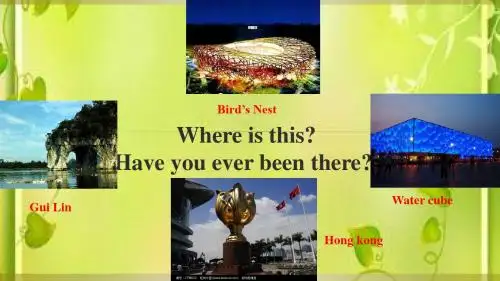
Gui Lin
Bird’s Nest
Where is this? Have you ever been there?
Water cube
Hong kong
Where is this? Have you ever been there?
qusetions
What colour is the Palace? How old is the Palace Museum? Are there old chairs and tables in the Palace
Jenny: That’s old.
詹妮:故宫博物馆有多少年了? 李明:大约有600 年了。 詹尼:那太久远了 注:hundred 百 一百 one hundred 两百 two hundred 三百 three hundred
五年级下册英语教案-Unit2Lesson9ThePalaceMuseum(冀教版)

教案:五年级下册英语教案 Unit 2 Lesson 9 The PalaceMuseum(冀教版)一、教学目标1. 知识目标(1)能够听懂、会说、会读关于The Palace Museum的词汇:palace, museum, emperor, dragon, guardian, visit, history, culture.(2)能够运用一般现在时描述博物馆的开放时间和参观人数。
(3)能够运用一般过去时描述自己去过的地方。
2. 能力目标通过听、说、读、写等环节,提高学生运用英语描述博物馆和相关词汇的能力。
3. 情感目标培养学生对我国传统文化的兴趣,增强民族自豪感。
二、教学内容本课主要介绍The Palace Museum,通过学习词汇和句子,让学生了解博物馆的开放时间和参观人数,以及一般现在时和一般过去时的用法。
三、教学重点与难点1. 重点:掌握关于The Palace Museum的词汇和句子,运用一般现在时描述博物馆的开放时间和参观人数。
2. 难点:一般过去时的运用,以及如何用英语描述自己去过的地方。
四、教具与学具准备1. 教具:PPT、图片、单词卡片、录音机、磁带。
2. 学具:课本、练习本、铅笔、橡皮。
五、教学过程1. 热身(5分钟)教师与学生进行简单的英语对话,检查学生对之前学过的知识的掌握情况。
然后引导学生谈论自己去过的地方,为导入新课做铺垫。
2. 导入(10分钟)教师出示The Palace Museum的图片,引导学生说出它的中文名字,然后简要介绍博物馆的历史和文化,激发学生的学习兴趣。
3. 呈现与练习(15分钟)(1)教师播放课文录音,让学生跟读并模仿语音、语调。
(2)教师将课文中的词汇和句子用PPT展示,让学生进行朗读和翻译。
(3)教师组织学生进行小组活动,用英语讨论自己去过的地方,并鼓励他们用一般过去时描述。
4. 巩固与拓展(10分钟)(1)教师出示一些关于The Palace Museum的图片,让学生用英语描述图片内容。
Unit 2 Lesson9 The Palace Museum (教案)冀教版(三起)英语五年级下
Unit 2 Lesson9 The Palace Museum (教案) Teaching Objectives1.Learn about Chinese culture and ancient architecture by introducing the Palace Museum.2.Master basic vocabulary related to the Palace Museum.3.Learn to describe the Palace Museum using simple sentences.4.Develop students’ listening and speaking skills by introducing interactive activities.Teaching Key Points1.Key vocabulary related to the Palace Museum.2.General knowledge of China’s history and culture.3.Basic sentence structures for describing the Palace Museum.Teaching Difficult Points1.Understanding the historical and cultural significance of the Palace Museum.2.Applying new words and grammar structures in practical situations.3.Enhancing students’ interest in learning English through cultural activities and interactive learning.Teaching Methods1.Multimedia teaching method.2.Interactive teaching method.3.Pair and group work.4.Question and answer sessions.Teaching ProceduresStep 1 Warming up (10 minutes)1.Review the previous lesson by asking questions related to the lesson.2.Introduce the topic for today’s lesson.Step 2 Vocabulary Learning (20 minutes)1.Introduce the new vocabulary using pictures and examples.e flashcards to review the new words.3.Offer different situations for students to apply the new vocabulary in.Step 3 Reading and Listening Practice (15 minutes)1.Play an audio file or video about the Palace Museum.2.Let the students answer and ask questions after listening.3.Have the students read a short article about the Palace Museum and answer the questions related to the text.Step 4 Speaking Practice (20 minutes)1.Divide the class into small groups.2.Ask the students to describe the Palace Museum in their own words.3.Have the groups present their descriptions to the class.4.Encourage other students to ask questions related to the Palace Museum.Step 5 Cultural Activity (20 minutes)1.Introduce a traditional Chinese craft, such as paper cutting or calligraphy.2.Have the students try to create their own works of art.3.Let the students share their creations with the class and explain the significance of their works.Step 6 Reflection and Conclusion (15 minutes)1.Discuss the challenges and successes students experienced during the lesson.2.Review key vocabulary and grammar structures taught during the lesson.3.Offer some additional resources (such as books or websites)related to the Palace Museum for students to explore in their free time.Teaching Materials1.Audio files or videos about the Palace Museum.2.Flashcards and other visual aids to teach new vocabulary.3.A short article about the Palace Museum.4.Paper cutting or calligraphy supplies.Assessment Methods1.Observation of students’ participation during the activities.2.Checking on students’ performance during pair and group work.3.Assigning homework that requires students to apply new vocabulary and grammar structures in writing.Homework1.Write a paragraph describing the Palace Museum.2.Create a poster or presentation introducing the Palace Museum and its history.Extension1.Arrange a field trip to visit the Palace Museum or other cultural institutions.2.Encourage students to explore other aspects of Chinese culture and share what they found with the class.。
五年级下册英语说课稿-Lesson 9 The Palace Museum-冀教版
五年级下册英语说课稿-Lesson 9 The Palace Museum-冀教版Part 1:Teaching Plan1.1 GoalsIn this lesson, students will learn about The Palace Museum. By the end of the lesson, students should be able to:1.Understand the history and culture of The Palace Museum.e new vocabulary terms to describe The Palace Museum.3.Speak with confidence about a tourist attraction.1.2 Key Vocabulary•palace•museum•Forbidden City•emperors•cultural relics•tour1.3 Teaching Objects1.To develop students’ reading skills.2.To enhance students’ s peaking and listening abilities.3.To cultivate students’ interests in Chinese history and culture.4.To help students to learn how to present a tourist attraction.1.4 Teaching ProcedureWarm-upStart the lesson by asking the following questions:1.Have you ever visited a museum?2.What did you see there?3.What is the history and culture of China?Presentation•Introduce the lesson by showing pictures of The Palace Museum.•Teach students new vocabulary terms (palace, museum, Forbidden City, emperors, cultural relics, tour).•Explain the background story of The Palace Museum.Practice•Divide the class into groups.•Ask each group to brainstorm and write a brief introduction about a tourist attraction.•Let students present their introductions to the class.Production•Ask students to create a brochure or poster advertising The Palace Museum.•Encourage students to use their language skills to present appealing descriptions of the museum to potential tourists.Review•Review new vocabulary terms and discuss The Palace Museum’s importance in Chinese history and culture.•Assess student learning by asking each student to share one new fact about The Palace Museum.Part 2: Teaching Content2.1 OverviewThe Palace Museum is located in the heart of Beijing, China. It was built over 600 years ago, and was the place where the Chinese emperors lived and ruled the country for over 500 years. Today, The Palace Museum is an exquisite cultural relic that reflects the ancient Chinese civilization and attracts tourists from all over the world.2.2 Vocabulary Terms2.2.1 PalaceA palace is a large, grand house where an important person, such as a king or queen, lives.2.2.2 MuseumA museum is a building where objects of historical, scientific, or cultural importance are kept and displayed.2.2.3 Forbidden CityThe Forbidden City is located in the center of Beijing, China. It served as the palace for Chinese emperors for more than 500 years.2.2.4 EmperorsAn emperor is a ruler of an empire.2.2.5 Cultural RelicsCultural relics are objects of artistic, historical, or cultural significance.2.2.6 TourA tour is a journey that people make to visit interesting places.2.3 Textbook Content2.3.1 TextThe textbook provides a brief overview of The Palace Museum, including its history, importance, and cultural significance. It also highlights some of the museum’s most impressive exhibits, such as its jade carvings, ceramics, and rare books.2.3.2 Learning Objectives•To help students understand the history and cultural significance of The Palace Museum.•To enable students to use new vocabulary terms related to The Palace Museum.•To encourage students to engage in conversations about tourist attractions and present a persuasive introduction of them.Part 3: Assessment3.1 Performance AssessmentsThe following assessments can be used to evaluate students’ progress and learning outcomes:3.1.1 Oral Presentation•Ask students to prepare a two-minute oral presentation on The Palace Museum.•Assess students based on their use of new vocabulary terms, pronunciation, pacing, and organization of content.3.1.2 Brochure or Poster•Ask students to create a brochure or poster advertising The Palace Museum.•Assess students based on their use of language, design, creativity, and persuasion.3.2 Formative AssessmentsThe following assessments can be used to monitor students’ learning progress and provide ongoing feedback:3.2.1 Vocabulary Quizzes•Quiz students on their mastery of new vocabulary terms.•Provide feedback and correct any errors.3.2.2 Peer Reviews•Ask students to review each other’s presentations or brochures.•Provide feedback and suggest improvements.Part 4: ConclusionIn this lesson, students learn about The Palace Museum, one of the most magnificent tourist attractions in China. They also learn new vocabulary terms, practice speaking and listening, and present a persuasive introduction to a tourist attraction. By the end of the lesson, students will be able to use their language skills to communicate about Chinese history and culture with confidence.。
五年级下册英语-Unit2Lesson9ThePalaceMuseum冀教版
教学设计一、教学目标1. 知识目标:(1)能够听懂、会说、会读本课的生词和重点句子。
(2)能够运用所学知识介绍中国的故宫。
2. 能力目标:(1)能够运用所学知识进行日常交流。
(2)能够正确使用指示代词和疑问代词。
3. 情感目标:激发学生对中华文化的兴趣,培养学生的民族自豪感。
二、教学内容本课主要介绍中国的故宫,通过学习,学生能够掌握相关的词汇和句型,如“This is ”,“It has ”,“How many”等,并能够运用这些词汇和句型进行日常交流。
三、教学重点与难点1. 教学重点:(1)掌握本课的生词和重点句子。
(2)能够运用所学知识介绍中国的故宫。
2. 教学难点:(1)正确使用指示代词和疑问代词。
(2)运用比较级和最高级形式描述事物。
四、教具与学具准备1. 教具:课件、图片、地图等。
2. 学具:课本、练习册、文具等。
五、教学过程1. 导入:(1)出示故宫的图片,引导学生说出“The Palace Museum”。
(2)引导学生说出关于故宫的一些已知信息。
2. 展示:(1)播放课件,展示故宫的图片和相关词汇。
(2)引导学生跟读生词和句子。
3. 操练:(1)分组进行角色扮演,模拟介绍故宫的情景。
(2)邀请几组学生上台表演,给予评价和鼓励。
4. 巩固:(1)完成课本练习题,巩固所学知识。
(2)进行小组竞赛,看哪个小组完成得最快最好。
5. 拓展:(1)引导学生思考:你还知道哪些中国的文化遗产?(2)学生分享自己的见解,互相交流学习。
六、板书设计1. The Palace Museum2. 生词:hallgardenroombridgepainting3. 句型:This is theIt hasHow many七、作业设计1. 抄写生词和句子。
2. 运用所学知识,写一篇关于故宫的小短文。
3. 预习下一课的内容。
八、课后反思1. 对学生的发音和语调要加强指导,提高他们的口语水平。
2. 针对不同学生的学习程度,进行分层教学,使每个学生都能在课堂上得到充分的练习。
冀教版五年级下册英语-Unit2Lesson9ThePalaceMuseum
教学设计一、教学目标1. 知识目标(1)能够听懂、会说、会读本课的生词和句子。
(2)能够用英语简单介绍故宫的历史和文化。
2. 能力目标(1)能够运用所学知识进行简单的英语交流。
(2)能够通过图片和文字资料,了解故宫的基本布局和主要建筑。
3. 情感目标培养学生对我国传统文化的热爱和自豪感,提高他们的文化意识。
二、教学内容本课的主题是介绍故宫,主要内容包括:故宫的历史、基本布局和主要建筑。
通过学习,学生能够用英语简单介绍故宫的历史和文化。
三、教学重点与难点1. 重点:能够听懂、会说、会读本课的生词和句子,能够用英语简单介绍故宫的历史和文化。
2. 难点:对故宫的历史和文化有一定的了解,能够运用所学知识进行简单的英语交流。
四、教具与学具准备1. 教具:课件、图片、地图、视频等。
2. 学具:课本、练习册、笔记本等。
五、教学过程1. Preclass preparation(1)教师提前准备相关资料,了解故宫的历史和文化。
(2)学生预习课本,熟悉生词和句子。
2. Leadin(1)教师通过提问方式引导学生谈论中国的历史和文化。
(2)学生分享自己对故宫的了解。
3. Presentation(1)教师播放课件,展示故宫的图片和地图,引导学生观察和描述。
(2)教师讲解故宫的历史和文化,引导学生学习生词和句子。
4. Practice(1)教师组织学生进行小组活动,互相介绍故宫的历史和文化。
(2)学生进行角色扮演,模拟向游客介绍故宫。
5. Consolidation(1)教师播放视频,展示故宫的美丽景色和游客参观的场景。
6. Summary7. Homework学生完成练习册的相关题目,进一步巩固所学知识。
六、板书设计板书设计如下:The Palace Museum历史:built in 1420, over 600 years old布局:外朝、内廷、东西六宫、御花园建筑:Forbidden City, Hall of Supreme Harmony, Hall of Central Harmony, Hall of Preserving Harmony, Imperial Garden七、作业设计1. 完成练习册的相关题目。
五年级下册英语教案-Unit2Lesson9ThePalaceMuseum冀教版
教案:五年级下册英语教案Unit 2 Lesson 9 The PalaceMuseum 冀教版一、教学目标1. 知识目标:(1)能够听懂、会说、会读本课的生词和重点句子。
(2)能够用英语简单描述故宫的特点和参观故宫的经历。
2. 能力目标:(1)能够运用所学的词汇和句型,与他人交流关于故宫的话题。
(2)能够根据图片或文字资料,整理并表达故宫的历史和文化。
3. 情感目标:激发学生对中华文化的兴趣,培养他们的民族自豪感。
二、教学内容本课的主题是故宫,主要介绍了故宫的历史、建筑特点和参观经历。
教学内容包含词汇、句型、对话和阅读理解等方面。
三、教学重点与难点1. 重点:本课的生词和重点句子,以及如何运用这些词汇和句子描述故宫。
2. 难点:如何用英语表达故宫的历史和文化内涵。
四、教具与学具准备1. 教具:多媒体课件、图片、地图等。
2. 学具:笔记本、彩色笔等。
五、教学过程1. Preclass preparation(1)教师提前为学生准备一些关于故宫的图片和资料,以便在课堂上使用。
(2)学生预习本课的生词和句子,了解故宫的基本知识。
2. Classroom teaching(1)导入:教师通过展示故宫的图片,引导学生谈论故宫,激发学生的学习兴趣。
(2)新课呈现:教师播放多媒体课件,为学生展示故宫的历史、建筑特点和参观经历。
学生在观看的过程中,注意听懂并记录下关键词语和句子。
(3)词汇教学:教师引导学生学习本课的生词,让学生通过观察图片和例句,理解并记忆单词的含义。
(4)句型练习:教师组织学生进行句型练习,让学生运用所学的词汇和句型描述故宫。
(5)对话教学:教师引导学生学习本课的对话,让学生通过角色扮演,运用所学的词汇和句型进行交流。
(6)阅读理解:教师为学生提供一篇关于故宫的短文,让学生阅读并回答相关问题,提高学生的阅读理解能力。
3. Afterclass practice(1)作业:教师布置作业,让学生运用所学的词汇和句型,写一篇关于故宫的短文。
【英语教案】五年级下册-Lesson9ThePalaceMuseum冀教版
教案:五年级下册Lesson 9 The Palace Museum 冀教版教学目标:1. 能够听懂、会说、会读本课的生词和句子。
2. 能够运用所学知识描述一个地方。
3. 能够通过图片和文字了解故宫的历史和文化。
教学内容:1. 生词:Palace Museum, building, hall, beam, roof, history, culture, artifact, collection, ceilings2. 句子:1. This is the Palace Museum. 2. It was built in 1406.3. There are many buildings and halls.4. The ceilings are beautiful.5. There are many artifacts and collections.6. It has a long history and culture.教学重点与难点:重点:能够听懂、会说、会读本课的生词和句子,能够运用所学知识描述一个地方。
难点:单词的准确发音和意义的理解,句子的运用。
教具与学具准备:1. 教学课件:包括生词和句子的图片,故宫的图片和视频。
2. 学具:笔记本、彩笔。
教学过程:Step 1:热身(5分钟)1. 老师出示一些北京的景点的图片,让学生用英语描述。
2. 学生自由讨论,练习英语口语。
Step 2:引入(10分钟)1. 老师出示故宫的图片,引导学生说出故宫的中文名字。
2. 老师简要介绍故宫的历史和文化,激发学生的兴趣。
Step 3:生词学习(10分钟)1. 老师出示生词的图片,引导学生说出单词的中文意思。
2. 老师带领学生一起读生词,注意发音。
Step 4:句子学习(10分钟)1. 老师出示句子的图片,引导学生说出句子的中文意思。
2. 老师带领学生一起读句子,注意发音。
Step 5:实践活动(10分钟)1. 学生分成小组,每组选择一个生词或句子,用彩笔在笔记本上画出来。