
高中英语必修一
10.—I’ve got an enormous amount of work to do. —___. A. That’s great B. So have I C. I’m amazed D. You’re lucky 11.Tom often attempts to escape ___ whenever he breaks traffic regulations. A. having been fined B. to have been fined C. to be fined D. being fined 12.I hear they’ve promoted Tom, but he didn’t mention __ when we talked on the phone. A. to promoted B. having been promoted C. having promoted D. to be promoted 13.The little boys planned to ___ a trick on their teacher by hiding her glasses. A. feel B. play C. get D. make 14.Before you leave the lab, make sure the electricity ___. A. to turn off B. to be turned off C. is turned off D. will be turned off 15.Hurry up, or we won’t be ___ to catch the train. A. in time B. for a time C. at the same time D. out of time 16.We are taught that a business letter should be written in a formal style ___ than in a personal one. A. better B. less C. other D. rather 17.She’s very strict ___ things like homework and has made great progress. A. towards B. with C. for D. in 18.I believe it is important to invest in new machinery rather than ___ wages. A. to increase B. increasing C. increase D. in increasing
36.The city streets are full of ___. A. traffic B. transportation C. crafts D. movement 37.I don’t mind ___ to have my door painted. A. costing money B. spending money C. paying D. taking much 38.___ I know, he is the most popular film star in China. A. As far as B. As long as C. As soon as D. As much as 39.Up to now, the program ___ thousands of children who would otherwise have died. A. would save B. saves C. had saved D. has saved 40.—Could you tell me the way to the nearest post office? —___. A. Excuse me, I don’t know B. Yes, but I don’t know C. Sorry, I don’t know D. Of course, but I don’t know 41.Franklin discovered ___ by flying a kite in a thunderstorm. A. electric B. electricity C. electrician D. electronic 42.Her daughter is an artist and her son is ___ the stage. A. on B. in C. at D. off 43.I have three good friends, ___ , John, Jack and Tom. A. for example B. for instance C. such as D. namely 44.___ of the land in that district ___ covered with trees and grass. A. Two fifth; is B. Two fifth; are C. Two fifths; is D. Two fifths; are
28.Excuse me. I ___ I was blocking your way. A. didn’t realize B. don’t realize C. haven’t realized D. wasn’t realizing 29.—Do you need any help, Lucy? —Yes. The job is ___ I could do myself. A. less than B. more than C. no more than D. not more than 30.—Could you do me a favor and take these books to my office? —Yes, ___. A. for pleasure B. with pleasure C. my pleasure D.I could 31.He didn’t look up for some time while employed ___ up his shoes. A. lacing B. to lace C. in lacing D. as lacing 32.Whole communities starved ___ death during the long drought. A. for B. of C. into D. to 33.Ten ___ students are selected to take part in the boat race. A. strong young Chinese B. Chinese strong young C. Chinese young strong D. young strong Chinese 34.The unemployment rate in this district ___ from 6% to 5% in the past two years. A. has fallen B. had fallen C. is falling D. was falling 35.He used to live in ___. A. a six-storey building B. a building of six floored C. a six-floors’ building D. a building of six storey
19.When asked by the police, he said that he remembered ___ at the party, but not ___. A. to arrive; leaving B. to arrive; to leave C. arriving; to leave D. arriving; leaving 20.—Shall we go to the art exhibition right away? —___. A. It’s your opinion B. I don’t mind C. It’s all up to you D. That’s your decision 21.I want to buy a blue jacket to ___ my blue trousers. A. match B. belong to C. treat D. fit 22.If we can ___ our present difficulties, then everything should be all right. A. get through B. get over C. get off D. get down 23.___ nice weather it is ! Let’s go out for a walk. A. How B. How a C. What a D. What 24.One of the advantages of living on the top floor of a high-rise is that you can get a good ___. A. sight B. scene C. view D. landscape 25.She was warned to keep her distance ___ Charles if she didn’t want to get hurt. A. at B. from C. in D. away 26.I’m not going to stay here ___. I won’t come here ___. A. any longer; any longer B. any longer; any more C. any more; any more D. any more; any longer 27.The world’s industrial ___ has fallen steadily during 2008. A. productions B. produce C. produces D. production
高中英语人教版必修一全册课文内容电子版

Unit 1 ANNE’S BEST FRIENDDo you want a friend whom you could tell everything to, like your deepest feelings and thoughts? Or are you afraid that your friend would laugh at you, or would not understand what you are going through? Anne Frank wanted the first kind, so she made her diary her best friend.Anne lived in Amsterdam in the Netherlands during World War II. Her family was Jewish so they had to hide or they would be caught by the German Nazis. She and her family hid away for nearly twenty-five months before they were discovered. During that time the only true friend was her diary. She said, “I don’t want to set down a series of facts in a diary as most people do, but I want this diary itself to be my friend, and I shall call my friend Kitty.”Now read how she felt after being in the hiding place since July 1942.Thursday 15th June, 1942Dear Kitty,I wondered if it is because I haven’t been able to be outdoors for so long that I’ve grown so crazy about everything to do with nature. I can well remember that there was a time when a deep blue sky, the song of the birds, moonlight and flowers could never have kept me spellbound. That’s changed since I came here.…For example, one evening when it was so warm, I stayed awake on purpose until half past eleven in order to have a good look at the moon by myself. But as the moon gave far too much light, I didn’t dare to open a window. Another time five months ago, I happened to be upstairs at dusk when the window was open. I didn’t go downstairs until the window had to be shut. The dark, rainy evening, the wind, the thundering clouds held me entirely in their power; it was the first time in a year and a half that I’d seen the night face to face……Sadly …I am only able to look at nature through dirty curtains hanging before very dusty windows. It’s no pleasure looking through these any longer because nature is one thing that really must be experienced.Yours,AnneUnit 2 English around the worldThe road to modern EnglishAt the end of the 16th century, about five to seven million people spoke English. Nearly all of them lived in England. Later in the next century, people from England made voyages to conquer other parts of the world and because of that, English began to be spoken in many other countries. Today, more people speak English as their first, second or foreign language than ever before.Native English speakers can understand each other even if they don’t speak the same kind of English. Look at this example:British Betty: Would you like to see my flat?American Amy: Yes. I’d like to come up to your apartment.So why has English changed over time? Actually, all languages change and develop when cultures meet and communicate with each other. At first, the English spoken in England between about AD 450 and 1150 was very different from the English spoken today. It was based more on German than the English we speak at present. Then gradually between about AD 800 and 1150, English became less like German because those who ruled England spoke first Danish and later French. These new settlers enriched the English language and especially its vocabulary.So by the 1600’s Shakespeare was able to make use of a wider vocabulary than ever before. In 1620 some British settlers moved to America. Later in the 18th century some British people were taken to Australia too. English began to be spoken in both countries.Finally by the 19th century the language was settled. At that time two big changes in English spelling happened: first Samuel Johnson wrote his dictionary and later Noah Webster wrote The America Dictionary of the English Language. The latter gave a separate identity to American English spelling.English now is also spoken as a foreign or second language in South Asia. For example, India has a very large number of fluent English speakers because Britain ruled India from 1765 to 1947. During that time English became the language for government and education. English is also spoken in Singapore and Malaysia and countries in Africa such as South Africa. Today the number of people learning English in China is increasing rapidly. In fact, China may have the largest number of English learners. Will Chinese English develop its own identity? Only time will tell.STANDARD ENGLISH AND DIALECTSWhat is standard English? Is it spoken in Britain, the US, Canada, Australia, India and New Zealand? Believe it or not, there is no such thing as standard English. This is because in the early days of radio, those who reported the news were expected to speak excellent English. However, on TV and the radio you will hear differences in the way people speak.When people use words and expressions different from “standard language”, it is called a dialect. American English has many dialects, especially the midwestern, southern, African American and Spanish dialects. Even in some parts of the USA, two people from neighboring towns speak a little differently. American English has so many dialects because people have come from all over the world.Geography also plays a part in making dialects. Some people who live in the mountains of the eastern USA speak with an older kind of English dialect. When Americans moved from one place to another, they took their dialects with them. So people from the mountains in the southeastern USA speak with almost the same dialect as people in the northwestern USA. The USA is a large country in which many different dialects are spoken.Although many Americans move a lot, they still recognize and understand each other’s dialects.Unit 3 JOURNEY DOWN THE MEKONGPART I THE DREAM AND THE PLANMy name is Wang Kun. Ever since middle school, my sister Wang Wei and I have dreamed about taking a great bike trip. Two years ago she bought an expensive mountain bike and then she persuaded me to buy one. Last year, she visited our cousins, Dao Wei and Y u Hang at their college in Kunming. They are Dai and grew up in western Yunnan Province near the Lancang River, the Chinese part of the river that is called the Mekong River in other countries. Wang Wei soon got them interested in cycling too. After graduating from college, we finally got the chance to take a bike trip. I asked my sister, “Where are we going?” It was my sister who first had the idea to cycle along the entire Mekong River from where it begins to where it ends. Now she is planning our schedule for the trip.I am fond of my sister but she has one serious shortcoming. She can be really stubborn. Although she didn’t know the best way of getting to places, she insisted that she organize the trip properly. Now I know that the proper way is always her way. I kept asking her, “When are we leaving and when are we coming back?”I asked her whether she had looked at a map yet. Of course she hadn’t; my sister doesn’t care about details. So I told her that the source of the Mekong is in Qinghai Province. She gave me a determined look--the kind that said she would not change her mind. When I told her that our journey would begin at an altitude of more than 5,000 metres, she said itwould be an interesting experience. I know my sister well. Once she has made up her mind, nothing can change it. Finally, I had to give in.Several months before our trip, Wang Wei and I went to the library. We found a large atlas with good maps that showed details of world geography. From the atlas we could see that the Mekong River begins in a glacier on a mountain in Qinghai Province. At first the river is small and the water is clear and cold. Then it begins to move quickly. It becomes rapids as it passes through deep valleys, travelling across western Yunnan Province. Sometimes the river becomes a waterfall and enters wide valleys. We were both surprised to learn that half of the river is in China. After it leaves China and high altitude, the Mekong becomes wide, brown and warm. As it enters Southeast Asia, its pace slows. It makes wide bends or meanders through low valleys to the plains where rice grows. At last, the river delta enters the South China Sea.PART II A NIGHT IN THE MOUNTAINSAlthough it was autumn, the snow was already beginning to fall in Tibet. Our legs were so heavy and cold that they felt like blocks of ice. Have you ever seen snowmen ride bicycles? That’s what we looked like! Along the way children dressed in long wool coats stopped to look at us. In the late afternoon we found it was so cold that our water bottles froze. However, the lakes shone like glass in the setting sun and looked wonderful. Wang Wei rode in front of me as usual. She is very reliable and I knew I didn’t need to encourage her. To climb the mountains was hard work but as we looked around us, we were surprised by the view. We seemed to be able to see for miles. At one point we were so high that we found ourselves cycling through clouds. Then we began going down the hills. It was great fun especially as it gradually became much warmer. In the valleys colourful butterflies flew around us and we saw many yaks and sheep eating green grass. At this point we had to change our caps, coats, gloves and trousers for T-shirts and shorts.In the early evening we always stop to make camp. We put up our tent and then we eat. After supper Wang Wei put her head down on her pillow and went to sleep but I stayed awake. At midnight the sky became clearer and the stars grew brighter. It was so quiet. There was almost no wind- only the flames of our fire for company. As I lay beneath the stars I thought about how far we had already travelled.We will reach Dali in Yunnan Province soon, where our cousins Dao Wei and Yu Hang will join us. We can hardly wait to see them!Unit 4 A NIGHT THE EARTH DIDN’T SLEEPStrange things were happening in the countryside of northeast Hebei. For three days the water in the village wells rose and fell. Farmers noticed that the well walls had deep cracks in them. A smelly gas came out of the fields looking for places to hide. Fish jumped out of their bowls and ponds. At about 3:00 am on July 28, 1976, some people saw bright lights in the sky. The sound of planes could be heard outside the city of Tangshan even when no planes were in the sky. In the city, the water pipes in some buildings cracked and burst. But the one million people of the city, who thought little of these events, were asleep as usual that night.At 3:42 am everything began to shake. It seemed as if the world was at an end! Eleven kilometres directly below the city one of the greatest earthquakes of the 20th century had begun. It was felt in Beijing, which is more than two hundred kilometres away. One-third of the nation felt it. A huge crack that was eight kilometres long and thirty metres wide cut across houses, roads and canals. Steam burst from holes in the ground. Hard hills of rock became rivers of dirt. In fifteen terrible seconds a large city lay in ruins. The sufferings of the people was extreme. Two-thirds ofthem died or were injured during the earthquake. The number of people who were killed or seriously injured reached more than 400,000.But how could the survivors believe it was natural? Everywhere they looked nearly everything was destroyed. All of the city’s hospital, 75%of its factories and buildings and 90%of its homes were gone. Bricks covered the ground like red autumn leaves. No wind, however, could blow them away. Two dams fell and most of the bridges also fell or were not safe for travelling. The railway tracks were now useless pieces of steel. Tens of thousands of cows would never give milk again. Half a million pigs and millions of chickens were dead. Sand now filled the wells instead of water. People were shocked. Then, later that afternoon, another big quake which was almost as strong as the first one shook Tangshan. Water, food, and electricity were hard to get. People began to wonder how long the disaster would last.All hope was not lost. Soon after the quakes, the army sent 150,000 soldiers to Tangshan to help the rescue workers. Hundreds of thousands of people were helped. The army organized teams to dig out those who were trapped and to bury the dead. To the north of the city, most of the 10,000 miners were rescued from the coal mines there. Workers built shelters for survivors whose homes had been destroyed. Fresh water was taken to the city by train, truck and plane. Slowly, the city began to breathe again.UNIT 5 ELIAS’ STORYMy name is Elias. I am a poor black worker in South Africa. The time when I first met Nelson Mandela was a very difficult period of my life. I was twelve years old. It was in 1952 and Mandela was the black lawyer to whom I went for advice. He offered guidance to poor black people on their legal problems. He was generous with his time, for which I was grateful.I needed his help because I had very little education. I began school at six. The school where I studied for only two years was three kilometres away. I had to leave because my family could not continue to pay the school fees and the bus fare. I could not read or write well. After trying hard, I got a job in a gold mine. However, this was a time when one had got to have a passbook to live in Johannesburg. Sadly I did not have one because I was not born there, and I worried about whether I would become out of work.The day when Nelson Mandela helped me was one of my happiest. He told me how to get the correct papers so I could stay in Johannesburg. I became more hopeful about my future. I never forgot how kind Mandela was. When he organized the ANC Youth League, I joined it as soon as I could. He said:“The last thirty years have seen the greatest number of laws stopping our rights and progress, until today we have reached a stage where we have almost no rights at all.”It was the truth. Black people could not vote or choose their leaders. They could not get the jobs they wanted. The parts of town in which they had to live were decided by white people. The places outside the towns where they were sent to live were the poorest parts of South Africa. No one could grow food there. In fact as Nelson Mandela said:“…we were put into a position in which we had either to accept we were less important, or fight the government.We chose to attack the laws. We first broke the law in a way which was peaceful; when this was not allowed…only then did we decided to answer violence with violence. ”As a matter of fact, I do not like violence…but in 1963 I helped him blow up some government buildings. It was very dangerous because if I was caught I could be put in prison. But I was happy to help because I knew it would help us achieve our dream of making black and white people equal.THE REST OF ELIAS’ STORYYou cannot imagine how the name of Robben Island made us afraid. It was a prison from which no one escaped. There I spent the hardest time of my life. But when I got there Nelson Mandela was also there and he helped me. Mr Mandela began a school for those of us who had little learning. He taught us during the lunch breaks and the evenings when we should have been asleep. We read books under our blankets and used anything we could find to make candles to see the words. I became a good student. I wanted to study for my degree but I was not allowed to do that. Later, Mr Mandela allowed the prison guards to join us. He said they should not be stopped from studying for their degrees. They were not cleverer than me, but they did pass their exams. So I knew I could get a degree too. That made me feel good about myself.When I finished the four years in prison, I went to find a job. Since I was better educated, I got a job working in an office. However, the police found out and told my boss that I had been in prison for blowing up government buildings. So I lost my job. I did not work again for twenty years until Mr Mandela and the ANC came to power in 1994. All that time my wife and children had to beg for food and help from relatives or friends. Luckily Mr Mandela remembered me and gave me a job taking tourists around my old prison on Robben Island. I felt bad the first time I talked to a group. All the terror and fear of that time came back to me. I remembered the beatings and the cruelty of the guards and my friends who had died. I felt I would not be able to do it, but my family encouraged me. They said that the job and the pay from the new South Africa government were my reward after working all my life for equal rights for the Blacks. So now I am proud to show visitors over the prison, for I helped to make our people free in their own land.。
高中英语必修一单词表及音标

高中英语必修一单词表及音标Unit 1exchange[ɪksˈʧeɪnʤ]n. 交换;交流vt.交换;交流;交易;兑换lecture[ˈlɛkʧə]n.讲座;讲课;教训vi.(开)讲座;讲课vt. 训斥registration[ˌrɛʤɪsˈtreɪʃən]n.登记;注册;挂号register[ˈrɛʤɪstə]vt.& vi. 登记;注册sex[sɛks]n.性别female[ˈfiːmeɪl]adj.女(性)的;雌的n.雌性动(植)物;女子male[meɪl]adj.男(性)的;雄的n.雄性动(植)物;男子nationality[ˌnæʃəˈnælɪti]n.国籍;民族nation[ˈneɪʃən]n.国家; 民族; 国民design[dɪˈzaɪn]n.设计;设计方案vt.设计;筹划designer[dɪˈzaɪnə]n.设计者campus[ˈkæmpəs]n.校园;校区formal[ˈfɔːməl]adj.正式的;正规的anxious[ˈæŋkʃəs]adj.焦虑的;不安的annoyed[əˈnɔɪd]adj.恼怒的;生气的annoy[əˈnɔɪ]vt.使恼怒;打扰frightened[ˈfraɪtnd]adj.惊吓的;害怕的p.m.[piː.ɛm.]下午;午后a.m[eɪ.ɛm]上午;午前;午夜至正午senior[ˈsiːnjə]adj.级别(或地位)高的n.较年长的人senior high school[ˈsiːnjəhaɪskuːl](美国)高中at last[æt lɑːst]终于;最终outgoing[aʊtˈgəʊɪŋ]adj.爱交际的;外向的impression[ɪmˈprɛʃən]n.印象;感想impress[ˈɪmprɛs]vt.使钦佩;给……留下深刻的好印象vi.留下印象;引人注目make an impression留下好印象what if[wɒtɪf]要是……会怎么样呢?guy[gaɪ]n.小伙子;男人;家伙concentrate[ˈkɒnsəntreɪt]vi.& vt.集中(注意力);聚集会神concentrate on集中精力于experiment[ɪksˈpɛrɪmənt]n.实验;试验leave…alone不打扰;不惊动awkward[ˈɔːkwəd]adj.令人尴尬的; 难对付的junior[ˈʤuːnjə]/adj.地位(或职位、级别)低下的n.职位较低者;(体育运动中)青少年junior high school(美国)初级中学explore[ɪksˈplɔː]vt.& vi. 探索;勘探confident[ˈkɒnfɪdənt]adj.自信的;有把握confidence[ˈkɒnfɪdəns]n.信心;信任forward[ˈfɔːwəd]adv.(also forwards)向前;前进adj.向前的;前进的look forward to盼望;期待take notes[teɪk nəʊts]记笔记flash[flæʃ]n.光;信号vi.闪耀;闪光;发出信号vt.使闪耀;发出(信号)flash card[flæʃkɑːd]教学卡片;识字卡organize[ˈɔːgənaɪz]vt.组织;筹备;安排;组建vi.组建;成立organization[ˌɔːgənaɪˈzeɪʃən]n.组织;团体;机构goal[gəʊl]n.目标;球门;射门strategy[ˈstrætɪʤi]n.策略;策划partner[ˈpɑːtnə]n.同伴;配偶;合伙人improve[ɪmˈpruːv]vi.&vt.改进;改善curious[ˈkjʊərɪəs]adj.好奇的;求知欲强的company[ˈkʌmpəni]n.公司;商行;陪personality[ˌpɜːsəˈnælɪti]n.性格;个性style[staɪl]n.方式;作风revise[rɪˈvaɪz]修改;修订;复习teenage[ˈtiːnˌeɪʤ]adj.十几岁的(指13至19岁);青少年的teenager[ˈtiːnˌeɪʤə]n.(13至19岁之间的)青少年ballet[ˈbæleɪ]n.芭蕾舞;芭蕾舞剧volunteer[ˌvɒlənˈtɪə]n.志愿者debate[dɪˈbeɪt]n.辩论;争论vt.& vi.辩论;争论prefer[priˈfɜː]vt.较喜欢prefer…to……喜欢……多于……content[ˈkɒntɛnt]n.内容; [pl]目录;(书、讲话、节目等的)主题movement[ˈmuːvmənt]n.动作;运动;活动greenhouse[ˈgriːnhaʊs]n.温室;暖房clean up打扫(或清除)干净suitable[ˈsjuːtəbl]adj.适合的;适用的suitable for对……适合的actually[ˈækʧʊəli]adv.事实上;的确challenge[ˈʧælɪnʤ]n.挑战;艰巨任务vt.怀疑;向……挑战title[ˈtaɪtl]n.(书、诗歌等的)名称;标题;职称;头衔topic[ˈtɒpɪk]n.话题;标freshman[ˈfrɛʃmən]n.(中学)九年级学生;(大学)一年级新生confusing[kənˈfjuːzɪŋ]adj.难以理解的;不清楚的confuse[kənˈfjuːz]vt.使糊涂;使迷惑confused[kənˈfjuːzd]adj.糊涂的;迷惑的fluent[ˈflu(ː)ənt]adj.(尤指外语)流利的;熟练的graduate[ˈgrædjʊət]vi. & vt.毕业;获得学位/'ɡrædʒʊət/n.毕业生recommend[ˌrɛkəˈmɛnd]vt.建议;推荐;介绍sign up for[saɪnʌp fɔː]报名(参加课程)advanced[ədˈvɑːnst]adj.高级的;高等的;先进的advance[ədˈvɑːns]n.前进;发展vi.前进;发展vt.发展;促进literature[ˈlɪtərɪʧə]n.文学;文学作品extra-curricular[ˈɛkstrə-kəˈrɪkjʊlə]adj.课外的;课程以外的extra [ˈɛkstrə]adj.额外的;附加的obviously[ˈɒbvɪəsli]adv.显然地;明显地quit[kwɪt]vi. & vt.(quit,quit)停止;戒掉;离开(工作职位、学校等) responsible[rɪsˈpɒnsəbl]adj.负责的;有责任的responsibility[rɪsˌpɒnsəˈbɪlɪti]n.责任;义务be responsible for对……负责solution[səˈluːʃən]n.解决办法;答案schedule[ˈʃɛdjuːl]n.工作计划;日程安排vt.安排;预定editor[ˈɛdɪtə]n.主编;编辑;编者plate[pleɪt]n.盘子,碟子adventure[ədˈvɛnʧə]n.冒险;奇遇expert[ˈɛkspɜːt]n.专家;行家adj.熟练的;内行的;专家的youth[juːθ]n.青年时期;青春survival[səˈvaɪvəl]n.生存;幸存;幸存事物behaviour[bɪˈheɪvjə]n.行为;举止generation[ˌʤɛnəˈreɪʃən]n.一代(人)attract[əˈtrækt]vt.吸引;引起……的注意(或兴趣)be attracted to喜爱focus[ˈfəʊkəs]vi.& vt.集中(精力、注意力等);(使)调节焦距n.中心;重点;焦点focus on[ˈfəʊkəsɒn]集中;特别关注addicted[əˈdɪktɪd]adj.有瘾的;上瘾的;入迷的addict[ˈædɪkt]n.对……入迷的人;吸毒成瘾的人addicted to对……很入迷adult[ˈædʌlt]n.成年人adj.成年的;成熟的Chicago[ʃɪˈkɑːgəʊ]芝加哥Seoul[səʊl]首尔Unit 2castle[ˈkɑːsl]n.城堡;堡垒apply[əˈplaɪ]vi. & vt.申请;请求vt.应用;涂(油漆、乳剂)apply for[əˈplaɪfɔː]申请visa[ˈviːzə]n.签证rent[rɛnt]vt.租用;出租vi.租用;租金为n.租金pack[pæk]vi. & vt.收拾(行李)vt.包装n.(商品的)纸包;纸袋;大包amazing[əˈmeɪzɪŋ]adj.令人惊奇的;令人惊喜的amazed[əˈmeɪzd]adj.惊奇的;惊喜的arrangement[əˈreɪnʤmənt]n.安排;筹备extremely[ɪksˈtriːmli]adv.极其;非常source[sɔːs]n.来源;出处narrow[ˈnærəʊ]adj.狭窄的vi.& vt.(使)变窄flat[flæt]adj.平坦的;扁平的n.公寓;单元房powerful[ˈpaʊəfʊl]adj.强有力的;有权势的;有影响力的empire[ˈɛmpaɪə]n.帝国emperor[ˈɛmpərə]n.皇帝site[saɪt]n.地点;位置;现场take control of控制;接管official[əˈfɪʃəl]adj.官方的;正式的;公务的n.官员;要员recognize[ˈrɛkəgnaɪz]vt.辨别出;承认;认可type[taɪp]n.类型;种类vi. & vt.打字flight[flaɪt]n.空中航行;航班;航程accommodation[əˌkɒməˈdeɪʃ(ə)n]n.住处;停留处;膳宿unique[juːˈniːk]adj.唯一的;独特的;特有的path[pɑːθ]n. 小路; 路线;道路destination[ˌdɛstɪˈneɪʃən]n.目的地;终点other than[ˈʌðəðæn]除……以外admire[ədˈmaɪə]vt.钦佩;赞赏architecture[ˈɑːkɪtɛkʧə]n.建筑设计;建筑学architect [ˈɑːkɪtɛkt]n.建筑设计师brochure[ˈbrəʊʃjʊə]n.资料(或广告)手册package[ˈpækɪʤ]n.包裹;包装盒vt.将……包装好package tour[ˈpækɪʤtʊə]包价旅游contact[ˈkɒntækt]vt.联络;联系n.联系;接触civilisation[ˌsɪvɪlaɪˈzeɪʃən]n.文明;闻名世界make up[meɪkʌp]构成;形成soldier[ˈsəʊlʤə]n.士兵;军人transport[ˈtrænspɔːt]交通运输系统vt.运输;运送hike[haɪk]vi.徒步旅行vt.去……远足n.远足;徒步旅行economy[i(ː)ˈkɒnəmi]交通运输系统vt.运输;运送economic[ˌiːkəˈnɒmɪk]adj.经济(上)的;经济学的credit[ˈkrɛdɪt]n.借款;信用;称赞;学分credit card信用卡detail[ˈdiːteɪl]n.细节;详情;细微之处check in[ʧɛkɪn](在旅馆、机场等)登记check out[ʧɛk aʊt]结账离开(旅馆等)request[rɪˈkwɛst]n.(正式或礼貌的)要求;请求vt.(正式或礼貌地)要求;请求view[vjuː]n.视野;景色;看法sight[saɪt]n.景象;视野;视力statue[ˈstætjuː]n.雕塑;雕像BCE[biː-siː-iː]公元前tomb[tuːm]n.坟墓unearth[ʌnˈɜːθ]vt. 挖掘;发掘comment[ˈkɒmɛnt]n.议论;评论vi.& vt.发表意见;评论the Eiffel Tower[ðiˈaɪf(ə)lˈtaʊə]埃菲尔铁塔Neuschwanstein[nɔɪˈʃvɑːnʃaɪn]新天鹅堡Iceland[ˈaɪslənd]冰岛Disneyland[ˈdɪzniːˌlænd]迪士尼乐园Peru[pəˈruː]秘鲁the Andes[ðiˈændiːz]安第斯山脉the Amazon[ðiˈæməzən]亚马孙雨林the Inca[ðiˈɪŋkə]印加帝国Machu Picchu[mɑːʧuːˈpiːkʧuː]马丘比丘Spain[peɪn]西班牙Spanish[ˈspænɪʃ]西班牙语,西班牙人,西班牙的Cusco[ˈkʊskəʊ]库斯科(秘鲁城市)Lake Titicaca[leɪkˌtɪtɪˈkɑːkɑ]的的喀喀湖the Uros[ðiˈjuːrəʊz]乌鲁斯人the Terracotta[ðəˈtɛrəˈkɒtə]兵马俑Unit 3fitness[ˈfɪtnɪs]n.健康;健壮;适合soccer[ˈsɒkə]n. 足球;足球运动stadium[ˈsteɪdiəm]体育场; 运动场boxing[ˈbɒksɪŋ]n.拳击(运动)badminton[ˈbædmɪntən]n.羽毛球运动marathon[ˈmərəθən]马拉松赛跑event[ɪˈvɛnt]n.比赛项目;大事;公开活动come along[kʌməˈlɒŋ]跟随;到达;进步;赶快ski[skiː]adj.滑雪的vi.滑雪host[həʊst]vt.主办;主持n.主人;东道主;节目主持人track[træk]n.跑道;足迹;铁路轨道vt.& vi.追踪;跟踪track and field[trækænd fiːld]田径gym[ʤɪm]n.健身房;体育馆gymnastics[ʤɪmˈnæstɪks]n.体操(训练)work out[wɜːk aʊt]锻炼;计算出;解决sweat[swɛt]vt.使出汗;出汗弄湿vi.出汗;流汗n.汗水;出汗make it[meɪkɪt]获得成功;准时到达legend[ˈlɛʤənd]n.传奇故事(或人物);传说athlete[ˈæθliːt]n.运动员;运动健儿master[ˈmɑːstə]n.高手;主人vt.精通;掌握set an example树立榜样honour[ˈɒnə]n.荣誉;尊敬;荣幸glory[ˈglɔːri]n.荣誉;光荣;赞美medal[ˈmɛdl]n.奖章;勋章championship[ˈʧæmpiənʃɪp]n.锦标赛;冠军赛;冠军称号champion[ˈʧæmpiən]n.冠军;优胜者determination[dɪˌtɜːmɪˈneɪʃən]n.决心;决定apart[əˈpɑːt]adv.分离;分开;成碎片fall apart[fɔːləˈpɑːt]破裂;破碎;崩溃injure[ˈɪnʤə]vt.使受伤;损害injured[ˈɪnʤəd]adj.受伤的;有伤的injury[ˈɪnʤəri]n.伤害;损伤captain[ˈkæptɪn]n.(运动队)队长;船长;机长lose heart[luːz hɑːt]丧失信心;泄气graceful[ˈgreɪsfʊl]adj.优美的;优雅的strength[strɛŋθ]n.力量;体力failure[ˈfeɪljə]n.失败;失败的人(或事物)give up[gɪvʌp]放弃;投降compete[kəmˈpiːt]vi.竞争;对抗make sense[meɪk sɛns]有道理;合乎情理;表述清楚pretend[prɪˈtɛnd]vi.& vt.假装;装扮pretend to do sth假装做某事even if/though[ˈiːvənɪf/ðəʊ]即使;虽然million[ˈmɪljən]num.一百万cheat[ʧiːt]vi.作弊;舞弊vt.欺骗;蒙骗n.欺骗手段;骗子audience[ˈɔːdiəns]n.观众;听众positive[ˈpɒzətɪv]adj.积极的;正面的;乐观的;肯定的slim[slɪm]adj.苗条的;单薄的diet[ˈdaɪət]n.规定饮食;日常饮食vi.节食make a difference有作用或影响rather[ˈrɑːðə]adv.相当;有点儿rather than[ˈrɑːðəðæn]而不是push-up[pʊʃ-ʌp]俯卧撑cut…out[kʌt…aʊt]停止做(或使用、食用);剪下now and then有时;偶尔compare…with/to…与……比较jog[ʤɒg]vi.慢跑n.慢跑stress[strɛs]n.压力;紧张;重音vt.强调;重读;使焦虑不安vi.焦虑不安error[ˈɛrə]n.错误;差错Unit 4disaster[dɪˈzɑːstə]n.灾难;灾害tornado[tɔːˈneɪdəʊ]龙卷风;旋风drought[draʊt]n.旱灾;久旱landslide[ˈlændslaɪd]n.( landfall) (山地或悬崖的)崩塌;滑坡slide[slaɪd]vi. & vt. (使)滑行;滑动tsunami[tsuːˈnɑːmi]n. 海啸flood[flʌd]n.洪水;大量vi.淹没;大量涌入vt.使灌满水;淹没vocanic eruption[ɪˈrʌpʃən]火山喷发magnitude[ˈmægnɪtjuːd]n. (地)震级;重大rescue[ˈrɛskjuː]n.& vt.营救;救援damage[ˈdæmɪʤ]t.损害;破坏n.损坏;损失destroy[dɪsˈtrɔɪ]vt. 摧毁;毁灭evacuate[ɪˈvækjʊeɪt]vt.疏散;撤出vi.撤离helicopter[ˈhɛlɪkɒptə]n. 直升机death[dɛθ]n. 死;死亡affect[əˈfɛkt]vt.影响;(疾病)侵袭;深深打动shelter[ˈʃɛltə]n.避难处;居所;庇护vt.保护;掩蔽vi.躲避(风、雨或危险)crack[kræk]n.裂纹;裂缝vi. & vt. (使)破裂as if[æzɪf]似乎;好像;仿佛ruin[rʊɪn]n.&vt.破坏;毁坏in ruins[ɪn rʊɪnz]严重受损;破败不堪percent[pəˈsɛnt]n. 百分之……adj.&adv.每一百种brick[brɪk]n. 砖;砖块metal[ˈmɛtl]n.金属shock[ʃɒk]n.震惊;令人震惊的事;休克vt.(使)震惊in shock[ɪnʃɒk]震惊;吃惊electricity[ɪlɛkˈtrɪsɪti]n.电;电能trap[træp]vt.使落入险境;使陷入圈套n. 险境;陷阱bury[ˈbɛri]vt. 埋葬;安葬breathe[briːð]vi.& vt.呼吸revive[rɪˈvaɪv]复活,使苏醒revival[rɪˈvaɪvəl]n.振兴;复苏effort[ˈɛfət]n.努力;艰难的尝试;尽力unify[ˈjuːnɪfaɪ]vi.& vt. 统一;(使)成一体wisdom[ˈwɪzdəm]n.智慧;才智context[ˈkɒntɛkst]n.上下文;语境;背景suffer[ˈsʌfə]vt.遭受;蒙受vi. (因疾病、痛苦、悲伤等)受苦volcano[vɒlˈkeɪnəʊ]火山erupt[ɪˈrʌpt]i.& vt. (火山)爆发;(岩浆、烟等)喷出supply[səˈplaɪ]n.供应(量);补给;[pl.] 补给品vt. 供应;供给typhoon[taɪˈfuːn]n.台风in the open air露天;在户外hurricane[ˈhʌrɪkən]n . (尤指大西洋的)飓风survive[səˈvaɪv]vi.生存;存活vt. 幸存;艰难度过power[ˈpaʊə]n.电力供应;力量;控制力tap[tæp]vi.& vt. 轻叩;轻敲;轻拍n.水龙头;轻叩;轻敲pipe[paɪp]n.管子;管道whistle[ˈwɪsl]vi.吹口哨;发出笛声vt. 吹口哨n. 哨子(声);呼啸声emergency[ɪˈmɜːʤənsi]n.突发事件;紧急情况calm[kɑːm]adj.镇静的;沉着的vt.使平静;使镇静aid[eɪd]n.援助;帮助;救援物资vi.& vt. (formal) 帮助;援助kit[kɪt]n.成套工具;成套设备first aid kit[fɜːst eɪd kɪt]急救箱on hand[ɒn hænd]现有(尤指帮助)crash[kræʃ]vt.& vi.碰撞;撞击n.撞车;碰撞sweep[swiːp]vt. & vi. ( swept, swept) 打扫;清扫sweep away消灭;彻底消除wave[weɪv]n.海浪;波浪vi.& vt.挥手;招手strike[straɪk]vi侵袭;突击;击打n. 罢工;罢课;袭击deliver[dɪˈlɪvə]vt. & vi.递送;传达vt.发表summary[ˈsʌməri]n.总结;概括;概要effect[ɪˈfɛkt]n.影响;结果;效果length[lɛŋθ]n.长;长度Ecuador[ˈɛkwədɔː]厄瓜多尔Sri Lanka[sriˈlɑːŋkə]斯里兰卡Indonesia[ˌɪndəˈnɪzɪə]印度尼西亚Thailand[ˈtaɪlænd]泰国Malaysia[məˈleɪʒə]马来西亚Sumatra[sʊˈmɑːtrə]苏门答腊岛Unit 5billion[ˈbɪljən]n.十亿native[ˈneɪtɪv]adj.出生地的;本地的;土著的n.本地人attitude[ˈætɪtjuːd]n.态度;看法reference[ˈrɛfrəns]n.指称关系;参考refer[rɪˈfɜː]vi.提到;参考;查阅vt.查询;叫…求助于refer to[rɪˈfɜːtuː]指的是;描述;提到;查阅system[ˈsɪstɪm]n.体系;制度;系统despite[dɪsˈpaɪt]prep. 即使;尽管ups and downs[ʌpsænd daʊnz]浮沉;兴衰;荣辱factor[ˈfæktə]n. 因素;要素based[beɪst]adj.以(某事)为基础的;以……为重要部分(或特征)的base[beɪs]vt. 以……为据点;以……为基础n. 底部;根据date back to追溯到bone[bəʊn]n.骨头;骨(质)shell[ʃɛl]n.壳;壳状物symbol[ˈsɪmbəl]n. 符号;象征carve[kɑːv]vt. & vi 雕刻dynasty[ˈdɪnəsti]n.王朝;朝代variety[vəˈraɪəti]n. (植物、语言等的)变体;异体;多样化major[ˈmeɪʤə]adj.主要的;重要的;大的n.主修课程;主修学生vi.主修;专门研究no matter where , who, what, etc.不论……;不管……dialect[ˈdaɪəlɛkt]n.地方话;方言means[miːnz]n.方式;方法;途径classic[ˈklæsɪk]adj.传统的;最优秀的;典型的n.经典作品;名著regard[rɪˈgɑːd]n.尊重;关注vt.把……视为;看待character[ˈkærɪktə]n.文字;符号;角色;品质;特点calligraphy[kəˈlɪgrəfi]n.书法;书法艺术global[ˈgləʊbəl]adj.全球的;全世界的affair[əˈfeə]n.公共事务;事件;appreciate[əˈpriːʃɪeɪt]vt. 欣赏;重视;感激;领会vi.增值specific[spɪˈsɪfɪk]adj.特定的;明确的;具体的CE[siː-iː]公元struggle[ˈstrʌgl]n.&vi.斗争;奋斗;搏斗tongue[tʌŋ]n.舌头;语言point of view[pɔɪntɒv vjuː]观点;看法semester[sɪˈmɛstə]n.学期gas[gæs].汽油;气体;燃气petrol[ˈpɛtrəl]汽油subway[ˈsʌbweɪ]地铁apartment[əˈpɑːtmənt]公寓套房pants[pænts]内裤;短裤beg[bɛg]vt. 恳求;祈求;哀求equal[ˈiːkwəl]n.同等的人;相等物adj. 相同的;同样的gap[gæp].间隔;开口;差距demand[dɪˈmɑːnd]n.要求;需求vt. 强烈要求;需要vi.查问vocabulary[vəʊˈkæbjʊləri]n.词汇description[dɪsˈkrɪpʃən]n.描写(文字);形容relate[rɪˈleɪt]vt.联系;讲述relate to[rɪˈleɪt tuː]vt.联系;讲述Korean[kəˈriːən]朝鲜(韩国)Danish[ˈdeɪnɪʃ]丹麦语,丹麦人,丹麦的Denmark [ˈdɛnmɑːk]丹麦Arabic[ˈærəbɪk]阿拉伯语FIFA国际足联。
新课标2019年版高中英语人教版必修一单词表(带音标)
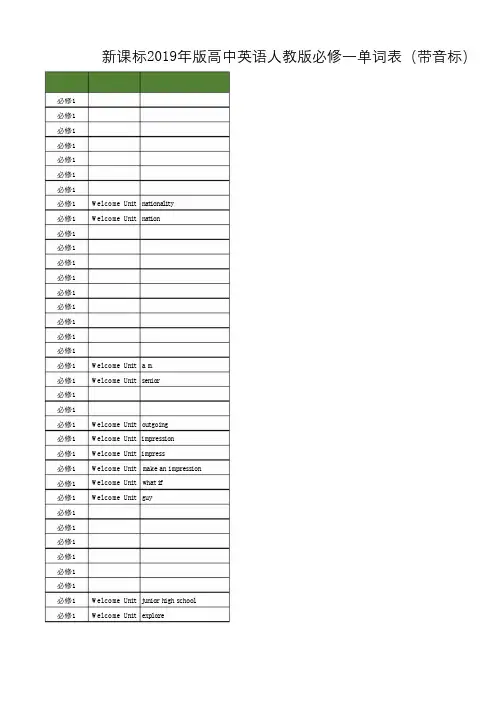
新课标2019年版高中英语人教版必修一单词表(带音标)必修1必修1必修1必修1必修1必修1必修1必修1必修1必修1必修1必修1必修1必修1必修1必修1必修1必修1必修1必修1必修1必修1必修1必修1必修1必修1必修1必修1必修1必修1必修1必修1必修1必修1必修1必修1W elcome Uni t na t iona l i tyW elcome Uni t na t ionW elcome Uni t a.m.W elcome Uni t sen iorW elcome Uni t ou tgoingW elcome Uni t impress ionW elcome Uni t impressW elcome Uni t make an impress ion W elcome Uni t wha t i fW elcome Uni t guyW elcome Uni t jun ior h igh school W elcome Uni t exp lore必修1必修1必修1必修1必修1必修1必修1必修1必修1必修1必修1必修1必修1必修1必修1必修1必修1必修1W elcome Uni t conf i dentW elcome Uni t conf i denceW elcome Uni t fo rwardW elcome Uni t look f orward to W elcome Uni t t ake notesW elcome Uni t f l ashW elcome Uni t s t ra tegyW elcome Uni t par tnerW elcome Uni t improveW elcome Uni t cur iousW elcome Uni t companyW elcome Uni t persona l i tyW elcome Uni t s ty leW elcome Uni t rev i se年版高中英语人教版必修一单词表(带音标)n. 交换、交流vt. 交换;交流;交易,兑换n. 讲座;讲课;教训vi.(开)讲座;讲课vt. 训斥n. 登记;注册;挂号n.设计者;设计师n. 小伙子;男人;家伙[ga i]adj. 令人尴尬的;难对付的;笨拙的;棘手的;不合适的adj.地位(或职业、级别)地下的;较年幼的;资力较浅的;n.职业较低者;(体育运动中)青少年;年少者;晚辈;(美国)初级中学vt.&vi.探索;勘探;探测;探究[ɪks'plɔː]adv. (also forwards) 向前;前进;按顺序地;迈向成功;进入显著的位置;向将来;提前;在(或向)船头adj. 向前的;盼望;期望;期待;盼望记笔记n. 光;信号vi. 闪耀;闪光;发出信号vt.(使)闪耀;发出(信号)教学卡片;识字卡n.目标;目的;球门;射门;(进球)得分n. 策略;策划;战略n.方式;作风;风格;风度;类型vt. & vi. 修改;修订;复习[rɪˈvaɪz]年版高中英语人教版必修一单词表(带音标)n. 交换、交流vt. 交换;交流;交易,兑换n. 讲座;讲课;教训vi.(开)讲座;讲课vt. 训斥n. 登记;注册;挂号n.设计者;设计师n. 小伙子;男人;家伙[ga i]adj. 令人尴尬的;难对付的;笨拙的;棘手的;不合适的adj.地位(或职业、级别)地下的;较年幼的;资力较浅的;n.职业较低者;(体育运动中)青少年;年少者;晚辈;(美国)初级中学vt.&vi.探索;勘探;探测;探究[ɪks'plɔː]adv. (also forwards) 向前;前进;按顺序地;迈向成功;进入显著的位置;向将来;提前;在(或向)船头adj. 向前的;盼望;期望;期待;盼望记笔记n. 光;信号vi. 闪耀;闪光;发出信号vt.(使)闪耀;发出(信号)教学卡片;识字卡n.目标;目的;球门;射门;(进球)得分n. 策略;策划;战略n.方式;作风;风格;风度;类型vt. & vi. 修改;修订;复习[rɪˈvaɪz]。
高中英语必修一电子版

高中英语必修一电子版Unit 1: Greetings and Introductions1. 学习基本的问候语,如“Hello”, “Hi”, “Good morning”, “Good afternoon”等。
2. 掌握自我介绍的表达方式,例如“My name is...”和“Nice to meet you”。
3. 学习询问和回答个人信息的句型,如“How old are you?”和“I am...years old”。
4. 熟悉日常会话中的礼貌用语,例如“Excuse me”, “Thank you”和“You're welcome”。
Unit 2: Daily Routines1. 了解描述日常活动的词汇,如“get up”, “brush teeth”, “have breakfast”等。
2. 学习使用一般现在时态描述日常习惯,例如“She always wakes up early”。
3. 掌握询问和回答日常活动安排的句型,如“What do you usually do in the morning?”和“I usually...”。
4. 熟悉关于时间表达的词汇和短语,例如“at seven”, “in the evening”和“on weekends”。
Unit 3: School Life1. 学习与学校生活相关的词汇,如“class”, “teacher”, “homework”等。
2. 掌握描述学校活动的句型,例如“We have a chemistry testtoday”。
3. 学习询问和回答学校生活相关问题的表达方式,如“Whatsubjects do you like?”和“My favorite subject is math”。
4. 熟悉学校日程安排的表达,例如“The school day starts at8:00 am”和“We have two hours of homework every night”。
英语人教版高中必修一单词表
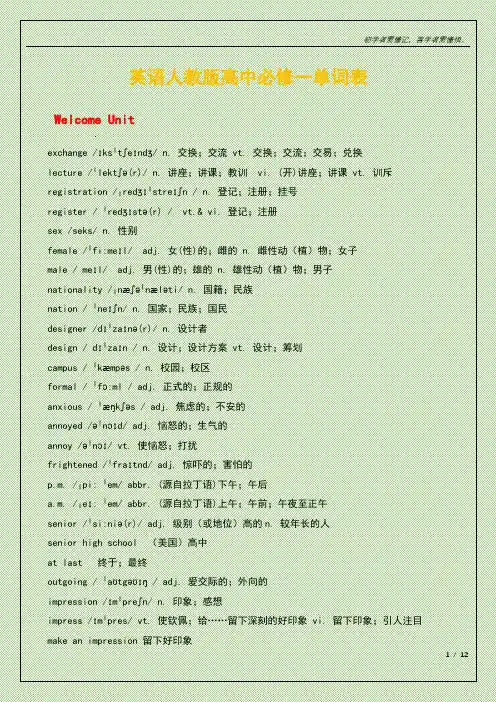
英语人教版高中必修一单词表Welcome Unitexchange /ɪksˈtʃeɪndʒ/ n. 交换;交流 vt. 交换;交流;交易;兑换lecture /ˈlektʃə(r)/ n. 讲座;讲课;教训 vi. (开)讲座;讲课 vt. 训斥registration /ˌredʒɪˈstreɪʃn / n. 登记;注册;挂号register / ˈredʒɪstə(r) / vt.& vi. 登记;注册sex /seks/ n. 性别female /ˈfi:meɪl/ adj. 女(性)的;雌的 n. 雌性动(植)物;女子male / meɪl/ adj. 男(性)的;雄的 n. 雄性动(植)物;男子nationality /ˌnæʃəˈnæləti/ n. 国籍;民族nation / ˈneɪʃn/ n. 国家;民族;国民designer /dɪˈzaɪnə(r)/ n. 设计者design / dɪˈzaɪn / n. 设计;设计方案 vt. 设计;筹划campus / ˈkæmpəs / n. 校园;校区formal / ˈfɔ:ml / adj. 正式的;正规的anxious / ˈæŋkʃəs / adj. 焦虑的;不安的annoyed /əˈnɔɪd/ adj. 恼怒的;生气的annoy /əˈnɔɪ/ vt. 使恼怒;打扰frightened /ˈfraɪtnd/ adj. 惊吓的;害怕的p.m. /ˌpi: ˈem/ abbr. (源自拉丁语)下午;午后a.m. /ˌeɪ: ˈem/ abbr. (源自拉丁语)上午;午前;午夜至正午senior /ˈsi:niə(r)/ adj. 级别(或地位)高的n. 较年长的人senior high school (美国)高中at last 终于;最终outgoing / ˈaʊtgəʊɪŋ / adj. 爱交际的;外向的impression /ɪmˈpreʃn/ n. 印象;感想impress /ɪmˈpres/ vt. 使钦佩;给……留下深刻的好印象 vi. 留下印象;引人注目make an impression 留下好印象what if 要是……会怎么样呢?guy / gaɪ / n. 小伙子;男人;家伙concentrate / ˈkɒnsntreɪt / vi.& vt. 集中(注意力);聚集会神concentrate on 集中精力于experiment /ɪkˈsperɪmənt/ n. 实验;试验leave…alone 不打扰;不惊动awkward / ˈɔ:kwəd / adj. 令人尴尬的;难对付的junior /ˈdʒu:niə(r)/ adj.地位(或职位、级别)低下的 n.职位较低者;(体育运动中)青少年junior high school (美国)初级中学explore / ɪkˈsplɔ:(r)/ vt.& vi. 探索;勘探confident /ˈkɒnfɪdənt/ adj. 自信的;有把握的confidence /ˈkɒnfɪdəns/ n. 信心;信任forward / ˈfɔ:wəd / adv. (also forwards)向前;前进 adj. 向前的;前进的look forward to 盼望;期待take notes 记笔记flash /flæʃ/ n. 光;信号 vi. 闪耀;闪光;发出信号 vt. 使闪耀;发出(信号)flash card 教学卡片;识字卡organise /'ɔ:(r)gənaɪz/ vt. 组织;筹备;安排;组建vi. 组建;成立organisation /ˌɔ:gənaɪˈzeɪʃn/ n. 组织;团体;机构goal/ gəʊl / n. 目标;球门;射门strategy /ˈstrætədʒi/ n. 策略;策划partner / ˈpɑ:tnə(r)/ n. 同伴;配偶;合伙人improve / ɪmˈpru:v/ vi.&vt.改进;改善curious /ˈkjʊəriəs/ adj. 好奇的;求知欲强的company / ˈkʌmpəni/ n. 公司;商行;陪伴personality /ˌpɜ:səˈnæləti/ n. 性格;个性style / staɪl/ n. 方式;作风revise / rɪˈvaɪz/ vt.& vi. 修改;修订;复习Unit 1teenage / ˈti:neɪdʒ/ adj. 十几岁的(指至岁);青少年的teenager / ˈti:neɪdʒə(r)/ n. (至岁之间的) 青少年ballet /ˈbæleɪ/ n. 芭蕾舞;芭蕾舞剧volunteer /ˌvɒlənˈtɪə(r)/ n. 志愿者debate /dɪ 'beɪt/ n. 辩论;争论 vt.& vi.辩论;争论prefer / prɪˈfɜ:(r)/ vt. 较喜欢 (preferred;preferred;preferring) prefer…to …喜欢……多于……content / 'kɒntent / n. 内容;[pl] 目录;(书、讲话、节目等的)主题movement / ˈmu:vmənt / n. 动作;运动;活动greenhouse / ˈgri:nhaʊs/ n. 温室;暖房clean up 打扫(或清除)干净suitable /ˈsu:təbl/ adj. 适合的;适用的suitable for 对……适合的actually / ˈæktʃuəli/ adv. 事实上;的确challenge /ˈtʃæləndʒ/ n. 挑战;艰巨任务 vt. 怀疑;向……挑战title /ˈtaɪtl/ n. (书、诗歌等的)名称;标题;职称;头衔topic /ˈtɒpɪk/ n. 话题;标题freshman / ˈfreʃmən / n. (especially )(中学)九年级学生;(大学)一年级新生confusing /kənˈfju:zɪŋ/ adj. 难以理解的;不清楚的confuse /kən'fju:z/ vt. 使糊涂;使迷惑confused /kənˈfju:zd/ adj. 糊涂的;迷惑的fluent /'flu:ənt/ adj. (尤指外语)流利的;熟练的graduate /'ɡrædʒʊeɪt/ vi. & vt.毕业;获得学位(/'ɡrædʒʊət/) n.毕业生recommend /ˌrekəˈmend/ vt. 建议;推荐;介绍sign up ( for sth) 报名(参加课程)advanced / ədˈvɑ:nst/ adj. 高级的;高等的;先进的advance / ədˈvɑ:ns/ n. 前进;发展 vi. 前进;发展 vt. 发展;促进literature / ˈlɪtrətʃə(r)/ n. 文学;文学作品extra-curricular / 'ekstrəkə'rɪkjulə/adj. 课外的;课程以外的extra /'ekstrə/ adj. 额外的;附加的obviously / ˈɒbviəsli/ adv. 显然地;明显地quit / kwɪt/ vi. & vt.(quit, quit) 停止;戒掉;离开(工作职位、学校等) responsible /rɪˈspɒnsəbl/ adj. 负责的;有责任的responsibility /rɪˌspɒnsəˈbɪləti/ n. 责任;义务be responsible for 对……负责solution / səˈlu:ʃn/ n.解决办法;答案schedule /ˈʃedju:l/ n.工作计划;日程安排 vt. 安排;预定editor /ˈedɪtə(r)/ n. 主编;编辑;编者plate /pleɪt/ n.盘子,碟子adventure /ədˈventʃə(r)/ n. 冒险;奇遇youth /ju:θ/ n.青年时期;青春survival /səˈvaɪvl/ n.生存;幸存;幸存事物expert /'ekspɜːt/ n.专家;行家adj.熟练的;内行的;专家的behaviour /bɪˈheɪvjə(r)/ n.行为;举止generation /ˌdʒenəˈreɪʃn/ n. 一代(人)attract /ə'trækt/ vt.吸引;引起……的注意(或兴趣)be attracted to喜爱focus /ˈfəʊkəs /vi.& vt. 集中(精力、注意力等);(使)调节焦距n. 中心;重点;焦点focus on 集中;特别关注addicted /əˈdɪktɪd/ adj. 有瘾的;上瘾的;入迷的addict /ˈædɪkt/ n.对……入迷的人;吸毒成瘾的人addicted to 对……很入迷adult /ˈædʌlt/ n.成年人 adj.成年的;成熟的Unit 2castle /ˈkɑ:sl/ n. 城堡;堡垒apply /əˈplaɪ/ vi. & vt. 申请;请求 vt. 应用;涂(油漆、乳剂)apply for 申请visa /ˈvi:zə/ n. 签证rent /rent/ vt. 租用;出租 vi. 租用;租金为 n.租金pack /pæk/ vi. & vt. 收拾(行李) vt.包装n. (商品的) 纸包;纸袋;大包amazing /əˈmeɪzɪŋ/ adj. 令人惊奇的;令人惊喜的amazed /əˈmeɪzd/ adj. 惊奇的;惊喜的arrangement /əˈreɪndʒmənt/ n. 安排;筹备extremely /ɪkˈstri:mli / adv. 极其;非常source /sɔ:s/ n. 来源;出处narrow /ˈnærəʊ/ adj. 狭窄的 vi.& vt. (使)变窄flat /flæt/ adj. 平坦的;扁平的 n. 公寓;单元房powerful /ˈpaʊəfl/ adj. 强有力的;有权势的;有影响力的empire /ˈempaɪə(r)/ n. 帝国emperor /ˈempərə(r)/ n. 皇帝site /saɪt / n. 地点;位置;现场take control of 控制;接管official /ə'fɪʃl/ adj. 官方的;正式的;公务的 n. 官员;要员recognize /ˈrekəgnaɪz/ vt. 辨别出;承认;认可type /taɪp/ n. 类型;种类 vi. & vt. 打字flight /flaɪt/ n. 空中航行;航班;航程accommodation /əˈkɒməˌdeɪʃn/ n. 住处;停留处;膳宿unique /juˈni:k/ adj. 唯一的;独特的;特有的path /pɑ:θ/ n. 小路;路线;道路destination /ˌdestɪˈneɪʃn/ n. 目的地;终点other than 除……以外admire /ədˈmaɪə(r)/ vt. 钦佩;赞赏architecture /ˈɑ:kɪtektʃə(r) / n. 建筑设计;建筑学architect /ˈɑ:kɪtekt / n. 建筑设计师brochure /ˈbrəʊʃə(r)/ n. 资料(或广告)手册package /ˈpækɪdʒ/ n. 包裹;包装盒 vt. 将……包装好package tour 包价旅游contact /ˈkɒntækt / vt. 联络;联系 n. 联系;接触civilization /ˌsɪvəlaɪˈzeɪʃn/ n. ( -ization) 文明;闻名世界make up 构成;形成soldier /ˈsəʊldʒə(r)/ n. 士兵;军人transport / ˈtrænspɔ:t/ n. (usually transportation) 交通运输系统 vt. 运输;运送hike / haɪk / vi. 徒步旅行 vt. 去……远足 n. 远足;徒步旅行economy /ɪˈkɒnəmi/ n. 经济;节约economic /ˌi:kəˈnɒmɪk/ adj. 经济(上)的;经济学的credit /ˈkredɪt/ n. 借款;信用;称赞;学分credit card 信用卡detail /ˈdi:teɪl / n. 细节;详情;细微之处check in (在旅馆、机场等) 登记check out 结账离开(旅馆等)request /rɪˈkwest/ n. (正式或礼貌的)要求;请求 vt.(正式或礼貌地)要求;请求view / vju:/ n. 视野;景色;看法sight /saɪt/ n. 景象;视野;视力statue /ˈstætʃu:/ n. 雕塑;雕像BCE /ˌbi: si: ˈi:/ (=before the Common Era) 公元前tomb / tu:m / n. 坟墓unearth / ʌnˈɜ:θ/ vt. 挖掘;发掘comment /ˈkɒment/ n. 议论;评论 vi.& vt. 发表意见;评论Unit 3fitness /ˈfɪtnəs/ n. 健康;健壮;适合soccer /ˈsɒkə(r)/ n. 足球;足球运动stadium /ˈsteɪdiəm/ n. (pl. stadiums or stadia) 体育场;运动场boxing /ˈbɒksɪŋ / n. 拳击(运动)badminton /ˈbædmɪntən/ n. 羽毛球运动event / ɪˈvent/ n. 比赛项目;大事;公开活动come along 跟随;到达;进步;赶快ski / ski:/ adj. 滑雪的 vi. 滑雪host /həʊst/ vt. 主办;主持 n.主人;东道主;节目主持人track /træk/ n. 跑道;足迹;铁路轨道 vt.& vi. 追踪;跟踪track and field 田径gym / dʒɪm / n. 健身房;体育馆gymnastics /dʒɪmˈnæstɪks/ n. 体操(训练)work out 锻炼;计算出;解决sweat /swet/ vt. 使出汗;出汗弄湿 vi.出汗;流汗n. 汗水;出汗make it 获得成功;准时到达legend /ˈledʒənd / n. 传奇故事(或人物);传说athlete /ˈæθli:t/ n. 运动员;运动健儿master /ˈmɑ:stə(r)/ n. 高手;主人 vt. 精通;掌握set an example 树立榜样honour /ˈɒnə(r)/ n. 荣誉;尊敬;荣幸glory /ˈglɔ:ri / n. 荣誉;光荣;赞美medal /ˈmedl/ n. 奖章;勋章championship /ˈtʃæmpiənʃɪp/ n. 锦标赛;冠军赛;冠军称号champion /ˈtʃæmpiən/ n. 冠军;优胜者determination /dɪˌtɜ:mɪˈneɪʃn/ n. 决心;决定apart /əˈpa:t/ adv. 分离;分开;成碎片fall apart 破裂;破碎;崩溃injure /ˈɪndʒə(r)/ vt. 使受伤;损害injured /ˈɪndʒəd / adj. 受伤的;有伤的injury /ˈɪndʒəri / n. 伤害;损伤captain /ˈkæptɪn / n. (运动队)队长;船长;机长lose hear 丧失信心;泄气graceful /ˈgreɪsfl / adj. 优美的;优雅的strength /streŋθ/ n. 力量;体力failure /ˈfeɪljə(r) / n.失败;失败的人(或事物)give up 放弃;投降compete /kəmˈpi:t / vi. 竞争;对抗make sense 有道理;合乎情理;表述清楚pretend /prɪˈtend/ vi.& vt. 假装;装扮pretend to do sth 假装做某事even if/though 即使;虽然million /ˈmɪljən / num. 一百万cheat / tʃi:t / vi. 作弊;舞弊vt. 欺骗;蒙骗 n. 欺骗手段;骗子audience /ˈɔːdiəns / n. 观众;听众positive /ˈpɒzətɪv / adj. 积极的;正面的;乐观的;肯定的slim /slɪm/ adj. 苗条的;单薄的diet /ˈdaɪət / n. 规定饮食;日常饮食 vi.节食make a difference 有作用或影响rather /ˈrɑ:ðə(r) / adv. 相当;有点儿rather than 而不是push-up /ˈpʊʃʌp / n. ( especially ) 俯卧撑cut…out 停止做(或使用、食用);剪下now and then 有时;偶尔compare…with/to…与……比较jog / dʒɒg / vi. 慢跑 n.慢跑stress /stres/ n.压力;紧张;重音 vt. 强调;重读;使焦虑不安 vi.焦虑不安error / ˈerə(r) / n. 错误;差错Unit 4disaster /dɪˈzɑ:stə(r)/ n. 灾难;灾害tornado /tɔ:ˈneɪdəʊ / n. (pl. -oes or -os) 龙卷风;旋风drought / draʊt / n. 旱灾;久旱landslide / ˈlændslaɪd / n. ( landfall) (山地或悬崖的)崩塌;滑坡slide / slaɪd / vi. & vt. (使)滑行;滑动tsunami / tsu:ˈnɑ:mi/ n. 海啸flood /flʌd / n. 洪水;大量 vi.淹没;大量涌入 vt.使灌满水;淹没volcanic eruption / vɔlˈkænɪk ɪˈrʌpʃn / 火山喷发magnitude /ˈmægnɪtju:d / n. (地)震级;重大rescue /ˈreskju:/ n.& vt. 营救;救援damage /ˈdæmɪdʒ / vt. 损害;破坏 n.损坏;损失destroy /dɪ'strɔɪ/ vt. 摧毁;毁灭evacuate /ɪˈvækjueɪt / vt. 疏散;撤出 vi.撤离helicopter /ˈhelɪkɒptə(r)/ n. 直升机death / deθ/ n. 死;死亡affect /ə'fekt/ vt. 影响;(疾病)侵袭;深深打动shelter /'ʃeltə(r)/ n. 避难处;居所;庇护 vt.保护;掩蔽 vi. 躲避 (风、雨或危险) crack /kræk/ n. 裂纹;裂缝 vi. &vt. (使)破裂as if 似乎;好像;仿佛ruin /'ru:ɪn/ n.&vt. 破坏;毁坏in ruins 严重受损;破败不堪percent / pəˈsent / n. 百分之…… adj.&adv.每一百种brick /brɪk/ n. 砖;砖块metal /'metl/ n.金属shock /ʃɒk/ n. 震惊;令人震惊的事;休克 vt.(使)震惊in shock 震惊;吃惊electricity /ɪˌlekˈtrɪsəti/ n. 电;电能trap /træp/ vt. 使落入险境;使陷入圈套 n. 险境;陷阱bury /ˈberi/ vt. 埋葬;安葬breathe / bri:ð/ vi.& vt. 呼吸revive /rɪˈvaɪv/ vt.& vi. 复活;(使)苏醒revival /rɪˈvaɪvl/ n. 振兴;复苏effort /'efət/ n. 努力;艰难的尝试;尽力unify /ˈju:nɪfaɪ / vi.& vt. 统一;(使)成一体wisdom /ˈwɪzdəm/ n. 智慧;才智context /ˈkɒntekst/ n. 上下文;语境;背景suffer /ˈsʌfə/ vt. 遭受;蒙受 vi. (因疾病、痛苦、悲伤等)受苦volcano /vɒlˈkeɪnəʊ/ n. (pl. -oes or -os) 火山erupt /ɪˈrʌpt/ vi.& vt. (火山)爆发;(岩浆、烟等)喷出supply /səˈplaɪ/ n. 供应(量);补给;[pl.] 补给品 vt. 供应;供给typhoon /taɪˈfu:n/ n. 台风in the open air 露天;在户外hurricane /ˈhʌrɪkən/ n . (尤指大西洋的)飓风survive /səˈvaɪv/ vi. 生存;存活 vt. 幸存;艰难度过power /ˈpaʊə(r)/ n. 电力供应;力量;控制力tap /tæp/ vi.& vt. 轻叩;轻敲;轻拍 n.水龙头;轻叩;轻敲pipe /paɪp/ n. 管子;管道whistle /ˈwɪsl/ vi. 吹口哨;发出笛声 vt. 吹口哨 n. 哨子(声);呼啸声emergency /iˈmɜ:dʒənsi/ n. 突发事件;紧急情况calm /kɑ:m/ adj.镇静的;沉着的 vt. 使平静;使镇静aid /eɪd/ n. 援助;帮助;救援物资 vi.& vt. (formal) 帮助;援助kit /kɪt/ n. 成套工具;成套设备first aid kit 急救箱on hand 现有(尤指帮助)crash /kræʃ/ vt.& vi. 碰撞;撞击 n. 撞车;碰撞sweep /swi:p/ vt. & vi. (swept, swept) 打扫;清扫sweep away 消灭;彻底消除wave /weɪv/ n. 海浪;波浪 vi.& vt.挥手;招手strike /straɪk/ vi.& vt. (struck,struck/stricken)侵袭;突击;击打 n. 罢工;罢课;袭击deliver /dɪˈlɪvə(r)/ vt. &vi.递送;传达 vt.发表summary /ˈsʌməri/ n. 总结;概括;概要effect /ɪˈfekt/ n. 影响;结果;效果length /leŋθ/ n. 长;长度Unit 5billion /ˈbɪljən / n. 十亿native /ˈneɪtɪv/ adj. 出生地的;本地的;土著的 n.本地人attitude /ˈætɪtju:d / n. 态度;看法reference /ˈrefrəns / n. 指称关系;参考refer / rɪˈfɜ:(r) / vi. 提到;参考;查阅 vt.查询;叫……求助于 (referred, referred , referring)refer to 指的是;描述;提到;查阅system /ˈsɪstəm / n. 体系;制度;系统despite /dɪˈspaɪt / prep. 即使;尽管ups and downs 浮沉;兴衰;荣辱factor /ˈfæktə(r)/ n. 因素;要素based/beɪst/ adj. 以(某事)为基础的;以……为重要部分(或特征)的base /beɪs/ vt. 以…为据点;以……为基础 n. 底部;根据date back (to …) 追溯到bone / bəʊn / n. 骨头;骨(质)shell /ʃel / n. 壳;壳状物symbol /ˈsɪmbl / n. 符号;象征carve / kɑ:v / vt. & vi 雕刻dynasty /ˈdɪnəsti n. 王朝;朝代variety /vəˈraɪəti/ n. (植物、语言等的)变体;异体;多样化major /ˈmeɪdʒə(r)/ adj. 主要的;重要的;大的 n.主修课程;主修学生 vi.主修;专门研究no matter where, who, what, etc. 不论……;不管……dialect /'daɪəlekt/ n.地方话;方言means /mi:nz/ n. 方式;方法;途径classic /ˈklæsɪk/ adj. 传统的;最优秀的;典型的 n.经典作品;名著regard /rɪˈgɑ:d/ n. 尊重;关注 vt. 把……视为;看待character /'kærəktə(r)/ n. 文字;符号;角色;品质;特点calligraphy / kəˈlɪɡrəfi / n. 书法;书法艺术global /'gləʊbəl/ adj. 全球的;全世界的affair /əˈfeə(r)/ n. 公共事务;事件;关系appreciate /ə'pri:ʃieɪt / vt. 欣赏;重视;感激;领会 vi.增值specific /spəˈsɪfɪk/ adj. 特定的;明确的;具体的CE /ˌsi: ˈi:/ (CommonEra) 公元struggle /ˈstrʌgl/ n.&vi.斗争;奋斗;搏斗tongue /tʌŋ/ n. 舌头;语言point of view 观点;看法semester /sɪˈmestə(r)/ n. 学期gas /ɡæs/ n. 汽油;气体;燃气petrol /'petrəl/ n. ( gas) 汽油subway /'sʌbweɪ/ n. (BrE underground) 地铁apartment /ə'pɑ:tmənt/ n. (especially) 公寓套房pants / pænts / n. [pl.] (BrE) 内裤;短裤;(especially) 裤子beg /beg/ vt.恳求;祈求;哀求equal /'i:kwəl / n. 同等的人;相等物 adj. 相同的;同样的gap /gæp/ n.间隔;开口;差距demand /dɪˈmɑ:nd/ n. 要求;需求 vt. 强烈要求;需要 vi.查问vocabulary /və'kæbjələri / n. 词汇description /dɪˈskrɪpʃn/ n. 描写(文字);形容relate /rɪˈleɪt / vt. 联系;讲述relate to 与……相关;涉及;谈到。
人教版高中英语必修一
人教版高中英语必修一一、课程简介人教版高中英语必修一是高中英语课程的必修科目之一,适用于高中一年级学生。
本教材着重培养学生的英语听、说、读、写、译等综合语言运用能力,以及阅读和翻译技巧。
通过学习本教材,学生将能够基本掌握英语的基本表达技巧,了解英美文化,并能够进行基本的语言交际。
本文档将介绍该教材的各个单元内容及教学目标。
二、教材结构人教版高中英语必修一共包含15个单元,每个单元的主题各有不同,且按照一定的语法和词汇进度展开。
每个单元的结构如下:1.单元主题和目标导学:介绍该单元的主题和学习目标,引领学生对本单元内容的理解。
2.话题语篇:通过一个或多个与该单元主题相关的话题语篇,帮助学生了解话题相关的重要词汇和语言表达方式。
3.语法焦点:介绍该单元所包含的语法内容,辅助学生掌握语法知识。
4.词汇:列出该单元的重点词汇和短语,帮助学生记忆和运用。
5.阅读与写作:提供与该单元主题相关的阅读材料和写作任务,培养学生的阅读和写作能力。
6.语法测试:通过一系列语法练习题,帮助学生巩固所学的语法知识。
7.句型扩展:提供一些相关的句型扩展训练,帮助学生进一步巩固所学的语法知识。
8.作文指导:引导学生进行写作训练,培养学生的写作技巧。
9.文化背景:介绍英语国家的文化背景,帮助学生了解不同文化背景下的语言使用习惯和风俗习惯。
10.新课标要点:说明课程与新课标要求之间的对应关系。
三、教学目标人教版高中英语必修一通过各个单元的学习,旨在培养学生的英语综合运用能力,包括听、说、读、写、译等方面。
具体的教学目标如下:1.能够听懂并理解日常生活和学习中常用的英语表达;2.能够简单有效地与他人进行口语交流,能够正确使用英语表达自己的观点和意见;3.能够阅读各种长度和难度的英语材料,理解其中的关键信息,提取出所需信息;4.能够使用正确的语法结构,准确地表达自己的意思;5.能够写出简单的英语作文,正确地运用所学的语法和词汇;6.了解并理解英美文化差异,增强跨文化交流的能力。
高中英语(新人教版)必修一知识点归纳
高中英语必修一知识点归纳Welcome Unit知识点归纳Part one Vocabulary1. exchange n.交换;交流vt.交换;交流;交易;兑换In exchange (for...)作为(与......的)交换exchange student 交换生exchange A for B 以A交换B:把A兑换成B exchange sth. with sb. 与某人交流/交换某物exchange opinions/ideas/views交流意见/想法/看法2. design1) n. 设计;图案;构思;打算,意图。
make designs for 为......做设计by design(=on purpose)故意地2) vt.设计,构思;计划;意欲。
design sth. for... 为...设计某物be designed to do... 旨在做...,用于做...3. anxious adj. 焦虑的;不安的be anxious for sb./ about sth. 为某人/某事担心be anxious for...渴望...be anxious (for sb.) to do sth. 渴望(某人)做某事be anxious that... 渴望...4. annoyed adj. 恼怒的;生气的be annoyed with sb.生某人的气be annoyed at/about sth.因某事生气be annoyed to do做...感到生气5. senior adj. 级别(或地位)高的n. 较年长的人senior high (school)高中be senior to sb. 比某人的地位/职位高6. impress vt. 使钦佩;给……留下深刻的好印象vi. 留下印象;引人注目have a(n) ...impression of... 对······有······印象leave/make a(n) ...impression on sb. 给某人留下······印象(be) under the impression that... 以为······,(通常指)误认为······7. concentrate on 集中精力于8. leave...alone 不打扰,不惊动9. explore vt.& vi. 探索;勘探exploration n. 探索,探测explorer n. 探险者;勘探者;考察者10. confident adj. 自信的;有把握的be confident about 对......有信心be confident of (doing) sth.对(做)······有把握be confident that... 确信······11. look forward to 盼望;期待12. organise vt. 组织;筹备;安排;组建vi. 组建;成立organisation n. 组织;团体;机构Part two Grammar句子成分和基本句型一、句子成分构成句子的各个部分叫作句子成分。
人教版高一英语必修一
人教版高一英语必修一人教版高一英语必修一的教材是为高中一年级学生设计的,旨在帮助学生巩固和提高英语基础知识,同时培养他们的英语综合运用能力。
该教材涵盖了词汇、语法、听说读写等多方面的内容,以下是该教材的主要内容概述:1. 词汇学习:教材精心挑选了适合高一学生水平的词汇,通过各种练习和活动帮助学生记忆和运用这些词汇。
每个单元都包含了一定数量的新词汇,以及相应的例句和用法说明,让学生在语境中学习词汇。
2. 语法知识:教材系统地介绍了英语语法的基础知识,如时态、语态、从句等,并配有大量的练习题,帮助学生理解和掌握这些语法规则。
3. 听力训练:教材包含了多种听力材料,如对话、短文、新闻报道等,旨在提高学生的英语听力理解能力。
每个听力练习都配有相应的问题,让学生在听的过程中进行思考和回答。
4. 口语表达:教材鼓励学生通过角色扮演、小组讨论等形式进行口语练习,提高口语表达能力。
每个单元都设计了相关的口语活动,让学生在实际交流中运用所学知识。
5. 阅读理解:教材提供了各种类型的阅读材料,如故事、科普文章、议论文等,以提高学生的阅读理解能力。
每个阅读练习都配有问题,引导学生深入理解文章内容。
6. 写作技巧:教材教授学生如何写英语作文,包括记叙文、议论文等不同文体的写作方法。
通过写作练习,学生可以学会如何组织文章结构、使用恰当的词汇和语法。
7. 文化交流:教材还包含了一些关于英语国家文化的介绍,帮助学生了解英语国家的文化背景,增加跨文化交流的能力。
8. 综合运用:每个单元都设计了综合练习,将词汇、语法、听说读写等各方面的知识结合起来,让学生在实际情境中综合运用所学英语知识。
通过人教版高一英语必修一的学习,学生不仅能够提高英语语言技能,还能够增强跨文化交际的意识和能力,为今后的英语学习和使用打下坚实的基础。
高中英语必修一电子课本
高中英语必修一电子课本《高中英语必修一电子课本》是一本专为高中阶段学生设计的英语教材,旨在帮助学生掌握英语基础知识,提高英语听说读写能力。
本教材内容丰富,结构清晰,适合高中学生使用。
Unit 1: Greetings and IntroductionsIn this unit, students will learn how to greet people and introduce themselves in English. They will practice using common phrases such as "Hello," "How are you?" and "My name is...". Additionally, students will be introduced to the concept of personal pronouns and possessive adjectives.Unit 2: Daily RoutinesThis unit focuses on vocabulary and expressions related to daily routines. Students will learn how to talk about their daily activities, such as waking up, eating breakfast, going to school, and doing homework. They will also practice using the present simple tense to describe habitual actions.Unit 3: Hobbies and InterestsStudents will explore the topic of hobbies and interests in this unit. They will learn vocabulary related to various pastimes and activities, such as reading, sports, and music. The unit will also cover the use of the present continuous tense to describe ongoing actions.Unit 4: Describing PeopleIn this unit, students will learn how to describe people's appearance, personality traits, and relationships. They will practice using adjectives and comparative forms to compare people and things. The unit will also introduce the use of relative clauses to provide additional information about people.Unit 5: School LifeThis unit is centered around the theme of school life. Students will learn vocabulary related to school subjects, facilities, and activities. They will also practice using the past simple tense to talk about past events and experiences at school.Unit 6: Travel and TransportationStudents will explore the world of travel and transportation in this unit. They will learn vocabulary related to modes of transportation, places of interest, and travel experiences. The unit will also cover the use of the future simple tense to talk about plans and predictions.Unit 7: Food and DrinkIn this unit, students will learn about various types of food and drink, as well as how to describe their preferences and experiences with different cuisines. They will practice usingthe present perfect tense to talk about past experiences that have relevance to the present.Unit 8: Weather and SeasonsStudents will study the vocabulary and expressions related to weather and seasons in this unit. They will learn how to talk about different types of weather, the characteristics of each season, and how these factors affect daily life.Unit 9: Sports and FitnessThis unit is dedicated to the topic of sports and fitness. Students will learn vocabulary related to various sports, fitness activities, and healthy lifestyles. They will also practice using the present perfect continuous tense to describe ongoing actions that started in the past and continue to the present.Unit 10: Festivals and CelebrationsIn the final unit, students will learn about different festivals and celebrations around the world. They will explore the vocabulary and customs associated with these events, as well as practice using the past continuous tense to describe past actions that were happening at a specific time.Each unit includes a variety of activities, such as listening exercises, reading comprehension, grammar practice, and speaking activities, designed to engage students andreinforce their learning. The textbook also features a comprehensive glossary and answer key for self-study and review.。
高中英语新课标人教版教案必修一
高中英语新课标人教版教案必修一一、教学内容本节课选自高中英语新课标人教版必修一,具体章节为Unit 1 "My First Day at Senior High"。
教学内容主要包括:了解并描述学生在高中第一天的生活和感受;学会使用一般过去时描述过去的事件;掌握本节课的核心词汇和短语。
二、教学目标1. 能够听懂并准确说出与高中生活相关的词汇和短语。
2. 能够运用一般过去时描述过去的事件,提高语言运用能力。
3. 能够通过小组合作,交流并分享自己在高中第一天的经历和感受。
三、教学难点与重点1. 教学难点:一般过去时的运用,特别是动词过去式的变化规则。
2. 教学重点:核心词汇和短语的掌握,以及运用一般过去时进行简单的叙述。
四、教具与学具准备1. 教具:多媒体教学设备、黑板、粉笔、单词卡片。
2. 学具:英语课本、笔记本、字典。
五、教学过程1. 导入:通过播放一段关于高中生活的视频,引导学生关注本节课的主题。
2. 新课内容展示:展示本节课的核心词汇和短语,让学生跟读并模仿。
3. 例题讲解:以"Yesterday was my first day at senior high. I"为例,讲解一般过去时的用法。
4. 随堂练习:让学生运用一般过去时,描述自己在高中第一天的经历。
5. 小组活动:学生分成小组,互相交流并分享自己的经历,提高语言表达能力。
六、板书设计1. 核心词汇和短语:写在黑板的左边,方便学生查看。
2. 一般过去时的结构:写在黑板的右边,突出教学重点。
七、作业设计1. 作业题目:请用一般过去时描述你昨天的一天。
2. 答案示例:Yesterday was my busy day. I got up at 6:00, had breakfast and went to school. In the morning, I had four classes. After lunch, I played basketball with my friends. In the evening, I did my homework and watched TV.八、课后反思及拓展延伸1. 课后反思:本节课学生对于一般过去时的掌握程度较好,但仍有个别学生动词过去式变化不准确,需加强练习。