
新目标英语七年级下册unit1-2复习
Unit 1Can you play the guitar点击要点【经典例句】He likes playing the guitar.他喜欢弹吉他。
【考点聚焦】guitar为一种乐器,注意play与表示乐器的名词连用时,名词前要加定冠词the。
【活学活用】 1.选择The boys often play guitar in afternoon.A.the;/B./;theC.the;theD./;/答案:C【巧记提示】jo+in(里面)【经典例句】I want to join the League.我想入团。
【考点聚焦】join意为“参加(某个组织成为其成员)”,一般常和介词in连用。
【活学活用】 2.根据释义写单词:become a member of答案:join【巧记提示】swim(游泳)→swan(天鹅)【经典例句】Do you like swimming?你喜欢游泳吗?【考点聚焦】常用词组:have a swim游泳;go swimming去游泳【活学活用】 3.用swim的适当形式填空I often go to in the pool(水池).答案:swim,swimming【巧记提示】chess(国际象棋)→cherr(欢欣)【经典例句】I am good at playing chess.我擅长下象棋。
【考点聚焦】一定注意“下棋”用play chess,而不用play the chess。
【活学活用】 4.选择I like to play piano and he likes to play chess.A.the;theB.the;/C./;theD./;/答案:B【巧记提示】pain(疼痛)+t【经典例句】The artist paints in water colors.这位画家以水彩画画。
【考点聚焦】1)派生词:painter n.画家painting n.画2)注意与draw的区别:paint指用颜料等绘画;而draw指用钢笔、铅笔等画。
【巧记提示】s+peak(顶点)【经典例句】Can you speak English?你会说英语吗?【考点聚焦】1)派生词:speaker n. 说话者;演讲者speech n. 说话;演讲2)注意区分:speak,say,talk和tell①say指用语言表达思想,着重说话的内容或强调说话这一动作,不表示说话的性质。
②speak强调说话的动作、声音,而不强调内容。
在正式场合表示发言、演讲,说某种语言用speak。
③talk表示两个人或多个人在一起讲话、谈论(多指随意谈论)。
④tell的意思是“告诉,讲述,吩咐”,讲故事或讲笑话多用tell。
【活学活用】 5.选择—What does he ?Can you me?—Sorry,I don’t know.A.say;tellB.speak;talkC.speak;tellD.say;talk答案:A【经典例句】She plays the piano very well.她弹钢琴弹得很好。
【考点聚焦】1)派生词:pianist .n. 钢琴家2)弹钢琴要用play the piano,其中定冠词the不能省略。
我的记忆卡【巧记提示】music(音乐)+ ian(表人的后缀)【经典例句】I think Qiao Y u is my favorite musician.我想乔羽是我最喜爱的音乐家。
【考点聚焦】派生词:musical adj.音乐的music n.音乐【巧记提示】show(演出)→how(怎么)【经典例句】There is a book show in the park.公园里有一个图书展览会。
【考点聚焦】1)show作动词,意为“表演,演出,出示……给某人看”,有时与介词搭配使用,构成show sth. to sb.=show sb. sth.。
2)show作名词,意为“展览,展出”。
构成短语on show,意为“在展出”。
【巧记提示】sun(太阳)+day(天)【经典例句】Sunday is the first day of the week.星期天是一周的第一天。
1)Sunday,Saturday,Friday等表示星期的名词为专有名词,开头的字母要大写2)表示“在星期几”要用介词on。
如:on Sunday“在星期日”。
【活学活用】 6.用in,on,at填空I often get up six o’clock Sunday.答案:at,on【巧记提示】little(少许的)→bottle(瓶子)【经典例句】He is little known to the villagers.村里几乎没人认识他。
【考点聚焦】1)little还有“小的,小巧的”之意,带有小的可爱之意。
2)注意little与a little 的区别:little与a little都可表示数量,修饰不可数名词。
但little表示否定意义,而a little表示肯定意义。
Silence is like sleep which refreshes wisdom.缄默像睡眠;它使智慧焕然一新。
【活学活用】7.翻译句子我会说一点英语。
答案:I can speak a little English.短语·典句·考点help sb.with sth. 在……方面帮助某人【经典例句】Could you help me with my English?你能帮我学英语吗?【考点聚焦】在help sb.with sth.结构中,with是介词,故后面要跟名词或动名词作宾语。
该结构相当于help sb.do sth.。
【活学活用】8.同义句转换I often help him do his homework.I often help him his homework.答案:withbe good with... 与……相处得好;与……合得来【经典例句】He is very good with children.他与孩子们很合得来。
【考点聚焦】1)同义词组:get on well with2)注意与be good...的其他词组意思的差别:be good at意为“擅长做某事”;be good for意为“对……有益处”。
school show 学校公演【经典例句】We’ll have a school show this afternoon.今天下午我们将有一场学校公演。
【考点聚焦】show在这里用作名词,注意下列搭配:fashion show 时装表演;a flower show花展;game show智力竞赛节目;chat show(电视台)现场采访节目【活学活用】9.翻译下列词组1)海豚表演2)一场电影答案:1)a dolphin show2)a movie/film show句子·剖析·拓展Can you play the guitar?你能弹吉他吗?【剖析】Can you...?用来询问对方能否做某事,意思是“你能/会……吗?”,肯定回答用“Yes,I can.”否定回答用“No,I can’t.”【拓展】can(能、会),may(可以;可能),must(必须)都是情态动词,后面跟动词原形。
其否定结构在后面加上not,can not通常缩写为can’t;must not缩写为mustn’t;may not一般不缩写。
Can you play the piano,the trumpet,the drums,or the guitar?你会弹奏钢琴,吹喇叭,敲鼓,或者弹吉他吗?【剖析】此句为简单的选择疑问句,即提问者提供两种或两种以上情况,让对方从中作出选择的句子。
它的基本结构是:一般疑问句+or+一般疑问句(后一部分与前一部分相同的成分常常省略)。
or连接的是两个并列的成分,要求词性一致。
【拓展】1)回答时,不用yes或no,而是选择其中一种回答。
2)在读法上,or的前一部分用升调,后一部分用降调。
语法·聚焦“能”说“会”道的canHi,everyone!I’m “can”.Welcome to come and see my show!【can的才艺展示】1.表示能力,通常指在体力或脑力方面的能力,意为“能;会”。
如:He can speak English.他会说英语。
2.表示许可,意为“可以”,这时可以和may通用,但是比may较正式。
如:Can I use your pen?我可以用你的钢笔吗?3.表示可能性,意为“可能”,这时常出现在否定句中。
如:It can’t be true.这不可能是真的。
4.表示提供帮助。
如:Can you help me?你可以帮助我吗?【can的个性展示】1.与动词原形“形影不离”在句中,can不能独立作谓语,必须与动词原形共同充当句子的谓语。
2.没有人称和数的变化当can与动词一起作句子的谓语时,无论主语是第几人称或单数、复数形式,can仍然保持自己的风格,不会发生任何变化。
【can的句式表演】1.肯定句:主语+can+动词原形+其他。
如:Mary can play the drums.玛丽会敲鼓。
2.否定句:主语+can’t+动词原形+其他。
如:He can’t play the piano.他不会弹钢琴。
3.一般疑问句:Can+主语+动词原形+其他?肯定答语:Yes,主语+can.否定答语:No,主 语+ can’t.如:—Can you play chess?你会下象棋吗?—Yes,I can.是的,我会。
(肯定回答)—No,I can’t.不,我不会。
(否定回答)4.特殊疑问句:疑问词+can+主语+动词原形+其 他?如:What can I do for you?我能为你做点什么呢?典题精讲经典题型例1(经典回放)My friend Bob likes to play basketball before supper.A.the;theB./;theC.the;/D./;/思路解析:本题考查冠词的用法。
在表示球类的名词和一日三餐的名词前面通常不加冠词,因此选D。
例2(2010绍兴模拟)—Look!Someone is cutting a tree on the moon.—It be true,Granny.Mum says there is no air there.A.can’tB.mustn’tC.mayD.should思路解析:根据there is no air there判断出月亮上根本不可能有人在砍树,所以表示不可能。
答案选A。
例3(2010临沂模拟模拟)The boy can play chess well,but he can’t play piano.A.the;theB.the;/C./;theD./;/思路解析:play后面跟表示球类(运动)的名词时,中间不用冠词the;而跟表示乐器的名词时,中间应用定冠词the。
人教新目标版 七年级英语下册 Unit 2 课前+课后同步练习习题 单元合集(含答案)

Unit 2 What time do you go to schoolPart 1 Section A(课前)——自主预习,扫清障碍一、Section A单词预习。
1.向上 up2.起床;站起 get up 3.穿衣服;连衣裙 dress4.刷;刷净;刷子 brush5.牙齿 tooth6.淋浴 shower 7.通常地;一般地 usually8.四十 forty9.从不;决不 never10.早(的) early11.五十 fifty12.工作;职业 job13.工作 work14.电(视)台;车站 station15.(表整点)……点钟o’clock16.晚上;夜晚 night17.滑稽好笑的 funny18.锻炼;练习 exercise二、Section A重点短语及目标句型预习。
1.What time do you usually get up? 你通常几点起床?up 向上; get up起床玛丽通常几点起床? What time does Mary usually get up?up的短语归纳:◎ come up with a good idea 想出一个好主意◎ up and down 上上下下◎ clean up 收拾干净◎ eat up 吃光◎ get up 起床◎ grow up 长大◎ give up doing sth.放弃做某事◎ hands up 举起手来◎ look up 查阅(字典); 向上看◎ pick up 捡起◎ put up 举起◎ stand up 起立; 站立◎ make up 编造◎ call up 给……打电话2.What time do you usually get dressed?你通常几点穿好衣服?(1)dress sb. 给某人穿衣服格林先生正在给他的儿子穿衣服。
Mr. Green is dressing his son.(2)dress oneself 某人给自己穿衣服彼得无法自己穿衣服。
人教新目标中考复习七年级下册英语基础练习题Unit1-2含答案
B. tells
C. to talk
D. talks
( )2. ---Can you
? ---Yes, I’m in a
club. (P2)
A. tell stories, tell stories
B. tell stories, story telling
Ⅳ. 用介词填空(15 分)
1.
weekends, when do you get up?
2. Jackson plays games 3. Mike eats lunch
4:00
the afternoon.
twelve o’clock
noon.
( )4. Miss Read is good
music.She can be good
(P5)
A. at, at
B. with, with
C. at, with
10. 在上学晚上我从不看电视。
能力提升(50 分)
得分
Ⅷ. 完形填空。(20 分) If you have no friends, you’re poor. Friends are very important in our life. We all like to 1
10. ---I’m sorry, I’m late Mr Wang. --- Please come to school e next morning. Ⅵ. 改错(把错误序号写在题前括号内,在题后横线上写出正确答(20 分)
( )1.Peter usually(A) take(B) a shower at(C) seven(D) o’clock.
B. I’m sorry to hear that. D. It’s half past eight. F. I’m glad to hear that.
人教版(新目标)初中英语七年级下册Unit 2预习自学
Unit 2单词(音标)up [ ʌp] adv. 向上get up 起床;站起dress [ dres] v. 穿衣服 n. 连衣裙getdressed 穿上衣服brush [ brʌʃ] v. 刷刷净 n. 刷子tooth [ tuːθ] n. ( pl. teeth[ tiːθ]) 牙齿shower [ ' ʃaʊə]n.& v.淋浴n. 淋浴器(间)take a shower 洗淋浴usually [ ' ju: ʒuəli] adv. 通常地;一般地forty [ ' fɔ:( r) ti] num. 四十wow [ waʊ] interj.(表示惊奇或敬佩)哇;呀never [ ' nevə( r)] adv. 从不;绝不early [ ' ɜːlɪ]adv.& adj. 早(的)f i fty [ ' f ɪ ftɪ]num. 五十job [ dʒɒb], [ dʒɑːb] n. 工作;职业work [ wɜːk] v. & n. 工作station [ ' steɪʃn] n. 电( 视) 台;车站radio station 广播电台o' clock [ ə' klɒk], [ ə' klɑ: k] adv.(表示整点)…… 点钟night [ naɪt] n. 晚上;夜晚funny [ ' fʌnɪ] adj. 奇怪的;滑稽好笑的exercise [ ' eksəsaɪz]v.& n. 锻炼;练习on weekends ( 在) 周末best [ best] adj. 最好的 adv. 最好地;最group [ gruːp] n. 组;群half [ hɑːf], [ hæf] n. & pron. 一半;半数past [ pɑːst],[ pæst]prep. 晚于;过(时间) adj. 过去的quarter [ ' kwɔː( r) tə( r)]n. 一刻钟;四分之一homework[' həʊmwɜː( r) k] n. 家庭作业do( one’ s) homework 做作业run [ rʌn] v. 跑;奔clean [ kliːn]v. 打扫;弄干净 adj. 干净的walk [ wɔːk]n.& v. 行走;步行take a walk 散步;走一走quickly [ ' kwɪkli] adv. 很快地either [ ' aɪðə( r)], [ ' iː ðə( r) ] adv. 或者;也(用在否定词组后)either… or…要么……要么……;或者……或者……lot [ lɒt], [ lɑ: t] pron. 大量;许多lots of 大量;许多sometimes [ ' sʌmtaɪmz] adv. 有时taste [ teɪst]v. 有……的味道;品尝 n. 味道;滋味li fe [ laɪf]n. 生活;生命Rick [ rɪk] 里克(男名)Jim [ dʒɪm] 吉姆(男名)Scott [ skɒt], [ skɑ: t] 斯科特(男名)Tony [ ' təʊnɪ] 托尼(男名)unit2电子课本Liaten and match the timea with the actions. Draw lines from the clocksto the pictures.Snident A ie the interviewer. Student B is Rick. Ask amd axxswerquestions about Rick's day.A: V 'ha c t tim dci yo u usually take a s lioive r, Rick * B : 1 us my take a sh never aI s ix fo rty.Match theactivi£ics wiEts tJze pictures.1. ,lot up c?. gn tn sChnnlri t si x i hi r r yWhos tiry›c dg ypuusmlly get up7Jim hassisters. Jim’s familyhas _ xhuxvcr.Ltccers agaJxs. Cossp!ete tbe shower schedcsle £orJiza*c fiuoJ3y'.Tims5:3¢linterviewer: -$cott has an inrcrext ing jrib. He wcirks at a radiri station.Scott, what time is your radio show?Ston: Interviewer: Scott:From bvelve o’clock at night to six oklock in the morning. What time do you usually get up?At eight thirty at night. ”thenI eat breakfast at nine.Interviewer: ‘Heat s a ftnftf¥y titTte fOr t›renkfast!S‹ort:Scoti:Yeah. After that, I usually exercise at a1›nut ten twenty. then do you go to «'ork?At 4•levcn t3’clock, .*cl I 'mnever late for work.tøte on •<cłændsüh< țjr î3 uc u14.Anna never eats breakfast.S. What rime does your be3t Friend go to sckooł7When do students usually do these things? h4atchthe activitie.s tenth the time of day..i .jiiartcr i‹› ten ii* ila.Check your answers with your partner.sListen rind circle the activities yuu hear.g= =p 5: 30.1. eat \ realm:1st 4. ¿u tu choul. in hnmc7. clcan i riy rel t3It1G. eat ‹4in n er9. t.Ake a is' all 1 O. t;ci ter b c dListen agatn. Wrtte Mtc titres text to tbe actioicies yotz circled In 1 c.AkandanswerquesConsaboutlom. ’Unit2 知识梳理◆短语归纳1.what time 几点2.go to school 去上学3.get up 起床4.take a shower 洗淋浴5.brush teeth 刷牙6.get to 到达7.do homework 做家庭作业8.go to work 去上班9.go home 回家10.eat breakfast 吃早饭11.get dressed 穿上衣服12.get home 到家13.either…or…要么…要么…14.go to bed 上床睡觉15.in the morning/afternoon/evening 在上午/下午/晚上16.take a walk 散步17.lots of=a lot of 许多,大量18.radio station 广播电台19.at night 在晚上20.be late for=arrive late for 迟到◆用法集萃1.at + 具体时间点在几点(几分)2.eat breakfast/lunch/dinner 吃早饭/午饭/晚饭3.thirty/half past +基数词…点半4.fifteen/a quarter to +基数词差一刻到…点5.take a/an+名词从事…活动6.from…to…从…到…7.need to do sth 需要做某事◆典句必背1.—What time do you usually get up? 你通常几点钟起床?—I usually get up at six thirty. 我通常6:30起床。
2020年人教新目标英语七年级下册Unit2重点知识总结及单元检测试题(含答案)

Unit 2 What time do you go to school?一译出下列短语去上学_____起床_____吃早饭______洗淋______在5点钟_____刷牙______ work very long hours______________all night ________ get home_________ 二.知识点1.What time do you get up?其结构,What time +助动词do/does +主语+动词原形,询问某人做某事的具体时间。
what time ___you begin class in the morning?注:What’s the time=What time is it?也是用来询问时间,意为“几点了”。
用it作答。
What’s the time? It’s 7:30.2.I usually get up at five o’clock.句中usually与often 一样都是频度副词,常用于动词be 之___,行为动词之___。
always 意思是“___”,表示动作重复,状态继续,中间没有间断,通常用来修饰动词的____时态。
We ____ get up before six o'clock. He ___ always thinking of others.★下面的排列更直观地说明了这几个词的频率的"大小"。
always>usually>often>sometimes>seldom>never3. What a funny time to eat breakfast!在这个时间做早饭是多么有趣的啊!这是一个感叹句,what 意为多么的,何等的,用于感叹句中,修饰后面的单数或复数名词,其句式结构为:(1)What____+形容词+单数名词+(主语+谓语)!what a good girl (she is)!她是多么好的女孩啊!(2)What+形容词+可数名词___+(主语+谓语)!What good girls _____!(3)What +形容词+_____+(主语+谓语)!What terrible weather ____!多么恶劣的天气啊!4.After breakfast he plays his guitar ,then he goes to work. 早餐以后,他练习吉它,然后他去上班了。
新目标七年级英语下学期unit1-2 PPT课件
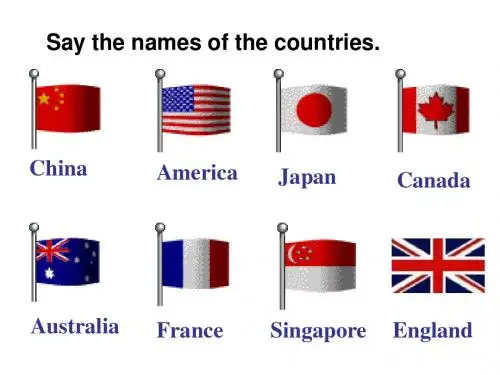
What country is this? Australia. What’s the capital of Australia? Sydney.
A: Hello, Bob! Where are you from? B: I’m from Canada. What about you, Andrew? A: I’m from France.
Peter
-Where’s … from?
-He’s/She’s from …
Country: Australia
-Where does he/she live?
City: Sydney
-He/She lives in …
Where are these cities?
City Sydney New York Paris Toronto Tokyo Country Australia
What country is this? France. What’s the capital of France? Paris.
What country is this? The United States. What’s the capital of the United states? Washington DC.
the United States
Australia the United States Canada France Japan
France Canada Japan
Listen and circle the cities and countries in 2a you hear.
Listen again and complete the chart.
Where is Sydney? Sydney is in Australia.
新目标(人教)七年级下册英语单元复习课件 Unit 2复习课件

具体时刻,也可询问日期、月份、年份等。 ②when常用来提问年、月、日、上/下午等大概时间,此时
when不可与what time替换。
From twelve o'clock at night to six o'clock in the morning.从夜里十二点到早上六点。
on weekends
radio show
16.几点 ____w_h__a_t_t_i_m__e_______
1178..一半份小有时趣__的__工___作____a__n____i__n__t__e__r__e___s__ti_n_g__j_o_b__ 19.要么……要h么al…f …an;h或ou者r……或者…… ____________________ 20.做作业 _________________________
either...or...
do (one’s) homework
21.去睡觉 __g_o__t_o__b__e_d_________ 2223..到散家 步;__走g__e一_t__走h_o__m_____e_________________________ 24.快速地吃 _________ta__k_e__a__w_a__lk_ 25.做运动 ____________________
play computer games
go home
三、核心句型
1. 里克,你通常几点钟洗淋浴?
__W__h_a_t_ _t_im__e___ do you usually _t_a_k_e__ __a_ _s_h_o_w__e_r,Rick? 2. 我通常在六点半起床。 I _______ ____ _____ at six thirty. 3.u—su—a斯lly科g特et,u你p的广播节目在几点?——从夜里12点到早上6点。 —Scott,________ ________ is your radio show? —_______ wtwhealvte o'cltoimckeat night _______ six o'clock in the morning.
人教新目标七年级英语下册课堂笔记Unit 2 What time do you go to
Unit 2 What time do you go to school?2012版人教新目标七年级英语下册课堂笔记1. upadv. 向上n 反义词:down nget up起床nstand up起立Please lift your head up.2. dress v. 穿衣服n. 连衣裙n复数:dressesn get dressed穿上衣服My daughter is too young to dress herself.3. brush v. 刷;刷净n. 刷子n 复数:brushes n 单三: brushes nwipe擦nsweep扫nrub摩擦nscrape刮掉You have to brush your shoes now.4. toothn. 牙齿n 复:teeth nbrush teeth刷牙ntoothpick牙签ntoothpaste牙膏ntoothbrush牙刷The baby has two teeth.常见的可数名词单数变复数时不规则变化的名词有: man, woman, child, foot, mouse, tooth 等。
我们可以用这样一句话来记忆这些单词“男女孩子的脚踩住老鼠的牙”5. shower n. & v. 淋浴,(名)淋浴器n 近: bath 洗澡,沐浴ntake/have a shower洗澡nshower下阵雨,倾注;阵雨,大量倾泻nshow给……看You’d better take a shower.6. usually adv. 通常地,一般地Do you usually go to the park?n unusually异乎寻常地7. fortynum. 四十n 表示“几十”的数字都以-ty结尾。
n词形特殊的有:twenty, thirty, forty, fifty, eighty.nfour四nfourteen十四There are 40 students in Class One.8. never adv. 从不; 绝不n Better late than never.迟做总比不做好。
新版教材新目标英语七年级下期末总复习Unit1-2_单元测试
Unit 1--- Unit2一、.单项选择。
( ) 1. ____ do you spell Wednesday?A. WhatB. HowC. WhichD. Why( ) 2. Those people can ____ Chinese.A. sayB. say toC. speakD. talk( ) 3. They can ____ English.A. speak manyB. much speakC. a little speakD. speak a little( ) 4. The yellow shirt is ____.A. herB. myC. yourD. his ( ) 5. Her brother ____ lunch at school.A. .isn’t haveB. hasn’t haveC. doesn’t hasD. doesn’t have ( ) 6. He can play ____. And he can play ____, too.A. basketball … the pianoB. a basketball…a guitarC. the basketball…pianoD. basketball…guitar ( ) 7. My mother can’t ____ a cake.A. doB. to doC. to makeD. make ( ) 8. I ____ a cup of tea.A. want toB. wantC. like toD. could like ( ) 9. Mrs. Green ____ buy a nice dress ____ her daughter.A. want, toB. wants to, forC. want to, forD. wants to, as( ) 10. Please ____ us a story, Granny.A. speakB. tellC. sayD. talk ( ) 11. ____ I come in, please? I’m sorry. I’m too late.A. WouldB. DoC. AmD. May ( ) 12. Our teacher always helps us ____ our English.A. forB. intoC. onD. with ( ) 13. Don’t ____ Chinese in English class.A. talkB. speakC. sayD. tell ( ) 14. He said he became ____ in physics.A. interestB. interestsC. interestedD. interesting ( ) 15. There are many ____ on the playground.A. leafesB. leafC. leavesD. leafs ( ) 16. -- Can you speak Russian?-- Yes, but only ____.A. littleB. a littleC. fewD. a few ( ) 17. There is ____ water in the bottle. You have to get some.A. littleB. a littleC. fewD. a few ( ) 18. Wang Wei is a ____ worker. She works very ____ in the factory and we all like her.A. well, wellB. good, goodC. good, wellD. well, good( ) 19. My grandpa doesn’t want ____ at home. He wants ____ out for a walk on Sunday.A. to stay, goB. stay, goC. stay, to goD. to stay, to go ( ) 20. She can’t ____ the difference between the two cars.A. sayB. talkC. speakD. tell二、连词成句。
寒假预习人教版(新目标)七年级英语下册Unit1预习资料
精品基础教育教学资料,仅供参考,需要可下载使用!Unit1 Can you play the guitar? Unit 1单词(音标)guitar[ɡɪ'tɑ:(r)] n.吉他sing [sɪŋ] v.唱;唱歌swim [swɪm] v. & n.游泳dance [dɑːns], [dæns] v.跳舞n.舞蹈draw [drɔː] v.画chess [tʃes] n.国际象棋play chess 下国际象棋speak [spiːk] v.说(某种语言);说话speak English 说英语join [dʒɔɪn] v.参加;加入club [klʌb] n.俱乐部;社团be good at…擅长于……tell [tel] v.讲述;告诉story ['stɔːrɪ] n.故事;小说write [raɪt] v.写作;写字show [ʃəʊ] n.演出;节目v.给……看;展示;or [ɔː(r)] conj.或者;也不(用于否定句)talk [tɔːk] v. & n.说话;交谈talk to…跟……说kungfu [,kʌŋ’fuː] n.(中国)功夫drum [drʌm] n.鼓play the drums 敲鼓piano [pɪ'ænəʊ] n.钢琴play the piano 弹钢琴violin [,vaɪə'lɪn] n.小提琴play the violin 拉小提琴also ['ɔːlsəʊ] adv.也;而且people ['piːpl] n.人;人们home [həʊm] n.家;活动本部adv.到家;在家be good with…善于应付的;对…有办法make [meɪk] v.使成为;制造make friends 结交朋友today [tə'deɪ] adv.在今天help (sb) with sth在某方面帮助(某人)center ['sentə(r)] n.(=centre)中心;中央weekend [,wiːk'end], [ 'wiː kend] n.周末on the weekend (在)周末teach [tiːtʃ] v教;讲授musician [mjuː'zɪʃn] n.音乐家Lisa['li:zə]莉萨(女名)Jill [dʒɪl] 吉尔(女名)Peter ['piːtə(r)] 彼得(男名)Unit1 知识梳理◆短语归纳1. play chess 下国际象棋2. play the guitar 弹吉他3. speak English 说英语4. English club 英语俱乐部5. talk to 跟…说6. play the violin 拉小提琴7. play the piano 弹钢琴8. play the drums 敲鼓9. make friends 结交朋友10. do kung fu 练(中国) 功夫11. tell stories 讲故事12. play games 做游戏13. on the weekend/on weekends 在周末◆用法集萃1. play +棋类/球类下…棋/打…球2. play the +西洋乐器弹/拉…乐器3. be good at doing sth.= do well in doing sth. 擅长做某事4. be good with sb. 和某人相处地好5. need sb. to do sth. 需要某人做某事6. can + 动词原形能/会做某事7. a little + 不可数名词一点儿…8. join the…club 加入…俱乐部9. like to do sth. =love to do sth. 喜欢/喜爱做某事◆典句必背1. —Can you draw? 你会画画吗?—Yes, I can./No, I can’t. 是的,我会。
英语人教新目标七年级下册七下Unit 1Section B 2a-2c
2. To read the ads to get the main idea. 3. To learn to write a poster. 4. To learn the words and phrases: 1) also, people, help (sb) with sth, center, home,
1.Where do they need help? At the old people's home.
2. When do they need help ?
In July
3. What do you need to do? To talk with the old people and play games with them.
Sentences: I can play ping-pong and chess. I can speak English and I can also play soccer.
Ⅰ. 根据语境,从方框中选择恰当的单词填 空,有的需要变换形式。
drum, people, musician, center, weekend
……有办法 make friends 交朋友 need sb. to do sth. 需要某人做某事 help (sb.) with sth. 在某方面帮助(某人)
Students’ Sports 学生体育活动中心 Center
on the weekend 在周末 music festival 音乐节
what when where how
Read the ads again and complete the blanks.