
unit1-Where-did-you-go-复习课件
are
goes
3、反身代词 1). The old man taught himself English. 那位老人自学英语。(做动词宾语) 2). I myself visited my aunt last weekend. 我自己去拜访了我的姑姑。(做同位语) 3)last Sunday we enjoyed ourselves in the park.上周六我们在公园玩得很开心。
短语归纳
study for tests
go somewhere interesting
11. long time no see. 好久未见 相当多+可数复数 12.quite a few 拍照 13.take photos 14.most of the time 大部分时间 15.taste great 尝起来很好吃 16.have a good time 玩得高兴 17.of course 当然 18.The only problem is/was 唯一的问题就 that… 是… 19.seem to be bored 好象很无聊 20.nothing…but… 没有什么……除了…
• 足够的,充足的,充分的 _____
go on vacation 1.去度假 2.待在家里 stay at home 3.去了爬山 go to the mountains 4.去海滩 go to the beach 5.参观博物馆 visit the museums 6.看望我叔叔 visit my uncle 7.去参加夏令营 8.买一些特别的东西 go to the summer camp buy something/ anything 9. 去一些有趣的地方 interesting 10.为……而学习
15. Did you go anywhere interesting? anywhere意为“在任何地方”,常用于一 般疑问句或否定句中,代替somewhere。 例如: I can’t find my keys anywhere. 我到处找不到我的钥匙。
e.g. 他因为生病而没有上学。 He didn’t go to school because he was ill. 或He didn’t go to school because of his illness.
13.below意为“在……下面,到……下面” e.g. 在飞机下面的远处我们能看到伦敦的灯火。 We could see the lights of London below the plane. [辨析] below与under的区别: below指某物处于较低的地方,但不一定是正 下方; under指处于某物的正下方。 e.g. 我们在月下。We are below the moon. 那名男孩子站在树下。 The boy stood under the tree.
7.I felt like I was a bird. It was so exciting! 我感觉自己就像一只小鸟。太刺激了! 1)feel like意为“给……的感觉;感受到”. 其后常接从句。 eg: aI feel like (that) I have never been there before. 我感觉我以前从未到过那儿。 拓展:feel like还可意为“想要……”接名词,代词或动名 词。 a. Do you feel like a cup of tea now? 你现在想喝杯茶吗? taking b. Do you feel like ______(take) a walk in the park with me?你想跟aries 21.记日记 feel like doing sth 22.想;感受到 在过去(用于过去时态) 23.in the past walk around 24.四处走走 太多+可数复数 25.too many wait for me 26.等我 because of the weather 27.由于天气 enough money 28.足够的钱 29.It tastes great 尝起来味道好极了 be different from… 30.与…不一样
4、seem 的用法
• 5. I arrived in Penang in Malaysia this morning with my family.今天早上我和家人到达了马来西亚的槟城。 • arrive不及物动词,意为“到达”。 • arrive in表示到达较大的地方,如国家、省、市等; • arrive at表示到达较小的地方,如机场、商店、广场、 村庄等。 • (注:地点副词home,here,there前介词省略) • 辨析:arrive at (in) / get to / reach reached • 1).He __________China yesterday. arrived in • 2).He __________ China yesterday. arrived at the small village yesterday. • 3).He ___________ • 4).How can I___________ get to the railway station?
2.I just stayed at home most of the time to read and relax.我大部分时间只是待在家里读书休 息。 most of the time意为“大部分时间”, 其中most为代词,意为“大部分;大多数”。
拓展:most of…意为“……中的大多数”,它 作主语时,谓语动词取决于most of后所修饰的 名词。 a. Most of us _____(be) going to the park. 我们大多数人要去公园。 b. Most of the food _____ (go) bad.大部分的食物 都变质了
8辨析:exciting与excited
exciting意为“令人兴奋的,使人激动的”.可作定语和 表语,作表语时主语通常为物。 excited意为“感到兴奋的,激动的”,常作表语, 主语通常为人。
a. The story is _________(exciting, excited)
b. He told me the _______(exciting, excited) news. c. Sarah was ___(exciting, excited) to see the singer.
看起来…… 1)seem to do sth. 2)seem +adj./n 3)It seems/ed that +句子 • 我好像是感冒了。 • I seem to have a cold. • =It seems that I have a cold. • 一切似乎很容易。 • Everything seems easy.
9.We wanted to walk up to the top ,but then it started raining a little so we decided take the train. 1) little副词短语,意为“一点儿”,在 句中修饰动词、形容词或副词。也可以修 饰不可数名词。 2) few副词短语,意为“一点儿”,在 句中修饰修饰可数名词复数。
He lost his job because of his age. b. because连词,意为“因为”,引导状语从
句.
I didn’t buy the shirt because it was too expensive .
11. I feel like I was a bird. feel like+从句 意为“觉得好像是……” e.g. 我感觉好像是倘佯在历史的长河中。 I feel like I’m walking through the history.
6.My sister and I tried paragliding.
try“尝试;试图,设法;努力” 辨析:try doing sth. / try to do sth. 1)try doing sth.尝试做某事,表示一种尝试、做做看的 想法,不一定付出很多努力。 2)try to do sth.=try one's best to do尽力、设法去做某 事,表示想尽一切办 法要把事情办成,强调付出一定的努力设法去完成。 tried calling a. I______ ______him, but no one answered. 我试着给他打电话了,但没有人接听。 trying to study b. I’m ______ ______ ______English well. 我正尽力把英语学好。 拓展: try也可用作名词,“have a try”,意为“试一 试”。 I’m going to have a try.我想试一试。
[拓展]feel like的其他用法: ① feel like + 名词或代词意为“觉得好像” 感觉天好像很快就要下雨了。 It feels like rain soon. ② feel like + 动名词意为“想做……” 今天我不太想去散步。 I don’t feel like walking today.
14. My father didn’t bring enough money. enough作形容词,意为“充足的,足够 的,充分的” e.g.你有足够的时间按时到达那里。You have enough time to get there on time. 当enough作副词时,意为“足够地\充足 地”。它修饰形容词时应置于该形容词后 面来修饰。 e.g. 这个房子对我们来说太小了。 The house isn’t big enough for us.
10.And because of the bad weather, we couldn’t see anything below. 因为坏天气,我们也没能看到下面的任何景色 1)辨析:because of与because a. because of介词短语,意为“因为,由于”, 后可接名词、代词或动名词,不能接句子。
合集下载
外研版英语五年级上册Module 3 Unit 1 Where did you go 第1课时课件
描述上周末的活动
⑴同桌两人互相用句型Where did you go last weekend? How did you go there? What did you do? I went to...I went there by...I bought/did...问答和 描述上周末自己的活动地点、搭乘的交通工具及做过 的事情。
Daming:How did you go to these places?
Amy:We went by bus.
Daming:Did Lingling like the museum?
Amy:Yes, she did. But she liked the bus
最 沿着
ride best! Then we took a boat trip along the river. It took us one hour and twenty minutes.
A. By bike. B. British Museum. C.I went shopping.
Homework
1.Role-play and act out Activity 2. 2.Make five sentences with ”where/
when/what/how“ .
Thanks for listening!
weekend 周末
museum 博物馆
British 英国的,英国人的;
英国人
trip 旅行,旅程
twenty 二十
认识句型
Where did you go?
知识要点 询问某人去过的地方 句型呈现 Where did+主语+go(+其他)?
பைடு நூலகம்
外研社三年级起点英语五年级上册m3-Unit-1-Where-did-you-go
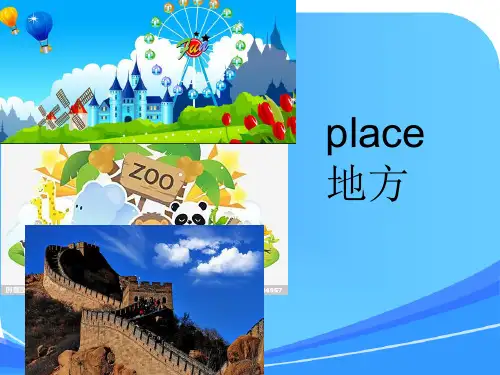
introductionlondoneye第五级britishmuseum英国国家博物馆britishmuseum又名不列颠博物馆位于英国伦敦新牛津大街北面的罗素广场成立于1753年1759月15日起正式对公众开放是世界上历史最悠久规模最宏伟的综合性博物馆也是世界上规模最大最著名的世界四大博物馆之一
• A: Where did you go on your summer holiday? • B: I ……
• A: What did you do on summer holiday? • I stayed at home/…
Where did Amy go on vacation?
• 伊丽莎白塔(Elizabeth Tower),旧称大本钟(Big Ben),即威斯敏斯特宫钟 塔,世界上著名的哥特式建筑之一,英国国会会议厅附属的钟楼(Clock Tower)的大报时钟。伊丽莎白塔于1858年4月10日建成,是英国最大的钟。 坐落在英国伦敦泰晤士河畔,是伦敦的标志性建筑之一。钟楼高95米,钟直 径7米,重13.5吨。每15分钟响一次,敲响威斯敏斯特钟声
practice Where did you go? I visited lots of places. I went to …
绿色圃中小学教育 绿色圃中学资源网 绿色圃中小学教育 绿色圃中学资源网
• 伦敦眼(The London Eye),坐落在英国伦敦泰晤士河畔,是世
界上首座、同时截至2005年最大的观景摩天轮,为伦敦的地标及 出名旅游观光点之一。伦敦眼于1999年年底开幕,为庆祝新千年 而建造,因此又称"千禧摩天轮“.总高度135米(443英尺)。伦敦 眼共有32个乘坐舱(由序号1排列到33。因为宗教忌讳,没有13 号)。每个乘坐舱可载客约25名,回转速度约为每秒0.26米,即 一圈需时30分钟。乘客可以乘坐"伦敦眼"升上半空,鸟瞰伦敦。
• A: Where did you go on your summer holiday? • B: I ……
• A: What did you do on summer holiday? • I stayed at home/…
Where did Amy go on vacation?
• 伊丽莎白塔(Elizabeth Tower),旧称大本钟(Big Ben),即威斯敏斯特宫钟 塔,世界上著名的哥特式建筑之一,英国国会会议厅附属的钟楼(Clock Tower)的大报时钟。伊丽莎白塔于1858年4月10日建成,是英国最大的钟。 坐落在英国伦敦泰晤士河畔,是伦敦的标志性建筑之一。钟楼高95米,钟直 径7米,重13.5吨。每15分钟响一次,敲响威斯敏斯特钟声
practice Where did you go? I visited lots of places. I went to …
绿色圃中小学教育 绿色圃中学资源网 绿色圃中小学教育 绿色圃中学资源网
• 伦敦眼(The London Eye),坐落在英国伦敦泰晤士河畔,是世
界上首座、同时截至2005年最大的观景摩天轮,为伦敦的地标及 出名旅游观光点之一。伦敦眼于1999年年底开幕,为庆祝新千年 而建造,因此又称"千禧摩天轮“.总高度135米(443英尺)。伦敦 眼共有32个乘坐舱(由序号1排列到33。因为宗教忌讳,没有13 号)。每个乘坐舱可载客约25名,回转速度约为每秒0.26米,即 一圈需时30分钟。乘客可以乘坐"伦敦眼"升上半空,鸟瞰伦敦。
Unit1--Where-did-you-go-on-vacation
The T-shirt looks beautiful.这件体恤衫看 起来很漂亮。
The songs sound beautiful.这些歌曲听起来 很优美。
过得高兴,玩得愉快
have a good\great\fun time (=enjoy oneself)
They had a good time yesterday.= They enjoyed themselves yesterday.
find—found找到
2.不定代词和不定副词的用法
some
body
any
one
every thing
no
where(疑问副
词)不定代词和不定副词
(1)左边的some、any、every、no与右 边的body、one、thing构成不定代词, some、any、every、no与右边的疑问副 词where构成不定副词;
2. 回顾一下在3b中所回答的问题的情况,然后 将这些句子按恰当的逻辑顺序排列在一起, 形成条理清晰的一段文字。
3. 可根据旅行经历再加一些恰当想像的句子。 4. 再次,阅读一遍短文,看有没有错误的句
子。
假如你和你的家人在四月八号这天参观了北 京,请你以日记的形式把这天的经历及感受 记录下来。 提示:1. 早上:参观颐和园(爬万寿山;在 昆明湖划船) 2. 中午:吃北京烤鸭 3. 下午: 逛王府井大街 参考词汇:颐和园 the Summer Palace; 万寿山 Longevity Hill;昆明湖Kunming Lake;王府井大街 Wangfujing Street;风 景 scenery
1. 定基调 体裁:应用文(日记);日记的主体部分为 记叙文 时态:谈过去的经历时,用一般过去时。 人称:写个人经历时,用第一人称。
The songs sound beautiful.这些歌曲听起来 很优美。
过得高兴,玩得愉快
have a good\great\fun time (=enjoy oneself)
They had a good time yesterday.= They enjoyed themselves yesterday.
find—found找到
2.不定代词和不定副词的用法
some
body
any
one
every thing
no
where(疑问副
词)不定代词和不定副词
(1)左边的some、any、every、no与右 边的body、one、thing构成不定代词, some、any、every、no与右边的疑问副 词where构成不定副词;
2. 回顾一下在3b中所回答的问题的情况,然后 将这些句子按恰当的逻辑顺序排列在一起, 形成条理清晰的一段文字。
3. 可根据旅行经历再加一些恰当想像的句子。 4. 再次,阅读一遍短文,看有没有错误的句
子。
假如你和你的家人在四月八号这天参观了北 京,请你以日记的形式把这天的经历及感受 记录下来。 提示:1. 早上:参观颐和园(爬万寿山;在 昆明湖划船) 2. 中午:吃北京烤鸭 3. 下午: 逛王府井大街 参考词汇:颐和园 the Summer Palace; 万寿山 Longevity Hill;昆明湖Kunming Lake;王府井大街 Wangfujing Street;风 景 scenery
1. 定基调 体裁:应用文(日记);日记的主体部分为 记叙文 时态:谈过去的经历时,用一般过去时。 人称:写个人经历时,用第一人称。
U1一课时Where_did_you_go_on_vacation)_ppt.
Did Didhe heplay … ? tennis ?
Yes,he did.
Did he … ?
Yes, he did. / No, he didn't.
Did he ……..?
Yes,he did. / No, he didn’t.
Did she ….?
Yes,she did. / No, she didn’t.
to play go your the your
go 1. A: Did you ________ to the movies? B: Yes, I did . your 2. A: Did you visit_________uncle? B: No, I didn’t.
play volleyball? B: Yes, I did. 3. A: Did you __________ the movies? B: No, we didn’t. 4. A: Did you go to _______ your 5. A: Did you do _________homework? B: Yes, we did . to 6. A: Did you go _________New York City? B: No, we didn’t.
给出下列动词的过去式
Regular verbs Irregular verbs clean cleaned make made play played study studied stayed were stay are visited do visit did watch watched am/is was had look looked have helped went help go
人教八上Unit1 Where did you go on vacation 复习课件(共30张PPT)
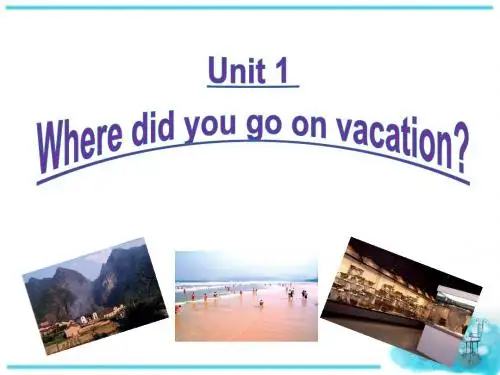
•Where did you go on vacation?
visited museums
•Where did you go on vacation?
did her homework
Did you see Huangguoshu Waterfall?
2d
Role-play the conversation.
八上Unit1 anyone anywhere wonderful few /'eniwʌn/ /'eniweə/,/'eniwer/ /'wʌndə(r)fl/ /fju:/ /məʊst/ pron.任何人 adv.任何地方 adj.精彩的;绝妙的 adj.&pron.不多;很少
quite a few
一般过去时
构成 主语+动词的过去式+其他 1. 表示过去某个时间发 生的动作或存在的状态。 2. 表示过去经常或 反复发生的动作。 (the day before) yesterday last night / week in 1990 / just now On Sunday morning two days ago
some 一些
any 一些
someone 某人 somebody 某人 something 某事; 某物 anyone 任何人 anybody 任何人 anything 任何事情
no没有
no one 没人 nobody 没人 nothing 没事物
every 每个,每一
everyone 每个人 everybody 每个人 everything 一切事物
below
enough hungry as hill duck dislike
Where did you go on vacation复习课件(共25张PPT) 人教版八年级上册
注意:反身代词注意与主语保持一致 积累固定搭配,例如 enjoy oneself 等。
语法百宝箱
总结本单元的语法知识,你掌握了吗
三、时态
一般过去时的用法
1.概念
2.结构
3.用法
Eg: —What did you do last week? — I stayed at home.
语法百宝箱
总结本单元的语法知识,你掌握了吗
10. 决定 v. __d_e_c_id_e___ 12. 想知道 v. w__o_n_d_e_r_ 14. 等待 v. _w_a_i_t___ 16. 饥饿的 adj. _h_u_n_g_r_y___
词汇训练营
单词填空,考查综合运用能力!
二、根据提示填空 1.Tom is new here, so he has ___fe_w_____(很少) friends. 2.The view(风景) in Lushan is __w__o_n_d_e_r_fu_l__(绝妙的). 3.You should look after ___y_o_u_r_se_l_f__(你自己)at home when your parents are away. 4.After doing homework for an hour, he feels__b_o_r_e_d___(厌倦的). 5.Do you have __e_n_o_u_g_h___(足够的)money to buy the car?
语法百宝箱
学以致用,各个击破语法点
一、单项选择 4.__B____his kindness, I got a free book. A.Because B.Because of C.Because for D.Because on 5.Do you feel like__C______? A.swim B.swiming C.swimming D.to swim 6.I feel ___A____, so I want to have something to eat. A.hungry B.thirsty C.wonderful D.enjoyable
unit1--Where_did_you_go_on_vacation_复习课件 - 副本
Grace
go to Central Park? buy anything special? play volleyball?
Kevin
swim? meet anyone interesting? do anything interesting ?
Julie
study for tests ? go out with anyone ?
keep a diary 21.记日记 22.给……的感觉的;感受到 feel like 在过去 23.in the past walk aroud 24.四处走走 太多 25.too many wait for 26.等待 27.because of 因为 enough money 28.足够的钱 29.taste great 尝起来味道好极了 30.be not as good 不象这样好
Explanation
1、不定代词: 由some-,any-,no-,every- 加上 -one,-body, -thing等所组成. 不定代词包括: something, somebody, someone, anything, anybody, anyone, nothing, nobody, no one, everything, everybody, everyone 等。
Thank you for listening!
Using the following sentences:
A: Where did you go on vacation? B:I … A: When did you do? B:I went there … A: How did you go on vacation? B:I went there by … A: Did you swim/go to the mountain/…? B:… A: How was the your vacation? B: It was…
Unit-1-Where-did-you-go-on-vacation单元课件培训课件
2. Betty stayed at home and ____ for the test
last weekend.
A. study
B. studyed
C. studied
3. --- ____ your mother go fishing?
--- No, she didn’t. She went shopping.
summer camp
He went to summer camp.
Where did she go on vacation?
mountain
['mauntn]
She went to the mountains.
Where did she go on vacation?
home She stayed at home.
Unit-1-Where-did-you-goon-vacation单元课件
Free talk:
A: How was your summer holiday? B: It was great / OK /not bad / …
A: Where did you go on your summer holiday? B: I ……
Yes, I did.
√ √ √
Kevin play volleyball?
swim?
√
meet anyone interesting? √
Julie do anything interesting?
study for tests?
√
go out with anyone?
No, I didn’t.
√
• 请找出2b中所有的不定代词
• anyone • 某人 • anything • 某事物
外研版五年级上册英语Module 3 Unit 1 Where did you go 授课课件
took/tʊk/v.(take的过去式)乘,乘坐 形近词:book书,look看
短语:takeabus乘公共汽车 一词多义: take花费(时间、金钱等)
trip/trɪp/n. 旅行,旅程 短语: takeatrip去旅行
haveagoodtrip旅途愉快 along/ə'lɒŋ/prep. 沿着 形近词: long长的
1熟记本节课所学的句型、短语和单词,必须会 听、说、读、写。
2将Listen, readandactout的对话朗读流利。
短语: goalongtheroad沿着这条路走
加法记忆法: a+long(长的)=along沿着
river/'rɪvə/n. 河,江 发音: 字母i在单词中发/ɪ/,相同发音的单词有list,
finish,city。 例句: Therearelotsofboatsontheriver.
河面上有许多小船。 短语: theChangjiangRiver长江
点拨:B、C项为具体建筑物,A项指统称的地方。
() B(2) A. hourB. twentyC. minute () C(3) A. howB. whatC. river () A(4) A. takeB. tripC. weekend () B(5) A. goB. tookC. like
四、按要求完成句子。
例句: Howareyou? 你好吗? 形近词: now现在
短语: howmany多少howmuch多少howold多大
联想记忆法: what什么,where哪儿,why为什么, when什么时候
魔法记忆: 现在(now)把n与h交换会怎样(how)?
bybus乘公共汽车 用法: “by+交通工具” 表示出行方式。
短语:takeabus乘公共汽车 一词多义: take花费(时间、金钱等)
trip/trɪp/n. 旅行,旅程 短语: takeatrip去旅行
haveagoodtrip旅途愉快 along/ə'lɒŋ/prep. 沿着 形近词: long长的
1熟记本节课所学的句型、短语和单词,必须会 听、说、读、写。
2将Listen, readandactout的对话朗读流利。
短语: goalongtheroad沿着这条路走
加法记忆法: a+long(长的)=along沿着
river/'rɪvə/n. 河,江 发音: 字母i在单词中发/ɪ/,相同发音的单词有list,
finish,city。 例句: Therearelotsofboatsontheriver.
河面上有许多小船。 短语: theChangjiangRiver长江
点拨:B、C项为具体建筑物,A项指统称的地方。
() B(2) A. hourB. twentyC. minute () C(3) A. howB. whatC. river () A(4) A. takeB. tripC. weekend () B(5) A. goB. tookC. like
四、按要求完成句子。
例句: Howareyou? 你好吗? 形近词: now现在
短语: howmany多少howmuch多少howold多大
联想记忆法: what什么,where哪儿,why为什么, when什么时候
魔法记忆: 现在(now)把n与h交换会怎样(how)?
bybus乘公共汽车 用法: “by+交通工具” 表示出行方式。
八年级上册下Unit1-Where-did-you-go-on-vacation
What did Lisa say about…? her vacation _g_r_e_a_t _ the fun park _e_x_ci_t_in_g_ the people _fr_i_e_n_d_l_y the stores _e_x_p_e_n_si_v_e_ the food _d_e_l_ic_i_o_u_s_
1. _S_o_m_e_o_n_e__ found Mr. Li’s keys and gave them back to him yesterday.
2. ─Did you see _a_n_y_t_h_in_g__ in the big box? ─ No, I didn’t. There’s _n_o_th__in_g_ in it.
It was delicious.
Practice
How were the hamburgers?
They were delicious.
Practice
How was the apple?
It was terrible.
Practice
How was the ice cream?
It was expensive.
3. _N_o__o_n_e___ helped the little boy. He did it himself.
4. My watch doesn’t work. _S_o_m_e_t_h_i_n_g__ is wrong with it.
5. ─Hello, _e_v_e_r_y_o_n_e___! ─Hello, Mr. Smห้องสมุดไป่ตู้th!
much to do in the evening but read. (即使这样)仍然没有人似乎看起来无聊。 Still no one seemed to be bored.
1. _S_o_m_e_o_n_e__ found Mr. Li’s keys and gave them back to him yesterday.
2. ─Did you see _a_n_y_t_h_in_g__ in the big box? ─ No, I didn’t. There’s _n_o_th__in_g_ in it.
It was delicious.
Practice
How were the hamburgers?
They were delicious.
Practice
How was the apple?
It was terrible.
Practice
How was the ice cream?
It was expensive.
3. _N_o__o_n_e___ helped the little boy. He did it himself.
4. My watch doesn’t work. _S_o_m_e_t_h_i_n_g__ is wrong with it.
5. ─Hello, _e_v_e_r_y_o_n_e___! ─Hello, Mr. Smห้องสมุดไป่ตู้th!
much to do in the evening but read. (即使这样)仍然没有人似乎看起来无聊。 Still no one seemed to be bored.