
人教版新目标英语七年级上册Unit_5_Do_you_have_a_soccer_ball_全单元课件_(新版)人教新目标版_2.ppt
Helen’s baseball bat jacket hat We don’t know.
Pairwork
2d Role-play the conversation.
Cindy: Hey, Helen, let’s go! We’re late. Helen: OK. Cindy: Do you have the baseball? Helen: Yes, I do. It’s in my bag. Cindy: And where’s our baseball bat? Helen: Bill has it. Cindy: Oh, yeah. And do you have your jacket? Helen: Oh, no, I don’t. It’s on the chair. Let me get it. Cindy: And your hat, too! Helen: OK, I have my jacket and hat. Let’s go.
1
2
Listening
Listen again. Match the pictures 2b in 2a with the balls.
3
2
1
4
Pairwork 2c Ask and answer about the people in 2a.
Does Jane have a tennis ball?
Does Linda have a schoolbag? Yes, she does. No, she doesn’t.
Linda
Does Anna have a schoolbag?
Anna
1a
Match the words with the things in the picture.
1. tennis ball __ a 2. ping-pong bat __ f c 3. soccer ball __ e 4. volleyball __ d 5. basketball __ 6. baseball bat __ b
4. us “我们”。 是we的宾格形式,在句子中放 在 介词或动词后作宾语。 【辨析】we / us / our we “我们” 是人称代词主格形式,作句子的主语。 us “我们”是人称代词宾格形式,作句子的宾语。 our “我们的”是形容词性物主代词,放在名词前。
We are in Mike’s room. 我们在迈克的房间里。 Call us at 457-3287. 给我们打电话457-3287. Our teacher is in the classroom. 我们的老师在教室里。
三、 根据汉语提示完成句子。
1. 你有一只棒球拍吗? Do you have bat _____ ______ a baseball _____? 2. 埃里克有一个网球吗? _____ ______ a tennis _______ ball? Does Eric have 3. 戴尔有一个足球和一个排球。 has a soccer volleyball Dale _____ ______ ball and a _________. bat have basketball 4. 我有一个篮球和一只乒乓球拍。 I _____ a _________ and a ping pong
ping-pong bat baseball bat ping-pong ball
tennis
二、 句型转换 1. Do you have a map? (作肯定回答) Yes, I do. 2. Do you have an English dictionary? (作否定回答) No, I don’t. 3. Does Linda have an eraser? (作肯定回答) Yes, she does. 4. Does he have a volleyball? (作否定回答) No, he doesn’t. 5. I have a nice ping-pong bat. (用she来代替I) ______ She _______ has a nice ping pong bat.
Basketball, basketball.
Does he have a basketball? We all have Ping-pong bat and baseball bat.
Lead in
Let’s chant:
Volleyball, volleyball; I have a volleyball.
2. late “迟到” 是个形容词,常用 be late 的 结 构。 Xiao Ming is always late.
小明总是迟到。 3. we是人称代词主格,意为“我们”,在句子 中作主语。如: We are good friends. 我们是好朋友。 We have a new soccer ball. 我们有一只新足球。
ruler
dog
He has a jacket.
She has a tape recorder.
has 有
Presentation
— What’s that? — It’s a __________. basketball — Spell it, please? — ______________ B-A-S-K-E-TB-A-L-L _________
Yes, I do.
Do you have a ping-pong ball? No, I don’t.
Practice
Do you have a …?
Yes, I do./ No, I don’t.
Listening
2a Listen and number the
things [1-4].
3
4
Explanation
1.have作动词,意为“有”,一般指某人拥有 某物,侧重于所属关系。其第三人称单数形 式 是has。 常用句式为:某人 + have/has + 某物,表示 “人有某物”。在一般现在时态中,当主语 为第三人称单数形式时,用has的形式。如: I have a good friend. 我有一个好朋友。 She has a new pen. 她有一支新钢笔。
Lead in
Let’s chant:
Volleyball, volleyball; I have a volleyball.
Soccer ball, soccer ball.
Do you have a soccer ball?
Baseball, baseball; She has a baseball.
Homework
1. 复习记忆本课所学的生词。 2. 编写三个问答句:
分别询问一下你的朋友有basketball,
soccer ball和volleyball吗?
Exercises
一、 看图说出下列物品的英语单词。
basketball soccer ball volleyball
baseball
5. 以动词let开头的祈使句,表示向别人提 建议,意思是“让„„做„„吧”。 基本结构为:let sb. do sth.,表示 “让 某 人做某事”,表示说话人的建议。其中 sb. 可由名词或代词宾格来充当,其后的动 词一定要用动词原形。 Let me do it. 让我来做吧。
6. let’s是let us 的缩写形式,意思为“咱们 一起做某事吧”,通常表示建议、请求或 命令。 肯定回答:一般用“OK”,“All right”, “Yes, let’s …”; 否定回答:一般用“Sorry, I …” 。如: — Let’s go! 让我们走吧! — OK. 好吧。 Let’s look at the blackboard. 让我们看黑板吧。
Listening 1b
Listen and circle the words your hear.
ping-pong bat volleyball
soccer ball ping-pong ball
Pairwork
1c
Do you have a ping-pong bat?
Practice the conversation with your partner. Then ask and answer questions about the things in the picture below.
volleyball
soccer ball
tennis ball
pong-pong bat
baseball bat
ping-pong ball
Presentation
Do you have a sister? Yes, I do. Do you have a cat? Do you have a baseball? Yes, I do. No, I d棒球拍 __________ 9. 让我们走吧。 Let’s go. ___________ 10. 我们迟到了。 ___________ We’re late. 11. 让我去拿它。 _____________ Let me get it. 12. 贝尔有个排球。 Bill has a volleyball. __________________
Ask and answer.
A: Do you have a basketball?
B: Yes, I do. / No, I don’t. A: Does she have a soccer ball?
B: Yes, she does. / No, she
doesn’t.
Role-play the conversation in 2d. Cindy: Hey, Helen, let’s go! We’re late. Helen: OK. Cindy: Do you have the baseball? Helen: Yes, I do. It’s in my bag. Cindy: And where’s our baseball bat? Helen: Bill has it. Cindy: Oh, yeah. And do you have your jacket? Helen: Oh, no, I don’t. It’s on the chair. Let me get it. Cindy: And your hat, too! Helen: OK, I have my jacket and hat. Let’s go.
英语人教新目标七年级上册Unit 5 Do you have a soccer ball

Competition 比赛
1
A: Do you have a ...?
2
B: Yes, I do. I have a ....
No, I don't. I don't have a..
3
4
5
6
1
A: Do you have a ...?
volleyball ['vɒlɪbɔːl]
play volleyball
baseball
['beɪsbɔːl]
晶晶
play baseball a baseball bat
a tennis ball
['tenɪs]
play tennis
a ping-pong bat
a ping-pong ball
将下列单词与图中物品匹配。
1. tennis ball __a___ 2. ping-pong bat __f___ 3. soccer ball __c___ 4. volleyball __e___ 5. basketball __d___ 6. baseball bat __b___
1b Listen and circle the words you hear.
['piŋpɔŋ]
play ping-pong
Look and say
basketball soccer ball
volleyball
tennis ball baseball ping-pong ball
baseball bat
ping-pong bat
Guessing
七年级英语上册(人教新目标版) Unit 5 Do you have a soccer ball

1. have作动词,意为“有”,一般指某人拥有某物, 侧重于所属关系。其第三人称单数形式是has。 常用句式为:某人 + have/has + 某物,表示“某人 有某物”。 在一般现在时态中,当主语为第三人称单数形式时, 用has的形式。
பைடு நூலகம்
2. late “迟到” 是个形容词,常用be late的结构。
We have a new soccer ball.
4. us“我们”, 是we的宾格形式,在句子 中放在介词或动词后作宾语。 【辨析】we / us / our we“我们”是人称代词主格形式,作句 子的主语。 us“我们”是人称代词宾格形式,作句 子的宾语。 our “我们的”是形容词性物主代词, 放在名词前。
反击式破碎机 /
不勒死也会被野狼吃了。樟树旁,一棵叶片差不多掉光的板栗树,尽管它算是板栗树里面的粗壮者,但长在这里,只能映衬古樟的茕茕孑立和翠绿葱茂。,
二 我们的林班在一个小沟塘里
A: Do you have a soccer ball? B: Yes. I do. A: Where is the soccer ball? B: It’s on the floor.
母亲说,孩子你太傻了,你上当了,这副银镯子得换好几个馍呐,再说呢,你怎么可以把姥姥送给你的纪念品随便送人呢?你姥姥若知道了会伤心会生气的。据说他是中过风的人,现在恢复得差不多。比如,生产队耕翻后的地瓜地啊,有时 会散落极少数小地瓜或破损的地瓜及地瓜根茎露在上面,一般来说耕地人会先捡拾一遍,可个别还有遗漏的啊。
【练习】翻译下列句子
1) It’s never too late to stop smoking. 戒烟何时都不算晚。
2) She’s late for work every day. 她每天上班都迟到。
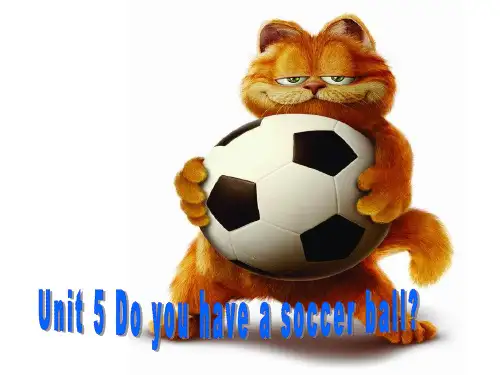
新目标英语七年级上unit_5_Do_you_have_a_soccer_ball(全课件)
1
4
2
5
3
6
Let’s play sports! Do you play tennis? Do you play volleyball? We have many sports clubs: basketball, ping-pong, soccer, and more!
1) play sports
B: That sounds good.
A: Let’s(让咱们) play volleyball. B: I don’t have a volleyball. A: Well, let’s play soccer. B: That sounds good/interesting/fun…
Do you have a basketball?
Does he have a/an…? Yes, he does. No, he doesn’t.
Does she have a …? Yes, she does. No, she doesn’t .
Does he have a …? Yes, he does.
No, he doesn’t.
Let’s play soccer. I don’t have a soccer ball. Let’s play … That sounds good.
Let’s play basketball.
Let’s play ping-pong. Let’s play tennis.
Let’s play baseball.
A: Let’s play basketball. (let’s=let us) B: I don’t have a basketball. A: Well, let’s play ping-pong.
人教版新目标英语七年级上册Unit5__Do_you_have_a_soccer_ball__SectionB_2a-2c
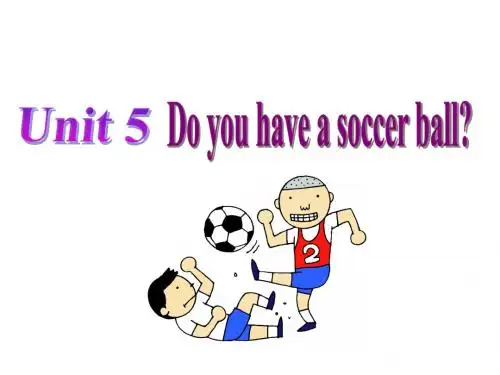
does ________ has ________ don’t _________ doesn’t _________
play basketball ______________
8. 打排球
9. 打网球
10. 踢足球
play volleyball _____________ play tennis _____________ play soccer _____________
6. After class, I play ping-pong with my classmates.
下课后我和我的同学打乒乓球。 after class 下课后 in class
在课上
课前
before class
自学目标五
Retell the survey results.
Do You Have a Soccer Ball? Frank Brown: soccer ball but don’t I ______have a__________, does We go my brother Alan _____. to the_____________ same school and we____________. love soccer We play at school with our friends it_______________________. It’s_______. relaxing
Let’s check the answers.
1. I play ping-pong with my classmates after class. 2. I have soccer balls, basketballs, volleyballs and baseballs. 3. My brother has a soccer ball but I don’t. 4. I only watch sports on TV. 5. Soccer is not easy for me. 6. My brother and I are in the same school.
新目标人教版七年级英语上册Unit5Doyouhaveasoccerball

新目标人教版七年级英语上册Unit5 Do you have a soccerball?第一课时SectionA(1a-2c)教学设计金安苑学校刘团业一、关于教材1.单元分析:本单元的教学主要内容是:学习have 的一般现在时的疑问式的肯定和否定回答,该话题与学生的日常生活紧密联系在一起,容易唤起学生的学习兴趣,这对于提高学生的综合能力很有帮助,特别是说的能力。
本单元仍在继续学习一般现在时,这是一个生活中离不开的时态,也是最基本的一个时态。
新课程标准要求学生重点掌握一般现在时,这在英语中使用频率很高,学好这一时态的用法对以后其他时态的学习和交际有很大的帮助。
但与前几个单元be 动词的一般现在时不同,本单元开始了实义动词一般现在时的一般疑问句及其答语的教学。
2.课时分析:本单元的第一课时,是一堂听说课。
以球类物品为载体学习使用Do you have ...?/Does he/she have ...?让学生掌握实意动词的一般疑问句及其答语。
在教学设计中我以“第一课时的听说教学为第二课时的语法教学打好基础,但该在语法课讲的内容绝不挤占听说时间”为出发点,对本课的句型进行了拓展:I (don’t)have...;He/She (doesn’t have)has...但仅仅是通过大量和反复地操练是使学生运用自如,而不急于提醒has和have的使用场合。
既为后面的学习做好铺垫又留有余地。
二、学生分析学生现有的能力与已掌握的知识:学生在已经学过词汇:What is this ?What is that?句型:Where is… It’s in / on / under/…经过前面的学习学生已经积累了一定的词汇,掌握了一定的目标语,已经具备了一定的听说读写能力。
三、教学目标1.语言知识词汇:A.重点掌握表示有关各种运动球类的名词重点句型:---Do you have a ... ?---Yes,I do./No,I don’t.---Does he/she have a soccer ball ?---Yes,he/she does./No,he/she doesn’t.2.语言技能:能通过图片及实物使用目标句型进行交际。
人教版新目标英语初一上册unit5
Unit 5 Do you have a soccer ball?一、知识概述本单元需要学习和掌握以下几个方面的知识:1.掌握本单元出现的生单词、词组和句型。
2.学习和掌握一部分描述事物性质的形容词。
3.学会用“have”对物品的所属进行提问与回答。
4.进一步复习和巩固连词and, but和or的区别和用法。
5.学会用“Let's...”提建议。
二、语音知识:音标三、单元重难点讲述1.—Do you have a ping-pong bat?你有乒乓球拍吗?—Yes, I do. 是的,我有。
—Do you have a ping-pong ball?你有乒乓球吗?—No, I don't. 不,我没有。
※动词have的用法:(1)have v.有(用于第一、二人称和第三人称复数)e.g.I have a new book.我有一本新书。
They have many interesting books.他们有许多有趣的书。
(2)have用于第三人称单数时应该用has。
e.g.Jim has a volleyball.吉姆有一个排球。
Rose has a tennis racket.露丝有一个网球拍。
(3)询问别人“有……吗?”要借助于助动词“do”来构成一般疑问句。
“?”句型。
肯定回答用“Yes”,否定回答用“No”。
e.g.-Do you have a bike?你有自行车吗?-Yes, I do. / No, I don't.有。
/ 没有。
-Do they have a basketball?他们有篮球吗?-Yes, they do. / No, they don't.有。
/没有。
对单数第三人称提问时则应用助动词“does”,此时其后的动词“has”就应还原成“have”。
e.g.-Does she have a soccer ball?她有足球吗?-Yes, she does. / No, she doesn't.是的,她有。
人教版七年级上Unit 5 Do you have a soccer ball?
新目标七年级英语上册Unit 5 Do you have a soccer ball?Section B 3a—Self check (writing)学案课前预习,自主学习:Rewrite the passage in Activity 2b (P29):改写课文1.Frank ____ _____ a soccer ball, but his brother Alan _____ one . They ___ to the same school and they _____ soccer.2. Gina Smith ____ many sports things, and she _____sports, but she ____ _____ them. She only _____ them on TV.3. Wang Wei ______ ___ soccer, but he _____ ping-pong. He thinks it’s easy for him. He ____ ping-pong with his classmates after class.课中练习,合作探究:1.Self check 1: 列出你所知道的体育活动名称和你对活动的观点,结组对话,建议你的伙伴参加活动,给出应答并说出简单的理由,恰当地使用连词and 或but.如:--- Let’s play soccer---- That sounds good, and it’s interesting, but I don’t have a soccer ball.---- I have a soccer ball.---- OK, let’s go!(应答语可以多样,和你的伙伴一起开动脑筋想一想可以怎么说吧?)2. Self check 2: 根据所给信息完成问句或答语(要注意主语的人称、物品和动词形式哦)3. Activity 3a:练习用本单元的目标语进行书写。
人教版 新目标七年级上册 unit 5
Unit 5 Do you have a soccer ball? 单词短语(词性,意思)DoHave Ball Tennis Ping-pong Volleyball Basketball LetUsPlayWell Sound GoodGo WeManyClubMoreClassInterestingBoringFunDifficultRelaxingWatchTVSameLoveWithSportEasyAfterClassmateWatchHasGreatButOnlyThemEveryLateDaySoccer ball like Does n’t =Let’s =看电视在课后迟到做运动知识点1. Do you have a ping-pong bat? 你有乒乓球拍么?—Yes, I do. 是的,我有。
—No, I don’t. 不,我没有。
当询问别人有没有某物时,用“do you have …?”句子中的do 是助动词,本身无意义。
与have 构成一般疑问句,搭配第一,第二,以及第三人称复数使用。
助动词do 的否定形式是do not,缩写为“don’t”。
肯定句:我有一个篮球。
否定句:他们没有字典。
一般疑问句:你有电脑吗?肯定回答:是的,我有。
. 否定回答:不,我没有。
当主语是第三人称单数的时候,询问对方有没有某物,用“does he/she have…?”句子中的does是助动词,本身无意义,是do 的第三人称单数形式,与have构成一般疑问句。
否定形式does not,缩写为“doesn’t”。
她有网球吗?肯定回答:是的,她有。
. 否定回答:不,她没有。
肯定句:他有一个篮球。
否定句:她没有字典。
例题:Do have a soccer ball?A, he B. she C. youDoes he a basketball?A. haveB. havingC. has2. Let’s go!这是一个以动词let开头的祈使句。
人教版新教材七年级英语上unit5_do_you_have_a_soccer_ball_SectionB
Haha! It’s difficult.
boring 无聊的,令人生厌的
Hmm. It’s boring.
1. interesting 有趣的, 令人感兴趣的
2. fun
有趣的, 令人愉快的
3. relaxing
4. difficult
5. boring
轻松的
困难的
无聊的, 令人生厌的
What do the pictures mean?
Let play baseball.
A: Let’s play basketball. B: I
don’have t a basketball.
A: Well, let’s play ping-pong.
B: That play volleyball.
B: I don’t have a volleyball.
A: Well, let’s play soccer. B: That sounds good/interesting/fun…
A: Let’s … B: That sounds good/interesting/difficult/
boring/fun/relaxing/....
computer
___you _____ Do have a computer? Yes, I_______. do I ______ have a computer
√
___ he have _____ Does a ruler? No, he doesn ______. ’t ’t have a Hedoesn __________ ruler.
有趣的
2a Find the sports words in the unit. Write them in the correct column.
新目标英语七年级上unit5_Do_you_have_a_soccer_ball
Do you have ….? Do we have ….? Do they have ….?
Yes, I do. Yes, we do . Yes, they do. No, I don’t. No, we don’t. No, they don’t. Yes, he does. Yes, she does No, he doesn’t. No, she doesn’t.
does . Yes, he _______
She is Mary, She has a tennis _______and a tennis racke_ not _______ have a volleyball.
They are Tom and his father. have a They ______ baseball bat. Do they ______ have a ______ baseball? don’t No, they _______.
Does she have … ?
Does she have … ?
Does she have … ?
A: Does she have …? B: Yes, she does. /No, she doesn’t.
A: Does he have … ? B: Yes, he does. /No, he doesn’t.
___you _____ Do have a computer? Yes, I_______. do I ______ have a computer
√
___you _____ Do have a ruler?
don’t No, I _______.
have a ruler. I don’t __________