
外研版五年级下册课件 Module 9 Unit 1
外研版(一起)五年级上册英语Module9 Unit1 Are you sad_(说课稿)
Module 9 Unit 1 Are you sad? 说课稿一、说教材本套教材注重学生语言运用能力和理解能力的培养,教学内容紧密联系学生的生活实际。
本课是《新标准英语》(一年级起点)五年级上册第九模块第一单元。
本模块的话题是谈论感受,目的是进一步巩固形容词的使用。
本课出现的新单词比较少,但出现了许多之前学生学过的情绪等单词,帮助学生将新旧知识结合起来进行综合运用。
二、说学情本单元的教学对象是五年级学生,他们已经有了一定的英语知识积累,英语听说读写能力有一定的基础,具备了初步运用英语的能力。
学生在合作学习中,运用所学语言进行交际等方面的能力比起低年级时有了很大提升。
在教授新语言点时,要尽可能多地联系实际生活和学生感兴趣的点,让学生在语境中更好地理解课文。
同时关于感受的表达在之前几个模块中也出现过,所以本次授课,教师尽可能多地给学生创造机会。
通过任务驱动,鼓励学生在真实的情景中运用所学语言大胆地积极参与活动,更好地培养学生积极的情感态度和自主学习的能力。
三、说教学目标(一)知识目标:词汇:学生能够认读nothing, think, drank.能够理解nothing, think, drank.能够强化运用sad, happy, bored, scared, angry 等情绪类形容词性旧词汇。
语句:能认读理解 Are you sad?(二)技能目标学生能熟练运用英文询问关心对方或者他人的情绪。
全体学生能运用并理解Are you sad? 以及回答Yes, I am./No, I’m not.全体能朗读课文并能写出1—3个相关语句。
(三)情感目标学生能够关心并体察他人感受,别人遇到困难时能主动提供帮助。
四、说教学准备电脑、课件、单词卡片、人物教具五、说教学流程(一)回顾+导入1.Free talk(出示哆啦A梦哭泣的图片)Do you know him? W hat’s the matter with him?He is crying. He is sad.出示哆啦A梦哭泣的图片引出今天的课题:Are you sad?2.Sing a song: If you are happy(全体学生起立,跟随视频边做动作边唱歌曲,活跃课前气氛)3.Find the feeling words in the song.(律动视频热身结束后,请学生们找出刚才歌曲视频中出现的关于情绪的单词: sad, happy, angry, bored and scared.刚好回顾了之前学习过的关于情绪的单词)4.Watch A1 and fill the blanks.At first, he is sad.At last, he is happy.(观看课文A1动画,请学生填出情绪单词: sad, happy.5. Let’s dub together.(二)展示+点拨1.Listen and find “Are you…?”Are you sad? No, I’m not.Are you angry? No, I’m not.Are you bored? No, I’m not.(请学生听A2录音,找出文中“Are you…?”顺带引出“No, I’m not”.补充肯定回答“Yes, I am.” 教师随机采访几名同学:Are you happy?/Are you sad?...操练句型)。
五年级英语下册课件-Module 1 Unit 1 (19张PPT)-外研版(三起)
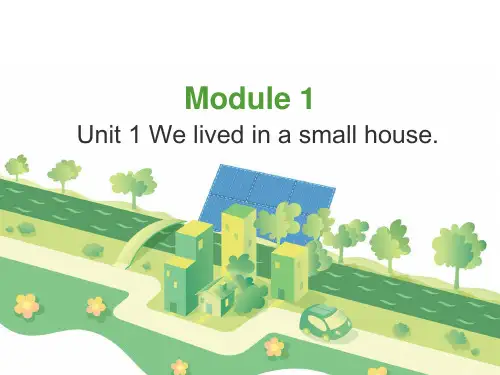
Now
We live in a big house. We have got lots of food.
表示现在“ 有”或 “没有” There is / are… There isn’t / aren’t…
表示过去“ 有”或 “没有” There was/ were… There wasn’t / weren’t…
New words
lady
interviewer
New words
grandparent
grandchildren
New words
Life was very different in China many years ago.
life
ago
still
enough
Listen and read.
Many years ago
There weren’t any buses. There weren’t any televisions.
ቤተ መጻሕፍቲ ባይዱ
Now
There are lots of buses and cars.
Many years ago
We lived in a small house. We didn’t have enough food.
2. 采访家里的老人,询问他们过去的 生活与现在的生活有什么不同,并仿照 Part3向你的朋友描述这些变化。
3. 预习Module1 Unit2。
Listen and say.
Practise.
描述自己过去的生活,并描述自己现在的 生活,对比发生了哪些变化。
Summary
对比过去和现在,能描述生活 发生的变化。 We lived in a small house. There weren’t many buses.
2019版五年级英语下册Module9Unit2MumboughtnewT_shirtsforyou教学课件外研版(三起)
Mum bought new T-shirts for you.
Poem.
Do you agree, do you agree, that there are monkeys in that tree? Yes, you're right. I do agree. Look very carefully, there are three. Do you agree, do you agree, that there are boats there in the sea? Yes, you're right. I do agree. There are boats, and there are three.
bed
room
history evening
Look, what did he/she do yesterday?
He watched TV yesterday.
He ate an apple yesterday.
She cleaned her room yesterday.
He played basketball yesterday.
1. We are going to see you in three weeks.
2. Dad's goroom.
3. He is going to ask you some questions.
Listen and repeat the sentences which contain "going to".
What day is today?
Today is May 18th.
What day is tomorrow? Tomorrow is May 19th.
五年级英语下册 Module 9 Unit 2 see you soon课件(2) 外研版(三起)
bed
room
history
evening
Look, what did he/she do yesterday?
He watched TV yesterday.
He ate an apple yesterday.
She cleaned her room yesterday.
He played basketball yesterday.
2. Who bought new chopsticks?
Simon's mum.
3. Who read a book about Chinese history?
Simon's dad.
4. What did they borrow for Daming?
A bike.
Please use these words to write a letter.
Homework.
写一封信给你的好朋友。
Review.
go---- went is---- was do---- did sing---- sang wear---- wore laugh----laughed are---- were swim---- swam tell---- told eat---- ate buy---- bought run---- ran
Group cooperation: Read the text each other.
Answer the questions.
1. What is Dad going to put in Simon's room?
Dad's going to put another bed in Simon's room.
外研版(三起)英语五年级上册Module9Unit1Areyoufeelingbored?课件
Look and say.
Look, listen and say.
Read and find.
Are you feeling sad?
Yes, I am.
Are you feeling happy now? No, I'm not.
feel : “感觉,觉得”,系动词
Are you feeling + 形容词? 你觉得······吗?
1.What's the matter with Lingling's grandma? She is ill.
2.Is Lingling feeling happy now? Yes, she is.
Language point.
Your grandma is better now. 你的(外)祖母现在恢复健 康了。
Is she feeling sad?
No, he/she isn't.
Is + 单三/人名 + feeling + 形容词? 某人觉得······吗?
Listen and say.
Practise.
Homework
1. 抄背: 本课新词。 2. 听并跟读书本P50-52句子。
Thank you!
The boy is better now. 那个男孩现在恢复健康了。
better 痊愈的, 恢复健康的
ill happy
反义词
better
sad
Read and find.
Is Lingling feeling bored?
Is he feeling angry? Yes, he/she is.
Module 9
外研版三起五年级英语下册Module10 Unit1 Where are you going?课件

Safe trip, Daming!
一路平安!
Listen and imitate.(注意模仿语音语调)
●Listen and imitate(跟读) ● Read together(齐读) ●Role play(分角色朗读)
Read and fill:
Daming is going to the _a_i_rp_o_r_t .
When ,Who 的句子)
1.Where are you going ?
2.What are you going to take?
3.When are you going to the airport?
4.Who’s going to the airport with you?
Listen and choose.
Are you ready for your trip?
A:Where are you going? B:I'm going to.....
Beijing
Qingdao
Hainan Shanghai
A:What are you going to take? B:I’m going to take…
B: I’m going to there…
A: Who’s going with you ?
B: …is going to go with me.
My travel plan
On summer holiday, I’m going to Beijing . I`m going to take ticket,clothes and shoes . I`m going to go there at six o’clock in the morning. I`m going to go with my sister .
(外研版 三起)五年级英语上册Module9《Feelings》第一课时Unit 1教案
外研版三起五年级英语上册Module9《Feelings》第一课时Unit1教案课时目标1.掌握单词:happy, sad, angry, tired。
2.应用目标单词,表达自己的感受。
3.通过短语练习,加强对目标单词的理解。
4.通过讲故事的方式,让学生品尝不同的情绪,并激发学生表达的兴趣。
教学重点1.目标单词:happy, sad, angry, tired。
2.该单词的使用——如何以口音正确地发音。
3.学习短语以及如何使用其表达情感。
教学备件PPT,卡片。
教学流程1.开始课堂:让学生用单词或短语形容自己感觉如何。
2.班轮阅读:让学生依次介绍自己,并利用所学单词和短语表达自己的感受。
3.目标单词学习:使用图片等工具,帮助学生正确理解目标单词及其发音。
4.词汇学习:结束课件学习后,每位学生拿到一张卡片,快速说出相应单词的短语。
5.在故事中了解新情绪:通过讲故事的方式,让学生更好地理解不同的情绪,并激发学员表达的兴趣。
6.回家任务:鼓励学生在回家后与家人讨论有关情感的话题。
教学方法1.利用多媒体工具让学生感知和领悟单词。
2.利用互动的方式,帮助学生更好地掌握单词的应用方法。
3.结合故事来引出新情绪,帮助学生更好领悟情感的表达。
友好提示1.对于某些喜爱冷落的学生,课堂练习可安排为两个人一组,根据对方的感受来表达对方的情感,以培养他们更多的同理心。
2.对于那些腼腆的学生,老师应该给予足够关注和引导,鼓励他们表达自己的感受,并告诉他们表达情感的重要性并强调作为一个英语学习者需要与外国人用英语交流的必要性。
3.需要在适当的时候使用肢体语言、表情和有趣的动作片段来调动学生对教学的兴趣和注意力。
课后作业1.看一些有趣的英语故事,并根据故事内容练习说出故事人物的情感。
2.使用所学单词,练习描述自己的情感,并在分享时积极评价其他同学。
3.向家人或朋友介绍课上学到的新单词和表达方法,并通过自主表达的方式打造一个有关情感的小故事。
外研版 五年级下册《单元 1 We laughed a lot》同步练习卷
外研版(三起)五年级下册《Module 9 Unit 1 We laughed a lot》小学英语-有答案-同步练习卷一、写出下列动词的过去式.1. 写出下列动词的过去式.(1)laugh________(2)wear________(3)see________(4)get________2. 写出下列动词的过去式.(1)go________(2)tell________(3)eat________(4)play________二、单项选择.I _____ a dog yesterday.()A.seeB.sawC.sees1 saw a man. He_____ a skirt.()A.wearB.wearsC.woreI have got one letter _____ the UK.() A.from B.on C.inThe actors _____ lots of jokes.()A.tellsB.tellingC.toldIt was very funny. We _____ a lot.()ughughedughing三、连词成句.连词成句.men's women clothes The wore (.)________连词成句.funny lt very was (.)________连词成句.restaurant We went after a show to the (.)________连词成句.week What do last he did (?)________连词成句.jokes lots actors of told The (.)________四、情景交际.当你想知道对方昨天晚上做什么了时,可以说()A.What do you do at night?B.What did you do last night?当你想说大明讲了许多笑话时,可以说()A.Daming told a lot of jokes.B.Daming laughed a lot.当你想说那只猴子穿着一件外套时,可以说()A.The monkey wears a hat.B.The monkey wears a coat.五、阅读短文,判断正(T)误(F).阅读短文,判断正(T)误(F).Dear Ann,How are you? I'm very happy to meet you soon. Yesterday I watched a TV programme. The baby wore his mother's dress and wore his father's shoes. It was very funny. The actor told lots of jokes. I laughed a lot. My parents and I are going to see you next month. My mother is going to buy a new book for you. I have many things to do with you. We can watch TV ,do homework and listen to music every day.See you soon.Daming(1)Daming will come to visit Ann next month.________(2)The programme wasn't very funny.________(3)The baby wore his father's shoes and his mother's dress.________(4)They can play football every day.________(5)Daming's mother will buy a new book for Ann.________参考答案与试题解析外研版(三起)五年级下册《Module 9 Unit 1 We laughed a lot》小学英语-有答案-同步练习卷一、写出下列动词的过去式.1.【答案】laughed,wore,saw,got【考点】一般过去时,动词过去式【解析】(1)笑(2)穿(3)看到(4)得到【解答】考查动词的过去式.(1)laughed.laugh笑,是动词,过去式是laughed.故答案为:laughed.(2)wore.wear穿,是动词,过去式是wore.故答案为:wore.(3)saw.see吃,是动词,过去式是saw.故答案为:saw.(4)got.get得到,是动词,过去式是got.故答案为:got.2.【答案】went,told,ate,played【考点】一般过去时,动词过去式【解析】(1)去(2)告诉(3)吃(4)玩【解答】考查动词的过去式.(1)went.go去,是动词,过去式是went.故答案为:went.(2)told.tell告诉,是动词,过去式是told.故答案为:told.(3)ate.eat吃,是动词,过去式是ate.故答案为:ate.(4)played.play玩,是动词,过去式是played.故答案为:played.二、单项选择.【答案】B【考点】一般过去时,动词过去式【解析】昨天我看到一条狗.【解答】考查动词的过去式. yesterday昨天,可知句子是一般过去时,动词用过去式saw.故选:B.【答案】C【考点】一般过去时,动词过去式【解析】我看见一个男的.他穿着裙子.【解答】考查动词的过去式.从saw,判断句子是一般过去时,动词用过去式wore.故选:C.【答案】A【考点】介词【解析】我有一封来自英国的信件.【解答】考查介词的辨析.from来自,on在…上面,in在…里面.由题,a letter from the UK一封来自英国的信件,符合题意.故选:A.【答案】C【考点】一般过去时,动词过去式【解析】演员们讲了很多笑话.【解答】考查动词的过去式.根据题干:句子中动作已经过去,句子使用一般过去时,动词用过去式told.故选:C.【答案】B【考点】一般过去时,动词过去式【解析】它很有趣.我们大笑.【解答】考查动词的过去式.从was判断句子是一般过去时,动词用过去式laughed.故选:B.三、连词成句.【答案】The women wore men's clothes.【考点】连词成句【解析】女人们穿了男人的衣服.【解答】考查连词成句,首先根据所给词汇及标点,可确定组合的句子为一般过去时的陈述句,组合的句意:女人们穿了男人的衣服.The women 女人们,做主语,放于句首;wore穿了,做谓语,放于主语后; men's clothes男人的衣服,做宾语,放于句末,结合整句及英语表达的习惯作答.故答案为:The women wore men's clothes.【答案】It was very funny.【考点】连词成句【解析】它非常有趣.【解答】考查连词成句,首先根据所给词汇及标点,可确定组合的句子为一般过去时的陈述句,组合的句意:它非常有趣. It 它,做主语,放于句首;is是,系动词,放于主语后;very funny非常有趣,做表语,放于系动词后,位于句末,结合整句及英语表达的习惯作答.故答案为: It was very funny.【答案】We went to the restaurant after a show.【考点】连词成句【解析】演出结束后我们去了餐厅.【解答】考查连词成句,首先根据所给词汇及标点,可确定组合的句子为一般过去时的陈述句,组合的句意:演出结束后我们去了餐厅.We 我们,做主语,放于句首;went to 去…,做谓语,放于主语后;the restaurant餐厅,做宾语,放于to后;after a show演出后,介词短语,表示时间,放于句末,结合整句及英语表达的习惯作答.故答案为: We went to the restaurant after a show.【答案】What did he do last week?【考点】连词成句【解析】他上周做了什么?【解答】考查连词成句,首先根据所给词汇及标点,可确定组合的句子为一般过去时的特殊疑问句,组合的句意:他上周做了什么?What什么,特殊疑问词,提出疑问,放于句首;did助动词,引导一般过去时一般疑问句,放在特殊疑问词后;he他,做主语,放于助动词后,主谓倒置;do做,是谓语动词,放于主语后,last week时间短语,常放于句末,结合整句及英语表达的习惯作答.故答案为: What did he do last week?【答案】The actors told lots of jokes.【考点】连词成句【解析】演员们讲了很多笑话.【解答】考查连词成句,首先根据所给词汇及标点,可确定组合的句子为一般过去时的陈述句,组合的句意:演员们讲了很多笑话.The actors演员们,做主语,放于句首; told 讲了,做谓语,放于主语后;lots of jokes很多笑话,做宾语,放于句末,结合整句及英语表达的习惯作答.故答案为:The actors told lots of jokes.四、情景交际.【答案】考查情景询问.What do you do at night你晚上做什么?What did you do last night你昨晚做了什么?当你想知道对方昨天晚上做什么了时,可以说What did you do last night?你昨晚做了什么?故选:B.【考点】情景交际【解析】What did you do last night?你昨晚做了什么?【解答】考查情景询问.What do you do at night你晚上做什么?What did you do last night你昨晚做了什么?当你想知道对方昨天晚上做什么了时,可以说What did you do last night?你昨晚做了什么?故选:B.【答案】该题考查交际用语.Daming told a lot of jokes大明讲了很多笑话.Daming laughed a lot大明笑得很开心.当你想说大明讲了许多笑话时,可以说Daming told a lot ofjokes.大明讲了很多笑话.故选:A.【考点】情景交际【解析】Daming told a lot of jokes.大明讲了很多笑话.【解答】该题考查交际用语.Daming told a lot of jokes大明讲了很多笑话.Daming laughed a lot大明笑得很开心.当你想说大明讲了许多笑话时,可以说Daming told a lot ofjokes.大明讲了很多笑话.故选:A.【答案】该题考查交际用语.The monkey wears a hat那只猴子戴着一顶帽子.The monkey wears a coat那只猴子穿着一件外套.当你想说那只猴子穿着一件外套时,可以说The monkey wears a coat.那只猴子穿着一件外套.故选:B.【考点】情景交际【解析】The monkey wears a coat.那只猴子穿着一件外套.【解答】该题考查交际用语.The monkey wears a hat那只猴子戴着一顶帽子.The monkey wears a coat那只猴子穿着一件外套.当你想说那只猴子穿着一件外套时,可以说The monkey wears a coat.那只猴子穿着一件外套.故选:B.五、阅读短文,判断正(T)误(F).【答案】T,F,T,F,T【考点】判断正误【解析】亲爱的Ann,你好吗?我很高兴很快能见到你了.昨天我看了一个电视节目.一个小宝宝穿着他母亲的衣服和他父亲的鞋.这很有趣.那个演员讲了很多笑话.我笑了许久.我父母和我下个月要来看你.我妈妈打算给你买一本新书.我和你有很多事情要做.我们可以每天看电视,做作业和听音乐.再见.大明【解答】本题主要考查判断正误.(1)T.由文中关键句I'm very happy to meet you soon.可知,大明很快就会来看望Ann.说法正确.故答案为:T.(2)F.由文中关键句Yesterday I watched a TV programme.The baby wore his mother's dress and wore his father's shoes.It was very funny.可知,这个电视节目很有趣,而不是没趣.说法错误.故答案为:F.(3)T.由文中关键句The baby wore his mother's dress and wore his father's shoes.可知,小宝宝穿了爸爸的鞋子,妈妈的裙子.说法正确.故答案为:T.(4)F.由文中关键句We can watch TV,do homework and listen to music every day.可知,他们每天会看电视,做作业,听音乐,而不会踢足球.说法错误.故答案为:F.(5)T.由文中关键句My mother is going to buy a new book for you.可知,大明的妈妈将会为Ann买一本新书.说法正确.故答案为:T.。
外研社(三起)小学英语五年级下册Unit 1[2] 课件
Who are they?
They are Lingling’s ___________.
grandparents
What’s his/her job?
dancer
driver
舞蹈演员
Read and choose.
1. Where did grandma dance? A. In China. B. In England. C. In America. 2. Did she learn any foreign languages? A. Yes, she did. B. No, she didn’t. C. We don’t know.
grandparents
was
danced
learnt
was
didn’t
learning
Amy: Did your grandma learn any foreign languages? Lingling: Yes, she learnt English.
Practise.
Look, ask and answer. Then write.
A: Did she make a cake yesterday? B: No, she didn’t.
She didn’t make a cake yesterday.
×
_____________________________
Listen and chant.
Who is she?
What did she do? Watch the video and answer.
She is Ms Smart.
She learnt to dance.
外研版(三起)-英语-五年级下册--Module9 Unit 2教材同步讲解
Unit 2:Mum bought new T-shirts for you.(第二单元:妈妈给你买了新的T恤衫o)(教材53~55页)1.Listen and chant.听一听,唱一唱o(教材第53页)课文英汉互译He borrowed some books. And he read them all.他借了一些书。
并且他把它们全读完了。
He bought some books. But he didn't read atall.他买了一些书。
但是他根本没读。
袋新词速记borrow/bDrau/v.(动词)借入,借来短语:borrow a book借一本书例句:I borrowed a book yesterday.我昨天借了本书。
反义词.lend借出read/ri:d/v.(动词)阅读短语:read books读书例句:I read a story book.我读了一本故事书。
1. Daming bought a new story book. I want to __________ it.A. borrowB. borrowsC. borrowed2. My father __________ a newspaper last night.A. readsB. readC. reading答案速查1.A 2.B@熏难点精析一、borrow的用法1.He borrowed some books.他借了一些书。
【点拨】borrow是以借者为主体,从他人处借入、借进来某东西为自己所用。
虽是及物动词,但其后一般接的宾语为没有生命的而不是人。
常用结构为.Borrow sth from sb或borrow sb's sth。
例如:I borrowed a pen from him.戒从他那里借了一支钢笔。
I borrowed his pen because mine was broken.我借了他的钢笔,因为我的坏了。