
英语人教版八年级下册现在完成时:
---Have you read Oliver Twist yet? ---Yes, I have. ---No, I haven’t.
---what do you think of it?
---Have you read Tom Sawyer yet? ---Yes, I have. ---No, I haven’t.
---what do you think of it?
Dream of the Red Chamber The Story by the Water Margin
Journey to the West.
I read them in the high school. I have already read four of them.
---Have you read Alice in Wonderland yet? ---Yes, I have. I have already read it. ---No, I haven’t. I haven’t read it yet.
---What do you think of it? ---I think it is…
Unit 8
Have you read Treasure Island yet?
Survey
What kind of books do you like best?
Lead in
• Do you often read English books? • What classic books have you already read? • What’s it about? • And what’s it like?
Have you heard of these books?
---Have you read Alice in wonderland yet? ---Yes, I have. ---No, I haven’t.
---What do you think of it? ---I think it is…
---Have you read Robinson Crusoe yet? ---Yes, I have. ---No, I haven’t. ---What do you think of it?
---Have you read Little Women yet? ---Yes, I have. ---No, I haven’t.
汤姆.索亚历险记
金银岛 鲁滨逊漂流记 爱丽丝梦游仙境
T: Have you read Treasure Island yet? A: Yes, I have. B: No, I haven’. T: What do you think of it? A: I think it is… exciting
The Romance of the Three Kingdoms
Have you read these books yet?
Treasure Island
Alice in Wonderland
雾都孤儿
小妇人
Little Women
Robinson Crusoe Oliver Twist Tom Sawyer
• 不规则变化需要熟读记忆
标志词
• 现在完成时常与以下副词搭配使用: already, yet, just, ever, never…
---what do you think of it?
---Have you read Tom Sawyer yet? -----Not yet.
---what do you think of it?
语法点拨
含义
标志词
现在完成时 结构
过去分 词变化
现在完成时的含义
• 表示过去发生的动作或事情对现在的影 响或者是结果 • 过去发生的动作一直延续到现在,而且 有可能继续延续下去
---Have you read Robinson Crusoe yet? ---… ---… ---What do you …?
---Have you read Little Women yet? ---… ---…
---What do you think of it?
---Have you read Oliver Twist yet? -----
结构
• have / has + 动词的过去分词
过去分词
• 规则变化同过去式的规则
• 1. 一般动词在结尾加“ed”。work—worked— worked • 2. 以“e”结尾的动词,在词尾加“d”。live— lived—lived • 3. 以“辅音字母+y”结尾的动词, 将“y”变i,再 加“ed”。study—studied—studied • 4. 重读闭音节结尾,末尾只有一个辅音字母,先 双写这一辅音字母,再加“ed”。stop—stopped— stopped
英语人教版八年级下册复习现在完成时态

复习现在完成时The Present Perfect Tense嵩阳街道二中余海红复习现在完成时The Present Perfect Tense Teaching aims:1. 语言知识目标:复习现在完成时的构成和两种基本用法;2. 能力目标:①现在完成时与一般过去时的区别;②现在完成时中动词延续性的用法。
3.情感目标:培养学生的竟争意识和团队精神。
Teaching Importance:现在完成时的用法及各种句式。
Teaching difficulties:Since+时间点,for+时间段Teaching procedure:Step 1:GreetingsIncluding show study aims quickly.(精彩早知道)Step 2. Review some tenses have learned.Step 3. Presentation. (我展示,我精彩,我成功,我快乐!)一、含义:①过去发生的动作对现在造成的影响或结果。
“过去对现在”(瞬间动词)I have just had my breakfast.(现在我不饿)②过去已经开始,持续到现在的动作或状态。
“过去到现在”(延续性动词)I have lived here for three years.I have lived here since 2014/three years ago.二、特点1.动作已经发生。
2.没有具体的时间状语。
3.强调结果。
三、现在完成时的句型结构:肯定句:主语+助动词have (has)+过去分词”+其它否定句:主语+haven’t(hasn’t)+过去分词+其它。
一般疑问句:Have /Has+主语+过去分词+其它?肯定回答:Yes, sb.+have (has).否定回答:No, sb.+haven’t (hasn’t).Step4.Make sentencesLook at the pictures and make sentences.I have finished my homework.I haven’t finished my homework.Have you finished your homework?Yes, I have. / No, I haven’t.Step5.复习动词过去分词的构成:1.规则动词的过去分词和过去式一致;2.不规则动词的变化形式没有规律,需要记忆。
人教版八年级英语下册现在完成时讲解及练习
人教版八年级英语下册现在完成时讲解及练习现在完成时讲解现在完成时的基本结构是助动词have/has加上过去分词(done)。
在否定句中,主语后面要加上not,构成have/has not的形式。
在一般疑问句中,have/has要提到主语前面。
简略答语中,肯定回答要用Yes,后面跟主语和have/has;否定回答要用No,后面跟主语和haven't/hasn't。
现在完成时可以表示过去发生或已完成的动作对现在的影响或结果。
比如说,“I have spent all of my money (so far)”表示现在我没有钱花了。
另外,现在完成时也可以表示发生在过去某一时刻的、持续到现在的动作或状态。
这时常常和for(+时间段)或since(+时间点或过去时的句子)连用。
例如,“Mary has been ill for three days”表示玛丽已经生病三天了,“I have lived here since 1998”表示我自1998年以来一直住在这里。
现在完成时还有一些标志词,可以表达过去完成的动作对现在的影响。
这些标志词包括already、just和yet。
例如,“He has al ready got her help”表示他已经得到她的帮助,“He hasn't come back yet”表示他还没有回来。
This is the best film I have ever seen。
I have never seen a better movie before.He has never been to Beijing before。
He has never had the chance to visit Beijing.He says he has been to the USA three times already。
He has had the opportunity to visit the USA on three separate ns.So far。
人教版英语八年级下册现在完成时(易懂版本)

现在完成时一、两个含义:①表示动作发生在过去,但对现在的情况造成了影响。
(借古讽今)He opened the door.The door is open.I saw the movie.I have seen the movie.I got married.I have got married.②表示从过去某一时间开始一直延续到现在并还可能继续延续下去的动作,用于延续性动词,且句中常带有表示一段时间的时间状语,如:since + 时间点/从句,for two months, so far等。
(从古至今)I have learned English for 10 years/since 10 years ago.I have lived in Chengdu for 12 years/since 12 years ago.I have been a teacher for 2 years/ since 2 years ago.二、构成have/has+动词的过去分词(done)三、标志词for, since, already, yet, before, recently, over the …., in the past few…..四、already与yet的区别already用于肯定句(已经)yet用于否定句(还)和疑问句(已经)ever & neverever作副词,意为“曾经”,常用于现在完成时的一般疑问句和肯定句中,置于主语之后,过去分词之前。
never作副词,意为“从不;从未”,用于现在完成时中,表示否定,位于助动词have/has之后,过去分词之前。
五.have been to & have gone to & have been inhave been to 去了某地,已回have gone to 去了某地,未回have been in 在哪里待了多久后面是地点副词there、here、home 时,省略to六、延续性和非延续性1. 含义:延续性动词表示能够延续的动作,这种动作可以延续下去或产生持久影响。
Unit8现在完成时课件人教版八年级英语下册

1.找
2. 变
3.去
4.加
What have they haddaomeal at a restaurant since they left school?
特殊疑问句
特殊疑问句= 特殊疑问词+ 一般疑问句
what who when which why what color what time
代替事物、事情 代替人 代替时间 代替事物,表选择 代替原因 代替颜色 代替时间点
2、before 表示之前发生的事情,放在句末。 I have been。
现在完成时的时间状语:
3、yet 放在否定句和一般疑问句句末。
just, before, recently,still, lately, never, ever, twice, on several occasions, in the past/weeks/months/years, till now.
6、ever
表示经常的或习惯性的动作,常与表示频率的时间状语连用。 放在 have/has后面,动词后面
例句:Their debts have grown ever larger. 他们的债务不断增加。
根据句意,完成下列句子 1,They _h_a_v_e_g_o_n_e (go) to the Beihu Park this year.
2,以不发音的e结尾
+d
3, 辅音字母+y结尾
改y为i+ed
4,以重读闭音节结尾, 双写该辅音字母
末尾只有一个辅音字母
+ed
示例
work---worked visit---visited
live---lived hope---hoped
现在完成时(unit8--unit10知识点总结)人教版英语八年级下册

现在完成时一.定义三要素与构成〔has/have done〕1.表示到现在为止已经完成或刚刚完成的动作。
By now, I have remembered 1000 English words.2.一件发生在过去的事情对现在产生影响。
常见时间状语:常和already〔已经〕,yet〔已经〕,just〔刚刚〕,still〔仍旧〕,so far〔到目前为止〕,till now,(直到现在),before〔以前〕,ever〔曾经〕,3 times(三次),in the past/last..years(在过去几年)I have spent all of my money so far.(1)already:〔已经〕用于确定句位置:放于助动词与done 之间或者放在句末(2)yet:疑问句〔已经〕否认句〔还〕位置:常放句尾(3)ever(曾经):疑问/确定位置:助动词与done之间(4)never〔从不〕位置:助动词与done之间【练习】〔1〕——你吃过早餐了吗?—Have you had breakfast ____?——是的,我已经吃过了。
/不,我还没吃。
—Yes,I have ________ had it./No,I haven’t had it ____.〔2〕I have ______ read this book,so I don’t know what it is about.〔3〕—Have you _____ been to the Great Wall? It’s so wonderful and great.—No,I have ______ been there.3.一个动作开头于过去,并持续到现在〔或许还将持续下去〕。
常见时间状语:①for+一段时间“长达/持续了……②since+过去一个时间点,表示“自从……以来〞时间段+ago,表示“从……以前〞+for+时间段从句〔一般过去时〕eg:Mary has been ill for three days.We have been classmates since 2 years ago.【练习】〔1〕我已经住在这里十年了。
人教版英语八年级下册第八单元:现在完成时语法
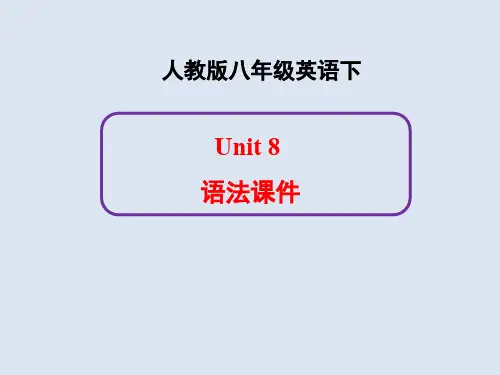
你已经读完这本书了么? yet 一般用于疑否句中,在句中意为“已经”;在否 定句中意为“还”通常放于句末。 如: Have you found the book yet ?
你已经找到那本书了么? Not yet . 还没找到。 She hasn’t finished her homework yet.
He _h_a_s_n_’_t __f_in_i_s_h_e_d__ his homework _y_e_t__. 3. Mum’s cooked the dinner. (改为否定句)
Mum _h_a_s_n_’t__ _c_o_o_k_e_d_ the dinner.
4.She joined the music club last week.( 改为现在完成时 ) She h_a_s_ _b_e_en__ _i_n___the music club __f_or__two weeks. 适当形式填空 5.He ____ha_s__le_ft____(leave ) the country and gone to India. 6.I have __be_e_n__(be )here for two months. 7.I’m waiting for my son . He __h_a_s_n’t__c_o_m_e_( not come )
---They have been here since 2008. Tom bought the car in 2009
---Tom have had the car since 2009.
语法加油站
一、句型转换。 1. I’ve already had dinner. (改为一般疑问句)
人教版八年级英语下册现在完成时
2. 辨析:for & since 的用法(表示动作或状态的持续)
标志词
含义
for + 时间段短语
“持续了…时间”
since + 时间点从句
“自从…”
【总结】 • 提问用how long,回答时两者一般放在句末,since可以放在句首 • 该时态与for/since连用表示动作或状态的持续时,使用延续性动词 • 若since引导从句,从句使用一般过去时
【练习3】选出正确选项。 ( B ) 1. Mathew_______ already _______ in Stone Town since 1998.
A. have, lived
B. has, lived
C. have, live
D. has, living
( C ) 2. We have been good friends since they ______ to China.
have been away from
have, lived
B.
came
D.
• ever 【adv.曾经】 _____________________________________
• never 【adv.不曾】
他刚来到。 He has just come. 我已经把邮件发送出去了。 I have already sent the email. Betty曾经到过上海。 Betty has ever been to Shanghai. 她不曾看过这部电影。 She has never seen this film.
3. 延续性动词 & 非延续性动词
【非延续性动词转化成延续性动词】 • 实质:瞬间行动作 → 状态
英语人教版八年级下册Unit 8 语法——现在完成时态
eg: 1. My mother has just washed the clothes. 2. She never met the boy before. 3. Has she ever heard of this song? 4. He has been there three times in the past few years. 5. How many times have you been there this year?
过去
现在
将来
一般过去时态 过去进行时态
一般现在时态 现在进行时态
一般将来时态
过去
发生的动 作或行为
现在
强调现在 的状态
造成影响或结果
现在完成时态
I have already eaten my breakfast. 我已经吃过早饭了。
发生在过去的动作或行为(eat breakfast) 对现在造成的结果就是“现在肚子是饱的”
用法: 1. 表示过去发生或已经完成的某一动作对现在造成的影响或结果,并强调这一 影响。常用的时间状语有 just, yet,already,ever,never,before,in the past few years,so far等等。 2. 表示发生在过去的某一动作一直延续到现在,并且有可能继续延续下去。 常用的时间状语有“for + 一段时间”,“since + 表示过去的时间点或从句”。
辨别: I did my homework for an hour last night. I have done my homework for an hour .
注: 现在完成时态的这一用法句子的谓语动词必须为延 续性动词。
eg: Jane has waited for her friend for a long time.
英语人教版八年级下册现在完成时
现在完成时一、 (1) 概念:现在完成时表示过去发生或已经完成的动作:现在完成时表示过去发生或已经完成的动作,,对现在造成的影响或结果。
对现在造成的影响或结果。
1. I have already c leaned cleaned my room. 我已经打扫了我的房间。
我已经打扫了我的房间。
2. We have finished our homework. 我们完成了作业。
我们完成了作业。
3. They have swept the floor. 他们扫了地。
他们扫了地。
4. She has read t hat book. that book. 她读了那本书。
她读了那本书。
5. Tom has broken the window. Tom 打碎窗户。
打碎窗户。
现在完成时的构成现在完成时的构成: : 主语主语 + + + +1. I haven haven’’t cleaned my room yet. 我还没打扫了我的房间。
我还没打扫了我的房间。
2. We haven haven’’t finished our homework. 我们没完成作业。
我们没完成作业。
3. They haven haven’’t swept t he floor. the floor. 他们没扫地。
他们没扫地。
4. She hasn hasn’’t read t hat book. that book. 她没读那本书她没读那本书5. Tom hasn hasn’’t broken t he window. Tom the window. Tom 没有打碎窗户。
没有打碎窗户。
否定句否定句: : 主语主语主语 + + + + + +1. Have you c leaned cleaned my room?Yes,I have.2. Have y ou you finishedour homework? No,I haven ’t. 3. Have they swept t he floor?the floor? Yes,they have. No,they haven ’t.4. Has she read t hat book?that book? Yes,she has. No,she hasn hasn’’t.5. Has Tom broken t he window?the window? Yes,Tom has. No,Tom hasn ’t.一般疑问句一般疑问句: : 助动词助动词助动词 + + ? + + ?(2) 现在完成时的基本句型:肯定句:肯定句:否定句否定句: : 一般疑问句:一般疑问句:二、现在完成时标志词1.I have already lost the key.2.She hasn ’t told us the news yet .3.Have you decided to go yet ?4.I have just cleaned my hands.5.John has never been to Nanjing6.Have you ever been to a museum?7.He has stayed here since 5 5 o o ’clock.David has lived here since 1992.8.He has has stayed stayed stayed here here since 5 5 hours hours hours ago. ago.His father has been in the Party since 10 years ago.9.She has taught English since he he came came came here. here.She has taught us since I came to this school.10.He has kept the book for 2 weeks.I have had this dictionary for t hree years.three years. Since: (自…以来)(1)(2)(3)for(长达)just (谓语动词之前谓语动词之前谓语动词之前) before() before(句末)句末) so far so far 到目前为止到目前为止in the past/last few years(过去几年来过去几年来) )练一练:练一练:选用选用 for for 和 since 填空填空: :1.We haven ’t seen each other ______ a long time.2.His father has been in the Party ______ 10 years ago.3.The film has been on ______ 20 minutes.4.Mr Green has worked here ______ he came to China.5.His grandparents have been dead ______ several years.6. It ’s five years _______ we met last time.1.The house is dirty. We _______it for weeks.A didn ’t cleanB hadn ’t cleanedC don ’t cleanD haven ’t cleaned2. ---Have you found your keys _______---Yes, I have _______ found them.A already; yetB yet;alreadyC already;alreadyD yet;yet3.3. -- I ’m sorry to keep you waiting.--Oh, not at all. I _____here only a few minutes.A have beenB had beenC wasD will be4.4. You don ’t need to describe her. I _______ her several times. A. had met B have met C met D meet5. --Will you go to Beijing for vacation ?--I _______ to go , but I don ’t know if I can go .A was planningB have plannedC had been planningD have been planning planning6. --When will they leave ?--They ______very soon .A do leaveB are leavingC have leftD leave7 --Was he studying for an exam ?--Yes , he's ____ it last week.A doingB to takeC makingD to give8.The teacher told the pupils that the earth ____ round.A isB wouldC wasD were9.9. She _______ such an interesting book before.A was never readingB will never readC had never readD has never rea10.10. How long do you think the meeting ______A is lastingB is lastedC will lastD lasts11. 11. I ____________(wait) for him for two hours . I am very angry . I ____________(wait) for him for two hours . I am very angry .12. 12. He _________ (be) a doctor since he was twenty .13. 13. The film __________ (be) on for fifteen minutes .14. 14. ____ you ever ____ (read) that book before ?15. 15. ____ you ever ____ (try) to change her ?16. 16. No one ____________ (arrive) here yet . No one ____________ (arrive) here yet .17. 17. ______ the bus _____ (leave) yet ?18. 18. I____ I____ I____ already already already ______ ______ ______ (see) (see) (see) the the the film. film. film.19. 19. My My My father father father ____ ____ ____ just just just _____ _____ _____ (come) (come) (come) back back back from from from work. work.20. 20. I I I _____________ _____________ _____________ (work) (work) (work) here here here since since since I I I ______ ______ ______ (move) (move) (move) here here here in in in 1999. 1999. 21. 21. So So So far far far I I I _______________(make) _______________(make) _______________(make) quite quite quite a a a few few few friends friends friends here. here.22. 22. -How -How -How long long long _______ _______ _______ the the the Wangs Wangs Wangs _______(stay) _______(stay) _______(stay) here? -For here? -For two two weeks. weeks. weeks.23. 23. I I I ________ ________ ________ just just just ___________ ___________ ___________ (finish) (finish) (finish) my my my homework. homework. homework.24.______ 24.______ you you you ______ ______ ______ (find) (find) (find) your your your science science science book book book yet? yet?一般过去时与现在完成时之比较1)一般过去时表示过去某时发生的动作或单纯叙述过去的事情,强调动作,和现在不发生关系。
2024年+寒假语法:现在完成时人教版八年级英语下册
Lesson10时态:现在完成时一、定义:1. 表示过去发生或已经完成的动作对现在造成影响或结果。
2. 表示从过去开始,一直持续到现在的动作或状态。
二、构成:(1)肯定式:主语+ has/have + 过去分词+ 其他。
eg: I have cleaned the room. (我已经打扫过房间了。
)(2)否定式:主语+ has/have + not(hasn’t/haven’t) + 过去分词+其他。
eg: I haven’t cleaned the room. (我还没有打扫过房间了。
)(3)疑问句:Have/Has + 主语+ 过去分词+ 其他。
eg: Have you cleaned the room? (你打扫过房间了吗?)(4) 简略答语:Yes, 主语+ have/has./ No, 主语+ haven’t /hasn’t. eg: Yes, I have. (是的,已经打扫过了。
) / No, I haven’t. (不,还没有打扫过。
)三、过去分词1. 规则动词:规则动词的过去分词的构成规则与规则动词的过去式的构成规则相同。
四点变化规则:(1).一般动词,在词尾直接加“ ed ”。
work—worked—worked ,visit—visited—visited(2).以“ e ”结尾的动词,只在词尾加“ d ”。
live—lived—lived ,(3)、以“辅音字母+ y ”结尾的动词,将y 变为i,再加“ ed ”。
study—studied—studied ,cry—cried—cried(4)、重读闭音节结尾,末尾只有一个辅音字母,先双写该辅音字母,再加“ ed ”。
stop—stopped—stopped , drop—dropped—dropped2. 不规则动词:cost—cost—cost shut—shut —shut spread —spread—spreadread —read —read (read原形发音为/ri:d/,过去式和过去分词发音为/red/)come —came —come burn— burnt —burnt catch —caught —caught dig —dug —dug feel —felt —felt fight—fought — fought make—made — made break —broke —broken choose—chose—chosen write —wrote —written四、现在完成时的用法及标志1. 表示过去发生的动作对现在造成的影响或结果。