
最新牛津译林版六年级英语下册第四单元(下)
六年级英语下册第四单元练习
一,短语互译
1、道路安全
2、穿过马路
3、在人行道上等
4、小心汽车
5、乘公交车
6、see you easily
7、talk loudly8、get on
9、a busy road10、to keep safe
二、选择填空
()1、How can you cross the road ? A. safe B. safety C. safely
()2、you must a zebra crossing. A. look at B. look for C. look out of
()3、The students are waiting the pavement A. on B. in C. behind
()4、The child go to school Saturday and Sunday .
A. and
B. between
C. except
()5、Must I go to see the doctor? No, you . You can have a rest.
A. must
B. needn’t
C. mustn’t
()6、There are three bedrooms on floor. A. the first B. one C. first
()7、There any milk in the fridge. A. isn’t B. aren’t C. are
()8、——Can I help you ? ——
A. Yes, you can.
B. I’d like some fruit.
C. No, thanks.
()9、Can you show the way to Zhongshan road?
A. I
B. we
C. me
()10、There is English book on the desk. A. a B. an C. some
三、选词填空
1、Some dogs (crossing\ are crossing)the busy road.
2、You must keep yourself (safe\ safety).
3、It’s late. We (must\ can) run quickly.
4、Dad uses it to clean the window (easy、easily).
5、There isn’t any(bread\ cakes)on the table.
四、根据中文提示完成句子
1、在马路上你禁止做什么?What you on the road?
2、你必须首先看左边,接着右边,然后再左边。
You must first look , then and then left .
3、公交车为什么又在停?is the bus again?
4、你必须保持你的桌子干净整洁You must keep your desk and .
五、英汉互译。
1. 睡觉前
2. 保持房间整洁
3. 跑得快
4. 帮助他的父母
5. 过来看她
6. 一些坏习惯
7. 做得好8. 非常了解
9. put …in order10. show…around
11. 起床早12. before lunch
13. 一些好习惯 14. brush teeth
15. 在街上16. make a big hole
17. 感到困倦的 18. catch the lion
19. 大声笑20. hit the ball hard
六、用所给单词的适当形式填空。
1. My father never (go) to bed early.
2. Mike is brushing his (tooth) in the bathroom.
3. I (finish) my homework early yesterday.
4. Liu Tao should listen to (he ) mother at home.
5. Yang Ling always does (good) at home.
6. My brother (do not )go to school early every day.
致密动脉征
【英文】The dense artery sign
【又名】大脑中动脉高密度征(The hyperdense middle cerebral artery sign;The hyperdense MCA sign;The dense middle cerebral artery sign;The hyperattenuating MCA sign ;HMCA sign ;HMCA)
【表现】CT平扫征象,表现为与对侧相比大脑中动脉的第1到2段密度增加或大脑其他动脉的密度增加。
【解释】致密动脉征是大脑动脉(常见于大脑中动脉)阻塞导致脑梗塞的间接征象。
高密度的成分代表大脑动脉腔内的血块、血栓或栓子。
流动血液的CT值大约是40 Hu,与血红蛋白浓度线性相关,栓塞时血栓内血浆浓缩,血栓的CT值大约是80 Hu,呈现高密度。
【讨论】
致密动脉征,文献认为系血栓所致,其密度(77-89Hu)介于正常血管( 35- 60HU )与钙化斑(114-321Hu)之间,常见于心源性脑梗塞。
大脑中动脉第一段(M1)位于侧裂内,动脉阻塞的机会也较多,从而卒中后显示此征的机会较多,目前已有较多学者进行研究,故又称此征为“大脑中动脉高密度征”。
实际上大脑内的动脉均可发生栓塞而导致脑梗塞,因此,称“致密动脉征”更为恰当。
CT常为急性脑梗塞的首选检查方法,但是,在梗塞后的先头几个小时,CT常表现正常。
当早期缺血性梗塞的影像改变出现时,一开始常为隐蔽的并随时间而明显,熟悉一些急性梗塞的影像征象有助于识别其病因。
在一些研究中,大脑中动脉分布区有脑梗塞的病人,约22.6% -61%出现HMCA征。
血管造影提示,HMCA 征最可能的原因是血栓栓塞。
大脑中动脉阻塞的早期征象包括HMCA征,豆状核征、岛带消失征、低密度灶、占位征及皮质征,这些征象在梗塞后6小时可变得明显,HMCA征从理论上讲可在血管阻塞时就能在CT图像上看见,早于急性脑卒中的其他改变。
另外,HMCA征是一过性的,大多数有急性脑梗塞症状及HMCA征的病人,MCA征在几天内或通过溶栓治疗后消失,证实了血凝块的移动性。
其它CT征象均为不同程度的局部脑水肿所致。
有作者发现脑梗塞后30min既可显示硬膜外压增高,提示有脑水肿,缺血性脑水肿在不同解剖部位和水肿及缺血坏死的不同程度分别引起不同的表现。
豆状核征在6h内组出现频率最高,脑岛带征及皮质征在6-12h组出现最多,低密度灶在12-24h组出现率最高。
当见到HMCA征时,要注意并不总是代表血管阻塞,比如在红细胞压积水平高时,因为血液的CT值增加或者血管壁钙化(常与糖尿病及高血压相关)会出现假阳性。
单侧大脑中动脉高密度比双侧更可靠。
Krings等最近研究认为,35.4%的大脑后动脉梗塞出现“大脑后动脉高密度征”(The hyperdense posterior cerebral artery sign,HPCA),环池内常见,特异性为95.4%,丘脑常被影响,当大脑后动脉高密度征存在,预示梗塞范围相对较大。
本征象有助于大脑后动脉梗塞的诊断。
总之,虽然有假阳性,在已出现脑梗塞症状的病人,致密动脉征有较高的诊断价值,当同时并有其他早期脑梗塞的早期征象时,致密动脉征征可靠性更高。
附图CT平扫示“大脑后动脉高密度征”
女性,67岁,突然发生偏瘫和偏盲。
CT平扫显示环池内的左侧大脑后动脉密度增高(图A、B 箭);1天后CT复查(图C),可见丘脑梗塞灶。
【新】牛津译林版六年级英语下册Unit 4 Road safety 课件 3.ppt
• Traffic lights mean different
• __R_e_d_m_a_n___ stop
• _G_r_e_e_n_m__an__ go
• You must wait
• On the road!
Part 1
How to cross the road safely when there is no zebra crossing?
2. You must first look rilgefhtt, then lreigfht,t and then rliegfht t again.
3. It’s safer to cross the road with other peole. T
pavement
B
Part 2
Part 3
Let’s teach Grandma. Act it out.
How to cross the road
3
without a zebra crossing
TheLroeCoaaknr!eyHomeuaresne’yebstuhtsheyerregodraedmesnainm?tahne. city. YouHoYmowuscctaannn’ycotruocsrcosrsotshsetshtrehoearomdandsoanwfeo.lwy?.
3. It’s safer to cross the road with other peole.
Part 2
Judge. True of false?
1. You can wait on the mpoavtoemrwenaty and look out for cars and
bikes.
小学英语牛津译林苏教版六年级下册Unit4 Seeing the doctor Grammer ti
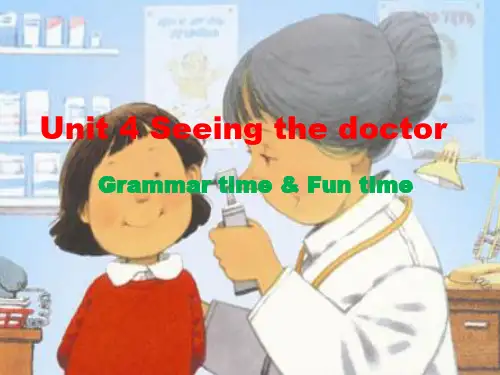
Grammar time & Fun time
1.What’s wrong with Su Hai? She has a fever
2.How does she feel? She feels cold.
What’s wrong with Mike?
What’s wrong with you? I have a…
Summary
语法: 1) What’s wrong with + 宾格 2)主语为三单时,后动词have变has
What should Su Hai do?
You should have a rest at home. You should take some medicine and drink some warm water.
She feels cold. She should her coat.
She likes eating sweets. She sometimes has a toothache. She should . She should not eat .
She has a headache. She feels tired. She should not . She should .
What should Mike do? He should brush his teeth in the morning and before bedtime. What shouldn’t Mike dHoe?shouldn’t eat too many
Should/shouldn’t
He feel hot. He should his jacket.
牛津译林版小学英语六年级下册Unit4 Road safety第四课时优课件

6
class.
Think and write:
Let’s make together:
Class Six
Our classroom rules
First, discuss in groups.(小组讨论) Then, write down the rules on the paper. (每位学生写出一条自己觉得最重要的班规。)
d 8. We mustn’t draw on our desks. b
4. We mustn’t eat or drink.
b 9. We mustn’t run fast.
c
5. We must wait for the green man. c 10. We mustn’t pick the flowers. d
Let’s talk:
Tips: When we give advice to others, we should pay attention to our tones.
当我们给他人建议时,应注意语音语调。
பைடு நூலகம் Rules in different places: 选择一个地点;谈论规则;完成海报初稿。
谢谢观赏
You made my day!
我们,还在路上……
Library rules Hospital rules
Cinema rules Park rules
Homework: 1. Finish the poster. 2. Revise the knowledge according to Ticking time.
1、谁要是自己还没有发展培养和教育好,他就不能发展培养和教育别人。2022年2月16日星期三2022/2/162022/2/162022/2/16 2、一年之计,莫如树谷;十年之计,莫如树木;终身之计,莫如树人。2022年2月2022/2/162022/2/162022/2/162/16/2022 3、提出一个问题往往比解决一个更重要。因为解决问题也许仅是一个数学上或实验上的技能而已,而提出新的问题,却需要有创造性的想像力,而且标志 着科学的真正进步。2022/2/162022/2/16February 16, 2022 4、儿童是中心,教育的措施便围绕他们而组织起来。2022/2/162022/2/162022/2/162022/2/16
牛津译林版2022春六年级英语下册Unit4RoadsafetyStorytime教案3

Unit 4Road safety【教学目标】1. Enable the students master the words and phrases: road, pavement, zebra crossing, traffic lights, red man, green man.2. Enable the students master the use way of must and mustn’t.3. Enable the students master the useful ex pressions: I must …\ I mustn’t…【教学重难点】重点:1. The students can master the words skillfully.2. The students can master the useful expressions skillfully.难点:1. The students can read the worlds and useful expressions correctly and skillfully.2. The students can use the knowledge in the life.【课前准备】1.单词卡片/时间展示图;2.教学光盘或其他录音机设备;3.教学课件。
【教学过程】Step 1:GreetingsTeacher and the students greet with each other.Step 2:Pre-reading1. Lead in(1)Words and phrasesT:Today,there’s a friend in our class.Who’s he?Ss:Think and guess.T:(Shows the ppt,there’s a photo) He’s Mr.Liu.Please look and guess:What’s his job?Ss:He’s a policeman.T:Yes,he’s a traffic policeman.Today, he’ll give us a class about road safety.Firstly,let’s look at some pictures. (Use ppt to show some pictures)Ss:Look at the pictures.T:There are many busy roads in the city.How can we cross the road safely?Then use a picture to show the new words:road, pavement, zebra crossing, traffic lights, red man, green man. Check,correct and teach them to read. After that,show a notice.To be volunteers,you must do… Show Mr.Liu’s advises. (设计意图:这节课学习的是马路安全,很贴近生活,内容都是孩子们所熟悉的,重点实在表达上。
英语六年级下册译林版第4单元

英语六年级下册译林版第4单元全文共四篇示例,供读者参考第一篇示例:英语六年级下册译林版第4单元是围绕“课外活动”这一主题展开的。
在这一单元中,学生将学习有关不同课外活动的词汇、动词时态以及如何描述自己的爱好。
在这一单元中,学生将学习一些有关课外活动的词汇,比如music, sports, drawing, dancing等。
通过学习这些词汇,学生可以更好地了解不同种类的课外活动,并且能够用英语正确描述这些活动。
学生可以通过学习这些词汇,说出自己喜欢的课外活动是什么,并且能够表达自己的兴趣爱好。
在这一单元中,学生还将学习不同动词时态的用法,比如一般现在时、一般过去时等。
通过学习这些动词时态,学生可以更好地描述过去和现在发生的事情。
学生可以用一般过去时叙述自己昨天做了什么课外活动,或者用一般现在时描述自己每天都会做的活动。
在这一单元中,学生还将学习如何描述自己的爱好和课外活动。
通过这一部分的学习,学生将会学会如何用正确的句子结构来表达自己的爱好。
学生可以说“I like playing basketball”来表达自己喜欢打篮球,或者说“She enjoys dancing”来描述别人喜欢跳舞。
英语六年级下册译林版第4单元是一个关于课外活动的单元,通过学习这一单元,学生将能够更好地了解不同种类的课外活动,掌握不同动词时态的用法,并且可以用英语描述自己的爱好和课外活动。
这将有助于提高学生的英语口语表达能力,同时也增强他们对英语课外活动的兴趣和认识。
希望学生们在学习这一单元的过程中能够收获满满的成长和快乐!第二篇示例:英语六年级下册译林版第4单元主题为“How do you get to school?”本单元主要介绍了不同的交通工具和描述如何到达学校的方式。
通过学习本单元,学生将能学会用英语描述自己每天上学的方式,并且能够与他人分享自己的交通方式。
本单元还介绍了如何描述到达学校的方式。
学生可以学会用英语描述从家里到学校的路程。
牛津译林版六年级英语下册Unit 4 Road safety 课件 3.ppt
and wait for the__g_r_e_e_n_m__a_n__.
Unit 4 Road safety
Learning aims(学习目标):
• I can understand the story with the help of pictures.
• I know how to cross the road safely. • I can tell others about road safety.
Part 1
LDeot’yosutreymtoecmhbaenrt?!
• How to cross the roads safely • First look for __a_z_e_br_a_c_r_o_ss_i_n_g_
• Then look at __th_e_t_r_a_ff_ic_l_ig_h_t_s _
Let‘s sing it out!
Sometimes no zebra crossing, Then wait on the pavement We must look carefully, Left, right and left again.
Cross the road with more friends, Drivers can see you easily. You must not run or play, On the road it isn’t safe.
• List out what you must do and must not do. Make it into a poster.
译林牛津版六年级英语下册教案 Unit4 Period 4
Unit 4 Road safety第四课时一、教学内容:Checkout time & Ticking time二、教学目标:1.准确运用句型We must/mustn’t谈论交通安全;2.能结合语境,准确运用must, mustn’t, can, can’t.;3.准确运用含有must, mustn’t的句型,谈论班级规则等,并尝试写一写,制作成海报。
4.进一步强化规则意识,做一个懂规则,守规则的人。
三、教学重点:1.准确运用含有must, mustn’t 的句型,谈论班级规则等,并尝试写一写,制作成海报;2.能结合语境,准确运用must, mustn’t, can, can’t。
四、教学难点:含有must, mustn’t 的句型的准确表达及正确运用。
五、教学准备:课件、纸、水彩笔等。
六、教学流程:Step 1 Lead-in1. Greetings: Date/Weather.2. Revise the story in Cartoon timeYesterday Bobby and Tina went to see their aunt, they took a bus. But the bus stopped twice, why?3. PK time.Talk about the rules on the road and at home. Boys use the sentence: We must… Girls use the sentence: We mustn’t…Step 2 PresentationRead and circle.1. T: What rules do they need to observe? Please read and circle.2. Check the answers.Picture 1:T: The first picture, which pair wants to try?S1: Can I watch TV?S2: No, you can’t . You must go to bed.T: Can you watch TV every day?S: No, we can’t . We can watch TV at weekends.3. Discuss the differences between must and can.(must表示说话人“不许”和“禁止”某人做某事,有很强的劝告语气。
牛津译林版六年级英语下册Unit 4 Road safety 课件 1.ppt
a zebra crossing traffic lights
a pavement
look left and right green man
red man
Group work 2
According to(根据) these pictures , h•ow can you cross the road safely?
First look left, then right and then left again.
Cross the road with other people
Let’s judge
What must you do ? What must you not do?
must
mustn’t
Let’s do
Unit 4 Road safety
Let’s talk
WTHhhoewarectaandryeiodmu cayrnooyssubtuhsesyeroraeodasdoasnfeinlyt?thheecirtoy.ad?
安全地
Group work 1
What did you see in the picture ?
C Retell the text
•
Tips: 1.小组内根据黑板上的思维导图进行复述 2. 组内成员每人一句,互相帮助 3. 时间:3分钟
Chinese style of crossing road 中国式过马路
run the red light in groups 扎堆儿闯红灯
in a hurry, save time…
GrIof uypowuordko5n’t follow the traffic rules, Nowwyhoaut’rewtihllehtraafpfipc eponl?iceman/policewoman.
牛津译林版六年级英语下册第四单元(下).doc
六年级英语下册第四单元练习一,短语互译1、道路安全2、穿过马路3、在人行道上等4、小心汽车5、乘公交车6、see you easily7、talk loudly8、get on9、a busy road10、to keep safe二、选择填空()1、How can you cross the road ? A. safe B. safety C. safely()2、you must a zebra crossing. A. look at B. look for C. look out of()3、The students are waiting the pavement A. on B. in C. behind()4、The child go to school Saturday and Sunday .A. andB. betweenC. except()5、Must I go to see the doctor? No, you . You can have a rest.A. mustB. needn’tC. mustn’t()6、There are three bedrooms on floor. A. the first B. one C. first()7、There any milk in the fridge. A. isn’t B. aren’t C. are()8、——Can I help you ? ——A. Yes, you can.B. I’d like some fruit.C. No, thanks.()9、Can you show the way to Zhongshan road?A. IB. weC. me()10、There is English book on the desk. A. a B. an C. some三、选词填空1、Some dogs (crossing\ are crossing)the busy road.2、You must keep yourself (safe\ safety).3、It’s late. We (must\ can) run quickly.4、Dad uses it to clean the window (easy、easily).5、There isn’t any(bread\ cakes)on the table.四、根据中文提示完成句子1、在马路上你禁止做什么?What you on the road?2、你必须首先看左边,接着右边,然后再左边。
牛津译林版英语六年级下册Unit 4《Road safety》ppt课件
Can the children run or play on the road? Why?
Because this is not _________. There are many ____________ on the road.
Let’s read
There are many busy roads in the city. How can you cross them safely? First, you must look for a zebra crossing. Then, you must look at the traffic lights and wait for the green man. Can you see the red man? You mustn’t cross the road now. Look! Here’s the green man. You can cross the road now. Sometimes, you cannot find a zebra crossing near you. To keep safe, you can wait on the pavement and look out for cars and bikes. You must first look left, then right and then left again. You can also cross the road with other people. Then the drivers can see you easily. Some children run or play football on the road. This is not safe. You must not play on the road because there are many cars and bikes. Follow the rules and stay safe on the road!