
离散均匀分布(Discrete Uniform Distribution)
(Ⅰ)離散均勻分配(Discrete Uniform on Distributi ):
一、 背景:
若隨機變數有n 個不同值,具有相同機率,則我們稱之為離散型均勻分配,通常這都發生在我們不確定各種情況發生的機會,且認為每個機會都相等,例如:投擲骰子、銅幣、、、等等 二、定義:
設離散隨機變數X 之可能變量有n ,...,2,1, 若其機率函數為
n
x f 1)(= n x ,...2,1= 則此種機率分配稱為離散均勻分配 三、性質: 1.2
1
)(+=
n X E ,由於機率值相等,故平均數為中心點, 即
2
1
+n 證明:∑=⋅=n
x n
x X E 1
1)(
n n n 1
2)1(⋅+= 2
1+=
n 2. 12
1
)(2-=n X Var
證明:n
x X E n
x 1)(1
22
⋅=∑=
n
n n n 1
6)12)(1(⋅++=
6
1
322++=n n
[]22)()()(X E X E X Var -=
=
2
2)2
1(6132+-++n n n 12
1
2-=n
3.Moment Generating Function xt n
x x e n
t m ∑==11)( 證明:[]tx x e E t m =)( ∑=⋅=n
x tx x f e 1)(
xt n x e n
∑==11
)
1()1(t
t
n t e n e e --=+ 例題:一輪盤分37個面積相等扇形,每個扇形上分別標明0 到36號,轉動輪盤,指針所指之數字為X ,若指針所 指之編號服從離散均勻分配,求 X a )(之機率函數?
X b )(位在1到10號間機率為何? )(c 奇數格內機率為何? )(d 0號之機率為何? 解:37
1
)()(=
x f a 36,...,2,1=x 37
10)101()(=
≤≤X P b
37
18
)()(=為基數X P c (∵0到36共有18個奇數) 37
1)0()(==X P d 四、應用:
我們可用隨機亂數表自均勻分配中抽出樣本,若自N 個物
品之母體中抽出n 個物品為一簡單隨機樣本,則有)(N
n 個
可能樣本,而這些樣本被抽出之機率均相同,則這些樣本之分配為
)
(1)(N n
x f = )(,...,2,1N
n x =
(Ⅱ)連續型均勻分配(Continuous Uniform on Distributi ):
一、 背景:
當我們認為一變數值在某區間(α,β)內發生的機率一樣時,我們稱之為連續型均勻分配 二、定義:
設X 為一隨機變數,若其機率密度函數為
⎪⎪⎩
⎪⎪⎨
⎧<<-=其他,0,1
)(β
ααβx x f 則稱X 為在區間(α,β)上均勻分布的隨機變數,以
),(~βαU X 表示,其中α、β為均勻分布的兩個參數
X
的分布函數為
⎪⎪⎪⎩⎪⎪
⎪⎨
⎧≥<<--≤=ββααβα
αx x x x x F ,1,,0)( )(x f 及)(x F 以圖形表示如下:
三、性質:
1.2
)(β
α+=
X E
證明:⎰=β
αdx x xf X E )()( dx x ⎰-⋅
=β
αα
β1
βα
αβ2
12
x -=
)(x f
α
β-1
α β x )(x F
1
x α β
2
12
2αβαβ--=
2
β
α+=
2.12
)()(2
αβ-=X Var
證明:dx x f x X E )()(22⎰=β
α dx x α
ββ
α-⋅
=⎰1
2 βα
αβ3
13
x -=
3
13
3αβαβ--=
3
2
2βαβα++=
22)]([)()(X E X E X Var -=
22
2)2
(3
β
αβαβα+-++=
4
23
2
22
2βαβαβαβα++-
++=
12
)(2
αβ-=
3.Moment Generating Function )
()(αβα
β--=t e e t M t t X
證明:][)(tX X e E t M = dx x f e tx )(⎰=β
α dx e tx α
ββ
α-⋅
=⎰1
β
α
αβtx e t 11⋅-=
)
(αβα
β--=t e e t t
4.任一隨機變數與(0,1)間之均勻隨機變數有函數關 係,以下是此特性之定理:
定理:
令)1,0(~U Y ,)(1Y F X -=
)(x F 為連續型分配函數且1)(,0)(==b F a F 在b x a <<時,)(x F 嚴格遞增(b a ,可能分別為
∞∞-,),則隨機變數)(1Y F X -=的分配函數為)(x F
證明:])([)(1x Y F P x X P ≤=≤-
)(x F 為嚴格遞增,)()(1x F Y x Y F ≤⇒≤- )]([)(x F Y P x X P ≤=≤∴
)1,0(~U Y
10,)(<<=≤⇒y y y Y P
1)(0),()]([)(<<=≤=≤∴x F x F x F Y P x X P X ∴的分配函數為)(x F 逆定理:
令X 具有連續型且嚴格遞增的分配函數)(x F ,則隨
機變數Y 定義為)(X F Y =具有)1,0(U 的分配
證明:10],)([)(<<≤=≤y y X F P y Y P
)()(1y F X y X F -≤⇒≤ )]([)(1y F X P y Y P -≤=≤∴ )()(x F x X P =≤
y y F F y F X P y Y P ==≤=≤⇒--)]([)]([)(11 10<<y )1,0(~)(U X F Y =∴
例題:設從7點開始每隔15分鐘有一班車到站,若一乘客到 站的時間是均勻分布在7點和7點半之間。
試求:
(1) 該乘客5分鐘內等到車子的機率為多少? (2)
該乘客超過10分鐘等到車子的機率為多少?
解:(1)令X 表示該乘客過7點以後到站的”分”數 則)30,0(~U X
)3025()1510(<<+<<X P X P dx dx ⎰⎰+=302515
10
30
1301
3
1=
(2))2015()50(<<+<<X P X P dx dx ⎰⎰+=20155
30130
1
3
1=
四、應用:
在測度理論中,)10)5.0(,0(k U -經常被用來描述在小數點後第(k+1)位四捨五入後誤差的分布。
也就是說,若觀測值Y 在小數點後第k+1位四捨五入所得的值為k Y (即表示到小
數點後第k 位),則假設)10)5.0(,0(~k k U Y Y -⨯-。
此外,
)1,0(U 分布在蒙地卡羅法(Monte Carlo Methods )中也廣泛地被
使用;
※故可利用電腦成式先產生具有)1,0(U 分布的一組隨機數(random numbers ),再將其轉換成具有任何分布之隨機亂數
※ 由性質4的定理知,均勻隨機變數經任一分布函數倒
函數之轉換,可產生具有該分布的隨機變數
感想:
在所有的隨機變數中,均勻分布不外乎是較為簡單的,但其重要性卻是不可忽視的,因為在一般的日常生活中有許多的情況皆可以均勻分布來解釋,例如擲骰子、錢幣、等候公車、、、等,當然,其最重要的就是可以此分布來模擬其他離散或連續型隨機變數的觀察值,也就可得到所謂的亂數表。
[1,N]离散均匀分布样本最大值分布-描述统计
![[1,N]离散均匀分布样本最大值分布-描述统计](https://360docs-1393072327.cos.ap-beijing.myqcloud.com/3f0d7c3a0b4c2e3f5727631a.webp)
1,N 离散均匀分布样本最大值分布基于Wolfram Mathematica9,下表给出了 1,N 区间内离散均匀分布DU 1,N 样本最大值的概率密度(质量)函数、累积分布函数、累积分布函数、逆生存函数、风险函数(故障率)、矩母函数 MGF 、中心矩母函数 CMGF 、累积量母函数 CGF 、阶乘矩母函数 FMGF 、特征函数的计算和结果表达式,均值、中位值、众数、四分位数列表、q分位数、方差、标准差、一三四分位数间矩、偏度系数、峰度系数、四分偏度系数、r阶原点矩、r阶中心矩、r阶阶乘矩、r阶累积量、信息熵等描述性统计量的计算和结果表达式。
In[105]:=dist DiscreteUniformDistribution 1,N ;dist1 OrderDistribution dist,n ,n ;"1.概率密度(质量)函数:"PDF dist1,k"2.累积分布函数:"CDF dist1,k"3.生存(可靠性)函数:"SurvivalFunction dist1,k"4.逆生存函数:"InverseSurvivalFunction dist1,q"5.风险函数(故障率):"HazardFunction dist1,k"6.矩母函数 MGF :"MomentGeneratingFunction dist1,t"7.中心矩母函数 CMGF :"CentralMomentGeneratingFunction dist1,t"8.累积量母函数 CGF :"CumulantGeneratingFunction dist1,t"9.阶乘矩母函数 FMGF :"CharacteristicFunction dist1,t"10.特征函数:"CharacteristicFunction dist1,t"11.均值:"Mean dist1"12.中位值:"Median dist1"13.四分位数列表:"Quartiles dist1"14.q分位数:"Quantile dist1,q"15.方差:"Variance dist1"16.标准差:"StandardDeviation dist1"17.一、三四分位数间矩:"InterquartileRange dist1"18.偏度系数:"Skewness dist1"19.峰度系数:"Kurtosis dist1"20.四分偏度系数:"QuartileSkewness dist1"21.r阶原点矩矩:"Moment dist1,r"22.r阶中心矩:"CentralMoment dist1,r"23.r阶阶乘矩:"FactorialMoment dist1,r"24.r阶累积量:"Cumulant dist1,r"25.信息熵:"Sum PDF dist1,k Log PDF dist1,k , k,1,N Out[107]= 1.概率密度(质量)函数:Out[108]= 1NkN n k N n k 1&&k N 0 1 1 1N n k N 0&&k 1 0k N 0 k 1 1 1N n k 1&&k N 0 N n TrueOut[109]= 2.累积分布函数:Out[110]= Floor k N n1 k N1k N0True Out[111]= 3.生存(可靠性)函数:Out[112]=1k 11 1 N Floor kN n1 k N 0TrueOut[113]= 4.逆生存函数:Out[114]=ConditionalExpression Max 1,Ceiling N 1 q 1n 0 1 1 q 1n 1N1 1 q 1n 01True,0 1 q 1n 1Out[115]= 5.风险函数(故障率):2[1,N]离散均匀分布样本最大值分布-描述统计.nbOut[116]=1 k NN n1 k 2&&k N 0 1k 2 0 k N 11 k NN n 1 1 k N N n1 1 1 k NN n k 2&&k N 0 0TrueOut[117]= 6.矩母函数 MGF :Out[118]=MomentGeneratingFunctionOrderDistribution DiscreteUniformDistribution 1,N ,n ,n ,t Out[119]=7.中心矩母函数 CMGF :Out[120]=CentralMomentGeneratingFunctionOrderDistribution DiscreteUniformDistribution 1,N ,n ,n ,t Out[121]=8.累积量母函数 CGF :Out[122]=CumulantGeneratingFunctionOrderDistribution DiscreteUniformDistribution 1,N ,n ,n ,t Out[123]=9.阶乘矩母函数 FMGF :Out[124]=CharacteristicFunctionOrderDistribution DiscreteUniformDistribution 1,N ,n ,n ,t Out[125]=10.特征函数:Out[126]=CharacteristicFunctionOrderDistribution DiscreteUniformDistribution 1,N ,n ,n ,t Out[127]=11.均值:Out[128]=1 N N n BernoulliB 1 n,1 BernoulliB 1 n,1 N1 nOut[129]=12.中位值:Out[130]=ConditionalExpression Max 1,Ceiling 2 1 n N 0 2 1 n 112 1 n 0N True,0 2 1 n 1Out[131]=13.四分位数列表:[1,N]离散均匀分布样本最大值分布-描述统计.nb3Out[132]=ConditionalExpressionMax 1,Ceiling 4 1 n N 0 4 1 n 114 1 n 0N True,0 4 1 n 1 ,ConditionalExpressionMax 1,Ceiling 2 1 n N 0 2 1 n 112 1 n 0N True,0 2 1 n 1 ,ConditionalExpressionMax 1,Ceiling 341nN 0341n11 341n 0NTrue,0341n1Out[133]=14.q 分位数:Out[134]=ConditionalExpressionMax 1,Ceiling N q 1n 0 q 1n 11q 1n 0N True,0 q 1n 1Out[135]=15.方差:Out[136]=1 N 11 nN nBernoulliB 1 n,1 BernoulliB 1 n,1 N 2N nBernoulliB 1 n,1 BernoulliB 1 n,N 1 n2 BernoulliB 2 n,1 BernoulliB 2 n,N2 nBernoulliB 3 n,1 BernoulliB 3 n,N3 nOut[137]=16.标准差:Out[138]=1 N11 nNnBernoulliB 1 n,1 BernoulliB 1 n,1 N2N nBernoulliB 1 n,1 BernoulliB 1 n,N1 n2 BernoulliB 2 n,1 BernoulliB 2 n,N 2 nBernoulliB 3 n,1 BernoulliB 3 n,N3 nOut[139]=17.一、三四分位数间矩:4 [1,N]离散均匀分布样本最大值分布-描述统计.nbOut[140]=ConditionalExpressionN Max 1,Ceiling 341nN341n1&&41n 1N Max 1,Ceiling 4 1 n N341n 1&&41n 1Max 1,Ceiling 341n N Max 1,Ceiling 4 1 n N 341n 1&&41n 10True,0341n1&&0 4 1 n 1Out[141]=18.偏度系数:Out[142]=21 N11 nNnBernoulliB 1 n,1 BernoulliB 1 n,1 N33N n 1 N 11 nN n BernoulliB 1 n,1 BernoulliB 1 n,1 NBernoulliB 1 n,1 BernoulliB 1 n,N1 n2 BernoulliB 2 n,1 BernoulliB 2 n,N 2 nBernoulliB 3 n,1 BernoulliB 3 n,N3 nN nBernoulliB 1 n,1 BernoulliB 1 n,N1 n3 BernoulliB 2 n,1 BernoulliB 2 n,N 2 n3 BernoulliB 3 n,1 BernoulliB 3 n,N 3 nBernoulliB 4 n,1 BernoulliB 4 n,N4 n1 N 11 nNnBernoulliB 1 n,1 BernoulliB 1 n,1 N2N nBernoulliB 1 n,1 BernoulliB 1 n,N1 n2 BernoulliB 2 n,1 BernoulliB 2 n,N 2 nBernoulliB 3 n,1 BernoulliB 3 n,N3 n3 2[1,N]离散均匀分布样本最大值分布-描述统计.nb5Out[143]=19.峰度系数:Out[144]=31 N 11 nNnBernoulliB 1 n,1 BernoulliB 1 n,1 N46Nn1 N11 nN nBernoulliB 1 n,1 BernoulliB 1 n,1 N 2BernoulliB 1 n,1 BernoulliB 1 n,N 1 n2 BernoulliB 2 n,1 BernoulliB 2 n,N2 nBernoulliB 3 n,1 BernoulliB 3 n,N3 n4N n 1 N 11 nN n BernoulliB 1 n,1 BernoulliB 1 n,1 NBernoulliB 1 n,1 BernoulliB 1 n,N 1 n3 BernoulliB 2 n,1 BernoulliB 2 n,N2 n3 BernoulliB 3 n,1 BernoulliB 3 n,N3 nBernoulliB 4 n,1 BernoulliB 4 n,N4 nN n BernoulliB 1 n,1 BernoulliB 1 n,N1 n4 BernoulliB 2 n,1 BernoulliB 2 n,N2 n6 BernoulliB 3 n,1 BernoulliB 3 n,N3 n4 BernoulliB 4 n,1 BernoulliB 4 n,N4 nBernoulliB 5 n,1 BernoulliB 5 n,N5 n1 N 11 nNnBernoulliB 1 n,1 BernoulliB 1 n,1 N2N nBernoulliB 1 n,1 BernoulliB 1 n,N1 n2 BernoulliB 2 n,1 BernoulliB 2 n,N2 n26 [1,N]离散均匀分布样本最大值分布-描述统计.nbBernoulliB 3 n,1 BernoulliB 3 n,N3 n2 Out[145]=20.四分偏度系数:Out[146]=ConditionalExpression 1 34 Indeterminate 34 ComplexInfinity 34N Max 1,Ceiling 34 1n N 2Max 1,Ceiling 2 1 n NN Max 1,Ceiling 34 1n N341 342N Max 1,Ceiling 34 1n N Max 1,Ceiling 4 1 n NMax 1,Ceiling 34 1n N Max 1,Ceiling 4 1 n N34N 2Max 1,Ceiling 2 1 n N Max 1,Ceiling 4 1 n NN Max 1,Ceiling 4 1 n N 34Max 1,Ceiling 34 1n N2Max 1,Ceiling 2 1 n N Max 1,Ceiling 4 1 n NMax 1,Ceiling 34 1n N Max 1,Ceiling 4 1 n NTrueOut[147]=21.r阶原点矩矩:Out[148]=Moment OrderDistribution DiscreteUniformDistribution 1,N ,n ,n ,rOut[149]=22.r阶中心矩:Out[150]=CentralMoment OrderDistribution DiscreteUniformDistribution 1,N ,n ,n ,rOut[151]=23.r阶阶乘矩:Out[152]=FactorialMoment OrderDistribution DiscreteUniformDistribution 1,N ,n ,n ,rOut[153]=24.r阶累积量:Out[154]=Cumulant OrderDistribution DiscreteUniformDistribution 1,N ,n ,n ,rOut[155]=25.信息熵:[1,N]离散均匀分布样本最大值分布-描述统计.nb7Out[156]=k 1NLog1Nk N n k Nnk 1&&k N 01 1 1Nn k N 0&&k 10k N 0 k 1 11Nn k 1&&k N 0 N nTrue1Nk N n k Nnk 1&&k N 01 1 1Nn k N 0&&k 10k N 0 k 1 11Nn k 1&&k N 0 N nTrue8 [1,N]离散均匀分布样本最大值分布-描述统计.nb。
[1,N]离散均匀分布样本中位数分布-描述统计
![[1,N]离散均匀分布样本中位数分布-描述统计](https://360docs-1393072327.cos.ap-beijing.myqcloud.com/29d455cfd5bbfd0a7956731a.webp)
1,N 离散均匀分布样本中位数分布基于Wolfram Mathematica9,下表给出了 1,N 区间内离散均匀分布DU 1,N 样本中位数的概率密度(质量)函数、累积分布函数、累积分布函数、逆生存函数、风险函数(故障率)、矩母函数 MGF 、中心矩母函数 CMGF 、累积量母函数 CGF 、阶乘矩母函数 FMGF 、特征函数的计算和结果表达式,均值、中位值、众数、四分位数列表、q分位数、方差、标准差、一三四分位数间矩、偏度系数、峰度系数、四分偏度系数、r阶原点矩、r阶中心矩、r阶阶乘矩、r阶累积量、信息熵等描述性统计量的计算和结果表达式。
dist DiscreteUniformDistribution 1,N ;dist1 OrderDistribution dist,2n 1 ,n 1 ;"1.概率密度(质量)函数:"PDF dist1,k"2.累积分布函数:"CDF dist1,k"3.生存(可靠性)函数:"SurvivalFunction dist1,k"4.逆生存函数:"InverseSurvivalFunction dist1,q"5.风险函数(故障率):"HazardFunction dist1,k"6.矩母函数 MGF :"MomentGeneratingFunction dist1,t"7.中心矩母函数 CMGF :"CentralMomentGeneratingFunction dist1,t"8.累积量母函数 CGF :"CumulantGeneratingFunction dist1,t"9.阶乘矩母函数 FMGF :"CharacteristicFunction dist1,t"10.特征函数:"CharacteristicFunction dist1,t"11.均值:"Mean dist1"12.中位值:"Median dist1"13.四分位数列表:"Quartiles dist1"14.q分位数:"Quantile dist1,q"15.方差:"Variance dist1"16.标准差:"StandardDeviation dist1"17.一、三四分位数间矩:"InterquartileRange dist1"18.偏度系数:"Skewness dist1"19.峰度系数:"Kurtosis dist1"20.四分偏度系数:"QuartileSkewness dist1"21.r阶原点矩矩:"Moment dist1,r"22.r阶中心矩:"CentralMoment dist1,r"23.r阶阶乘矩:"FactorialMoment dist1,r"24.r阶累积量:"Cumulant dist1,r"25.信息熵:"Sum PDF dist1,k Log PDF dist1,k , k,1,N 1.概率密度(质量)函数:BetaRegularized 1N kN,1 n,1 n BetaRegularized kN,1 n,1 n k 1&&k N 01 BetaRegularized 1 1N,1 n,1 n k 1&&k N 0BetaRegularized 1N,1 n,1 n k 1&&k N 0 0True2.累积分布函数:BetaRegularized Floor kN,1 n,1 n 1 k N1k N0True3.生存(可靠性)函数:1k 1BetaRegularized N Floor kN,1 n,1 n 1 k N0True4.逆生存函数:ConditionalExpression Max 1,Ceiling N 1 InverseBetaRegularizedq,1 n,1 nInverseBetaRegularizedN InverseBetaRegularized 1True5.风险函数(故障率):2[1,N]离散均匀分布样本中位数分布-描述统计.nb1 BetaRegularized k N N,1 n,1 n1 k 2&&k N 01k 2 0 k N 1 BetaRegularized k N N,1 n,1 nBetaRegularized 1 k NN,1 n,1 nBetaRegularized 1 k N N ,1 n,1 nk 2&&k N 0True6.矩母函数 MGF :MomentGeneratingFunctionOrderDistribution DiscreteUniformDistribution 1,N ,1 2n ,1 n ,t 7.中心矩母函数 CMGF :CentralMomentGeneratingFunctionOrderDistribution DiscreteUniformDistribution 1,N ,1 2n ,1 n ,t 8.累积量母函数 CGF :CumulantGeneratingFunctionOrderDistribution DiscreteUniformDistribution 1,N ,1 2n ,1 n ,t 9.阶乘矩母函数 FMGF :CharacteristicFunctionOrderDistribution DiscreteUniformDistribution 1,N ,1 2n ,1 n ,t 10.特征函数:CharacteristicFunctionOrderDistribution DiscreteUniformDistribution 1,N ,1 2n ,1 n ,t 11.均值:Mean OrderDistribution DiscreteUniformDistribution 1,N ,1 2n ,1 n 12.中位值:ConditionalExpressionMax 1,Ceiling N InverseBetaRegularized 12,1 n,1 nInverseBetaRegularized1InverseBetaRegularized NTrue13.四分位数列表:[1,N]离散均匀分布样本中位数分布-描述统计.nb3ConditionalExpression Max 1,Ceiling N InverseBetaRegularized 14,1 n,1 nInverseBetaRegularized1InverseBetaRegularized N TrueConditionalExpression Max 1,Ceiling N InverseBetaRegularized 12,1 n,1 nInverseBetaRegularized1InverseBetaRegularized N TrueConditionalExpression Max 1,Ceiling N InverseBetaRegularized 34,1 n,1 nInverseBetaRegularized1InverseBetaRegularized N True14.q分位数:ConditionalExpression Max 1,Ceiling N InverseBetaRegularized q,1 n,1 nInverseBetaRegularized1InverseBetaRegularized N True15.方差:Variance OrderDistribution DiscreteUniformDistribution 1,N ,1 2n ,1 n16.标准差:StandardDeviationOrderDistribution DiscreteUniformDistribution 1,N ,1 2n ,1 n17.一、三四分位数间矩:4[1,N]离散均匀分布样本中位数分布-描述统计.nbConditionalExpression 1 N InverseBetaRegularized14,1 n,1 n 1&&InverseBetaRegularized1 N InverseBetaRegularized14,1 n,1 n 0&&InverseBetaRegularized1Max 1,Ceiling N InverseBetaRegularized14,1 n,1 n0 InverseBetaRegularized14,1 n,1 n 1&&InverseBetaRegularizedNMax 1,Ceiling N InverseBetaRegularized14,1 n,1 n0 InverseBetaRegularized14,1 n,1 n 1&&InverseBetaRegularized1Max 1,Ceiling N InverseBetaRegularized34,1 n,1 nInverseBetaRegularized0&&0 InverseBetaRegularize34,1 n,1 n 1NMax 1,Ceiling N InverseBetaRegularized34,1 n,1 nInverseBetaRegularized1&&0 InverseBetaRegularize34,1 n,1 n 1Max 1,Ceiling N InverseBetaRegularized14,1 n,1 nMax 1,Ceiling N InverseBetaRegularized34,1 n,1 n0 InverseBetaRegularized14,1 n,1 n 1&&0 InverseBetaRegularized34,1 n,1 n 10True0 InverseBetaRegularized 34,1 n,1 n 118.偏度系数:Skewness OrderDistribution DiscreteUniformDistribution 1,N ,1 2n ,1 n19.峰度系数:Kurtosis OrderDistribution DiscreteUniformDistribution 1,N ,1 2n ,1 n20.四分偏度系数:1 InverseBetaRegularized1&&InverseBetaRegularize14,1 n,1 n &&InverseBetaRegularized,1 n,1 n 1InverseBetaRegularized0&&InverseBetaRegularize1,1 n,1 n &&[1,N]离散均匀分布样本中位数分布-描述统计.nb54,1 n,1 n &&InverseBetaRegularized12,1 n,1 n Indeterminate InverseBetaRegularized1&&InverseBetaRegularize12,1 n,1 n &&InverseBetaRegularized,1 n,1 n 1InverseBetaRegularized0&&InverseBetaRegularize12,1 n,1 n &&InverseBetaRegularized34,1 n,1 n1 InverseBetaRegularized1&&InverseBetaRegularize12,1 n,1 n &&InverseBetaRegularized,1 n,1 n 1InverseBetaRegularized0&&InverseBetaRegularize12,1 n,1 n &&InverseBetaRegularized34,1 n,1 n ComplexInfinity InverseBetaRegularized1&&InverseBetaRegularize14,1 n,1 n &&InverseBetaRegularized,1 n,1 n 1InverseBetaRegularized0&&InverseBetaRegularize14,1 n,1 n &&InverseBetaRegularized3 4,1 n,1 n1 2N Max 1,Ceiling N InverseBetaRegularized 14,1 n,1 n 1 Max 1, Ceiling N InverseBetaRegularized1 4,1 n,1 n0 InverseBetaRegularized14,1 n,1 n 1&&InverseBetaRegularized0&&InverseBetaRegularized2 N Max 1,Ceiling N InverseBetaRegularized 1,1 n,1 n N Max 1,0 InverseBetaRegularized14,1 n,1 n 1&& InverseBetaRegularized1&&6[1,N]离散均匀分布样本中位数分布-描述统计.nbConditionalExpression4,1 n,1 n N Max 1,Ceiling N InverseBetaRegularized14,1 n,1 nInverseBetaRegularized1&&InverseBetaRegularized11 N 1 N 2Max 1,Ceiling N InverseBetaRegularized12,1 n,1 nInverseBetaRegularized14,1 n,1 n 1&&InverseBetaRegularized0&&0 InverseBetaRegularize12,1 n,1 n 1 11 N 1 N 2Max 1,Ceiling N InverseBetaRegularized12,1 n,1 nInverseBetaRegularized14,1 n,1 n 0&&InverseBetaRegularized1&&0 InverseBetaRegularize12,1 n,1 n 11 Max 1,Ceiling N InverseBetaRegularized14,1 n,1 n 2Max 1,Ceiling N InverseBetaRegularized12,1 n,1 n 1 Max 1,Ceiling N InverseBetaRegularized14,1 n,1 n0 InverseBetaRegularized14,1 n,1 n 1&&InverseBetaRegularized0&&0 InverseBetaRegularize12,1 n,1 n 1N Max 1,Ceiling N InverseBetaRegularized14,1 n,1 n 2Max 1,Ceiling N InverseBetaRegularized12,1 n,1 n N Max 1,Ceiling N InverseBetaRegularized14,1 n,1 n0 InverseBetaRegularized14,1 n,1 n 1&&InverseBetaRegularized1&&0 InverseBetaRegularize12,1 n,1 n 11 2N Max 1,Ceiling N InverseBetaRegularized34,1 n,1 n 1 Max 1,Ceiling N InverseBetaRegularized34,1 n,1 nInverseBetaRegularized0&&0 InverseBetaRegularize34,1 n,1 n 1&&InverseBetaRegularized 2 N Max 1,Ceiling N InverseBetaRegularized34,1 n,1 n N Max 1,Ceiling N InverseBetaRegularized34,1 n,1 nInverseBetaRegularized1&&0 InverseBetaRegularize34,1 n,1 n 1&&InverseBetaRegularized 2 Max 1,Ceiling N InverseBetaRegularized14,1 n,1 n Max 1,Ceiling N InverseBetaRegularized0 InverseBetaRegularized14,1 n,1 n 1&&0 InverseBetaRegularized3,1 n,1 n 1&&[1,N]离散均匀分布样本中位数分布-描述统计.nb7Ceiling N InverseBetaRegularized34,1 n,1 n Max 1,Ceiling N InverseBetaRegularized14,1 n,1 n Max 1,Ceiling N InverseBetaRegularized 34,1 n,1 n4,1 n,1 n 1&&InverseBetaRegularized2N Max 1,Ceiling N InverseBetaRegularized14,1 n,1 n Max 1,Ceiling N InverseBetaRegularized 34,1 n,1 n Max 1,Ceiling N InverseBetaRegularized14,1 n,1 n Max 1,Ceiling N InverseBetaRegularized 34,1 n,1 n0 InverseBetaRegularized14,1 n,1 n 1&&0 InverseBetaRegularized 34,1 n,1 n 1&&InverseBetaRegularized1 2Max 1,Ceiling N InverseBetaRegularized12,1 n,1 n Max 1,Ceiling N InverseBetaRegularized 34,1 n,1 n1 Max 1,Ceiling N InverseBetaRegularized34,1 n,1 nInverseBetaRegularized0&&0 InverseBetaRegularize34,1 n,1 n 1&&0 InverseBetaRegularized12,1 n,1 n 1N 2Max 1,Ceiling N InverseBetaRegularized12,1 n,1 n Max 1,Ceiling N InverseBetaRegularized 34,1 n,1 nN Max 1,CeilingN InverseBetaRegularized34,1 n,1 nInverseBetaRegularized1&&0 InverseBetaRegularize34,1 n,1 n 1&&0 InverseBetaRegularized12,1 n,1 n 1Max 1,Ceiling N InverseBetaRegularized 14,1 n,1 n 2Max 1,Ceiling N InverseBetaRegularized12,1 n,1 n Max 1,Ceiling N InverseBetaRegularized34,1 n,1 n Max 1,Ceiling N InverseBetaRegularized14,1 n,1 n Max 1,Ceiling N InverseBetaRegularized34,1 n,1 nTrue&&8 [1,N]离散均匀分布样本中位数分布-描述统计.nb0 InverseBetaRegularized 12,1 n,1 n 1&&0 InverseBetaRegularized 34,1 n,1 n 121.r 阶原点矩矩:Moment OrderDistribution DiscreteUniformDistribution 1,N ,1 2n ,1 n ,r 22.r 阶中心矩:CentralMomentOrderDistribution DiscreteUniformDistribution 1,N ,1 2n ,1 n ,r 23.r 阶阶乘矩:FactorialMomentOrderDistribution DiscreteUniformDistribution 1,N ,1 2n ,1 n ,r 24.r 阶累积量:Cumulant OrderDistribution DiscreteUniformDistribution 1,N ,1 2n ,1 n ,r 25.信息熵:k 1NLogBetaRegularized 1Nk N ,1 n,1 n BetaRegularized k N,1 n,1 n k 1&&k1 BetaRegularized 11N,1 n,1 n k 1&&k BetaRegularized 1N,1 n,1 n k 1&&k 0True[1,N]离散均匀分布样本中位数分布-描述统计.nb9。
统计学专业英语词汇汇总

统计学复试专业词汇汇总population 总体sampling unit 抽样单元sample 样本observed value 观测值descriptive statistics 描述性统计量random sample 随机样本simple random sample 简单随机样本statistics 统计量order statistic 次序统计量sample range 样本极差mid-range 中程数estimator 估计量sample median 样本中位数sample moment of order k k阶样本矩sample mean 样本均值average 平均数arithmetic mean 算数平均值sample variance 样本方差sample standard deviation 样本标准差sample coefficient of variation 样本变异系数standardized sample random variable 标准化样本随机变量sample coefficient of skewness (歪斜)样本偏度系数sample coefficient of kurtosis (峰态) 样本峰度系数sample covariance 样本协方差sample correclation coefficient 样本相关系数standard error 标准误差interval estimator 区间估计statistical tolerance interval 统计容忍区间statistical tolerance limit 统计容忍限confidence interval 置信区间one-sided confidence interval 单侧置信区间prediction interval 预测区间estimate 估计值error of estimation 估计误差bias 偏倚unbiased estimator 无偏估计量maximum likelihood estimator 极大似然估计量estimation 估计maximum likelihood estimation 极大似然估计likelihood function 似然函数profile likelihood funtion 剖面函数hypothesis 假设null hypothesis 原假设alternative hypothesis 备择假设simple hypothesis 简单假设composite hypothesis 复合假设significance level 显著性水平type I error 第一类错误type II error 第二类错误statistical test 统计检验significance test 显著性检验p-value p值power of a test 检验功效power curve 功效曲线test statistic 检验统计量graphical descriptive statistics 图形描述性统计量numerical descriptive statistics 数值描述性统计量classes 类(组)class 类class 组class limits; class boundaries 组限mid-point of class 组中值class width 组距frequency 频数frequency distribution 频数分布histogram 直方图bar chart 条形图cumulative frequency 累积频数relative frequency 频率cumulative relative frequency 累积频率sample space 样本空间event 事件complementary event 对立事件independent events 独立事件probability [of an event A] [事件A的]概率conditional probability 条件概率distribution function [of a random variable X] [随机变量X的]分布函数family of distributions 分布族parameter 参数random variable 随机变量probability distribution 概率分布distribution 分布expectation 期望p-quantile; p-fractile p分位数median 中位数quartile 四分位数univariate probability distribution 一维概率分布univariate distribution 一维分布multivariate probability distribution 多维概率分布multivariate distribution 多维分布marginal probability distrubition 边缘概率分布marginal distribution 边缘分布conditional probability distribution 条件概率分布conditional distribution 条件分布regression curve 回归曲线regression surface 回归曲面discrete probability distribution 离散概率分布discrete distribution 离散分布continuous probability distribution 连续概率分布continuous distribution 连续分布probability [mass] function 概率函数mode of probability [mass] function 概率函数的众数probability density function 概率密度函数mode of probability density function 概率密度函数的众数discrete random variable 离散随机变量continuous random variable 连续随机变量centred probability distribution 中心化概率分布centred random variable 中心化随机变量standardized probability distribution 标准化概率分布standardized random variable 标准化随机变量moment of order r r阶[原点]矩means 均值moment of order r = 1 一阶矩mean 均值variance 方差standard deviation 标准差coefficient of variation 变异系数coefficient of skewness 偏度系数coefficient of kurtosis 峰度系数joint moment of order r and s (r,s)阶联合[原点]矩joint central moment of order r and s (r,s)阶联合中心矩covariance 协方差correlation coefficient 相关系数multinomial distribution 多项分布binomial distribution 二项分布Poisson distribution 泊松分布hypergeometric distibution 超几何分布negative binomial distribution 负二项分布normal distribution, Gaussian distribution 正态分布standard normal distribution, standard Gaussian distribution 标准正态分布lognormal distribution 对数正态分布t distribution; Student's distribution t分布degrees of freedom 自由度F distribution F分布gamma distribution 伽玛分布, Γ分布chi-squared distribution 卡方分布,χ2分布exponential distribution 指数分布beta distribution 贝塔分布,β分布uniform distribution, rectangular distribution 均匀分布type I value distribution; Gumbel distribution I型极值分布type II value distribution; Gumbel distribution II型极值分布Weibull distribution 威布尔分布type III value distribution; Gumbel distribution III型极值分布multivariate normal distribution 多维正态分布bivariate normal distribution 二维正态分布standard bivariate normal distribution 标准二维正态分布sampling distribution 抽样分布probability space 概率空间。
均匀分布种类
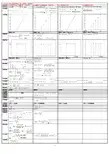
01.连续均匀分布(等概分布,一致分布) 02.离散均匀分布(稀疏分布,同致分布) 03.U(a,b)或或Unif (a,b ) X Continuous uniform distribution 或CU(a,b)X Inverse discrete uniform 或IU(a,b)或或或F(X)=(b-a)X+a或F(X)=(b-a+1)X+aba-a 2+a a b 横轴为x 轴横轴为x 轴,横轴为x 轴向上平移ba-a 2+a 横轴为x 轴向上平移ba-a 2+a密度函数-a)0 -a)图像为矩形,面积为1n=b--a+1,x=k 图像为矩形,面积为1 n=b--a+1,x=k或或连续型 离散型(最值),,支撑集域 或任何内的值任何内的整数值任何内的值任何内的整数值(),或原点阶距r 阶:.b-a n -a b EX n n n))(1(11+=++,中心阶距r 阶:,,,,其中是样本均值见注释1均匀分布是用来模拟一个同样的随机变量a 和均匀分布是“等可能”取值的连续化模型。
均匀分布或称规则分布。
植物种群的个体是等(1)当a ≤x 1<x 2≤b 时,X 落在区间()内的概率为a b x x x X x P --=<<1221)(。
(2)若,则X 落在[a,b]内任一子区间[c,d]上的概率:只与区间[c,d]的长度有关,而与他的位置无关。
(3)均匀分布随机变量概率落在任何间隔固定长度间隔的位置本身独立(但它是依赖于时间间隔大小),只要间隔分布中包含支持。
如果X ~(a,b)和[X,X + d]是[a,b]的子区间与固定d > 0,(3) X ∼U[0,1]和Y=a+(b−a)X , 则Y ∼U[min(a,b),max(a,b)].如在生日问题中论述的那样,输出中选择,在次碰撞。
平方根对应一半的数字位数。
例如,一个数,无论在何种进制当中。
注释1:连续均匀分布第二种表达形式:对于一个取值在区间[a ,b ]上的均匀分布函数,它的概率密度函数:也就是说,当x 不在区间[a ,b ]上的时候,函数值等于0;而在区间[a ,b ]上的时候,函数值等于这个函数。
[N1,N2]离散均匀分布参数的点估计
![[N1,N2]离散均匀分布参数的点估计](https://360docs-1393072327.cos.ap-beijing.myqcloud.com/90363b11c281e53a5802ff71.webp)
N1,N2 离散均匀分布参数的点估计本文基于Wolfram Mathematica 9,讨论了 N1,N2 离散均匀分布参数的点估计,包括矩估计法和极大似然估计。
并通过程序产生伪随机数进行模拟。
N1,N2 区间内的离散均匀分布,我们记作DU N1,N2 。
总体均值Μ m1 N1 N22,方差Σ2 1121 1 N1 N2 2 。
X 1,X 2, ,X n 为其一简单随机样本,X 1 ,X 2 , ,X n 为样本顺序统计量。
一、矩估计当N1,N2其中一个已知时,可知另一个即N1 2m1 N20或N2 2m1 N10,用样本矩估计总体矩m1 X 1n n i 1X i ,即得N1 2m1 N20或N2 2m1 N10。
当N1,N2其均未知时,显然方差是均值的函数,因此,无法用样本均值和方差估计出参数N1、N2。
我们考虑二阶原点矩m2 16N1 2N12 N2 2N1N2 2N22 ,将N2 2m1 N1代入,得到:m2 13m1 4m12 N1 2m1N1 N12 。
整理得到:N12 2m1 1 N1 4m12 m1 3m2 0,令b 2m1 1,c 4m12 m1 3m2,解方程得到:N1 b b 2 4c2.由于N1和N2对称且N1 N2,所以N1 b b 2 4c2,N2 b b 2 4c2。
同样,用样本矩m1 X 1n n i 1X i 代替同m1,m2 1n n i 1X i 2代替m2,即可得N1 ,N2 。
二、极大似然估计不管N1,N2是否其中一个已知,还是都未知,通过求解对数似然方程,容易得它们的极大似然估计为N1 X 1 ,N2 X n 。
三、计算程序及结果In[225]:=Needs "HypothesisTesting`"N10 6;N20 57000;X RandomVariate DiscreteUniformDistribution N10,N20 ,300 ;min Min X ;max Max X ;m1 Mean X ;m2 Moment X,2 ;"一.矩估计:""1.已知N1 N10,估计N2:""1.1公式法:"N2ME1 Ceiling 2m1 N10"1.2函数法:"N2ME2 CeilingN2ME2 .FindDistributionParameters X,DiscreteUniformDistribution N10,N2ME2 , ParameterEstimator "MethodOfMoments"Clear N2ME1,N2ME2 ;"2.已知N2 N20,估计N1:""2.1公式法:"N1ME1 Ceiling 2m1 N20"2.2函数法:"N1ME2 CeilingN1ME2 .FindDistributionParameters X,DiscreteUniformDistribution N1ME2,N20 , ParameterEstimator "MethodOfMoments"Clear N1ME1,N1ME2 ;"3.N1、N2均未知:""3.1公式法:"a 1;b 2m1 1;c 4m12 m1 3m2;N1ME3 Floor b b2 4a c 2a ;N2ME3 Ceiling b b2 4a c 2a ;N1ME3,N2ME3"3.2函数法:"N1ME3,N2ME3 N1ME3,N2ME3 .FindDistributionParameters X,DiscreteUniformDistribution N1ME3,N2ME3 ,ParameterEstimator "MethodOfMoments" ;Floor N1ME3 ,Ceiling N2ME3Clear N1ME3,N2ME3 ;"二.极大似然估计:""1.已知N1 N10,估计N2:""1.1公式法:"N2MLE1 max"1.2函数法:"N2MLE2 Ceiling N2MLE2 .FindDistributionParameters X,DiscreteUniformDistribution N10,N2MLE2 Clear N2MLE1,N2MLE2 ;"2.已知N2 N20,估计N1:"2[N1,N2]离散均匀分布参数的点估计.nb[N1,N2]离散均匀分布参数的点估计.nb3"2.1公式法:"N1MLE1 min"2.2函数法:"N1MLE2 Ceiling N1MLE2 .FindDistributionParameters X,DiscreteUniformDistribution N1MLE2,N20 Clear N1MLE1,N1MLE2 ;"3.N1、N2均未知:""3.1公式法:"N1MLE3 min;N2MLE3 max;N1MLE3,N2MLE3"3.2函数法:"N1MLE3,N2MLE3 N1MLE3,N2MLE3 .FindDistributionParameters X,DiscreteUniformDistribution N1MLE3,N2MLE3 ; N1MLE3,N2MLE3Clear N1MLE3,N2MLE3 ;Clear N10,N20,X,min,max,m1,m2 ;Out[233]=一.矩估计:Out[234]= 1.已知N1 N10,估计N2:Out[235]= 1.1公式法:Out[236]=58932Out[237]= 1.2函数法:Out[238]=58932Out[240]= 2.已知N2 N20,估计N1:Out[241]= 2.1公式法:Out[242]=1938Out[243]= 2.2函数法:Out[244]=1938Out[246]= 3.N1、N2均未知:Out[247]= 3.1公式法:Out[253]= 434,58504Out[254]= 3.2函数法:Out[256]= 434,58504Out[258]=二.极大似然估计:4[N1,N2]离散均匀分布参数的点估计.nbOut[259]= 1.已知N1 N10,估计N2:Out[260]= 1.1公式法:Out[261]=56930Out[262]= 1.2函数法:Out[263]=56930Out[265]= 2.已知N2 N20,估计N1:Out[266]= 2.1公式法:Out[267]=203Out[268]= 2.2函数法:Out[269]=203Out[271]= 3.N1、N2均未知:Out[272]= 3.1公式法:Out[275]= 203,56930Out[276]= 3.2函数法:Out[278]= 203,56930。
均匀分布变换-概述说明以及解释
均匀分布变换-概述说明以及解释1.引言1.1 概述概述均匀分布变换是指对于一个具有均匀分布的随机变量,通过某种变换方式将其转化为另一个随机变量,使得转化后的随机变量仍然保持均匀分布。
均匀分布变换是概率论与数理统计领域中的一个经典问题,也是数据分析与建模中常用的方法之一。
在均匀分布变换中,我们关注的是如何通过一系列的数学运算,将原始的均匀分布转化为具有特定分布形态的随机变量。
通过变换,我们可以改变随机变量的分布特征,从而使其更符合我们的需求。
均匀分布变换的核心思想是通过数学映射将原始分布的概率密度函数转化为目标分布的概率密度函数。
均匀分布变换在实际应用中具有广泛的意义。
例如,在统计建模中,我们常常需要将原始数据转换为具有正态分布特征的数据,以满足模型的假设条件。
同时,在随机数生成和模拟实验中,均匀分布变换也扮演着重要的角色。
通过均匀分布变换,我们可以生成满足特定分布形态的随机数,从而进行模拟实验或者构建模型。
本文将首先介绍均匀分布的定义和特点,包括均匀分布的概念、概率密度函数以及其在随机数生成中的应用。
接着,我们将探讨均匀分布变换的应用场景,包括将数据转换为正态分布、指数分布等各种常见分布形态。
最后,我们将总结均匀分布变换的重要性,并展望其未来发展的方向。
通过本文的阅读,读者将能够对均匀分布变换有更深入的理解,并能够将其灵活应用于实际问题中。
均匀分布变换作为一种重要的数据分析工具,具有广泛的应用前景。
希望本文能为读者提供一些启发和帮助,促进均匀分布变换方法在数据分析和建模中的应用。
文章结构部分的内容可以进行如下编写:1.2 文章结构本文主要分为引言、正文和结论三个部分。
下面将对每个部分的内容进行简要介绍:引言部分通过概述对本文的主题进行总体的介绍,包括均匀分布变换的概念和重要性。
接着介绍了本文的结构安排,包括正文部分和结论部分的内容,以及本文的目的。
正文部分是本文的核心内容,主要分为两个小节。
第一个小节是对均匀分布的定义和特点进行阐述,包括均匀分布的概念、特点和数学表达方式。
FRM-中文NOTES(1)
前言FRM是全球金融风险管理领域的资格证书,由美国“全球风险协会”(GARP)设立。
GARP 是一个拥有来自超过150个国家的8万多名会员的世界最大的金融协会组织之一,主要由风险管理方面的专业人员、从业者和研究者组成。
其主要职能是通过信息交换,实施教育计划,提高金融风险管理领域的标准。
FRM考试始于1997年,在中国北京、上海,香港,台北设有考点。
FRM考试虽然设立时间不长,但发展极为迅速,已经得到华尔街和其他欧美著名金融机构与大型公司风险管理部门以及政府监管层的认同,并已经初步成为风险管理领域的最权威的认证。
FRM涵盖众多领域,包括数量分析、市场风险、信用风险、操作风险、基金投资风险、会计和法律等内容。
在今日错综复杂、瞬息万变的金融市场上,风险往往难以掌握。
在金融市场困境或有危机发生时,有效管理风险往往成为企业成功的关键。
而这一攸关企业组织及其投资人命运的重要决策,需要众多的金融风险管理专业人士(Financial Risk Professionals)的参与,故FRM 日益受到重视,全球报考人数以每年超过38%成长,已俨然成为全球瞩目的国际风险管理证照。
在国内正日益受到国家金融监管机构以及各家金融机构的重视,对金融风险专业人员的需求日益壮大。
秉承“服务社会,帮助他人,成就自己”的价值观,金程教育始终以“专业来自百分百的投入”全心全意地为客户持续创造价值。
我们拥有一支自主、强大的财务金融培训研发团队,经过九年的实践和积累,已经自主开发了一系列针对CFA FRM等课程的辅导书籍,如《固定收益证券定价理论》、《投资组合管理》、《金融衍生产品》、《权益类证券定价》,这些书籍汇聚专家视角,权威新颖、紧贴时事,为各类金融进修学员提供全新的金融视野,广受各界好评,并被许多高校选为专用教材。
本书是金程教育权威师资与研究团队在金程内部浩瀚的教材、国内外权威备考辅导资料、各类题目组成的资料库基础上,根据考试大纲指定内容编制的中文辅导教材,全面涵盖考试内容,可以让学员迅速掌握考试内容的知识要点,便于其后的英文教材的学习领悟和掌握,具有极高的参考价值。
discrete uniform probability distribution
discrete uniform probability distribution1. 引言1.1 概述离散均匀概率分布是概率论与统计学中一种重要的概率分布模型,其在许多实际问题的建模和分析中起到了关键作用。
该分布涉及到有限个数的离散随机变量,且每个变量取值的概率相等的情况。
离散均匀概率分布具有简单的定义和特征,易于理解和应用。
1.2 文章结构本文将按照以下结构来展开对离散均匀概率分布的介绍:首先,在引言部分将给出文章的背景和目标;接着,我们将详细介绍离散均匀概率分布的定义、特征以及相关性质;然后,我们将探讨一些常见应用场景,并演示如何使用该分布模型解决实际问题;最后,文章将通过总结主要观点和所获发现,并提出进一步研究建议来达到一个完整的结论。
1.3 目的本文旨在向读者传达离散均匀概率分布这一统计学概念的基本原理和应用方法。
通过全面介绍该分布模型的定义、特征、性质和应用场景,读者将能够更好地理解离散均匀概率分布,并在实际问题中运用相关知识进行分析和解决。
本文将对离散均匀概率分布进行全面系统的讲解,以期为读者提供一个基础性的参考材料。
2. 离散均匀概率分布:离散均匀概率分布是一种简单而常见的概率分布,用于描述在有限范围内等可能发生的离散事件。
该概率分布具有以下定义和特征。
2.1 定义和特征:离散均匀概率分布是指在给定范围内,每个事件发生的概率相等,并且不存在其他可能性。
这意味着每个事件发生的机会是完全相同且独立的。
离散均匀概率分布可以由两个参数来描述:最小值a和最大值b。
其中,最小值a表示离散变量可能取到的最小值,最大值b表示离散变量可能取到的最大值。
对于一个服从离散均匀分布的随机变量X,其取值可以是[a, b]中任意一个整数。
因此,该随机变量共有(b - a + 1)个不同的取值。
2.2 概率质量函数:对于服从离散均匀概率分布的随机变量X,在[a, b]范围内每个可能取到的整数上有相等的概率质量。
discrete uniform probability distribution
discrete uniform probability distribution离散均匀概率分布是概率论中的一个重要概念,它在统计学、工程学和其他领域中被广泛应用。
本文将介绍离散均匀概率分布的定义、特性以及在实际应用中的一些例子。
离散均匀概率分布是指在一定范围内,每个可能的取值具有相等的概率。
具体来说,给定一个包含n个元素的有限样本空间S,离散均匀概率分布定义了每个元素xi的概率都是1/n,即P(xi) = 1/n,其中xi ∈ S。
可以看出,每个样本点的概率都是相同的,这是离散均匀概率分布的显著特征。
离散均匀概率分布的期望值和方差也有简明的表达式。
设X是一个服从离散均匀分布的随机变量,取值范围为[a, b],则它的期望值E(X) = (a + b) / 2,方差Var(X) = (b - a + 1)^2 / 12。
这些公式的推导可以通过概率论中的一些基本原理得到,并且在实际应用中非常实用。
离散均匀分布在许多实际问题中都有广泛应用。
下面是一些具体的例子:1. 投掷骰子:假设骰子是公平的,每个面上的数字1到6出现的概率相同。
这是一个典型的离散均匀分布。
2. 抽奖:假设有10个人参加了抽奖活动,每个人的中奖概率相同。
这也是一个离散均匀分布。
3. 计算机仿真:在计算机科学中,经常使用随机数生成器来进行模拟和实验。
如果需要模拟一个离散事件,而事件的发生概率是相等的,那么可以使用离散均匀概率分布来生成随机数。
4. 客流调查:在交通规划和市场调研中,对于不同时间段和不同区域的客流量进行调查和统计分析时,可以使用离散均匀概率分布来估计和预测客流量。
离散均匀概率分布的应用不仅局限于上述例子,在实际问题中还有许多其他情况。
通过了解和理解离散均匀概率分布的特性和原理,我们可以更好地分析和处理实际问题,并做出相应的决策。
总结起来,离散均匀概率分布是指样本空间中每个元素具有相等概率的概率分布。
它具有简洁的数学表达式和计算公式,适用于许多实际问题。
Uniform distribution均匀分布
Uniform distribution(discrete)From Wikipedia,the free encyclopediaIn probability theory and statistics,the discrete uniform distribution is a symmetric probability distribution whereby a finite number of values are equally likely to be observed;every oneof n values has equal probability1/n.Another way of saying"discrete uniform distribution"would be"a known,finite number of outcomes equally likely to happen".A simple example of the discrete uniform distribution is throwing a fair dice.The possible values are1,2,3,4,5,6,and each time the dice is thrown the probability of a given score is1/6.If two dice are thrown and their values added,the resulting distribution is no longer uniform since not all sums have equal probability.The discrete uniform distribution itself is inherently non-parametric. It is convenient,however,to represent its values generally by an integer interval[a,b],so that a,b become the main parameters of the distribution(often one simply considers the interval[1,n]with the single parameter n).With these conventions,the cumulative distribution function(CDF)of the discrete uniform distribution can be expressed,for any k∈[a,b],asEstimation of maximumThis example is described by saying that a sample of k observations is obtained from a uniform distribution on the integers, with the problem being to estimate the unknown maximum N.This problem is commonly known as the German tank problem,following the application of maximum estimation to estimates of German tank production during World War II.The UMVU estimator for the maximum is given bywhere m is the sample maximum and k is the sample size,sampling without replacement.This can be seen as a very simple caseof maximum spacing estimation.The formula may be understood intuitively as:"The sample maximum plus the average gap between observations in the sample",the gap being added to compensate for the negative bias of the sample maximum as an estimator for the population maximum.This has a variance ofso a standard deviation of approximately,the(population) average size of a gap between samples;compare above.The sample maximum is the maximum likelihood estimator for the population maximum,but,as discussed above,it is biased.If samples are not numbered but are recognizable or markable,one can instead estimate population size viathe capture-recapture method.discrete uniformProbability mass functionn=5where n=b−a+1Cumulative distribution functionParametersSupportpmfCDFMeanMedianMode N/A VarianceSkewnessEx.kurtosis EntropyMGFCF。