
新PEP小学英语六年级下册unit3 A let's learn
A:What did he/she do yesterday ?
B:He/She _____.
went fishing went shopping
went swimming went hiking
: Did you do anything else?
Yes,I rode a bike and then I rode a horse.
A:Where did you go on your holiday? B: I went to Xinjiang.
A: What did you do there? a horse B:I rode __________.
A:Where did you go on your holiday? B: I went to Hangzhou.
A: What did you do there? rode a bike B:I __________.
Pair-work
• A: Where did you go last Saturday? • B: I went to ______. • A: What did you do there? • B: I ______.
rode a bike ride a bike
rode a horse ride a horse
: What happened then?
hurt-----hurt
Oh, I hurt my foot.
hurt my foot hurt my foot
hurt my head
hurt my hand hurt my arm
Unit 3 Where did you go? A Let's learn
read a book
slept
stayed
drank
was
talked
watched
Pair work
A: What did you do the day before yesterday/yesterday/last weekend/?
Where did you go last Saturday?
/went/
:I went to a forest park.
go-----went
: What did you do there?
I went fishing. went fishing
went camping go camping
B: I ...
washed the clothes cleaned the room watched TV had a cold slept
drank tea
read a film magazine
微博
This is my microblog. You can see my daily life from it.()
went fishing
went camping
Catch the plane 找飞机,看谁快
பைடு நூலகம்
rode a bike
rode a horse did hurt my foot slept saw drank fixed
A:Where did you go last weekend? B: I stayed at home. A: What did you do there? B:I __________. watched TV
PEP小学六年级英语下册第三单元同步练习题
PEP⼩学六年级英语下册第三单元同步练习题六年级(下)第3单元第1课时当堂达标题Unit 3 Where did you go?A Let ’ s talkⅠ.选择填空。
1. B 【解析:问题中的特殊疑问词是What,是指做什么事情,因此选B saw a film.】2. B 【解析:答语是去了上海,上海是地点,针对地点的特殊疑问词是Where,因此选B. Where.】3. C【解析:问题中的⼈称是he, 所以选Yes,he did.】4. A【解析:⼀般过去时的⼀般疑问句的句⾸是did, did帮助构成⼀般疑问句,后⾯的动词要⽤原形,所以选A. watch】5. A【解析:句中有助动词did,说明句⼦是⼀般过去时,因此要选表⽰过去的时间:last weekend.】II . 连词成句。
(注意⼤⼩写和标点符号)1. I fell off my bike last Saturday.2. We saw lots of grapes there.3. Look at my photos from the Labour Day holiday.4. What did you do there?5. He went to Mt. Tianshan, Xinjiang.III . 把下列句⼦翻译成英语。
1. Where did you go?2. I rode a horse.3. They won ’ t be ready till August.4. Are you all right?六年级(下)第3单元第2课时当堂达标题Unit 3 Where did you go?A Let ’ s learnⅠ.Look and choose.(图⽂配对。
)A. rode a bikeB. rode a horseC. went fishingD. went campingB. E. hurt my foot( ) ( )( ) ( ) ( )II. Read and write . (读⼀读,按要求写⼀写。
人教版PEP 小学六年级英语-Unit 3 Part A Let's learn.说课稿
Unit 3 Where did you go ?Hello, everyone. Today I’m very pleased to have an opportunity to talk about some of my teaching ideas. My topic is Part A Let’s learn from Unit 3 Where did you go ,Grade 6. It is made up of four parts.Part 1 My understanding of this lessonThe analysis of the teaching material:This lesson talks about verbs. It plays a very important part in the English teaching of this unit. By studying this, Ss can learn more new verbs. At the same time, we should get the students to understand some difficult sentences better. The Ss should do some listening, speaking and writing, too. Of course, the Ss should receive some moral education. Let the Ss understand the verbs better,.Teaching aims:1. Knowledge aim: Understand the words and expressions.2. Ability aim: Make new conversations.3. Emotional aim: Make the Ss care about themselves, and study hard to make better life.Key points / Teaching important points:How to use the verbs to make new conversations..Teaching difficult points:1. Use your own words to make new conversations..2. Discuss where they went and what they did.Something about the Ss:1.The Ss have known something about what sb did in the past.2. They don’t often use English to express themselves and communicate with others.3. Some Ss are not active in the class because they are afraid of making mistakes.Part 2 My teaching theories, methods and aidsBefore dealing with this lesson, I’ll do my best to carry out the following theories: Make the Ss the real masters in class while the teacher himself acts as director;Combine the language structures with the language functions; Let the students receive some moral education while they are learning the English language.Teaching method:Double activities teaching methodQuestion-and-answer activity teaching methodWatch-and-listen activityFree discussion methodTeaching aids:1.some cards2.some objects3. a tape recorder4. the blackboardPart 3. Teaching steps / proceduresI have designed the following steps to train their ability of listening, speaking, reading and writing.The entire steps are:Greetings, Revision, Lead-in and reading, Preparation for details of the lesson, Consolidation, Discussion, Homework.Step 1 GreetingsGreet the whole class as usual.Step 2. Revision1. T: Act,let the Ss guess.2.Ask students some questions to revise the last lesson(show them on the screen).a. What did you do last Saturday?b. What did he do last Sunday?c. What did he do yesterday?d.What did you do last Monday?Step 3. Lead-in and preparationShow them some pictures and let them talk each other, and then use the pictures about places and the things we or they did in the past .Purpose: Arouse the students’interest of study.Bring in new subject: Where we or they went and what we or they did there. Method: Talk about the pictures , read the words and expressions and act. Purpose: Help the Ss remember the words and expressions best.Step 5. Play a game.Look, act and guess.Purpose: Make the Ss learn the expressions best and feel interesting. Step 6. ConsolidationRead the words and expressions , finish the conversation. Purpose: Let the Ss can communicate better.Step 7. DiscussionShow them some words and expressions, let the Ss talk freely. Purpose: Give the Ss much ,they can give us more.Step 8. Listening and exercise.Purpose:Improve the Ss listening and writing ability .Step 9. SummaryLet the Ss make a summary.Purpose:Let the Ss remember the lesson better.Step 10. HomeworkRead the words and expressions and make new conversations.Part 4. Blackboard designUnit 3 Where did you go?A: Where did you go_____? go went camping / fishing B: I went to ____________. ride rode a horseA:What did you do there? rode a bikeB: I ___________________. hurt hurt my footThat’s all , Thank you for listening!。
新版PEP六年级下册Unit3_Where_did_you_go_A_Let's_learn

drank tea
read a film magazine
微博
This is my microblog. You can see my daily life from it.
A:Where did you go on your holiday? B: I went to Xinjiang. A: What did you do there? rode a horse B:I __________.
A:Where did you go on your holiday? B: I went to Hangzhou. A: What did you do there? rode a bike B:I __________.
Where did you go last Saturday?
/went/
:I went to a forest park.
go-----went
: What did you do there?
I went fishing. went fishing
go ---went
went camping go campபைடு நூலகம்ng
A:What did he/she do yesterday ?
B:He/She _____.
went fishing went shopping
went swimming went hiking
: Did you do anything else?
你还做其他的事了吗?
Yes,I rode a bike and then I rode a horse.
PEP六年级下册unit3_Last_weekend.A_let's_learn
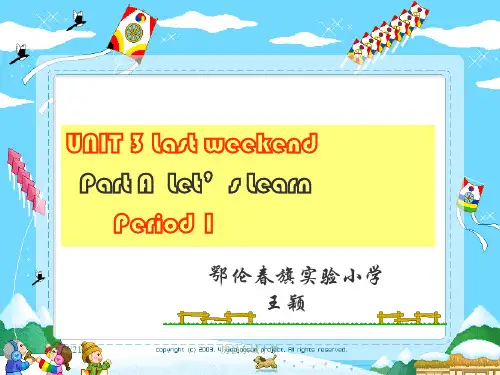
I visited grandparen
ts. 房县东城小学
2020/7/21
房县东城小学
一般过去时中的动词 观
动词一般过去时:动词原型+ed
察 这
watched
些 单
washed
词
cleaned
有 什
played
么
visited
特 点?
2020/7/21
房县东城小学
Words:
watched TV washed the clothes cleaned the room played football visited grandparents
UNIT 3 Last weekend Part A Let’s Learn
Period 1
鄂伦春旗实验小学 王颖
2020/7/21
房县东城小学
last weekend(上个周末) A: what did you do last weekend? B: I watched TV.
/t/
看电视
2020/7/21
/d/
打扫房间
2020/7/21
房县东城小学lastFra bibliotekweekend(上个周末) A: what did you do last weekend? B: I played football.
/d/
踢足球
2020/7/21
房县东城小学
last weekend(上个周末) A: what did you do last weekend? B: I visited grandparents.
/id/
看望爷爷、奶奶
2020/7/21
房县东城小学
人教PEP版小学英语六年级上册教学设计(Unit3 A.Let's learn)
教学课件说明(A.Let’s learn)Let’s learn一、复习(review)1.通过呈现日历,复习tomorrow、next week等表示将来时间的词。
2.通过“时刻”,复习morning、afternoon、evening、tonight表示将来时间的词。
二、学习新知1.学习课本Let’s learn部分的内容:Sarah: What are you going to do today? B: I’m going to see a film.并运用此对话句型根据图片谈论其它计划。
2.将“today”替换成其它将来时间,如this morning、this afternoon、this evening、tonight等,根据图片呈现的活动,再次进行对话练习。
三、巩固练习1.Magic eyes:通过小游戏,练习学生对新词以及表示活动的动词短语的熟练程度。
2.听音,对Let’s learn部分的对话以及词汇进行巩固并加深记忆。
3.Make a plan:让学生做计划,并与同伴分享,让学生进行对话操练。
四、归纳总结总结本课学习的内容:“be going to + 动词原形”表示将要或即将发生某种状况;this morning/afternoon/evening、next year/month/Sunday等表示将来时间的词;“be going to + 地点”五、巩固练习给出动词,让学生用适当形式填空,通过练习题的形式,巩固复习本节课所学的内容。
六、Homework课外作业的布置。
让学生回归课本,通过作业的形式,巩固本次课所学内容,并为下次课的学习做准备。
PEP小学英语六年级上册重点单词和句型练习一、重点单词Unit 1:by ( ) foot( ) bike( ) bus( ) train( ) how( )go to school() traffic()traffic light()traffic rule()stop()wait() get to()Unit 2library( ) post office( ) hospital( ) cinema( ) turn( ) bookstore( ) where( ) please( )next to( ) right ( ) left( ) straight( )then ( )Unit 3next week( ) this morning( ) this afternoon( )this evening ( ) comic book( ) post card( )newspaper( ) buy( )Unit 4hobby( ) ride a bike--riding a bike( ) dive--diving( )play the violin—playing the violin( ) make kites—making kites( ) collect stamps—collecting stamps( ) live –lives( ) teach--teaches( ) go--goes( ) watch--watches( ) read--reads( ) does doesn’t=does notUnit 5singer( ) writer( ) actor( ) actress( ) artist( ) TV reporter( ) engineer( ) accountant( ) policeman( ) salesperson( ) cleaner( ) where() work()Unit 6rain( ) cloud ( ) sun( ) stream( ) come from( ) seed( ) soil( ) sprout ( ) plant( )should ( ) then( )Unit 1: ▁▁(经,乘) ▁▁(脚) ▁▁(自行车) ▁▁(公共汽车) ▁▁(火车)▁▁(怎样) ▁▁▁▁(上学)▁▁▁▁(交通)▁▁▁▁▁▁(交通灯)▁▁▁▁▁▁(交通规则)▁▁(停,停车站)▁▁(等待)▁▁▁▁(到达)Unit 2 ▁▁▁▁(图书馆) ▁▁▁▁(邮局) ▁▁▁▁(医院) ▁▁▁▁(电影院)▁▁(转弯) ▁▁▁▁(书店) ▁▁▁(在哪里,到哪里) ▁▁▁(请)▁▁▁(与…相邻) ▁▁▁ (右边) ▁▁(左边) ▁▁▁(成直线地) ▁▁▁(然后)Unit 3 ▁▁▁▁▁(下周) ▁▁▁▁▁(今天上午) ▁▁▁▁▁(今天下午)▁▁▁▁ (今天晚上) ▁▁▁▁(漫画书) ▁▁▁▁(明信片) ▁▁▁▁ (报纸) ▁▁▁(购买)Unit 4▁▁▁(爱好) ▁▁▁▁▁--▁▁▁▁▁▁(骑自行车) ▁▁▁--▁▁▁(跳水) ▁▁▁▁▁▁—▁▁▁▁▁▁▁(拉小提琴) ▁▁▁▁▁—▁▁▁▁▁▁▁(制作风筝) ▁▁▁▁▁▁—▁▁▁▁▁▁(集邮) ▁▁▁–▁▁▁(居住)▁▁▁▁--▁▁▁▁(教) ▁▁--▁▁▁(去) ▁▁▁--▁▁▁(看)▁▁--▁▁▁(读,看) does doesn’t=▁▁▁▁Unit 5▁▁▁▁(歌唱家,歌手) ▁▁▁▁(作家) ▁▁▁▁(男演员) ▁▁▁▁(女演员) ▁▁▁▁(画家) ▁▁▁▁(电视台记者) ▁▁▁▁(工程师) ▁▁▁(会计) ▁▁▁▁(男警察) ▁▁▁▁▁▁(销售员) ▁▁▁(工作)▁▁▁▁(清洁工) ▁▁▁▁(在哪里,到哪里)Unit 6▁▁▁(雨) ▁▁▁ (云) ▁▁▁(太阳) ▁▁▁▁(河,溪) ▁▁▁▁(来自,从…来) ▁▁▁(种子) ▁▁▁(土壤) ▁▁▁ (苗,芽) ▁▁▁(植物,种植) ▁▁▁(应该) ▁▁▁▁(然后)二、单词分类1)交通方式:by bus, by train, by subway, by ship, by plane, by car, on foot2)文具书籍:dictionary, newspaper, comic book, post card3)职业:singer, writer, TV reporter, actor, actress, engineer, accountant, salesperson, policeman, policewoman,artist, cleaner4)V-ing形式:riding a bike, collecting stamps, diving, making kites, playing the violin5)第三人称单数形式:lives,teaches, watches, goes, does, doesn’t6)公共场所:library,post office, cinema, hospital, science museum, bookstore7)方位:east, west, south, north, turn left, turn right, go straight8)交通灯; red light, yellow light, green light9)自然:sun, cloud, rain, vapour, stream六年级上册四会句子1.你是怎样去上学的?▁▁▁▁▁▁▁▁2.通常我走路去上学。
PEP小学英语六年级下册第三单元教案

六年级下册第三单元课题 Last weekend Part A let’s learn( 第一课时) 课型词汇教学教学目标 1. 能听说读写短语:watched TV, washed clothes, cleaned the room, played football and visited grandparents。
2. 能够听懂问句:What did you do last weekend ? 并能做出正确的回答。
3. 能够运用新学内容完成Make a survey的任务。
4. 教育学生熟悉身边的人所做的事情,并能做到经常关心别人。
教学重难点 1. 重点:(1)能听说读写短语:watched TV,washed clothes,cleaned the room,played football and visited grandparents。
(2) 听懂会说句子:What did you do last weekend ? 并能在实际情景中灵活用。
2. 难点:5个加e d词组的读音和书写,掌握动词过去式和发音。
教具准备 1. 教师准备本课时所需的六张词卡。
2. 教师准备录音机和录音带。
3. 教师准备调查表。
对本主备稿的评价教学过程二次备课(一)、Warm up1、Let’s chantEvery weekend I climb mountains, what do you do ?Every weekend I clean the room, what do you do ?Every weekend I read books, what do you do ?Every weekend I go shopping, what do you do ?然后,问What do you do on the weekend ? 复习与周末活动相关的动词短语。
2、Let’s startT: What do you usually do on the weekend? 帮助学生回忆学过的动词短语,并引导学生回答,如:I usually play football.(设计意图:通过简短交流,让学生回忆周末所做的活动,既复习了以前的单词,又为学习这些单词的过去式做了铺垫。
人教PEP六年级英语下册Unit3 Where did you go?教案教学设计(含教学反思)
Unit 3 Where did you go?Part A 第一课时 (1)Part A 第二课时 (4)Part A 第一课时Let’s try & Let’s talk教学目标1.能听、说、认读fell,off,mule,could,till,Labour Day,Turpan等词汇。
2.能听懂Let’s try的内容,并完成对应的训练题。
3.能理解Let’s talk的内容,并能熟练朗读对话。
教学重点1.听、说、认读句子:What happened?Are you all right?I’m OK now.Where did you go?Did you go to Turpan?Yes,we did.2.理解重点句型,并能运用过去式谈论假期活动。
教学难点运用句型“Where did you go?What did you do?”询问并回答有关假期去过的地方及做过的事情。
教学准备1.单词卡片2.录音机及录音带或教学光盘3.多媒体课件教学过程Step 1:Warm-up1.师生相互问候。
2.播放英语歌“Tell me about your holiday”,让学生跟着录音学唱。
3.“打擂台”游戏。
规则:请五名学生到教室前面,教师任意抽取一张短语卡片,让五名学生根据卡片上的内容造句,如:I watched TV last weekend.不能正确造句的学生即被淘汰出局。
然后教师出示另一张卡片,留在台上的学生继续比赛。
最后留在台上的学生成为擂主。
Step 2:Presentation1.Let’s try.(1)教师通过问候对话谈论的关于假期的话题,引导学生猜猜看John的假期过得怎么样。
(2)教师播放录音,学生完成题目。
(3)教师追问学生:Why was John at home?引导学生进行猜测。
教师再次放录音,学生根据录音回答问题。
2.Let’s talk.(1)教师播放本部分动画,学生带着问题观看动画,看后回答问题:①What happened to John last Saturday?②What did they talk about later?(2)教师利用图片帮助学生理解短语fell off;教师结合日历,让学生理解Labour Day holiday的概念。
新版pep小学六年级英语下册unit3教案
Unit 3 Where did you go ?第一课时A Let’s learn & Listen,answer and write一、教学目标与要求:1. 能够听、说、读、写五个有关周末活动的词组:rode a horse, rodea bike, went camping, hurt my foot, went fishing。
2. 能够正确运用上述五个词组谈论周末活动。
3. 能够完成听录音填写所缺信息的活动。
二、教学重点、难点分析:1. 学习五个短语,注意ride, go,hurt的过去式。
2. 学生能用句型进行简单的对话。
三、教学准备:多媒体课件。
单词图片四、教学步骤和建议:Step1.Preparation1. Show the pictures and Go over the phrases of Unit2.S1:watched TVS2: I watched TVS3: I watched TV last weekend.同样的方法复习cleaned my room, washed my clothes, stayed at home, read a book, saw a film, had a cold and slept.2. Free talk. --- What did you do last weekend?--- I watched TV./ ...Step2 Presentation1. 教学短语(1)Show the picture of ride a horse. 教读短语T: ride a horse I often ride a horse. (学生跟读)Go camping, hurt my foot,go fishing.(用同样的方法复习这些词组) (2) 呈现句子T: I rode a horse last weekend.同样的方法教学短语rode a bike, went camping, hurt my foot,went fishing.听音正音3)听录音,指导学生完成探究学习1中的内容,并指导学生记忆关键词。
Unit 3 Where did you go?Part A教案设计-人教版(三起)英语六年级下册
活动设计意图:通过观看视频和图片能充分调动学生的整体感观,提高参与度,并且游戏教学能够寓教于乐,激发了学生的学习兴趣,让他们对此记忆深刻,在学习知识的同时形成了积极的学习态度,又很好地巩固所学知识。
4)听录音朗读单词和句型
5)复述约翰的周六故事
请几位学生扮演约翰的一家人演周六的活动
Step3. Consolidation
1) Make a survey
提示:要求用句型Where did you go last summer/winter holiday?和What did you do ?来提问班上的同学。
Name
Where?
What?
Wu Yifan
媒介运用:PPT、调查表
媒介运用:图片、PPT、视频
活动设计意图:通过教师的暑假活动带出John的周六假期活动,观看视频引出约翰去了一个森林公园。并通过图片训练Where did you go ? I went to ….句型。视频的设置目的是把五个新单词串成一个简短的故事,情境中教学单词,以便学生记忆单词。
Step2. Presentation and practice
to Zhaoqing . He ate good
food…
4.Summing
Summing up
1. Words:
rode a horse, rode a bike, went camping, went fishing, hurt my foot.
2.Sentences:
Where did you go last Saturday? I went to a forest park. What did you do there? I rode a bike.
(完整版)PEP人教版小学英语六年级下册教材解析
吉安县中小学教师说教材活动全局把握温故知新——浅谈我对六年级英语下册教材的理解吉安县实验小学彭建林在我们的日常教学活动中,明确目标,吃透教材,选择合适的策略是非常重要的,在我们小学英语教学中也是一样。
今年我继续担任我校六年级英语的教学工作,在此,说一说我对人教版小学六年级上册英语教材的理解,与各位同仁探讨。
一、紧扣课程标准,了解教材特点。
1.《英语课程标准》对小学阶段应达到的目标作了明确的阐述,我们小学六年级应该达到的应该是二级,其要求是:对英语学习有持续的兴趣和爱好。
能用简单的英语互致问候、交换有关个人、家庭和朋友的简单信息。
能根据所学内容表演小对话或歌谣。
能在图片的帮助下听懂、读懂并讲述简单的故事。
能根据图片或提示写简单的句子。
在学习中乐于参与、积极合作、主动请教。
乐于了解异国文化、习俗。
我们的这一册教材就是人民教育出版社根据国家教育部颁布的《英语课程标准》编订的以小学三年级为起始年级的小学英语教材的最后一册课本。
通过完成此册课本的学习,学生的英语水平要达到《英语课程标准》规定的基础教育阶段英语课程的二级目标。
因此,本册教材的教学对学生在小学毕业时能否达到教学目标规定的要求有举足轻重的作用。
2.本套教材的编写特点是:*强调语言运用(如let’s do、let’s sing等)*注重能力培养(Group work、Let’s check等)*突出兴趣出发(卡通插图、图文并茂)*重视双向交流(融合中西方文化知识)*融合学科内容(贯穿自然科学、社会文化、语言艺术领域)*重视灵活扩展(选学C部分)*实现整体设计(三至六年级系统编排)3.在编写上,本套教材是这样安排的:(1)、全册共有4个单元,两个recycle是针对小学所有教学内容的总体复习单元。
(2)、新的教学内容较少,12周的时间完成新授单元的教学,2周的时间对这四个单元进行复习巩固,阶段复习;(3)、语言点较为集中,Unit One 是比较级,Unit 3 , Unit 4 是过去时,是本册的难点。