
中国结与中国文化英文
The end Thank you
Chinese knot
The tradition of Chinese
•
Traditional Chinese decorative knots, also known as Chinese knots, are typical local arts of China. They are a distinctive and traditional Chinese folk handicraft woven separately from one piece of thread and named according to its shape and meaning.
• Nowadays ,chinese knot is more and more popular in the world. • It is a sign of china. Foreign people love it very much.
Chinese knot in today
• in nowadays, chinese knot has various products. the two main series are auspicious hanging and knitting clothing adornment. auspicious hanging includes large tapestry, big room hanging, automobile hanging etc. knitting clothing adornment includes ring, eardrop
The meaning
• In Chinese, “knot” means reunion, friendliness, peace, warmth, marriage, love, etc. Chinese knots are often used to express good wishes, including happiness, prosperity, love and the absence of evil.
The history
• Chinese Knot is a kind of characteristic folk decorations of handicraft art. Appeared in ancient time, developed in Tangand Song Dynasty (9601229A.D.)and popularized in Ming and Qing Dynasty (1368-1911A.D.) .Chinese Knot has now become a kind of elegant and colorful arts and crafts from its original practical use.
中国结与中国文化英文

The end
Thank you
知识回顾 Knowledge Review
祝您成功!
• Nowadays ,chinese knot is more and more popular in the world.
• It is a sign of china. Foreign people love it very much.
Chinese knot in today
• in nowadays, chinese knot has various products. the two main series are auspicious hanging and knitting clothing adornment. auspicious hanging includes large tapestry, big room hanging, automobile hanging etc. knitting clothing adornment includes ring, eardrop
The meaning
• In Chinese, “knot” means reunion, friendliness, peace, warmth, marriage, love, etc. Chinese knots are often used to express good wishes, including happiness, prosperity, love and the absence of evil.
Chinese knot
The tradition of Chinese
• Traditional Chinese decorative knots, also known as Chinese knots, are typical local arts of China. They are a distinctive and traditional Chinese folk handicraft woven separately from one piece of thread and named according to its shape ry
中国结知识介绍英语

中国结知识介绍英语Chinese Knot Knowledge Introduction in EnglishThe Chinese knot, also known as the Chinese knotting or the Chinese decorative knot, is a form of Chinese folk art that has been passed down through generations. It is not only a traditional handicraft but also a symbol of Chinese culture and heritage. The Chinese knot is made from a single strand of silk or other types of thread, which is intricately woven to form various patterns and shapes.The origin of the Chinese knot can be traced back to ancient times when it was used for practical purposes such as fastening clothes, bags, and other items. Over time, the Chinese knot evolved into a decorative art form, and it became popular as a symbol of good luck, prosperity, and happiness. The knots are often used as decorations during Chinese festivals and celebrations, such as the Spring Festival, weddings, and birthdays.The Chinese knot is not only aesthetically pleasing but also rich in cultural significance. The patterns and shapes of the knots are often inspired nature, such as flowers, animals, and geometric designs. Each knot has its own meaning and represents different blessings and wishes. For example,the double happiness knot symbolizes love and joy, while the longevity knot represents health and longevity.Today, the Chinese knot continues to be an important part of Chinese culture and is cherished people around the world. It is not only a beautiful art form but also a way to connect with Chinese traditions and values.中国结知识介绍英语Chinese Knot Knowledge Introduction in EnglishThe Chinese knot, also known as the Chinese knotting or the Chinese decorative knot, is a form of Chinese folk art that has been passed down through generations. It is not only a traditional handicraft but also a symbol of Chinese culture and heritage. The Chinese knot is made from a single strand of silk or other types of thread, which is intricately woven to form various patterns and shapes.The origin of the Chinese knot can be traced back to ancient times when it was used for practical purposes such as fastening clothes, bags, and other items. Over time, the Chinese knot evolved into a decorative art form, and it became popular as a symbol of good luck, prosperity, and happiness. The knots are often used as decorations during Chinese festivals and celebrations, such as the Spring Festival, weddings, and birthdays.The Chinese knot is not only aesthetically pleasing but also rich in cultural significance. The patterns and shapes of the knots are often inspired nature, such as flowers, animals, and geometric designs. Each knot has its own meaning and represents different blessings and wishes. For example, the double happiness knot symbolizes love and joy, while the longevity knot represents health and longevity.Today, the Chinese knot continues to be an important part of Chinese culture and is cherished people around the world. It is not only a beautiful art form but also a way to connect with Chinese traditions and values.Learning to create Chinese knots can be a rewarding experience. It requires patience, precision, and an appreciation for detail. Many people find that the process of knotting is meditative and calming, allowing them to escape the stresses of daily life and focus on the beauty of the art form.In recent years, there has been a resurgence of interest in traditional Chinese crafts, including the Chinese knot. People are seeking ways to reconnect with their cultural roots and to preserve these ancient traditions for future generations. Workshops and classes are now available in many parts of the world, where enthusiasts can learn the techniques and history of this fascinating art form.The Chinese knot is more than just a decoration; it is a testament to the creativity and skill of the Chinese people. It is a symbol of unity, as each knot is made from a single strand, and it is a reminder of the strength and resilience of the Chinese culture. As we continue to explore and appreciate the beauty of the Chinese knot, we are also celebrating the diversity and richness of human creativity.中国结知识介绍英语Chinese Knot Knowledge Introduction in EnglishThe Chinese knot, also known as the Chinese knotting or the Chinese decorative knot, is a form of Chinese folk art that has been passed down through generations. It is not only a traditional handicraft but also a symbol of Chinese culture and heritage. The Chinese knot is made from a single strand of silk or other types of thread, which is intricately woven to form various patterns and shapes.The origin of the Chinese knot can be traced back to ancient times when it was used for practical purposes such as fastening clothes, bags, and other items. Over time, the Chinese knot evolved into a decorative art form, and it became popular as a symbol of good luck, prosperity, and happiness. The knots are often used as decorations during Chinese festivals and celebrations, such as the Spring Festival, weddings, and birthdays.The Chinese knot is not only aesthetically pleasing but also rich in cultural significance. The patterns and shapes of the knots are often inspired nature, such as flowers, animals, and geometric designs. Each knot has its own meaning and represents different blessings and wishes. For example, the double happiness knot symbolizes love and joy, while the longevity knot represents health and longevity.Today, the Chinese knot continues to be an important part of Chinese culture and is cherished people around the world. It is not only a beautiful art form but also a way to connect with Chinese traditions and values.Learning to create Chinese knots can be a rewarding experience. It requires patience, precision, and an appreciation for detail. Many people find that the process of knotting is meditative and calming, allowing them to escape the stresses of daily life and focus on the beauty of the art form.In recent years, there has been a resurgence of interest in traditional Chinese crafts, including the Chinese knot. People are seeking ways to reconnect with their cultural roots and to preserve these ancient traditions for future generations. Workshops and classes are now available in many parts of the world, where enthusiasts can learn the techniques and history of this fascinating art form.The Chinese knot is more than just a decoration; it is a testament to the creativity and skill of the Chinese people. It is a symbol of unity, as each knot is made from a single strand, and it is a reminder of the strength and resilience of the Chinese culture. As we continue to explore and appreciate the beauty of the Chinese knot, we are also celebrating the diversity and richness of human creativity.Moreover, the Chinese knot is often used as a form of cultural exchange and diplomacy. It is given as a gift to represent friendship and goodwill between individuals and nations. The intricate beauty and cultural significance of the Chinese knot make it a cherished symbol of Chinese heritage and a powerful tool for fostering connections and understanding.In conclusion, the Chinese knot is a remarkable art form that embodies the essence of Chinese culture. Its intricate patterns, rich symbolism, and historical significance make it a treasure worth exploring and preserving. Whether you are a knotting enthusiast or simply appreciate the beauty of this ancient art, the Chinese knot offers a glimpse into the rich tapestry of Chinese traditions and the boundless creativity of the human spirit.。
四级英汉互译·英语作文120词·中华文化之中国结
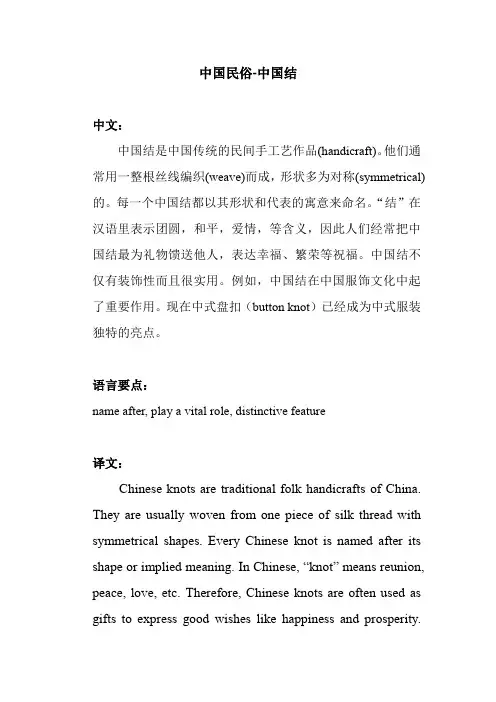
中国民俗-中国结中文:中国结是中国传统的民间手工艺作品(handicraft)。
他们通常用一整根丝线编织(weave)而成,形状多为对称(symmetrical)的。
每一个中国结都以其形状和代表的寓意来命名。
“结”在汉语里表示团圆,和平,爱情,等含义,因此人们经常把中国结最为礼物馈送他人,表达幸福、繁荣等祝福。
中国结不仅有装饰性而且很实用。
例如,中国结在中国服饰文化中起了重要作用。
现在中式盘扣(button knot)已经成为中式服装独特的亮点。
语言要点:name after, play a vital role, distinctive feature译文:Chinese knots are traditional folk handicrafts of China. They are usually woven from one piece of silk thread with symmetrical shapes. Every Chinese knot is named after its shape or implied meaning. In Chinese, “knot” means reunion, peace, love, etc. Therefore, Chinese knots are often used as gifts to express good wishes like happiness and prosperity.The Chinese knot is both decorative and practical. For instance, the Chinese knots play a vital role in the Chinese costume culture. Today the Chinese button knot has become a distinctive feature of traditional Chinese-style clothes.。
中国结传统文化英语作文
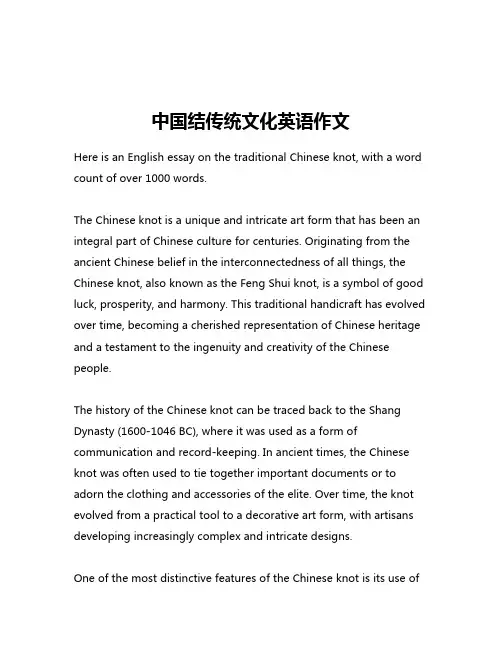
中国结传统文化英语作文Here is an English essay on the traditional Chinese knot, with a word count of over 1000 words.The Chinese knot is a unique and intricate art form that has been an integral part of Chinese culture for centuries. Originating from the ancient Chinese belief in the interconnectedness of all things, the Chinese knot, also known as the Feng Shui knot, is a symbol of good luck, prosperity, and harmony. This traditional handicraft has evolved over time, becoming a cherished representation of Chinese heritage and a testament to the ingenuity and creativity of the Chinese people.The history of the Chinese knot can be traced back to the Shang Dynasty (1600-1046 BC), where it was used as a form of communication and record-keeping. In ancient times, the Chinese knot was often used to tie together important documents or to adorn the clothing and accessories of the elite. Over time, the knot evolved from a practical tool to a decorative art form, with artisans developing increasingly complex and intricate designs.One of the most distinctive features of the Chinese knot is its use ofsymbolism. Each knot pattern is imbued with meaning and represents specific cultural values or beliefs. For example, the double happiness knot, also known as the "Shuang Xi" knot, is a popular design that symbolizes marital bliss and is often used in wedding ceremonies. The endless knot, or the "Auspicious Knot," is a symbol of infinity and the unbroken cycle of life, representing the endless flow of wisdom and good fortune.The creation of a Chinese knot is a meticulous and time-consuming process that requires a high level of skill and patience. Traditionally, the knots are made using a single piece of cord or string, which is carefully manipulated and woven into intricate patterns. The artisan must have a deep understanding of the knot's symbolism and a keen eye for detail to ensure that the final product is both visually stunning and imbued with cultural significance.One of the most remarkable aspects of the Chinese knot is its versatility. These intricate creations can be found adorning a wide range of everyday objects, from clothing and accessories to home decor and furniture. They are often used as decorative elements in traditional Chinese architecture, such as on the eaves of temples and palaces, adding a touch of elegance and cultural richness to the overall aesthetic.In recent years, the Chinese knot has gained increasing globalrecognition and popularity. As more people around the world become interested in exploring and appreciating the rich cultural heritage of China, the demand for these beautiful and meaningful handicrafts has grown. Many artisans have dedicated themselves to preserving and promoting the art of the Chinese knot, passing down their skills and knowledge to the next generation of craftspeople.One of the key factors contributing to the enduring popularity of the Chinese knot is its ability to transcend cultural boundaries. While the knot is deeply rooted in Chinese tradition, its universal appeal lies in its timeless beauty and the way it captures the essence of human connection and the natural world. The intricate patterns and symbolism of the Chinese knot resonate with people from all walks of life, making it a powerful tool for cultural exchange and understanding.As China continues to play an increasingly prominent role on the global stage, the Chinese knot has become a powerful symbol of the country's rich cultural heritage. It serves as a testament to the ingenuity, creativity, and enduring spirit of the Chinese people, and its continued popularity and evolution is a testament to the enduring power of traditional craftsmanship in a rapidly changing world.In conclusion, the Chinese knot is a truly remarkable art form that has captured the hearts and imaginations of people around theworld. Its intricate designs, rich symbolism, and deep cultural significance make it a unique and captivating expression of the Chinese spirit. As we continue to explore and appreciate the beauty and wisdom of this traditional handicraft, we can gain a deeper understanding of the rich tapestry of Chinese culture and its enduring impact on the world.。
中国结的四级英语作文

中国结的四级英语作文China Knots: A Cultural Symbol of Unity and BeautyIn the rich tapestry of Chinese culture, there is a unique and intricate art form that has stood the test of time: the Chinese knot. This traditional craft is not only a decorative element but also a profound symbol of Chinese heritage. The Chinese knot, known as "Chinese knotting" or "Chinese macramé," is a form of textile art that has been cherished for centuries.The art of Chinese knotting is rooted in ancient Chinese traditions, where it was used for practical purposes such as clothing fasteners and decorative purposes such as wall hangings. Over time, it evolved into a complex and beautiful art form that represents various cultural meanings. Each knot has its own symbolic significance, often associated with good luck, prosperity, longevity, and happiness.One of the most famous knots is the "Double Coin Knot," which resembles two ancient Chinese coins tied together. It symbolizes wealth and good fortune, making it a popular choice for gifts and home decorations. Another notable knotis the "Eternal Knot," which is characterized by its endless loop design, signifying eternal love and unity.The process of creating a Chinese knot is meticulous and requires patience and skill. It involves a series of steps,including choosing the right type of string, deciding on the knot design, and carefully tying the knot by hand. The knots are often made with red silk threads, as red is considered a lucky color in Chinese culture.In modern times, Chinese knots have become a popular item for tourists and collectors alike. They are commonly found in souvenir shops and markets, where they are sold as keychains, necklaces, or as standalone pieces of art. The knots are also used in fashion and interior design, adding a touch of traditional elegance to contemporary settings.The Chinese knot is not just a beautiful piece of art; it is a testament to the ingenuity and creativity of the Chinese people. It serves as a bridge between the past and the present, connecting generations through a shared appreciation for this timeless craft. As China continues to embrace modernization, the Chinese knot remains a cherished symbol of the country's rich history and cultural identity.In conclusion, the Chinese knot is more than a simple decorative item; it is a vibrant emblem of Chinese culture that carries deep symbolic meanings. It is a craft that has been passed down through generations, and it continues to captivate people with its intricate designs and profound significance. Whether worn as a piece of jewelry or admired as a work of art, the Chinese knot is a beautiful reminder of the rich cultural heritage that continues to thrive in China today.。
中国传统文化考试词汇之--中国结Chinese knotting(中英文)
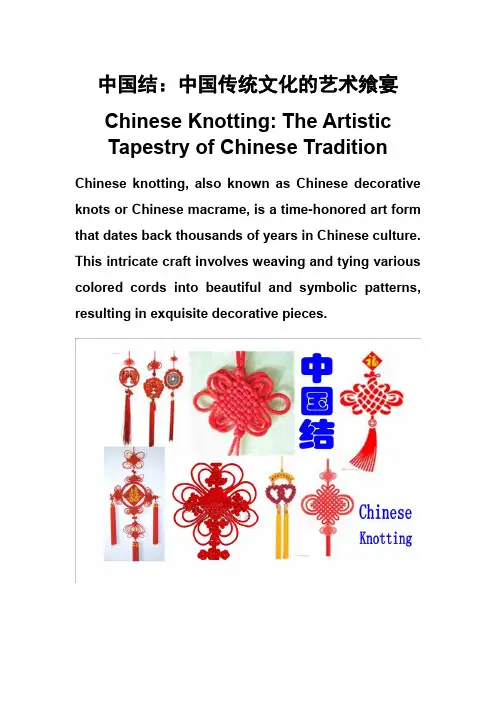
中国结:中国传统文化的艺术飨宴Chinese Knotting: The ArtisticTapestry of Chinese Tradition Chinese knotting, also known as Chinese decorative knots or Chinese macrame, is a time-honored art form that dates back thousands of years in Chinese culture. This intricate craft involves weaving and tying various colored cords into beautiful and symbolic patterns, resulting in exquisite decorative pieces.Each knot has its unique significance, with different designs representing various wishes and blessings. The Chinese knot is not only an embodiment of creativity but also a reflection of cultural meanings and traditions. It is often used in festive celebrations, weddings, and other auspicious occasions to bring good luck and prosperity.The art of Chinese knotting requires precision, patience, and a keen eye for aesthetics. Skilled artisans meticulously combine different knots and colors to create stunning works of art that showcase the harmony and elegance of Chinese design. Through the ages, Chinese knotting has evolved and incorporated diverse elements, allowing for a rich tapestry of styles and patterns. Today, it remains a cherished aspect of Chinese culture, with modern interpretations blending traditional techniques with contemporary aesthetics.As a tangible representation of Chinese heritage, Chinese knotting preserves and celebrates the beauty of cultural traditions, weaving together the threads of the past and present.中国结:中国传统文化的艺术飨宴中国结,又称中国装饰结或中国编织艺术,是中国传统文化中源远流长的艺术形式。
中国传统文化中国结英语作文素材
中国传统文化中国结英语作文素材The Chinese Knot: A Timeless Symbol of Chinese CultureChina's rich cultural heritage is a tapestry woven with intricate patterns and symbols, each imbued with profound meaning and significance. One such enduring symbol is the Chinese knot, a decorative and functional element that has captivated the hearts and minds of people both within and beyond the borders of the Middle Kingdom.The Chinese knot, also known as the Feng Shui knot or the Endless Knot, is a intricate and visually striking design that has its roots firmly planted in the ancient traditions and beliefs of Chinese culture. Originating from the traditional Chinese art of knotting, the Chinese knot is a complex and intricate form of decorative knotwork that has been used for centuries to adorn a wide range of objects, from clothing and accessories to furniture and architectural elements.At its core, the Chinese knot is a representation of the interconnectedness of all things, a symbol of the eternal cycle of lifeand the unbreakable bonds that exist between individuals, families, and communities. The knot's continuous, looping design, with no beginning and no end, is a metaphor for the endless flow of time, the perpetual cycle of the seasons, and the never-ending dance of yin and yang.The Chinese knot is also imbued with a deep sense of auspiciousness and good fortune. In Chinese culture, the knot is often associated with the concept of "Feng Shui," the ancient art of harmonizing individuals with their surrounding environment. The knot is believed to possess the power to attract positive energy, or "qi," and to ward off negative influences, making it a popular choice for use in a variety of ceremonial and decorative contexts.One of the most striking features of the Chinese knot is its intricate and complex design. The knot is typically composed of a series of interlocking loops and curves, each one woven together with meticulous precision and skill. The specific pattern and style of the knot can vary depending on the region, the artisan, and the intended use of the object.In some cases, the Chinese knot may feature additional decorative elements, such as tassels, beads, or pendants, which serve to enhance the overall aesthetic and symbolic meaning of the design. These additional elements can often be used to convey specificmessages or wishes, such as prosperity, longevity, or protection.The process of creating a Chinese knot is a true art form, requiring a deep understanding of the traditional techniques and an unwavering attention to detail. Master knotters, often trained over many years, must possess a keen eye for proportion, a steady hand, and a deep respect for the cultural significance of the craft.The creation of a Chinese knot typically begins with the selection of the appropriate materials, which can include silk, cotton, or even metal. The knotting process itself involves the careful manipulation of these materials, using a series of intricate loops and turns to create the desired pattern. The final result is a stunning and intricate work of art that serves as a tangible representation of the rich cultural heritage of China.Beyond its decorative and symbolic significance, the Chinese knot has also played an important role in the practical and functional aspects of Chinese culture. In the past, the knot was often used as a means of fastening and securing various items, such as clothing, accessories, and even tools. The knot's strength and durability made it an essential element in the daily lives of the Chinese people, helping to ensure the safe and secure transport of goods and the preservation of cherished possessions.Today, the Chinese knot continues to hold a prominent place in the cultural landscape of China, serving as a symbol of national pride and a testament to the enduring ingenuity and creativity of the Chinese people. From the intricate patterns adorning traditional architecture to the delicate embroidery found on ceremonial robes, the Chinese knot remains a ubiquitous and beloved element of Chinese culture.As the world becomes increasingly interconnected, the Chinese knot has also gained a growing global following, with people from all corners of the world recognizing its timeless beauty and profound cultural significance. Whether used as a decorative accent, a symbolic talisman, or a functional fastening, the Chinese knot remains a powerful and enduring symbol of the rich and diverse heritage of China.In conclusion, the Chinese knot is a true masterpiece of traditional Chinese culture, a testament to the ingenuity, creativity, and enduring spirit of the Chinese people. From its intricate design to its deep symbolic meaning, the Chinese knot continues to captivate and inspire people around the world, serving as a living embodiment of the timeless traditions and beliefs that have shaped the unique and vibrant culture of China.。
中国结 英语介绍
中国结英语介绍The Chinese knot, or "Zhongguo Jie" (中国结), is a traditional Chinese decorative handicraft that dates back thousands of years. It's a type of decorative knotting that's intertwined and woven from a single cord or multiple cords. Here's a complete introduction in English:Origin and Significance:The Chinese knot has a rich cultural heritage and is deeply rooted in Chinese history. It originated in ancient China and has been an integral part of Chinese culture for centuries. Its intricate designs and artistic significance make it a symbol of good luck, prosperity, and well-being.Symbolism:The knotting technique symbolizes unity, harmony, and the interconnection of people. It is often used to express good wishes, blessings, and hopes for a better future. The finished knots come in various shapes, patterns, and sizes, each carrying its own symbolic meaning.Styles and Variations:There are numerous variations and styles of Chinese knots, each with its own unique pattern and significance. Some popular styles include the "Double Happiness Knot," the "Button Knot," the "Mandarin Knot," and the "Endless Knot."Usage and Occasions:Chinese knots are used in various ways and for different occasions. They are commonly seen as decorations during Chinese New Year, weddings, festivals, and other celebrations. They can be used as pendants, ornaments, home decorations, or accessories for clothing.Techniques and Craftsmanship:Crafting a Chinese knot requires skillful techniques and precision. It involves intricate weaving and tying methods passed down through generations. Different tying methods create distinct patterns and designs, showcasing the artisan's creativity and expertise.Cultural Heritage and Global Appeal:As an iconic symbol of Chinese culture, the Chinese knot has gained international recognition. Its elegant and intricate designs have captured the interest of people worldwide, making it a popular cultural symbol and souvenir representing China's rich heritage.The Chinese knot serves as a reminder of tradition, craftsmanship, and the enduring values of unity and good fortune in Chinese culture. Its timeless beauty and symbolic meanings continue to enchant people both in China and around the world.。
中国结,中国文化的象征英语作文
中国结,中国文化的象征英语作文English:The Chinese knot, also known as "Zhong Guo Jie", is a traditional Chinese handicraft that has been passed down for generations. It is a symbol of Chinese culture and is used for decorative purposes as well as for various auspicious meanings. The Chinese knot is created by tying intricate patterns using colored cords or ribbons, and can come in various shapes and sizes. The art of making Chinese knots requires patience, precision, and skill, making it a cherished art form in Chinese culture. The Chinese knot is often used in celebrations, such as weddings, New Year, and other important occasions, where it is believed to bring good luck, prosperity, and longevity to those who receive it. Its intricate patterns and the symbolism behind each knot make it a unique and beautiful representation of Chinese heritage.中文翻译:中国结,又称“中国结”,是一种传统的中国手工艺品,代代相传。
中国民俗-中国结英文介绍
段落翻译B-中国民俗-中国结-历史-4中文:中国结(the Chinese knot)是一种古老的编织(weave)艺术。
中国人自汉朝(Han Dynasty)起就把中国结用作装饰品。
现在,人们仍然对传统中国结复杂的美而着迷。
“结”在中文的含义是团聚、友谊、温暖和结婚等等,所以中国结也成为团聚、幸运、和谐和爱的象征。
今天,中国结已成为国际流行的重要元素之一。
为了与现代生活的需要相适应,它被开发出各式各样既美观又实用的产品。
语言要点:be fascinated by; reunion; come to be; element of international fashion; to meet the needs of译文:The Chinese knot is actually an ancient art of weaving. Chinese people have used knots as decorations since the Han Dynasty. Now people are still fascinated by the complicated beauty of traditional red knots. “Knot”in Chinese has the meanings of reunion, friendship, warmth, marriage, etc, so the Chinese knot has come to be the symbol of reunion, luck, harmony and love. Today, it has become an important element of international fashion. To meet the needs of modern life, it has been developed into various products that are both decorative and practical.。