
选修7 unit 3 writing and reading
Revision
to be the witness 1.He refused___ ___ ____ _______(拒绝当证 人) to provide 2. It's very kind of you ______ _______ accommodations ________________(提供住所) for us. 3. He dived into ______ _____(跳入) the river without thinking twice. 4. She urged the education system _____ be reformed _________.(被改革) helping out 5. We have trouble _______ him _____(摆脱困 境)
7. What’s the shape of Tombe’s house? 8. How many people would sleep on the platform? 9. Can you use a adjective to describe the impression of the decoration? 10. What does Kau Kau mean? 11. Did the author like the food? 12. Could the author speak the local language? 13. Why did Tombe throw the can? 14. How do you understand the word “ privilege”
Translation
1. 自从那时我一直没收到他的信。 2. 他极想过一种平静的生活。 3. 我们在学校学的东西与生活无关。 4. 他设法自我调节以适应新环境。 5. 弄干你的头发否则你会感冒的。
Check the answers
1. I haven't heard from him since then. 2. He is dying to live a peaceful life. 3. What we have learnt in school isn't relevant to our life. 4. He managed to adjust himself to the new environment. 5. Dry out your hair, or you will catch a cold.
单词拼写
fornights 1. He stayed there for two __________. 2. It was raining heavily and the path became muddy ________. 3. The concept is beyond my understanding. _______ 4. The fingerprints prove that the young man relevant is ________ to the murder. weeds 5. He cut down the _______ in his garden. remote 6. He offered to teach in a ________ village. adjust 7. He had a professional ________ his camera.
The things you do to help 1. help to do cleaning 2. help to do washing 3. help to attend the sick and old 4. help to look after children ...
Questions--- the first three paragraphs 1. How long did it take to arrive at the destination(目的地)? 2. What are the classrooms made of ? 3. Is it convenient for the students to go to school? 4. Who does he work as? 5. What did it happen when he did a chemistry experiment? 6. Where did he visit for the first time?
fled in 5. Hearing the gun, the people _____ ______ all directions _______ _________ was aware of 6. He ____ ______ _____(意识到) the danger.
Unit 4
Sharing
Type of houses: The walls are made __________ and the the roofs made _________. Family relations: They have a _______________ with each other because Cooking method: They usually ________ food. Sleeping arrangements: simple beds and a __________ for a guest What do they eat: Some _________ food. Possessions: ____________________ and two jars. Agriculture: They use simple tools Beliefs: The villagers believe that any leftover_________.
platform 8.She waved on the _________ until the train was out of sight. participate 9. He was quiet and didn't __________ in our conversation. 10.The disabled and old can enjoy a privilege ________
How to write a complaint letter
1. The problem
2. The possible solution
3. Your advice
Practice
like going shopping I am Li Ping and_________________(购物) online. which I bought a shirt from your online shop,_____ I spent 150 Yuan buying _________________(它花了我150元). But I find it is different from ____________________(有差别) the one online. feel disappointed It isn’t as good as you promised. I __________ with it ______(对此感到失望). I am writing this letter to see If you can change it for me. If the new one is still must refund my money Of bad quality, you ________________(必须给我退款) I suggest you ___________________(提高产品质量) should improve the quality of yo Only in this way _______________________(你们才能 can you make more profits 赢得更多的利润)
重点短语
1. 收到某人的信 --- hear from sb 2. 极想渴望得到某物--- be dying for sth 3. 极想去做某事--- be dying to do sth. 4. 与有关--- be relevant to 5. 调整自己以适应 --- adjust oneself to sth 6. 参与--- participate in 7. 烘干,使变干--- dry out
人教英语选修7unit3 reading(共32张ppt)
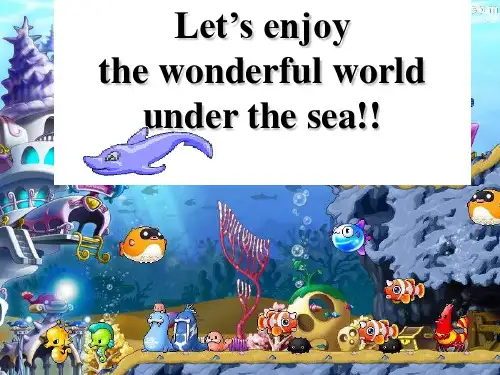
3. why did George think that the killer whales worked as a team?
Because he could see that some of the killers were throwing themselves on top of the whale’s blow-hole to stop it breathing while others were preventing it from fleeing out to sea.
• Homework
1. Writing: What can we
do for our “Green School”?
2. Finish exercises on 22 and 63
Thank you! Bye-bye
Writing style Time
At the beginning of the 20th century Australia Whalers, killer whales and
baleen whales
Place
Main character
The killer whale helped the whalers to kill a baleen whale
• Word Filling
Although the killers were f_ie_r_c_e_hunters , they never ha_r_m_e_d_ or a_tt_a_c_k_e_d_ people. In fact , they pr_o_t_e_c_te_d_ them. However, whales are now in d_a_n_g_e_r_ . They are dying o_u_t _.
高中英语选修七:Unit_3_Under_the_sea_(Reading)课件(新人教版选修7)
逃跑, 消失 打包, 收拾行李 遗弃, 抛弃
Fast-reading
Task 1 : Read the text and then fill in the blanks with their names.
1._C_l_a_n_c_y_ was 16 years of age when he went to work at the whaling station.
传统捕鲸方法:6名捕鲸者离开大船,乘小艇追 逐鲸鱼,小艇通常长8.5公尺,装备有具倒钩 的捕鲸铦和长索。鲸一旦被铦刺中,便带着绳 索逃遁,直到筋疲力尽浮出水面,人们在那儿 用捕鲸枪(一种更长的捕鲸铦)将它杀死,用绳 索拖到大船边,用有刃的长枪割取油脂,并把 尸体抛弃。
现代捕鲸业肇: 挪威人福伊恩发明了一种 捕鲸炮,用来发射内充炸药的标枪。后来又使 用了动力船,与捕鲸炮相得益彰,这些方法使 用至今几乎没有什么变化。
dolphin
shark
Anemone (海葵)
coral
anemone fish sea star
turtle
sea horse
killer whales (虎鲸)
baleen whales (须鲸)
Do you know about whales? such as
• sharks
• the killer whales
Tom was helping the whalers out?
Evidence of helping the whalers
throw itself out of the water and crash down again.
Let the whalers know that there was a baleen whale nearby.
选修7Unit3Reading
Homework:
New words
witness pack flee abandon annual
v. get ready for a trip by putting things into a box v. to see, to give evidence n. person who gives evidence v. to leave, to go away from v. to run/hurry away from sth. adj. coming / happening every year
B _____.
A. the whalers needn’t train the killer whales B. the whalers may train the killer whales C. the killer whales live on other whales D. the author worked in the whale station for a long time
Sea flowers
Clown fishes
An Angel fish
A shark is coming ~ Dangerous!
He notices us~ We must go now. ^^^^^^^
We are safe now.
And I catch a sea star near the shore~
Do the “True” or “False” exercises.
1.The author believed the story was truth at the very beginning.
2.The killer whale was throwing itself out of the water and then crashing down again just to play.
人教版选修七Unit 3 Under the sea教案及说课稿

Unit 3 Under the seaI.教学内容分析本单元的中心话题是海底世界。
听说读写活动主要围绕海底的动植物、奇异景观和有关大海的神话绽开的。
Warming Up局部通过探讨海底生物和理解海底世界的途径导入本单元话题。
Pre-reading局部通过探讨图片导入课文并介绍故事背景。
Reading局部讲解并描述了一个虎鲸助人捕鲸、救人脱险的故事。
课文中采纳了大量的动作描写,并运用了大量的-ing形式。
Comprehending局部由三个练习题组成,旨在逐步加深学生对课文的理解。
Learning about Language局部突出了本单元词汇和语法的学习与训练。
本单元的语法是-ing 形式的被动语态。
Using Language局部包括阅读和写作两局部。
课文通过对海的世界奇观妙境的描写,为学生树立了景物描写的典范。
写作局部要求学生仿照课文描写景物。
本局部中,形容词的依次和复合形容词的构成也是学生应理解的内容。
Summing Up局部要求学生对本单元的内容、词语和构造进展总结,有助于学生Learning Tip 局部介绍了合成形容词的构词法,并指导学生在写作中主动利用构词规则组词。
II.教学重点和难点1. 教学重点(1) 本单元的生词和短语;(2) 驾驭运用-ing 形式的被动式;(3) 学会在对话和写作中表达责怪、埋怨以及要求赔偿。
2. 教学难点(1) 帮住学生更多地理解海洋生物,培育学生敬重海洋、爱惜海洋生物的道德品质;(2) 学会仿照课文描写景物;(3) 学会复述故事。
III.教学安排本单元建议分五课时:第一课时:Warming up, Pre-reading, Reading & Comprehending第二课时:Learning about Language第三课时:Reading and discussing (Using Language)第四课时:Reading, discussing and listening (Using Language) & Speaking and writing (Using Language)第五课时:Reading task (Workbook) & Writing task (Workbook)Period 1 Warming up, Pre-reading, Reading & Comprehending Teaching Goals:1. To arouse Ss’ interest in animals and plants living under the sea.2. To develop Ss’ reading ability.3. To appreciate how the writer describes movements.Teaching Procedures:Step 1. Leading-inPurpose: To arouse Ss’ interest in the content of this unit.1. Ask Ss to collect information about sea animals and plants and answer the followingquestion.Can you name some animals and plants living under the sea? What’s you favorite? Speak about it.2. Ask Ss to collect information about whales and answer the following question.(1) Are whales fish? How do you know?(2) What is a killer whale? What do you know about it?Step 2. Warming upPurpose: To get Ss to know something about the content of this unit.1.Get two or three Ss to talk about their favorite animals or plants under the sea. And ask Ss toanswer the following question.From where did you learn this?2. Ask Ss to look at the three pictures of Warming Up on P19 and answer the following questions.(1)What are your favorite sea plants and animals(2)Where can you find them?(3)If possible, would you like to keep some at home?Step 3. Pre-readingPurpose: To get the Ss prepared for reading the text.1.Ask Ss to talk about whales. Teacher may say, “Today, we are gong to read a story of alarge animal living in the sea, a killer whale. Do you think whales are fish? Why do you say so? Then get one of two Ss to talk about whales.”2.Ask Ss to look at the picture of Pre-reading and answer the following questions.(1)what do you think is happening?(2)What is a killer whale? Can you tell me about it?Step 4. Fast readingPurpose: To get Ss to read for the general idea.1.Ask Ss to read the text fast and sum up the main idea of the text and answer the followingquestion.In what person is the text written?Suggested Answer: The text is written in the first person.2.Play the tape and ask Ss to read after it.Step 5. Intensive readingPurpose: To develop Ss’ reading ability of scanning.1.Play the tape again sentence by sentence and ask Ss to underline what they cannot understand.2. Ask Ss to discuss what they have underlined.3. Read the following sentences and ask Ss to find whether they are true or false.4. Ask Ss to make a dialogue according to the questions in Ex1 of Comprehending on P21 and then act it out.Step 6. Language points (1)Purpose: To learn the language points in the text.1. Present the following phrases on the blackboard. Ask Ss whether they are what they have underlined and then ask them to translate them into Chinese. Finally, get them to remember the sentences containing these phrases.2. Lead Ss to deal with the following language points.Step 7. Language point (2)Purpose: To deal with the main sentence structures.1. Ask Ss to find the sentences containing –ing forms and tell what parts they play in the sentences. Then present the following sentences on the blackboard.(1).We ran down to the shore in time to see an enormous animal throwing itself out of water.(2).I saw James being held up in the water by Old Tom.(3).I could see a whale being attacked by a pack of about six other killers.(4).Gorge didn’t like being kept waiting.(5).I could see he was terrified of being abandoned by us.(6).The killers over there are throwing themselves on top of the whale’s blow hole to stop it breathing. And those others are stopping them fleeing out to sea.(7).I looked down into the water and could see Old Tom swimming by the boat, showing us the way.(8).And there was Tom, circling back to the boat, leading us to the hunt again.(9).Gorge told me, pointing towards the hunt.(10).“They are having a good feed on its lips and tongue,” added Gorge, laughing.(11).Gorge told me, pointing towards the hunt.(13).Being badly wounde d, the whale soon died.Suggested Answers:(1)~(3): 宾语补足语(4)~(6): 宾语(7): 宾补,伴随状语(8):状语(9)~(11): 伴随状语2. Collect Ss’ questions in understanding the grammar.Step 8. ExtensionPurpose: To develop Ss’ mentality of harmonious coexistence between man and nature.1. Ask Ss to answer the following questions and discuss them.(1)How do you feel after reading the text?(2)Should whale hunting be banned?2. Ask Ss to make a dialogue according to the result of the discussion.Step 9. Homework1.Rewrite the reading text in the third person. Encourage Ss to use their own words.2.Make sentences with the phrases learnt in the text.Period 2 Learning about LanguageTeaching Goals:1.To revise the passive –ing form.2.To enable Ss to master some new words and expressions.Teaching Procedures:Step 1. Revision1.Ask Ss to speak out the words and expressions learnt in this unit. The student who knows the mostwill be praised.2.Ask Ss to exchange the sentences they made with the phrases.Step 2. Grammar1. Complete the following sentences with the suitable –ing form of the verbs in the brackets.(1)_______(laugh) at in public made him upset.2. Analyze the grammar by explaining the answers.Group 1: In(1)~(10), passive forms of gerunds used as subjects or objects.Note: In (8)~(10), passive forms are not used.Group 2: In (11)~(14), non-finite verbs used as attributives.Convert the past or present participles into attributive clauses.(11).The house (which was) built last year will be our dormitory.(12).The house (which is) to be built next year will be our dormitory.(13).The house (which is) being built now will be our dormitory.(14).The soldier (who is ) being operated on now was wounded in the fight.Group 3: In (15)~(21), non-finite verbs used as adverbials.Convert the past or present participles into adverbial clauses.(15).(If I had been) given more time, I would have done the work better.(16).If you give me more love, you would be more loved.(17).When (she was) asked about her father, the girl cried.(18).(While he was) asking this and that, the doctor took out some medicine.(19)..(After they had been) shown around the school, the leaders went to the hotel.(20).(As it is) being painted, the house can’t be moved in.(21).(As it is) being repaired, the car can’t be used right now.3. Ask Ss to finish Ex1 and Ex2 in Using Structure on P64~65. And then check the answers withthe class.4. Let Ss finish Ex3 in Using Words And Expressions on P63. Leave Ss enough time for thinking.Collect different translations.Step 3. Homework1.Ask Ss to finish Ex1 and Ex2 in Revising Useful Structures on P22 and Ex1 and Ex2 inUsing Words And Expressions on P63.2.Ask Ss to preview the reading text in Using Language on P23 and finish Ex1 on P24according to the reading text.Period 3 Reading and discussing (Using language)Teaching Goals:1.To get Ss to learn how to describe things.2.To get Ss to know something about the formation of compound adjectives.Teaching Procedures:Step 1. Revision1.Ask Ss to speak out sentences with the passive –ing form. The student who speaks out themost will be praised.2.Check the homework with the class and correct Ss’ errors.Step 2. Leading-inPurpose: Get Ss prepared for the text learning.1. Ask Ss to look at the pictures on P23 and ask the following questions.(1) What can you see in the pictures? Are they beautiful?(2) Where do you think we can find them?2. Tell Ss what man in the past thought about the deep sea and lead them to the reading text. Teacher may say, “But in the past, man didn’t know much about the deep sea. He thought there was no living thing in deep sea because there was little light and great pressure. But he was wrong. It is a colorful world full of life. Today, let’s see what it is like under the sea.”Step 3. Fast reading1.Ask Ss to listen to the tape and ask Ss to sum up the main idea of the text2.Ask Ss to read after the tape and finish Ex1 in Reading and discussing on P24.Step 4. Intensive reading1. Ask Ss to read the text carefully and finish Ex2 in Reading and discussing on P24.2. Ask Ss to sum up the main idea of each paragraph and underline what they cannot understand. Step 5. Language point1. Explain the following language points.(1)reflect on (line 1, para 1): think deeply about, considerI need time to reflect on what your request. 我须要时间来考虑一下你的恳求。
高中英语_人教版选修7Unit3阅读课教学设计学情分析教材分析课后反思
Book7 Unit 3 Old Tom the Killer Whale 虎鲸老汤姆一、教学目标1. 知识目标:通过深层次的理解,使学生了解并掌握词汇用法,并完成有关课文内容的练习。
2. 能力目标:通过个人活动,同伴活动和小组活动,使学生掌握速读—略读—精读—总结—寻找细节等阅读文章的各种阅读技巧,并利用多媒体课件创设情境,为学生提供大量的输出机会,提高学生的听说读写能力及培养他们的发散思维与创新能力。
3. 情感目标:体验使用多媒体手段辅助学习的乐趣和成就感,帮助学生更多的了解海洋生物,培养学生热爱和保护海洋生物的意识。
二、教学重点与难点1. 培养学生的阅读策略及获取信息的方法。
2. 创设情境,激活学生思维,培养学生的合作学习能力以及发现问题,思考问题和解决问题的能力。
三、教学媒体选择多媒体教室、计算机、CAI课件四、教学设计思路《全日制义务教育普通高级中学英语课程标准(实验稿)》把基础教育阶段英语课程的目标设定为以学生语言知识、语言技能、情感态度、学习策略和文化意识的发展为基础,培养学生英语综合语言运用能力。
同时,也指出:“高中英语课程的设计与实施要有利于学生优化英语学习方式,是他们通过观察、体验、探索等积极主动的学习方式,充分发挥自己的学习潜能,形成有效的学习策略,提高自主学习的能力。
”应《标准》的要求,我将在培养学生听说读写四个能力的基础上通过对教学情境的创设,采用discussion等方式来进行对本单元的教学。
本单元是高中英语人教版选修七第三单元Under the Sea。
该单元的中心话题是“海底世界”,单元各项活动的设计都是围绕海底动植物、海底奇妙景观,以及有关大海的神话故事展开的。
本课时是根据该单元中的阅读内容“Old Tom the Killer Whale”而设计的一节课。
作者以第一人称的口吻,讲述了一个名叫Old Tom的虎鲸的故事。
学生阅读此文可以了解人类如何利用鲸捕杀鲸的残酷现实。
人教版高中英语选修七课件:Unit 3 Under the sea 单元教案
Unit Three :Old Tom The Killer Whale Unit 3 的主题是“Under the sea”, 中心话题是海底世界, 听说读写活动主要围绕海底动植物, 海底奇妙景观,以及有关大海的神话故事展开的.阅读内容是:1. 两起虎鲸轶事.2. 一篇有关海洋见闻和感受的日记.Period Two Pre-reading, Reading and ComprehendingTeaching aims:1. Grasp the basic information about the killer whales, such as size, habit, food, how they hunt animals and the relationship with human beings.2. Learn to retell the two anecdotes with the help of some key words.3. Make sure the students know that killer whales are friends of human beings and we should keep balance with nature.Teaching difficult points:1. The relationship between the killer whales and the whalers.2. Develop students’ reading abilityTeaching important points:1. Reading comprehension to the text2. Learning more about the killer whales and understanding the relationship between the killer whales and the whalers3. Important words and expressionsStep 1 Warming up and lead-inRiddle games:猜谜语(课件warming up第38个幻灯,显示出答案的图像)1. a large reptile which has a thick shell covering its body.2. a hard substance formed from the skeletons of very small sea animals. It is often used to make jewelry.3. a very large mammal with the general shape of a fish and one or two blowholes for breathing.4. A type of small fish which appears to swim in an upright position and whose head looks a little like the head of horse.After teaching them some new words and useful phrases in this unit, we lead in the new text by introducing an imagined story about a snorkeling trip under the sea.Some new words: dolphins(海豚); turtles(海龟), manatee(海牛); eels(鳗鱼); octopus(章鱼); squids(鱿鱼); butterfly fish(蝶鱼); kelp(海藻); sea star(海星); angel fish(宝贝鱼); clown fish / anemones fish(小丑鱼); parrotfish(鹦鹉鱼); sea flower / anemone(海葵); sea-slug(海参); clam(蛤); coral(珊瑚礁); seahorse(海滩); jellyfish(海蜇, 水母); shark(鲨鱼); the killer whale(杀人鲸); the baleen whale(须鲸); cormorants(鸬鸟); otters(水獭); ferrets(雪貂) etc.Step 2 PresentationStep 3 Skimming1. Ask students to skim the passage quickly and answer the questions:1) What is the first anecdote about? And how about the second one?2) The first anecdote mainly talks about that ________.A. Clancy began to work at a whaling stationB. the killer whales helped the whalers to catch a baleen whaleC. the killer whales hunted in a team and killed a baleen whaleD. Old Tom showed whalers the way to a baleen whaleThe second anecdote: Old Tom saved a whale James who was washed off the boat.3) The text mainly tells us _______.A. what a hard life the whalers livedB. how the killers helped the whalers catch whalesC. what the whalers did at the whaling stationD. how the whalers caught a whale by teamwork4) Why didn’t the shark hurt James when he was washed off the boat?A. Because James wore a protective diving suitB. Because other people drove away the sharkC. Because the shark wasn’t interested in JamesD. Because Old Tom didn’t let it near Jamesbreathing; dragged; washed off; nearing; held up; pulled)Step 4 Scanning1. Fill in the following blanks with the proper names:1) ________ was 16 years of age when he went to work at the whaling station.2) ________ ordered Clancy to go to the boat as there was a whale out there in the bay.3) ________ was swimming by the boat, showing the whales the way.4) ________ told Clancy that they would return the next day to bring in the body of the hale.5) ________ was carried by the waves further away from the whalers.6) ________ knew that Old Tom would protect James.(Suggested answers: Clancy; George; Old Tom; Jack; James; Red)2. Reading aloud and underlining expressions:at the times; at the whaling station在捕鲸站; hear of听说; witness it with my own eyes亲眼目睹; sort out my accommodation整理我的床铺; an enormous animal一个庞然大物; throw itself out of the water猛地跃出水面; crash down坠落; call out to sb.高声对某人说; yell out大声喊叫; ahead of在…..的前面; head out into the bay朝向海湾方向驶去; circle back转回来; a pack of一群; in the bow of the boat在船头; aim at; hit the spot击中要害; within a moment or two片刻之后; the depth of the sea深海中; float up to the surface跃出水面; in the meantime同时; have a good feed on sth.跑餐一顿; wash off冲走; man overboard有人落水; the sea was rough波涛汹涌; be terrified of doing sth.害怕做什么; be abandoned by sb.被某人遗弃; hold up举起; pull back拉回;Step 5 Careful readingStory part 1: the hunt------before------after------during1. Ask the students to read the part 1 of the reading passage and find out before the hunt, what did Old Tom do and how did the whalers react?(Suggested answers:Old Tom threw itself out of the water, then crashed down again and swam by the boat, showing the whalers the way.One whaler yelled out and George ran ahead of Clancy. Clancy raced after him. They jumped into the boat with the other whalers and headed out into the bay.)Next, find out during the hunt and after the hunt, what did the killer whales do and how did the whalers react?(Suggested answers:a pack of killers are throwing themselves on top of the whale’s blow-hole to stop it breathing; and some others are stopping it fleeing out to sea. The killers started racing between the whalers’ boat and the whale just like a pack of excited dogs. Within a moment or two, the whale’s body was dragged down into the depth of the sea.The man in the bow of the boat aimed the harpoon at the whale and then let it go to hit the spot.)2. Ask students to read Part 1 of the reading passage and put the following sentences into the correct order:a. George started beating the water with his oar.b. Clancy raced after George to the boat.c. Clancy arrived at the whaling station.d. The killers started racing between our boat and the whale.e. Clancy heard a huge noise coming from the bay.f. Clancy was sorting out his accommodation.g. Clancy ran down to the shore.h. The man in the bow of the boat aimed the harpoon at the whale.(Suggested answers: c,f,e,g,b,a,d,h)显示先后次序时,先用图片展示这些句子的内容,其后再出现句子3. Story Part 2Which was not the danger facing James?A. Being washed off the boat.B. Being carried away by rough waves.C. A shark out there.D. Being attacked by another killer whale.Step 6 Comprehending1. The text is mainly about _______.A. the killer whales are easily trainedB. the killer whales can help the halers catch the huge whalesC. the killer whales kill the whales for their foodD. the killer whales drag the whales under the water2. Old Tom throws itself out of the water and then crashes down in order to _______.A. give the whalers information about a whaleB. tell the whalers it is hungryC. help the whalers catch the whaleD. inform the whalers to run away3. ________ killed the whale at last.A. Old TomB. The killer whalesC. The authorD. The whalers4. Why did the whalers start turning the boat around to go to home after the whale died?A. Because they didn’t need a dead whaleB. Because they couldn’t find the whale’s bodyC. Because they knew that the dead whale wouldn’t float up to the surface for around 24 hoursD. They had to do this because it was too late5. The killer whale protected James by _______.A. fighting the sharkB. killing the sharkC. preventing the shark going closerD. dragging him back6. We can infer from the story that ________.A. the killer whales may be trained by the whalersB. the killer whales want to help man catch the whales themselvesC. the killer whales need no training for helping the whalersD. the killer whales want to eat the whales after killing them7. Why didn’t the shark hurt James when he was washed off the boat?A. Because James wore a protective diving suitB. Because other people drove away the sharkC. Because the shark wasn’t interested in JamesD. Because Old Tom didn’t let it near James(Suggested answers: BADCCAC)SummaryThis text is two __________ written by an old man called Clancy , who was a ______ and hunted whales on the south-eastern coast of Australia at the beginning of the 20th century, when the ____________ helped the whalers catch the ______________ that were on their _________ migration.The key: anecdotes; whaler; killer whale; baleen whale; annual Step 7 Discussion1. What is the relationship between Old Tom and the whalers?________________________________________________________.2. What other animals can help out humans in hunting?________________________________________________________.(Suggested answers:Old Tom had a strong relationship with the whalers. There was obviously a great deal of understanding and cooperation between them.There are many other animals that help out humans in hunting as dogs, cormorants(鸬鸟); otters(水獭); ferrets(雪貂).3. What else do you think is amazing in the story? Show your evidence._________________________________________________________ ___________________________________________________________.4. What is an anecdote?________________________________________________________.Step 8 DebateThe last whaling station in Australia closed in 1978. Whales are now an endangered species and protected by an international ban on whaling, but some countries oppose the ban. In groups, discuss the reasons for and against banning whaling.Step 9 Learning phrases and sentencesUseful phrases:at the whaling station在捕鲸站; hear of听说; witness it with my own eyes亲眼目睹; sort out my accommodation整理我的床铺; an enormous animal一个庞然大物; throw itself out of the water猛地跃出水面; crash down坠落; call out to sb.高声对某人说; yell out大声喊叫; ahead of 在…..的前面; head out into the bay朝向海湾方向驶去; circle back转回来; a pack of一群; in the bow of the boat在船头; aim at; hit the spot击中要害; within a moment or two片刻之后; the depth of the sea深海中; float up to the surface跃出水面; in the meantime同时; have a good feed on sth.跑餐一顿; wash off冲走; man overboard有人落水; the sea was rough波涛汹涌; be terrified of doing sth.害怕做什么; be abandoned by sb.被某人遗弃; hold up举起; pull back拉回;Beautiful sentences:1. It was a time when the killer whales……helped the whalers catch the baleen whales…..2. This was the call that announced there was about to be a whale hunt.3. I had already heard that George didn’t like being kept waiting, so even though I didn’t have the right clothes on, I raced after him.4. As we drew closer, I could see a whale being attacked by a pack of about six other killers.5. From James’s face, I could see he was terrified of being abandoned by us.Step 10 Homework1) Prepare to retell the whole text in your own words.2) Write a short summary of the whole text in about 30 words.。
高中英语选修7课文逐句翻译(人教版)
1.选修七Unit1 MARTY’S STORY马蒂的故事Hi, my name is Marty Fielding and I guess you could say that I am "one in a million".你好。
我叫马蒂·菲尔丁。
我想你可能会说我是“百万人中才有一个”的那种人。
In other words, there are not many people like me. 换句话说,世界上像我这样的人并不多见。
You see, I have a muscle disease which makes me very weak, so I can't run or climb stairs as quickly as other people. 你瞧,我的肌肉有毛病,使我的身体非常虚弱,所以我不能像别人那样快跑快步爬楼梯。
In addition, sometimes I am very clumsy and drop things or bump into furniture. 再说,有时候我还会笨手笨脚、不小心摔掉东西,或磕碰到家具上。
Unfortunately, the doctors don't know how to make me better, but I am very outgoing and have learned to adapt to my disability. 不幸的是,大夫们不知道如何治好我的病,但是我很开朗乐观,学会了适应身体的残疾。
My motto is: live one day at a time. 我的座右铭是:活好每一天。
Until I was ten years old I was the same as everyone else. 十岁以前,我跟其他人是一样的。
I used to climb trees, swim and play football. 我常常爬树、游泳、踢足球。
人教版高中英语选修7 Unit 3 Under the sea Section Ⅱ
fish.( F ) 4.The author liked to get close to eels with strong sharp teeth.( F ) 5.Although the sharks were not dangerous,the author still felt scared
was acting out of unawareness,fear,and even love. 词性 名词 含义 无意识;未察觉到
自主预习
合作学习
随堂练习
12345
[温馨提示]①aware后可接of+动词-ing形式或that-从句,但其后一 般不可接动词不定式。
√We are aware of his honesty. √We are aware that he is honest. ×He is not aware to have done wrong. √He is not aware of having done wrong. ②aware可被quite,well,fully,perfectly等副词修饰,但不可被very修 饰。 ×We are very aware that the old days are gone forever. √We are quite/well/fully aware that the old days are gone forever. ③aware作“意识到的”解时,通常只作表语,不作前置定语,除非前 面有副词修饰。
,he felt scared to death.
A.anemonefishs B.parrotfishs
选修7 Unit3 Under the sea(Reading)-Language points
n 证人 目击者,证明 证人,目击者 证明 目击者
He was a witness to the accident. The police found the witness to the murder case. bear witness to...为...作证 为...的证人 作证,为 的证人 为 作证 The temples and theatres all bear witness to the city`s former greatness. give witness on behalf of sb.为某人作证 为某人作证 She gave witness on behalf of the accused person.
accommodation 住宿 食宿供应 住宿,食宿供应
make accommodations for...为...提供食宿 为 提供食宿 book accommodation at a hotel向旅馆预订房间 向旅馆预订房间 arrange sb`s accommodation安排住处 安排住处 accommodate vt 为...提供住处 食宿 容纳 供给 使适应 提供住处/食宿 容纳;供给 提供住处 食宿;容纳 供给;使适应 accommodate...to...=adapt ...to...使...适应 适应... 使 适应 accommodate oneself to..=adapt oneself to使适应 使适应 accommodate sb with..=supply sb with
1.Many Chinese immigrated (in)to the United States. 2.Swallows migrate south in winter. 3.Many people migrated from rural to urban areas in searc of jobs. 4.to emigrate from Ireland to Australia 从爱尔兰移居澳大利亚
人教版英语选修7 Unit3 Under the sea--Period3
Unit 3 Under the seaPeriod 3 A sample lesson plan for Using Language(A New Dimension of life)IntroductionLanguage is learned to be used in and for communication. So in this period we shall have the students read, listen, write and speak in English, making use of the focused words, collocations, structures and topic ideas covered in this unit. Warming up by listening and reading aloud is to be followed by reading for forms, copying and making sentences, putting the text A New Dimension of Life into a short play, writing a paragraph and reading, discussing and listening about whale watching tours. The class will end in students speaking and writing.ObjectivesTo help students read the passage A New Dimension of lifeTo help students to use the language by reading, listening, speaking and writingProcedures1.Warming up by listening and reading aloudWhy do we read aloud? Because reading aloud:∙Is great fun, and it benefits our growth as readers and learners.∙Nurtures our love of both the written and spoken word.∙Gives us a chance to rediscover favorite stories and find new ones.Helps us develop important language skills that will help us learn to read on our own.So open your book to page 23 and read the text aloud while listening to the recording. Watch your pauses between the thought groups.2. Reading for formsRead the text again to: cut/ the sentence into thought groups, blacken the predicates, darken the connectives and underline all the useful collocations.3. Finding collocations and making sentencesThere are several different types of collocation made from combinations of verb, noun, adjective etc. Some of the most common types are: •Adverb + Adjective: completely satisfied (NOT downright satisfied) •Adjective + Noun: excruciating pain (NOT excruciating joy)•Noun + Noun: a surge of anger (NOT a rush of anger)•Noun + Verb: lions roar (NOT lions shout)•Verb + Noun: commit suicide (NOT undertake suicide)•Verb + Expression With Preposition: burst into tears (NOT blow up in tears)•Verb + Adverb: wave frantically (NOT wave feverishly)You are asked to read the text and find all the useful collocations and copy them into your Collocation Book after class as homework. You may make your own sentences with these collocations.4. Put the text A New Dimension of Life into a short playActing out the text is a strategy for motivating us to read out loud the text. We need oral practice and help with pronunciation and so acting out the text really helps us.A New Dimension of LifeAct OneIt’s 8:00am, a warm morning, at the side of the reef. The sea ripples abit and a man is preparing to go snorkeling on the reef.Jerry: Well, (looks at all his equipment) I’m ready now! (confidently) One, two, three…go! (jumps into t he sea)(Jerry sees all the vivid colors surrounding him-purples, reds, yellows, blues and greens and all kinds of corals shaped like fans, plates, brains, lace, mushrooms, the branches of trees and the horns of deer.)Jerry: (surprisingly) Wow…that’s fan tastic! (at the very time, a group of fish swims by and a fish stops and begins to talk with him)The fish: (elegantly) Hi, body! Where are you going?Jerry:(friendly) Hello, Mr. Fish, I’m just going around and trying to find something new to me.The fish: Oh, this is the right place. Good luck! (then goes away) (Jerry continues to swim, after a while, he sees a little thing. And then he goes close to it, trying to find what it is.)Jerry: (happily) Oh, another small cute fish! (then says friendly to it-a little orange and white fish) Morning, boy!Anemone fish: (frightened) Who are you?Jerry: Man.Anemone fish: What is man? I’ve never seen Man before!Jerry: Stuff like me is called Man. And who are you?Anemone fish:Anemone fish…(it seems extremely frigh tened, and slip away, hiding in the poisonous tentacles of the sea anemones)Jerry:(murmurs) … a coward fish, but anyway, fantastic! (then he sees another fish even more fantastic than the anemone fish…)(Jerry sees a small fish is cleaning the body of a large fish.)Jerry: (crying) Dangerous! Go away!Small fish:(smiling at him) Don’t worry! We are friends! (it then gets inside the mouth of the larger fish and begins to clean its teeth) Jerry:(opens his mouth widely) Wow, I’ve never thought of this! Jerry:I’d better go! That’s too scaring!(There are lots of strange creatures. By the way he swims, he sees a yellow and green parrotfish hanging upside down, gathering tiny plants off the coral with its hard bird-like mouth; a yellow-spotted red sea-slug sliding by a blue sea-star; an orange and blue-striped angelfish looking straight at him; a large wise-looking turtle passing so close to me that I could touched it. )Jerry: (says to himself) A wonderful underground world! When I come back, I will tell Marry.Act Two(A whole day’s traveling finishes, and Jerry goes back home, sitting in the warm night air with a cold drink in his hand, talking with his wife-Marry) Marry: … then what else did you see? (with her chin on her fist, seems really interested in Je rry’s experience)Jerry: …then I said goodbye to the friendly turtle and went swimming again, and I met other creatures that I didn’t want to get close to-an eel with its strong sharp teeth, with only its head showing from a hole, watching for a tasty fish, or my tasty toe; and the giant clam half buried in some coral waiting for something to swim in between its thick green lips. Then there are two gray reef sharks, you know, each about one and a half meters long, which suddenly appeared behind some coral.Marry: Oh, that’s too dangerous!Jerry: That’s the case, and I told myself they weren’t dangerous but that didn’t stop me from feeling scared to death for a moment! The water was quite shallow but where the reef ended, there was a sharp drop to the sandy ocean floor. I thought I was very brave when I swam over the edge of the reef and hung there looking down into depths of the ocean. My heart was beating wildly-I felt exposed in such deep clear water!Marry: …and it’s very interesting!Jerry: Oh, what a wonderful, limitless world it is down there! And what a tiny spot I am in this enormous world!(The end)5. Writing a paragraphLet’s read A New Dimension of life on page 23 again. Pay attention to the ways the author uses words and collocations to describe colors, patterns, shapes, and animals.Now you are to write a paragraph describing a place and the plants or animals there.The first stop on a visit to Zuoquan is the Mt. Miao’er Scenic Area, known as the National Geographical Park, featuring geological structure movements and hydraulic creations. The whole area is scattered with valleys, such as Chazuogou and Yaojiagou. Measuring 1,500 meters long and a dozen meters wide, Chazuogou has currents and deep pools, and is where a gorge, 700 meters high, forms a fantastic view. Walking along plank roads on precipitous cliffs, one can clearly see the traces of geographical transformation and the effect water erosion has had on the area over the years.Ganlanba (Olive Dam), a complex of several villages inhabited by the Dai people, is shaped like an olive and abounds in evergreen plants; hence its name. Viewed from the air, the villages are connected to one another and covered with green trees, while Buddhist pagodas and bamboo tower houses stand out amidst the lush green. Ganlanba is also known as Menghan ("han" means rolling up), and according to a legend, from which the name derives, when Sakyamuni came here to preach Buddhism, his followers laid a cotton cloth on the ground for him to tread on. After he had walked over it, his followers rolled up the cloth.I was shocked to see fish tanks (鱼缸) with so many live fish. Each did not have enough room to turn round and there were dead fish floating on the surface. I was horrified (惊骇的), but then I saw hundreds of crabs (螃蟹) in pots dying under the bright lights. But for a lifelong animal lover like me, the worst were the tanks of turtles, all destined (去往…的) to end up as soup.Iguanodon, or "iguana tooth" was a large plant eater who was 30 feet long and stood 6 feet tall when on his hind legs. This dinosaur from the Early Cretaceous period had large thumb spikes, thought to be used for defense or possibly to pull branches off trees. Iguanodon could walk on it's hind feet or on all fours and was a very good swimmer.6. Reading, discussing and listening about whale watching toursWhale watching as a commercial activity began in 1955 in North America along the southern California coast. Today, whale watching is carried on in the waters of some 40 countries, plus Antarctica. All the large whale species and many dolphins and porpoises canbe seen regularly on a wide range of tours,lasting from an hour to two weeks. Whale watching is a non-consumptive use of whales with economic, recreational, educational and scientific dimensions. The economic benefits occur in areas where whale watching has quickly become a significant aspect of a local tourism economy.Now you may turn to page 25. Read Whale Watching Tours, discuss the three questions, and then listen to the tape.Collocations from Whale Watching Toursmiss an opportunity to do…错过做……的一个机会, at close range接近地,在很近的范围/区域空间里, on one’s annual migration年度迁徙, on whale watching tour观光鲸鱼, sit outside for clear viewing坐在外面清晰地赏景, witness…in one’s natural environment在自然的环境中见证/亲眼目睹……, l eap out of…从……中跳出, success rate 成功率, offer…a free tour向……提供免费旅游, refund half the fare半价7. Closing down by speaking and writingFlying as an airline passenger is an often memorable experience, but there are times where the experience is memorable for all the wrong reasons: mechanical problems, poor service, bad food, lost luggage, or any of a number of other problems that result in a significant inconvenience or financial loss for the passenger. If you experience this kind of problem with your airline, you may want to deal with it by lodging a complaint with the airline or to one of the authorities that oversee air transportation.On page 27, at the top, there are some collocations. You are going to make up dialogues with them for the three situations.Understand Why You Are ComplainingAfter you have decided to gather information about your situation, butbefore you make that phone call or write that letter, you should take a bit of time and get to know a few basic things about your particular circumstances:●Why you are complaining●What situation caused you to complain and what people ororganizations played a role in that situation●What are the things that you want to happen that will address thecomplaint● What should you reasonably expect as an outcomeComplaining to the airline serviceYou: Hello, is this the Airline Service?Airline: Yes, speaking.You: I’m sorry but I have to complain to you about your bad service. Airline: What is it?You: I’d like to talk to the manager.Airline: I am the manager.You: I missed my flight to Beijing yesterday afternoon. I went to the airport early. I waited in the waiting room, but I didn’t hear the flight being announced over the loudspeaker.Airline: I’m afraid the loudspeaker went wrong at the time.You: I suffered a lot from your bad service. I ask for a free flight from you.Airline: I’m feeling sad about your experience. We’ll refund all of your fare. And we’ll offer you a free ticket. Is that ok?You: That’s good. But I hope you will repair the loudspeaker as soon aspossible.Complaining to the manager of the restaurantYou: Hey! Are you the manager of the restaurant?Manager: Yes, I am. What is it?You: Come and have a taste of this fish.Manager: I’m afraid it has gone bad.You: Why did you serve me such bad fish as this?Manager: I’m sorry but I have to tell you that you have been eating too slowly. You know it is hot at this time of the year here. You have to eat your fish quick enough.You: What are you speaking of? I like a refund from you! A full refund. Manager: We’ll refund half the money you paid.You: Then I’ll write to the newspapers complaining about it.Manager: Do whatever you like.You: You…Complaining to the manager of the tailorYou: Look, Mr. Tailor. The trousers you made for me are too short. Tailor: I’m afraid you have come to the wrong tailor’s shop. We don’t make such trousers at all.You: But my son says he had the trousers made here.Tailor: I see. That tailor’s shop has moved to the next door. Ours is here for only a week.You: Sorry. I shall go to the next door to complain to them.。