
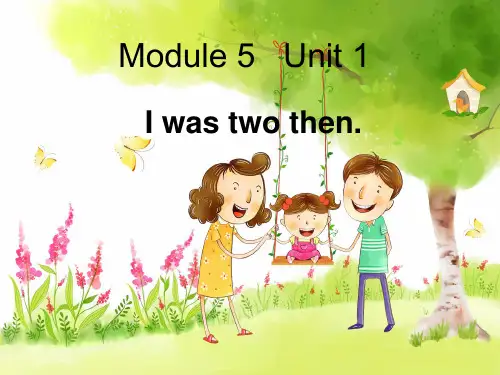
新外研版_四下Module5__Unit1_Iwas_two_then
I was short then . young, they , then, were.
They were young then.
Read
was were hair so then young grandparent old long
short
Read
You were two then, you were so cute. Her hair was short then. Now it is long.
Your hair was so short.
Yes, now my
hair头发
so short 那么短
long hair 长发
short hair 短发
Aah. You were very cute. Yes, but I was very naughty too.
now
am/is
then now
Who are they, Linling?
They are my grandparents.
grandpa grandpa
grandparents
They were young then.
Yes ,now
Hale Waihona Puke then过去now现在
Who’s that little girl?
It’s me .I was two then.
Match.
1.
A.It was small then . It’s big now.
2.
B. They were young then, but now they are old.
3.
C. They were long then, but they are short now.
1. I two then. But I ten now. A. am, was B. was, am 2.you short then? – Yes, I was. A. Were B. Are 3. My hair was short then , but it’s now. A. tall B. long
They were young then. Now they are old.
Module 5
Unit 1
I was two then.
Bishan School Lily
young
old
young 年轻的
old
老的, 年老的
thin
fat
long
short
tall
short
small
big
new
old
This is me. I was one. I was short. Now I am tall.
is old . It was small then. Now it is big .
Theywere shortthen. Now they
tall . Her hair was long then. Now it is short.
are
Choose.
1. We (was\were) young then. 2. The cat is big now. But it (was\were) small then. 3.Lingling was short then. Now she is (tall\long) . 4. Her hair is long now. But it was (short\old) then. 5. I (am\was) thin now. I (am\was) fat then.
Choose .
Choose .
4.They young then, but they old now. A. was, were B. were, are
5. You two then. I two ,too. A. were, was B. was, was
连词成句。
I , short, was, then.
He was short Now he is then. tall.
They were small then.
Now they are big.
She was two then. Now she is ten.
They were young then.
Now they are old.
Hewas youngthen. Now he
was are
then
were
I am …now. I was …then. He is …now. He was …then. They are ……now. They were ……then.
I was…
You were…
Her hair was Now her hair short then. is long.
四年级英语下册课件-Module 5 Unit 1 I was two then.-外研版(三起)
cute.
then
now
Her hair was short then. Her hair is tall now.
The girl is young. The man is old.
It’s me.
I was two then.
那时 我两岁。
I am 40 now. 现在我40岁
I was short then.
I am tall.
My hair was short then. My hair is long now.
then
now
He was fat then. He is thin now. He was short then. He is tall now.
Do you know ?
now then ★am/is→was was was I was was was she was was was he was
Module 5 Unit 1
I was two then.
This panda is fat. This monkey is thin.
The elephant is big. The dog is small.
The tree is tall. The house is sg. The bus is short.
2.Now her hair was ______. A.short B.long
grandma grandpa grandparents
外研版四年级下册英语第五模块第一单元教案
外研版四年级下册英语第五模块第⼀单元教案四年级下册英语第五模块第⼀单元教案Module 5 Unit1 I was two then.教学⽬标:知识与技能:The Ss can describe the past.Using the simple past tense. They were young then. I was two then. The Ss can grasp the new wo rds and phrases.Using the simple past tense of the irregular verb ―be‖ to talk about the past. Cultivate the Ss’ cooperation.过程与⽅法:讲授、接触过去时情感、态度和价值观:看图回忆过去德育⽬标:有个家真好重点:The Ss can grasp the new words and phrases.难点:Using the simple past tense of the irregular verb “be” to talk about the past. 教学⽅法:讲授、接触过去时教学过程:(⼀)导⼊:Sing the song“OH, we love holidays.”( 调动学⽣的学习兴趣,营造英语教学⽓氛 ) Review some adjectives.E.g. tall, short; fat, thin; big, small etc. Have the Ss make the sentences with the pictures.( 为后⾯的课⽂教学做铺垫)3. Free talkHave the Ss talk about countries and their capitals (the USA an d China)(⼆)探究新知LeadingTake out a photo of my family. Then introduce it. ―It’s old. Because I was four then. Look, there are my parents. They were young then. But now they a re old.‖ Point to me and say ―I was fat and short then. Now you can look at me.‖ Then get the Ss to look at today’s story. ( 教师可以通过肢体语⾔及神情让学⽣领会这段英语的意思。
新外研版四年级英语下册Module 5 Unit 1 I was two then 教案.doc

Module 5 Unit 1 I was two then.教案教学目标:使学生能听、说、认识、口头运用单词:was, then, were…能理解并口头运用:Her hair was short then. Now…情感目标:通过本课的学习,激发学生学习兴趣和动力。
教学重点:1、认识新单词三会(会说、会听、会读):then 那时old老的young 年轻的2、掌握新句子:两会(会听、会说):Her hair was short then. Now…她的头发以前很短,现在______。
教学难点:理解并口头运用:Her hair was short then. Now…知道如何做简要的介绍。
教学流程:Class opening1、Greeting: Hello!/Hi!New Concepts1、利用图片引出对话,并对其进行介绍:Her …was … then. Now…(说出图片),接着介绍Her … was … then. Now…,教师可以重复这句话,使学生理解它,如果学生不能明白,教师就多举几个例子,例如:在学生理解句子的含义后教师试着让学生造句:Her …was … then. Now …反复进行几组后就要放手让学生自己来练习了。
教授单词和句子同上述方法。
设计意图:根据年龄特点,用创设情景的方法,直观的将所学内容展示给学生,生动活泼,使学生容易接受新知。
激发学生的学习兴趣。
2、Listen to the tape, and read after it.设计意图:让学生在模仿练习进一步熟练课文内容,并同时进行听力训练。
3、Play a game.Memory name。
游戏规则:让几名自告奋勇的学生面对全班站在教室的前面,教师站在这一排学生得一端拿着卡片提问。
设计意图:通过游戏使学生能有亲身体验,并激发他们的学习兴趣,在游戏中轻松愉悦地获得新知。
4、Make a dialogue in groups.设计意图:使学生在活动中发散思维,并培养他们的合作创新精神,能够运用所学知识进行简单的口语交流,培养自主学习能力。
外研版英语四年级下册module5-unit1--i-was-two-then
TGhrisains mdypgararnednmtas.
/T‘ghirsæisnmdypgeraəndrəpan. ts/ T祖he父y a母re m、y 外gra祖ndp父are母nts.
then
1955年
now
2015年
They were young then. Now they are old.
1.Who are they? They were Lingling’s__A___.
A. grandparents. B. parents.
2. They were ____B___thenWho is that little girl? B She is _______.
long —— short
big —— small
cold —— hot
air chair fair
hair
long hair
short hair
10CM
A
B
short
A 20CM
B long
then
2010年
now
2015年
Now my hair is short My hair was long then.
then
now
They were short then. Now they are tall.
then
now
They were thin then. Now they are fat.
So
tall
So
short
So
So
young
old
New words:
• Then
was were young short grandparents
四年级英语下册课件-Module 5 Unit 1 I was two then.-外研版(三起)
(3)Read the text for three times.
Love our life and cherish what we have today.
Now she is ____(tall/ long). 3.My hair was short then.
Now my hair is ____(tall/ long). 4. The cat is big now.
But it ____ (was/ were)small then. 5.I ____ (am/ was) fat then.
Step 5 Task finished
Describe their photos.
Step 6 Summary
I am a little teacher.
Step 7 Homework
(1)Give your mum and dad a big hug(抱),and say: “I love you.”
热爱生活,珍惜现在。
Part 5
The blackboard design
Module 5 Unit 1 I was two then.
Now
I am ... now. They are...now.
Then
I was...then. They were...then.
18
The End
Step 2 Presentation
10
Learn the new words with the photos.
外研社四年级下册英语教案 Module 5 Unit 1 I was two then (三起)

4.Great! Now let’s repeat the sentences together.
很棒!现在我们来跟读一下这些句子吧!
通过情景展现,学生学说
young, old,hair, short, long, tall, cute, naughty等更多的人物外貌词汇,并一一理解识记。
教学环节/步骤
学生活动
教师活动
设计意图
热身进入
1.看完视频动画,回答He is Sam.
2.回答He was one.
3.回答Iwas short.
NowI’m tall.
学生观察照片中Sam的神态和话语,了解本节课的主题:谈论过去和现在的不同之处。
4.学生练读第一部分的句子。
1.Hello everyone, welcome to our class.Now let’s watch a video and tell me who the baby boy is.
学习目标
1.能够听懂、会说was, were, now, then.Her hair was short then. Now her hair is long.
2.能够在实际情境中灵活运用已学词汇和句型,能够对比过去和现在的不同之处。
重难点
能够听懂、会说was, were, now, then.Her hair was short then. Now her hair is long.
old,hair, short, long, tall, cute, naughty…
2.使用句型“He/She
was…then. Now he/she is…”或者“They were…then. Now they are…”,加上恰当的形容来介绍图片里的人物。
Module5_Unit1.I_was_two_then说课稿doc
Module5_Unit1.I_was_two_then说课稿doc第十届“教学能手”大赛Module5 unit1 《I was two then》说课稿单位:教师:时间:各位评委、老师:大家好!今天我说课的题目是外研社新标准,三年级起点,四年级下册第五模块第一单元《I was two then.》《英语课程标准》指出:在小学英语教学中,教师应充分利用各种直观教具为学生创设直观、有趣的学习情景,并引导学生积极参与进来,大胆实践、大胆交际,充分调动学生的学习积极性和学习兴趣。
本节课的教学设计每一个环节都力求彰显这一理念。
下面我从教材分析、学情分析、教法学法、教学准备、教学设计及课后反思六个方面来说这节课。
一、教材分析(一)教学内容本课的教学内容是外研版小学英语三年级起点第四册Module5 Unit1 I was two then.本课主要是练习和运用句型I was two then. They were young then.这类语句向他人介绍过去的事情和状况。
这节课是学生第一次接触到一般过去式的结构,因此在课堂上只是告诉同学们在描述过去的状况时我们就使用这种结构。
(二)教学目标知识目标:1、认识单词was和were以及它们对应的原型。
2、能够听懂、会读、会说句型:“…was/were…then.Now…am/is/are … .”3、复习巩固词汇“tall、short、young、old、long、short、cute、naughty”.技能目标:1、能够运用was和were来描述过去,介绍自己或他人过去的事情。
2、能够听懂、会读、理解课文意思,会变换句式。
情感目标:通过对本课的学习,培养学生细心观察、乐于发现的学习态度。
(三)教学重、难点及处理教学重点:1、理解be动词和它对应的过去式,正确使用人称和be动词,使其搭配正确。
2、能够听懂、会读、会说句型:“…was/were…then.Now…am/is/are … .”处理方法:为突出重点,让学生观察图片进行句型练习,小组合作学习,以加深学生对本课知识点的记忆。
Module5Unit1Iwastwothen(教学设计)外研版(三起)英语四年级下册
Module 5 Unit 1 I was two then(教学设计)外研版(三起)英语四年级下册教学目标知识目标1. 学生能够听懂、会说、会读本课的生词和重点句子。
2. 学生能够通过图片和情景理解过去时态的概念。
能力目标1. 学生能够运用所学知识进行简单的日常交流。
2. 学生能够描述自己的过去经历。
情感目标1. 学生能够培养对英语的兴趣,增强自信心。
2. 学生能够通过小组活动,培养合作精神。
教学内容本课的主要内容是让学生掌握一般过去时态的基本结构"was/were + 表语",并能够运用过去时态描述自己的过去经历。
通过听、说、读、写的练习,使学生能够熟练运用本课的生词和句子。
教学重点与难点重点1. 一般过去时态的基本结构 "was/were + 表语"。
2. 本课的生词和重点句子。
难点1. 一般过去时态的运用。
2. 如何正确使用生词和句子进行描述。
教具与学具准备教具1. 与本课相关的图片。
2. 与本课相关的视频或录音资料。
学具1. 课本。
2. 练习本。
3. 彩色笔。
教学过程引入(5分钟)1. 利用图片或视频引入本课的主题,激发学生的兴趣。
2. 通过简单的提问,引导学生思考并回顾过去经历。
讲解(10分钟)1. 讲解一般过去时态的基本结构 "was/were + 表语"。
2. 通过例子和练习,让学生理解和掌握一般过去时态的运用。
练习(10分钟)1. 利用课本中的练习,让学生进行听力、口语和书写的练习。
2. 分组活动,让学生互相练习,巩固所学知识。
应用(10分钟)1. 利用情景或图片,让学生运用一般过去时态进行描述。
2. 让学生进行小组活动,通过角色扮演或故事分享,运用所学知识。
2. 鼓励学生在家中尝试运用所学知识,进行亲子活动或与朋友交流。
板书设计板书设计应简洁明了,突出一般过去时态的基本结构 "was/were+ 表语",并用关键词和图示来帮助学生理解和记忆。
外研版四年级下册英语Module 5《Unit 1 I was two then.》教案
外研版四年级下册英语Module 5《Unit 1 I was two then.》教案【教材分析】本节课是外研版四年级下册Module 5的第一单元,主题为"I was two then.",教材主要内容是学习描述过去和现在发生的变化。
通过学习单词和句型,学生将能够谈论自己和他人的过去,并对比过去与现在的不同之处。
【教学目标】1. 学生能够识别并拼写单词: was, then, grandparent, were, young, old, hair, so, short, long,以及个人选择的2-3个单词。
2. 学生能够运用句型"I was two..."和"They were young, then."描述过去的情况。
3. 学生能够对比过去和现在的不同之处,运用所学知识描述过去和现在发生的变化。
【教学重点和教学难点】教学重点:1. 能够运用所学知识描述过去和现在发生的变化。
2. 能够区分was-is/am和were-are的用法。
教学难点:1. 区分was-is/am和were-are的用法。
【学情分析】学生是四年级学生,已经学过一定的英语基础知识,包括基本的动词变化和句型结构。
他们对于过去时态的使用可能还不够熟练,需要通过本节课的学习来加强对过去时态的理解和运用。
【教学过程】Step 1: Lead-in1. Greet the students and briefly review the previous lesson by asking questions related to the topic of changes and the past.Example: "Good morning, class! In our last lesson, we talked about changes. Can anyone tell me something that has changed in their life recently?"2. Show some pictures of yourself at different ages and ask the students to guess how old you were in each picture. Encourage them to use the sentence pattern "I was ___ then" to make guesses.Example: "Now, let's look at these pictures. How old do you think I was in this picture? Can you complete the sentence using 'I was ___ then'?"Step 2: Vocabulary1. Introduce the target vocabulary: was, then, grandparent, were, young, old, hair, so, short, long.Example: "Now, let's learn some new words. Repeat after me: was, then, grandparent, were, young, old, hair, so, short,long."2. Use real objects, flashcards, or pictures to help students understand and remember the meanings of the words.Example: Show a picture of a grandparent and ask students to identify the word. Provide real objects or pictures to help students understand the words young, old, hair, short, and long.3. Practice pronunciation and spelling of the words together as a class.Example: Say each word aloud and have the students repeat after you. Then, ask individual students to spell the words on the board or in their notebooks.Step 3: Grammar1. Introduce the sentence pattern "I was two..." and "They were young, then." Explain that "was" is used to talk about the past, while "were" is used to talk about a group of people in the past.Example: "Now, let's talk about the past. When we talk about ourselves in the past, we use 'was,' like 'I was two.' When we talk about a group of people in the past, we use 'were,' like 'They were young, then.'"2. Give examples and ask students to repeat after you.Example: Say a sentence using the sentence pattern and have the students repeat after you. For example, say "I was three then" and ask the students to repeat.3. Provide more examples and ask students to complete sentences using the correct form of "was" or "were."Example: Give students a worksheet with incomplete sentences and ask them to fill in the blanks with the correct form of "was" or "were." For example, "We ___ happy, then" or "She ___ tall, then."Step 4: Practice1. Divide the class into pairs or small groups.2. Give each group a set of picture cards depicting different scenes or situations.Example: Provide each group with picture cards showing different stages of a person's life or different places at different times.3. Students take turns describing the pictures using the sentence pattern "I was ___ then" or "They were ___ then."Example: One student describes a picture while the other student listens and completes the sentence. For example, "In this picture, I was five years old. My friends were playing with me."4. Monitor the students' practice and provide assistance when needed.Example: Circulate around the classroom, listen to the students' conversations, and provide feedback or assistance as necessary.Step 5: Consolidation1. Review the main points of the lesson by asking questions and eliciting responses from the students.Example: "Can someone tell me when we use 'was' and 'were'? How do we describe ourselves in the past? How do we describea group of people in the past?"2. Have a class discussion about the changes that have happened in their own lives or the lives of their family members.Example: "Now, let's talk about changes. Can you think of a change that has happened in your life or your family? How would you describe it using the sentence patterns we learned today?"3. Encourage students to use the target vocabulary and sentence patterns to describe the changes.Example: Provide sentence starters for students to complete, such as "Before, my hair was ___, but now it is ___" or "When I was younger, I ___ but now I ___."Step 6: Wrap-up1. Summarize the key points of the lesson and reinforce the use of the target vocabulary and sentence patterns.Example: "Today, we learned how to talk about the past and changes. We practiced using 'was' and 'were' to describe ourselves and groups of people. We also learned new words to help us talk about the past."2. Assign homework, which could be writing a short paragraph about a change thathas happened in their lives or creating a dialogue using the target language.Example: "For homework, I would like you to write a short paragraph about a change that has happened in your life. Use the vocabulary and sentence patterns we learned today. You can also create a dialogue between two people discussing a change. Be creative!"【板书设计】Title: Unit 1 - I was two then.Vocabulary:- was, then, grandparent, were, young, old, hair, so, short, longSentence Patterns:- I was ___ then.- They were ___ then.【教学反思】本节课通过引导学生运用句型描述过去和现在的变化,培养了学生对过去时态的理解和运用能力。
外研版四年级下册英语教案:Module5Unit1Iwastwothen
外研版四年级下册英语教案:Module 5 Unit 1 I was two then 教学内容:本课是外研版四年级下册英语Module 5 Unit 1的内容,主题是描述过去的事情。
教学内容包括学习过去时态,描述过去的经历,以及询问和回答关于过去的问题。
教学目标:1. 学生能够理解并运用过去时态描述过去的经历。
2. 学生能够听懂并回答关于过去的问题。
3. 学生能够通过图片和情境创设,运用英语进行简单的交流。
教学难点:1. 学生能够正确运用过去时态描述过去的经历。
2. 学生能够理解并运用过去时的疑问句和回答句。
教具学具准备:1. 教材、图片、PPT等教学资源。
2. 录音机、音响等音频设备。
3. 学生自备笔记本、笔等学习用品。
教学过程:1. 导入:通过展示一张自己小时候的照片,引导学生谈论自己的过去。
2. 新课内容展示:通过PPT展示Module 5 Unit 1的内容,引导学生学习过去时态,描述过去的经历。
3. 情境创设:创设一个情境,让学生运用英语进行交流,描述自己的过去经历。
4. 小组活动:学生分成小组,相互询问和回答关于过去的问题,巩固所学知识。
板书设计:1. Module 5 Unit 1 I was two then2. 过去时态的构成:was/were + 主语 + 过去的时间3. 描述过去的经历的句子:I was two then. I could walk and talk.4. 询问和回答关于过去的问题:How old were you then? I was three years old.作业设计:1. 完成教材P49的练习题。
2. 写一篇短文,描述自己过去的经历。
3. 与同学互相询问和回答关于过去的问题。
课后反思:本节课通过图片、情境创设和小组活动,让学生在轻松愉快的氛围中学习英语,提高了学生的学习兴趣。
在教学过程中,教师要注意引导学生正确运用过去时态,注意语法和句型的正确性。