
一般将来时的句子_一般将来时 英语语法.doc
一般将来时的句子_一般将来时
1、明天谁将要来这里?Who will come here tomorrow?
2、九月份我将会返校。
I will come back to school in September.
3、下周会发生什么?What will happen in the following week?
4、今天下午我们打算开班会。
We are going to have a class meeting this afternoon.
5、Look a t the black clouds. It’s going to rain.看那些乌云,快要下雨了。
6、这封信明天将寄出去。
The letter will be sent tomorrow.
7、明天早上我要去买些东西。
I am going to buy something tomorrow morning.
8、我明天要去上学。
I will go yo school tomorrow.
9、你会明白这个问题的。
You will understand the question.
10、我将去买一本书。
I’m going to buy a book.
11、下次你将在哪里打篮球?Where will you play basketball next time?
12、王教授稍后将会给我们展示。
Professor Wang will give us a presentation later.
13、你明天要干什么?What will you do tomorrow?
14、他不会那样做的。
He won’t do that.
15、我将过去帮你。
I’m going to help you.
16、下个月我会看你的。
I will visit you next month.
17、我将回答那个问题。
The question will be answered by me.
18、Tom明晚3点到我家来了。
Tom will come to my home at 3PM.
19、明天我要去北京。
I will go to BeiJing tomorrow.
20、如果我们违反规定,我们将受到惩罚。
We shall be punished if we break the rule.
21、她打算今天下午去看望王先生。
She is going to see Mr. Wang this afternoon.。
一般将来时知识点总结(word)1
一般将来时知识点总结(word)1一、一般将来时1.—I wonder if you for a picnic tomorrow.—If it ,I will go.A. go, not rainB. go, doesn't rainC. will go, isn't rain.D. will go, doesn't rain.【答案】 D【解析】【分析】句意:--我想知道明天你是否去野餐。
--如果天不下雨,我就去。
分析:第一个句子为宾语从句,主句为一般现在时,从句用原来的时态;第二个句子为条件状语从句,体现主将从现的原则,主语是第三人称单数,因此助动词用does.故选D【点评】考查动词的用法。
2.— Let's go fishing if it this weekend.— But nobody knows if it .A. is fine; will rainB. will be rain; rainsC. will be fine; will rainD. is fine; rains 【答案】 A【解析】【分析】句意:——如果这个周末晴天我们去钓鱼吧。
——但是没人知道是否会下雨。
第一个空前的if引导条件状语从句,意思是“如果”,从句中用一般现在时表示将来;第二个空前的if引导宾语从句,意思是“是否”,根据从句的tomorrow可知用一般将来时;故选A。
【点评】考查动词的时态。
3.—May I speak to Mr. Smith?—Sorry, he _______ Australia. But he _______ in two days.A. has been to; will come backB. has gone to; will be backC. has been in; would come backD. is leaving for; doesn't come back【答案】 B【解析】【分析】考查动词的时态。
[经典语录]一般将来时的句子100句
![[经典语录]一般将来时的句子100句](https://360docs-1393072327.cos.ap-beijing.myqcloud.com/93d965a8ec3a87c24128c404.webp)
[经典语录]一般将来时的句子100句一般将来时的句子一般将来时的句子(一):1、我明天要去上学。
Iwillgoyoschooltomorrow。
2、明天谁将要来那里?whowilleheretomorrow?3、下周会发生什么?whatwillhappeninthefollowingweek?4、下次你将在哪里打篮球?wherewillyouplaybasketballnexttime?5、这封信明天将寄出去。
Theletterwillbesenttomorrow。
6、这天下午我们打算开班会。
wearegoingtohaveaclassmeetingthisafternoon。
7、我将回答那个问题。
Thequestionwillbeansweredbyme。
8、他不会那样做的。
Hewon’tdothat。
9、王教授稍后将会给我们展示。
Professorwangwillgiveusapresentationlater。
10、我将过去帮你。
I’mgoingtohelpyou。
11、明天早上我要去买些东西。
Iamgoingtobuysomethingtomorrowmorning。
12、Lookattheblackclouds。
It’sgoingtorain。
看那些乌云,快要下雨了。
13、我将去买一本书。
I’mgoingtobuyabook。
14、九月份我将会返校。
IwillebacktoschoolinSeptember。
15、你会明白这个问题的。
youwillunderstandthequestion。
16、明天我要去北京。
IwillgotoBeijingtomorrow。
17、她打算这天下午去看望王先生。
Sheisgoingtoseemr。
wangthisafternoon。
18、你明天要干什么?whatwillyoudotomorrow?19、Tom明晚点到我家来了。
TomwilletomyhomeatPm。
一般将来时

一般将来时用法(1)一般将来时表示将要发生的动作或情况。
例如:I will arrive tomorrow.我明天到。
Will you be free tonight? 你今晚有空吗?We won’t be busy this evening. 我们今晚不忙。
(2)在一般将来时的句子中,有时有表示将来时间的状语,有时没有时间状语,这时要从意思上判断是否指未来的动作或情况。
例如:Will she come? 她(会)来吗?We’ll only stay for two weeks. 我们只待两星期。
The meeting won’t last long. 会开不了多久。
(3)在以第一人称I或we作主语的问句中,一般使用助动词shall,这时或是征求对方的意见(a),或是询问一个情况(b):a. Where shall we meet? 我们在哪儿碰头?b. Shall we have any classes tomorrow?明天我们有课吗?在这类问句中,近年来也有不少人用will,特别是在美国。
例如:How will I get there? 我怎么去?(4)be going to+动词原形a.表示打算、准备做的事。
例如:We are going to put up a building here.我们打算在这里盖一座楼。
How are you going to spend your holidays?假期你准备怎样过?b.表示即将发生或肯定要发生的事。
例如:I think it is going to snow. 我看要下雪了。
There’s going to be a lot of trouble about this. 这事肯定会有很多麻烦。
c.“will”句型与“be going to”句型,前者表示纯粹将来,后者表示打算、计划、准备做的事情,更强调主语的主观意愿。
例如:Tomorrow will be Saturday. 明天是周六了。
“一般将来时”的几种语法形式[整理版]
![“一般将来时”的几种语法形式[整理版]](https://360docs-1393072327.cos.ap-beijing.myqcloud.com/6c03bef44bfe04a1b0717fd5360cba1aa8118c39.webp)
“一般将来时”的几种语法形式一般将来时的语法形式主要有四种:shall / will +动词原形;be going to +动词原形;现在进行时和一般现在时。
现将这四种形式分述如下:一、shall / will +动词原形1. will可用于所有人称,但shall 仅表示单纯将来时,用于第一人称I和we,作为will的一种替代形式。
以Y ou and I为主语时通常避免用shall。
例如:He will be back soon. 他很快就会回来。
I shall/will be free on Sunday. 星期天我有空。
Y ou and I will work in the same factory. 你和我将在同一工厂工作。
2. will, shall可用来预言将来发生的事。
如说出我们设想会发生的事,或者请对方预言将要发生什么事。
例如:It will rain tomorrow. 明天将要下雨。
3. will, shall除可表示单纯的将来时以外,还可以带有意愿的色彩,仍指的是将来。
例如:I’ll buy you a bicycle for your birthday. 你过生日时,我给你买一辆自行车。
(表示允诺) Will you open the door for me please? 请你帮我开门好吗?(表示请求)Shall I get your coat for you? 我可以为你拿外套吗?(表示提议)二、be going to +动词原形1. 表示说话人根据现在已有的迹象,判断将要或即将发生某种情况。
这类句子的主语可以是人,也可是物。
例如:There is going to be a football match in our school tomorrow afternoon. 明天下午我们学校将有一场足球赛。
(已有告示)I feel terrible. I think I’m going to die. 我感到难受极了,我想我快不行了。
(完整版)一般将来时的定义、结构、例句、用法
(完整版)一般将来时的定义、结构、例句、用法一般将来时一、定义一般将来时表示将来某一时刻的动作或状态,或将来某一段时间内经常的动作或状态。
常常和表示将来的时间状语连用。
如:tomorrow(明天),next week(下周);in the future (将来)等。
一般将来时由助动词shall(第一人称),will(第二、三人称)动词原形构成。
美国英语则不管什么人称,一律用will。
二、结构(一)常见结构1、will / shall + 动词原形(否定句在will/shall后加not)这种方法一般单纯地表示将来某个时间将要发生的动作或存在的状态。
will用于各种人称;shall只用于第一人称。
例如:I will / shall go to visit him next week. 下周我将去拜访他。
What time shall we go there tomorrow? 明天我们几点去那儿?2、be going to+动词原形be going to 相当于一个助动词(其中be有人称和数的变化),与它后面的动词原形一起构成谓语。
用来表示将要发生的动作以及计划、安排和打算要做的事。
例如:There is going to be a football match this afternoon.今天下午将有一场足球赛。
I‘m going to go to the park. 我将要去公园。
(二)常用结构1、用于"I expect, I'm sure, I think, I wonder等的宾语从句"中。
Don't worry about the exam. I'm sure you'll pass.不要担心这次考试,我确信你会通过的。
2、用于祈使句和陈述句中。
Work hard and you will succeed.如果你努力,就会成功的。
3、与表示时间或条件的状语从句连用。
一般将来时
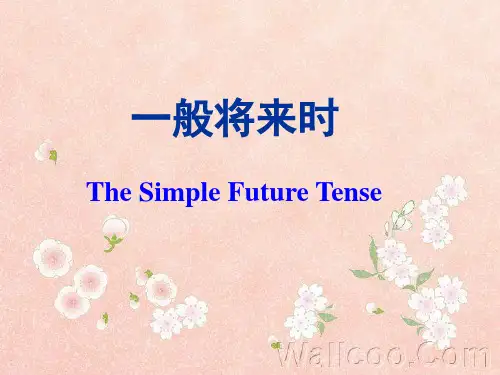
与一般将来时连用的时间状语
tomorrow 明天
this year 今年
the day after tomorrow 后天
soon 很快 in three days 三天后
next week 下周
in the future 将来
some day 将来的某一天
在一般将来时中用 in 表示在多 久以后
A. coming back B. came back C. will come back D. is going to coming back (A)12. Who ________ we ________ swimming with tomorrow afternoon? A. will; go B. do; go C. will; going D. shall; go
will
句式的变化规则:
1.变否定句—---在be/will后加not 。
2.变一般疑问句------将be/will动词提前。 (主语是第一人称I 时,变一般疑问句 时将I 变you)
3.特殊疑问句(也就是对划线部分提问) -----要用特殊疑问词what +一般疑问句。
一般将来时的疑问句形式及回答
含一般将来时的句子变成一般疑问句只需把will或shall提到主语 前面即句首,并大写首字母就可以了。例如: 你下周要去北京。You will leave for Beijing next week.这句 话变成一般疑问句就是Will you leave for Beijing next week? 肯定回答是:Yes, I will.否定回答是:No, I won't. 含一般将来时的句子变成特殊疑问句的时候,通常结构是:特殊 疑问词+一般疑问句的语序。也就是: 疑问词+ will +主语+动词原形+其他成分。 如果是对主语提问,则主语部分就不在句子中出现。例如: I will leave for Beijing next week. 这句话可转换为以下特殊疑问句: Who will leave for Beijing next week? (对主语提问) When will you leave for Beijing? (对时间提问)
一般将来时句子
一般将来时句子一般将来时是指将来某个时间要发生的动作或存在的状态。
在英语中,一般将来时通常由助动词“will”或“shall”加上动词原形构成。
一般将来时句子通常用来表达预测、打算、意图、承诺、决定等未来的动作或状态。
一般将来时的构成。
一般将来时的构成非常简单,通常由助动词“will”或“shall”加上动词原形构成。
例如:I will go to the park tomorrow.明天我会去公园。
She shall visit her grandparents next week.下周她将去看望她的祖父母。
一般将来时的用法。
一般将来时通常用来表达以下几种情况:1. 预测未来的动作或状态。
例如,It will rain tomorrow.明天会下雨。
2. 打算、意图、计划。
例如,I will study hard for the exam.我会为考试努力学习。
3. 承诺、决定。
例如,He will help you with your project.他会帮助你完成你的项目。
4. 请求、邀请。
例如,Will you join us for dinner?你会和我们一起吃晚餐吗?一般将来时的句子结构。
一般将来时的句子结构非常简单,通常由主语 + will/shall + 动词原形构成。
例如:They will visit the museum next month.他们下个月会去参观博物馆。
I shall buy a new car next year.明年我将买一辆新车。
一般将来时的特殊情况。
在一般将来时的句子中,有一些特殊情况需要注意:1. 否定形式:在一般将来时的句子中,否定形式通常由助动词“will not”或缩写形式“won't”构成。
例如:She will not come to the party.她不会来参加聚会。
I won't be late for the meeting.我不会迟到参加会议。
一般将来时语法
3. 主语+will+ do (动词的原形)+…
注: 如果主语是I , we , 可用shall+动词 的原形 They will build a new road in this part of the city next year. She will be a good teacher in the future.
I. Fill in the blanks with the right form of the given verbs. 1. What _________ you ______(do) this Sunday? There _____________(be) a football match. ______you _________(go) with us? 2. I ____________(go) to see your father as soon as I get to Beijing. 3. I think it _____________ (be) rainy tomorrow. 4. My father ___________ (send) me a new bike when I am tall enough.
There will be a football match after class.
will / shall引导的一般将来时:一般将来时表示将 来发生的动作或情况,最基本的结构:will / shall + 动词原形
“主谓(宾)句型”的一般将来时:
肯定句:主语+ will / shall +动词原形+(宾语) +其他成份
[注意]:无论后面加单数名词或复数形式,be 都必须用原形。
一般将来时
一般将来时一般将来时(Simple Future Tense)用于表示将来某个时间或情况下会发生的动作或状态。
在英语中,一般将来时通常使用助动词“will”或“shall”,加上动词的原形来构成。
结构:主语 + will/shall + 动词原形例句:1.I will go to the party tomorrow night. (我明天晚上会去参加派对。
)2.They will travel to Europe next year. (他们明年将要去欧洲旅行。
)3.She shall complete her project by the end of this week. (她本周末之前将完成她的项目。
)4.We won't have class on Friday. (我们星期五不上课。
)5.Will you help me with my homework? (你会帮我做作业吗?)注意事项:1.不加“will”或“shall”的否定形式为“won't”。
2.在一般将来时中,“will”可用于所有人称,而“shall”通常只用于第一人称(I和we)。
3.类似于情态动词,一般将来时的句子也没有人称和数的变化。
练习题:完成下列句子,使用一般将来时:1.She _____________ (study) abroad next semester. (她下个学期将出国留学。
)2.They _____________ (call) you as soon as they arrive. (他们一到就会给你打电话。
)3.We _____________ (have) a meeting at 2 o'clock tomorrow.(我们明天2点会开会。
)4.He _____________ (not watch) TV tonight because he has anexam tomorrow. (他今晚不会看电视,因为他明天有考试。
一般将来时的各种句式_一般将来时 英语语法.doc
一般将来时的各种句式_一般将来时
我们除了用be going to+动词原形可以表示一般将来时外,我们还可以用will+动词原形来表示一般将来时.
will 引导的一般将来时:表示将来发生的动作或存在的状态,最基本的结构:will + 动词原形
主谓(宾)句型的一般将来时:
肯定句:主语+ will +动词原形+(宾语)+其他
Some day people will go to the moon .
否定句:在will 的后面加not即可。
will not 可缩写为wont
Some day people will not go to the moon .
一般疑问句:把will 提到句子主语之前,结尾变问号。
Will Some day people go to the moon ?
特殊疑问句:特殊疑问词+will +主语+动词原形+其他?
Where will some people go ?
There be句型的一般将来时
肯定句:There will be +名词+其他成份
[注意]:无论后面加单数名词或复数形式,be都必须用原形。
There will be only one country.
否定句:在will后面加not.
There wont be only one country.
一般疑问句:把will提到there之前。
Will there be only one country?
Yes, there will. / No, there wont.
注意:在口语中,所有人称都可以用will.。