
牛津译林版八年级下册Unit 7知识点总结梳理
Unit 7 International charities7.1 Comic strip & Welcome to the unit1. have some pocket money left. 剩一些零花钱。
left为后置定语,修饰pocket money。
动词的过去分词常常可以用作后置定语。
a man called/named Tom 一位叫作/名为汤姆的男子a book written by Lu Xun 一本由鲁迅写的书2. after that 然后I went to see my sick friend after that. 然后,我去看望了我生病的朋友。
3. further & fartherfarther表示具体距离的远近,而further可表示抽象的“远”,是“进一步;更多的”的意思。
His home is farther to our school than mine. 他家离我们学校比我家离得远。
Please give us a further explanation. 请给我们进一步解释。
4. especially特别,尤其especially副词,意为“特别,尤其”。
Everyone feels sad sometimes, especially when unhappy things happen.比较especially与specially,前者表示突出重点,强调其后的成分,specially的意思是“专门的,特别的”,如:This kind of chair is specially designed for the disabled. 这种椅子是专门为残疾人设计的。
5. equal rights 平等的权利right名词,意为“(法定)权利”。
have right to do sth. 做某事的权利Every child has the right to receive education. 每个孩子都有结构教育的权利right的其他用法:①形容词,“正确的,恰当的;右边的”②名词,“右边;正义”6. spread 传播,扩散spread作为名词,意为“扩散;分布;展开”the spread of some serious diseases 一些严重疾病的传播spread还可以作为动词,意为“(使)散开;扩散,spread-spread-spread.如:All his private papers were spread all over the floor. 他所有的私人文件都被散地满地都是。
7.2 Reading1. interview(1)interview名词,意为“采访”,短语have an interview with sb.(2)interview及物动词,interview sb. 采访某人interviewer采访者,interviewee 被采访者;面试者2. tell sb. (about) sth. 告诉某人(关于)某事(1)表示讲述。
tell a story/joke讲故事/笑话(2)表示吩咐、命令。
Tell him to wait for me in the office. 让他在办公室等我。
She told them not to smoke in the room. 她叫他们不要在屋子里吸烟。
(3)表示告诉。
tell sb. (about) sth.告诉某人某事。
The headteacher will tell us about the result of the sports meeting. 校长将会告诉我们运动会的结果。
3. blindnessblindness是名词,意为“失明”,形容词为blind,-ness为其名词后缀,类似用法的词有:deafness,illness,happiness,kindness,sadness等。
4. mostly与most(1) mostly的用法:mostly只能作副词,意为“主要地;多半地;大部分地”。
The audience consisted mostly of women.观众主要是妇女。
Our weather is mostly warm.我们这里的天气多半是暖和的。
(2) most的用法:①most作形容词,意为“最多的;多数的;大部分的”。
Most fish have fins.大多数鱼有鳍。
②most还可以作代词,意为“许多;许多人(或物)”。
Most of my friends live in London.我的大多数朋友住在伦敦。
5. prevent(1)意为“防止;预防”,prevent sth.预防某事。
These rules are intended to prevent accidents. 这些规则旨在防止事故发生。
(2)意为“阻止;阻挡”,prevent sb. from doing sth.阻止某人做某事。
The rain prevented us from playing football. 这场雨使我们不能踢足球了。
prevent sb. from doing sth.=stop/keep sb. from doing sth.6. Many of our patients can’t afford to go to hospitals, so we have to go to them.afford意思是“买得起; (有时间)做” 通常与can, could, be able to连用,多用于否定句和疑问句。
7. on board 在飞机(船、火车)上注意board 与broad的拼写。
board意为“木板,板子”,broad意为“宽阔的”,Eagles have broad wings. 老鹰有宽阔的翅膀。
Have the passengers gone on board yet? 乘客们登机了吗?abroad 副词,意为“在国外”,go abroad 去国外8. medicalmedical 形容词,意为“医学的”如:medical treatmentMany people don’t have money for medical treatment.medicine名词,“药;医学”modern medicine 现代医学take some medicine吃药9. The plane is also used as a training centre.飞机也被用作培训中心。
be used as意为“被用作为……”。
English is used as a foreign language in China.在中国,英语被作为一门外语使用。
a training centre意为“一个培训中心”,在这个短语中training作定语。
现在分词作定语的短语有:a shopping list购物单reading week阅读周driving lessons驾驶课10. By training them, we hope to help more people.句中的by是介词,意思是“通过某种方法、手段”,后接名词或者动词-ing形式。
You can learn more about the news by reading today’s newspaper.看看今天的报纸,你就能对这条信息有更多的了解。
11. During my last visit, 150 patients were operated on. 在我上一次拜访期间,150位病人动了手术。
do/perform operations //an operation (on sb.) =operate on sb.给…做手术have an operation接受手术,开刀12. I’m proud to help people see again and improve their lives.proud adj.自豪的, 骄傲的be proud of sb /sth.对….感到自豪be proud to do sth.be proud that +句子They were proud of their success. 他们为自己的成功而骄傲。
pride名词,“骄傲”,短语:the pride of …I’m the pride of my parents. 我的父母以我为豪。
13. Modern medicine is developing quickly and now most eye problems and diseases can be treated and cured.develop动词,意为“发展;加强”,其名词形式为development。
Modern music was first developed in Italy.现代音乐最初是在意大利发展起来的。
with the development of the society 随着社会的发展developing与developed(1) developing意为“正在发展中的”。
India is a developing country.印度是一个发展中国家。
(2) developed意为“发达的”。
The USA is a developed country.美国是一个发达国家。
treat vt.治疗;处理Doctors treated her with an operation. 医生对她进行手术治疗。
treat(治疗), cure(治愈)1)treat治疗过程,后面接人、疾病或病痛处treat sth. & treat sb. for sth.treat ---(名)treatment ; medical treatment2)cure“治好,治愈”,cure sb. &cure sb. of sth.表示“治好某人某种疾病或不良习惯。
14. But more money is needed to carry on with our work.但需要更多的钱来继续我们的工作。
carry on with意为“继续进行,继续下去”,相当于carry on doing sth.carry on to do sth.与carry on doing sth.carry on to do sth.表示继续做另一件事;carry on doing sth.表示继续做刚才没做完的事。
I will carry on to do my English exercises after I finish my maths exercises.完成数学作业之后,我将继续做英语作业。
Unit 7 复习课件牛津译林版英语八年级下册

proud adj. 骄傲的,自豪的 ①以...为荣;为...感到骄傲
be proud of+n./doing ②为做某事感到骄傲/自豪
be proud to do sth
pride n.骄傲,自豪 ①以...为自豪 take pride in... ②是...的骄傲,自豪 be the pride of...
4. 汉译英时,用英语表达汉语的”被,由,所,为“等意思时。 The telephone was invented by Bell. 电话是贝尔发明的。
使役动词短语被动语态变化: make sb do sth sb be made to do sth
have sb do sth sb be had to do sth
English__is_t_a_u_g_h_t_(teach) in their school. 句中无by sb/with sth,此时要分析句中的主语和谓语之间是否存在逻辑上的动宾关系。 English不可能发出teach的动作。
1.by短语在被动语态中的位置 ①紧挨在被动句谓语中的过去分词后
据说昨天他爬上屋顶了。
It is said that he cilmbed to the top of the house yesterday. ③汉语中没有”被,由“等词但是在原句中加”是“这类词且句意通畅。
这些歌通常是男生唱的。(在”是“后面可以加上”由“)
These songs are usually sung by boys. ④某些句子习惯上用被动语态表示礼貌。
He was made monitor of the class.
③说话人本身是行为者,但出于某种考虑(如为了表示礼貌,措辞婉转等),不愿 说出自己的行为者时。
2019年牛津译林版英语八年级下册Unit7InternationalCharities知识点总结

2019年牛津译林版英语八年级下册Unit7InternationalCharities知识点总结8B Unit 7 International charities单元重点知识点总览1.You have some pocket money left. 你有一些剩下来的零花钱。
have sth left 动词短语,表示“有某物被留下;被剩下”,left是leave的过去分词,在句中作后置定语。
如:Don’t worry, and still have a little time left.不要担心,我们还剩一点时间。
【拓展】have sth done“请/让某人做某事”。
如:Mr. Green had her daughter educated in America last year. 格林先生去年让他的女儿在美国接受教育。
2.I’m too weak to walk any further.我太虚弱了不能继续走了。
further副词,“较远、更远”,是far的比较级,最高级为furthest“最远”。
如:He can jump further than I can. 他能跳得比我远。
3.About 285 million people around the world are blind or have other eye problems, mostly in poor areas, and about 80 per cent of these cases can be prevented or cured.全世界大约两亿八千五百万的人是盲人或有其他眼部疾病,绝大多数在贫困地区,百分之八十的病例能够被预防或治愈。
(1)mostly 副词,“主要地,大部分地”,常用于修饰动物和介词短语。
如:The students in our class are mostly 14 or 15 years old.我们班大部分的学生是14或15岁。
牛津译林版八年级英语下册Unit7知识点归纳
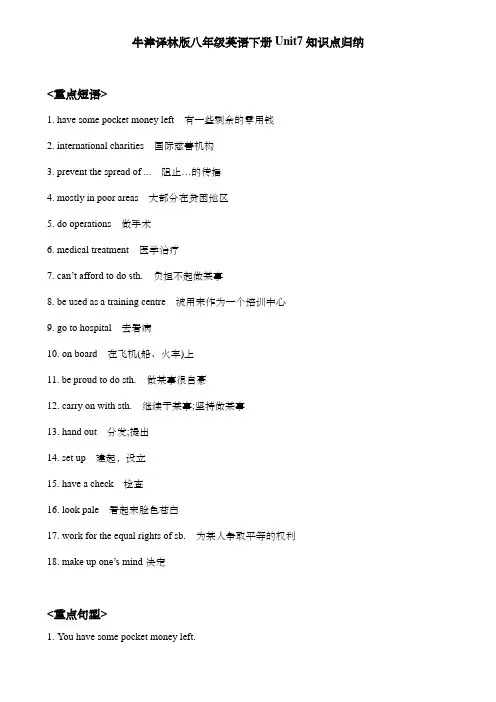
牛津译林版八年级英语下册Unit7知识点归纳<重点短语>1. have some pocket money left 有一些剩余的零用钱2. international charities 国际慈善机构3. prevent the spread of ... 阻止…的传播4. mostly in poor areas 大部分在贫困地区5. do operations 做手术6. medical treatment 医学治疗7. can’t afford to do sth. 负担不起做某事8. be used as a training centre 被用来作为一个培训中心9. go to hospital 去看病10. on board 在飞机(船、火车)上11. be proud to do sth. 做某事很自豪12. carry on with sth. 继续干某事;坚持做某事13. hand out 分发;提出14. set up 建起,设立15. have a check 检查16. look pale 看起来脸色苍白17. work for the equal rights of sb. 为某人争取平等的权利18. make up one’s mind决定<重点句型>1.You have some pocket money left.你有一些剩余的零用钱。
2.I’m too weak to walk any further.我太虚弱,走不动了。
3.It helps build a better world for everyone,especially children all over the world.它帮助为每个人,尤其是全世界的孩子们建造一个更好的世界4.About 285 million people around the world are blind or have other eye problems,mostly in poor areas and about80 per cent of these cases can be prevented or cured.全世界大约2.85亿人是失明的或者有其他的眼部问题,大部分在贫困地区,并且这些病例中的大约80%可以被预防或治愈.5.Many of our patients can’t afford to go to hospital,so we have to go to them.我们的很多病人没钱去医院,所以我们得去他们那儿。
Unit7Internationalcharities知识点汇总牛津译林版英语八年级下册

Unit 7 International charities 学问点汇总Wele to the unit1. Eddie, more money is needed for charity. 埃迪,慈善机构需要更多的钱。
charity作名词,意为“慈善〔不行数名词〕;慈善机构〔可数charities〕〞。
do charity 做慈善2. You have some pocket money left. 你还剩下一些零花钱。
left作动词leave的过去分词,意为“剩下,余下〞,作后置定语,修饰pocket money。
There be sth. left或sb. have sth. left,表示“有…留下/剩下,剩下某物〞。
【leave的其他用法】①作留下、丢下、落下,常表示某物落在/忘在某地。
You’d better leave your address and telephone number.②表示离开、动身去某地。
leave sp. for sp.③leave作使役动词,表示使/让…保持某种状态。
Leave the door open.3. Let’s go and donate it.让我们去捐了它。
4. Now? It’s time for lunch. 现在吗?到吃午饭的时间了。
It’s time for... 到…的时间了。
It’s time to do sth. 到做某事的时间了It’s time to have dinner. =It’s time for dinner.lt’s time for sb. to do sth. 是某人做某事的时候了,某人该做某事了It’s time for them to take action to help ocean animals.let sb. do sth. 让某人做某事too...to... 太…而不能…further 程度更深,farther 距离更远8. Do you know about any international charities,class? 同学们,你们知道一些国际性的慈善机构吗?know about... 知道关于...的内容especially作副词,意为“特殊,尤其〞,修饰动词、形容词或整个句子。
译林牛津版英语八年级下册 Unit 7 重点难点汇总
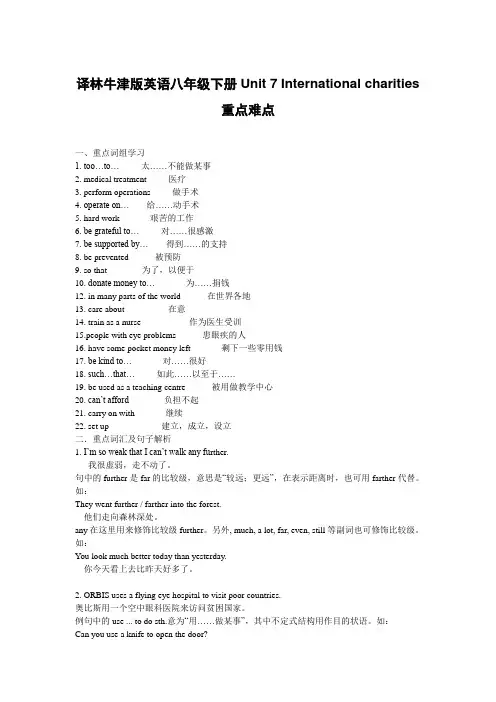
译林牛津版英语八年级下册Unit 7 International charities重点难点一、重点词组学习1. too…to…太……不能做某事2. medical treatment 医疗3. perform operations 做手术4. operate on…给……动手术5. hard work 艰苦的工作6. be grateful to…对……很感激7. be supported by…得到……的支持8. be prevented 被预防9. so that 为了,以便于10. donate money to…为……捐钱12. in many parts of the world 在世界各地13. care about 在意14. train as a nurse 作为医生受训15.people with eye problems 患眼疾的人16. have some pocket money left 剩下一些零用钱17. be kind to…对……很好18. such…that…如此……以至于……19. be used as a teaching centre 被用做教学中心20. can’t afford负担不起21. carry on with 继续22. set up 建立,成立,设立二.重点词汇及句子解析1. I’m so weak that I can’t walk any fu rther.我很虚弱,走不动了。
句中的further是far的比较级,意思是“较远;更远”,在表示距离时,也可用farther代替。
如:They went further / farther into the forest.他们走向森林深处。
any在这里用来修饰比较级further。
另外, much, a lot, far, even, still等副词也可修饰比较级。
如:You look much better today than yesterday.你今天看上去比昨天好多了。
牛津译林版英语八年级下册期末复习第七单元知识点梳理international charities

5.especially in the world尤其在世界上
6.mostly in poor areas主要在贫困地区
7.provide basic education提供基础教育
8.work for the rights of girls and women为女孩和妇女们的权利而工作
9.prevent the spread of some serious diseases防止一些严重疾病的传播
11、She is getting used to travelling by plane她习惯了乘飞机旅行。
四.重点语法
一般现在时和一般过去时的被动语态
英语中共有两种语态:主动语态和被动语态。主动语态表示主语是动作的执行者,被动语态表示主语是动作的承受者。被动语态是动词的一种特殊形式。一般说来,只有需要动作对象的及物动词才有被动语态。汉语往往用“被”“受”“给”“由”等词表示被动意义。如:
上周米莉被邀请参加凯特的生日聚会。
3.主动语态变被动语态的方法
先把主动语态的宾语变为被动语态的主语,再把谓语变为被动结构(be+动词的过去分词),最后把主动语态的主语放在介词by后面作宾语,将主格变为宾格。如:
Her mother cooks meals at home.
→ Meals are cooked by her mother at home.
59.hope to be a teacher希望当一名老师。
三.重点句型
1、Eddie, more money is needed for charity.埃迪,慈善组织需要更多的钱。
牛津译林版八年级下册8B Unit 7 知识点精讲
-2-
解析:is singing 是这句话的谓语动词,主语是 the bird,所以这句话的结构应该是主语+谓语。注意这里的 happily 是副词作状语,不是句子的主要成分。 7. him 解析:这里是双宾语结构。这里 him 接在 think 后面,需要用宾格。
-3-
A. S+V
B. S+V+DO+OC
C. S+V+IO+DO
D. S+V+P
4. The sentence structure of “Every morning we hear him read English aloud” is ______.
A. S+V+DO
B. S+V+DO+OC
C. S+V+IO+DO
8B Unit 7 知识点精讲
知识点1: 句子结构
Þ 对标课本:U7 语法
Þ 考点提炼
一、简单句的五种句型
1. 主 + 谓(S+V)
这类句型中的动词大部分是不及物动词(动词划分为及物动词和不及物动词),不及物动词后面不能直接跟
宾语。
2. 主 + 谓 + 宾(S+V+O)
3. 主 + 系(动词)+ 表(S+V+P)
表语常位于系动词之后。系动词可以分为两类。
(1)表示状态的连系动词。主要有:be, look, smell, taste, sound, feel, keep, seem, appear, remain
(2)表示转变或结果的系动词。主要有:become, get, grow. turn, go, come, prove
初中英语 江苏专版牛津译林八年级下册 Unit 7 知识点总结
译林版八下U7知识点总结1.You have some pocket money left.你有一些剩余的零用钱。
解析:句中left是动词leave的过去分词,意为“剩下的,余下的”,在句中作后置定语修饰pocket money。
固定结构have sth. left 意为“剩下/剩余某物”。
如: ➢ I have a little milk left.我剩了一点牛奶。
2.It helps build a better world for everyone, especially children all over the world.它帮助为每个人,尤其是全世界的孩子们建造一个更好的世界。
解析:especially,副词,意为“特别,尤其”,在句中可修饰名词、动词、形容词介词短语等,especially多放在它所修饰的内容的前面,后面常跟强调的内容,在句中作状语。
如: ➢ I love the country, especially in spring.我喜欢乡村,尤其在春天的时候。
➢ The sun looks especially beautiful from this angle.太阳从这个角度看起来特别美。
拓展:special,形容词,意为“特别的;特殊的”,副词为specially,意为“特意;专门地”。
如: ➢ He came here specially to get a grammar book.他专门来这儿买一本语法书。
3.It provides basic education for children in poor areas.它为贫困地区的孩子提供基础教育。
解析:education,不可数名词,意为“教育”。
如: ➢ She received medical education in Japan.她在日本受过医学教育。
拓展:①education的动词为educate,意为“教育;教养”,固定结构educate sb to do sth.意为“教育某人做某事”。
牛津译林版八年级英语下册Unit7单元知识点总结
牛津译林版八年级英语下册Unit7国际慈善机构International charities1.你还剩一些零钱。
You have some pocket money left.2.我不习惯在午饭前出去。
I’m not used to go ing out before lunch.3.你过去对我非常友好。
You used to be very kind to me.4.我太虚弱了,以至于我再也走不动了。
I’m so weak that I can’t walk any further.5.它在奥比斯商店旁边。
It’s next to the Oxfam shop.6.慈善机构如何帮助全世界的穷人们?How charities help poor people around the world?7.采访一名奥比斯的医生an interview with/ interview an ORBIS doctor8.失明影响了大约四千五百万的人,特别是在贫困地区。
Blindness affects about 45 million people, mostly in poor countries.9.这些案例中大约有百分之八十能够被治愈或者阻止。
About 80 percent of these cases can be cured or prevented.10.然而,很多人没有钱支付医疗治疗。
However, many people do not have the money for medical treatment.11.奥比斯使用一个飞行眼科医院去贫困城市。
ORBIS uses a flying eye hospital to visit poor countries.12.志愿者医师在飞机上做手术。
On the plane, volunteer doctors perform opetations.13.飞机也被当做是教学中心。
Unit7单词讲解牛津译林版八年级英语下册
especially•解释:特别,尤其•固定搭配:especially for 对...来说尤其•例句:She enjoys reading, especially books about history. 她喜欢阅读,尤其是历史书。
basic•解释:基础的,基本的•固定搭配:basic knowledge 基础知识•例句:A good grasp of basic math skills is essential for further studies. 掌握基本的数学技能对于进一步的学习至关重要。
education•解释:教育•固定搭配:higher education 高等教育•例句:Education is the key to success. 教育是成功的关键。
equal•解释:平等的•固定搭配:equal rights 平等权利•例句:All people should be treated equally, regardless of their race or gender. 所有人都应该被平等对待,无论种族或性别。
right•解释:权利•固定搭配:human rights 人权•例句:It is everyone's right to be treated with respect. 每个人都应该受到尊重。
spread•解释:扩散;分布;展开•固定搭配:spread the word 传播消息•例句:The news spread quickly throughout the town. 消息迅速传遍了整个城镇。
interviewer•解释:采访者•固定搭配:be interviewed by 被...采访•例句:He was interviewed by several major news outlets. 他被几家大型新闻机构采访了。
blindness•解释:失明•固定搭配:cure blindness 治疗失明•例句:The doctor is working on a new treatment for blindness. 医生正在研究治疗失明的新方法。