
七年级英语上册Unit4FoodandRestaurants复习课件新版冀教版
every day. 10.My father_t_e_a_ch__es__(teach) me English
when he is free every day.
03 语法集训
二、单项选择
11.The ____D____ are twenty yuan. Would you like some?
03 语法集训
(一)可数名词与不可数名词
名词是表示人或事物的名称的词。
专有名词名词的名词分类可数名词 普通名词 不可数名词
名词 的数
可数名词的数 规则变化 不规则变化
不可数名词没有数的变化
03 语法集训
考点一:考查不可数名词
1.常见的不可数名词可分为以下几类。 不可数名词
固体的物 质或原料
液体、 汽体等
03 语法集训
We have many ____B____in our school.
A.man teachers
B.men teachers
C.man teacher
D.mans teachers
03 语法集训
(二)一般现在时
一般现在时常用来表示习惯性、经常性的动作或存在的状态。 a.一般现在时的标志词
Do+主语+实义动词原形 Does+主语+实义动词原形+其他?
+其他?
其简略回答为Yes,主语+does./No,
一般疑 问句
eg:Do you have any water? 你有水吗?
主语+doesn’t. eg:—Does Lucy like bread?—露 西喜欢面包吗?—Yes,she
简略回答为Yes,主语+ does./No,she doesn’t.—是的,她喜
Unit 4 Food and Restaurants Revision
C目录 ONTENTS 01
单元复习目标
02 单元词汇听写
03 单元语法集训
04 单元要点训练
05 单元实战演练
01 复习目标
1
熟记本单元的重点词汇,短语和句型
2
熟练掌握一般现在时和名词复数变化规则
02 词汇听写
同学们,本单元的单词你们都掌握了吗? 现在大家来检验一下,点击下面的音频开始听写吧!
A.meat B.water
C.apple
D.Apples
12.—What can I do for you?
—Er,I want a glass of milk,some bread and____C____.
A.some chickens
B.any chickens
C.some chicken
03 语法集训
构成 词尾加-s
以字母s,x,sh, ch结尾动词
词尾加-es
以辅音字母加y 结尾的动词
变y为i,再加-es
特殊形式
例词
help→ helps say→ says /sez/ teach→ teaches wash→ washes guess→ guesses
cry→ cries study→ studies
do./No,主语+don’t
欢/不,她不喜欢
03 语法集训
特 特殊疑问词+do+主语 特殊疑问词+does+主语+实
殊 +实义动词原形+其他? 义动词原形+其他? 疑 问 eg:What do you do你 eg:Where does Tom live?汤
句 是做什么工作的?
姆住在哪?
03 语法集训
05 实战演练
Do the exercises online!
Unit 4 Food and Restaurants单元检测
再见
编后语
常常可见到这样的同学,他们在下课前几分钟就开始看表、收拾课本文具,下课铃一响,就迫不及待地“逃离”教室。实际上,每节课刚下课时的几分 钟是我们对上课内容查漏补缺的好时机。善于学习的同学往往懂得抓好课后的“黄金两分钟”。那么,课后的“黄金时间”可以用来做什么呢?
have→ has go→ goes do→ does
03 语法集训
考点一:be动词作谓语
①在肯定句中,am用于主语I的后面;is用于第三人称单数、不可数 名词或可数名词单数的后面;are用于可数名词复数或第二人称和第 一、三人称复数的后面。 ②肯定句变否定句时,在be后面加not构成am/ not/isn't/aren't;变一般 疑问句时,一般把am/is/are提至句首且将句末标点改为问号。
一般现在时常与often,always(总是),usually,sometimes(有时)等表 示频率的副词连用,它们的位置放在实义动词前,be动词后,另外 every day/month/morning/Sunday/week等也是一般现在时的标志词。 在表示现在的状态时,now也可用在一般现在时中。
03 语法集训
eg:He is a teacher.(肯定句) 他是一名教师。 He isn’t a teacher.(否定句) 他不是一名教师。 Is he a teacher?(一般疑问句) 他是一名教师吗?
03 语法集训
—Are you Maria? —No,___D_____. A.you are C.you aren’t
03 语法集训
—Would you like some drinks,girls? —Yes,____D____please. A.some oranges B.two boxes of chocolates C.some cakes D.two bottles of orange
03 语法集训
一、释疑难
对课堂上老师讲到的内容自己想不通卡壳的问题,应该在课堂上标出来,下课时,在老师还未离开教室的时候,要主动请老师讲解清楚。如果老师已 经离开教室,也可以向同学请教,及时消除疑难问题。做到当堂知识,当堂解决。
B.visited
C.have visited D.will visit
04 要点集训
根据首字母或汉语提示完成短文 In my family, we have different kinds of food for three meals. We like coffee and chicken for br_e_a_k_fa_s_t__(1). After breakfast, we eat some grapes and __p_e_a_rs___(2)(梨). We usually eat d_u_m__p_li_n_g_s(3)(饺子) with meat and cabbage or rice with chicken for lunch. Then, we sometimes eat some apples and bananas. For supper, we like to eat cereal and beef. After supper, we usually eat some oranges and____w_a_t_e_rm__e(l4o)(n西s 瓜) . And the watermelon is my favourite f__fr_u_i_t ___(5). Dumplings are my favourite food.
03 语法集训
7.Li Ming __g_o_e_s___(go) to school from Monday to Friday. 8.There is a lot of __w_a_t_e_r__(water)on the floor. 9.My mother _d__o_es_n_’_t_h_a_v_e_(not have)lunch at home
English books.他们 homework in the evening.
有一些英语书。 詹妮经常在晚上做作业。
03 语法集训
否定句
主语+don’t+实义动词原形 +其他
eg:I don’t like hamburgers. 我不喜欢汉堡包。
主语+doesn’t+实义动词原形 eg:Lucy doesn’t like bread.露西不 喜欢面包。+其他
03 语法集训
eg:What’s the time now?现在几点了? I usually go to bed at 10:00. 我通常在10点钟上床睡觉。 She often has porridge for breakfast. 她早饭经常喝粥。
b.动词第三人称单数的变化
03 语法集训
情况 一般情况
某国人变复数记忆口诀: 中日不变英法变,其余-s加后面。
03 语法集训
The people in the north of China usually eat some___d_u_m__p_li_n_g_s_ (dumpling)on New Year’s Eve(除夕).
03 语法集训
若复合名词前的名词为man,woman,变复数时,构成复合 名词的两个词都要变成复数;如果是其他复合名词,只需把 后面的名词变成复数形式。 如:man teacher → men teachers woman driver → women drivers boy student → boy students apple tree → apple trees room number → room numbers
13.There is some ___A_____ in the fridge. It’s fresh.
A.milk
B.apples
C.Egg
14. —What do you often do at weekends?
—I often ____A____ my grandparents.
A.visit
—Could you help me get some ___C_____ about London Olympics?
when he is free every day.
03 语法集训
二、单项选择
11.The ____D____ are twenty yuan. Would you like some?
03 语法集训
(一)可数名词与不可数名词
名词是表示人或事物的名称的词。
专有名词名词的名词分类可数名词 普通名词 不可数名词
名词 的数
可数名词的数 规则变化 不规则变化
不可数名词没有数的变化
03 语法集训
考点一:考查不可数名词
1.常见的不可数名词可分为以下几类。 不可数名词
固体的物 质或原料
液体、 汽体等
03 语法集训
We have many ____B____in our school.
A.man teachers
B.men teachers
C.man teacher
D.mans teachers
03 语法集训
(二)一般现在时
一般现在时常用来表示习惯性、经常性的动作或存在的状态。 a.一般现在时的标志词
Do+主语+实义动词原形 Does+主语+实义动词原形+其他?
+其他?
其简略回答为Yes,主语+does./No,
一般疑 问句
eg:Do you have any water? 你有水吗?
主语+doesn’t. eg:—Does Lucy like bread?—露 西喜欢面包吗?—Yes,she
简略回答为Yes,主语+ does./No,she doesn’t.—是的,她喜
Unit 4 Food and Restaurants Revision
C目录 ONTENTS 01
单元复习目标
02 单元词汇听写
03 单元语法集训
04 单元要点训练
05 单元实战演练
01 复习目标
1
熟记本单元的重点词汇,短语和句型
2
熟练掌握一般现在时和名词复数变化规则
02 词汇听写
同学们,本单元的单词你们都掌握了吗? 现在大家来检验一下,点击下面的音频开始听写吧!
A.meat B.water
C.apple
D.Apples
12.—What can I do for you?
—Er,I want a glass of milk,some bread and____C____.
A.some chickens
B.any chickens
C.some chicken
03 语法集训
构成 词尾加-s
以字母s,x,sh, ch结尾动词
词尾加-es
以辅音字母加y 结尾的动词
变y为i,再加-es
特殊形式
例词
help→ helps say→ says /sez/ teach→ teaches wash→ washes guess→ guesses
cry→ cries study→ studies
do./No,主语+don’t
欢/不,她不喜欢
03 语法集训
特 特殊疑问词+do+主语 特殊疑问词+does+主语+实
殊 +实义动词原形+其他? 义动词原形+其他? 疑 问 eg:What do you do你 eg:Where does Tom live?汤
句 是做什么工作的?
姆住在哪?
03 语法集训
05 实战演练
Do the exercises online!
Unit 4 Food and Restaurants单元检测
再见
编后语
常常可见到这样的同学,他们在下课前几分钟就开始看表、收拾课本文具,下课铃一响,就迫不及待地“逃离”教室。实际上,每节课刚下课时的几分 钟是我们对上课内容查漏补缺的好时机。善于学习的同学往往懂得抓好课后的“黄金两分钟”。那么,课后的“黄金时间”可以用来做什么呢?
have→ has go→ goes do→ does
03 语法集训
考点一:be动词作谓语
①在肯定句中,am用于主语I的后面;is用于第三人称单数、不可数 名词或可数名词单数的后面;are用于可数名词复数或第二人称和第 一、三人称复数的后面。 ②肯定句变否定句时,在be后面加not构成am/ not/isn't/aren't;变一般 疑问句时,一般把am/is/are提至句首且将句末标点改为问号。
一般现在时常与often,always(总是),usually,sometimes(有时)等表 示频率的副词连用,它们的位置放在实义动词前,be动词后,另外 every day/month/morning/Sunday/week等也是一般现在时的标志词。 在表示现在的状态时,now也可用在一般现在时中。
03 语法集训
eg:He is a teacher.(肯定句) 他是一名教师。 He isn’t a teacher.(否定句) 他不是一名教师。 Is he a teacher?(一般疑问句) 他是一名教师吗?
03 语法集训
—Are you Maria? —No,___D_____. A.you are C.you aren’t
03 语法集训
—Would you like some drinks,girls? —Yes,____D____please. A.some oranges B.two boxes of chocolates C.some cakes D.two bottles of orange
03 语法集训
一、释疑难
对课堂上老师讲到的内容自己想不通卡壳的问题,应该在课堂上标出来,下课时,在老师还未离开教室的时候,要主动请老师讲解清楚。如果老师已 经离开教室,也可以向同学请教,及时消除疑难问题。做到当堂知识,当堂解决。
B.visited
C.have visited D.will visit
04 要点集训
根据首字母或汉语提示完成短文 In my family, we have different kinds of food for three meals. We like coffee and chicken for br_e_a_k_fa_s_t__(1). After breakfast, we eat some grapes and __p_e_a_rs___(2)(梨). We usually eat d_u_m__p_li_n_g_s(3)(饺子) with meat and cabbage or rice with chicken for lunch. Then, we sometimes eat some apples and bananas. For supper, we like to eat cereal and beef. After supper, we usually eat some oranges and____w_a_t_e_rm__e(l4o)(n西s 瓜) . And the watermelon is my favourite f__fr_u_i_t ___(5). Dumplings are my favourite food.
03 语法集训
7.Li Ming __g_o_e_s___(go) to school from Monday to Friday. 8.There is a lot of __w_a_t_e_r__(water)on the floor. 9.My mother _d__o_es_n_’_t_h_a_v_e_(not have)lunch at home
English books.他们 homework in the evening.
有一些英语书。 詹妮经常在晚上做作业。
03 语法集训
否定句
主语+don’t+实义动词原形 +其他
eg:I don’t like hamburgers. 我不喜欢汉堡包。
主语+doesn’t+实义动词原形 eg:Lucy doesn’t like bread.露西不 喜欢面包。+其他
03 语法集训
eg:What’s the time now?现在几点了? I usually go to bed at 10:00. 我通常在10点钟上床睡觉。 She often has porridge for breakfast. 她早饭经常喝粥。
b.动词第三人称单数的变化
03 语法集训
情况 一般情况
某国人变复数记忆口诀: 中日不变英法变,其余-s加后面。
03 语法集训
The people in the north of China usually eat some___d_u_m__p_li_n_g_s_ (dumpling)on New Year’s Eve(除夕).
03 语法集训
若复合名词前的名词为man,woman,变复数时,构成复合 名词的两个词都要变成复数;如果是其他复合名词,只需把 后面的名词变成复数形式。 如:man teacher → men teachers woman driver → women drivers boy student → boy students apple tree → apple trees room number → room numbers
13.There is some ___A_____ in the fridge. It’s fresh.
A.milk
B.apples
C.Egg
14. —What do you often do at weekends?
—I often ____A____ my grandparents.
A.visit
—Could you help me get some ___C_____ about London Olympics?
合集下载
七年级英语上册Unit4FoodandRestaurantsLesson24EatGoodFood预习课件新版冀教版
自主学习要求
学习以上内容,认真完成 1、预习案上的习题 2、老师布置的讨论作业 你在网上定过外卖吗?你认为外卖对我们的时候益处是什么?坏 处是什么?
再见
编后语
常常可见到这样的同学,他们在下课前几分钟就开始看表、收拾课本文具,下课铃一响,就迫不及待地“逃离”教室。实际上,每节课刚下课时的几分 钟是我们对上课内容查漏补缺的好时机。善于学习的同学往往懂得抓好课后的“黄金两分钟”。那么,课后的“黄金时间”可以用来做什么呢?
2019/5/27
精选最新中小学教学课件
thank
you!
2019/5/27
精选最新中小学教学课件
一、释疑难
对课堂上老师讲到的内容自己想不通卡壳的问题,应该在课堂上标出来,下课时,在老师还未离开教室的时候,要主动请老师讲解清楚。如果老师已 经离开教室,也可以向同学请教,及时消除疑难问题。做到当堂知识,当堂解决。
二、补笔记
上课时,如果有些东西没有记下来,不要因为惦记着漏了的笔记而影响记下面的内容,可以在笔记本上留下一定的空间。下课后,再从头到尾阅读一 遍自己写的笔记,既可以起到复习的作用,又可以检查笔记中的遗漏和错误。遗漏之处要补全,错别字要纠正,过于潦草的字要写清楚。同时,将自己 对讲课内容的理解、自己的收获和感想,用自己的话写在笔记本的空白处。这样,可ቤተ መጻሕፍቲ ባይዱ使笔记变的更加完整、充实。
everyday 形容词 每天的;日常的 在句中只作定语
You should exercise every day. 你应该每天锻炼(身体)。 everyday English 日常英语
Language points
◆ be short for 是……的缩写 be short for 为固定短语,for 后面跟名词或名词短语。 China is short for the People's Republic of China. 中国是中华人民共和国的缩写。
七年级英语上册Unit4FoodandRestaurants单元语法课件新版冀教版ppt
肯定回答:Yes, 主语+
一般疑问句
Be(Am/Is/Are) be(am/is/are). +主语+ 其他? 否定回答:No, 主语+be
( am/is/are)+ not.
语法讲解
e.g. They are students. 他们是学生。 They are not students. 他们不是学生。 —Are they students? 他们是学生吗? —Yes, they are./ No, they are not (aren’t). 是的,他们是。/ 不,他们不是。
语法讲解
温馨提示:主语为第三人称单数时,动词也用第三人 称单数形式,其余人称一律用动词原形;动词原形变为第 三人称单数时,一般在词尾加-s ;以s/x/ch/sh/o结尾的动 词加-es;以辅音字母加y 结尾的动词先变y为i,再加-es。
语法讲解
e.g. My mother watches TV in the evening. 我妈妈晚上看电视。 My mother doesn’t watch TV in the evening. 我妈妈晚上不看电视。 —Does your mother watch TV in the evening? 你妈妈晚上看电视吗? —Yes, she does./No, she does not (doesn’t). 是的,她看。/ 不,她不看。
一般现在时 一般现在时表示经常性或习惯性的动作或存在的状态。 常与always,often,sometimes等时间状语连用。一般现在 时的构成主要有两词be
肯定句 主语+ be(am/ is/are)+其他.
否定句 主语+ be(am/ is/are)+ not +其他.
语法讲解
《单元语法聚焦》Food and Restaurants PPT-冀教版七年级英语上册
单元语法聚焦
语法探究
可数名词和不可数名词是本单元的重点语法内容, 学习中应注意以下几个方面。 1. 含义 名词是指表示人、事物、地点或抽象概念的名称的词。
单元语法聚焦
2. 可数名词和不可数名词的区别及用法对比 (1)可数名词和不可数名词的区别
类别
表达的意义
例词
可数 个体名词 表示单个的人或事物的名词。 名词
用how many询问数量。
用how much询问数量。
单个可数名词单数作主语,谓语动
词用可数形式;多个可数名词单数 或复数名词作主语,谓语动词则用 复数形式。
不可数名词作主语,谓语动词用单数形式; 但是,当不可数名词前面有复数名词短语修 饰时,谓语动词则用复数形式。
单元语法聚焦
(3)名词复数的构成请参见P32[语法探究]名词复 数的具体讲解。
单元语法聚焦
3. 一般现在时的一般疑问句式及简略回答 含有连系动词be的一般疑问句, 直接把be提到句首; 其肯 定回答用yes, 否定回答用no, 后面可接相应的简略解释。 含实义动词的一般现在时, 则需在句首加助动词do(主语为 第三人称单数时加does), 句中的实义动词必须用动词原形; 其肯定回答用yes, 否定回答用no, 后面可接相应的简略解 释。例如:
单元语法聚焦
(2)表示人的习惯、能力、职业或特征等。例如: My father gets up very early. 我的父亲起得很早。(表示习惯) Miss Smith teaches English. 史密斯小姐教英语。(表示职业) Mary sings very well. 玛丽唱歌唱得很好。(表示能力)
单元语法
1. I like the supermarket! 我喜欢超市! 2. Do you like cabbage, Jack? 杰克, 你喜欢卷心 菜吗?
冀教版七年级上册英语Unit 4 Food and Restaurants Lesson 19课件
欢把一些面包和牛奶作为早餐。
e.g.What will we have for supper?
我们晚餐吃什么? 【拓展】for用作介词,还可以表示所属关系或用 途,意为“为,适于 ……的”。 e.g.It’s time for school. 到上学的时间了。 e.g.Here is a gift for you. 这儿有你的一个礼物。
for breakfast? What would you like?
Can I have some cereal and bread?等。
第二十一页,共二十一页。
Some cereal and sugar
a cup of tea
第十七页,共二十一页。
新课讲解
Work in pairs. What would you like for breakfast, lunch or supper? Make up a dialogue.
What would you like for breakfast /lunch/supper?
—Yes,I have one.是的,我有一把。Give it to
me,please.请把它给我。
第十三页,共二十一页。
新课讲解
Language points 5
5.Then I would like some bread and a glass of juice for breakfast.
句中bread和juice是不可数名词,不可数名词没有 复数形式。不可数名词可以与表示量的可数名词 连用,借以表示“可数”的概念。
Unit 4 Food and Restaurants
Lesson 19: Time for Breakfast!
e.g.What will we have for supper?
我们晚餐吃什么? 【拓展】for用作介词,还可以表示所属关系或用 途,意为“为,适于 ……的”。 e.g.It’s time for school. 到上学的时间了。 e.g.Here is a gift for you. 这儿有你的一个礼物。
for breakfast? What would you like?
Can I have some cereal and bread?等。
第二十一页,共二十一页。
Some cereal and sugar
a cup of tea
第十七页,共二十一页。
新课讲解
Work in pairs. What would you like for breakfast, lunch or supper? Make up a dialogue.
What would you like for breakfast /lunch/supper?
—Yes,I have one.是的,我有一把。Give it to
me,please.请把它给我。
第十三页,共二十一页。
新课讲解
Language points 5
5.Then I would like some bread and a glass of juice for breakfast.
句中bread和juice是不可数名词,不可数名词没有 复数形式。不可数名词可以与表示量的可数名词 连用,借以表示“可数”的概念。
Unit 4 Food and Restaurants
Lesson 19: Time for Breakfast!
1.26Unit4FoodandRestaurants课件(冀教版七年级上册
banana apple orange
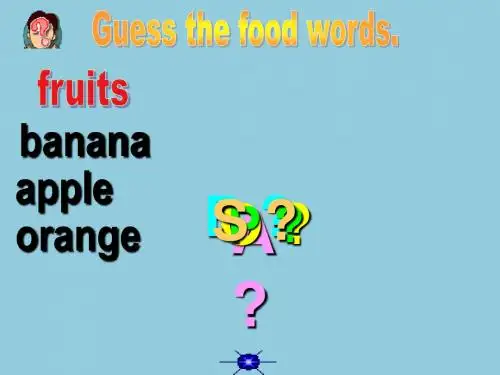
B ? S P ? O ? A
?
Make a dialogue!
• • • •
A:你早餐想吃什么? A:What would you like for breakfast ? B:我想吃鸡蛋,喝牛奶。你呢? B:I'd like some eggs and milk .How about you ? • A:我想吃面包喝稀饭。 • A:I would like some bread and porridge.
It's time for lunch. dumplings and rice.
I want to eat ,
A special treat.
Check yourself
1.----____ B you like bananas? -----Yes, I do. A. Does B. Do C. Are D. Is 2.----Do you like peaches? A ----____________. A. No, I don’t. B. Yes, I likes. C. Yes, I don’t. D. No, I do. 3. I ____ C like strawberries. A. am not B. not C. don’t D. doesn’t
2.How many ? 6 six 7 seven 8 eight 9 nine 20 twenty 16 sixteen 17 seventeen 18 eighteen 19 nineteen
sixteen
apples
seventeen
oranges
eighteen
bananas
B ? S P ? O ? A
?
Make a dialogue!
• • • •
A:你早餐想吃什么? A:What would you like for breakfast ? B:我想吃鸡蛋,喝牛奶。你呢? B:I'd like some eggs and milk .How about you ? • A:我想吃面包喝稀饭。 • A:I would like some bread and porridge.
It's time for lunch. dumplings and rice.
I want to eat ,
A special treat.
Check yourself
1.----____ B you like bananas? -----Yes, I do. A. Does B. Do C. Are D. Is 2.----Do you like peaches? A ----____________. A. No, I don’t. B. Yes, I likes. C. Yes, I don’t. D. No, I do. 3. I ____ C like strawberries. A. am not B. not C. don’t D. doesn’t
2.How many ? 6 six 7 seven 8 eight 9 nine 20 twenty 16 sixteen 17 seventeen 18 eighteen 19 nineteen
sixteen
apples
seventeen
oranges
eighteen
bananas
Unit4《Food and Restaurants》课件4(17页)(冀教版七
Lesson 28 What’s for breakfast?
Warm-up
Let’s review(复习) the names of the food and drinks.
Presentation:
Now let’s learn the new names of the food and drinks in lesson 28.
2.I’d like porridge for breakfast.
Would you like some porridge? I’d like= I would like,其中would like 表示(说话人的)意愿。
eg: a.我现在想吃鱼。 b.我现在不想吃鱼。 a.I _w__o_u_ld_l_ik_e__fish now.
b.I _w_o_u_l_d_n_’t_li_k_e fish now.
3.I put milk and sugar on it. put 指放或放置,试比较以下两个例子:
a. Please put sugar on the porridge.
b. I put on my coat.
Group work :
ice cream sugar
cereal
egg
bread milk
cake porridge
Listen,please!
Happy face and sad face: please
make sentences with the following
words(用所给词分别造句子).
1. you/eggsguage points(知识点):
1.Time for breakfast.
It is time for sth/doing sth. to do sth.
Warm-up
Let’s review(复习) the names of the food and drinks.
Presentation:
Now let’s learn the new names of the food and drinks in lesson 28.
2.I’d like porridge for breakfast.
Would you like some porridge? I’d like= I would like,其中would like 表示(说话人的)意愿。
eg: a.我现在想吃鱼。 b.我现在不想吃鱼。 a.I _w__o_u_ld_l_ik_e__fish now.
b.I _w_o_u_l_d_n_’t_li_k_e fish now.
3.I put milk and sugar on it. put 指放或放置,试比较以下两个例子:
a. Please put sugar on the porridge.
b. I put on my coat.
Group work :
ice cream sugar
cereal
egg
bread milk
cake porridge
Listen,please!
Happy face and sad face: please
make sentences with the following
words(用所给词分别造句子).
1. you/eggsguage points(知识点):
1.Time for breakfast.
It is time for sth/doing sth. to do sth.
冀教版英语七年级上(课件):第四单元第四课时
Don't worry about me, I can take care of myself. Now, I’m drinking a can of coke. —How many bottles of water are there? —Seven.
Listen to the dialogue and fill in the blanks. It’s lunch time.Li Ming and Jack are ready to order something in the restaurant.The noodles are fourteen yuan with beef or chicken.Rice with fish or chicken is twelve yuan each. Fifteen yuan for dumplings with meat and cabbage,and thirteen yuan for dumplings with carrot and egg.
Listen again and answer the following questions.
(1)When is it? It’s lunch time.
(2)Where are Li Ming and Jack? In the restaurant.
(3)What would Li Ming like to eat? The chicken noodles.
☆教材解读☆
1.Are you ready to order? be ready to do sth.意为“准备做某事”。
menu['menju:] n. 菜单
In a restaurant or caféor at a formal meal, the menu is a list of the food and drinks that are available.
Listen to the dialogue and fill in the blanks. It’s lunch time.Li Ming and Jack are ready to order something in the restaurant.The noodles are fourteen yuan with beef or chicken.Rice with fish or chicken is twelve yuan each. Fifteen yuan for dumplings with meat and cabbage,and thirteen yuan for dumplings with carrot and egg.
Listen again and answer the following questions.
(1)When is it? It’s lunch time.
(2)Where are Li Ming and Jack? In the restaurant.
(3)What would Li Ming like to eat? The chicken noodles.
☆教材解读☆
1.Are you ready to order? be ready to do sth.意为“准备做某事”。
menu['menju:] n. 菜单
In a restaurant or caféor at a formal meal, the menu is a list of the food and drinks that are available.
冀教七年级上册Unit 4 Food RestaurantsUnit 4 单元主题阅读与写作课件英语
2. What tense do the verbs in the passage use? Simple Present Tense. ____________________________________________ 3. What descriptions are used when we write a passage
写作实践 假设Jenny 和Lisa是你的好朋友,请根据下表写一 篇50词左右的英语短文。(开头已给出,不计入总词数)
Name Jenny Lisa
ቤተ መጻሕፍቲ ባይዱFavourite
Drink tea coffee
Favourite
Fruit watermelon pear
Favourite
Food beef chocolate
思路构建 步骤 1 构思 列纲
开篇点题:介绍 I have two good friends.They are 两个朋友 Jenny and Lisa.
2
爱好介绍:具体 They like different food,different 介绍她们的爱好 drinks and different fruit. 总结感受:她们 的饮食习惯不同 They have different eating habits.
about favourite food?
They like… His favourite food is… _____________________________________________ He likes… best. ______________________________________________
Unit 4 Food and Restaurants
Unit4FoodandRestaurants复习课件冀教版七年级英语上册
语法点
可数名词 2.名词复数的不规则变化 (1)改变内部的元音字母: foot→ feet, tooth→ teeth, mouse→ mice,man→ men, woman→ women (2)单复数同形: sheep→ sheep, deer→ deer, Chinese→ Chinese, (3)加ren: child→ children (3)集体名词:
必背句型
2.What’s for breakfast/lunch/supper? 早餐、午餐、晚餐吃什么? 3.What would you like (to do) sth.? 你想要(做)什么? 4.Do you want to come with me? 你想和我一起来吗?
必背句型
5.Good job!/Well done!/Great!/Wonderful!/Excellent!/Perfect! 做得好! 6.Are you ready to order? 你准备好点餐了吗? 7. How much is/are sth.? / How much for sth.?/What’s the price of sth.? 某物多少钱?
……的缩写,简称
12.put...on...把......放在......上
13.have to do sth.
不得不(客观)
must do sth.
必须(主观)
14.take sb. to some place 带某人去某地
必背句型
1.(It’s) time to do sth. 到干某事的时候了。 (It’s) time for sth. 到.......的时候了 It’s time for sb. to do sth. 到某人做......的时候了
七年级英语上册Unit4FoodandRestaurantsUnitReview教学课件(新版)冀教版
学练优七年级英语上(JJ) 教学课件
Unit 4
Food and Restaurants Unit Review
Words and Phrases
必须掌握的十五个句型。 1. 是吃早饭的时候了!
Time for breakfast.
2. 早饭吃什么?
What’s for breakfast?
3. 你想要什么?
2. 一 玻璃杯/茶杯/听/瓶…… a glass of juice a cup of tea a can of coke a bottle of water Three glasses of juice _a_r_e (be) over there.
固定搭配补充
3. 充满 be full of
The market __i_s__ (be) full of delicious food.
Words and Phrases
7. 你想跟我一起去么? Do you want to come with me?
8. 我非常喜欢蔬菜。 I like vegetables very much.
9. 做得好。没问题。 Good job. No problem.
Words and Phrases
school.
Exercises
4. ___C__he _____ to school with his classmates?
A.Do , comes
B. Does, comes
C. Does, come
D. Do, come
5. I like chicken very much, but I __C___ like fish.
A. meat
B. water
Unit 4
Food and Restaurants Unit Review
Words and Phrases
必须掌握的十五个句型。 1. 是吃早饭的时候了!
Time for breakfast.
2. 早饭吃什么?
What’s for breakfast?
3. 你想要什么?
2. 一 玻璃杯/茶杯/听/瓶…… a glass of juice a cup of tea a can of coke a bottle of water Three glasses of juice _a_r_e (be) over there.
固定搭配补充
3. 充满 be full of
The market __i_s__ (be) full of delicious food.
Words and Phrases
7. 你想跟我一起去么? Do you want to come with me?
8. 我非常喜欢蔬菜。 I like vegetables very much.
9. 做得好。没问题。 Good job. No problem.
Words and Phrases
school.
Exercises
4. ___C__he _____ to school with his classmates?
A.Do , comes
B. Does, comes
C. Does, come
D. Do, come
5. I like chicken very much, but I __C___ like fish.
A. meat
B. water