
沪教版六年级英语下册(上海牛津6B)知识点总结
lazy
懒惰的
take off
脱掉
roof
屋顶
yard
院子
hit
碰撞
see the world
见世面
one by one
一个接一个地
look out of
往外看
even
甚至
themselves
他们自己
sweep
扫地
space
太空
theatre
剧院
broom
扫帚
dinosaur
恐龙
go fishing
去钓鱼
drive
驾驶
a piece of
一张
enjoy oneself
玩得愉快
street sweeper
环卫工人
have a picnic
去野餐
get…in
收割
油
craft
手艺,工艺
long race
长跑
oil painting
油画
crown
王冠
short race
短跑
powerful
强有力的
scissors
剪刀
win
获胜
ink
墨水
tape
胶带
long jump
跳远
brush
画笔,刷子
glue
胶水
high jump
跳高
paints
绘画颜料
saw
锯
swimsuit
kilogram
千克,公斤
writer
作家
online
在线的
centimeter
厘米
photographer
摄影师
head teacher
校长
taller
更高的
film
胶卷
PS
附言(书信)
fan
迷,爱好者
digital
数码的
mountain
山脉
fantastic
极好的
street cleaner
环卫工人
童话
Western
西方的
pea
豌豆
adult
成年人
turkey
火鸡
pod
豆荚
well-known
著名的
bright
明亮的
forever
永远
stronger
更强大的
laugh at
嘲笑
bigger
更大的
than
比
jack-o’-lantern
南瓜灯
excited
兴奋地
scarf
围巾
bullet
子弹
blow off
throw away
扔掉
get lost
迷路
some time
一段时间
on the way
在路上
Module 4 Things we enjoy
Unit 10 Great storybooks
Unit 11 Western festival
Unit 12 The five peas
fairy tale
游泳衣(女士)
artist
艺术家
craftsman
工匠
swimming cap
游泳帽
unhappy
不高兴的
tool工具swimFra biblioteking pool
游泳池
carefully
仔细地
easily
容易地
warm-up
热身练习
on the left
在左边
himself
他自己
fit
健壮的
on the right
在右边
笔筒
praise…for…
因…而表扬
lose
迷路的
envelope
信封
worry
担心
plastic
塑料的
follow
跟随
rubbish bin
垃圾桶
in the middle
在中间
truck
卡车
look out
小心
piece
碎片
no smoking
禁止吸烟
cloth
布料
no swimming
禁止游泳
still
仍然
swimming goggles
游泳镜
all the time
一直,始终
model house
房子模型
Chinese inkpainting
中国水墨画
a longtime ago
很久以前
at work
忙着
say to oneself
自言自语
Module 3 Things we do
Unit 7 Helping others
Unit 8 Reading signs
Unit 9 Reusing things
bell
铃铛
sign
标识
reuse
重新利用
neck
脖子
middle
中间
can
金属罐
ago
以前
special
特别的
rubber
橡皮
gatekeeper
门卫
path
小路
vase
花瓶
praise
赞扬
may
可能
pen holder
单词表
沪教版(三年级起点)英语六年级下册单词表
Module 1 Changes and differences
Unit1 You and me
Unit 2 Changes in our lives
Unit 3 Our school in the future
weigh
有……重
life
生活
carry
背,提,拿
wife
妻子
better and better
越来越好
poor
贫穷的
fairy
仙子
wish
愿望
by hand
用手
right away
立即
in a short time
很快
Module 2 Work and play
Unit 4 Art
Unit 5 Crafts
Unit 6 PE lessons
oil
沪教版牛津英语六年级下册6B期中知识点总结

沪教版牛津英语六年级下册6B期中知识点总结Unit 1 Great cities in Asia【知识点梳理】1.方位词:east / west / north / south / north-east / north-west / south-east / south-west用法:a. 两地不相邻: e.g. A is north B. (= to the south of)b. 两地接壤: e.g. A is on the north of B.c. 所属关系;A包含B, B属于A: e.g. B is in the north of A.2. by + 交通工具表示“乘……交通工具”,用how进行提问e.g. by bus / ferry / train / ship / underground… by plane = by air, by ship = by sea3. How far…多远(询问距离的远近;路程的长短)e.g. Hoe far is it from your home to school? 从你家到学校有多远?4. How long…多长;多久(询问时间的长短;提问一段时间)e.g. How long does it take to travel from Shanghai to Beijing by train? 坐火车从上海到北京要花多长时间?5. It takes (sb.) some time to do sth. 做某事需要花费(某人)多少时间e.g. It takes me five hours to make this modal plane. 做这个模型飞机花了我5个小时.6. like / love / enjoy doing sth. 喜欢做某事e.g. The people in Bangkok like / love / enjoy eating spicy food. 曼谷人喜欢吃辛辣食物.6. 词组句型at an exhibition about great cities in Asia 在一个关于亚洲大城市的展览会上Which city…? 哪个城市…?the capital of……的首都from…to…从…到…in the past 在过去travel to other places 去别的地方more than = over超过;多于visit the Great wall 参观长城tall building s高楼大厦huge department stores大型的百货商店famous hotels著名的宾馆quiz cards测试卡at these beautiful beach es在这些美丽的沙滩上Module 1 City LifeUnit 2 At the Airport【知识点梳理】1.have/has been to去过;到过(表示现在已经回来)have/has been in 住在 = have lived / stayed inhave/has gone to 去;到…(表示现在还没有回来)e.g. We have already been to Changfeng Park.I have lived in Shanghai for thirteen years.Where is Henry? He has gone to Japan. H2.already 已经(多用于肯定句;放于动词前)yet 迄今;还(多用于疑问句和否定句;放于句末)just 刚刚 (用法和位置和already相同)e.g. I have already been to Lily’s home.Have you been to Lily’s home yet?No, I haven’t been to her home yet.3.plan to do计划做……e.g. Tom is planning to visit Rome this Spring Festival. 汤姆正计划今年春节到罗马旅行.4.leave for 出发去……动身去……leave A 离开A地 e.g. He will leave Shanghai.leave for B 出发去B地 e.g. He will leave for Tokyo.leave A for B 离开A地去B地e.g. He will leave Shanghai for Tokyo.5.arrive + in大地方 (如国家、城市等范围较大的地方) e.g.arrive in Chinaarrive + at小地方 (如车站、学校等小范围的地方) e.g. arrive at the airport 【近义】get to, reach到达6.have to do…不得不做… (否定don’t have to do)e.g. I have to say it again. 我不得不再说一遍.7.enough space足够的空间space“空间”;不可数名词enough 修饰名词时前置;修饰形容词副词时后置 e.g. enough money, good enough 8.live / stay …for…在…住/待…(时间)for +一段时间;多与现在完成时连用表示动作从过去延续到现在的一段时间;并用how long提问. e.g. We have learned English for six years. 我们学习英语已经六年了.9.have / has got “有、拥有”否定形式haven’t/ has n’t got…疑问形式Have/ Has…got…?10.too many + 可数名词复数“太多的…” too much + 不可数名词“太多的…”11.plenty of “许多;大量”;后面可跟不可数名词或可数名词复数12.重要词组句型this Sunday live in Los Angelesone and a half hour s at eleven thirty in the morninglook at this sign over therebuy sb. sth. =buy sth. for sb. departure time / arrival timewrite down one’s address What time…?Module 1 City LifeUnit 3 Dragon Boat Festival【知识点梳理】1.know something about the Dragon Boat Festival了解一些关于端午节的知识know about 知道/了解关于……的事情know认识2.His job was to give advice to the king. 他的工作是给国王出谋划策.⑴ be +to do, 不定式做表语,表示主语和表语在概念上是等同的.e.g. His plan is to clean the room. 他的任务是打扫房间.My wish is to be a doctor. 我的愿望是称为一名医生.⑵ give sth. to sb. = give sb. sth. 给某人某物⑶ advice “劝告, 忠告”, 不可数名词a piece of advice 一条建议some advice 一些建议give advice to sb. 想某人提出建议take sb’s advice 采纳某人的建议3.listen to在本文中指“听从, 听信”e.g. She never listens to me. 她从不听我的话.4.in danger 在危险中danger n. 危险dangerous adj. 危险的5.would like to do想要做……= want to do6.---Would you like some…? 表示“你想要……吗?”;用于询问对方的意见.---Yes, please. (肯定回答) / No, thanks. (否定回答)ter adv. 后来;以后late adj. 晚的;迟的e.g. I'll tell you later. 我以后再告诉你.He was late for school. 他上学迟到了.8. a salty rice dumpling with / without meat 一只(没)有肉的咸粽子with 表示“有”;without表示“没有”with还有“和……”、“用”等意思e.g. I write the report with my pen. 我用我的新钢笔写报告.She lives with her son.她和儿子住在一起.9.I like salty rice dumplings, but I don’t like sweet ones. 我喜欢咸粽子;但我不喜欢甜粽子.⑴ one 用来指代一个人或事物;而ones用来指代一些人或事物.⑵ but但是;表示意思的转折.10.would rather do 宁愿做……would rather not do 宁愿不做……e.g. He would rather stay at home at weekends. 他宁愿周末呆在家.11.the fifth day of the fifth lunar month 农历五月初五在英语中;用序数词表达农历的第几个月和第几天.12.重要词组句型the story of the festival be borntwo hundred years ago jump into a riverthe fifth day of the fifth lunar month of that year on that dayeat rice dumplings and have dragon boat races to remember himModule 1 City LifeUnit 4 Staying Healthy【知识点梳理】1.like / love / enjoy doing 喜欢做……e.g. Many children like/love/enjoy eating fried food. 许多小孩喜欢吃油炸食品.2.stay healthy 保持健康stay 在本课中“意为”保持;为联系动词;后面只能跟形容词.e.g. I hope the weather will stay fine.我希望天气能持续放晴.3.health n. 健康healthy adj. 健康的unhealthy adj. 不健康的e.g. health problems 健康问题healthy / unhealthy food (不)健康食品4.Work and play, we love both. 工作与学习;我们都喜欢.both pron. 意为“两者(都)……”;在此句中指的是学习和工作这两件事.e.g. Both of the twins like doing puzzles. 这对双胞胎都喜欢玩拼图.5.forget doing 忘记做过……(已做)forget to do忘记去做……(未做)【反义】 remember;用法与foeget相同e.g. I forgot posting the letter. 我忘了信已寄出.Don't forget to post the letter. 别忘了去寄信.6.What’s your favourite…?你最喜欢的……是什么?(what用来询问具体的信息)e.g. What should I do to stay healthy? 要保持健康;我应当做些什么?7.I like playing football in the playground. 我喜欢在操场上踢足球.⑴“在操场上”可以用 in / on the playground 表示.⑵ 定冠词the的用法:a. 在球类运动前不加定冠词the e.g. play football / basketball / tennis,etc.b. 在乐器前必须加定冠词the e.g. play the piano / violin, etc.c. 在watching television中;不加定冠词the8.Why…? 用于询问原因;回答用 (It’s) becausee.g. —Why do I always feel tired, Mum?—It’s because you watch too much television.9.have a headache 头痛“身体部位+ache”表示疼痛.此处的have意为“患病;得病”e.g. have a stomach ache 胃痛have toothache 牙痛其他身体不适的表达有: have a cold 感冒have a fever 发烧 have a sore throat 喉咙痛10.too much 太多+不可数名词too many 太多+可数名词复数e.g. Don’t drink too much cola. 不要喝太多的可乐.Too many sweets are bad for your teeth. 吃太多糖对你的牙齿不好.11.too little 太少+不可数名词too few 太少+可数名词复数可以用not...enough (修饰可数或不可数名词)结构改写句子.e.g. You eat too little fruit. = You don’t eat enough fruit.12.less 更少+不可数名词(less是little的比较级)fewer 更少+可数名词(fewer是few的比较级)more 更多+可数名词、不可数名词(more是many、much共同的比较级)e.g. You should have less meat, fewer soft drinks and do more exercise. 你应该少吃肉;少喝软饮料;多做运动.13.enough + 名词“足够的……”形容词/ 副词 +enough “足够地……”e.g. We have enough chairs for everyone. 我们有足够的椅子让大家坐.They cannot walk fast enough. 他们走得不够快.14.How often……?“多久一次”;用于对时间频率提问.e.g. How often do you go to see a film? 你多久看一次电影?【比较】how often 与 how many timeshow often 提问“频率次数+时间范围”how many times 提问“频率次数”e.g. —How often do you exercise? —Twice a week.—How many times have you been there? —Twice.15.once 一次 twice 两次三次及以上: 数字+timese.g. I see them once every two months. 我每两个月与他们见一次面.I go to the library three times a month. 我一个月三次去图书馆.16.practise doing…练习做……;训练……e.g. She practises dancing every afternoon. 她每天下午练习跳舞.17.help do the housework 帮忙做家务help sb. (to) do sth. 帮某人做某事= help sb. with sth. 帮某人某事e.g. Ben helps me learn English.Ben helps me with my English.18.exercise n. & v. 锻炼(身体);运动;练习e.g. You don’t do enough exercise. 你锻炼不够.(“锻炼”;不可数名词)You need do more maths exercises. 你需要做更多的数学练习.(“练习”;可数名词)I think you should exercise more.我认为你应该多运动运动.19.重要的词组句型really love musicThat’s my favourite indoor / outdoor activityI’m afraid.should wear more clotheswatch too much televisionnot…enoughwatch less televisionhave enough exercisego to bed lateonce / twice /…times a day/week/month/yearneverUnit 5 What will I be like?【基础知识】1.What will I be like? = How will I be? 我将是怎么样的?一般将来时:用于表示将来某个时间发生的动作或状态.常与tomorrow, next +时间词;in+一段时间, in the future等连用.其动词形式有will/shall + do 或 is/am/are going to + do(动词原形)e. g. There is going to be/ will be a sports meeting in our school next week.下周我校将有一个运动会.I will possibly be a doctor in the future.将来我可能是一个医生.possibly ad.可能地—possible a.可能的2.stand in front of a magic camera 站在魔幻照相机前 stand—stood—stood3.take a photograph with it 用它拍一张照片take—took—taken4.wait for the red light 等待红灯5.look for the “START” button 寻找“开始”按钮6.put in a ¥20 note 放入一张20元面值的纸币7.press the “START” button 按“开始”按钮8.read the note on the back 阅读背面的注释9.in 15 year s’ time在十五年以后(多与将来时连用);提问用 How soon10.be 165 centimetres tall 将是165厘米高, 提问用How tall are you?或What’s yourheight?11.weigh 55 kilograms 称得55公斤;提问用How much do you weigh? 或What’s yourweight?或者How heavy are you? 回答也可用 I am 55 kilograms heavy.12.an astronaut 一个宇航员 grow bigger长得更大13.be good at singing 擅长唱歌 be good at cooking擅长烹饪be good at sports 擅长运动 be good at Chinese擅长英语be poor at English不擅长英语be good at/ be poor at(doing) sth. 擅长于/不擅长于(做)某事14.wear a pair of glasses 戴一副眼镜 wear穿着;戴着强调状态;wear—wore—wornput on穿上;戴上强调动作 put on your coat 穿上你的大衣15.love helping people 爱帮助人 love listening to music 爱听音乐love taking photograph 爱拍照片16.be good-looking 是好看 be strong 是强壮的 be slim是苗条的17.in a bakery 在面包房 a baker一个面包师 bake some bread烤一些面包18.read and write a lot读和写许多19.a report on/about my future 一个关于我的将来的报告report an accident报告一起事故 a reporter一个记者20.would like to be a doctor想要做一个医生=want to be a doctor21.fly a spacecraft驾驶一架航天飞机 fly—flew—flown22.在夜晚回来23.learn how to make sick people better 学会怎样使生病的人更好learn to do sth. 学会做某事 learn—learnt—learnt24.have to practice English more 不得不更多地练习英语practice doing sth. 练习做某事v. (AE)练习 = practise v. (BE)do much practice做许多练习n. 练习Practice makes perfect. 熟能生巧.have to do sth. 表示“不得不做某事”;意思与must do sth.相近;但用法上有一定区别.have to do sth. 有时态的变化;因此否定句与疑问句需要助动词构成.肯定句:He has to do a lot of homework. 他不得不做许多回家作业.否定句:He doesn’t have to do much homework. (doesn’t have to= doesn’t need to =needn’t)一般疑问句:Does he have to do a lot of homework?25.连词主要连接两个简单句.并列连词有and并且;和; but但是; or或者;否则的话; so所以; for因为.I like eating fruit and vegetables and I always eat plenty of fruit and vegetables.我喜欢吃水果和蔬菜;并且我总是吃大量的水果和蔬菜.Kitty likes dogs, but she doesn’t like cats.凯蒂喜欢狗;但是她不喜欢猫.Hurry up, or you will be late for school. 赶快;否则的话你将会上学迟到.He was ill, so he asked for sick leave. 他病了;所以他请病假了.Tom was fat, for he ate too much unhealthy food. 汤姆胖;因为他吃了太多不健康食品.【词性转换】possible adj. --possibly adv. --impossible adj.heavy adj. 比较级 heavier 最高级 the heaviestslim adj. 比较级 slimmer 最高级 the slimmestbeautiful adj. 比较级 more beautiful 最高级 the most beautiful report v. -- reporter n.bake v. -- baker n. --bakery n.practice n. --practise v.be good at/ be poor at(doing) sth. 擅长于/不擅长于(做)某事【动词结构】V+doinglove/like/enjoy/practise doinglove helping people 爱帮助人like listening to music 爱听音乐enjoy taking photograph 爱拍照片practise swimming 练习游泳V+ to dowould like to/want to/ learn how to/have towould like to be a doctor想要做一个医生=want to be a doctorlearn how to make sick people better学会如何使病人康复have to pracitse English more加强英语的操练【句型】一般将来时:用于表示将来某个时间发生的动作或状态.常与tomorrow, next +时间词;in+一段时间, in the future等连用.其动词形式有will/shall + do 或is/am/are going to + do(动词原形)* What will I look like?= How will I look?in 15 years’ time在十五年以后(多与将来时连用);提问用 How soonbe 165 centimetres tall 将是165厘米高, 提问用How tall are/will you?或What’s your height?weigh 55 kilograms 称得55公斤;提问用How much do/will you weigh? 或What’s your weight?6B 期中考试作文范文My Favourite CityShanghai is my favourite city. It is one of the biggest cities in China. It is in the east of China. You can see a lot of tall buildings, huge department stores and famous hotels there. There are about 22 million people in this city. They enjoy eating sweet food. (50 words)My Favourite FestivalI like the Dragon Boat Festival best. It is my favourite festival. The Dragon Boat Festival is on the fifth day of the fifth lunar month. Today, people usually eat rice dumplings and have dragon boat races on that day. People celebrate the Dragon Boat Festival to remember Qu Yuan. (50 words)My favourite Outdoor ActivityPlaying basketball is my favourite outdoor activity. I like it very much because it can help me to keep healthy. I usually play basketball in the playground in the P.E. lessons. I usually play basketball three times a week. When I play basketball, I feel very happy. Do you like playing basketball? (52 words)My Favourite Indoor ActivityMy favourite indoor activity is reading books. I like it very much because I can learn a lot from books. I usually read books at home. I usually read books after I finish my homework. I read all kinds of books. I read books almost every day. Do you like reading books? (52 words)Health RulesDo you want to stay healthy? If you want to keep healthy, please follow these rules. You should watch less television. You should eat less spicy food and fewer sweets. You should have enough exercise. You shouldn’t go to bed late. All in all, health is very important to everybody. (50 words)My Possible FutureI lik e reading books. I am good at writing. In 15 years’ time, I will possibly be a reporter. I will be 175 centimeters tall. I will weigh 60 kilograms. I am poor at taking photos. I have to learn to take photos. I will practise taking photos more. I will read and write a lot. (56 words)。
沪教牛津版六年级知识点归纳
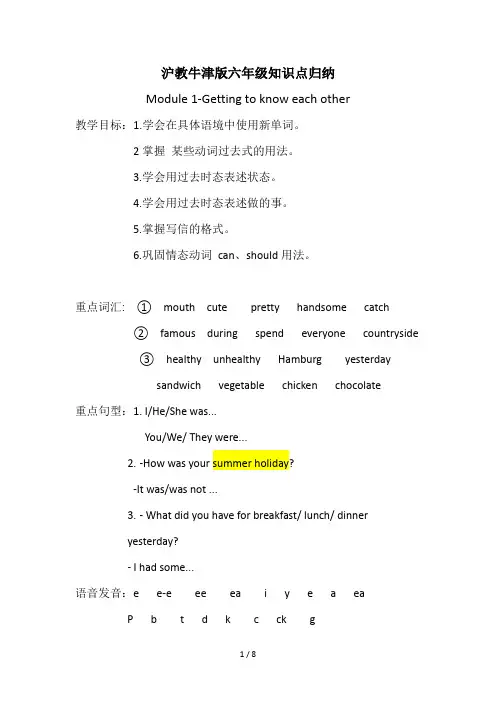
沪教牛津版六年级知识点归纳Module 1-Getting to know each other教学目标:1.学会在具体语境中使用新单词。
2掌握某些动词过去式的用法。
3.学会用过去时态表述状态。
4.学会用过去时态表述做的事。
5.掌握写信的格式。
6.巩固情态动词can、should用法。
重点词汇: ①mouth cute pretty handsome catch②famous during spend everyone countryside③healthy unhealthy Hamburg yesterdaysandwich vegetable chicken chocolate重点句型:1. I/He/She was...You/We/ They were...2.-How was your summer holiday?-It was/was not ...3.- What did you have for breakfast/ lunch/ dinneryesterday?- I had some...语音发音:e e-e ee ea i y e a eaP b t d k c ck gModule 2-Relationship教学目标:1.学会在具体语境中使用新单词。
2掌握某些动词过去式的用法。
3.学会用一般过去时的疑问句。
4.巩固wh - questions 在过去语态中的用法。
5.掌握数词hundred,thousand的用法。
6.巩固Would like to...句型和There be ...句型。
重点词汇: ①neighbour son daughter noisy dig② thousand hundred wild way die learn send③e-friend country other hobby重点句型:1. - Did you +动词原形+过去时间?- Yes,I did./ No,I didn’t.2.There was a...in the past.There were many...in the past.3.-Would you like to ...-Yes,I’d like to./No, I wouldn’t.语音发音 a ar u o ue u-e oo uf v thModule 3-Out and about教学目标:1.学会在具体语境中使用新单词。
牛津英语上海版六年级下册知识点整理36435
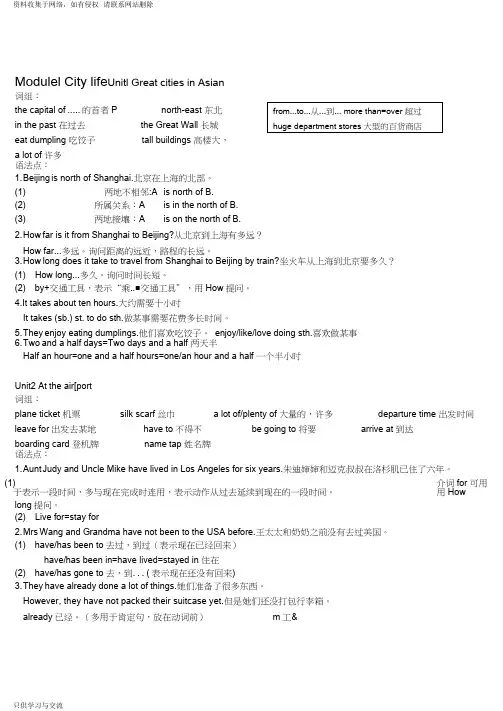
Modulel City life Unitl Great cities in Asian词组:the capital of ..... 的首者P north-east 东北 in the past 在过去 the Great Wall 长城 eat dumpling 吃饺子tall buildings 高楼大,a lot of 许多 语法点:1. Beijing is north of Shanghai.北京在上海的北部。
(1) 两地不相邻:A is north of B. (2) 所属关系:A is in the north of B. (3)两地接壤:Ais on the north of B.2. How far is it from Shanghai to Beijing?从北京到上海有多远?How far...多远。
询问距离的远近,路程的长远。
3. How long does it take to travel from Shanghai to Beijing by train?坐火车从上海到北京要多久? (1) How long...多久。
询问时间长短。
(2) by+交通工具,表示“乘..■交通工具”,用How 提问。
4.It takes about ten hours.大约需要十小时It takes (sb.) st. to do sth.做某事需要花费多长时间。
5. They enjoy eating dumplings.他们喜欢吃饺子。
enjoy/like/love doing sth.喜欢做某事6. Two and a half days=Two days and a half 两天半Half an hour=one and a half hours=one/an hour and a half 一个半小时 Unit2 At the air[port 词组:plane ticket 机票 silk scarf 丝巾a lot of/plenty of 大量的,许多departure time 出发时间 leave for 出发去某地 have to 不得不 be going to 将要arrive at 到达boarding card 登机牌 name tap 姓名牌语法点:1. Aunt Judy and Uncle Mike have lived in Los Angeles for six years.朱迪婶婶和迈克叔叔在洛杉肌已住了六年。
【课内词汇背背背】沪教牛津版(一起) 小学英语 六年级(A册+B册) 词汇表(pdf版)

【课内词汇背背背】沪教牛津版(一起) 小学英语六年级(A册+B册) 词汇表(pdf版)课内单词背背背六年级Aafter ['ɑ:ft ] prep.在…之后after school [ ɑ:ft sku:l] 放学后age [eid ] n.年龄always [' :lweiz] adv.总是area ['ε ri ] n.地区,区域centimetre [ sent mi:t (r)] n.厘米cycle ['saikl] v.骑自行车dress [dres] v.给…穿衣each other [i:t ] 互相,彼此estate [i'steit] n.不动产,产业family [ f m li] n.家庭ferry ['feri] n.渡船get to 到达75heavy ['hevi] adj.重的height [hait] n.高度how [hau] adv.怎么how about 怎么样just [d st] adv.仅仅kilogramme ['ki:l ugr m] n.千克like [laik] v.喜欢loudly ['laudli] adv.大声地love [l v] n.爱meet [mi:t] v.遇到member ['memb ] n.成员museum [mju:'zi m] n.博物馆never ['nev ] adv.从不number ['n mb ] n.数字,数量76 沪教版牛津小学英语(一起)词汇表课内单词背背背nut [n t] n.坚果only [' unli] adv.仅仅,只有pitch [pit ] n.场地puppy ['p pi] n.小狗,小动物quickly ['kwikli] adv.很快地quietly ['kwai tli] adv.安静地right [rait] adj.正确的share [ ε ] v.共享,共有skate [skeit] v.滑冰slowly ['sl uli] adv.慢慢地sometimes ['s mtaimz] adv.不时,有时soon [su:n] adv.很快地space [speis] n.空间take [teik] v.(后接car,bus 等)乘77than [ n] conj.比time for bed 就寝时间together [t 'ɡe ] adv.共同, 一起tomorrow [t 'm r u] adv.明天Underground [' nd ɡraund] n.地铁usually ['ju: u li] adv.通常weekend ['wi:kend] n.周末weight [weit] n.重量yesterday [ jest de ] adv.昨天young [j ] adj.年轻的across [ 'kr s] prep.穿过address [ 'dres] n.地址along [ 'l ] adv.往前,向前astronaut [' str n :t] n.宇航员78 沪教版牛津小学英语(一起)词汇表课内单词背背背bus-stop ['b s'st p] n.公共汽车站crossing ['kr :si ] n.十字路口crowded ['kraudid] adj.拥挤的fire-engine ['end in] n.消防车foot [fut] n.脚get on [ɡet n] 上车get off [ɡet f] 下车job [d b] n.工作kindergarten ['kind ga:tn] n.幼儿园lamp post [l mp p ust] n.路灯leave [li:v] v.离开left [left] adv.在左面litter ['lit ] n.垃圾litter bin [bin] n.垃圾箱79lot [l t] indef.det.许多make [meik] v.使成为minibus ['minib s] n.小型公共汽车minute ['minit] n.分钟park [pa:k] v.停放pavement ['peivm nt] n.人行道plane [plein] n.飞机post [p ust] n.邮政post box [p ust b ks] n.邮政信箱put out [put aut] 消除right [rait] adv.在右面room [ru:m] n.房间safe [seif] adj.安全的spacecraft ['speiskrɑ:ft] n.太空船80 沪教版牛津小学英语(一起)词汇表课内单词背背背teach [ti:t ] v.教,讲授tennis ['tenis] n.网球运动court [k :t] n.网球场top [t p] adj.最高的,顶上的traffic ['tr fik] n.交通traffic jam [ tr fik d m] 交通阻塞tram [tr m] n.电车车站turn [t :n] n.转动,翻转way [wei] n.路线,路途on one's way to [ n w nz wei tu:] 某人去…的路上wrong [r ] adj.错误的zebra ['zi:br ] n.斑马crossing ['kr :si ] n.斑马线also [' :ls u] adv.也,同样81another [ 'n ] adj.另外的,又一Australia [ s'treilj ] n.澳大利亚bad [b d] adj.坏的,不利的cafe ['k fei] n.咖啡馆,小餐馆can [k n] n.罐Canada ['k n d ] n.加拿大carton ['kɑ:t n] n.纸箱,纸盒cereal ['si ri l] n.谷类食品cheese [t i:z] n.奶酪chicken wing [ t ikin wi ] n.鸡翅choose [t u:z] v.选择come [k m] v.来come from [k m fr m] 来自come on [k m n] 快点82 沪教版牛津小学英语(一起)词汇表课内单词背背背crab [kr b] n.螃蟹dairy ['dε ri] n.奶制品product ['pr d kt] n.乳制品diet ['dai t] n.饮食each [i:t ] adv.每个enough [i'n f] det.足够ever ['ev ] adv.曾经,永远favourite ['feiv rit] adj.特别喜爱的fish finger [fi fi ɡ ] n.冻鱼条fridge [frid ] n.冰箱fried [fraid] adj.油炸的frozen ['fr uzn] adj.冷冻的,冻结的ham [h m] n.火腿hamburger ['h mb :ɡ ] n.汉堡83hard [hɑ:d] adv.硬的healthy ['helθi] adj.健康的hot-dog ['h td g] n.热狗面包jam [d m] n.酱Japan [d 'p n] n.倭国lay [lei] v.放置lay the table [lei teibl] 摆桌子lemonade [ ] n.柠檬水lettuce ['letis] n.生菜list [list] n.目录,列表little ['litl] indef. det.很少的menu ['menju:] n.菜单mix [miks] v.混合mixture ['mikst ] n.混合物84 沪教版牛津小学英语(一起)词汇表课内单词背背背New Zealand [nju: zi:l nd] n.新西兰onion [' nj n] n.洋葱oven [' v n] n.烤箱packet ['p kit] n.小包裹page [peid ] n.页pancake ['p nkeik] n.薄煎饼peach [pi:t ] n.桃peel [pi:l] v.剥,削piece [pi:s] n.块,篇…pizza ['pi:ts ] n.比萨饼plate [pleit] n.盘子plenty ['plenti] 大量,丰富plenty of [ plenti v] indef. det.许多product ['pr d kt] n.产品85salad ['s l d] n.沙拉section ['sek n] n.部分区UP [ p] n.上shopping [' pi ] n.买东西,购物go shopping [ɡ u p ] 买东西,购物slice [slais] n.薄片snacks [sn ks] n.小吃,快餐Soft drink [s ft dri k] n.软饮料soup [su:p] n.汤soya ['s i ] n.豆奶spend [spend] v.花费squid [skwid] n.鱿鱼steak [steik] n.牛排sundae ['s ndei] n.圣代冰淇淋86 沪教版牛津小学英语(一起)词汇表课内单词背背背sushi ['su:si] n.寿司Thailand ['tail nd] n.泰国think [θi k] v.想,思考tin [tin] n.罐toast ['t ust] n.吐司面包tomato [t 'mɑ:t u] n.西红柿unhealthy [ ] adj.不健康的The USA n.米国yoghurt ['j ɡ t] n.酸奶around [ 'raund] adv.周围, 四周prep.在…周围,到处arrive [ 'raiv] v.到达back [b k] adv.向后的basketball ['bɑ:skitb :l] n.篮球87brochure ['bru ] n.小册子Buddha ['bud ] n.佛camp [k mp] v.扎营Chinese New Year [ t a 'ni z nju j (r)] 春节;中国新年Christmas ['krism s] n.圣诞节cinema ['sin m ] n.电影,电影院clothes [kl u iz] n.衣服collect [k 'lekt] v.收集collect stamps 集邮compass ['k mp s] n.指南针decoration [ ] n.装饰dumpling ['d mpli ] n.饺子east [i:st] n.东方end [end] n.结尾,结束88 沪教版牛津小学英语(一起)词汇表课内单词背背背enough [i'n f] n.足够,充足,很多except [ik'sept] prep.除了…之外festival ['fest v l] n.节日fish [fi ] v.钓鱼forecast ['f :kɑ:st] n.预测,预见holiday ['h l di] n.假期hotel [h u'tel] n.旅馆,饭店how long [hau l ] 多长时间jump [d mp] n.跳跃high jump [hai d mp] n.跳高leap [li:p] n.跳跃,飞跃map [m p] n.地图market ['ma:kit] n.市场model ['m d l] n.模型89Moon cake [mu:n keik] n.月饼needle ['ni:dl] n.针noon [nu:n] n.下午north [n :θ] n.北方paint [peint] n.油漆,颜料race [reis] n.比赛railway ['reilwei] n.铁路relative ['rel tiv] n.亲戚rest [rest] n.休息river ['riv ] n.河流sandal ['s d l] n.凉鞋,便鞋sew [s u] v.缝制shorts [ :ts] n.短裤snow [sn u] n.雪90 沪教版牛津小学英语(一起)词汇表课内单词背背背snowy ['sn ui] adj.雪的south [sauθ] n.南方special ['spe l] adj.特别的,特殊的sport [sp :t] n.体育stamp [st mp] n.邮票start [sta:t] n.开始,出发点stay [stei] v.在,暂住table-tennis ['te bl ten s] n.桌球then [ en] adv.然后thousand ['θauz nd] num.一千ticket ['tikit] n.票trip [trip] n.旅行video ['vidi u] n.录像visit ['vizit] n.参观,访问91volleyball ['v lib :l] n.排球west [west] n.西方when [wen] conj.当…的时候will [wil] aux.v.将,愿意about [ 'baut] adv.大约adult [' d lt] n.成年人against [ 'ɡenst] prep.反对,对抗airport ['ε p :t] n.飞机场barbecue ['bɑ:bikju:] n.野餐bear [bε ] v.生(孩子)because [bi'k z] conj.因为begin [bi'gin] v.开始boot [bu:t] n.长靴builder ['bild ] n.建筑者92 沪教版牛津小学英语(一起)词汇表课内单词背背背building ['bildi ] n.建筑物change [t eind ] n.变化child [t aild] n.小孩city ['siti] n.城市exciting [ik'saiti ] adj.令人激动的factory ['f kt ri] n.工厂feather ['fe ] n.羽毛few [fju:] indef.det.少量的fight [fait] v.对抗,战斗fishing ['fi i ] n.钓鱼,捕鱼frightening ['frait ni ] adj.令人恐惧的harbour ['hɑ:b ] n.海港history ['hist ri] n.历史hundred ['h ndr d] num.一百93hundreds of ['h ndr dz v] 数百的interesting ['intristi ] adj.有趣的laugh [la:f] v.笑learn [l :n] v.学习,学会length [le θ] n.长度lie [lai] v.躺light [lait] adj.轻的million ['milj n] num.百万more [m :] adv.更,更多next [nekst] adj.下一个,下次的other [' ] indef.det.其他的pin [pin] n.大头针primary school [ praim ri sku:l] n.小学quite [kwait] adv.相当,十分94 沪教版牛津小学英语(一起)词汇表课内单词背背背rain [rein] n.雨run [r n] v.跑sandcastle ['s ndkɑ:sl] n.沙堡secondary ['sek nd ri] n.初中snowman ['sn um n] n.雪人star [sta:] n.星星story ['st :ri] n.故事swim [swim] n.游泳sword [s :d] n.剑take off [teik f] (后接clothes)脱teenager ['ti:n:eid ] n.十几岁的年轻人tell [tel] v.告诉then [ en] adv.那时候think of 想象,对…的看法95town [taun] n.城镇turn [t :n] n.机会,轮流village ['vilid ] n.村庄weigh [wei] v.重,称…的重量wonderful ['w nd ful] adj.奇妙的,极好的work [w :k] n.工作worker ['w :k ] n.工人96 沪教版牛津小学英语(一起)词汇表课内单词背背背六年级Bair [ε ] n.空气alive [ 'laiv] adj.活着的answer ['ɑ:ns ] n.答案as if 好像bath [ba: θ] n.洗澡berry [ beri] n.浆果better [bet ] adv.更好的breathe [bri: ] v.呼吸bright [brait] adj.明亮的broken ['br uk n] adj.坏的burn [b :n] v.烧,烧焦by [bai] prep.用,借助于camp-fire [k mp fai ] n.营火97can [k n] aux.能,能够;可以cave [keiv] n.山洞charcoal ['t ɑ:k ul] n.木炭cigarette [:siɡ 'ret] n.香烟clean [kli:n] adj.干净的closed [kl uzd] adj.关闭的Construction site [k n str k n sait] 建筑工地cooked [kukt] adj.煮熟的corner ['k :n ] n.角;隅;街角;墙角countryside [ ] n.乡下cry [krai] v.哭danger ['deind ] n.危险diamond ['dai m nd] n.钻石dictionary ['dik n ri] n.字典98 沪教版牛津小学英语(一起)词汇表课内单词背背背dirty ['d :ti] adj.脏的district ['distrikt] n.地区,区,行政区drop [dr p] v.(使)落下;(使)下降dust [d st] n.灰尘earth [ :θ] n.地球,土地electricity [ ] n.电end [end] v.完结,终止,结束far [fa:] adv.远的fast [fa:st] adv.快fax [f ks] n.传真finally ['fain li] adv.最后fire-safety [ fai seifti] n.防火安全first [f :st] adv.第一;最初;首次flight [flait] n.航班99forest ['f rist] n.森林fork [f :k] n.叉forward ['f :w d] adv.向前gas [ɡ s] n.煤气gently ['d entli] adv.轻轻地handkerchief ['h k t if] n.手绢happen ['h p n] v.发生heat [hi:t] n.热heavily ['hevili] adv.沉重地helicopter ['helik pt ] n.直升飞机high [hai] adv.高的(地)hill [hil] n.小山hit [hit] v.打, 打击, 碰撞home [h um] n.家100 沪教版牛津小学英语(一起)词汇表课内单词背背背however [hau'ev ] adv.无论如何, 可是, 仍然hurt [h :t] v.伤害keep [ki:p] v.保持;保存;继续kill [kil] v.杀死kilometre ['kil umi:t ] n.千米land [l nd] n.土地lift [lift] v.升起,升高light [lait] n.光litre ['li:t ] n.升(容量单位)long [l ] adv.长期的madam ['m d m] n.夫人,女士,太太;小姐match [m t ] n.比赛matter ['m t ] n.东西,事情;情况may [mei] aux.也许,可能101metre ['mi:t ] n.公尺,米millions of ['m l nz v] 数百万的most [m ust] pron.大多数的,最多的must [m st] aux.必须narrow ['n r u] adj.狭窄的next [nekst] adv.下一次,其次No...at all [ bd ikt] 一点也没有object [ ] n.物体,目标,对象open [' up n] adj.开着的;口的out of [aut v] 离开,逃离pack [p k] v.装,包装,塞parachute [ ] n.降落伞part [pa:t] n.部分per [p :] prep.每…102 沪教版牛津小学英语(一起)词汇表课内单词背背背pipe [paip] n.管子plastic ['pl stik] adj.塑料pollute [p :'lju: n] v.污染pollution [p :'lju: n] n.污染poster ['p ust ] n.海报Power station [ pau stei n] n.发电站pump [p mp] n.泵push [pu ] v.推,推动quick [kwik] adj.快的,迅速地raw [r :] adj.原始的remember [ri'memb ] v.记得reservoir ['rez vwɑ:] n.水库rule [ru:l] n.惯例seaweed ['si:wi:d] n.海藻,海草103second ['sek nd] n.第二;秒send [send] v.送,寄should [ ud] aux.应该sincerely [sin'si li] adv.真诚地sir [s :] n.先生skin [skin] n.皮肤smell [smel] n.气味some more 更多一些的son [s n] n.儿子South China 中国南部;华南square [skwε ] adj.形的,四方的starry ['stɑ:ri] adj.布满星星,被星星照亮的start [sta:t] v.出发;开始;着手stay up [stei p] 开夜车,不睡觉; 熬夜104 沪教版牛津小学英语(一起)词汇表课内单词背背背still [stil] adv.仍,仍然Stone Age [st un eid ] 石器时代stream [stri:m] n.河流,溪survive [s 'vaiv] v.幸存,生还talk about [t :k baut] 谈论tap [t p] n.水龙头taste [teist] n.味,味道;爱好,趣味twinkle ['twi kl] v.闪烁,闪耀waterfall ['w :t f :l] n.瀑布well [wel] n.井Well done [wel d n] 做得不错;做得好wide [waid] adj.广阔的,广大的,广泛的wild [waild] adj.狂热的,疯狂的;野生的wink [wi k] v.眨眼,闪烁105without [wi' aut] prep.没有;毫无wonder ['w nd ] v.想知道,惊奇wood [wud] n.树林,木头world [w :ld] n.世界able ['eibl] adj.能够,有能力的already [ :l'redi] adv.已经badminton ['b dmint n] n.羽毛球botanical [b 't nik l] adj.植物学的call [k :l] v.叫,招呼;打cost [k st] v.花费,值daughter ['d :t ] n.女儿dead [ded] adj.死的department store [di pɑ:tm nt st :] 百货公司; 百货商店else [els] adv.其他,另外;此外,别的106 沪教版牛津小学英语(一起)词汇表课内单词背背背environment [in'vai r nm nt] n.环境family tree [ f mili tri:] 系谱图; 族谱far away(from) [fɑ: wei] 遥远; 迢迢; 远离;(离)很远find out [faind aut] 发现,查明friendly ['frendli] adj.友好的get it right [ɡet it rait] 回答正确;算对hardworking [ hɑ dw k ] adj.苦干的,不辞辛劳的helpful ['helpful] adj.有帮助的;有用的her [h :] pron.(宾格)她him [him] pron.(宾格)他idea [ai'di ] n.主意, 观点if [if] conj.如果,假使、是否just [d st] adv.刚刚;恰好;不过;仅仅keep one'spromise 遵守诺言107kind [kaind] n.种类,类型last [la:st] adj.最后的,上一次的look after [luk ɑ:ft ] 照顾; 照料mall [m :l] n.购物商场market ['ma:kit] n.市场might [mait] aux.或许,可以,可能nephew ['nefju:] n.侄子,外甥niece [ni:s] n.侄女,外甥女others [ (rs] n.另一个; 其余的phone [f un] n.电话photo ['f ut u] n.相片pick up [pik p] 捡东西playtime ['pleitaim] n.游乐时间promise ['pr mis] n.&v.允诺,承诺108 沪教版牛津小学英语(一起)词汇表课内单词背背背relative ['rel tiv] n.亲戚solve [s lv] v.解决someone [ ] pron.有人,某人somewhere ['s mwε ] adv.在某处,到某处sum [s m] n.总数,和,金额tell a lie [tel lai] 撒谎them [ em] pron.(宾格)他们time [taim] n.时间;次tonight [t 'nait] adv.今晚very much 非常How about... …怎么样?yet [jet] adv.到目前为止,还;仍然lie [lai] v.躺,卧、说谎almost [' :lm ust] adv.几乎109bank [b k] n.银行,河岸board [b :d] n.木板businessman ['biznism n] n.生意人,商人businesswoman [ b zn s w m n] n.女生意人,女商人choir ['kwai ] n.唱诗班church [t :t ] n.教堂clerk [klɑ:k] n.工作人员;职员club [kl b] n.俱乐部covered ['k v d] adj.有屋顶的enter ['ent ] v.进入,加入,参加entrance ['entr ns] n.入口,入学finish ['fini ] v.结束hawker ['h :k ] n.小贩information [ ] n.信息110 沪教版牛津小学英语(一起)词汇表课内单词背背背interview ['int vju:] v.面试;面谈;会见invite [in'vait] v.邀请make one's bed 整理床铺mean [mi:n] v.意思是;意味着Open Day [ up n dei] 接待日,可参观的日子parent ['pε r nt] n.父母programme ['pr uɡr m] n.计划,程序project ['pr d ek] n.设计,项目,计划put up one's hand 举起手secretary ['sekr t ri] n.秘书speak [spi:k] v.讲话,说话;说(某种语言) staff [sta:f] n.全体职员switch off [swit f] 切断,关take [teik] v.拿,取;(接交通工具)乘111tidy ['taidi] adj.整洁的,整齐的travel ['tr vl] v.旅行underground [' nd ɡraund] n.地铁would [wud] aux.将要,打算altogether [ :lt 'ɡe ] adv.完全,总共as [ z] prep.作为as...as 和…一样…bacon ['beik n] n.熏肉baked ['beikid] adj.烤的base [beis] n.底部,基础beef [bi:f] n.牛肉before [bi'f :] conj. & prep. 在…之前black pepper [bl k pep ] 黑椒boiled [b ild] adj.煮沸的112 沪教版牛津小学英语(一起)词汇表课内单词背背背brush [br ] v.刷,擦chilli ['t ili] n.红辣椒cookery ['kuk ri] n.烹调术cornflakes [ k :nfle ks] n.脆玉米片cream [kri:m] n.奶油curry ['k :ri] n.咖喱粉delicious [di'li s] adj.美味的dish [di ] n.菜;盘distilled [dis'tild] adj.蒸馏得来的energy ['en d i] n.能量,精力exercise ['eks saiz] n.锻炼,运动;做操;练习fast food [fɑ:st fu:d] n.快餐fat [f t] n.肥肉fresh [fre ] adj.清新的;新鲜的113fun [f n] n.乐事,趣事garlic ['ɡɑ:lik] n.大蒜grated ['ɡreitid] adj.磨碎的green pepper [ɡri:n pep ] n.青椒grocery ['ɡr us ri] n.食品杂货店,杂货habit ['h bit] n.习惯honey ['h ni] n.蜂蜜ingredient [in'ɡri:di nt] n.成分jelly ['d eli] n.果冻kind [kaind] adj.善良的,好心的less [les] adv.较少地,较小地lobster ['l bst ] n.龙虾love [l v] v.爱,喜爱magazine [m ɡ 'zi:n] n.杂志114 沪教版牛津小学英语(一起)词汇表课内单词背背背meatball ['mi:tb :l] n.肉丸子middle ['midl] n.中间,上都milkshake [ m lk e k] n.奶昔mango ['m ɡ u] n.芒果mushroom ['m ru:m] n.蘑菇oyster [' ist ] n.牡蛎pastry ['peistri] n.面团pea [pi:] n.豌豆pepper ['pep ] n.椒pork [p :k] n.猪肉pork chop [p :k t p] n.猪排pudding ['pudi ] n.布丁quiz [kwiz] n.测验,提问ready ['redi] adj.准备好的,乐意的,情愿115的roast [r ust] adj.烤过的salty ['s :lti] adj.盐的,咸的sauce [s :s] n.调味汁,酱汁seafood ['si:fud] n.海产品,海鲜secondly ['sek ndli] adv.第二,其次shall [ l] aux.将要,将;会shrimp [ rimp] n.虾slice [slais] v.切片spaghetti [sp 'ɡeti] n.意大利面条spicy ['spaisi] adj.辛辣的,有风味的spinach ['spinid ] n.菠菜spread [spred] v.传播sprinkle ['spri kl] v.撒,洒116 沪教版牛津小学英语(一起)词汇表课内单词背背背stall [st :l] n.货摊,出售摊steamed ['sti:mid] adj.蒸的,蒸汽的stick [stik] n.棒,棍tasty ['teisti] adj.好吃的,可口的think about [θi k baut] 考虑tomato paste [t mɑ:t u peist] 番茄酱tuna ['tju:n ] n.金枪鱼watercress [ ] n.豆瓣菜,水田芹watermelon ['w :t mel n] n.西瓜117。
牛津英语上海版六年级下册知识点整理教学资料

牛津英语上海版六年级下册知识点整理Module1 City lifeUnit1 Great cities in Asian词组:the capital of... ...的首都 north-east东北 from...to...从...到...in the past在过去 the Great Wall长城 more than=over超过eat dumpling吃饺子 tall buildings高楼大厦 huge department stores大型的百货商店a lot of许多语法点:1.Beijing is north of Shanghai.北京在上海的北部。
(1)两地不相邻:A is north of B.(2)所属关系:A is in the north of B.(3)两地接壤:A is on the north of B.2.How far is it from Shanghai to Beijing?从北京到上海有多远?How far... 多远。
询问距离的远近,路程的长远。
3.How long does it take to travel from Shanghai to Beijing by train?坐火车从上海到北京要多久?(1)How long...多久。
询问时间长短。
(2)by+交通工具,表示“乘...交通工具”,用How提问。
4.It takes about ten hours.大约需要十小时It takes (sb.) st. to do sth. 做某事需要花费多长时间。
5.They enjoy eating dumplings.他们喜欢吃饺子。
enjoy/like/love doing sth. 喜欢做某事6.Two and a half days=Two days and a half两天半Half an hour=one and a half hours=one/an hour and a half一个半小时Unit2 At the air[port词组:plane ticket机票 silk scarf丝巾 a lot of/plenty of大量的,许多 departure time出发时间 leave for出发去某地 have to不得不 be going to将要 arrive at到达boarding card登机牌 name tap姓名牌语法点:1.Aunt Judy and Uncle Mike have lived in Los Angeles for six years.朱迪婶婶和迈克叔叔在洛杉矶已住了六年。
沪教牛津版六年级下册单元知识点一览表
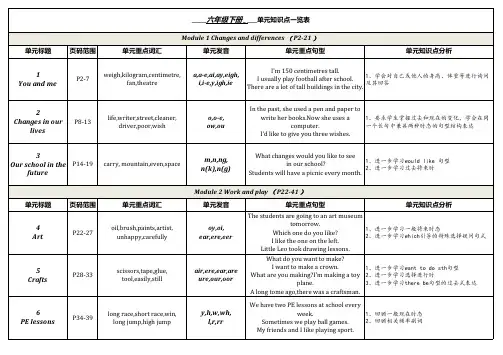
7 Helping others
P42-47
bell,neck,ago,gatekeeper,prais e,praise…for…
Syllables
I can't find my dog. I saw her half an hour ago. I'm going to ask the gatekeeper.
1、进一步学习want to do sth句型 2、进一步学习选择进行时 3、进一步学习there be句型的过去式表达
A long tome ago,there was a craftsman.
y,h,w,wh, l,r,rr
We have two PE lessons at school every
computer.
一个长句中兼具两种时态的句型结构表达
I'd like to give you three wishes.
3 Our school in the P14-19
future
carry, mountain,even,space
m,n,ng, n(k),n(g)
What changes would you like to see
2 Changes in our
lives
P8-13
life,writer,street,cleaner, driver,poor,wish
o,o-e, ow,ou
In the past, she used a pen and paper to
write her books.Now she uses a 1、要求学生掌握过去和现在的变化,学会在同
in our school?
1、进一步学习would like 句型 2、进一步学习过去将来时
小学英语沪教牛津版六年级下册全册知识点整理2
小学英语沪教牛津版六年级下册全册知识点整理2Module Changes and DifferencesIn this module。
we will learn about XXX。
We will also learn some new vocabulary words and phrases.Core Vocabulary:1.Nouns:Kilogram: a unit of measurement for weight (abbreviated as kg)XXX (abbreviated as cm)Fan: XXX who is a big admirer of something。
like a XXXXXX: a place where plays and other performances are heldLife: the state of being aliveWriter: XXX。
stories。
or articlesXXX: a desire or hope for somethingMountain: a large natural n of the earth's surface Space: the area beyond the XXX2.XXX:XXX: to find out how heavy something isDrive: to operate a XXXCarry: to hold or support something while moving it3.Other:Poor: having little money or resourcesEven: used to XXX4.Phrases:Street cleaner: a person who cleans the streetsGo fishing: to fish as a hobby or sportXXX oneself: to have fun or pleasureGet。
(完整版)上海牛津英语六年级第二学期6B英语知识点汇总U1U9
(完整版)上海牛津英语六年级第二学期 6B 英语知识点汇总 U1-U9(word 版可编辑修改)
one and a half hours (注意复数)
两天半 two days and a half two and a half days.
eg. it takes about two and a half hours to fly from Shanghai to Beijing。
哪个城市
18。 by plane=by air;
乘飞机
by ship=by sea;
乘船
by train/ ferry
乘火车/ 渡轮
19。 That’s right。
对的.
* That's all right.
没关系,不要紧.
20。 two days and a half = two and a half days 两天半
4. That’s right 那是对的 That's all right 没关系 You are right 你是对的 All right 好吧
eg。 A: Tokyo is the capital of Japan---——----B: That’s right。/ You are right。
颐和园
第 2 页 共 49 页
(完整版)上海牛津英语六年级第二学期 6B 英语知识点汇总 U1-U9(word 版可编辑修改)
* the Palace Museum
故宫博物院
11. more than= over
超过
* less than = under
少于
12。 15 million people
新沪教牛津版六年级下册小学英语全册单元知识点小结
新沪教牛津版六年级下册小学英语全册单元知识点小结新沪教牛津版六年级下册小学英语期末复习(全册单元知识点小结)Module Changes and differences一、核心词汇1. 名词kilogram千克;公斤(缩略形式kg)centimetre厘米(缩略形式cm)fan(足球、电影等)迷;爱好者theatre剧院life生活writer作家wish愿望;祝愿mountain山;山脉space太空2. 动词weigh有……重;重drive驾驶carry背;提;拿3. 其他poor贫穷的;差的;次的even甚至4. 短语street cleaner 环卫工人二、拓展词汇1. 名词photographer摄影师film胶卷broom扫帚wife妻子fairy仙子;小精灵PS附言(用于信末)dinosaur恐龙2. 动词sweep扫地3. 形容词fantastic极好的digital数码的4. 副词online在线地;在线的5. 代词themselves他们自己;她们自己;它们自己6. 其他taller更高的7. 短语go fishing去钓鱼enjoy oneself玩得愉快;得到乐趣get … in 收割street sweeper扫地车by hand用手right away立即;马上in a short time很快head teacher 校长 a piece of一张;一片have a picnic去野餐better and better越来越好三、核心句型1. I’m 150 centi metres tall. 我身高150厘米。
解读:这是介绍身高的句型。
“主语 + be动词 + 数字 + 长度单位(+ tall).”可以用来介绍某人的身高。
举一反三:My cousin is 154 centimetres tall. 我的堂弟身高154厘米。
Jim is 149 centimetres tall. 吉姆身高149厘米。
上海版牛津英语六年级全重点知识点复习整理[资料]-9页文档资料
上海牛津英语六年级上下册全知识点梳理频度副词always/sometimes/usually/never 是频度副词,提问应该要用How often…?在句中的位置是:放在行为动词的前面,放在be动词的后面。
也可以说“行前系后”。
E.g She is always kind.她总是很善良的。
She always helps other people.她总是帮助其他人。
不能出现这样的句子:She is always helps other people.(×)一句话中不能同时出现两个动词。
并且要注意主谓保持一致,尤其注意第三人称单数不可以忽略。
how often 与how many timeshow often 提问“频率次数+时间范围”how many times 提问“频率次数”e.g. —How often do you exercise? —Twice a week.—How many times have you been there? —Twice.副词表示动作特征或性状特征。
一般用来形容或修饰除了名词和代词以外的词,主要修饰形容词、动词、其他副词和句子。
He looks very happy.(修饰形容词)The old lady is walking slowly now.(修饰动词)Luckily, he got the first prize.(修饰句子)形容词后面+ly构成副词:slow—slowly slight—slightly quick—quickly careful—carefully fierce—fiercely immediate—immediately gentle—gently lucky—luckily happy—happily介词What else do you do with your…?你和你的…还干什么?With是个介词,后面接人称代词时,要用宾格的形式。