
科普版-英语-六年级上册-Lesson 1 Do you always have lunch at twelve教学教案
小学-英语-上册-打印版
小学英语六年级第七册英语教案
Lesson 1 Do you always have lunch at twelve?
教学内容 (Teaching
Material) Book seven
Lesson 1 Do you always have lunch at twelve?
设计人(Designer) Shiyan xiaoxue Shi Yongqin
教学目标
(Teaching Aims) 1、复习What time is it?/It’s time for....
2、通过音标认读本课新单词.
3、运用自由对话、表演等教学活动形式,培养学生学习英语积极的情感态度。
4、通过创设情境,导入与拓展本课书的话题和主题句,逐步培养学生用英语交流的习惯。
5、能够运用主题句型Do you always have lunch at
twelve ? 进行交际
教学重难点
(Main and Difficult
Point)
1.运用新单词就本课句型进行替换练习.
2.通过音标认读新单词.
3.培养学生语感,提高学习兴趣.
教学准备(Teaching Aids) 录音机 多媒体 单词卡片 Period First period
基本教学过程(参考)
(Teaching Procedure) 个性设计
(Personality Design)
Step1 Warm-up
Free talk about personal information
(自由对话营造英语会话氛围,个人信息话题为本课 主题句奠定下基础)
Step2 Revision
Review summary of lesson1-6
Step3 Presentation
1.Learn new words of lesson one
Read all the words of lesson one according to the
phonetic symbols by themselves.
(让学生根据音标自学单词,培养学生自学意识)
2. Learn black words.(Read and spelling)
3. Practice(read the word cards)
Step4 Presentation(Let’s talk)
1. Guiding
Take out a clock and ask : what time is it?
The student will answer: It’s twelve. Then the
teacher say:Oh, yes it’s time for lunch.The teacher 小学-英语-上册-打印版
ask:Do you always have lunch at twelve? Help the
students anawer:Yes, I do.
2. Show the topic
OK,today we will learn lesson one: Do you always
have lunch at twelve?
(Write the topic on the blackboard,以旧引新,循序渐进的导入,减低学习难度)
3.Let’talk__new dialogue
a.Read the dialogue by themslves for one time
b.Look at the books and listen to the tape
C. Listen to the tape and repeat for twice.
(学生先自渎可发现自己不会的地方,便会有目的的去听,然后再重点跟度自己不会的句子,有目的的去听会很有效的提高学生的听力。)
d.Understand
Explain difficult sentences:
I usually have lunch at eleven thirty. Sometimes
I have lunch at twelve.
What do you usually have for lunch?
e.Present__reading
(为学生解决难点后再练读可提高学生阅读兴趣及能力)
Step4 Practice
Reading
[在操练时可采用多种形式,如跟读、分组读、分角色读,通过朗读培养学生正确的语音、语调,而小组内的合作学习,更是新课标中要求培养学生合作精神的具体体现]
Step 5 Consolidation and Creation(巩固与创新)
1.Act the dialogue on the book
(电脑操作:屏幕显示本课对话画面,学生看画面进行对话)
2.Make up new dialogue
(电脑操作:屏幕显示新画面,出示一块钟表及一种食物,学生仿照以上对话编排新的对话,培养学生创新精神及新知识运用能力)
Step6 Class closing
1. Listen to the music__the music room
2.Homework, do exercise 7 on the exercises book.
小学-英语-上册-打印版
教学后记
(Postscript)
教学内容
(Teaching Material) Book seven
lesson 1 Do you always have lunch at twelve?
设计人(Designer) Shi yan xiao xue Shi yongqin
教学目标
(Teaching Aims) 1. 掌握本课主题句型,并进行替换练习。
2. 运用新句型编排对话。
3. 培养学生创造性思维。
教学重难点
(Main and Difficult
Point)
1. 掌握本课句型。并进行替换练习。
2. 让学生创造性的学习新知。
教学准备(Teaching Aids) 录音机 多媒体 Period Second period
基本教学过程(参考)
(Teaching Procedure
Step1. Revision
1. Read the “let’s talk”of this lesson
2. Free talk about dayly life.
What time is it ?
It’s time for...
Do you always ...?
Step2. Presentation
1.Guide
Show pictures
(电脑操作,屏幕显示let’s learn,model图片)
Listen to the tape ,this is “a talk” between Eve
and Tom. Let’s listen how do they
Talk about the same topic about yourself. 个性设计
(Personality Design) 小学-英语-上册-打印版
(通过本环节来拓展学生思维,同时有可把话题引入现实生活,使得学有所用)
speak
3. Act
Now I am Eve ,and you are Tom, please answer my
questions.
T: Do you usually have breakfsat at seven?
Ss: Yes, I do.
T: What do you have for breakfast?
Ss: I usually hve milk and bread.
4. Practice
Ask and answer questions about the other two
pictures,as same as last step, in their groups
5. Check
Ask some students to stand up and act their
dialogues.
munication
Talk about the same topic about yourself.
(通过本环节来拓展学生思维,同时有可把话题引入现实生活,使得学有所用)
Step4 Writing
Copy the model dialogue of let’s learn on the
exercise books.
(在学生问答,听说操练到一定程度是,让学生练习一些句子的书写,进一步加强对该句子的理解和巩固,以真正达到听说为先,读写跟上。)
Step5.Homework
Finish off writing about let’s learn.
教学后记
(Postscript)
教学内容
(Teaching Material) Book seven
lesson 1 Do you always have lunch at twelve?
设计人(Designer) Shi yan xiao xue Shi Yongqin
教学目标 1. Read and understand “Read for fun”
科普版-英语-六年级上册-Lesson1__Do__you__always__have__lunch?练习册
小学-英语-上册-打印版 小学-英语-上册-打印版
小学-英语-上册-打印版 小学-英语-上册-打印版
小学-英语-上册-打印版 小学-英语-上册-打印版
小学-英语-上册-打印版 小学-英语-上册-打印版
小学-英语-上册-打印版 小学-英语-上册-打印版
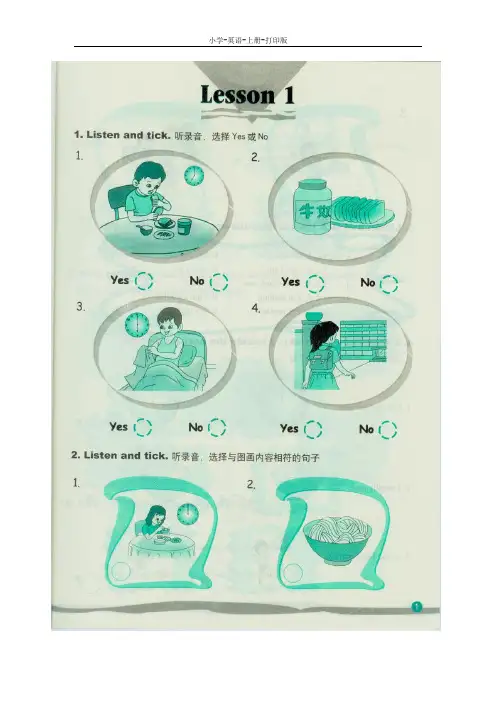
听力录音材料及参考答案
一、听录音,选择Yes或No
1. I usually have breakfast at seven.
2. We usually have milk and eggs for breakfast.
3. He often gets up at six in the morning。
4. She usually goes to school at seven
二、听录音,选择与图画内容相符的句子
1. A I usually have lunch m twelve. B I usually have lunch at twelve thirty.
2. A I usually have rice for lunch. B I usually have noodles for lunch.
3. A The boy is doing morning exercises. B The boy is playing football.
4. A Mingming is swimming. B Mingming is doing his homework.
三、听录音,选择恰当的答语
1. What time is it? 2. Do you usually have lunch at twelve?
3. How are you? 4. What are you doing?
5. How old are you?
科普英语六年级英语上册Lesson1练习题

六年级上册英语练习题(Lesson1)
班级: 姓名:
一、根据汉语意思,补全下面单词:
1、 alw s(总是;一直)
A、ay B、ey C、ur
2、 s lly(通常)
A、u, ur B、u, ua C、a, ua
3、 ly(早的)
A、ear B、aer C、eer
4、 w k (醒来)
A、e, a B、a, y C、a, e
5、 br kfast(早饭)
A、ae B、ea C、ir
二、根据图片,完成句子。
1、John always at six.
2、I usually at 7:00.
3、I often do in the morning.
4、My mother is cooking in the .
5、There isn’t in the school.
三、选择填空
( )1、It’s twelve. It’s time lunch
.A、to B、for C、at
( )2、 you usually have breakfast at seven?
A、Do B、Does C、Are
( )3、-----What do you have breakfast?
-----Rice.
A、to B、at C、for
冀教2011版六年级英语下册《Lesson7AlwaysHaveBreakfast》教案及教学反思
冀教2011版六年级英语下册《Lesson7AlwaysHaveBreakfast》教案及教学反思
教学目标
1. 学生能够理解单词:always, breakfast, lunch,
dinner。
2. 学生能够听懂、会说和会读短语:always have
breakfast, have lunch, have dinner。
3. 能够掌握以下句式的用法:I always have
breakfast at seven o’clock. She has lunch at
twelve o’clock. He has dinner at six o’clock.
4. 提高学生的英语口语表达能力。
教学重点
1. 单词及短语的掌握。
2. 句式的运用。
教学难点
1. 句式的构建与表达。
2. 口语交流的提升。
教学准备
1. 教师准备PPT教案。
2. 学生课本、练习册、录音笔。
教学过程
Step 1. Warm up
1. 与学生进行简单的英语问答,如问候和问今天的天气等。 2. 让学生使用已学过的英语单词及短语进行交流,包括问候及日常用语。
3. 检查学生对上节课学习内容的掌握情况。
Step 2. Presentation
1. 引入新单词及短语:always, breakfast, lunch,
dinner, always have breakfast, have lunch, have
dinner。
2. 用图片展示每个单词的意思及意象。
3. 通过朗读单词和让学生跟读巩固单词及短语的掌握。
Step 3. Practice
1. 学生使用新学单词及短语进行对话和问答,并使用句式I always have breakfast at seven o’clock. She
has lunch at twelve o’clock. He has dinner at six
o’clock.进行练习。
精通版六年级英语上册Unit 1 I go to school at 8:00 Lesson 2 教

1 / 3 Unit 1 I go to school at 8:00 Lesson 2教学设计
一、教学目标
1、能够用英语表述在一天的生活作息。
2、能够正确地听、说、读、写以下单词:
Activity、get up、have breakfast/lunch/dinner、go home/to school、do homework、watch
TV、go to bed
3、 能够正确地听、说、认读以下句子:
1)-What are you interested in? -I am interested in doing ......
2)-What’s his hobby? -His hobby is doing......
4、在适当的情景中正确地听、说、读、写上面的单词和句子:
5、进一步提高学生在学习过程中的时间观念。
二、教学重点
认、读、运用:
(1) 短语:Activity、get up、have breakfast/lunch/dinner、go home/to school、do homework、watch TV、go to bed
(2)句子:
1)-What are you interested in? -I am interested in doing ......
2)-What’s his hobby? -His hobby is doing......
三、教学难点
在适当的情景中正确地听、说、读、写下面单词和句子:
(3)短语:Activity、get up、have breakfast/lunch/dinner、go home/to school、do homework、watch TV、go to bed
(4)句子:
1)-What are you interested in? -I am interested in doing ......
六年级英语上册-Unit-1-I-go-to-school-at-8-00教案-人教精通版
六年级英语上册-Unit-1-I-go-to-school-at-8-00教案-人教精通版
1 / 11 Unit1 I go to school at 8:00.
Lesson 1
课 题 Lesson1 授课时间
课 型 新授课 课时安排 一课时
一、教学目标:
知识与技能: 1、学习简单介绍自己的日常生活和学习情况。2、能够听懂并运用表示日常生活中习惯性、经常性动作的句子: I get up at seven thirty in the morning.I have
breakfast at 8:00. I go to school at thirty past eight.等;会运用以下短语:go home ,
have lunch/dinner ,watch TV ,go to bed
过程与方法:引导学生注意观察e-mail的界面样式,仿写电子邮件介绍自己的日常生活和学习情况。
情感态度与价值观:帮助学生积极主动地参与课堂教学活动,提高与他人合作交往的意识和能力。
二、教学重点:能够用英语向别人简单介绍自己介绍自己的日常生活和学习情况。
三、教学难点:运用本课所学用英语询问和表达自己的日常生活和学习情况。
四、教法:谈话、讨论、引导
五、学法:合作、交流、调查
六、教学准备: Cards and a recorder.
教 学 过 程
Step 1Warm up
1)师生相互问候并作简单的自我介绍,为本课教学内容的学习做好铺垫。
2)猜谜游戏:教师向学生介绍说自己结识了三个外国新笔友,并请学生根据电脑课件中或自制卡片中呈现的各国代表性景物和国旗(三个国家的顺序依次为:Britain, Australia, New Zealand.)猜一猜,他们分别来自哪个国家。教师可参考使用以下语言:I have three new pen pals.They often write e-mail to me
科普版-英语-六年级上册-Lesson 2 What are you going to do tomorrow 教案
小学-英语-上册-打印版
小学-英语-上册-打印版 Lesson 2 What are you going to do tomorrow?
教案
【教学目标】
1.知识目标:
(1)能听说读写单词:map, crayon, China, Saturday, never, another.
(2)理解掌握动词词组和时间短语:see a film, listen to music, clean room, play football,
this evening, after school.
(3)能够听、说、认读句型以下并能对其中的动词和时间短语进行替换操练:
--What are you going to do tomorrow?
--I’m going to do some shopping.
2.情感目标:
(1)在情景创设中培养学生合作学习的能力。
(2)通过多种形式的游戏和活动,激发学生学习英语的兴趣。
(3)通过本课的学习教育学生合理安排自己的活动时间并能将计划付诸于实践。
【教学重点】
1. 掌握所学动词词组:see a film, listen to music, clean room, play football
2. 能在情境中替换going to do 句型中的动词词组和时间短语对将来的活动进行描述,并能与他人进行交流。
【教学难点】
1.能掌握本单元新单词及词组。
2.句型:
--What are you going to this Saturday?
--I’m going to see a film.
【教学过程】
Step 1 Warming up
1.教师课前播放歌曲What Are You Going to Do? 复习上一课所学的be going to do句型。
2.师生进行日常会话,可将重点放在动词短语的问答上,如:
T: What day is it tomorrow? 小学-英语-上册-打印版
科普版英语六年级上册教学Lesson 1课件使用说明
Lesson 1 Are you going to have a birthday party?
一、教学重点
1. 词汇
party, weather, sunny, will, begin, bring (听说认写)
do some shopping (听说认)
2. 语法点
1)一般将来时态
*一般将来时态陈述句、一般疑问句及答语
*现在进行时表将来
2)would … like to do 表示想要做某事
3. 句型
1) I’m going to have a party next Sunday evening.
2) —Are you going to have a birthday party?
—Yes, I am. / No, I’m not.
3) My birthday is coming.
4) —Would you like to come?
—Yes, I’d love to. / No, thanks.
二、课件使用说明
第一课时
Greeting & Revision
P2 回顾之前所学习的提问星期和生日等的句型, 同时与本课所学习的对话主题相关联。
Revision
P3 复习之前所学习的数字和星期的表达方式,也是为学习对话做准备。
Let’s talk
P4 听整段对话,了解大意。可将对话分为两部分来讲解。首先呈现前半部分对话内容,逐句讲解。注:由于本对话只有一个生词party,因此可在讲解对话时直接学习。
P5 重点讲解现在进行时态表将来的句式。
P6 呈现后半部分的对话内容,逐句讲解。
P7 重点讲解一般将来时态的一般疑问句及肯否回答。
P8 重点讲解一般将来时态的陈述句结构。
P9 重点讲解would引导的疑问句。
P10 知识点讲解完毕后,带领学生进行朗读操练。
Practices
科普版英语五年级下册课文(电子档)
精选版doc
. Lesson 1 May I speak to Mary?
Let’s talk
(K=Kate, R=Mrs Read)
R: Hello!
K: Hello! May I speak to Mary?
R: Sorry, she’s not in. Who’s this?
K: It’s Kate. Is that Mrs Read?
R: Yes.
K: Good afternoon, Mrs Read. I want to ask Mary a question. Can you ask her to call me this
evening?
R: OK. May I have your number?
K: Certainly, it’s 8-6-0-4-2-7-5.
R: 8-6-0-4-2-7-5, right?
K: Right. Thank you. Goodbye.
R: Bye.
Listen and say
(T=Tom, D=Dongdong)
T: Hello! Can I speak to Dongdong?
D: This is Dongdong speaking.
T: Hi, Dongdong. This is Tom. What are you doing now?
D: I’m having lunch. What’s up?
T: How about playing football this afternoon?
D: Good idea. What time?
T: What about three o’clock?精选版doc
. D: OK. Where shall we meet?
T: At the sports centre, OK?
D: OK.
Read
Making a pizza
Mom, are you making a pizza? May I help you?
科普版英语六年级上册lesson 1《 are you going to have a birthday party》教案1.doc
1 Are you going to have a birthday party?
【学习目标】
1.能够听、说、认读动词短语:make a cake,invite some friends,sing and
dance,eat noodles. 2.能够听、说、读、写短语:next week,this morning/afternoon/evening;并能够听、说、认读时间短语:tomorrow,tonight. 3.能够在Read and write中合理安排自己的活动时间并与他人进行交流。
【学习重点】
Are you going to do tomorrow? Yes,I’m./No,I’m not.
【学习难点】
能准确理解本课对话内容,并能在实际生活中和别人进行练习。
【学习探究】
1.热身: “演一演、猜一猜”活动 教师准备好动词短语卡片,如:do spots,party,do morning exercises.at home,coming,Would you like...等以及相关道具,如电话、书刊、蛋糕、耳机等。学生抽出一张卡片,根据上面的图片或文字,用动作表现出来,其他学生猜是什么短语。当有学生抽到新短语书刊时,教师可引他借助书刊来进行表演,其他学生由此可能会猜:read books。教师可将at home留到最后自己表演。使用卡片蛋糕和party引出新句型Are you going
yo ...?教师可设立“最佳表演奖”来鼓励学生进行创造性表演,也可设立心有灵犀奖”来鼓励学生踊跃竞猜。 2.教师放课文的录音,学生静听一遍后跟读,随后学生两人一组进行练习。 3.Read and write 教师出示Read and write部分的表格,说:Look! Here are some activities that are good for you.Please
科普版-英语-六年级上册-Lesson1 《Are you going to have a birthday party》教案2
小学-英语-上册-打印版
小学-英语-上册-打印版 Lesson1 《Are you going to have a birthday party?》教案
——第二课时
教学目标
1.能够正确听、说、读、写短语:do my homework,clean my room,see my grandma,watch
TV,visit my friends,take swimming lessons,do some washing;
2.能根据时间表,制定自己的假日计划。
3.能听懂对话,并根据对话内容选出合适的图片。
4.能根据范例,写出自己的周末计划。
教学重点
1.听、说、读、写短语:do my homework,clean my room,see my grandma,watch TV,visit
my friends,take swimming lessons;
2.根据课文范例,制定合理的假日计划。
教学难点
能够使用be going to do句型描述自己的活动计划并用first,next,then,finally来进行写作。
教学方法
任务型教学,图文写作教学法。
教学媒体准备
卡片纸、与本课相关的图片和单词卡片、录音机、实物,、多媒体课件PPT.
课时安排
1课时
教学过程
Step1 热身 (Warm-up)
1.课件图片以复习形式呈现第一个课时中要求学生掌握的重点短语:make a cake, invite
some friends,sing and dance,eat noodles.教师手持单词卡片再次点名抽查学生的掌握情况,做得好的,课堂表现立刻添加星级评价;稍微欠缺的,教师要即时鼓励,并帮助学生克服语言输出困难。
2.再次操练第一个课时的重点句型:Are you going to have a birthday party? 小学-英语-上册-打印版