
北京出版社 小学四下 英语单词
Unit one单词:jazz 爵士乐cat 猫dog 狗parrot 鹦鹉duckling小鸭子rabbit 兔子hamster 仓鼠goldfish 金鱼turtle 乌龟noisy 吵闹的cute 可爱的sometimes 有时favourite 最喜欢的best 最quiet 安静的piano 钢琴drums 鼓guitar 吉他erhu 二胡词组:listen to music 音乐pop songs 流行歌曲country music 乡村音乐folk music 民乐classical music 古典乐after school 放学后in the evening 在傍晚in the afternoon 在下午on weekends 在周末make model planes 做飞机模型go fishing 去钓鱼go roller-skating 玩轮滑watch TV 看电视keep a pet 养宠物play football 踢足球classical music 古典音乐play basketball 打篮球all kinds of 各种各样after work 下班后play the piano 弹钢琴play the drums 打鼓play the guitar 弹吉他句子:1. Do you like music?你喜欢音乐吗?2. Yes. I listen to all kinds of music. But I like pop songs best.喜欢。
我听各种各样的音乐。
但我最喜欢流行歌曲。
(可以替换各种音乐类型)3. Do you keep a cat?你养猫吗?4. No. I don’t keep a cat. I like dog s.(表示一类要用复数,dog 后加了S,一句话中,名词前的a 和名词后的s不能同时用)我不养猫。
我喜欢狗。
(可以替换其他动物单词)5. What do you like to do after school?你喜欢放学后做什么?(换线部分替换after school, in the evening, in the afternoon, on weekends)6. I like to make model planes.我喜欢做飞机模型。
(替换watch TV,go roller-skating, go fishing, go swimming, play football等活动类单词)注意:to 后用动词原形。
7. I like cats. Because they are cute and quiet. I like to play with my cat after school.8. I like to listen to music. Ilike pop music best.I like to 后面用动词原形I like to swim. 我想游泳I like 后面用动词ing,如I like swimming. 我喜欢游泳Unit 2单词:has 有(have的第三人称单数现在式)flu 流感cough 咳嗽leg 腿foot 脚finger 手指arm 胳膊neck脖子knee 膝盖right 右left左afraid 恐怕feel 感觉bad 糟糕,坏wrong 错误matter 问题hurt 受伤,疼痛pill 药丸need 需要temperature 温度dentist 牙医physician 内科医生surgeon 外科医生near 在…附近walk 行走man (pl. men) 男子,男人pill 药丸,药片soon 立刻,不久词组:have a headache 头疼have a high fever 发高烧have the flu? 患流感have a toothache 牙疼sore throat咽喉痛have a stomachache 胃疼see a doctor看医生go swimming游泳take it easy .放松get well 恢复take X-ray 照X光(大写X)in the hospital 在医院runny nose流鼻涕go to school 上学take your temperature 为你量体温open mouth 张嘴blood test 验血句子:1. What’s wrong with you?你怎么了?2. I have a headache.我头疼。
(可以替换其他fever, toothache等)3.He/She has a fever.他/她发烧。
4. Does he have the flu?他得流感了吗?5. I ‘m afraid so.我恐怕这样。
(可以替换其他三单人称和病情)6.What’s the matter with you? You don’t look very well.你怎么了?你看起来不太好。
7. My right leg hurt s badly.我右腿疼的厉害。
(hurt加s,因为前面的leg是单数呈现,如果是legs,就是hurt.)8.What’s the matter with him? He doesn’t look well.他怎么了?他看起来不太好。
9. His legs hurt.他的双腿疼。
10. What’s the matter with her?她怎么了?11. Her left knee hurt s.她的左膝盖受伤了。
12. I am not well. My left foot hurts. I go to the hospital with mum. The doctor gives me some pills. I will get well soon.我不舒服。
我左脚受伤了。
我和妈妈去了医院。
医生给了我一些药,我将很快恢复。
13. He is not well. He has a toothache. He goes to see the doctor with dad. The doctor gives him some pills. He will get well soon.他不舒服。
他牙疼。
他和爸爸一起去看医生。
医生给他开了一些药片。
他会很快好起来。
Unit three单词:excuse 原谅library 图书馆floor 层;地面,地板building 建筑物playground 运动场,操场stair 楼梯clinic 诊所nearby 在附近,不远grey 灰色的,灰白的beside 在...旁边please 请behind 在…的后面cinema 电影院supermarket 超市bookstore 书店restaurant餐馆subway 地铁hospital 医院museum 博物馆station 站far 远方的;久远的far from 离...很远way 路,路线then 然后miss 未见到,错过find 找到,发现plane 飞机welcome 欢迎词组:Excuse me 请问;打扰;劳驾;抱歉tall building高楼drugstrore 药店police station 警察局car park 停车场bus stop 公交车站post office 邮局gas station 加油站gift shop 礼品店shoe shop 鞋店toy shop 玩具店teachers’office 教师办公室classroom building 教学楼Computer lab 计算机室Art classroom 艺术教室Building No.5. 5号楼in front of 在...的前面look for 寻找turn right 右转drive on 继续开车句子:它在那边的那栋楼里。
3、Which floor?它在哪一层?4、It’s on the second floor 在第二层。
5、Is the art classroom on the left of the stairs?艺术教室是在楼梯左边吗?6、No, it is the fifth room on the right of the stairs.不,它是右边的第五个房间。
7、You’re so kind. Thank you so much.你真是太好了。
非常感谢。
8、Not at all./ 8、You are welcome.不客气9、Excuse me, I’m looking fora gas station, where can I find it?打扰一下,我在找一个加油站,请问我在哪里能找到它?10、It’s nearby, it’s right beside that grey building.它就在附近,就在那栋灰色大楼的旁边。
(in front of, behind)11、Excuse me. Can you tell me the way to the bookstore? 请问你能告诉我去书店怎么走吗?first corner. Then drive on for13、Walk on, and then turn right at the second corner.往前走,在第二个路口右转。
14、Playground is on the left of the clinic.操场在诊所的左边15、The zoo is far from the hotel.动物园离旅馆很远*Unit four单词:get help 得到帮助habit 习惯friend 朋友coat 外套beautiful 美丽polite 礼貌speak 说话should 应该also 也public 公共场合,公开的remember 记得wonderteacher 老师Never 从不,绝不Winter 冬天Born 出生Morning 早上Forty 40Short 短的,矮的Granny 老奶奶Policeman 警察Lady 女士Girl 女孩Street 街道Cold 冷的Country 国家,乡村North 北,北方PullFarm 农村Sheep 羊Work 工作Head 头Read 读Bread 面包Easy 简单的Sweater 毛衣Leaf 树叶Heavy 重的Often 经常Tell 告诉Other 其他的Ask 问Listen 听Say 说Understand 理解City 城市Town 城镇Rest 休息Tail 尾巴Safe 安全Look afterBe good atTake care ofThree times a daywalk past 经过,走过make noise in public 在公共场合制造噪音good job 干得好say nice words 说好听的话,表扬In the day 在白天At night 在夜里I hold the door open for you. 我为你把着门。
北京版小学英语一至四年级下册词汇表
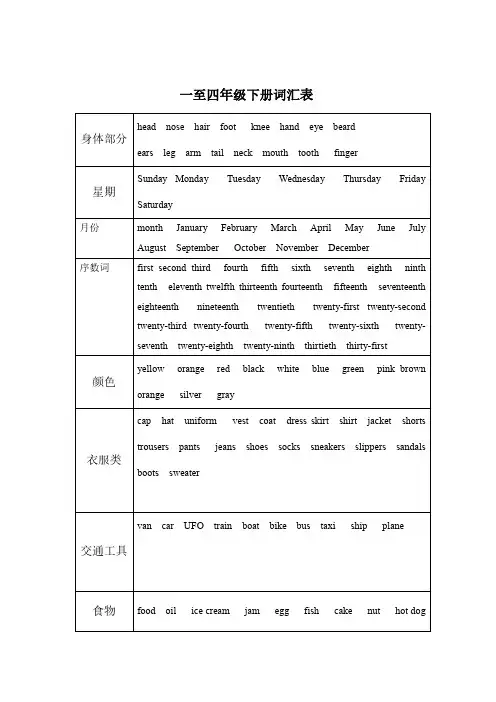
plant trees visit the Great Wall
情态动词 can will shall
nice glad cute big louder same right many little happy
形容词 late sorry tired sour sweet good hungry dear
hold these books drink a lot of water stay in bed lost the key
spill the milk hit somebody
have a good rest read these books do housework watch out
fall into the water cross the street get hit by a car
玩具 toy ball yo-yo kite model plane puppet
天气 四季
节日
season spring summer autumn winter weather cold hot
cool warm sunny rainy windy cloudy snowy
holiday Children’s Day Christmas Day New Year’s Day
celebrate
push step break/broke drop fix kick
lose hit spill check leave happen forget/forgot
play ping-pong play basketball play football
fly a kite plant trees make a cake
北京版英语四年级下册单词
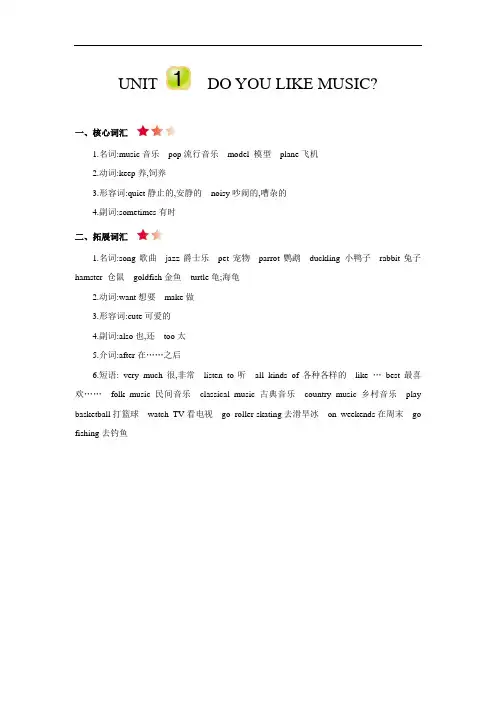
UNIT DO YOU LIKE MUSIC?一、核心词汇1.名词:music音乐pop流行音乐model 模型plane飞机2.动词:keep养,饲养3.形容词:quiet静止的,安静的noisy吵闹的,嘈杂的4.副词:sometimes有时二、拓展词汇1.名词:song歌曲jazz爵士乐pet宠物parrot鹦鹉duckling 小鸭子rabbit兔子hamster 仓鼠goldfish金鱼turtle龟;海龟2.动词:want想要make做3.形容词:cute可爱的4.副词:also也,还too太5.介词:after在……之后6.短语: very much很,非常listen to听all kinds of各种各样的like …best最喜欢……folk music民间音乐classical music古典音乐country music乡村音乐play basketball打篮球watch TV看电视go roller-skating去滑旱冰on weekends在周末go fishing去钓鱼UNIT WHAT’S WRONG WITHYOU?一、核心词汇1.名词: headache头痛fever发烧,发热mouth嘴flu流行性感冒,流感pill药丸,药片man(pl. men)男子,男人2.动词: has有(have的第三人称单数现在式)hurt受伤3.形容词: wrong有毛病的,不正常的right右边的4.副词: soon立刻,不久near在附近二、拓展词汇1.名词: temperature体温;温度stomachache胃痛toothache牙痛cough咳嗽dentist 牙科医生physician内科医生surgeon外科医生leg腿knee膝盖finger手指arm 胳膊neck颈;脖子2.动词: look看起来feel觉得;感觉need需要open张开;打开take服(药),吃(药) walk 行走3.形容词: well健康的bad严重的high高的,超乎寻常的young年轻的4.副词: first首先just仅仅,只是badly严重地5.短语: see a doctor看医生go swimming去游泳take a blood test做血液测试get well恢复健康runny nose流鼻涕sore throat喉咙痛all right好,行take an X-ray拍X光片take it easy放轻松;别紧张UNIT CAN YOU TELL ME THEWAY?一、核心词汇1.名词: library图书馆floor层;地面,地板building建筑物station站way路,线路left左边2.动词: excuse原谅miss未见到,错过3.形容词: grey灰色的,灰白的far远方的;久远的4.副词: nearby在附近,不远then然后5.介词: beside在……旁边二、拓展词汇1.名词: stair楼梯supermarket超市gas汽油corner拐角处2.动词: find找到should应该3.形容词:third第三(个)的fifth第五(个)的kind善良的;仁慈的4.副词: sure当然可以5.感叹词: please请6.代词: one一个7.介词: behind在……后面8.短语: over there在那边on the left在左边not at all不客气look for寻找right beside 正好在……旁边in front of在……前面UNIT IS MAY DAY A HOLIDAY?一、核心词汇1.名词: China中国labour劳动wall墙壁,围墙cinema电影院,电影museum博物馆country国,国家boat小船;艇2.动词: sound听起来……3.介词: about关于;对于二、拓展词汇1.名词: holiday假日,节日Monday星期一September九月park公园gift礼物party聚会calendar日历;历法place地方2.动词: visit参观;游览celebrate庆祝know知道;了解3.形容词: every每一个special特别的;专门的fun有趣的4.介词: on在……5.短语: May Day五一国际劳动节World Earth Day世界地球日Tree-planting Day植树节all over遍及;到处of course当然Dragon Boat Festival端午节UNIT WHERE CAN I FLY TH KITE?一、核心词汇1.名词: front前面,正前方safety安全crowd人群2.动词: push推3.形容词: safe安全的dangerous危险的thick厚的,粗的enough足够的,充足的4.副词: slowly慢速地,缓慢地二、拓展词汇1.名词: kite风筝wire电线square广场grass草;草地flower花ice冰2.动词: fly放飞(风筝)pick捡,拾;采摘may可能,也许fall跌倒;落下skate滑冰;溜冰step踏,踩3.形容词: warm温暖的4.副词: then那么always总是,一直5.介词: into到……里,进入like像during在……期间6.短语: no swimming禁止游泳keep off避开;不接近watch out小心,当心won’t(= will not)将不UNIT 7WHAT HAPPENED TO THE FLOOR?一、核心词汇1、动词break (过去式broke) 打破drop (过去式dropped) 使降落,使落下fix 修理lose (过去式lost) 遗失happen (过去式happened) 发生,碰巧never 从未2、名词:key 钥匙vase 花瓶3.形容词:next 下一个二、拓展词汇1、动词:forget(过去式forgot )spill 洒出,泼出milk hit 碰撞,打wet 把...弄湿kick 打,踢check 检查2、名词:toy 玩具floor 地上house 房子schoolbag 书包bike 自行车cap 帽子mess 一团糟carpet 地毯3、形容词:upset 心烦sad 伤心naughty 淘气的4、副词:、again 又,再5、代词:somebody 某人6、词组搭配:come in请进birthday gift 生日礼物let me check让我检查一下on my way home在我回家的路上on my way to school在我去学校的路上broke the toy打碎了玩具spilled the milk弄洒了牛奶pick some flowers摘了一些花kicked the ball into the lake把球踢进了湖里Thank you 谢谢你You are welcome别客气Sorry 对不起next time下次don’t worry别担心。
四下英语第19课生字组词 北京版

四下英语第19课生字组词北京版The English language is a rich and diverse means of communication that continues to evolve and expand with each passing year. As students progress through their educational journey, they are introduced to an ever-increasing array of vocabulary words that not only broaden their linguistic abilities but also provide them with the tools to effectively express themselves in a variety of contexts. One such example can be found in the 4th grade English textbook used in Beijing, where Unit 19 introduces a captivating collection of new words for students to explore and incorporate into their growing linguistic repertoire.At the heart of this unit lies a focus on the concept of word formation, specifically the process of creating new words by combining existing ones. This is a fundamental aspect of language development, as it allows speakers to convey complex ideas and nuanced meanings through the strategic assembly of familiar building blocks. By delving into this unit, students not only expand their vocabulary but also gain a deeper understanding of the structural and semantic relationships that underpin the Englishlanguage.One of the key vocabulary words introduced in this unit is "compound." A compound word is formed by combining two or more individual words to create a new term with a distinct meaning. For example, the word "sunflower" is a compound word, composed of the words "sun" and "flower." Similarly, "heartbreak" is a compound word that combines "heart" and "break" to convey the emotional anguish of a broken heart. Students learn to recognize and identify compound words, as well as to create their own by blending familiar terms in meaningful ways.Another important concept covered in this unit is the idea of prefixes and suffixes. Prefixes are word parts that are added to the beginning of a root word to modify its meaning, while suffixes are added to the end of a word to change its grammatical function or impart additional meaning. By understanding the roles and functions of these linguistic building blocks, students can unlock the secrets of word formation and expand their vocabulary exponentially.For instance, the prefix "un-" can be added to the word "happy" to create the word "unhappy," which conveys the opposite meaning. Similarly, the suffix "-ful" can be added to the word "wonder" to create "wonderful," transforming the noun into an adjective. Through numerous examples and exercises, students in this unit learn torecognize and apply prefixes and suffixes to create new words, fostering their linguistic creativity and problem-solving skills.In addition to compound words and affixes, this unit also explores the concept of root words and their derivatives. A root word is the core element of a word, to which prefixes and suffixes can be added to create new terms. By understanding the meanings of common root words, students can more easily decipher the meanings of unfamiliar words and make connections between related terms.For instance, the root word "act" can be found in a variety of words, such as "action," "active," "activity," and "actor." By recognizing the shared root, students can infer the core meaning of these words and use context clues to determine their specific applications. This not only enhances their vocabulary but also strengthens their overall comprehension and language skills.Throughout this unit, students are encouraged to engage in various activities and exercises that reinforce the concepts of word formation. These may include identifying compound words, analyzing the structure and meaning of words with prefixes and suffixes, and exploring the relationships between root words and their derivatives. By actively participating in these learning experiences, students develop a deeper understanding of the English language and its underlying principles, equipping them with the linguistic tools theyneed to communicate effectively in a wide range of contexts.Moreover, the vocabulary introduced in this unit is carefully selected to reflect the diverse and dynamic nature of the English language. The words cover a broad range of topics, from everyday objects and actions to more abstract concepts and ideas. This variety not only expands students' lexical knowledge but also helps them to navigate the complexities of the language and apply their newfound skills in meaningful ways.As students progress through this unit and continue to build their vocabulary, they will undoubtedly encounter words that challenge their understanding and push the boundaries of their linguistic abilities. However, it is precisely these moments of discovery and growth that make the learning process so rewarding. By embracing the challenges and actively engaging with the material, students develop a greater appreciation for the richness and nuance of the English language, and they become better equipped to express themselves with clarity, precision, and confidence.In conclusion, the 4th grade English textbook's Unit 19, with its focus on vocabulary development and word formation, represents a significant milestone in the educational journey of students. By delving into the intricacies of compound words, prefixes and suffixes, and root words, students not only expand their lexical repertoire butalso cultivate a deeper understanding of the structural and semantic relationships that underpin the English language. This knowledge, in turn, empowers them to communicate more effectively, think more critically, and engage more deeply with the world around them. As students continue to explore and master the vocabulary introduced in this unit, they will undoubtedly find themselves better prepared to navigate the linguistic landscape of the English language, both now and in the years to come.。
北师大版一年级起点小学英语四年级下(英语单词表)
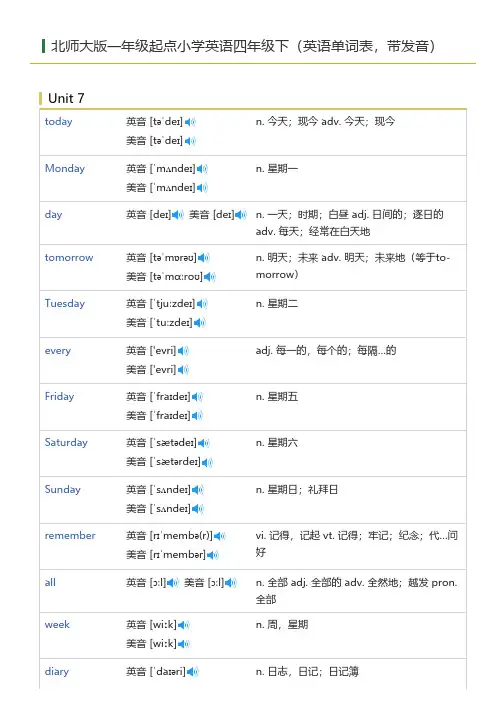
北师大版一年级起点小学英语四年级下(英语单词表,带发音)Unit 7today英音 [t əˈdeɪ]美音 [t əˈdeɪ]n. 今天;现今 adv. 今天;现今Monday英音 [ˈm ʌnde ɪ]美音 [ˈm ʌnde ɪ]n. 星期一day英音 [de ɪ]美音 [de ɪ]n. 一天;时期;白昼 adj. 日间的;逐日的adv. 每天;经常在白天地tomorrow英音 [t əˈm ɒr əʊ]美音 [t əˈmɑːro ʊ]n. 明天;未来 adv. 明天;未来地(等于to-morrow)Tuesday英音 [ˈtju ːzde ɪ]美音 [ˈtu ːzde ɪ]n. 星期二every英音 [ˈevri]美音 [ˈevri]adj. 每一的,每个的;每隔…的Friday英音 [ˈfra ɪde ɪ]美音 [ˈfra ɪde ɪ]n. 星期五Saturday英音 [ˈsæt əde ɪ]美音 [ˈsæt ərde ɪ]n. 星期六Sunday英音 [ˈs ʌnde ɪ]美音 [ˈs ʌnde ɪ]n. 星期日;礼拜日remember英音 [r ɪˈmemb ə(r)]美音 [r ɪˈmembər]vi. 记得,记起 vt. 记得;牢记;纪念;代…问好all英音 [ɔːl]美音 [ɔːl]n. 全部 adj. 全部的 adv. 全然地;越发 pron.全部week英音 [wi ːk]美音 [wi ːk]n. 周,星期diary英音 [ˈdaɪəri]n. 日志,日记;日记簿Unit 8Unit 9Wednesday英音 [ˈwenzde ɪ]美音 [ˈwenzde ɪ]n. 星期三Thursday英音 [ˈθɜːzde ɪ]美音 [ˈθɜːrzde ɪ]n. 星期四visit英音 [ˈv ɪz ɪt]美音 [ˈv ɪz ɪt]n. 访问;参观;逗留 vt. 访问;参观;视察 vi.访问;暂住;闲谈watch英音 [w ɒt ʃ]美音 [wɑːt ʃ]n. 手表;监视;守护;值班人 vt. 观察;注视;看守;警戒 vi. 观看,注视;守侯,看守late英音 [le ɪt]美音 [le ɪt]adj. 晚的;迟的;已故的;最近的 adv. 晚;迟;最近;在晚期hurry英音 [ˈh ʌri]美音 [ˈh ɜːri]n. 匆忙,急忙 v. 仓促(做某事);催促;(朝某方向)迅速移动;迅速处理... o'clock abbr. …点钟(等于of the clock)time英音 [ta ɪm]美音 [ta ɪm]n. 时间;时代;次数;节拍;倍数 adj. 定时的;定期的;分期的 vt. 计时;测定…的时…early 英音 [ˈɜːli]美音 [ˈɜːrli]adj. 早期的;早熟的 adv. 提早;在初期slow英音 [sl əʊ]美音 [slo ʊ]adj. 慢的;减速的;迟钝的 vt. 放慢;阻碍 vi.变慢;变萧条 adv. 慢慢地;迟缓地have dinner 吃晚饭;吃饭;吃正餐fix英音 [f ɪks]美音 [f ɪks]n. 困境;方位;贿赂 vt. 使固定;修理;安装;准备 vi. 固定;注视night英音 [na ɪt]美音 [na ɪt]n. 夜晚,晚上;黑暗,黑夜 adj. 夜晚的,夜间的breakfast英音 [ˈbrekf əst]n. 早餐;早饭 vt. 为…供应早餐 vi. 吃早餐Unit 10always英音 [ˈɔːlwe ɪz]美音 [ˈɔːlwe ɪz]adv. 永远,一直;总是;常常often英音 [ˈɒf(ə)n]美音 [ˈɔːf(ə)n]adv. 常常,时常after英音 [ˈɑːft ə(r)]美音 [ˈæft ər]conj. 在……之后 prep. 在……之后 adj. 以后的adv. 后来,以后morning英音 [ˈm ɔːn ɪŋ]美音 [ˈm ɔːrn ɪŋ]n. 早晨;黎明;初期afternoon英音 [ˌɑːft əˈnu ːn]美音 [ˌæft ər ˈnu ːn]n. 午后,下午never英音 [ˈnev ə(r)]美音 [ˈnev ər]adv. 从未;决不sometimes英音 [ˈs ʌmta ɪmz]美音 [ˈs ʌmta ɪmz]adv. 有时,间或exercise英音 [ˈeks əsa ɪz]美音 [ˈeks ərsa ɪz]n. 运动;练习;运用;操练;礼拜;典礼 vt.锻炼;练习;使用;使忙碌;使惊恐 vi. 运…get up英音 [ɡet ʌp]美音 [ɡet ʌp]na. 起床;起身;站起来;叫…起床have lunch英音 [hæv l ʌnt ʃ]美音 [hæv l ʌnt ʃ]吃午饭;吃午餐;吃中饭go to bed na. 睡;同床;【印】付印do homework做作业;做家庭作业;做功课let's让我们(let us的简写)go to a movie 去看电影;会去看电影;看场电影start英音 [stɑːt]n. 开始;起点 vt. 开始;启动 vi. 出发Unit 11美音 [stɑːrt]enough英音 [ɪˈn ʌf]美音 [ɪˈn ʌf]n. 很多;充足 adj. 充足的 adv. 足够地,充足地 int. 够了!shall英音 [ʃəl; ʃæl]美音 [ʃəl; ʃæl]aux. 应;会;将;必须amusement park n. 游乐场;娱乐园museum英音 [mju ˈzi ːəm]美音 [mju ˈzi ːəm]n. 博物馆dinosaur英音 [ˈda ɪn əs ɔː(r)]美音 [ˈda ɪn əs ɔːr]n. 恐龙;过时、落伍的人或事物idea英音 [a ɪˈd ɪə]美音 [a ɪˈdi ːə]n. 想法;主意;概念free英音 [fri ː]美音 [fri ː]adj. 免费的;自由的,不受约束的;[化学] 游离的 vt. 使自由,解放;释放 adv. 自由地;…close英音 [kl əʊz]美音 [klo ʊz; klo ʊs]n. 结束 adj. 紧密的;亲密的;亲近的 vt. 关;结束;使靠近 vi. 关;结束;关闭 adv. 紧密地by bus na. 乘公共汽车go to the library 无play sports 做运动;进行体育运动;进行体育活动play games 做游戏;玩游戏;捣鬼by bike 骑自行车;骑车;骑单车by car na. 乘电车;乘汽车by taxi乘出租车;坐出租车;打的weather英音 [ˈweðə(r)]美音 [ˈweðər]n. 天气;气象;气候;处境 vt. 经受住;使风化;侵蚀;使受风吹雨打 adj. 露天的;迎风…Unit 12sunny 英音 [ˈs ʌni]美音 [ˈs ʌni]adj. 阳光充足的,和煦的;快活的;性情开朗的farm 英音 [fɑːm]美音 [fɑːrm]n. 农场;农家;畜牧场 vt. 养殖;耕种;佃出(土地) vi. 种田,务农;经营农场cloud 英音 [kla ʊd]美音 [kla ʊd]n. 云;阴云;云状物;一大群;黑斑 vt. 使混乱;以云遮敝;使忧郁;玷污 vi. 阴沉;乌云…rain 英音 [re ɪn]美音 [re ɪn]n. 雨;下雨;雨天;雨季 vt. 大量地给;使大量落下 vi. 下雨;降雨weather report na. 气象通报;天气预报cloudy英音 [ˈkla ʊdi]美音 [ˈkla ʊdi]adj. 多云的;阴天的;愁容满面的fun英音 [f ʌn]美音 [f ʌn]n. 乐趣;玩笑;有趣的人或事 adj. 供娱乐用的vi. 开玩笑stay at home na. 长时间内不在rainy英音 [ˈre ɪni]美音 [ˈre ɪni]adj. 下雨的;多雨的snowy英音 [ˈsn əʊi]美音 [ˈsno ʊi]adj. 下雪的,多雪的;被雪覆盖的;洁白无瑕的windy英音 [ˈw ɪndi]美音 [ˈw ɪndi]adj. 多风的,有风的;腹胀的;吹牛的fine英音 [fa ɪn]美音 [fa ɪn]n. 罚款 adj. 好的;优良的;细小的,精美的;健康的;晴朗的 vt. 罚款;澄清 adv. 很好地…sky英音 [ska ɪ]美音 [ska ɪ]n. 天空;顶点 vt. 把…投向空中;把…挂得过高 vi. 踢或击高空球;把桨叶翘得过高;飞涨。
北京版英语四年级重点单词
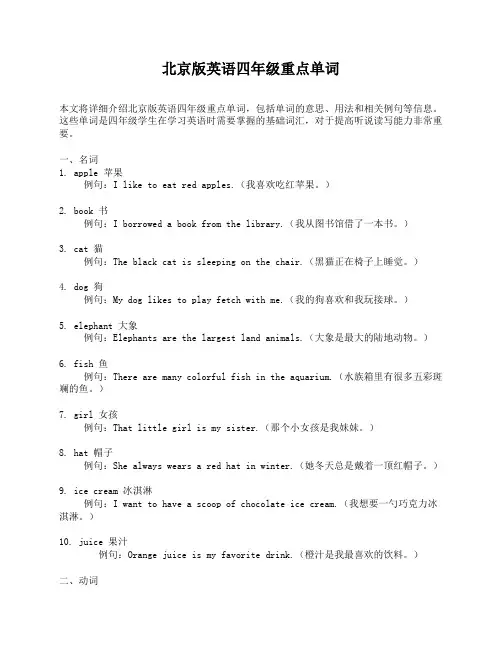
北京版英语四年级重点单词本文将详细介绍北京版英语四年级重点单词,包括单词的意思、用法和相关例句等信息。
这些单词是四年级学生在学习英语时需要掌握的基础词汇,对于提高听说读写能力非常重要。
一、名词1. apple 苹果例句:I like to eat red apples.(我喜欢吃红苹果。
)2. book 书例句:I borrowed a book from the library.(我从图书馆借了一本书。
)3. cat 猫例句:The black cat is sleeping on the chair.(黑猫正在椅子上睡觉。
)4. dog 狗例句:My dog likes to play fetch with me.(我的狗喜欢和我玩接球。
)5. elephant 大象例句:Elephants are the largest land animals.(大象是最大的陆地动物。
)6. fish 鱼例句:There are many colorful fish in the aquarium.(水族箱里有很多五彩斑斓的鱼。
)7. girl 女孩例句:That little girl is my sister.(那个小女孩是我妹妹。
)8. hat 帽子例句:She always wears a red hat in winter.(她冬天总是戴着一顶红帽子。
)9. ice cream 冰淇淋例句:I want to have a scoop of chocolate ice cream.(我想要一勺巧克力冰淇淋。
)10. juice 果汁例句:Orange juice is my favorite drink.(橙汁是我最喜欢的饮料。
)二、动词1. ask 问例句:Can I ask you a question?(我可以问你一个问题吗?)2. buy 买例句:I want to buy a new toy car.(我想买一辆新玩具车。
精通版英语四年级下单词表 -回复
尊敬的知友,您好!今天我想共享一下四年级下学期的英语单词表内容,希望能给大家带来一些帮助。
四年级下学期的英语单词主要包括动物、食物、颜色、天气、家庭等方面的词汇,下面我将按照不同分类逐一列举出来。
1. 动物类1) cat 猫2) dog 狗3) rabbit 兔子4) elephant 大象5) giraffe 长颈鹿6) monkey 猴子7) lion 狮子8) tiger 老虎9) panda 熊猫10) bear 熊2. 食物类1) apple 苹果2) banana 香蕉3) orange 橙子4) watermelon 西瓜5) bread 面包6) milk 牛奶7) egg 鸡蛋8) rice 米饭9) cake 蛋糕10) noodle 面条3. 颜色类1) red 红色2) yellow 黄色3) blue 蓝色4) green 绿色5) black 黑色6) white 白色7) pink 粉红色8) purple 紫色9) brown 棕色10) orange 橙色4. 天气类1) sunny 晴天2) cloudy 多云3) r本人ny 雨天4) snowy 下雪的5) windy 有风的6) stormy 暴风雨的7) foggy 雾蒙蒙的8) hot 炎热的9) cold 寒冷的10) warm 温暖的5. 家庭类1) father 父亲2) mother 母亲3) brother 兄弟4) sister 姐妹5) grandfather 爷爷6) grandmother 奶奶7) uncle 叔叔8) aunt 阿姨9) cousin 表兄弟/表姐妹10) family 家庭以上就是四年级下学期英语单词表的内容,希望对大家有所帮助。
祝大家学习进步!谢谢!*注:以上内容仅供参考,具体单词表内容以当地教材为准。
*尊敬的知友,欢迎继续阅读关于四年级下学期英语单词表的内容。
四年级下英语 unit 5-6 短语归纳 北京版
1.visit the Great Wall参观长城2.go to cinemas去电影院3.celebrate this day庆祝这天4.get gifts 得到礼物5.hold parties 举办联欢会6.go to a science museum 去科学博物馆7.see lantern shows看灯展8.pick up litter 捡垃圾9.plant trees 植树10.go to a puppet show 去看木偶表演11.go to an amusement park 去游乐场12.all over the country 全国13.have drago n boat races 举行龙舟比赛14.the first Monday 第一个星期一15.every year每年16.on May 1st在5月1日bour Day 劳动节18.Children’s Day 儿童节19.Women’s Day 妇女节20.World Earth Day世界地球日21.Tree-planting Day植树节22.Dr agon Boat Festival端午节23.the Chinese c alender中国农历24.vis it f riends and relatives 看望亲戚朋友25.in front of在……・前面26.excuse me打扰一下27.cross the street横穿街道28.fly the k ite放风筝29.watch out for..,注意30.fall into the water掉进水里31.be careful小心32.hurt yourself伤到你自己33.pick flowers摘花34.in the crowd在人群中35.on thin ice在薄冰上36.this afternoon今天下午37.the thick crowd拥挤的人群38.step on o ne' s foot踩某人的脚39.I'm afraid not.恐怕不能。
英语4年级下册单词表
小学四年级英语下册单词表一、单词表1.playground /ˈpleɪɡraʊnd/ 操场-解析:play(玩)+ground(地面),是孩子们玩耍的地方。
-例句:We play games on the playground.(我们在操场上玩游戏。
)2.teacher's office /ˈtiːtʃəz ˈɔːfɪs/ 教师办公室-解析:teacher(教师)+’s(……的)+office(办公室)。
-例句:The teacher is in the teacher's office.(老师在教师办公室里。
)3.library /ˈlaɪbrəri; ˈlaɪbri/ 图书馆-解析:存放书籍供人阅读和借阅的地方。
-例句:We can borrow books from the library.(我们可以从图书馆借书。
)4.art room /ɑːt ruːm/ 美术教室-解析:art(美术)+room(房间),用于上美术课的教室。
-例句:We draw pictures in the art room.(我们在美术教室里画画。
)5.music room /ˈmjuːzɪk ruːm/ 音乐教室-解析:music(音乐)+room(房间),上音乐课的地方。
-例句:We sing songs in the music room.(我们在音乐教室里唱歌。
)puter room /kəmˈpjuːtə ruːm/ 计算机房-解析:computer(计算机)+room(房间),有很多电脑供学生使用。
-例句:We have computer classes in the computer room.(我们在计算机房上计算机课。
)7.breakfast /ˈbrekfəst/ 早餐;早饭-解析:break(打破)+fast(禁食),早晨打破禁食的一餐。
-例句:I have bread and milk for breakfast.(我早餐吃面包和牛奶。
四年级下册英语课 北京版
四年级下册英语课北京版Unit 1 My School LifeIn this unit, we will learn about our school life in Beijing.Lesson 1: School FacilitiesOur school in Beijing is well-equipped with various facilities. We have a library, a computer room, a science lab, and a playground. The library is a quiet place where we can read books and do research. The computer room is where welearn how to use computers and explore the internet. In the science lab, we conduct experiments and learn about different scientific concepts. The playground is where we have PEclasses and play sports during break time. The schoolfacilities make our learning experience enjoyable and engaging.Lesson 2: Daily RoutinesEvery day, we follow a set of daily routines at school.We start our day with morning exercises, which helps us stay active and fit. After that, we have Chinese class, where we learn how to read and write Chinese characters. Then, we have math class, where we solve problems and improve our mathematical skills. After lunch, we have English class,where we practice speaking, listening, reading, and writingin English. In the afternoon, we have other subjects like science, history, and art. Our daily routines keep us organized and help us make the most out of our time at school. Lesson 3: School EventsThroughout the year, our school organizes various events and activities. One of the most exciting events is the SportsDay. On this day, students participate in different sports competitions and cheer for their teams. We also have anannual Talent Show, where students showcase their unique talents, such as singing, dancing, and playing musical instruments. Another important event is the Cultural Exchange, where we learn about different cultures and traditions from around the world. These events bring us together as a school community and create wonderful memories.Lesson 4: My Favorite SubjectIn this lesson, we share our favorite subjects. Some ofus love Chinese because it helps us understand our cultureand heritage. Others enjoy math because it challenges us to think critically and solve problems. English is also afavorite subject for many of us, as it opens up opportunities to communicate with people from different countries. Science, history, and art are also subjects that spark our curiosity and creativity. Each subject has its own unique charm, and we appreciate the diversity in our curriculum.Lesson 5: My School LifeIn this lesson, we reflect on our overall school life in Beijing. We have made new friends, learned new knowledge and skills, and grown both academically and personally. Our teachers have been supportive and inspiring, guiding us every step of the way. We cherish the memories we have created together in our school, and we look forward to the futurewith excitement and determination to continue our educational journey.By following these lessons, we gain a deeperunderstanding of our school life in Beijing. We appreciatethe facilities, routines, events, and subjects that shape our learning experience. Our school provides us with a nurturingenvironment to grow and succeed. We are grateful for the opportunities and the memories we have made in our four years of studying English in Beijing.。
北京四年级英语下册单词表
北京四年级英语下册单词表Unit 1Young (年轻的)funny (滑稽可笑的)tall (高的)strong (强壮的)kind (和蔼的;亲切的)old (年老的)short (矮的)thin (瘦的)Mr (先生)like (像;喜欢)strict (严格的)smart (聪明的;巧妙的)active (积极的;活跃的)quiet (安静的;文静的)very (很;非常)but (但是)Unit 2Monday (星期一)Tuesday (星期二)Wednesday (星期三)Thursday (星期四)Friday (星期五)Saturday (星期六)Sunday (星期天)day (天;日子)have (有;吃)on (在…..时候)do homework (做作业)watch TV (看电视)read books (读书)Unit 3eggplant (茄子)fish (鱼)green beans (青豆)tofu (豆腐)potato (土豆)tomato (西红柿)for (为;给)lunch (中餐;午饭)we (我们)tasty (好吃的)sweet (甜的)sour (酸的)fresh (新鲜的)salty (咸的)favourite (最喜爱的;特别喜爱的)they are (他们是)fruit (水果)grape (葡萄)Unit 4Cook the meals (倒垃圾)water the flowers (浇花)sweep the floor (扫地)clean the bedroom (打扫卧室)make the bed (铺床)set the table (摆饭桌)wash the clothes (洗碗碟)do the dishes (收拾衣服)use a computer (使用计算机)Unit 5curtain (空调)trash bin (垃圾箱)closet (壁橱)mirror (镜子)end table (床头柜)bedroom (卧室)kitchen (厨房)bathroom (卫生间)living room (客厅)in (在…里面)on (在…上面)under (在…下面)near (在..旁边)behind (在…后边)clothes (衣服)Unit 6river (河流)flower (花)grass (草)lake (湖泊)forest (森林)path (路)park (公园)picture (照片)house (房子)bridge (桥)tree (树)road (公路)building (建筑物)clean (干净的)。