
人教版必修5英语Unit1_听说课 教学设计(1)
Unit1 听说课公开课教学设计(二)1教学目标一、通过完成短文填空及观察图片猜词, 全班学生能够准确的记忆有关航空航天事业的词汇。
二、借助视频片段的播放及教师所提供的相关语言支持, 全班学生能够完全掌握本节课的全部描述人物性格特点的词汇及相关句型。
三、通过完成本节课所设置的各项听说任务, 全班学生学会运用听前预测, 快速记录有效信息并加工信息, 在说的过程中, 培养学生形成良好的语感和正确的语音语调。
四、在辅助信息和语言支持下, 全班学生能够准确获取听力有效信息并流畅连贯地用英语输出。
五、鼓励学生向钱学森学习, 学习他探索、钻研、无畏的科研精神。
未来工作的话题使学生认真思考自己的未来, 增强学习动力。
在活动的过程中培养学生相互配合的团队合作精神。
2学情分析学生情况分析: 全班学生的基础知识扎实, 学习能力强。
大部分同学学习英语的兴趣较高。
高二学生思维活跃, 敢于提出不同见解, 两年的高中英语学习使学生储备了相当数量的词汇和英语知识, 能较好地展开话题讨论, 各抒己见。
学生对科学家人物介绍类的文章已经了解和熟悉, 而且这个话题也是学生所感兴趣的, 特别是对于理科班的学生来说, 谈论他们未来想要从事的科学工作, 学生会有比较高的积极性。
学生语音是否准确, 语言是否流畅, 是否能听懂信息进行问答, 能否及时记录关键信息点并完成相关听力任务等等这些都是教师在设计听说课活动时要考虑的问题。
一些学生会在Speaking语言输出时, 缺乏自信心, 总是怕出错误, 所以教师所设计的活动应当符合学生的认知规律, 以学生的生活体验和所感兴趣的事物为出发点, 由浅入深, 层层递进, 逐步培养和提高学生运用英语进行表达的能力。
教师采取多媒体教学, 运用多种教学方法和手段激发学生交流和学习的兴趣, 希望学生始终处于积极、主动的思考、探究和创造的状态中, 创造充满活力的课堂气氛。
教学内容分析: 本节听说课是围绕人教版《普通高中课程标准实验教科书-英语必修五》第一单元第三课时Using language 部分的主要内容展开的。
该单元的话题是围绕“科学家如何以探索、钻研、无畏的科研精神验证未知的科学道理”而展开的。
其中本课时是单元教学中的语言运用(Using language)部分, 它涵盖了听说读写四个方面。
根据课堂时间的安排及语言教学规律, 这节课的设计重点集中在听和说两方面。
听的部分是通过两个学生谈论科学家钱学森的故事, 使学生了解科学家的生活经历, 并通过回答问题训练学生的分析和解决问题的能力。
说的部分是通过学生讨论将来选择什么科学工作, 需要什么样的教育, 品格以及经历来完成提问和应答的交际功能任务训练, 也实施了对学生的德育教育。
由于本节课的听力材料是关于科学家钱学森的事迹, 学生有所了解但很有限, 内容比较难。
教材中的听力教学设计是:①要求学生听完Part 1和Part 2后来概括听力材料的main idea;②要求学生听完Part1后回答有关钱学森的一些问题;③要求学生听完Part 2后填充表格中关于中国航天成就及人物理想的信息。
这样的安排让学生在听完相关材料完成所设计的练习是比较困难的。
Main idea 是对一段材料的高度总结, 学生需要在真正听懂整段材料后才能进行概括;此外本段听力材料是由两个部分组成的, 让学生听完后直接概括出main idea更是增加了难度。
听力刚开始这样的设计难度太大, 不利于学生完成任务。
教材所提供的主旨概括题, 问答练习题和表格填充题没有任何辅助信息或语言支持, 学生在组织句子以提供正确答案上会用时很多, 这样反而忽略了听力的本质内容。
整个听力材料是两个学生的对话, 其中既有对他们各自理想和中国航天的成就的谈论, 又贯穿着钱学森的主要信息, 因此结合学生的实际情况, 听力教学的要求及本节课听力材料的内容, 教师除了要分别播放教材中的Part 1和Part 2以外, 还要播放编辑合成后的Part 1和Part 2, 便于学生有针对性的获取信息。
本节课的听力教学部分为四个环节处理:①播放Part 1, 学生主要获取细节信息:关于两个学生未来想要做的工作和两个后面口语输出用到的句型;②播放Part 2, 学生主要获取细节信息:关于中国的航空航天成就和一个学生的ambition;③播放教师编辑合成后的Part 1和Part 2, 学生主要获取细节信息:钱学森的个人信息;④再次播放教师编辑合成后的Part 1和Part 2, 学生获取听力材料的main idea。
本节课所设计的各项听说活动, 教师在必要的地方都增加了辅助信息和相关的语言支持, 以使学生顺利完成本节课的各项任务。
3重点难点教学重点:一、在听力过程中培养学生根据图片预测听力内容, 获取有效信息并对信息进行处理的能力。
二、在说的过程中培养学生良好的语感, 正确的语音语调, 熟练运用教师所提供的语言支持进行口头表达的能力。
教学难点:一、指导学生快速地记录有用信息。
二、设置利于学生开口用英语表达的情境。
4教学过程4.1教学步骤及意图4.1.1教学活动活动1【导入】步骤1:Lead-in引入部分教师呈现一篇短文。
要求学生填充空白内容并根据短文内容猜测所涉及的科学家。
(3 minutes)设计意图: 本单元教材Using Language--Listening and speaking(教材P6)的听力教学部分所提供的第一个问题是:What do you know about Qian Xuesen? Before you listen to the tape, look at the picture and exercises and predict the content of the listening.对于科学家钱学森的事迹, 学生有所了解但很有限, 而且学生对航天航空事业中的一些常用词汇也掌握的较少, 这些都限制了他们用英语表达有关科学家钱学森的事业, 成就等情况。
所以教材中提供的这样的问题不易于学生回答, 很容易使他们在本节课开始时就对后继的听力部分产生畏惧心理, 丧失对听力部分的兴趣和信心。
因此, 教师补充一篇关于介绍钱学森的短文, 并在短文中挖空, 改编成高考新题型-语法填空的形式, 这样既拓展学生的阅读视野, 激活学生相关的背景知识, 又增强学生对于一些语法结构的重视程度, 也让学生在针对特定人物和话题的篇章中接触到高考新题型并进一步熟悉该题型。
结合短文内容, 教师要求学生猜测所描述的科学家, 学生很容易得出答案, 这样的导入也就成功的激活学生已有的关于钱学森的背景知识, 扩充学生对钱学森的了解, 降低学生对听力的焦虑程度, 激发学生想要更多了解钱学森及其事业和成就的好奇心和求知欲, 为本节课的听力教学任务奠定基础。
活动3【活动】步骤3:While-listening部分:While-listening部分:Focus on detailed information 播放听力材料时, 提示学生关注特定细节信息并完成后面相应的选择题和句子填充题。
First Listening--Focus on Steve Smith and Yapping’s ideal job in the future; t wo key sentence patterns. (2 minutes)设计意图:通过第一步Lead-in和第二步的Pre-listening活动的准备, 本节课顺利进入While-listening部分。
首先要求学生捕捉听力材料中的细节信息, 即Steve Smith和Yuping的未来理想工作是什么;其次根据听力材料内容来补全两个句子的信息。
这样的设计是为了让学生带着问题有目的, 有针对性地获取信息。
针对听力材料中涉及Steve Smith和Yuping的信息设置两个选择题;为了更好地服务于本课的输出任务, 为Speaking部分提供语言支持, 设置两个句子信息填充题来让学生听过精听得到本节课语言输出时用到的两个基本句型, 为speaking输出奠定基础。
活动4【活动】步骤4:While-listening部分While-listening部分:Focus on detailed information 第二遍播放听力材料, 提示学生关注特定细节信息并提取关键词完成后面相应的填空题。
Second Listening--Focus on China’s achievements in space industry and Steve Smith’s ambitions (2 minutes)设计意图: 在听完Part 2后, 教材中直接提供一张表格让学生填内容(如下所示)China’s achievements in space_________________________________________ ______Steve Smith’s ambitions______________________________________________ _______表格中没有任何辅助信息, 即使学生从听中获得了表格所需的内容, 也仍需花费较多时间组织答案, 即在组织句子上耗时, 这样容易使学生忽略了听力的本质内容, 所以教师将表格简单化, 提供相关辅助信息, 以填空的方式呈现给学生, 这样有助于学生在听中筛选所需信息, 也为后面的听写奠定基础。
活动5【活动】步骤5:While-listening部分:Focus on detailed information 第三遍播放听力材料, 提示学生关注科学家钱学森的个人信息并提取关键词完成后面相应的填空题。
Third Listening—Focus on Qian Xuesen’s personal information (3 mi nutes)设计意图: 教材中要求学生在听完后直接回答三个问题:1. What did Qian Xuesen study first?2. What experience did he get in America that was useful for China?3. What was Qian Xuesen’s main achievement when he returned to China? 第1个问题学生容易回答, 而第2, 3两个问题在教材未提供其它辅助信息的情况下,学生组织语言并形成答案需要很多时间, 不易于听力的顺利进行。
教师从听力材料中挑出较难的句子并把它们设计成短文填空练习, 让学生边听边填空。
短文中的句子都是听力材料中的重点和难点。
教师所设置的空格都是学生们所熟悉的单词。
Unit5+口语课教案 高中英语人教版(2019)必修第一册 (1)

Unit5口语课教案Explore Different Kinds of English一、Teaching Objective:The main objective of this lesson is to explore different kinds of English language skills and techniques. Students will be able to understand and apply various forms of English, such as spoken, written, and creative expression. This will help them improve their overall English language proficiency.二、Teaching Points:1. Different forms of English language skills and techniques2. Importance of mastering different types of English3. Strategies for improving English language skills in each form4. Engaging in group discussions and activities to practice these skills三、Teaching Key Points:1. Understanding the different forms of English language skills and techniques2. Applying these skills in real-life situations3. Improving overall English language proficiency through diverse learning methods四、Difficulties:1. Overcoming the fear of making mistakes when practicing different forms of English2. Maintaining focus and engagement during group discussions and activities五、Student Analysis:This class is designed for high school students who are at an intermediate level of English language proficiency. They should have a basic understanding of grammar rules and vocabulary, but may struggle with applying these skills in real-life situations or expressing themselves creatively in English.六、Teaching Process:1. Introduction (5 minutes)-Briefly introduce the topic of exploring different kinds of English and their importance in today's globalized world.- Discuss common challenges that students may face when learning English and how this class can help overcome them.2. Formative Assessment (10 minutes)-Have students work in pairs to discuss their favorite ways to practice English (e.g., reading, writing, listening, speaking) and why they enjoy these activities.-Encourage students to share examples of how they have used English in their daily lives.3. Learning Objectives (15 minutes)-Introduce the different forms of English language skills and techniques (e.g., spoken, written, creative expression).-Discuss the benefits of mastering each form and how it can improve overall English language proficiency.- Provide examples of each form and discuss strategies for improving each skill.4. Application (20 minutes)-Break students into small groups and assign each group a specific form of English language skill or technique to explore (e.g., poetry writing, storytelling, debate).- Have students engage in group discussions and activities related to their assigned skill, using a variety of resources (e.g., books, articles, videos).- Encourage students to share their findings with the class and provide feedback on each other's work.5. Closing (5 minutes)- Review the key points covered in the lesson and emphasize the importance of practicing different forms of English in order to improve overall proficiency.- Ask students to reflect on what they learned in this lesson and what they plan to do differently moving forward to improve their English language skills.七、Homework:1. Write a reflection paper on the different forms of English language skills and techniques covered in the lesson. Discuss how you can apply these skills in your own life to improve your overall English language proficiency.2. Practice a new form of English language skill or technique outside of school by setting aside time each day to engage in the activity (e.g., reading a book in English, watching a movie without subtitles, joining an online forum to practice writing).3. Share your progress with your teacher or classmates by presenting your reflection paper or sharing your experiences practicing a new form of English language skill or technique.。
英语人教版五年级上册Unit1 A Let’ s talk教学设计
Unit1 A Let’ s talk教学设计(A. Let’ s try A. Let’ s talk)一、教学目标1. 能听、说、认读单词“know”和“our”。
2. 能听懂、会说句子“Do you know Mr Young? ”,“He’ s our music teacher.”,“I like funny teachers.”。
3. 能听懂、会唱歌曲“Who’ s your teacher?”。
4. 能完成“Let’ s try”部分的听力任务。
5. 能与同学谈论各科老师的性格特征。
二、教学重难点(一) 重点1. 能听、说、认读单词“know”和“our”。
,2. 能听懂、会说句子“Do you know Mr Young?”,“He’ s our music teacher.”,“ I like funny teachers.”。
(二) 难点1. 单词“our”的含义和运用。
2. 能灵活运用所学知识谈论各科老师的性格特征。
三、教学准备1. 教师准备多媒体课件、词卡、A. Let’ s talk课文情景动画或音频MP3。
2. 学生准备画笔和画纸、人物头饰。
四、教学过程(—) 课前热身(Warm-up)1. 日常口语练习。
T: Hello, boys and girls.Ss: Hello, Mr/Miss/Mrs...T: How are you today?Ss: Fine, thank you. And you?T: I’ m fine, too.2. 检查作业。
学生在四人小组内依次出示自己家人或朋友的照片,向其他小组成员介绍照片中人物的体貌和性格特征,然后教师请两三位小组代表上讲台向全班学生介绍,如: S: This is a pic ture of my mother. She’ s tall and thin. She’ s beautiful and polite.(二) 课前预习(Preview )1. 教师拿出单词old, young, kind, strict, polite的词卡,然后随机展示词卡,学生迅速说出与词卡中单词相对应的汉语意思。
人教课标版高中英语必修5 Unit1_听说课_名师课件

John: What personality will be needed for that job? Li Ming: I think I need to be patient for my ideas which will take a long time to develop. I also need to be creative enough to have good ideas. John: What experience will be most useful to you?
patient, creative, hard-working, co-operative, confident, brave, positive, pleasant, polite, determined, energetic, strict with……
Group work
In groups discuss a scientific job you might choose in the future. Questions and expressions in the table on page 6 may help you begin and make the dialogue with your partner.
3. What was Qian Xuesen’s main achievement when he returned to China? When Qian Xuesen returned to China he set up a space institute to begin training people in how to design and build rockets.
Unit 1 Great Scientist
人教版PEP小学英语五年级下册Unit 1 教案(一)
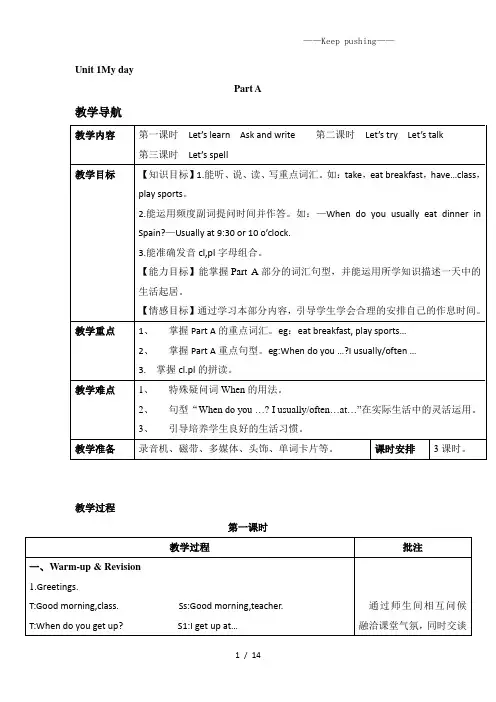
(1)教师请同学说说他的时间表,教师板书,并与Pedro的作比较。如:
S1 Pedro
6:30 a.m. get up 7:00 a.m. do morning exercises
7:00 a.m. eat breakfast 8:00 a.m. eat breakfast
2.能利用所学句型询问和表达周末做了什么事。如:—What do you do on the weekend?—I usually/often…on the weekend.
2.学习Let’s talk。
(1)播放Let’s talk录音。边播放边请同学们思考问题:When does Pedro finish class in the morning?When does Pedro go back to school after lunch?When does Pedro usually eat dinner in Spain?
T:When do you get up? S1:I get up at…
T:When do you eat breakfast? S2:I eat breakfast at…
2.Tell your partner about your tim Nhomakorabeatable.
通过师生间相互问候融洽课堂气氛,同时交谈内容也引出了新课。
Part B
教学导航
教学内容
第一课时Let’s learn Do a survey第二课时Let’s try Let’s talk
第三课时Read and write Let’s check
教学目标
【知识目标】1.能听、说、读、写clean my room, go for a walk等单词短语,并能熟练的掌握运用。
英语人教版五年级上册Unit1ALet’slearn教学设计

Unit1 A Let’s learn教学设计(A. Let’s learn A. Ask and answer)一、教学目标和“strict”。
,“kind”,“young”1. 能听、说、读、写单词“old”,“funny”2. 能在创设的实际情景中灵活运用句型“Who’ s your art/English/maths/进一步了解各science/music… teacher?”,“Is he/she young/old/ funny/kind/strict/…科老师的欲望,融洽师生关系。
部分的对话任务。
3. 能完成“Ask and answer”4. 培养学生自主学习、合作学习的意识和能力,帮助学生树立学好英语的自信心。
二、教学重难点(一) 重点,和“strict”。
,“kind”,“young”,“funny”1. 能听、说、读、写单词“old”2. 能在创设的实际情景中灵活运用句型“Who’s your art/English/match/science/music/… teacher? , “Is he/she young/old/funny/kind/strict/…?”3. 在师生互动、生生互动的过程融洽师生关系。
(二) 难点1. 利用教材提供的对话情景,以旧引新,引导学生进入学习状态。
2. 能准确判断各科老师的性格。
三、教学准备课文情景动画或音频MP3、1. 教师准备多媒体课件、单词卡片、 A. Let’s learn各科教材图片和各科老师的照片。
2. 学生准备画笔和画纸。
四、教学过程(―) 课前热身(Warm-up)1. 日常口语交际T: Good morning, everyone. Welcome back to school. How are you today?Ss: Fine, thank you.T: Nice to see you again.Ss: Nice to see you, too.T: This is the first class of our new term. What grade are you in now?Ss: We’re in Grade Five now.2. 简单介绍各科老师.T: Now let me ask and you answer. (出示英语书)What’s this?Ss: It’s an English book.T: And I teach you English. So I am your...Ss: English teacher.然后教师出示其他科目老师的照片和相应的课本,和学生进行类似的对话。
【教案】Unit+5Listening+and+speaking+教学设计人教版高中英语必修第一册
主题单元分课时教学设计课题指向学科核心素养的高中英语主题式教学 (第1 课时)课时类型Listening and Speaking学时40分钟教学素材PPT, 视频资料;黑板;指导思想和理论依据1.主题为语言学习提供主题范围或主题语境。
学生对主题意义的探究应是学生学习语言的重要内容,直接影响学生语篇理解的程度、思维发展水平或语言学习的成效。
语言技能是语言运用能力的重要组成部分。
学生应通过大量的专项和综合性语言实践活动,发展语言技能,提升认知策略技能——在语境中学习词汇和语法。
2.设计理念重点在于从传统的讲解式的被动式学习转变成语法知识的积极主动的体验式学习,突出语篇和主题的功能性,培养学生积极探索的学习意识内容分析/语篇研读/文本分析本课内容的主题语境属于:人与社会—探索世界上的语言,主题活动为一段关于“learn a foreign language”的演讲。
要求学生通过听一段介绍语言和语言学习的演讲,了解联合国的工作语言,并和同伴探What听力文本是一段演讲,信息量较大,介绍了世界上的语言数量、母语使用人数最多的语言,以及当代年轻人学习外语的动机和理由等内容。
作为演讲文体,文本语言注重节奏,讲究对转折、欲扬先抑等技巧的运用,以制造兴奋点、吸引注意力,引起青年听众的共鸣,并逐步引导听众随着演讲者的陈述,分析和思考相关的内容。
文本从学生把英语学习视作唯一的外语学习说起,首段运用了表示转折和表达观点的多种句式,例如:“it seems that the only ...""There ar...”"However ...”“But it is very wise to learn ...”,等等。
这些带有转折意味的句子环环相扣,能有效地吸引听众跟随演讲者的思路,关注演讲内容。
接下来文本通过将介绍联合国的六种工作语言与语言学习相结合,启发学生从国际视野的角度思考自身的语言学习。
PEP人教版五年级英语上册《Unit1_A_Let’s_talk名师教案》
教材版本:PEP小学英语五年级上册第一单元课题Unit1 What’s he like?备课时间课型PartA Let’s try&Let’s talk 主备人复备教师一、课程标准1. 能根据录音模仿说话。
2. 能交流简单的个人信息。
3. 能在教师的指导下用英语做游戏并进行简单的交际和角色扮演。
二、教材解析本课时巩固复习学过的有关描述人物外貌的词汇tall, thin, short, friendly和quiet;在此基础上,学习词汇young, old, funny和句型Who is your … teacher? Is he young? 展开一段情景对话,谈论自己熟悉的老师。
相比四年级教材,本册增加了Let’s try的听力部分内容,以训练学生的听力技能。
三、目标预设1. 能够正确、熟练地朗读对话,做到语调、重音地道自然。
2. 从角色扮演到创设情景,能运用所学词汇和句型编创一段不少于5句的对话,谈论自己的老师。
四、重难点预设1. 本课时内容中出现our这个词汇,对于大多数学生来说,这个词比较生疏,但只是出现在He is our music teacher.这句话里,并不难理解,学生有可能会用He is the music teacher.来描述。
2. 对基础不佳的学生,创编应用有一定难度,可以只做朗读和仿读要求。
五、评价设计1. 用听音跟读、Pair work、角色扮演等活动检测目标1的达成情况。
2. 利用指定词汇自创对话检测目标2的达成情况。
六、教学设计第1课时教学环节教学预设一、热身/复习(Warm-up/Revision)1. Review the words and sentences with free talk:Present Zhang Peng’s and Wu Yifan’s picture.He is strong. He is tall and thin. He has glasses.Do you have a new teacher?Pair work:Review the words about describing people.Then talk about your friend.2.Let’s tryOliver and Wu Yifan see Mr Li. Look at the pictures and listen. Choose the correct picture.Listen to the tape, tick the answers.Who is Mr Li? Is he strict?He is a math teacher. Sometimes he is strict.Please guess and say:Is he young? Is he funny? Is he friendly? Is he funny?二、呈现新课(Presentation)导入:Oliver and Wu Yifan also have a new teacher.Do you have any questions about him?1.Listen to the talk and answer the questions.Is he young? Is he funny? Is he strict?Is he an English teacher?2. Watch the video and read.3. Imitate and read the talk.2. Read the talk in pairs.3. Show time: Play the talk in groups.三、趣味操练(Practice)1.Look at the pictures on the book, ask and answer in pairs. Who’s your music teacher?Is he/she ...?2. Game: 事先准备任课老师的名单,规范地书写在卡片上。
英语人教版五年级上册Unit1 read and write Part教学设计
第六课时Read and write课时目标1、能够在图片帮助下读懂日记的内容2、能够在语境中理解新单词robot,made,speak,finish的意义3、能够按照正确的语音、语调和语气朗读日记的内容4、能够选出描述Robin特征的单词5、能够“设计”一个机器人并写出三局描述其特征的句子教学重难点1、重点:帮助学生理解句型He can speak English and Chinese. He makes me finish my homework. He’s very helpful at home.2、难点:帮助学生在实际情境中正确地运用四会句型。
教学过程一、热身(Warm-up)1、单词复习教师呈现单词,学生朗读,直到所有的单词都复习一遍。
2、活动:谈一谈你的科任老师师生先合作,教师问,学生答。
然后同桌合作谈论自己的老师。
T: Who is your teacher? Ss: Mr/Miss .T: What’s he/she like? Ss: She/He is .(What about me?--I am clever, too. (laugh). I can speak Chinese and English.)二、新课呈现(Presentation)1、教学Read and write(1)Lead in.教师介绍Robin:T: Wu Yifan has a teacher at home, too. He is clever,too. He can speak Chinese and English. Who is he?呈现Robin的图片,教读Robin和robot。
T:What’s Robin like? Do you know? Let’s meet Robin.(1)Ask students to circle short、strong、clever、hard-working、helpful、strict in the book.(2)Let’s listen播放录音教师呈现以下表格(3)阅读指导教师告诉学生,要认真阅读,然后想一想主人是怎样描述机器人的。
Unit1听力课教案 高中英语人教版(2019)必修第一册
Unit1听力课教案Choosing a School Club一、Teaching Objective:By the end of this lesson, students will be able to understand the importance of joining a school club and how to choose one that suits their interests and abilities. They will also be able to express their opinions on different school clubs in English.二、Teaching Key Points:1. The significance of joining a school club.2. How to choose a school club that matches your interests and abilities.3. Different types of school clubs available.4. Expressing opinions about school clubs in English.三、Teaching Methods:Interactive activities, group discussions, and role-playing.四、Materials Needed:1. Pictures of different school clubs.2. Handouts with descriptions of different school clubs.3. Audio recordings of students discussing their school clubs.五、Teaching Procedure:Step 1: Warm-up (5 minutes)1. Greet students and ask them if they have ever joined a school club before.2. Discuss the benefits of joining a school club, such as making new friends, developing skills, and having fun outside of class.Step 2: Presentation (10 minutes)1.Show pictures of various school clubs, such as sports teams, music groups,academic clubs, and volunteer organizations.2.Explain the purpose and activities of each type of club. For example, a sportsteam may play games or compete in tournaments, while a music group may perform at school events or concerts.3.Ask students listen to the first two conversation and choose the right answer inactivity 2. Then check the answer together.4.Ask students listen to the conversation 3 carefully and complete the activity 3.5.Introduce the idea of choosing a school club based on your interests and abilities.Ask students to share their own experiences with school clubs and discuss the factors they consider when making a decision.Step 3: Practice (15 minutes)1. Divide students into small groups and assign each group one type of school club(e.g. sports team, music group, academic club).2. Have each group discuss their assigned club in English, sharing information about its purpose, activities, and requirements. Encourage them to ask questions and provide answers to each other's questions.3. After the discussion, have each group present their findings to the class, using handouts or visual aids if needed.Step 4: Application (10 minutes)1. Ask students to think about which school club they would like to join if they could choose any type of club right now. Encourage them to consider their interests, strengths, and goals when making their decision.2. Have students share their thoughts with the class, either individually or in small groups. Record their responses for future reference or use them as inspiration for writing an essay about why they chose their desired club and what they hope to achieve through it.3. Review key points from the lesson and emphasize the importance of being open-minded when choosing a school club and expressing opinions in English during discussions with peers and teachers.。
Unit1 听力课(教案)-高中英语人教版(2019)必修第一册
Unit1听力课教案Choose a School Club一、Teaching Objectives:1. Students will be able to understand the importance of joining a school club.2. Students will be able to identify and describe different types of school clubs.3. Students will be able to select a suitable school club based on their interests and goals.4. Students will be able to communicate effectively in English about their chosen school club.二、Teaching Key Points:1. Importance of joining a school club for personal growth and development.2. Different types of school clubs such as sports, arts, academic, and service-oriented clubs.3. Factors to consider when selecting a school club, such as personal interests, skills, and goals.4. Effective communication skills in English for discussing school club activities and achievements.三、Teaching Process:I. Introduction (5 minutes)1. Greet students and ask them about their hobbies and interests.2. Introduce the topic of school clubs and explain their purpose in high school life.3. Ask students to share their own experiences with joining or being part of a school club.II. listening practice (10 minutes)1.Ask students to predict the listening content according to the questions in Activity two, and then choose the correct answer according to the listening material2.Ask students listen to Material 3 carefully. Then complete Activity 33.Teachers and students check the answers and discuss the difficulties encountered in the listening process and solutionsIII. Choosing a School Club (15 minutes)1. Ask students to think about their personal interests, skills, and goals related to school clubs.2. Provide examples of questions they can ask themselves to help them select asuitable school club, such as "What are my strengths?" or "What do I want to achieve through this club?"3. Encourage students to discuss their ideas with their peers and teachers for feedback and suggestions.IV. Communication Skills in English (10 minutes)1. Review effective communication skills in English, such as active listening, clear expression, and appropriate language use.2. Provide examples of how to communicate about school club activities and achievements in English, such as writing an email to the club leader or giving a presentation in front of the class.3. Assign a role-play activity where students practice these skills in a simulated scenario, such as introducing their chosen club to a new student or giving a speech at an assembly.V. Conclusion (5 minutes)1. Recap the importance of joining a school club for personal growth and development.2. Encourage students to start exploring their options for joining a school club and practicing their communication skills in English.3. Thank students for their attention and remind them to complete the homework assignment by next week.。