
仁爱版八年级英语上册_动词用法的形式归纳
学优教育之家————进步的关键是不停步!学优精品资料缄赠
仁爱版英语七--八上册动词一些用法的形式归纳
形式主要有(以do为代表):
1 原形do;2单三形式does;3 现在分词(或动名词)doing;4过去式did;5不定式to do
一、使用(带to)不定式:
1、It’s + adj + to do sth 做某事如何/怎样……
例:It’s easy/difficult/important/necessary(for sb.) to do….
(对某人来说)做某事容易/困难/重要/必要(客观事实类形容词)……
区别:It’s careless, clever, good, foolish, honest, kind, lazy, nice, right, silly, stupid, wise(of sb)to do sth
(对某人来说)做某事粗心/聪明/好的/蠢的……(对人评价的形容词)
2、It's time + to do sth 做某事的时间到了/该做某事
3、It's a good time + to do sth 现在是做某事的好时间
4、It’s the best time + to do sth 现在是做某事的最好
时间
5、It’ s one’s turn to do sth 轮到某人做某事
以下注意“动词+to do ”的搭配
6、want to do sth = would like to do sth 想要做某事(2个)
7、like to do sth 想要做某事
8、plan to do sth 计划/ 打算做某事
9、hope to do sth = wish to do sth 希望做某事(2个)
10、begin to do sth = start to do sth 开始做某事(2个)
11、go to do sth 去做某事12、learn to do sth学会做某事
13、teach sh to do sth 教某人做某事
14、ask sb (not)to do sth 请/叫某人(别)做某事
15、tell sb (not)to do sth 叫/吩咐/告诉某人(别)做某事
16、have no time to do sth 没有时间做某事
17、get sb to do sth 让某人做某事
18、hope sb. to do sth. 希望某人做某事(wish则无此用法)
19、take turns to do sth 轮流做某事
20、remember to do sth 要记得做某事(事情还没有做)
21、forget to do sth 忘记做某事(事情还没有做)
22、help sb (to)do sth帮助某人做某事(to常省略)
23、be afraid/happy/glad… + to do sth 害怕/高兴/乐意……做某
事
24、happen to do sth碰巧发生某事
25、use sth to do sth使用某物做某事
26、be sure to do sth务必/肯定/一定做某事
27、be free to do sth有空做某事
28、something to do(例:something to eat/drink 吃的东西,喝的东西)
(这里的不定式作为后置定语,修饰something)
29、have sth to do 有某事要做
30、be afaid to do sth.害怕做某事
二、使用动词原形+do:
1、Why not + do sth …? 为什么不做某事
(=Why don’t you/we do sth….?)
2、have to do sth 不得不做某事
3、had better do sth 最好做某事
4、let sb do sth 让某人某事
5、make sb. (not )do sth. 使/让某人(别)做某事
5、情态动词(can/ could/must/would/may/should/might/had better/have
to/(need)等)之后动词用原形
6. see/watch/hear/feel sb do sth. 看到/听到/感觉到某人做过某事
三、使用-ing 形式
1、介词+ doing sth
①What about doing sth = How about doing sth 做某事怎么样?
②be good at doing sth=do well in doing sth 擅长于做某事
③It’s time for doing sth. 该做某事了
④Thank you for doing sth. 因做某事而感谢某人
⑤take turns in doing sth 轮流做某事
2、be busy doing sth 忙于做某事
3 go swimming/shopping/dancing/hiking/skating/skiing/climbing
去游泳/购物/跳舞/远足/滑冰/滑雪/爬山……(搭配较固定)
4、There be +名词+doing sth 有正在做某事的……
如:There is a girl dancing in the room. 在房间里有一个正在跳舞的男孩。
学优教育之家————进步的关键是不停步!学优精品资料缄赠5、enjoy doing sth 喜欢做某事
6、finish doing sth 已完成做某事
7、keep doing sth. 继续/持续做某事
8、keep sb. doing sth. 让某人一直做某事
9、hate doing sth. 讨厌/憎恨做某事
10、feel like doing sth. 感觉想做某事
11、give up doing sth. 放弃/停止做某事,戒掉……
12、practice doing sth. 练习做……
13、prefer doing sth. 更喜欢做某事(prefer to do sth宁愿做某事)
14、Would you mind (not) doing sth….?
请你做……,好么?/你不介意做……吧?
Would you mind (one’s) doing sth….? (某人)做……你介意么?
15、hear/see/watch sb doing sth 听到/看到某人正在做某事
16、remember doing sth 记得曾经做过某事(事情已经做过)
17、forget doing sth 忘记曾经做过某事(事情已经做过)
18、Doing sth is + 形容词…做某事如何……
例:Getting up early is good for health.
特别注意以上用法中
A.既用doing也用动词不定式to do且意思差别不大:
like doing sth./to do sth. 喜欢做某事
begin/start doing sth./to do sth. 开始做某事
B. 既用ing也用to动词不定式且意思不同:
1. remember doing sth. )
remember to do sth. 记得做某事(未做)
2.see /watch/hear/feel sb doing 看到/听到/感觉到某人正在做某事
see/watch/hear/feel sb do sth. 看到/听到/感觉到某人做过某事
3. stop doing sth. 停止做(手头正做的)某事
stop to do sth. 停下来做(别的)某事
4. go on doing sth. 继续做(原来)的某事
go on to do sth. 继续做(别的)某事附录★某些特定的动词后面接ving作宾语---顺口溜Avoid, miss, put off 避免错过少延期Advise, finish, practice 建议完成多练习Enjoy, imagine, can’t help 喜欢想象禁不住Admit, deny, envy,承认否定与嫉妒Escape, risk, excuse 逃避冒险莫原谅
允许感激和考虑Understand ,encourage ,forbid 明白鼓励要禁止。
仁爱版英语八年级上册知识点归纳

仁爱版英语八年级上册知识点归纳一、Unit 11.重点词汇:festival, custom, occasion, traditional, celebrate, annual, superstition2.语法:一般现在时和现在进行时3.重点句型:How do you celebrate the Spring Festival? I usually clean the house and have a big family dinner.二、Unit 21.重点词汇:adventure, explore, wander, journey, destination, route, scenery2.语法:一般过去时和过去进行时3.重点句型:We visited the Great Wall and took many photos.三、Unit 31.重点词汇:charity, donation, organization, fund, poverty, volunteer, campaign2.语法:情态动词can, could, may, might表请求、允许、建议、批准等3.重点句型:Can I join the charity bike ride? Sure, you can.四、Unit 41.重点词汇:weather forecast, hurricane, tornado, thunderstorm, lightning, disaster, rescue2.语法:虚拟语气3.重点句型:If I were you, I would take an umbrella because it may rain this afternoon.五、Unit 51.重点词汇:talent show, contestant, judge, round, applause, champion, performance2.语法:感叹句3.重点句型:What a wonderful performance!六、Unit 61.重点词汇:hobby, furniture, instrument, recipe, exhibition, display, masterpiece2.语法:动词不定式3.重点句型:She likes to play the piano in her free time.七、Unit 71.重点词汇:environment, pollution, recycle, global warming, carbon dioxide, emissions, alternative2.语法:虚拟语气3.重点句型:If we don't take action now, the environment will bein great danger.八、Unit 81.重点词汇:vacation, destination, souvenir, guidebook, sightseeing, journey, amodation2.语法:宾语从句3.重点句型:I want to know where you are going for vacation.以上是仁爱版英语八年级上册的知识点归纳。
仁爱版英语八年级上册unit1topic3语法知识点总结 肖克华
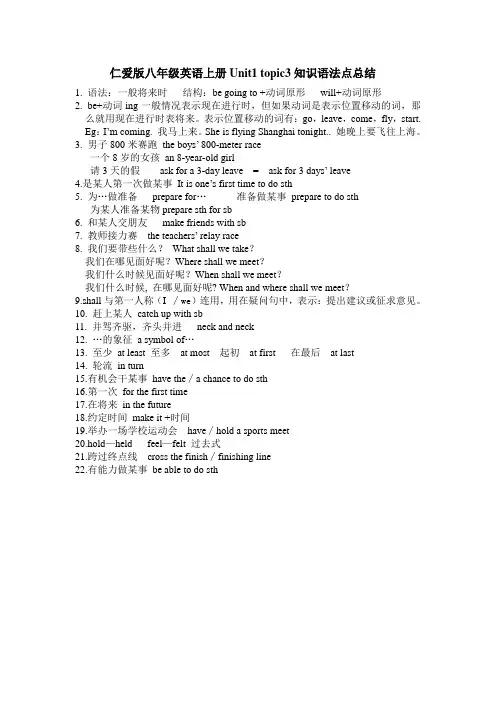
仁爱版八年级英语上册Unit1 topic3知识语法点总结1. 语法:一般将来时结构:be going to +动词原形will+动词原形2. be+动词ing一般情况表示现在进行时,但如果动词是表示位置移动的词,那么就用现在进行时表将来。
表示位置移动的词有:go,leave,come,fly,start. Eg:I’m coming. 我马上来。
She is flying Shanghai tonight.. 她晚上要飞往上海。
3. 男子800米赛跑the boys’ 800-meter race一个8岁的女孩an 8-year-old girl请3天的假ask for a 3-day leave = ask for 3 days’ leave4.是某人第一次做某事It is one’s first time to do sth5. 为…做准备prepare for…准备做某事prepare to do sth为某人准备某物prepare sth for sb6. 和某人交朋友make friends with sb7. 教师接力赛the teachers’ relay race8. 我们要带些什么?What shall we take?我们在哪见面好呢?Where shall we meet?我们什么时候见面好呢?When shall we meet?我们什么时候, 在哪见面好呢? When and where shall we meet?9.shall与第一人称(I ∕we)连用,用在疑问句中,表示:提出建议或征求意见。
10. 赶上某人catch up with sb11. 并驾齐驱,齐头并进neck and neck12. …的象征a symbol of…13. 至少at least 至多at most 起初at first 在最后at last14. 轮流in turn15.有机会干某事have the∕a chance to do sth16.第一次for the first time17.在将来in the future18.约定时间make it +时间19.举办一场学校运动会have∕hold a sports meet20.hold—held feel—felt 过去式21.跨过终点线cross the finish∕finishing line22.有能力做某事be able to do sth。
仁爱英语八年级上册语法

一般将来时:一be going to 结构: ①表示主语进行某一将来行动的打算、意图;这种打算常经过预先考虑并含有自己做好某些准备的意思,因此通常认为用be going to表达的行动很可能会见诸实践; 如:I’m going to play basketball with my classmates this Sunday.我打算本周日和同学们一起打篮球;She is going to buy a sweater for her mother.她打算为她妈妈买一件毛衣;②表预测;指根据迹象推测,而且马上或很快就要发生;如:Look at those clouds. It’s going to rain. 瞧那些乌云快要下雨了二 will + 动词原形:表示单纯的将来事实,常与表将来的时间状语如:tomorrow, soon, later, next timeweek/month/year…等连用;will not = won’t; 缩略形式为’ll.表示作出立即的决定;这种意图并未经过事先的考虑或计划,是临时的一种决定;如:a. ----Please put your things away, Tom. 汤姆,把你的东西收拾好;----I’m sorry. I’ll do it right away. 对不起;我马上就去做;b. ----Would you like coffee or tea 您要咖啡还是茶 --I will have a cup of tea,please. 我要一杯茶;c. Don’t worry. I’ll help you. 别担心;我会帮你的;表示预测;指说话人对于将来的看法、假设和推测;如:I’m sure our team w ill win next time. 我确信下次我们队会赢;Maybe she will go to the gym. 也许她会去体育馆;表示许诺;如:I’ll do better next time. 下次我会做得更好的;I’ll visit you tomorrow. 明天我会去看你的;句式:肯定句:I/She/He/They will go to play baseball soon.否定句:I/She/He/They won’t go to play baseball soon.一般疑问句:Will you/she/he/they go to play baseball soon回答:Yes, I/she/he/they will. No, I/she /he/they won’t.三动词plan, come, go, leave, fly等用现在进行时表示将要发生的事.如:I’m coming. 我就来;He is leaving for Shanghai. 他将到上海去;We are going to Beijing. 我们将去北京;5. There be 句型的一般将来时正:There will be a sports meeting in our school this weekend.= There is going to be a sports meeting in our school this weekend.误:There will have a sports meeting in our school this weekend.= There is going to have a sports meeting in our school this weekend.四、重点语法一情态动词: must 与 have to① must "必须;一定”, 表示有做某一动作的必要或义务,侧重表达说话者的主观看法.只有一种时态如:We must wash hands before meals. 饭前我们必须洗手.We must eat healthy food. 我们必须吃健康的食物.② have to “不得不,必须”, 侧重表示因客观条件或客观环境的迫使而"不得不做某事".可用于各种时态如:It’s t oo late. I have to go now. 太迟了.现在我得走了.I had to borrow some money at that time. 那时我不得不借了一些钱.----Must we keep the windows open all the time---No, we don’t have to. / No, we needn’t. 注意回答时不能用No, we mustn’t.1Are you free this evening = Do you have time this evening 你今天晚上有空吗三.语法学习1.I used to listen to rock music but now I collect telephone cards and paintings. Page 53我过去常听摇滚乐,可现在我集电话卡和画;used to do sth. 这一结构表示过去的习惯过去经常反复发生的动作或状态暗含的意思是现在已不复存在,只有一种形式,即过去式,用于所有人称;used to的否定形式为:used not to do或didn’t use to do;疑问句为Used you to...或 Did you use to...如:1I used to go to school on foot.我过去步行上学;暗含的意思是:我现在不再步行上学了;2Mary used to sleep late.玛莉过去总是很晚才睡觉;暗含的意思是:玛莉现在睡觉不再那么晚了;3I used to walk along the road after supper.我过去常常在晚饭后沿着这条马路散步;4He used not to like Peking opera, but now he’s very fond of it.他过去不喜欢京剧,但现在非常喜欢;现在大多数人在口语中或不太正式的书面语中对否定句和疑问句常使用与do 连用的形式;例如:1I didn’t use to like skating, but now I like it very much.我过去不喜欢滑冰,但现在很喜欢;2Did you use to go there 你以往常去哪儿3There used to be a theatre here, didn’t there 以前这里有一座剧院,是不是另外,注意be used to doing sth.与used to do sth.的区别:be used to doing sth “习惯于…,适应于…”如:1He is used to working hard. 他习惯于努力地工作;2He used to bring me roses when he came to see me. 过去他来看我时,常带玫瑰花;3I’m us ed to doing jogging in the morning now. 我习惯于早上慢跑;be used to do sth.“某物被用来做某事”;如:1Wood is used to make paper. 木材被用来生产纸张;2Computers can be used to do a lot of work now. 如今电脑可用来做许多事;2. Collecting stamps must be great fun Page 53集邮肯定很有趣must在这里是情态动词,作用是用来表示推测,可以翻译为“想必”;如:1Your brother must be in the school. I saw him just now.你的哥哥想必在学校;我刚才看见他了;2Your friend must have left for Nanjing yesterday.你的朋友想必昨天已经离开去南京了;3 She thought that her present must be in the box.她以为礼物一定是在盒子里;4 You must be thirsty after a long walk.走了很长的路,你一定渴了;5 It must be ten o’clock now.现在肯定有10点钟了;情态动词must的三种否定形式must表示“必须”时,其否定回答为don’t have to,意思为“不需要”;如:1Must I pay back the money right nowNo, you don’t have to.我必须现在偿还这笔钱吗不,你不需要现在还;2You must listen to the teacher carefully in class.你必须在课堂上认真听讲;must表示“推测”时,其否定形式为can’t,意思为“不可能”;如:1I’ve seen what she is talking about, so she can’t be telling lies.我目睹了她所说的事情,因此,她不可能在说谎;2Yesterday I received a letter from him, so he can’t be here. 昨天我收到了他的信,所以说他不可能在这儿;而must not的意思为“绝对不可,不许,禁止”;如:1You must not smoke in the hospital.你绝对不可以在医院里吸烟;2You must not cross the road when the traffic lights are red.交通灯是红色时,你千万不能过马路;3.He doesn’t mind whether they’re good or not. 他并不介意它们是否是好的;此句为以whether引导的宾语从句;whether...or not“不论是否……”;如:1You have to get up early everyday whether it rains or not.你必须天天早点起床,不论是否下雨;2Whether we go or not matters little.不论我们是否去,关系不大;if与whether的区别;二者在引导宾语从句时一般可换用;如:1I want to know if / whether it is going to rain tomorrow.我想知道明天是否下雨;2 He asked me if / whether Li Ping was at home.他问我李平是否在家;3 He didn’t understand if / whether the stranger told a lie.他不明白那个陌生人是否说的是假话; 但下列几种情况不能换用;whether 后可紧接or not,而if一般不能;Let me know whether or not you can come.你能来还是不能来,请告诉我一声;whether引导的宾语从句可移到主句前,if则不能;如:Whether this is true or not, I can not say.这件事是否真实,我说不上;不定式前用whether,不用if;如:I haven’t decided whether to go to the cinema or to stay at home.我还没有决定是看电影还是留在家里;介词后可用whether,不用if;如:I haven’t settled the question of whether I’ll go back home.我是否回家还没有定; Topic2 I like pop music三.语法学习1. What a pity Page 61真遗憾这是一个由what引导的感叹句;what引导感叹句的基本构成为:what + a / an +形容词+可数名词单数what +形容词+可数名词复数/不可数名词如:1What a stupid question多么愚蠢的问题啊2What lively boys they are 多么活泼的男孩子们啊2. What are you going to do this Sunday eveningPage61 这一周日晚上你想干什么1“be going to” 是一般将来时的一种表达方法.它表示:i 现在打算在最近或将来要做某事. 如: Tom is going to Beijing with his father next week.ii 说话人根据已有的迹象认为可能要发生某事. 如: There are a lot of dark clouds. It’s going to rain.2 “be going to”句式的基本结构:肯定句:主语+be going to … eg. He is going to stay at school.否定句:主语+be + no t +going to… eg. I’m not going to the library this afternoon.一般疑问句: Be +主语+going to… eg. Are you going to play tennis next week3be going to 用于there be 结构时要用There be going to be + 主语+其它形式.如: There is going to be a football game tomorrow.4与be going to 连用的时间状语有: next week/month/year, tomorrow, the day after tomorrow, this evening, in the future等.Topic3 The movie is so wonderful三.语法学习 I was doing some washing. I was doing some cleaning. Page 69我在洗衣服; 我在打扫卫生;这句用的是过去进行时.1. 过去进行时表示过去某一时刻正在进行或发生的动作,也表示过去一段时间内的活动或那个阶段正在进行的动作.如:He were watching TV at 8:00 last night.They were writing a book last month.1. 过去进行时由be was/were+动词ing 形式构成的,肯定句:主语+was/were +doing +…否定句: 主语+wasn’t/weren’t +doing +…一般疑问句: Was/Were+主语+doing+…肯定回答:Yes, 主语+was/were.否定回答:No, 主语+wasn’t/weren’t.如: They were studying English at this tine yesterday.They weren’t studying English at this time yesterday. Were they studying English at this time yesterdayYes, they were. / No, they weren’t.11. Then decide how you are going to spend your weekend. Page 74然后决定你的周末怎么过;spend度过;花费时间、金钱;结构有:spend...on sth., spend...indoing sth. 如:1He spent 5 yuan on the post card. 他买这张明信片花了5元钱;2They spent three days looking for the lost sheep on the hill.他们用了三天的时间在山上找丢失的羊;12. Did you have a good time Page 76 你们玩得高兴吗have a good time = enjoy oneself过得愉快;玩得高兴;类似的说法还有havea great time, have a nice time, have a wonderful time;三.语法学习 I was doing some washing. I was doing some cleaning. Page 69我在洗衣服; 我在打扫卫生;这句用的是过去进行时.1. 过去进行时表示过去某一时刻正在进行或发生的动作,也表示过去一段时间内的活动或那个阶段正在进行的动作.如:He were watching TV at 8:00 last night.They were writing a book last month.2. 过去进行时由be was/were+动词ing 形式构成的,肯定句:主语+was/were +doing +…否定句: 主语+wasn’t/weren’t +doing +…一般疑问句: Was/Were+主语+doing+…肯定回答:Yes, 主语+was/were.否定回答:No, 主语+wasn’t/weren’t.如:They were studying English at this tine yesterday. They weren’t studying English at this time yesterday. Were they studying English at this time yesterdayYes, they were. / No, they weren’t.Unit 4 Our World三.语法学习一.现在进行时与过去进行时的区别:1.现在进行时表示现在正在发生或正在做的事情,基本结构be+现在分词;如:肯定句:The robots are making a car now. 这些机器人正在生产小汽车;否定句:We are not studying on the Internet. 我们没有在互联网上学习;疑问句:Is the teacher looking up the word in the dictionary这个老师正在词典中查这个词吗特殊疑问句:Who am I talking to我在和谁谈话2.过去进行时表示过去某一时间,正在发生或正在做的事情;基本结构waswere+现在分词;肯定句:When he came in,I was writing a letter.当他进来时,我在写一封信;否定句:They weren’t watching TV while she was reading.她读书时,他们没在看电视;疑问句:Was the UFO flying to us at 8 last night昨晚8点UFO向我们飞来了吗特殊疑问句:What were you drinking while we were sleeping 我们睡觉时,你们在喝什么进行时态往往用在时间状语从句中,常与when,while等连词搭配;二.be sure结构表示肯定和不肯定;be sure一般用来表示肯定,be not surewhether/if表示不肯定;be sure后面可以跟不定式和宾语从句;跟不定式一般译为“一定……”,跟宾语从句,译为“确信……”;如:We are sure to repair the TV well. 我们一定修好这台电视机;I’m sure you can finish your work. 我确信你能完成你的工作;Are you sure whetherifhe switched the computer on你确信他打开还是没有打开电脑三. 语法学习反意疑问句:由陈述句或祈使句、感叹句加一个简短问句构成的疑问句叫反意疑问句;实质是前面陈述句的反问句;一般对应规律:前肯后否;前否后肯;即陈述部分为肯定形式,附加问句用否定形式;陈述部分为否定形式,附加问句用肯定形式;如:There are many pyrami ds in Egypt,aren’t there 在埃及有许多金字塔,不是吗Sally visited the Great Wall last month,didn’t she 萨莉上个月参观了长城,不是吗He doesn’t realize the importance of saving water,does he 他没有意识到节约用水的重要性,是吗特例点拨:①I’m your good friend,aren’t I 我是你的好朋友,不是吗 I don’t think you can rebu ild the house,can you 我认为你不能重修这座房子,是吗I don’t think…主要在说think后的内容,故按从句变化;②陈述部分有nobody,nothing,never,no,few没几个,little几乎没有,hardly 几乎不等否定或半否定词时,仍视为否定句;根据反意疑问句对应规律,疑问部分用肯定形式;如:There is nothing in the room,is there 屋子里什么也没有,是吗Maria never surports me,does she 玛丽亚从未支持过我,是吗He had few apples,did he 他几乎没有苹果,是吗③祈使句的反意疑问句:无论肯定或否定,通常在祈使句后加上will you 如:Please close the door,will you 请关门好吗Don’t tear down the old walls,will you 不要拆毁古墙,好吗但以Let’s开头的祈使句用shall we 如:let’s make a survey,shall we我们做个调查,好吗。
仁爱版八年级英语上知识点笔记
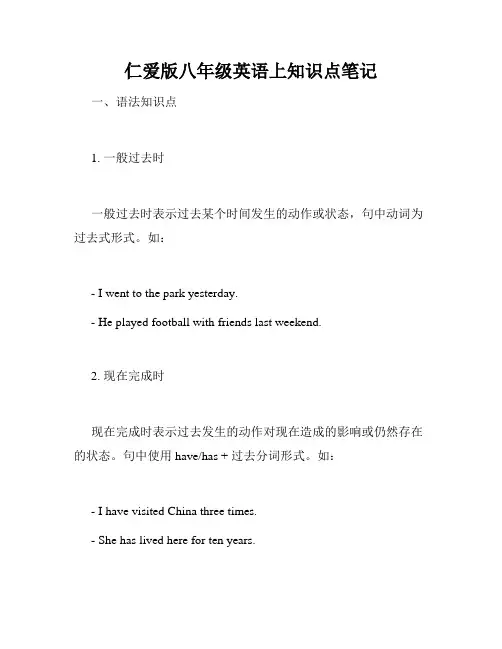
仁爱版八年级英语上知识点笔记一、语法知识点1. 一般过去时一般过去时表示过去某个时间发生的动作或状态,句中动词为过去式形式。
如:- I went to the park yesterday.- He played football with friends last weekend.2. 现在完成时现在完成时表示过去发生的动作对现在造成的影响或仍然存在的状态。
句中使用have/has + 过去分词形式。
如:- I have visited China three times.- She has lived here for ten years.3. 一般现在时一般现在时表示现在经常或习惯性发生的动作或状态。
句中动词不变。
如:- I usually go to bed at 10 pm.- He drinks coffee every morning.4. 一般将来时一般将来时表示将来要发生的动作或状态。
句中使用will/shall + 动词原形。
如:- We will have a party next week.- She shall visit her grandparents during the holiday.5. 进行时态进行时态表示现在正在发生的动作,也可以表示计划将要发生的动作。
句中使用am/is/are + V-ing。
如:- I am studying English in the library.- They are planning to travel around the world next year.6. 定语从句定语从句用于修饰名词或代词,从句中使用关系词连接。
如:- The book that I borrowed from the library is very interesting.- The person who is standing over there is my friend.7. 状语从句状语从句用于修饰句子中的动词、形容词或副词,句中使用连词连接。
仁爱英语八年级上册语言点、语法总结归纳
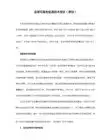
八年级上学期期末复习资料Unit One语法:一般将来时结构:be (am/ is /are)going to do sth. 表示计划、打算或安排搭配词:tomorrow;the day after tomorrow;tomorrow morning/...next week/month/Friday/...this morning/afternoon/evening/week/term/...; tonightin a week => in + 一段时间; 注意划线的提问词用how soonin the futurefour days later => 一段时间+ latersb. hope/wish + 宾语从句(将来时)e.g. Our Chinese teacher is going to give (give)a speech this Friday.否定句:Our Chinese teacher isn't going to give a speech this Friday.一般疑问句:Is our Chinese teacher going to give a speech this Friday?肯定回答:Yes, he is.否定回答:No,he isn't.画线提问:When is he going to give a speech?Topic 11.see sb. do sth. “看到某人做了某事(强调过程,经常发生)”see sb. doing sth.“看到某人在做某事(强调瞬间,偶尔发生)”类似用法的动词还有:find; watch; hear;noticee.g. We just found Tom reading a book in his study.Mr. Green often hears the little girl play the piano.2.during(介词) the summer holidaysp.s. 介词后跟动词,动词应加ing。
最新仁爱版英语八年级上册语法汇总

最新仁爱版英语八年级上册语法汇总
1. 一般现在时
- 用法:表达当前的状态或经常发生的动作
- 句式结构:主语 + 动词原形(第三人称单数要加 -s)
- 示例:She plays basketball every day.
2. 一般过去时
- 用法:表达过去发生的动作或状态
- 句式结构:主语 + 动词过去式
- 示例:He visited his grandparents last weekend.
3. 现在进行时
- 用法:表达现在正在进行的动作
- 句式结构:主语 + be 动词(am, is, are)+ 现在分词
- 示例:They are studying for the exam now.
4. 一般将来时
- 用法:表达将来要发生的动作或状态
- 句式结构:
- 主语 + will + 动词原形(肯定句)
- 主语 + won't + 动词原形(否定句)
- Will + 主语 + 动词原形?(疑问句)
- 示例:I will finish my homework later.
5. 现在完成时
- 用法:表达过去发生的但与现在相关的动作或状态
- 句式结构:主语 + have/has + 过去分词
- 示例:She has already eaten lunch.
以上是最新仁爱版英语八年级上册的语法汇总。
语法知识的掌握对于学习英语非常重要,希望以上内容能帮助你更好地理解和应用语法规则。
如果有任何疑问,请随时向我提问。
仁爱版八年级上册重点动词和句型汇总
仁爱版八年级上册重点动词和句型汇总本文档总结了仁爱版八年级上册的重点动词和句型。
通过掌握这些词汇和句型,可以帮助学生更好地理解课本内容,提高英语表达能力。
重点动词1. study - 研究study - 学习2. practice - 练practice - 练习3. listen - 听listen - 听4. speak - 说speak - 说5. read - 读read - 读6. write - 写write - 写7. learn - 研究learn - 学习8. understand - 理解understand - 理解9. remember - 记住remember - 记住10. review - 复review - 复习11. improve - 提高improve - 提高12. prepare - 准备prepare - 准备13. answer - 回答answer - 回答14. ask - 问ask - 问15. watch - 观看watch - 观看16. enjoy - 喜欢enjoy - 喜欢17. finish - 完成finish - 完成18. start - 开始start - 开始19. try - 尝试try - 尝试20. practice - 练practice - 练习重点句型1. Can you help me? - 你可以帮助我吗?Can you help me? - 你可以帮助我吗?2. What's your favorite subject? - 你最喜欢的科目是什么?What's your favorite subject? - 你最喜欢的科目是什么?3. I'm good at English. - 我擅长英语。
I'm good at English. - 我擅长英语。
4. I need some help. - 我需要一些帮助。
仁爱版英语八年级上册u3t1知识点
仁爱版英语八年级上册u3t1知识点本文将为大家介绍仁爱版英语八年级上册 Unit 3 Topic 1 的知识点。
该部分内容主要涉及基本单词、词组、句子及语法知识。
下文将分别进行介绍。
一、基本单词1. 动词:1)inflict:v. 使遭受痛苦,使受惩罚2)limit:v. 限制,约束,限定2. 名词1)struggle:n. 奋斗,斗争,努力2)limitation:n. 限制,局限性3. 形容词1)fierce:adj. 凶猛的,猛烈的,狂热的2)pathetic:adj. 可怜的,悲哀的,引起怜悯的二、词组1. inflict punishment on sb.:对某人施加惩罚2. limit sb./sth. to sth.:将某人/某事物限制在某种程度上3. struggle for sth.:为某事物而奋斗4. pathetic sight:可怜的景象5. in fierce competition:在激烈竞争中三、句子1. The cruel dictator inflicted severe punishment on those who opposed him.2. The teacher limited the number of words the students could usein their essays to 500.3. Many people struggle for their dreams all their lives.4. The beggar on the street was a pathetic sight to behold.5. The two companies were in fierce competition for the market share.四、语法知识1. To 形式的不定式在英语中,to 形式的不定式可以当作名词、形容词或副词使用。
英语八年级上册语法知识点仁爱版
英语八年级上册语法知识点仁爱版一、一般现在时1. 概念:表示经常发生的动作或存在的状态。
2. 构成:动词原形或第三人称单数形式。
3. 用法:表示经常性、习惯性的动作或存在的状态,也表示现在的特征或状态。
如:He often helps his mother do the housework. 他经常帮他妈妈做家务。
4. 特殊用法:表示主语具备的性格和能力,也可以表示客观事实或普遍真理。
如:She can sing this song in English. 她能用英语唱这首歌。
二、现在进行时1. 概念:表示正在进行的动作或存在的状态。
2. 构成:be动词(am/is/are)+动词的现在分词形式(-ing)。
3. 用法:表示正在进行的动作或存在的状态,强调的是正在发生的事情。
如:They are studying in the classroom. 他们在教室里学习。
4. 特殊用法:表示将来发生的动作,也可以表示过去发生的动作。
如:He is coming to see you tomorrow. 他明天要来看你。
(表示将来) They were having a meeting at this time yesterday. 昨天这个时候他们在开会。
(表示过去)三、现在完成时1. 概念:表示已经完成的动作或存在的状态,对现在产生的影响或结果。
2. 构成:have/has + 过去分词。
3. 用法:表示过去发生的动作已经完成,对现在产生的影响或结果。
如:I have finished my homework. 我已经完成了我的作业。
4. 特殊用法:可以表示发生在过去的动作延续到现在,也可以表示过去发生的动作与现在的状态有关。
如:He has lived here since 2000. 他从2000年就住在这里了。
(表示过去的动作延续到现在)They have been married for five years. 他们结婚已经五年了。
完整)仁爱版八年级英语上册语法
完整)仁爱版八年级英语上册语法UNIT 1 Topic 1 语法精讲Be going to + 动词原形Be going to + 动词原形用于表示说话人根据现有的迹象判断将要或即将发生某种情况。
这种句子的主语可以是人或物。
例如:明天下午我们学校将有一场足球赛。
(已有告示)我感到难受极了,我想我快不行了。
看看那些乌云!天快要下雨了。
Be going to + 动词原形也用于表示主语现在的意图或现已作出的决定,即打算在最近或将来进行某事。
这种意图或决定往往是事先经过考虑的。
例如:他明天不准备去看他哥哥。
XXX决定长大了当一名教师。
Be going to + 动词原形还可以单纯地预测未来的事情,此时可与will互换。
例如:我认为今晚要下雨。
需要注意的是:1.Be going to 和 will 在含义和用法上略有不同。
Be going to 往往表示事先经过考虑的打算;will 多表示意愿、决心。
两者有时不能互换。
例如:他正努力研究,准备参加考试。
(不能用will替换)我来。
(不能用be going to替换)2.在 if 之后,通常不用will表示预言,但可以用be going to表示意图。
例如:你若今晚去看电影,最好带着外套。
Be going to 也常可以用于主句之中。
例如:如果你邀请XXX,那就会有麻烦。
在条件从句中,will 可以用作情态动词来表示将来的意愿。
例如:如果你愿意学踢足球,我可以帮助你。
以下是课堂小测:1、要小心,火车即将到来。
A。
will come B。
C。
comes D。
is coming2.看那些云,恐怕很快就会下雨了。
A。
is going to rain B。
is XXX3.收音机说后天会下雪。
A。
is going to snow B。
is XXX4.他明天下午会去买些东西吗?A。
Will…does B。
is going to do C。
is…doing D。
Shall… do第2页共15页UNIT 1 Topic 3 语法精讲随堂测试1、明天下午将会有一次会议。