
新PEP人教版七年级下册英语Unit 6 Section A 1a-1c
UNIT 6 SECTION A
T: What is she doing? S: She is… S: She is…
… She is running.
UNIT 6 SECTION A
T: What is he doing? S: He is… S: He is… He is playing the guitar.
UNIT 6 SECTION A
— What _i_s__ your mom _d_o_i_n_g_? — She is _c_o_o_k_i_n_g__ in the kitchen. — What about your sister? — She’s _h_e_lp_i_n_g_ my mom.
She’s using the computer.
UNIT 6 SECTION A
What’s she doing?
She’s exercising.
What’s he doing?
He’s reading a newspaper.
UNIT 6 SECTION A
What’s she doing?
UNIT 6 SECTION A
What are they doing?
They are watching TV.
watch TV
UNIT 6 SECTION A
exercise
What are they doing? They are exercising.
UNIT 6 SECTION A
What are they doing? They are cleaning.
UNIT 6 SECTION A
T: What are they doing? S: They are… S: They are…
… They are dancing.
UNIT 6 SECTION A
1c
Ask and answer questions about what people are doing in 1a.
UNIT 6 SECTION A
➢ Warming up
-What is he doing? -He is reading a
newspaper.
read a newspaper
UNIT 6 SECTION A
-What is she doing? -She is making soup.
make soup
UNIT 6 SECTION A
1a Match the activities with the pictures.
UNIT 6 SECTION A
1. watching TV__i__ 2. cleaning __d__ 3. reading a newspaper __g__ 4. talking on the phone __a___ 5. listening to a CD __h__ 6. using the computer __e__ 7. making soup __b__ 8. washing the dishes __c__ 9. exercising __f__
UNIT 6 SECTION A
What’s he doing?
He’s making soup. What’s he doing? He’s washing the dishes.
UNIT 6 SECTION A
What’s she doing? She’s cleaning.
What’s she doing?
She’s listening to a CD.
What’re they doing?
They’re watching TV.
UNIT 6 SECTION A
Exercises
看图补全对话。
—Hi, Li Xue. What _a_r_e__ you _d_o_in__g__?
— I’m _e_x_e_r_c_i_s_in_g____. — What i_s__ your dad _d_o_i_n_g_? — He’s _c_le__a_n_in_g____ his car.
UNIT 6 SECTION A
1b Listen. What are these people doing? Write the numbers from 1a.
a. Jenny _1__watching TV b. John __8_washing the dishes c. Dave and Mary _5__listening to a CD
Pair work
A: What’s he doing? B: He’s using the computer. A: What are they doing? B: They’re listening to a CD.
UNIT 6 SECTION A
What’s she doing?
She’s talking on the phone.
人教版七年级英语下册
Unit 6
I’m watching TV.
Section A 1a-1c
UNIT 6 SECTION A
➢ Objectives
To learn to use present progressive tense.
To learn to use What questions.
To learn to talk about what people are doing.
Recite the new words and write down what people are doing in 1a.
UNIT 6 SECTION A
What is he doing?
use the computer
He is using the computer.
UNIT 6 SECTION A
What is she doing? She is washing the dishes.
wash the dishes
UNIT 6 SECTION A
➢ 中考链接
【2019·北京】
— Tom, what's your dad doing?
— He __D_____ my bike.
A. repairs
B. will repair
C. has repaired
D. is repairinECTION A
UNIT 6 SECTION A
-What is she doing? -She is talking
on the phone.
talk on the phone
UNIT 6 SECTION A
What is she doing? She is listening to a CD.
listen to a CD
合集下载
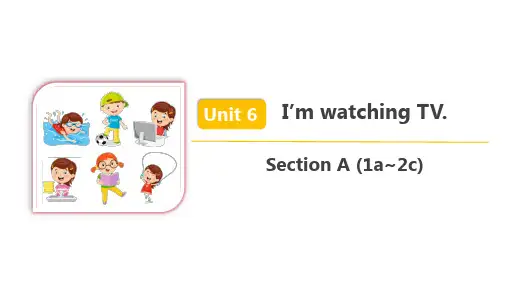
人教七年级英语下册 Unit 6 Section A (1a~2c) 精品课件
Summary
Listen and match
Listen and match the answers with the questions.
a. He is watching TV. b. He is listening to a CD.
1. What is Steve doing? __a__ 2. What is Jack doing? __b__
While-listening Post-listening
Summary
1
Alex
2
Tony
3
Sam and Paul
5
Kate
4
Jane
6…
Warming-up Pre-listening While-listening Post-listening
Summary
Do a survey and report
Warming-up Pre-listening While-listening Post-listening
Summary
Look and predict
What are they doing?
Observing the picture helps you predict the text.
Warming-up Pre-listening While-listening Post-listening
What’s John doing? Bob: He’s washing the dishes. Jenny: Well, what are Dave and Mary
doing? Bob: They’re listening to a CD.
Conversation 2 Jack: Hello, Steve. Steve: Hi, Jack. Jack: What are you doing, Steve? Steve: I’m watching TV. What
Listen and match
Listen and match the answers with the questions.
a. He is watching TV. b. He is listening to a CD.
1. What is Steve doing? __a__ 2. What is Jack doing? __b__
While-listening Post-listening
Summary
1
Alex
2
Tony
3
Sam and Paul
5
Kate
4
Jane
6…
Warming-up Pre-listening While-listening Post-listening
Summary
Do a survey and report
Warming-up Pre-listening While-listening Post-listening
Summary
Look and predict
What are they doing?
Observing the picture helps you predict the text.
Warming-up Pre-listening While-listening Post-listening
What’s John doing? Bob: He’s washing the dishes. Jenny: Well, what are Dave and Mary
doing? Bob: They’re listening to a CD.
Conversation 2 Jack: Hello, Steve. Steve: Hi, Jack. Jack: What are you doing, Steve? Steve: I’m watching TV. What
英语人教PEP版七年级(上册)Unit1+.Section+A+1a-1c+

chess club
swim
swimming club
I can play chess. I want to join the chess club.
I can swim. I want to join the swimming club.
1a
What can these people do? Match the activities
What can you do?
speak English
English club
draw
art club
I can speak English. I want to join the English club.
I can draw. I want to join the art club.
play chess
?
A: No, I can't.
B: What can you do?
A: I can
.
B: Then you can join
. .
Unit 1 Can you play the guitar?
Section A 1a-1c
New words
1. guitar [ɡɪ'tɑ:(r)] n. 吉他 2. sing [sɪŋ] v. 唱;唱歌 3. swim [swɪm] v. & n. 游泳 4. dance [dɑːns], [dæns] v. 跳舞 n. 舞蹈 5. draw [drɔː] v. 画 6. chess [tʃes] n. 国际象棋 7. play chess 下国际象棋 8. speak [spiːk] v. 说(某种语言);说话 9. speak English 说英语 10. join [dʒɔɪn] v. 参加;加入 11. club [klʌb] n. 俱乐部;社团
2019-2020学年人教版英语七年级下册Unit6SectionA(1a–1c)教案
2019-2020学年人教版英语七年级下册Unit6 Section A (1a–1c)教案
一、教学内容
2019-2020学年人教版英语七年级下册Unit 6 Section A (1a–1c)主要围绕“天气”主题展开,教学内容包括:1a部分,通过图片展示不同天气状况,引导学生学习描述天气的词汇,如:sunny, cloudy, rainy, windy等;1b部分,通过听力练习,让学生熟悉如何询问和回答天气情况,如:“What's the weather like?” “It's sunny/rainy...”等;1c部分,则是一个小组活动,学生模拟天气预报员,运用所学词汇和句型描述不同城市的天气情况。本章节内容紧密结合生活实际,旨在提高学生在实际情境中运用英语进行交流的能力。
三、教学难点与重点
1.教学重点
(1)词汇:本节课的核心词汇包括sunny, cloudy, rainy, windy等描述天气的词汇,以及句型“What's the weather like? It's sunny/rainy...”。这些词汇和句型是表达天气情况的基础,教师应重点讲解和强调。
(2)听力:1b部分听力练习,要求学生能够听懂并回答关于天气的问题,培养其获取信息的能力。
3.重点难点解析:在讲授过程中,我会特别强调词汇的正确发音和句型的正确使用这两个重点。对于难点部分,如主谓一致等,我会通过举例和比较来帮助大家理解。
(三)实践活动(用时10分钟)
1.分组讨论:学生们将分成若干小组,每组讨论一个与天气相关的实际问题,如“如何在不同的天气下安排户外活动”。
2.实验操作:为了加深理解,我们将进行一个模拟天气预报的小组活动。每个小组选择一个城市,用所学词汇和句型描述该城市的天气情况。
一、教学内容
2019-2020学年人教版英语七年级下册Unit 6 Section A (1a–1c)主要围绕“天气”主题展开,教学内容包括:1a部分,通过图片展示不同天气状况,引导学生学习描述天气的词汇,如:sunny, cloudy, rainy, windy等;1b部分,通过听力练习,让学生熟悉如何询问和回答天气情况,如:“What's the weather like?” “It's sunny/rainy...”等;1c部分,则是一个小组活动,学生模拟天气预报员,运用所学词汇和句型描述不同城市的天气情况。本章节内容紧密结合生活实际,旨在提高学生在实际情境中运用英语进行交流的能力。
三、教学难点与重点
1.教学重点
(1)词汇:本节课的核心词汇包括sunny, cloudy, rainy, windy等描述天气的词汇,以及句型“What's the weather like? It's sunny/rainy...”。这些词汇和句型是表达天气情况的基础,教师应重点讲解和强调。
(2)听力:1b部分听力练习,要求学生能够听懂并回答关于天气的问题,培养其获取信息的能力。
3.重点难点解析:在讲授过程中,我会特别强调词汇的正确发音和句型的正确使用这两个重点。对于难点部分,如主谓一致等,我会通过举例和比较来帮助大家理解。
(三)实践活动(用时10分钟)
1.分组讨论:学生们将分成若干小组,每组讨论一个与天气相关的实际问题,如“如何在不同的天气下安排户外活动”。
2.实验操作:为了加深理解,我们将进行一个模拟天气预报的小组活动。每个小组选择一个城市,用所学词汇和句型描述该城市的天气情况。
Unit6I'mwatchingTV-SectionA1a-1c课件人教版七年级英语下册

现在进行时的含义与构成
1.含义:表示现在正在进行或一 段时间正在进行的动作。 2.构成:be +V-ing
现在进行时
I am using the computer be动词+动词ing
She is cleaning. be动词+动词ing
He is watching TV. be动词+动词ing
✓clean cleaning ✓sing singing ✓write writeing ✓be being ✓eat eating ✓read reading ✓swim swimming ✓open opening ✓paint painting
1
8
5
:
2024/4/19
Listen again and fill in the blanks with be+v-ing structure. (再听并填空)
washing
wash
wash the dishes
What’s he doing?
He is talking on the phone. He is playing computer games. He is playing the violin.
He is cooking.
He is drawing.
What are you doing ? 你正在做什么?
I’m watching TV. 我正在看电视
watching TV
watch TV
Look at Picture i, she is watching TV.
d g
a
h
e b
c
2024/4/19
f
英语人教PEP版七年级(上册)第1课时(SectionA1a-2d)(2024版新教材)
2d Role-play the conversation.
Mom: Come on, Jack! 快点儿
Jack: Oh, no! Where’s my bag?
Mom: Hmm…is it on your desk?
Jack: No. And it’s not under the chair.
Come on! Do you think I’m afraid of you? 来吧!你认为我会怕你吗?
【自主归纳】 come on的用法
(1)用于鼓励他人,意为“加油” 。 (2)用于招呼别人,意为“过来” 。 (3)用来表示请求、安慰等,意为“来吧;行啦”。 (4)用于挑战对方,意为“来吧;试试吧” 。
Language points
1. on prep. 在……上 【语境领悟】
*They’re on the sofa. 它们在沙发上。
*It’s in your schoolbag. 它在你的书包里。
*It’s under your bed. 它在你的床底下。
【自主归纳】介词on的用法 on是介词, 意为“在……上”, 强
1. living room 客厅
table桌子 sofa 沙发 sofas
schoolbag
bookcase书架 bookcases 书柜
keys books
2. dining room 餐厅
chair椅子 chairs
3. bedroom 卧室
bed 床
表示方位的介词 on 在……上面 in 在……里面 under 在……下面
Mom: It’s on your head!
Jack: Oh, yeah! Haha!
人教版英语七年级下册 Unit6 SectionA grammar-3c 课件
5. Susan and Bob/watch TV/on weekends _S_u__sa_n__a_n_d__B_o_b_w__a_t_ch__T_V__o_n_w__e_e_k_e_n_d_s_. ___________
Please number the sentences in order to make a telephone conversation. Then practice it with a partner.
2.—Sentences:What are you doing?—I’m watching TV. —Are you doinI am./ No, I’m not. I’m cleaning my room.
3.掌握现在进行时用法、be+doing结构,能 用现在进行时描述自己或他人正在进行的 事。
1. What is Jenny doing 2. What are the girls doing over there.
Grammar
Focus
What are you doing? What’s she doing? What are they doing? Are you doing your homework?
3a Write sentences following the examples.
1. Jenny/ clean the house/ now
Jenny is cleaning the house now.
2. Bob/make dinner/every Saturday
Bob makes dinner every Saturday.
Unit 6 I’ m watching TV. Section A
Please number the sentences in order to make a telephone conversation. Then practice it with a partner.
2.—Sentences:What are you doing?—I’m watching TV. —Are you doinI am./ No, I’m not. I’m cleaning my room.
3.掌握现在进行时用法、be+doing结构,能 用现在进行时描述自己或他人正在进行的 事。
1. What is Jenny doing 2. What are the girls doing over there.
Grammar
Focus
What are you doing? What’s she doing? What are they doing? Are you doing your homework?
3a Write sentences following the examples.
1. Jenny/ clean the house/ now
Jenny is cleaning the house now.
2. Bob/make dinner/every Saturday
Bob makes dinner every Saturday.
Unit 6 I’ m watching TV. Section A
Unit6SectionA(1a-1c)课件2021-2022学年人教版英语七年级下册
What are they doing? They are cleaning.
newspaper
n. 报纸
a newspaper read a newspaper
What is the old man doing? He is reading a newspaper.
wash v.洗
wash clothes wash the dishes
action today then start writing) Preview what we’ll learn tomorrow.
Hale Waihona Puke 3.Your clothes are dirty. Please__C___.
A.washing B.washes C.wash D is washing
4.--_B__she ____her homework?
--No, she isn’t. She’s writing a letter. A. Does, do B. Is, doing C. Do, do D. Are, doing
Unit 6
I’m watching TV.
Section A Period 1 (1a- 1c)
三维学习目标
• 知识目标:熟练掌握以下词汇、短语、句式 • newspaper,use,wash,
• read a newspaper,make soup
• What are you doing? I'm watching TV. • What’s he doing? • B: He’s using the computer. • What are they doing?They’re listening to a
newspaper
n. 报纸
a newspaper read a newspaper
What is the old man doing? He is reading a newspaper.
wash v.洗
wash clothes wash the dishes
action today then start writing) Preview what we’ll learn tomorrow.
Hale Waihona Puke 3.Your clothes are dirty. Please__C___.
A.washing B.washes C.wash D is washing
4.--_B__she ____her homework?
--No, she isn’t. She’s writing a letter. A. Does, do B. Is, doing C. Do, do D. Are, doing
Unit 6
I’m watching TV.
Section A Period 1 (1a- 1c)
三维学习目标
• 知识目标:熟练掌握以下词汇、短语、句式 • newspaper,use,wash,
• read a newspaper,make soup
• What are you doing? I'm watching TV. • What’s he doing? • B: He’s using the computer. • What are they doing?They’re listening to a
+Unit+6+Section+A+1a-2b 人教版英语七年级下册
8. washing the dishes __c
9. exercising __f_
I
am
He
is
She
They are
watching TV. cleaning. reading. talking on the phone. listening to a CD. using the computer. making soup. washing the dishes. exercising.
2. cleaning _d_
and find the rules.
3. reading a newspaper __g
4. talking on the phone __a 5. listening to a CD _h_
6. using the computer __e
7. making soup __b_
washing the dishes
/wɒʃ/
A: What is he doing? B: He is washing the dishes.
1a Match the activities with the pictures.
1. watching TV __i
Observe the Verb-ing
Unit 6 I'm watching TV.
Section A Period One
The Happy Apartments
〈微信(5) 王俊凯
What are you doing?
I’m singing. What about you?
I’m watching TV.
read ing a newspaper
2019-2020学年人教版英语七年级下册Unit6SectionA1(1a-1c)教案
1b:借助听力练习,让学生听懂并模仿关于日常活动的句子,提高口语表达能力。
1c:组织学生进行对话练习,运用所学句型询问和回答他人的日常活动,巩固一般现在时的用法。
教学内容与课本紧密相关,旨在提高学生在实际生活中运用英语进行沟通的能力。二、核心素养目标本来自课的核心素养目标主要包括以下方面:
1.语言能力:通过学习Unit6 Section A 1的内容,使学生能够熟练运用一般现在时描述和询问日常活动,提高英语口语表达和听力理解能力。
五、教学反思
在今天的教学过程中,我发现学生们对一般现在时的用法和日常活动词汇的学习表现出较大的兴趣。他们积极参与讨论和实践活动,这让我感到很欣慰。然而,我也注意到在一些方面还有待提高。
在导入新课环节,通过提问同学们的日常活动,成功引起了他们对本节课的兴趣。但我意识到,如果能够结合学生的实际生活,提供更多具体的例子,可能会更有助于他们理解和记忆。
在教学过程中,教师要关注学生的掌握情况,及时进行针对性讲解和指导,确保学生对本节课的重点和难点知识有透彻理解。
四、教学流程
(一)导入新课(用时5分钟)
同学们,今天我们将要学习的是Unit6 Section A 1的日常活动主题。在开始之前,我想先问大家一个问题:“你们在日常生活中是如何安排自己的早晨活动的?”(如刷牙、吃早餐等)。这个问题与我们将要学习的内容密切相关。通过这个问题,我希望能够引起大家的兴趣和好奇心,让我们一同探索日常活动的英语表达方式。
3.重点难点解析:在讲授过程中,我会特别强调一般现在时的动词变化和日常活动词汇这两个重点。对于难点部分,我会通过例句和对比来帮助大家理解。
(三)实践活动(用时10分钟)
1.分组讨论:学生们将分成若干小组,每组讨论一个与日常活动相关的场景,并尝试用英语表达出来。
1c:组织学生进行对话练习,运用所学句型询问和回答他人的日常活动,巩固一般现在时的用法。
教学内容与课本紧密相关,旨在提高学生在实际生活中运用英语进行沟通的能力。二、核心素养目标本来自课的核心素养目标主要包括以下方面:
1.语言能力:通过学习Unit6 Section A 1的内容,使学生能够熟练运用一般现在时描述和询问日常活动,提高英语口语表达和听力理解能力。
五、教学反思
在今天的教学过程中,我发现学生们对一般现在时的用法和日常活动词汇的学习表现出较大的兴趣。他们积极参与讨论和实践活动,这让我感到很欣慰。然而,我也注意到在一些方面还有待提高。
在导入新课环节,通过提问同学们的日常活动,成功引起了他们对本节课的兴趣。但我意识到,如果能够结合学生的实际生活,提供更多具体的例子,可能会更有助于他们理解和记忆。
在教学过程中,教师要关注学生的掌握情况,及时进行针对性讲解和指导,确保学生对本节课的重点和难点知识有透彻理解。
四、教学流程
(一)导入新课(用时5分钟)
同学们,今天我们将要学习的是Unit6 Section A 1的日常活动主题。在开始之前,我想先问大家一个问题:“你们在日常生活中是如何安排自己的早晨活动的?”(如刷牙、吃早餐等)。这个问题与我们将要学习的内容密切相关。通过这个问题,我希望能够引起大家的兴趣和好奇心,让我们一同探索日常活动的英语表达方式。
3.重点难点解析:在讲授过程中,我会特别强调一般现在时的动词变化和日常活动词汇这两个重点。对于难点部分,我会通过例句和对比来帮助大家理解。
(三)实践活动(用时10分钟)
1.分组讨论:学生们将分成若干小组,每组讨论一个与日常活动相关的场景,并尝试用英语表达出来。
2019——2020学年人教版英语七年级下册Unit6SectionA(1a-2d)教案
2019——2020学年人教版英语七年级下册Unit 6 Section A (1a-2d)教案
一、教内容
本节课为人教版英语七年级下册Unit 6 Section A (1a-2d)的教学内容。主要围绕“动物”这一主题展开,包括以下几个部分:
1. 1a:通过观察图片,让学生描述动物的外貌特征,引入新词汇。
-难点二:一般现在时的正确使用。学生可能会在构造否定句时忘记使用助动词don't/doesn't,或者在描述第三人称单数主语时忘记动词变化。
-难点三:听力理解。对于一些基础薄弱的学生来说,理解含有一般现在时的对话可能存在困难,特别是在对话中出现多个动物和描述性词汇时,如何快速准确地抓住关键信息。
举例说明:
四、教学流程
(一)导入新课(用时5分钟)
同学们,今天我们将要学习的是《Unit 6 Section A》这一章节。在开始之前,我想先问大家一个问题:“你们在生活中见过哪些动物?它们有哪些特别的外貌特征或行为?”这个问题与我们将要学习的内容密切相关。通过这个问题,我希望能够引起大家的兴趣和好奇心,让我们一同探索动物世界的奥秘。
-重点二:一般现在时的肯定句和否定句。学生需要掌握如何使用一般现在时来描述动物的行为,包括肯定句(主语+动词原形)和否定句(主语+don't/doesn't+动词原形)。
-重点三:听力技巧。学生需要通过听力练习,学会捕捉关键信息,理解对话内容。
2.教学难点
-难点一:词汇的准确运用。学生可能会在记忆和使用新词汇时出现混淆,如cute和furry的用法区分,以及形容词的比较级和最高级形式。
其次,关于一般现在时的教学,我注意到学生在构造否定句时容易忘记使用助动词“don't/doesn't”。这说明我在讲解这部分内容时,还需要更加细致和具体。在以后的教学中,我可以设计一些有趣的练习,如编写小故事,让学生在故事中运用一般现在时,特别是否定句的构造,以提高他们的熟练度。
一、教内容
本节课为人教版英语七年级下册Unit 6 Section A (1a-2d)的教学内容。主要围绕“动物”这一主题展开,包括以下几个部分:
1. 1a:通过观察图片,让学生描述动物的外貌特征,引入新词汇。
-难点二:一般现在时的正确使用。学生可能会在构造否定句时忘记使用助动词don't/doesn't,或者在描述第三人称单数主语时忘记动词变化。
-难点三:听力理解。对于一些基础薄弱的学生来说,理解含有一般现在时的对话可能存在困难,特别是在对话中出现多个动物和描述性词汇时,如何快速准确地抓住关键信息。
举例说明:
四、教学流程
(一)导入新课(用时5分钟)
同学们,今天我们将要学习的是《Unit 6 Section A》这一章节。在开始之前,我想先问大家一个问题:“你们在生活中见过哪些动物?它们有哪些特别的外貌特征或行为?”这个问题与我们将要学习的内容密切相关。通过这个问题,我希望能够引起大家的兴趣和好奇心,让我们一同探索动物世界的奥秘。
-重点二:一般现在时的肯定句和否定句。学生需要掌握如何使用一般现在时来描述动物的行为,包括肯定句(主语+动词原形)和否定句(主语+don't/doesn't+动词原形)。
-重点三:听力技巧。学生需要通过听力练习,学会捕捉关键信息,理解对话内容。
2.教学难点
-难点一:词汇的准确运用。学生可能会在记忆和使用新词汇时出现混淆,如cute和furry的用法区分,以及形容词的比较级和最高级形式。
其次,关于一般现在时的教学,我注意到学生在构造否定句时容易忘记使用助动词“don't/doesn't”。这说明我在讲解这部分内容时,还需要更加细致和具体。在以后的教学中,我可以设计一些有趣的练习,如编写小故事,让学生在故事中运用一般现在时,特别是否定句的构造,以提高他们的熟练度。