
七年级英语上册 Module 6 A trip to the zoo课件 (新版)外研版
1. I like drinks __s_u_c_h__a_s tea and soda. 2. _F_o_r__e_x_a_m_p_l_e_, my full name is James Allen Green. Green is my family name.
A. the same as B. different from C. interested in D. angry with
【2】other的用法 【教材例句】They eat other animals. 它们吃其他的动 物。(教材第36页) 【要点思维导图】
【举例】 What other questions do you have, Danny? 丹尼,你还有其他什么问题吗?
【2】also与too的区别 【教材例句】Yes, they do, but they also eat plants. (教材第36页) 【要点思维导图】
We want some other people/others to do it. 我 们还要另外一些人做这件事。
Some students are in the classroom. Where are the other students/the others? 一些学生在教室里。 其他的学生在哪里?
【举例】Boys such as John and James are very friendly. 像约翰和詹姆斯这样的男孩都很友好。
For example,he is a good student. =He, for example, is a good student.=He is a good students, for example. 例如,他就是一个好学 生。
I have two uncles, one is a driver, the other is a teacher. 我有两个叔叔,一个是司机,另一个是 教师。
【应用】( B )1. —Is New Zealand a big country? —No, New Zealand only has two islands. One is North Island, and ________ is South Island.
常考短语
1.ma_n_y__k_i_n_d_s of 许多种
2. _s_u_c_h__a_s_
比如
3. c_o_m_e__f_r_o_m 来自
4. _l_o_o_k__a_t_
看
5. _o_v_e_r__t_h_ere 在那边,往那里
典型句子
1. They come from many different countries and they eat different food. ____他__们__来__自__许__多__不__同__的__国__家__并__且__吃__不__同__的__食__物__。_______ 2. Do lions eat meat? ____狮__子__吃__肉__吗__?___________________________________ 3. Shall we go and see them? ____我__们__去__看__看__它__们__好__吗__?___________________________
要点梳理
重点词汇精析 【1】different的用法 【教材例句】 They come from many different countries and they eat different food. 它们来自许 多不同的国家,并且它们吃不同的食物。 (d Xu Ying are in different classes. 王丽和徐莹在不同的班级。
A. other B. the other C. another ( B )2. Have you got any________ books?
A. another B. other C. others D. the other ( A )3. We have Chinese, English, maths, science and ________ subjects.
Our habits are different from theirs. 我们的 习惯与他们的不同。 【应用】 ( B )Most of my classmates don't like to talk with their parents, but I am ________ them. I love to talk with my parents.
A. other B. the other C. the others D. another
易混词 (组) 辨析 【1】such as与for example的区别 【教材例句】The zoo has many kinds of animals, such as bears, zebras, giraffes and pandas. 这个 动物园里有许多种动物,比如:熊、斑马、长颈鹿和熊 猫。(教材第36页) 【要点思维导图】
Module 6 A trip to the zoo
Unit 1 Does it eat meat?
第一课时 Getting ready & vocabulary
课前导学
核心单词
1. _e_l_e_p_h_a_n_t n. 大象 2. m_o_n_k_e_y___ n. 猴子 3. _g_u_i_d_e___ n. 导游 4. _a_n_i_m_a_l__ n. 动物 5. __s_u_c_h___ adj. 这样的;如此的 6. _d_i_f_f_e_r_e_nt adj. 不同的 7. _d_a_n_g_e_r_o_us adj. 危险的 8. _a_l_s_o____ adv. 也;而且 9. __b_a_m_b_o_o_ n. 竹子 10. __f_u_n_n_y__ adj. 有趣的
七年级英语上册Module6Atriptothezoo课后作业课件(新版)外研版

dinner.
as well as
4. The old man gave imse gsooomdeaftood, _________ drink.
5. My little sister __________ English, and she
speaks English well. 第十八页,共40页。
Mike says a fish is his favourite pet. It is very easy to take care of and it is quiet. Rick says he likes pigs, although people think pigs are lazy and dirty. But in fact, they are cleverer than dogs sometimes.
第十页,共40页。
二、思维导图复述 In class, the teacher asks us which kind of
animals we like best. Here are some of the answers. Lucy says she likes dogs because they can help
1. John is from Africa and he is ____A_f_r_i_can(Africa).
2. This animal eats ________ (leaf), but it doesn't
eat meat.
leaves
3. The panda ___________ (not live) in Oceania.
Pandas are Asian ____10____ you can see them only in China.
初中英语外研七年级上册AtriptothezooThetigerlivesinAsia课件
Wawo Middle School …
五、姓和名、年级、班级、序号等的首字母要
大写。如:
Lei Feng
Jim Green
Class Two, Grade One Number 5
六、车站、公园的首字母要大写。如: Beijing Station Tian’anmen Square
Beihai Park … 七、节日、月份、星期的首字母要大写。如: National Day(国庆节),September,
There are only about 1,800 pandas in China.
2. What does the panda eat? How many does the panda eat a day?
1 The panda eats bamboo and plan2ts. It eats about 30 kilos of bamboo a day as well as other plant全s. 世界
lls
meat, leaves, fruit and eggs
meat bamboo
like water
1,800 pandas
black and white
like water, strong
about 200 kinds
Work in groups. 1. Choose a kind of animal and read
1, 2
Read para.4 and answer the questions.
1. Does the tiger live in Asia?
Yes, it does.
2. How does the tiger usually live?
《Language in use》A trip to the zoo PPT课件2
European forests.
二、 句型转换。 1. My favourite animal is the elephant.
(对划线部分提问)
_W__h_a_t i_s your favourite animal? 2. Hand often goes to see his grandparents
The camel lives in the desertsleaves, but it doesn’t eat meat.
of Africa and Asia and eats It carries its babies in a pocket
grass. Some people think it on the front of its body. With
他起床不很早。
如果要问别人是否经常做某事,我们要 采用下面的表达方式: —Does the panda eat meat?熊猫吃肉吗? —No, it doesn’t. 不,它不吃。 —Does it eat bamboo? 它吃竹子吗? —Yes, it does. 是的,吃。
从以上例子可以看出,行为动词的第三 人称单数一般现在时疑问形式是在句首 加助动词does ,而加does之后,后面的 谓语动词像否定句一样也要用原形。 试比较: 肯定:He gets up very early.
elephant
I describe, you guess.
It’s very funny and clever. It eats kinds of food, such as fruit,
外研版英语七年级上册 Module 6 A trip to the zoo
Sure. Shall we go and…? That’s very funny.
alone adv. 独自地 be good at 擅长
strong adj.强壮的;强大的;强烈的 catch v. 抓住;接住 many kinds of 许多种类 even adv. 甚至
1 Find these places on the map.
Africa America Asia Europe
Does it eat plants? B: Yes, it does. A: Does it come from China? B: Yes, it does. A: Is it the panda? …
Look and guess: What animal is it?
zebra giraffe
Notes:
1.Welcome ( sb.) to +__地__点__.欢迎(某人)来……; Warmly welcome! 热烈欢迎! You’re welcome! 不用客气!
2.表示单位名称、山河等专有名词,首字母要大 写!如:Beijing Zoo
3.Let’s +动词原形 用来表示提建议. 其他表示建 议的句型有:Shall we do ….?
Listen and repeat.
dangerous favourite here there sure
Listen and choose
or
.
外研七年级上册Module 6 Unit1教学课件(共45张PPT)

Module 6 Unit 1
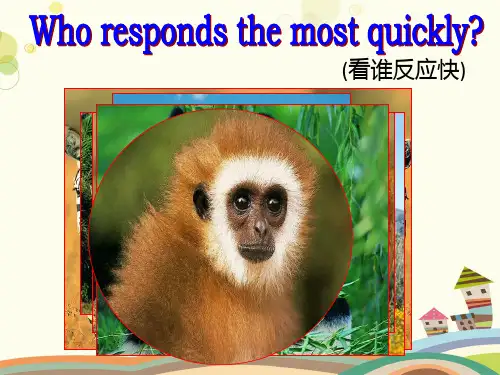
What do monkeys eat? They eat … fruit Do they eat meat? No, they don't. They eat fruit.
What does the tiger eat? It eats … meat Does it eat fruit? No, it doesn’t. It eats meat.
What is an elephant like?
It’s very big and strong.
Module 6 Unit 1
What’s the animal? It’s … a panda
How many pandas are there in this picture? There …
What does the panda look like?
Module 6 Unit 1
行为动词的一般现在时(2) (1) They speak good English. They don’t speak good English. Do they speak good English? Yes, they do. / No, they don’t.
It’s very dangerous.
What’s the animal? It’s … a monkey What is the monkey like?
It’s very clever.
Module 6 Unit 1
What’s the animal? It’s … a tiger What does a tiger look like? It’s black-and-yellow. What is the tiger like?
外研版英语七年级上册M6-2《Atriptothezoo》说课稿

外研版英语七年级上册M6-2《A trip to the zoo》说课稿一. 教材分析《A trip to the zoo》是人教版英语七年级上册Module 6的第二课时,本节课的主要内容是谈论动物以及它们的特点。
通过本节课的学习,学生能够掌握动物的名称以及一些描述动物特点的词汇和句型。
教材内容丰富,插图生动有趣,能够激发学生的学习兴趣。
二. 学情分析七年级的学生已经掌握了一些基本的英语语法和词汇,他们对学习英语有浓厚的兴趣。
但部分学生可能对一些动物的名称和特点不够了解,因此在教学中,我需要注重引导学生运用英语描述动物的特点,提高他们的语言表达能力。
三. 说教学目标1.知识目标:学生能够掌握本节课的生词和短语,正确运用所学的句型描述动物的特点。
2.能力目标:学生能够听懂、会说、会读关于动物的对话,提高他们的口语表达能力。
3.情感目标:培养学生关爱动物、保护生态环境的意识。
四. 说教学重难点1.重点:学生能够掌握动物的名称和描述动物特点的句型。
2.难点:学生能够运用所学的句型熟练地进行口语交流,描述动物的特点。
五. 说教学方法与手段1.采用任务型教学法,让学生在完成任务的过程中,自然而然地学习英语。
2.运用多媒体教学手段,如图片、视频等,激发学生的学习兴趣,帮助学生更好地理解教材内容。
3.小组活动,鼓励学生相互交流、合作,提高他们的口语表达能力。
六. 说教学过程1.导入:展示一些动物的图片,引导学生谈论他们喜欢的动物,激发学生的学习兴趣。
2.新课呈现:通过展示动物园的场景,引入本节课的主题。
教师引导学生观察图片,回答有关动物的问题。
3.单词和短语学习:学生跟读单词和短语,教师解释单词和短语的意思,并进行简单讲解。
4.句型学习:教师示范句型,引导学生进行口语练习,学生两人一组进行对话练习。
5.小组活动:学生分组进行角色扮演,运用所学的句型描述动物的特点。
6.总结:教师对本节课的内容进行总结,强调重点句型和词汇。
外研版七年级英语上册M6-Unit1课件
/programs/view/i_gLHYlSpcg
come from 来自 =be from
giraffe
tall
hippo zebra
课后回顾
本课时主要句型
1. … come from/be from… 2. Let’s go and see ... 3. It’s my favourite… 4. Shall we go and …? 5. That’s very funny.
Quiz
一、 根据所给汉语意思填空。 leaves 1. Can you see any ______ (叶子) in the picture? from 2. The lion _____ (来自) America is very strong. 3. The trip (旅行) to Hong Kong is very ___ interesting. 4. The ______ (狼) are very dangerous. wolves guide 5. We need a _____ (导游) to help you. giraffes 6. The ______ (长颈鹿) are very tall.
这是一个倒装句,正确的顺序应该是She is there. There,here等副词使用倒装句,是为了强调地点。如:
倒装句 不同
完全倒装 主语是名次 部分倒装 主语是代词
There/Here+谓语+主语。 There comes the taxi.出租车来了。 There/Here+主语+谓语。 Here you are.给你。
七年级英语上册外研版课件:Module 6Unit1
课堂导学
2. They come from many different countries and they eat different food. 它们来自许多不同的国家,并且吃不同的食物。 ◆come from =be from来自,后常接表示国家或 地点名称的词。如: She comes from London. =She is from London. 她来自伦敦。
巩固提升
二、单项填空。
( B ) 1. I _____ English and Tom _____
Chinese.
A. studies;study B. study; studies
C. study;study
D. studies;studies
巩固提升
( A ) 2. The giraffe _____ from Asia.
课文理解
三、根据课本Act.3对话,完成下列短文填空。 There are many kinds of animals in Beijing
Zoo, such as bears, zebras, giraffes and pandas. They come from 1. _d_i_ff_e_r_e_n_t _ countries and eat different food. The lions eat meat, so they are 2. _d_a_n_g_e_r_o_u_s.
课堂导学
4. Here are the lions. 狮子在这儿。 ◆此句是倒装句,正常语序为:The lions are here. 句子中如果出现副词here(这儿), there(那儿)位于句首时,常用倒装句式。
课堂导学
5. Look at this elephant. 看这只大象。 ◆look at意为“看……”,后接名词或代词作宾语。 辨析:look,see,watch与read
外研版七上 module 6 A trip to the zoo 知识点
Module 6 A trip to the zoo 知识点讲解1. A trip to the zoo 动物园之旅(1) a trip to…(后接目的地) 意为“去……的旅行”例如:a trip to China 中国之旅 a trip to Wuhan 武汉之旅(2) trip作名词为“旅行”,通常指短途旅行。
例如:He is going to make a day trip to Hong Kong. 他想进行香港一日游。
I’m on a business trip to Japan. 我正在日本出差。
(拓展) trip前面的介词用on, on a trip表示“在旅行期间”。
make/take/have a trip 短语都表示“旅行”2.Welcome to Beijing Zoo. 欢迎来到北京动物园。
北京动物园是中国开放最早、动物种类最多的动物园,距今已有90 多年的历史。
位于北京西城区西直门外,占地面积约90 公顷,饲养展览动物900多种,20000多只,每年接待中外游客六百多万人次。
welcome to… 意为“欢迎来到……”例如:Welcome to our school. 欢迎来到我们学校。
3.The zoo has many kinds of animals, such as bears, zebras, giraffes and pandas.动物园里有许多种动物,比如熊、斑马、长颈鹿和熊猫。
a. many为形容词,意为“许多”,后接可数名词的复数形式。
例如:There are many animals in the zoo. 动物园里有许多动物。
辨析many和muchmany意思为“许多的”修饰或替代可数名词I have many comic books. 我有许多漫画书。
much 修饰或替代不可数名词We have much cola in the fridge. 我们有许多可乐在冰箱里。
七年级英语上册 10分钟掌控课堂 Module 6 A trip to the zoo(pdf)(新版)外研版
º¿:H ¿cÀ $:H ¿ÓÔF ºü$ k.#$ .;H Õ. eF. ¼ ;H º2 ½ ¾ O OR 28 c t1 R?@ «@ > K81 > K8 7 c
L 9F 3 1 = > 8 2 K8 G aH 1 > K8 7 a8 1 aG 8 # STºwxNÂ#* ]<1 2` > G / @8> K/ HA1 1 @# 6 2 3 1 9 D / Q 8C 86 21 > K8 71 28 & °± ¦ l ö" ~ ;l& ] K6 Q 8> 5 1H / H > 8 7 H # P 28/ H6 > 8 6 F K8 76 2< > K81 > K8 7/ H6 <1 F > 1 7 # ÓH * ; H!ef";H!pÞ* )# # < % @ " =& t % t ) > Az& »º2~õñX.:oK = F 1 97 H 8 # R ô* 4. P ; 1 1 < / <8 6 # R b97 8 # R ; 7 8 6 > #° ` CH 1 7 7 3 " A9> ] c 4.] bK6 G G5 8D 1> 1> K8 d 1 1 > 1 C 1 7 7 1 5 & hÇ#Q eè'& , JK - H K6 G G ;W2z. ;#[*
$) "
&'()*% > !? "$2@ "' ".% A''
!
!!<=>? 2< a6 2<6 H G / @88 6 >