
人教版(新起点)-英语-五年级上册-Unit 6 Chores拓展学习
小学英语人教版新起点(一起)五年级上册Unit6 chores 教案3

小学英语人教版新起点(一起)五年级上册Unit 6《Chores》教案教学目标一、知识与技能1.The new words: rubbish, fold, sweep, floor, mess2.The key phrases: do chores, do the dishes, sweep the floor, take out the rubbish, fold your clothes, make your bed, clean the living room, stay out late, get a ride二、过程与方法1.The key structures:---Could you please clean your room?---Yes, sure. /Sorry, I can't. I have to do my homework.---Could I use your computer?---Yes, you can. / No, you can't. I am going to work on it now2.To improve the ability of listening and speaking.三、情感态度和价值观Make polite requests and ask for permission教学重点Talk freely with the sentences we learnt in this class教学难点Remember the words and phrases教学方法讲授法、交流法课前准备Tape recorder, computer or multimedia课时安排6课时教学过程一、导入新课Watch cartoon Cinderela (In the cartoon, Cinderela has to do lots of chores)to introduce thetopic of this lesson: do choresThen ask students what chores the girl does every day.Present different pictures of Cinderela二、新课学习Present the new phrases in part 1a:do the dishes, sweep the floor, take out the rubbish, fold your clothes, make your bed, clean the living roomRead them again and again.T: Peter’s room is untidy, peter and his mother are at home, what should they do?Now listen to the tape player, then finish part 1b. Peter’s chores or Mom’s chores?Listen it the first time, and check the answersListen it again, then pay attention to the question:T: How does Mum ask peter to help her?----Could you please …?----Yes, sure. / Sorry, I can’t, I have to…Look at the picture in 1a, ask your partner to do the chores that you see.Example:A: Could you please sweep the floor?B: Yes, sure. Can you do the dishes?A: Well, could you please do them? I ‘m going to clean the living room.B: No problem.三、结论总结1.The new words: rubbish, fold, sweep, floor, mess2.The key phrases: do chores, do the dishes, sweep the floor, take out the rubbish, fold your clothes, make your bed, clean the living room, stay out late, get a ride3.The key structures:---Could you please clean your room?---Yes, sure. /Sorry, I can't. I have to do my homework.---Could I use your computer?---Yes, you can. / No, you can't. I am going to work on it now.四、课堂练习用所给词的适当形式填空。
五年级上册英语教案-Unit 6《Chores》(Story Time)|人教(新起点)
五年级上册英语教案-Unit 6《Chores》(Story Time)|人教(新起点)教学内容词汇•clean the bedroom•water the plants•sweep the floor•take out the trash•do the dishes•make the bed句型•What chores do you have at home?•I have to clean the bedroom, water the plants, and sweep the floor.•What about you?•I have to take out the trash, do the dishes, and make the bed.阅读教材 P47,通过阅读故事《The Two Mice》学习家务活的相关词汇和句型。
教学目标1.学生能够听懂、理解、运用与家务活相关的词汇和句型。
2.学生能够通过阅读故事,学习与家务活相关的单词,并能够回答相关问题。
教学步骤Step 1:Lead-in1.教师依次出示 P47 上的图片并进行语音讲解,让学生初步了解本单元的主题——家务活。
2.教师用图片展示常见家务活,引导学生说出自己在家中的家务活。
Step 2:Vocabulary1.教师呈现 P44 上的图片,并语音讲解词汇 clean、water、sweep、take out、do 和 make。
2.教师展示居家场景,进一步解释这些单词在家务活中的应用。
让学生学会运用这些词汇,描述自己的家务活。
Step 3:Story Time1.教师对《The Two Mice》这个故事进行简要介绍,并播放语音讲解。
2.教师放映 P47 上的故事图片,让学生跟着故事的进行,学习与家务活相关的单词。
3.教师引导学生用故事中所学到的单词回答问题。
Step 4:小结1.教师让学生总结本节课所学的单词和句子。
2.学生可以用已学到的单词和句子来描述自己做过的家务活。
五年级上册英语教案-Unit6《Chores》(第3课时)|人教(新起点)

五年级上册英语教案-Unit 6《Chores》(第3课时)|人教(新起点)教学内容本课时为五年级上册英语Unit 6《Chores》的第3课时,教学内容主要围绕家务活动展开。
学生将学习如何用英语描述和谈论日常家务,包括打扫房间、洗衣服、洗碗、做饭等。
通过本课时的学习,学生能够掌握相关的词汇和句型,并能够在实际情境中进行运用。
教学目标1. 学生能够听懂、会说、会读本课时所学的词汇和句型。
2. 学生能够运用所学的词汇和句型描述和谈论日常家务活动。
3. 学生能够理解并运用日常交际用语进行简单的交流。
教学难点1. 词汇的掌握和运用,特别是家务活动的相关词汇。
2. 句型的构造和运用,特别是描述和谈论家务活动的句型。
3. 交际用语的运用,特别是进行日常交流时的用语。
教具学具准备1. 教学课件或黑板,用于展示和讲解教学内容。
2. 教学录音机或音响设备,用于播放听力材料。
3. 教学卡片或图片,用于辅助教学和巩固词汇。
4. 学生用书和学习材料,用于学生自主学习和参与活动。
教学过程1. 导入:通过图片或实物展示,引导学生回顾和复习与本课时相关的词汇和句型,激发学生的学习兴趣。
2. 新课内容呈现:通过教学课件或黑板,向学生展示本课时的教学内容,包括词汇、句型和交际用语。
通过讲解、示范和练习,帮助学生理解和掌握新知识。
3. 听力训练:通过播放听力材料,让学生听懂本课时所学的词汇和句型。
通过听力练习和活动,提高学生的听力理解能力。
4. 口语训练:通过角色扮演、小组讨论和对话练习,让学生运用所学的词汇和句型进行口语交流。
通过口语练习和活动,提高学生的口语表达能力。
板书设计1. 五年级上册英语教案-Unit 6《Chores》(第3课时)2. 教学内容:家务活动的词汇和句型3. 教学目标:掌握词汇和句型,进行口语交流4. 教学难点:词汇的掌握和运用,句型的构造和运用5. 教学过程:导入、新课内容呈现、听力训练、口语训练、课堂小结作业设计1. 书面作业:完成本课时相关的练习题,巩固所学知识。
五年级上册英语Unit 6《Chores》人教新起点
Let's read. ,pmwfhlseaawaeetntadrkeetksereprsfsuepl,shewosbsttetohaobhrctrreshuieapusSh,ettbwhpebu.etetf.lsbatshladacaoticen,sekanolhtsrotersw.s.ts,hteoheeusmpewt,fsateathekshdeheessesthcelobthteideds,ymdwomtaahekasset,dNhekmiitodrsehaceaytbenllskhouetcdetethndyhhielcrbseeuihohersndoe,d,bcism,sheh.d,e,rsoom
makes the bed, sweeps the floor ,waters the
plants,washes clothes,feeds her pet cat. takes out the
rubbish.
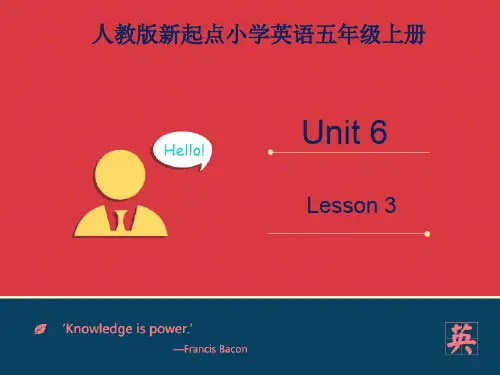
Let's read. What chores does Susan usually do in the afternoon?
Let's read. What chores do Nancy's usually do on Sunday?
makes the bed, wash clothes ,tidy their bedroom. ,make lunch,does the dishes
Let's read. What chores does Nancy usually do after getting up?
Let's read. Susan is always busy on Sunday. 星期天总是很忙。
五年级英语上册 Unit 6 Chores(Lesson 3) 人教新起点
SHOW TIME
Let’s report.
Susan and Nancy are busy on Sunday. On Sunday morning, Susan … On Sunday morning, Nancy … They both usually …
>>Practice
Let’s write.
>>Practice
>>Presentation
Let’s rБайду номын сангаасad.
2. Now read and underline the chores they do.
>>Presentation
Let’s read.
>>Presentation
Le’s read.
3. Fill in the chores they do in the right place.
Unit 6 Chores
Lesson 3
>>Warm-up
Let’s sing.
>>Presentation
Let’s read.
1. Look at pictures. Who are they? What are they doing?
They are Susan and Nancy. They are washing the clothes and making lunch.
>>Practice
Let’s retell.
in the morning
makes the bed
then
sweeps the floor, waters the plants
小学英语人教版新起点(一起)五年级上册Unit6 chores 资料环保的定义和内涵
小学英语人教版新起点(一起)五年级上册定义内涵环境保护是利用环境科学的理论和方法,协调人类与环境的关系,解决各种问题,保护和改善环境的一切人类活动的总称。
包括,采取行政的、法律的、经济的、科学技术的多方面的措施,合理地利用自然资源,防止环境的污染和破坏,以求保持和发展生态平衡,扩大有用自然资源的再生产,保证人类社会的发展。
环境保护(environmental protection)涉及的范围广、综合性强,它涉及自然科学和社会科学的许多领域,还有其独特的研究对象。
环境保护包含至少三个层面的意思:对自然环境的保护防止自然环境的恶化。
包括:对青山、绿水、蓝天、大海的保护。
这里就涉及到了不能私采(矿)滥伐(树)、不能乱排(污水)乱放(污气)、不能过度放牧、不能过度开荒、不能过度开发自然资源、不能破坏自然界的生态平衡等等。
这个层面属于宏观的,主要依靠各级政府行使自己的职能、进行调控,才能够解决。
对人类居住、生活环境的保护使之更适合人类工作和劳动的需要。
这就涉及到人们的衣、食、住、行、玩的方方面面,都要符合科学、卫生、健康、绿色的要求。
这个层面属于微观的,既要靠公民的自觉行动,又要依靠政府的政策法规作保证,依靠社区的组织教育来引导,要工农兵学商各行各业齐抓共管,才能解决。
对地球生物的保护物种的保全,植物植被的养护,动物的回归,生物多样性,转基因的合理、慎用,濒临灭绝生物的特别、特殊保护,灭绝物种的恢复,栖息地的扩大,人类与生物的和谐共处,不欺负其他物种等等。
这3个层面的关系是:你中有我、我中有你,各有侧重而又统一的。
3者并不矛盾、更不对立。
作为公民来说,我们对于居住、生活环境的保护,就是直接地保护了自然环境;我们破坏了居住、生活的环境,就会直接或间接地破坏自然环境。
作为政府来说,既要着眼于宏观的保护,又要从微观入手,发动群众、教育群众,使环境保护成为公民的自觉行动。
1972年联合国人类环境会议以后,“环境保护”这一术语被广泛的采用。
小学英语人教版新起点(一起)五年级上册Unit6 chores 资料环保的行为规范
小学英语人教版新起点(一起)五年级上册行为规范1)节水为荣——随时关上水龙头,别让水白流2)监护水源——保护水源就是保护自己的生命3)一水多用——让水重复使用4)阻止滴漏——检查维修水龙头5)慎用清洁剂——尽量用肥皂,减少水污染6)关心大气质量——别忘了你时刻都在呼吸7)随手关灯——省一度电,少一份污染8)节用电器——为减缓地球温暖化出一把力9)减用空调——降低能源消耗10)支持绿色照明——人人都用节能灯11)利用可再生资源—别等到能源耗竭的那一天12)做“公交族”——以乘坐公共交通车为荣13)当“自行车英雄”——保护大气,始于足下14)减少尾气排放——开车人的责任15)用无铅汽油——开车人的选择16)使用再生纸——减少森林砍伐17)替代贺年卡——减轻地球负担18)节粮新时尚——让节俭变成荣耀19)控制噪声污染——让我们互相监督20)维护安宁环境——让我们从自己做起21)认“环境标志”——选购绿色食品22)用无氟制品——保护臭氧层23)选无磷洗衣粉——保护江河湖泊24)买环保电池——防止汞镉污染25)选绿色包装——减少垃圾灾难26)认绿色食品标志——保障自身健康27)买无公害食品——维护生态环境28)少用一次性制品——节约地球资源29)自备购物袋——少用塑料袋30)自备餐盒——减少白色污染31)少用一次性筷子——别让森林变木屑32)旧物巧利用——让有限的资源延长寿命33)交流捐赠多余物品——闲置浪费,捐赠光荣34)回收废塑料——开发“第二油田”35)回收废电池——防止悲剧重演36)回收废纸——再造林木资源37)回收生物垃圾——再生绿色肥料领养树——做绿林卫士38)推动垃圾分类回收——举手之劳战胜垃圾公害39)拒食野生动物——改变不良的饮食习惯40)拒用野生动植物制品——别让濒危生命死在你手里41)不猎捕和饲养野生动物——保护有脆弱的生物链42)制止偷猎和买卖野生动物的行为——行使你神圣的权利43)做动物的朋友——善待生命,与万物共存44)不买珍稀木材用具——别摧毁热带雨林45)植树护林——与荒漠化抗争46)领养树——做绿林卫士47)回收各种废弃物——所有的垃圾都能变成资源。
五年级上册英语教案-Unit6《Chores》(FunTime)|人教(新起点)
五年级上册英语教案-Unit 6《Chores》(Fun Time)|人教(新起点)教学内容本单元主要围绕“家务事”这一主题展开,通过生动有趣的活动,让学生学习并掌握与家务相关的英语词汇和表达方式。
教学内容包括:学习单词“clean”, “wash”, “cook”, “fold”, “dust”等;学习句子“I can do the dishes.”, “Can you make the bed?”等;通过听力练习,提高学生对家务相关词汇和句型的理解和反应能力;通过口语练习,培养学生运用英语进行日常交流的能力。
教学目标1. 让学生掌握与家务相关的英语词汇和表达方式。
2. 培养学生运用英语进行日常交流的能力。
3. 提高学生的听力和口语水平。
4. 培养学生的合作意识和团队精神。
教学难点1. 家务相关词汇的发音和记忆。
2. 句型的正确运用和口语表达。
3. 听力练习中的细节理解和反应速度。
教具学具准备1. 多媒体设备:用于播放PPT和听力材料。
2. 教学卡片:用于展示和复习家务相关词汇。
3. 小组活动道具:用于小组活动和角色扮演。
教学过程1. 导入:通过图片或视频展示不同的家务场景,引导学生思考和讨论家务的重要性。
2. 新课内容学习:通过PPT展示家务相关词汇和句型,引导学生跟读和模仿,并进行适当的练习。
3. 小组活动:学生分成小组,进行角色扮演或讨论活动,运用所学的词汇和句型进行交流。
4. 听力练习:播放听力材料,让学生听并完成相应的练习,提高听力理解能力。
5. 口语练习:学生进行口语表达练习,如模拟对话或小组讨论,培养口语交流能力。
板书设计1. Unit 6 Chores (Fun Time)2. 重点词汇:clean, wash, cook, fold, dust等3. 重点句型:I can do the dishes., Can you make the bed?等4. 小组活动提示:Roleplay, Discussion作业设计1. 听力练习:完成听力练习题,巩固听力理解能力。
小学英语人教新起点五年级上册Unit6ChoresUnit6Chores
教学反思:In this lesson ,students are familiar with the expressions about chores. The teacher explains and emphasize some phrases,While students practice phrases and sentences.(sweep the floor,take out the rubbish....)
Do you help your parents do chores at home? Yes, I do.
What chores do you usually do at home? I usually wash
clothes. How often do you do it? Three times a week.
you read them?
clean the room, make the bed, take out the rubbish, wash
clothes, tidy the desk, sweep the floor and so on.
Can you make a survey with these words?
wash clothes tidy the desk sweep the floor
Do you help your parents do chores at home?
Yes, I do.
What chores do you usually do at home?
I usually wash clothes.
make the bed take out the rubbish wash clothes tidy the desk sweep the floor 2, Lead in the word”chores” T teach the word : or---for --more--chore 3, T show out PPT: Get ready:“Look! The three children are going to school. They are talking about chores. They can help their parents do chores at home. Can you do chores at home? In this unit , we’ll learn about chores. So today we learn Unit 6 Chores ( Read the tittle one by one)
五年级英语上册Unit 6 Chores 教案人教新起点
Unit 6 Chores 教案一、教学目标1. 学习礼貌地询问。
2. 学习并复习一些关于家务活的短语和词组。
二、教学重点1.Key words and phrases: ①do the chores,② do the dishes,③ do the laundry, ④sweep thefloor, ⑤take out the trash, ⑥fold the clothes, ⑦clean the living room,⑧wash the car, ⑨buy some drinks and snacks…2.语言目标:① Do you help your parents do chores at home?② What chores do you usually do at home?三、教学过程StepⅠ. write “house work is a big work to do”on the blackboard and let students guess the meaning of this sentence. then I explain to theclass.houseworks are part of fun in our life so when we are rest we should helpour partents do some housework to build our spirt .so this class we will learnunit11 “Could you please clean your room?” learn something about houseworksand ask requests.StepⅡ. This activity introduces some new words.New words: ①do the chores.② do the dishes. ④sweep the floor,.⑤take out the trash. ⑥ fold the clothes. ⑦ clean the living room.1. Point to the itemsunder the heading Chores in the chart. Ask studentsWhat the word chores means.2. Point to the items again and read each one to the class. Ask studentsto explain each chore in their own words and say if they do it or notFor example, a student might say, after we eat breakfast the dishesare dirty. We have to do the dishes. Do the dishes is the same as washthe dishes.3.Ask students to find a partner. As they work, move around the room andanswer any questions.4.Guessing game①. Give some pictures on the screen. There are someactivities on each of the picture. Look at the pictures carefully then tell methe name of the activities. Then ask some students to tell me their answers Step Ⅲ. Chores are part of fun in our l ife it’s always right to be polite requests and ask for permission. Look at these pictures let’s learn how to make a politerequest and answer it. Boys ask girls answer. Ok .let’s do it together. Givesome pictures on the screen. Practise the conversations.Step Ⅳ. Key sentence structures.What chores do you usually do at home?Step Ⅴ. Ask students work in pairs to prctise the dialogues use sentences.四、Homework1.Remember the new words in Unit 6.2. Help your parents do some chores at home .。