
2020年沪教牛津版英语五年级上册Unit 2《Going to school》第2课时课件
on foot
by bike
by bus by car
Revision
根据给出的表格和例句进行对话,完成表格。 A:How do you come to school? B:I come to school...
Name on foot by bus by bike by car
She lives on Green Street.
她住在格林街。
on +
街道 星期 具体日期
例如:on January 1st on Sunday
Language point
There is an underground station near Ms Guo's home.
郭女士家附近有一个地铁站。 There be 句型结构: There is+可数名词单数/不可数名词. There are +可数名词复数.
Think and write 根据左边的图片试着进行回答。
My father goes to work
.
My mother goes to work
.
go(es) to
.
I go to school
.
New words
underground n. 地铁
New words
station n.车站
8、拥有梦想只是一种智力,实现梦想才是一种能力。20:3020:30:177.14.2020Tuesday, July 14, 2020
Xiaoming
√
Ask and answer
用所学知识说一说你爸爸妈妈是怎么去工作的。 A:How does your father go to work? B: He goes to work ... A:How does your mother go to work? B: She goes to work ...
Draw and say
画一画,说一说你家离学校远还是近。你是怎么去学校的。
home underground live far from/ near my school. I go to school...
Learn the sounds
wasp 黄蜂
by bus by car on foot underground train bus stop
用所给词适当形式填空
1. She lives (live) near here. 2. Tony draws (draw) pictures well. 3. Lily goes (go) to school by subway.
Write T(true) or F(false).
1. Ms Guo is a student at Happy Primary School. ( F) 2. She lives on Spring Street. ( F) 3. There is an underground station near Ms Guo's home. (T) 4. After half an hour,she gets off at Spring Street Bus Stop. (T)
1. fast wasp (F ) 2. spring crisp (T ) 3. lamp speak (F ) 4. last please (F ) 5. English ship (T ) 6. map play (T )
Let's say 根据给出的单词和句子,说一说你是怎么去学校的。
My school is far from /near my home. I go to school...
She gets off the train at Park Street Station.
Look and read
3
4
Then she takes Bus No.12 to Spring Street.
After half an hour, she gets off at Spring Street Bus Stop. Then she walks to her school.
Language point
Then she takes Bus No. 12 to Spring Street. 然后她乘坐12路公交车到春季街。
takes Bus No. 12 = by Bus No. 12 同义句: Then she goes to Spring Street by Bus No.12.
Summary
重点单词: train primary underground station
重点句子:
There is an underground station near Ms Guo's home.
Homework
1.重点单词抄写三次。 2.背诵短文。
亲爱亲的爱读的者读:者: 1、人盛生不年活可不有重相傲来信气,眼,一泪但日,不难眼可再泪无晨并傲。不骨及代。时表宜软20自弱.7.勉。14,270.岁.174.月1.24不072.待1042人.02:。0320。022020:03:.3070:.112740J7:3u.10l-4:21.02720J02u:0l3-200:2300:230:30:17Jul-2020:30 亲爱的读者: 2、人千世生里上自之没古行有谁,绝无始望死于的,足处留下境取。,丹只20心有20照对年汗处7月青境1。绝4日二望星〇的期二人二〇。年二七〇月二十〇四年日七月20十20四年日7月201240日年星7月期1二4日星期二 春去春春去又春回又,回新,桃新换桃旧换符旧。符在。那在桃那花桃盛花开盛的开地的方地,方在 3、路少成漫年功漫易都其学永修老远远难不兮成会,言吾一弃将寸,上光放下阴弃而不者求可永索轻远。不。会20成2:300功:370。.174.1.240.220022002:300:370.174.1.240.220022002:300:32002:300:3:107:177.174.1.240.220022002:300:370.174.1.240.220020 ,在 420、:3吾敏07生而.1也好4.有学20涯,20,不20而耻:3知下07也问.1无。4.涯。20。72.10742.1.024:03.2200022700.:13740.1.:21407.22700.122400.2:23000:23200022:3000::33200072:3.010:43:1.027:01227002:300:3:107:17 春去春又回,新桃换旧符。在那桃花盛开的地方,在 54、欲海不穷内要千存为里知它目已的,结更天束上涯而一若哭层比,楼邻应。当为Tu它es的da开y,始Ju而ly笑1。4, 72.01240.2J0u2ly0270.1T4u.2e0sd2a0y2,0J:3u0ly2104:3,022002:0370/:147/2200:230:17 这醉这人醉芬人芳芬的芳季的节季,节愿,你愿生你活生像活春像天春一天样一阳样光阳,光心,情心像情桃像桃 65、莫天愁生时前命不路的如无成地知长利已,,需地天要利下吃不谁饭如人,人不还和识需。君要。吃8时苦83时,03分吃08分亏时8。3时0T3分u0e1分s4d1-aJ4uy-J,l-uJ2lu0-l27y0.174.1.,2420.02220002J0uly 20Tuesday, July 14, 20207/14/2020 这醉人芬芳的季节,愿你生活像春天一样阳光,心情像桃 76、人生谁生命无贵太过相?知短过,暂而何,能用今改金天,与放善钱弃莫。了大明20焉天.7.。不14一2200定.7.7.能1.14得4220到0.7.。7.1.1844时2。03.2700.分12480。时年23700月2分01年144日7-J月星ul1期-42日二07星二.14期〇.2二02二〇0〇年二七〇月年十七四月日十四日 花一花样一美样丽美,丽感,谢感你谢的你阅的读阅。读。 87、满勇放招气眼损通前,往方谦天,受堂只益,要。怯我懦们20通继:30往续2地,0:3狱收0。获:17的270.季:1340节.22就00:23在00T前:1u7方e7s.。d1a42y.02,.0J72u.10ly4T12u40e,.s72d.01a24y02, 0Ju.7ly.1144。, 2020年7月14日星期二二〇二〇年七月十 花一样美丽,感谢你的阅读。 四日
sp/sp/
crisp 炸薯片
Learn the sounds
Listen, Little Wasp! This is my crisp. Please go away. It's not a good day For a wasp To play on my crisp.
Practice 判断下列红色部分是否发音相同,相同的打“T”, 不相同打“F”。
小练习
用 is/are 填空。
1. There is a picture on the wall. 2. There are many pictures on the wall. 3. There is lots of snow . 4. There are lots of pens in my bag.
Think and number ( 6 )Finally she walks to her school. ( 3 )She walks to the station and takes the train. ( 1 )Ms Guo lives on Green Street. ( 5 )Then she takes Bus No. 12 to Spring Street. ( 4 )She gets off the train at Park Street Station. ( 2 ) There is an underground station near Ms Guo's home.
2020年【上海教育版】英语五年级上册:Unit 2《Going to school》教案

2020年精编沪教版英语资料课时教学设计首页课题M1U2 Going to school 课型新授课第几课时2 授课时间教具学具Multimedia课时教学目标(三维)1.学生通过Do a survey 做调查的任务,操练核心句型。
2.学生通过Think and write,用生活化的场景提供句型的写作练习。
3.学生理解短文《郭老师的上班路线》,通过阅读活动及反馈练习,引导学生抓住关键信息。
4.通过Draw and say ,学生把自己上学的路线展示出来,并作介绍,以巩固核心句型。
5.培养低碳环保意识,采用合理的出行方式。
教学重点与难点重点:词汇:Ms underground take after hour bus stop get off 语音:sp(wasp crisp)难点:表示不同交通方式的短语on foot 、by bus 等所用的介词不同。
教学方法与手段阅读讨论角色扮演使用教材的构想在设计活动时,由浅入深地引导学生学习,在读读顺序,完成地图,角色扮演的基础上,增加判断正误,看图说话环节,帮助学生进一步理解,运用语言。
课时教学互动流程教师行为学生行为补充课堂变化及处理主要环节的效果Pre-task preparationsSalon game(Pick the card for on foot)I come to school on foot.How do you come to school? S1:(Pick the card for by bus)I come to school by bus.How do you come toschool?S2:(Pick the card for by bus)How do you come to school?)etc.(by underground by taxi by school bus)While-task procedures1.Pair workS1:Do you live near school?S2:Yes,I do.S1:How do you come to school?S2:I come to school by bike.S1:What time do you leave/arrive athome/school?S2: ...课时教学互动流程教师行为学生行为补充课堂变化及处理主要环节的效果2.A survey name job come to schoolby /on... near/far from3.DialogueMy father is a doctor.He works in a hospital.He works far from home.He goes to work by bus.What does your father do?How does he go to work?4.Think and read5.Look and read①Look,this is Ms Guo.She’s a teacher.How does she goes to work? Guess.②Learn and answerPicture1What can you see?How does Ms Gus go to the underground station?③Fill in the blankPost-task activitiesIntroduce themselves S1:My father is a teacher.He works near home.He goes to work by bike.How does your father go to work?S2:He goes to work on foot.S1:She goes to work on foot.S2:She goes to work by undergroud.S3:I can see an underground station.S4:She walks there.S:I live on...(name)Street.This is my home.I live near/far from school.I go to school on foot.课时教学设计尾页达标检测Think and writeMy father goes to work__________________.My mother goes to work___________________.______________________go(es) to _______________.I go to school_______________________.板书设计U2 Going to schoolHow do you come to school?I come to school on foot.作业设计1.Talk about your way to school.2.Read the rhyme in “Learn the sounds”.※ 3.Retell the story “Ms Guo’s journey to work”.教学后记。
泸教版英语五年级上册Unit2 Going to school重点解析
Unit2 Going to schoolWords单词bywalkMs journey underground station take after hourPhrases 短语bus stopby busby bikeby caron footget offfar from primary school come to school walk to the station half an houron Green Street Bus No.12go to work take a trainSentences 句子How do you come to school?I come to school by bus .I live from our school.Alice comes to school on foot.What about you ?Ms Guo walks to the station and takes the train.She gets of the train at Park Street Station.word discrimination词义辨析1.How do you come to school ?how : 怎样come to school 来学校(指来学校,说话者在学校)go to shool 去学校(说话者不再学校)How do you come to school ? I come to school by bus .How does Tom come to school ?He comes to school on foot .= He walks to school .第三人称单数,谓语动词要加s.助动词do /does(含有动词的疑问句和否定句要借助助动词do,第三人称单数用does)拓展:How many +可数名词有多少How many apples are there . How much + 不可数名词有多少How much milk is in the fridge. How much 多少钱(问价格)How much is the bag?2.I come to school by bus.by +交通工具乘坐某种交通工具by bus/car/train/ship/plane/taxi/boat/underground(metro/subway) take bus/car/train/ship/plane/taxi/boat/underground(metro/subway) on foot 走路go /come to + 地点+ on foot = walk to +地点I come to school on foot everyday .= I walk to school everyday .3.I live far from school .far from 离……远near 离……近4.too 也(用于句末)My mother is a teacher too.also 也(用于句中)My mother is also a teacher.5.together 一起together with sb. 和某人一起Jam and I go swimming together after school .=I go swimming together with Jam after school.6.What about you ? 你呢What about + v-ing ?=How about +v-ing? 做某事怎样How about eating hamburger tonight ?=What about eating hamburger tonight?7.Ms Guo’s journey to work‘s 所有格形式……的Jam’s book my sister’s skirt her father ‘s carmy father and my mother’s roomLily’s and Lucy’s rooms Lily and Lucy’s room(共同所拥有时只需在后者加’s , )8.There is an underground.There is a tree.There are some trees .There is a tree and two cars.There are two cars and a tree.9.Take Bus NO.12 to Spring Street.take + 交通工具+ to + 地点乘坐……去某地10.get off 下车get on 上车11.half an hour 半个小时12. Then she walk to her school .she herhe hisI my13.Spring Street Park Street Station Ms Guo Bus Stop 人名、地名、首字母大写习题 1一、写词组1.乘公共汽车______________2.离……远_______________3.步行____________________4.骑自行车_______________5.车站___________________6.乘小汽车_________________7.近_____________________ 8.第12路公共汽车_____________ 9.上班___________________ 10.来学校_____________________11.下车__________________ 12.半小时_____________________二、填空1.-----________(如何) do you come to school?-----I come to school _____ ______(乘公交).2.I live _____ ______(离…远) school.3.Alice and I walk to school __________(一同/一起).三、选择题1. _____ do you go to work?A. WhatB. HowC. Where2. My home is ______ from our school. I go to school by underground.A. farB. nearC. behind3. My home is not far from our school. I go to school _______.A. on footB. by busC. by train4.Lily ______ to school by train .A. comingB. comese。
牛津上海版(深圳)五上Unit2《Goingtoschool》(第3课时)word教案

牛津上海版(深圳)五上Unit2《Goingtoschool》(第3课时)word教案Module 1Unit 2 Going to schoolPeriod 3 Ms Guo’s journey to work教案教学目标1. 能在理解故事内容的过程中进一步复习巩固与交通出行有关的词汇和句型,如:walk (to) …, take the train; How do/ does…come/ go to…? 等;2. 能在语境中理解get on/ off, after, hour, bus stop, underground station, journey等含义并掌握相关的介词搭配;3. 能在故事语境中用一般现在时来描述习惯性的动作;4. 能在故事阅读中尝试使用副词来表达动作发生的先后顺序,如:first, next, then, finally5. 能通过阅读感知现代交通给人们生活带来的方便。
教学过程:PROCEDURES CONTENTS METHODS PURPOSEWarm-up Daily talk 1. Ask and answer.How do you come to school?复习本单元的重点句型,并为故事教学做好铺垫。
Pre-readingProcedure The beginning of the story 1. Introduce Ms Guo2. Show two maps and ask Ss to choose the right one.3. Elicit new phrases: bus stop, underground station4. Guess: How does Ms Guo go to work?5. Show ‘Ding-ding map’ and ask Ss to dis cuss the best way.6. Showing the7. whole story.通过阅读选择,既帮助学生确定故事中的起点和终点,又引出新授词汇。
牛津上海版(深圳)五上Unit 2《Going to school》word表格式教案(3课时)
How do you come to school?
I come to school by bike.
2.请学生运用所学的句型,分组完成下面的调查表。
3.让学生继续使用上面活动的调查表,填入家人上班的交通方式,并开展对子活动。
4.然后指导学生完成think and write的练习。
This is theway Icome to school, I come to school, I come to school by bike
2.学生通过接龙游戏,操练核心词汇及句型,并做适当拓展。请五六位学生上来,每人抽取一张写有交通方式的词组的卡片,根据卡片上的词组开展句型练习。
T: I come to school on foot. How do you come to school?
Period 2
Pre- task preparation
1.This is the way I come to school, I come to school, I come to school.
This is the way I come to school, I come to school, I come to school on foot. This is the way I come to school, I come to school, I come to school by bus.
5.出示Learn the sounds的儿歌单词卡片sp,请学生跟读并记住sp的发音。
Post –task activities
1.请每组学生代表口头汇报各组数据,教师汇报总数据后,请学生仿照Do a survey中的柱形图绘制班级学生的交通方式统计表,然后完成书面汇报,并贴在墙上展示。
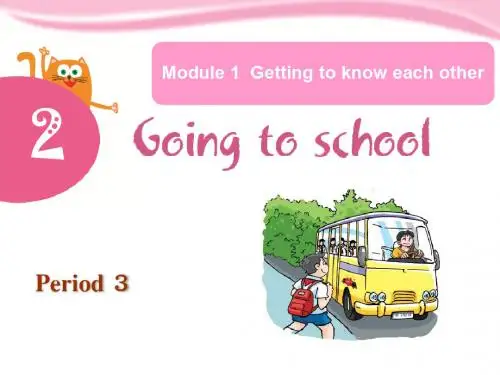
小学英语五年级三起上册(牛津上海版)Unit 2《Going to school》(第3课时)课件
traffic lights
pavement
zebra crossing
Wait
cross
left
right
walk
run
WWbpeihecoymctcoaulesns'thtrisetdatreoekpe.a.
How do you come to school?
I come to school …Because …
How does your father go to work? He goes to work …
How does your mother go to work? She goes to work …
Module 1 Getting to know each other
2
Period 3
Our school will shine today. Our school will shine. Our school will shine today, All down the line. Our school will shine today. Our school will shine. When the sun goes down, When the moon goes up, Our school will shine.
school
I live far from/near my school. I go to school …
________ ’s journey to school
First, _____________________________. Next, _____________________________. Then, ____________________________. Finally, __________________________.
沪教版五年级上册英语Unit2 Going to school讲义
Unit 2 Going to school 一、基本知识点(一)重点词汇:by [baɪ] prep. (表示方式);靠近walk [wɔ:k]v.走;步行Ms [mɪz]n.女士underground [ʌndə'graʊnd] n.地铁take [teɪk] v.乘坐(交通工具);带领after ['ɑ:ftə] prep.在......后hour ['aʊə]n.小时journey ['dʒɜ:nɪ] n. 旅程,旅行station ['steɪʃ(ə)n] n. 车站(二)短语:by bike 骑自行车by bus 乘公共汽车by car 乘小汽车on foot 步行primary school 小学bus stop 公共汽车站far from 离......远get off 下车(三)句型:1. How do you come to school?你怎么来学校?2.I come to school on foot.我步行来学校。
3.She takes the train and gets off the train at Park Street Station.她乘坐火车(地铁)然后在公园街站下车。
4.I live far from/near my school.我住的离学校很远/近。
(四)重难点、易错点:1. by直接加交通工具(bus, taxi, plane, bike......),走路出行on foot.2. 能分辨字母组合在单词中的发音, sp /sp/: wasp, crisp, grasp, space, sport, speak二、典型例题(一)单项选择( )1. Ben and his sister ________ to the park by bike.A. comeB. comesC. coming【解析】答案:A 考查主谓一致,主语为Ben和他的妹妹,是复数,所以谓语动词也要用复数。
沪教版小学五年级英语上册Unit 2 Going to school 教案
Unit 2 Going to school教学设计
课时划分与分课时目标
课题
Unit 2 going to
school 课
型
new
课
时
1
授
课
时
间
年月
日
项目内容
教学重难点重点 :
1.能正确听说读写四会短语by bus . by bike .by car .on foot .
2.通过listen and say 的情景对话,能够运用句型how do you come to school ?询问他人去学校的方式,并能用I come to school … 回答
难点: 表示不同交通方式的短语on foot ,by bus 等所用的介词不同。
区别go to school和come to school的用法。
板书设计
Unit 2 going to school How do you come to school ?
I come to school
Unit 2 going to school Ms Guo’s journey to work Drow the map of page 11
Unit 2 going to school sp / sp / wa sp cri sp How do you go to …. ?
I go to … by… / on foot .
I take…. to……。
2020年牛津上海版(三起)五年级英语上册Unit 2《Going to school》第1课时课件
Missing Game
by bike
by car
by car
by bike
by bus on foot
Listen and say
How do you come to school? I come to school on foot.
Jill: How do you come to school, Joe? Joe: I come to school by bus. I live far from our school. Jill: How do you come to school, Alice? Alice: I come to school on foot. I live near school. Jill: How do you come to school, Kitty? Kitty: I come to school on foot too. Alice and I walk to school together. Jill: What about you, Peter? How do you come to school? Peter: I come to school by bus.
Look and learn How do you come to school? I come to school...
by bike
by bus
by car
on foot
Look and learn
I come to school on foot. I walk to school .
Look and learn
409、:0敏17而.1好2.学20,20不09耻:0下17问.1。2.。2072.1020.92:021079.:1021.:2405270.1029.:200120090:091:00197:0.112:4.2500290:01:45
牛津上海版(三起)英语五年级上册Module1 Unit 2 Going to school 课件
4. Joe travels to London _____b_y_____ plane.
Pre-reading While-reading
Post-reading
Time to read a story.
Let’s read the article to find out these answers.
Yes, she is.
Alice.
Pre-reading While-reading
Post-reading
How does Peter come to school ?
Peter
He comes to school by bus. I come to school by bus.
Pre-reading While-reading
Unit2 Go to school
深圳牛津版5年级上册
Part 1 Vocabulary
Part 2 Text book
C
目
O N
Part 3 Comprehension
T
E
N T
录 Part 4 Grammar
Part 5 Phonics
Part 6 Practice
Part 1
Vocabulary
Post-reading
While-reading
Now, let’s read the textbook to find out “ How do they come to school?”.
Now, let’s read the textbook to find out how do they come to school.
How do/does … come to school? I/We/They come to school by… He/She/It comes to school by… By + transportations
牛津沪教版五上英语Unit 2 Going to school 教案
Module 1Unit 2 Going to school教案一、教学目标1.知识目标:①表示交通方式的单词和短语,如walk, on foot, by bus, by car, by train, by taxi, bybike , 要求学生从听、说、认、读方面掌握。
②两个句型:How do you usually go to school? I usually /often/sometimes go to schoolby bus.要求学生熟记并能拓展,进行交流。
2.能力目标:掌握与交通相关的词汇和短语,在恰当的情景下流畅地表达出来。
通过多种游戏和活动,激发学生学习英语的兴趣。
二、教学重难点1.学生能够辨别交通工具,如car, bus, bike, plane, train .2.难点是掌握How do you usually go to school? I usually /often/sometimes go toschool by bus.这两个句型,学生能用这两个问句进行口语交际三、教学过程(一)热身1.师生互相问候:Are you ready for this class?(二)导入新课1.播放图片。
2.教师发问:你喜欢哪种出行方式,是坐火车,坐汽车?这些交通工具用英语怎么表达?如:plane, train, subway, bus, car,等。
(三)练习1.教师提问:How do you usually go to school? 通常你怎么上学?引导学生说出各种交通工具后,同时介绍单词,plane, train, subway, bus, car, bike 等。
2.I usually go to school by bus.我通常坐公共汽车去学校。
3.I often go to school by car.我经常坐小汽车去学校。
4.Sometimes I walk there.有时我步行去学校。