
新目标八年级英语上册第四单元课件
¥6999
This computer is cheap.
¥4999
This computer is cheaper than that one.
This one is the cheapest of all.
¥3999
The weather is bad.
The weather is worse. The weather is the worst.
等修饰.其主要句型有: • ⑴比较级+than e.g Mary is much younger than Sue. • ⑵疑问句+动词+比较级,AorB? e.g Who draws
better ,Tom or Jim? • ⑶ Which …like better, A or B? e.g Which do you
观察与发现
1.Tom is the tallest in our class. This apple is the biggest of all.
1)形容词最高级: 用于三者或三者以上的人或 事物相比较。
2)标志词:表示比较范围时用in/of 3) 形容词最高级前必须加the.
观察与发现
2.Which do you like best? Chinese, English or math? Tom is one of the tallest boys in his class. The Yellow River is the second longest river in China.
like better ,maths or English? • ⑷ 比较级+ and+比较级,表示越来越…e.g the days
are getting shorter and shorter. • ⑸ the +比较级 , the + 比较级,表示越…越…e.g he
says ,”the busier ,the better.”
写出下列单词的适当形式。
1. Which do you think is the _w__o_r_s_t (bad) food store in town?
2. Who sings _b__es_t__ (good) in your class. 3. Jane writes _m__o_s_t _c_a_re_f_u_l_ly_ (carefully) in
9. That was one otfh_e_m__o_s_t_e_x_c(iteinxcgiting) moments in
2008.
10. This kind of food mumstobree _d_e_li_c_io_u__s ( delicious )
than that one.
11. Beihai park is one tohfe_m__o_s_t_b_e_a_u_t_i_fu(lbeautiful )
常用句式: 1) Who/ Which…+ 最高级…, A, B or C ? 2) one of +the +形容词最高级 +名词复数形式,
意为“最…之一”。 3)序数词后跟形容词最高级。
3.上海是中国最大的城市。 Shanghai is the biggest city in China. Shanghai is bigger than the other cities in China. Shanghai is bigger than any other city in China. 小结:形容词比较级可用来表达最高级的意思。
• 16. This horse is very _st_r_o_n_g___ (strong), but that horse is much _st_r_o_n_ge_r___ (strong) than this one.
• 17. It’s so late, so I drive the camr _o_r_e_sl_ow(sllyowly)
your class. 4. Which store has the _fr_e_s_h_e_s_t_ (fresh)
fruit in town?
6. Which lesson isth_e_m__o_s_t_d_i_ff_ic(duilftficult) in Book ?
7. Alice writes m__o_r_e_c_a_r_e_f_u_ll_y_(carefully ) than I. 8. This story ism__o_r_e_i_n_te( rinestetirnegsting) than that one.
原级
比较级 最高级
good well
better best
特 殊
badly bad
worse worst
情
ill
况
many
more most
much
far little
farther farthest less least
¥40 ¥20 ¥10
Screen City is cheap.
Movie World is cheaper.
改y为i再加est
直接加st
comfortable—most comfortable 不规则的: 多音节词在前面加most
good--------better--------best
bad----------worse--------worst
最高级规则变化口诀:
最高级,很容易,一般词尾加est。 (cheap - the cheapest) 词尾若有哑音e, 直接就加st。 (close-the closest) 重读闭音节, 单辅音字母要双写。 (big-the biggest) 辅音字母加y, 记得把y变为i。 (friendly-the friendliest) 多音节,考考你,the most到底加哪里? (popular-the most popular)
Movie World has more comfortable seats.
Screen City has the most comfortable seats.
• 二.形容词、副词比较等级的用法要点 • 1.原级:可用very, quite, so, too,等词修饰. e.g Jim is
very tall. • 2.比较级:可用much ,far, even, any,a lot ,a little ,a bit
= She is ______ ( tall)than any other student in his class.
• 一、写出以下各形容词的比较级和最高级:
• 1. nice __n_i_c_e_r,_n_ic_e_s_t__ 2. fat __fa_t_t_e_r,_f_a_tt_e_s_t • 3. slow _s_l_o_w_e_r_,s_l_o_w_e_s_t4. dry _d__r_ie_r_,d_r_i_e_st__ • 5. happyh_a_p_p_ie_r_,_h_a_p_p_ies6t. wet __w_e_t_t_er_,_w_e_t_test • 7. much _m_o_r_e_,_m_o_s_t_ 8. ill __w_o_r_s_e_,w__o_r_s_t • 9. little ___le_s_s_,l_e_a_s_t _ 10. bad __w_o__rs_e_,_w_orst • 11. thinth_i_n_n_e_r_,t_h_i_n_n_e1s2t . far _fa_r_t_h_e_r_,f_a_r_th_est
Town Cinema is the cheapest.
Red star Cinema has a big screen.
Movie World has a bigger screen.
Screen City has the biggest screen.
Town Cinema has comபைடு நூலகம்ortable seats.
carefully adv. 细致地;小心地;谨慎地
comfortably adv. 舒服地;舒适地 5. so far 到目前为止 6. fresh adj. 新鲜的;清新的
big bigger
This apple is the biggest of all.
good
better This car is the best of the three.
比较级+than any other+单数名词 比较级+than the other+复数名词 可与最高级转化。
Grammar 语法
形容词最高级的变化:
规则的:
cheap—cheapest big--biggest friendly—friendliest nice— nicest
直接加est 双写再加est
(正)This is my best friend. (误)This is my the (the my) best friend. (正)Today is the happiest day of my life. (误)Today is happiest day of my life. 练习: She is the tallest in his class.
• 13. earlye_a_r_l_ie_r_,l_e_a_r_li1e4st. carefulm__o_r_e_--_,m__o_s_t-• 15. excitingm__o_r_e_e_x_c_it_i_n_g_,_m__o_st_exciting • 16. busy __b__u_si_e_r_,b_u_s_i_e_st_____
parks in Beijing.
人教版新目标初中英语八年级上册 Unit4 教学课件Section A 1a2d (共22张PPT)
1a Choose
How do you choose which movie theater to go to?
Write the things in the box.
Important
Not important
comfortable seats
close to home
big screens
cheap
most cheaply there.
970 AM 97.9 FM 107.9 FM _9_7_0__A_M___ It has the worst music. _9_7_._9_F_M___ They play the most boring songs. _1_0_7_.9__F_M__ The DJs choose songs the most
comfortable —— the most comfortable
(多音节词和部分双音节词前加 the most) good —— the best
bad/badly —— the worst
many/much —— the most 特殊变化的,需单独记忆)
cheaply —— (the) most cheaply carefully —— (the) most carefully
•11、凡为教者必期于达到不须教。对人以诚信,人不欺我;对事以诚信,事无不成。 •12、首先是教师品格的陶冶,行为的教育,然后才是专门知识和技能的训练。 •13、在教师手里操着幼年人的命运,便操着民族和人类的命运。2021/11/52021/11/5November 5, 2021 •14、孩子在快乐的时候,他学习任何东西都比较容易。 •15、纪律是集体的面貌,集体的声音,集体的动作,集体的表情,集体的信念。 •16、一个人所受的教育超过了自己的智力,这样的人才有学问。 •17、好奇是儿童的原始本性,感知会使儿童心灵升华,为其为了探究事物藏下本源。2021年11月2021/11/52021/11/52021/11/511/5/2021 •18、人自身有一种力量,用许多方式按照本人意愿控制和影响这种力量,一旦他这样做,就会影响到对他的教育和对他发生作用的环境。 2021/11/52021/11/5
八年级英语上册Unit4What’sthebestmovietheaterSectionA课件(新版)人教新目标版
7. ___w__o_rs_t___ (bad和badly的最高级)最差(的);最坏(的); 最糟(的)
8. __c_h_e_a_p__ly__ 便宜地;低廉地 9. ___s_o__n_g___ 歌;歌曲 10. ____D_J_____ (电台、电视台、俱乐部的)音乐节目主持人 11. ___c_h_o_o_s_e__ 选择;挑选 12. __c_a_re_f_u_l_ly__ 细致地;小心地;谨慎地 13. __r_e_p_o_r_te_r__ 记者 14. ___f_re_s_h____ 新鲜的;清新的 15. _c_o_m__fo__rt_a_b_ly__ 舒服地;舒适地
【举例】 Our school is close to a park. 我们的学校靠近一个 公园。 【辨析】 near (to), close to 和next to near(to),close to, next to 表示位置时,near (to)仅指 一般的近,两物体间可能还有些距离。 close to 和next to 则 比near ( to ) 更近些。close to 强调紧贴、伸手可及、(建 筑物)相连等。next to强调从左右方向上看,甲就在乙的旁边, 或两物体接近等。
【举例】 Next to me, on my left, was a woman in dark
blue. 在我的左边,是一个身穿深蓝色衣服的女士。
She sat near (to) me. 她坐在我的旁边。
The woman held the baby close to her breast. 那女人把婴儿
16. __s_e_r_v_i_c_e__ 接待;服务 17. ___p_r_e_tt_y___ 相当;十分;很;漂亮的 18. ___m__e_n_u___ 菜单 19. ___m__e_a_l ___ 早(或午、晚)餐;一餐所吃的食物 20. ___a_c_t_____ 扮演;表演者
新目标英语八年级上册Unit4课件-新目标全套

40 minutes / 2 miles
25 minutes / 3 miles
15 minutes / 4 miles
30 minutes / 3 miles
35 minutes / 8 miles
50 minutes / 9 miles
A: How do you get to school? B: Well, I usually take a bus but sometimes I take the subway.
train
take the
plane
How does he get to school? He rides the bike.
•
How do they get to school?
They take a taxi.
How does he go to work?
He takes the car.
homework
Discussion:
The weekend is coming. Discuss your vacation plan and fill in the chart. Where are you going? How are you What are going there? you doing there? How long are you staying?
How long does it take?
10 miHale Waihona Puke utesPair-work:
A:How do you get to school? B:I take a car. A: How long does it take? B: It takes about 18 minutes. A: How far is it from your home to school? B: About 10 kilometers.
新目标英语八年级上Unit 4 整体课件

Ss--/s/ sack safe sad same six self sleep
Tt--/t/ take tale tend tiger time toy tooth Uu--/ʌ/ up bus sum, cup ugly upset us
Vv--/v/ van veal very visit voice vote volt
Ff → /f/
fat fifth first food fun
Gg → /g/ Hh → /h/ Ii → /i/
game get good green egg give hat habit has help hi his happy hit, bit, stick, pin, pig it
Jj → /dʒ/ jeep Jack jacket jam job joke
th → /ð/ they them their the this that those
→ /θ/ thought mouth thank thing thirty
er, ir, ur → /ɜ:/ nurse, girl, sir, purple
tion → /ʃən/ 或者/ʃn/
dictionary generation action station informatio
Ww → /w/ wake wash watch week wet will wife wide width win wise Xx → /ks/ box fox ox ax Yy → /j/ yes, you, yard, year, yell
→/i/
Zz → /z/
bicycle symbol dusty duty tidy
wh → /w/ wheat when where while white
人教新目标八年级英语上册第4单元课件
walks
takes the taxi takes the subway takes the plane
Listen and fill in the blanks.
Bob
the takes ___ ___
___ to get to school.
train
takes the Mary ___ ___ subway to get to school. _____
take the ship
take the plane
walk
take the train
take the bus take the ship
take the car take the bike
walk
take the taxow does she get to Beijing Park?
Homework Make a survey : How does your pen pal get to school? How many students take the bus to get to school in your class ? How many students take the bike ? How many students walk?
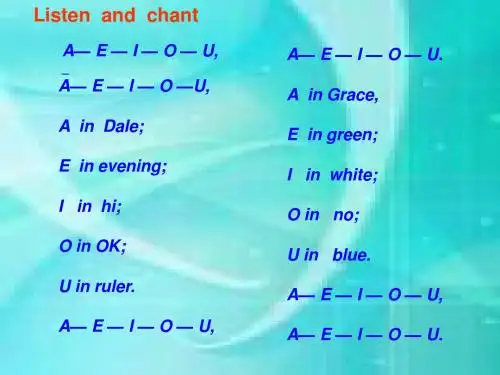
A— E — I — O — U,
A— E — I — O — U.
A— E — I — O — U,
Unit 4 How do you get to school ?
Section A
take the bus
take the car
take the bike
take the taxi
take the subway
一
英语课件新目标八年级上 unit4 section A 课件

• How do you get there? • How long does it take?
Dongqian Lake around 9 miles from Beilun
Jiufeng Mountain around 6 miles from Beilun
Shanghai Around 225 miles from Ningbo
A: How far is it from … to …? B: It’s around ___kilometers / ___miles.
From…to … Transportation
(交通工具)
Time
Distance (距离) 360kilometer/ 225 miles 1500kilometers/ 938 miles
He rides a bike. He walks to school.
Listen. Write the numbers in the box. 1 2 3 4 5 A: How does Bob get to school? B: He takes the train .
Guess:
How does she go to work?
Ningbo--Shanghai
Ningbo--Guangzhou
train
plane
14:40-18:40
8:30-10:00
Ningbo--Shaoxing
bus
7:00--8:30 150kilometers/ 94 miles
Questionnaire (问卷调查). We will go autumn outing next month. (秋游) • Where do you want to go?
新目标八年级上英语unit4课件
新目标八年级上英语unit4课件新目标八年级上英语unit 4课件一、teaching material analysis《新目标英语》的语言教育理念是:知识用于行动,强调“语言应用”,培养“创新、实践、能力”,发展“学习策略”。
那么本节课作为unit4的section a,教材以how do you get to school?为中心话题,围绕“traffic way”展开,运用一般现在时。
section a与学生的实际密切相关,易于引发学生用英语进行交际交流,完成听说读写的任务活动,我将灵活运用这些活动,将其中的一些活动进行变化或整合。
通过对本课的仔细诊断,把教学策略重点地位在三个教学环节上,即presentation ,practice and production上,将“激发兴趣,激活思维,轻松导入,读后仿说,逐层训练,强化能力,创设情景,迁移知识,实现目标”作为本课的设计导向。
二、teaching aims:1、技能目标:学生能听懂本课录音;能听懂师生之间就本课内容而展开的一切形式的问答;会和别人展开对话,了解和传递信息;能将本课重难点理解透彻,灵活恰当运用;无大的语言错误;就类似话题创造性地自编对话,掌握比较级的用法。
2、知识目标:take subway train forty ninety hundred minute kilometerhow do you get to school? how long does it take?3、情感目标:让学生感受到他们学习英语是为了在现实生活进行交流,而不单纯是为了英语课和应付考试而学习;让学生感受到他们是英语学习活动中的主体和中心,以此来激励他们在英语课上积极参与,追求创新,使学生爱学英语,爱说英语,想说口语。
4、学习策略目标:改变传统的死记硬背,积极主动的投入到语言的实践中去,用英语去思考问题,在实践中提高语言的综合使用能力,加深对基础知识的掌握和记忆,学会使用brains storing 。
新目标八年级上 Unit 4 课件(PPT)
Name How do you How far is it from How long does it get to school? your home to school? take ?
Peter Walk
…
…
3 kilometers Ten minutes …
Report:Peter’s home is about … kilometers far from school. He walks to school. It takes him about ten minutes….
Interview (采访)your classmates or our teachers here. By
using the following questions:
How do you get to school? How far is it from your
home to school?
How long does it take ?
•
重于泰山,轻于鸿毛。14:06:1514:06:1514:06Thursday, November 12, 2020
•
安全在于心细,事故出在麻痹。20.11.1220.11.1214:06:1514:06:15November 12, 2020
•
加强自身建设,增强个人的休养。2020年11月12日 下午2时 6分20.11.1220.11.12
•
追求至善凭技术开拓市场,凭管理增 创效益 ,凭服 务树立 形象。2020年11月12日星期 四下午2时6分15秒14:06:1520.11.12
•
专业精神和专业素养,进一步提升离 退休工 作的质 量和水 平。2020年11月下午2时6分20.11.1214:06N ovember 12, 2020
人教版新目标初中英语八年级上册《Unit 4 How do you get to school》精品课件共18页文档
take a subway 乘地铁 take a subway to…
-How do you get to school? -I take a subway to school.
take a train 乘火车 take a train to…
-How do you get to school? -I take a train to school.
Read3a and answer the questions.
1.How far is it from his home to school? About 10 kilometers.
2.When does he get up? At 6:00.
3.How long does the bus ride take?
walk步行 walk to…
-How do you get to school? -I walk to school.
-How do you get to school? -I take a … to school. I ride a bike to school. I walk to school.
A.takes B.rides C.get ( )4.My brother often takes the bus ______school.
A.to B.at C.of 5.Tom takes a bus to school.
_____ ______Tom get to school? 6._____ _____ does it take?(多长时间、多久) 7. _____ _____is it? (多远?)
Test: ( )1._____do you get to school? –Take a bus.
八年级英语上册Unit4课件ppt
通过学生的分组活动,激 发兴趣,在用中学,培养 学生口语交际能力。
Step5 Exercise:
(用以上的 调查内容写一篇小短文,讲述周围人上学的方式,字数在50字左 右)
Step6 Homework: Make conversations about transportations.
通过写作训练,提高学生对英语的应用能力。
Unit4 How do you get to school ?
第一课时 (说课)
一 教材分析
(一)教材的地位及作用 1、 新目标英语教材的语言特点是:知识用于行动,强调语言应 用,培养创新,实践能力,它采用的是任务型语言教学,教材每单元都 设计了一些相关的教学任务,让学生在完成任务的过程中,使用英语 获取信息,培养学生的实际能力. 2 、本单元的分析及教材处理:本课是新目标英语八年级上册第四 单元,围绕谈论如何去上学这一话题展开,引导学生通过课本上的 各种活动来学会使用英语谈论乘坐不同的交通工具,,这些与现实 相连,因此在教学过程中,将联系生活,采用多种方式,以说为主,配 以听的练习来解决问题,同时通过How do you get to shool ?I take the bus.以及pairwork的反复练习,进一步提高学生听说读写的能 力.本单元的第一课时,Section A1a—1c主要学习交通工具的单词 以及特殊疑问句How do you get to school?及答语,通过听说读写 的任务活动,将其中的一些活动进行整合,为下一课的学习打下基 础.
这部分主要是通过用图片导入 新课,激发兴趣,学习巩固交 通工具的名称,学习新单词。
Step2 Presentation
1 、Free talk: How do you get to school? 2、 Teacher helps them to answer. 3、 Let students practice in pairs. A: How do you get to school ? B: I ride my bike.(=I get to school by bike .)