
牛津译林版初一英语7A Unit6 Grammar公开课课件
tomatoes
Singular(单数)
Most nouns
Nouns ending in a consonant +y Nouns ending in s, sh, ch, or x Nouns ending in o Nouns ending in f or fe Some other nouns +s -y +ies +es +s or +es -f or fe +ves
an apple
apples
a banana
bananas
a potato potatoes
a watch
watches
How to say them in English?
knives a knife a strawberry
a sheep a tomato
some sheep
strawberries
plural(复数)
a cake→cakes
a story →stories
a glass →glasses, a wish →wishes, a watch →watches, a box →boxes a potato →potatoes, a radio → radios,a mango →mangoes, a shelf →shelves, a knife →knives man →men, woman →women, foot →feet, tooth →teeth, sheep →sheep, fish →fish, Chinese →Chinese
Tell me the plural form of these words. 1. glass 2. piano 3. kilo 4. shelf 5. watch 6. story 7. hour 8. mango glasses
pianos kilos
shelves
watches
stories
hours
mangoes
Phrases:
十一个婴儿 九个男孩 eleven babies nine boys
四个班级
我的五张相片
four classes
my five photos six elephants three good friends eighteen monkeys seven knives
salt Coke meat rice tea
beef juice milk bread
an apple
an orange
a pear a banana
an egg
a carrot
We use ‘a’ or ‘an’ before a singular countable noun. If the noun starts with a vowel(元音) sound, we use ‘an’. I want to buy
Fill in the blanks: Millie: Mum, what do we need to buy?
chicken bag Mum: We need some _________, a ______ packet rice salt of __________ and a _________ of _____. vegetables Millie: Do we need to buy some _____. carrots Mum: Yes. Let’s buy some __________ potatoes ______.
tea
three cups of tea
meat
four kilos of meat
milk
five cartons of milk
juice
six bottles of juice
sugar packets of sugar a packet of salt a bottle of water
a
an
hamburger cake egg orange
More examples: a university ___
an ___hour an ___uncle/aunt Tips
“a” or “an”
a “u” and an There is ___ ___ “s” in the word “ use”.
六头大象
三个好朋友
十八只猴子
七把小刀
Here are some examples.
bread a piece of bread
water a glass of water
chicken a plate of
salt a packet of salt
chicken
如何表达不可数名词的量?
rice
two bags of rice
number +noun+ of+ uncountable noun
量词
two cartons of milk two cups of tea
one carton of milk
four bottles of water
Hobo wants to buy some things for Christmas .Look at his shopping list below. Help him complete the list
bottle, can, plate, bowl, carton, cup
three cups oftea _________ two bottles ofmilk _________ plate chicken a _____
_________ three cartons of milk a bowl of ________soup a can of ________Coke
orange cup dish tea
plate
salt
countable … …
uncountable
countable(可数名词
)
uncountable(不
可数名词)
apple orange cup plate egg dish cake potato bowl tomato hamburger
Grammar
Countable and uncountable nouns
Countable Nouns
可数名词
nouns
名词
Uncountable Nouns
不可数名词
Can you help them find the right family?
apple egg
beef bread cake hamburger potato Coke bowl juice meat milk rice tomato
7AUnit6grammar精品课件新译林版英语
7AUnit6grammar精品课件新译林版英语一、教学内容本节课选自新译林版英语7A教材的Unit 6 "Grammar"部分。
详细内容包括:现在进行时态的构成与用法,以及与一般现在时态的区别。
具体章节为Unit 6的Grammar Focus和Practice部分。
二、教学目标1. 学生能够理解并掌握现在进行时态的构成及用法。
2. 学生能够正确运用现在进行时态描述正在进行的动作或状态。
3. 学生能够区分现在进行时态和一般现在时态,并在实际语境中灵活运用。
三、教学难点与重点1. 教学难点:现在进行时态的构成及与一般现在时态的区分。
2. 教学重点:现在进行时态的用法及其在语境中的应用。
四、教具与学具准备1. 教具:PPT、黑板、实物模型。
2. 学具:练习册、笔记本、彩色笔。
五、教学过程1. 导入:通过展示一幅动态的图片,引导学生观察并描述正在进行的动作,引出现在进行时态。
2. 呈现:讲解现在进行时态的构成(be + 现在分词)及用法,结合PPT展示例句。
3. 实践:分组活动,学生运用现在进行时态描述组内正在进行的动作,并进行角色扮演。
4. 例题讲解:分析并讲解Grammar Focus部分的例题,指导学生正确填写答案。
5. 随堂练习:学生完成Practice部分的练习题,教师实时指导并解答疑问。
7. 巩固:通过PPT展示不同的场景,学生用现在进行时态进行描述。
六、板书设计1. Unit 6 Grammar Present Continuous Tense2. 内容:构成:be + 现在分词用法:描述正在进行的动作或状态与一般现在时态的区别七、作业设计1. 作业题目:a. 根据下列图片,用现在进行时态描述图片中的动作。
b. 将下列句子改为现在进行时态。
c. 区分下列句子中的现在进行时态和一般现在时态。
2. 答案:a. He is playing football. / She is dancing.b. I am reading a book. / They are listening to music.c. Now, I am eating dinner. (现在进行时态) / I eat breakfast every morning. (一般现在时态)八、课后反思及拓展延伸1. 课后反思:关注学生在课堂上的参与度,及时解答学生在练习中遇到的问题,提高教学效果。
7AUnit6grammar精品课件新译林版英语
7AUnit6grammar精品课件新译林版英语教学内容:1. 单词和短语的学习,如:sign, rule, remind, trafficlight等。
2. 一般现在时的用法,特别是情态动词must和can的用法。
3. 对话和阅读材料,涉及不同场景下的规则和指导。
4. 语法练习,如:构成一般现在时句子,使用情态动词must和can等。
教学目标:1. 学生能够掌握本节课的生词和短语。
2. 学生能够理解和运用一般现在时,特别是在描述日常规则和指导时。
3. 学生能够参与对话和阅读,理解不同场景下的规则和指导。
教学难点与重点:重点:一般现在时的用法,特别是情态动词must和can的用法。
难点:对话和阅读材料的理解,以及如何在实际情境中运用一般现在时。
教具与学具准备:1. PPT课件,包括单词和短语的图片,情态动词must和can的用法示例,对话和阅读材料等。
2. 作业纸,用于随堂练习和作业设计。
教学过程:1. 引入:通过展示一张交通信号灯的图片,引导学生思考日常生活中遵守规则的重要性。
2. 单词和短语学习:通过PPT展示单词和短语的图片,引导学生跟读和记忆。
3. 语法讲解:通过示例和练习,讲解一般现在时的用法,特别是情态动词must和can的用法。
4. 对话和阅读理解:引导学生朗读和理解对话和阅读材料,回答相关问题。
5. 语法练习:通过PPT上的练习题,让学生运用所学的语法知识。
6. 小组活动:学生分组,进行角色扮演,模拟不同场景下的规则和指导。
板书设计:1. 单词和短语的板书,包括图片和英文释义。
2. 一般现在时的板书,包括情态动词must和can的用法示例。
作业设计:1. 完成PPT上的语法练习题。
2. 根据对话和阅读材料,编写一个类似的场景,并使用一般现在时描述。
课后反思及拓展延伸:本节课通过引入日常生活中的规则和指导,引导学生理解和运用一般现在时。
通过对话和阅读材料,增加了学生对规则和指导的理解。
7AUnit6grammar精品课件新译林版英语
7AUnit6grammar精品课件新译林版英语一、教学内容本节课的教学内容选自新译林版英语7A Unit 6,主要讲述一般现在时的用法。
通过本节课的学习,学生能够理解一般现在时的概念,掌握一般现在时的构成和用法,并能够运用一般现在时进行日常交流。
二、教学目标1. 学生能够理解一般现在时的概念和用法。
2. 学生能够正确运用一般现在时进行句子构造。
3. 学生能够在日常生活中运用一般现在时进行交流。
三、教学难点与重点1. 教学难点:一般现在时的构成和用法。
2. 教学重点:引导学生运用一般现在时进行句子构造和日常交流。
四、教具与学具准备1. 教具:PPT、黑板、粉笔。
2. 学具:教材、练习本、铅笔。
五、教学过程1. 导入:通过展示图片,引导学生描述图片中的人物和事物,引入一般现在时的概念。
2. 讲解:讲解一般现在时的概念、构成和用法,举例说明。
3. 练习:学生跟读、模仿,进行一般现在时的句子构造练习。
4. 互动:学生之间进行一般现在时的问答练习,巩固所学知识。
5. 应用:小组讨论,运用一般现在时描述日常生活中的人物和事物。
六、板书设计1. 一般现在时的概念。
2. 一般现在时的构成:主语 + 动词原形。
3. 一般现在时的用法:描述习惯性动作、状态和普遍真理。
七、作业设计1. 作业题目:用一般现在时描述你的家人和他们的习惯。
2. 答案示例:My mother always gets up at 6:00 a.m. My father enjoys playing basketball on weekends.八、课后反思及拓展延伸1. 课后反思:本节课通过图片导入、讲解、练习、互动、应用等环节,使学生掌握了般现在时的概念和用法。
但在课堂实践中,发现部分学生对一般现在时的运用仍存在一定的困难,需要进一步加强练习和指导。
2. 拓展延伸:鼓励学生在日常生活中多运用一般现在时进行交流,提高他们的实际应用能力。
同时,可进行一般现在时的家庭作业设计,让学生在家庭环境中巩固所学知识。
牛津译林版七年级英语上册课件:7A U6 Grammar(3)
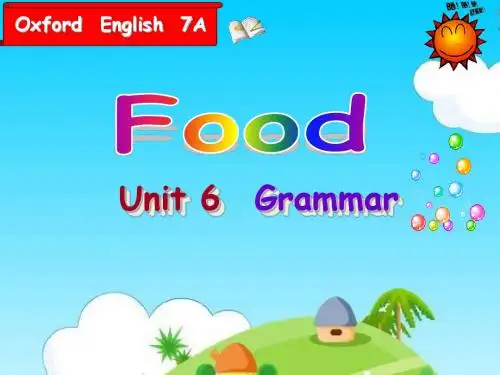
Mr Wang: What about fruit? There are Millie: (8)____________ are some pears, apples and bananas.
C4
Mr Wang: What about drinks?
There is Millie: (9)____________ a carton of milk, a carton of orange juice and a bottle of Coke. Is there Mr Wang: (10)____________ any bread?
a cake→cakes
a story →stories
a glass →glasses, a wish →wishes, a watch →watches, a box →boxes a potato →potatoes, a radio → radios,a mango →mangoes,
a shelf →shelves, a knife →knives
There is (not) There are (not) Is there Are there
a banana too much sugar many potatoes
Yes, /No,
on the table? in them? on the table?
there is/ isn't.
there are/ aren't.
pianos kilos
shelves
watches
stories
CLICK
hours
mangoes
B8
a piece of bread
7AUnit6grammar精品课件新译林版英语

7AUnit6grammar精品课件新译林版英语一、教学内容本节课选自新译林版英语7A教材,主要针对Unit 6的Grammar 部分。
详细内容包括:现在进行时的用法和结构,常用的现在进行时态的动词,以及现在进行时在句子中的应用。
二、教学目标1. 掌握现在进行时的基本结构,即主语+be动词(am/is/are)+动词的现在分词;2. 学会使用现在进行时描述正在进行的动作;3. 能够在具体的语境中运用现在进行时,并能正确书写现在分词形式的动词。
三、教学难点与重点1. 教学难点:现在进行时的结构,尤其是动词现在分词形式的掌握;2. 教学重点:现在进行时的用法,以及在实际语境中的应用。
四、教具与学具准备1. 教具:PPT课件、黑板、粉笔;2. 学具:学生用书、练习本、彩色笔。
五、教学过程1. 导入:通过展示一组正在进行的动作图片,引导学生用英语描述图片内容,激发学生对现在进行时的兴趣。
2. 讲解:详细讲解现在进行时的结构,通过例句展示现在进行时的用法。
3. 实践:进行课堂互动,让学生用现在进行时描述身边正在进行的动作。
4. 例题讲解:分析并解答关于现在进行时的练习题,帮助学生巩固所学知识。
5. 随堂练习:让学生完成教材中的相关练习,检验学生对现在进行时的掌握程度。
六、板书设计1. 7A Unit 6 Grammar2. 内容:a. 现在进行时的结构:主语+be动词(am/is/are)+动词的现在分词b. 常用现在进行时态的动词:play, read, write, listen, speak, look, think, eat, drink, sleep, walk, run等。
c. 例句展示七、作业设计1. 作业题目:c. 根据所给词组,用现在进行时编写对话(提供词组)。
2. 答案:a. The boy is playing basketball.The girl is reading a book.b. They are listening to music.He is writing a letter.c. A: What is your mother doing?B: She is cooking dinner.八、课后反思及拓展延伸1. 课后反思:关注学生对现在进行时的掌握程度,及时调整教学策略,提高教学效果。
牛津译林版英语七年级上册Unit6 Grammar课件
Countable noun: 可数名词是可以数清数目的词
Uncountable noun: 不可数名词是不能数清数目的词
Countable nouns and uncountable nouns
Can you help the nouns in the box find their home? apple rice lemon meat hamburger carrot juice sheep milk sweet pork man beef chicken
a “u ”
an “h”
singular
选择“a”或“an” 填空。
_a__ hamburger _a_n__ hour
_a__ lemon
_a_n__ umbrella
_an__ orange
_a___ university[ˌjuːnɪˈvɜːrsəti]
an important meeting There is _a__ ‘u’ and _a_n_ ‘s’ in the word ‘use’.
不可数名词
不可数名词作主语时,谓语动词用单数形式。
例:There is some money in the purse. 钱包里有一些钱。 如果不可数名词前有复数名词修饰,two glasses of milk,谓语动词用 复数 如果不可数名词前有单数名词修饰,a glass of milk,谓语动词用单数
*sports center → sports centers
注: 集体名词本身复数的概念,不存在单数形式 glasses,clothes,trousers等,单独出现谓语要用复数
the +姓(s)=the +姓+family表示某某一家人 格林一家 the Greens=the Green family
Unit6Grammar课件英语牛津译林版七年级上册
5.—________ meat do you need
—One kilo.( B)
A.How many
B.How much
C.How long
[解析] 空格后是不可数名词m概要
课时讲练
知识清单
14
知识概要
课时讲练
知识清单
13
4.There isn’t ________ in the glass.( C )
A.any oranges
B.some orange
C.any orange
[解析] 由空格前的isn’t可知选项中的orange应用作不可数名词,表示“橙 汁”,在否定句中应用any修饰。
知识概要
课时讲练
知识清单
10
三、用括号内所给单词的正确形式填空。
1.The two singers at the party are both _C__h_in_e_s_e_(Chinese). 2.There is some _p_o_r_k_(pork) on the plate. 3.Are there any __p_o_ta_t_o_e_s(potato) in the kitchen 4.You can see many new __fa_c_t_o_ri_e_s_(factory) in Sunshine Town. 5.Only two _w__o_m_e_n__d_o_c_to_r_s_(woman doctor) work in that hospital. 6.There _a_r_e_(be) three bags of rice on the ground. 7.It’s time for lunch. All the _c_h_i_ld_r_e_n_(child) sit around the table. 8.On the plate, there _i_s_(be) some beef, chicken and vegetables.
牛津译林版七年级英语上册Unit6 Grammar 课件 (共22张PPT)
sheep milk sweet
可数名词 countable nouns
不可数名词 uncountable nouns
Countable and uncountable nouns
可数名词VS不可数名词
可数名词
定义 有无复 数形式 数量的 表达 能用数目直接进行计数的 名词。 有单、复数形式。
不可数名词
3. 复合名词的复数形式
构成方法 一般的复合名词,只用把中心 词变为复数形式(中心词一般 是第二个名词) 由man和woman构成的复合名 man doctor—men doctors 例词 apple tree—apple trees pencil box—pencil boxes
词,二者均变为复数形式
5) 有些名词既可以作可数名词,又可以作不可数名词。 但它们的汉语意思有差别。
例: fish 鱼(可数),鱼肉(不可数);
chicken 小鸡(可数),鸡肉(不可数);
glass 玻璃杯(可数),玻璃(不可数)。
Complete the conversation
Millie: Mum, what do we need to buy? chicken bag of Mum: We need some _________, a ______ ______ and a _______ salt packet of _____. rice vegetables Millie: Do we need to buy ____________? carrots Mum: Yes. Let’s buy some ________ oranges Millie: I want to buy some ________. and ________. potatoes They are apple Grandpa’s favourite. And we have only an ______ at home. We need to buy some too. juice bottles Mum : OK. We can also buy a few________of ______.
2021年秋学期译林牛津版七年级英语上unit6Foodandlifestylegrammar公开课教学课件
The __fo_x_e_s____ (fox) take the _b_u_s_e_s___ (bus) to have m__a_t_c_h_e_s _ (match). They use their _b_r_u_s_h_e_s_ (brush) to paint beautiful pictures. Best _w_i_s_h_e_s_ (wish) for them.
photo photos
zoo
zoos
I use a knife to cut the apple into_h_a_l_v_e_s_. knives
1.snack snacks
9. match /s/
matches
2.presentpresents 10. orange oranges /ız/
chicken
bag
rice
packet
salt
vegetables
carrots
potatoes
oranges apple
bottles
juice
bag packet apple
vegetables carrots
potatoes oranges bottles
chicken salt
rice juice
Nouns ending in o
Nouns ending in f or fe
Some other nouns
+s cake cakes
-y + ies story stories
+es
+s or +es -f/fe + ves
bus buses wish wishes match matches box boxes photo photos potato potatoes tomato tomatoes
7AUnit6grammar精品精品课件新译林版英语
7AUnit6grammar精品精品课件新译林版英语一、教学内容本节课选自新译林版英语7A Unit 6的Grammar部分,详细内容涉及一般过去时态的构成及其用法。
具体章节为Unit 6 Reading和Grammar,内容主要包括:描述过去发生的动作或状态,掌握一般过去时的肯定句、否定句和疑问句;学习如何使用频率副词和短语描述过去动作的频率。
二、教学目标1. 学生能够理解并掌握一般过去时态的构成和用法。
2. 学生能够运用一般过去时描述过去发生的具体事件。
3. 学生能够运用频率副词和短语,准确地描述过去动作的频率。
三、教学难点与重点教学难点:一般过去时态的构成及其在句子中的运用。
教学重点:频率副词和短语在描述过去动作频率时的运用。
四、教具与学具准备1. 教师准备PPT课件,内容包括例句、练习题和课后作业。
2. 学生准备笔记本、课本和文具。
五、教学过程1. 导入:通过PPT展示一组图片,让学生描述图片中发生的过去事件,引入一般过去时态。
2. 讲解:讲解一般过去时的构成和用法,结合教材例句进行分析。
a. 肯定句:主语 + 动词过去式 + 其他b. 否定句:主语 + didn't + 动词原形 + 其他c. 疑问句:Did + 主语 + 动词原形 + 其他?3. 实践:进行课堂互动,让学生运用一般过去时描述过去事件。
4. 例题讲解:讲解如何使用频率副词和短语描述过去动作的频率,并进行例题演示。
5. 随堂练习:学生完成PPT上的练习题,教师进行讲解和指导。
六、板书设计1. 一般过去时的构成:a. 肯定句:主语 + 动词过去式 + 其他b. 否定句:主语 + didn't + 动词原形 + 其他c. 疑问句:Did + 主语 + 动词原形 + 其他?2. 频率副词和短语:always, usually, often, sometimes, never, every day, once a week等。