
人教版九年级英语unit13SectionA(1a-2d)说课课件
写作实践
我们生活的地球正面临着巨大的环境压力,如空气污染、水污染、固体废弃物污染、动物濒
临灭绝等问题。因此,将环保行动渗透到日常生活是我们每个人的责任。请你选择其中的一个问
题,自拟题目,写一篇英语短文,谈谈引起此问题的原因,并讨论公众如何从点滴做起来解决问
题,使我们的世界变得更美好。(120字左右)
二、教学方法
任务型教学法
情景教学
教师的主导作用
多媒体计算机 辅助课堂教学
学生的主体作用
自学、小组交流、全班讨论等活动
勇于说,乐于说,提高运用语言的能力, 逐步贯彻乐美教育
三、学习方法
引导学生自主 参与学习、 交流合作, 倡导体验、 实践和自主探 究的学习方式
获取知识,
听力 自主 形成正确的
学习方法,
1、知识目标
1).掌握重点单词及短语。 2).复习语法,能正确区分和使用现在进行时,
被动语态,现在完成时,情态动词。
2、能力目标
掌握认识问题、分析问题、解决问题的能力。
3、情感目标:
培养学生的环保意识以及回收再利用的生活 观念。
(三)教学重难点
能正确运用现在进行时, 现在完成时,被动语态, 情态动词和used to句型谈论 环境污染和环境保护问题, 了解保护环境的措施方法。
factories smoking building houses mobile phones
noise pollution
__lo_u_d__m__u_si_c__ ____p_la_n_e_s____ _m__o_b_il_e_p_h_o_n__es b_u_il_d_i_n_g_h_o_u_s_e_s
cut down 减少
instead of 代替;而不是 为介词短语 +名词、代词或动词的-ing 形式。 He is a writer instead of a teacher. 他是一位作家而不是一位老师。
advantage n.优点
反义词 disadvantage,“缺点;劣势;不利条件” 常用于短语:
close down the factories
目的:
bring a bag to go shopping don’t throw the litter away
How should the problem be solved?
新课呈现三部设计目的:
通过多媒体课件展示污染的种 类,以及污染对我们的地球造 成的严重危害,充分唤起同学 们的环保意识以及回收再利用 的生活方式。
目的:
归纳考点,解决阅读障碍, 达到本堂课知识目标
Step 7 随堂检测(8分钟)
一、单项选择
二、用所给词的适当形式填空。
三、用方框中所给词的适当形式填空。
目的:
针对学生“两极分化”现象,采用“倒金字塔” 教学原理,习题由简入难,提升学生学习能力和 成就感,达到乐学、善学、学有所用。
Step 8 布置作业(1分钟)
air pollution
__fa_c_t_o_r_ie_s___ __s_m__o_k_in_g___ ___c_a_r_s_____ b_u_il_d_i_n_g_h_o_u_s_es
water pollution ___s_h_ip__s _____ __r_u_b_b_i_s_h____ __l_it_t_e_ri_n_g____ __f_a_c_to_r_i_e_s___
Step 1 视频导入(1分钟) Let’s watch a video ! ! !
大气污染保护环境宣传动画
目的:引出关键词 pollution
Step 2
新课呈现(5分钟)
air pollution water pollution
noise pollution
目的:
land pollution
Different kinds of pollution.
Here are some words related to different kinds of pollution.
1a Write them in the box below. Then add more words.
loud music cars rubbish planes littering ships
思路构建
步骤
构思
列纲
1 选择你要讨论的环境问题
...I want to talk about... pollution
2 引起此问题的原因
Here are some reasons. First, ...Second,...Third...
3 如何从生活的点滴做起来解决问题 There are some methods to solve the problem...
Step 3 听力练习(8分钟)
播放录音, 学生完成课文1b,2a,2b的听力练习。
Step 4 小组活动巩固练习(4分钟)
检查答案之后,学生角色扮演诵读对话2b.
目的:
细化
What was the problem? What caused the problem?
How should the problem be solved?
人教版新目标九年级英析
教学方法 学习方法 教学过程 教学反思
一、教材分析
(一)说教材
本单元共需要5个课时,本课时即第一 部分围绕pollution and protection 展开听力和对话,以环境污染与保护, 节约资源与回收再利用为中心话题。
(二)教学目标
根据《英语课程标准》的教学理念,教材特点 以及学生的实际情况,教学目标确定如下:
原文:So together, our actions can make a difference and lead to a better future!
考点: make a difference (to…) 表示(对……)产生影响或作用
e.g. Do you think his words would make any difference to the final decision? 你认为他的话会对最后的决定产生影响吗?
have the advantage of(有……的有利条件)
be to... advantage(对……有利)
eg: His sister has many advantages. 他的姐姐有很多优点。 He had the advantage of being born in a rich family. 他有出生在一个富有家庭的有利条件。 Being able to speak German is to your advantage. 会讲德语对你有利。
waste pollution
bring a bag to go shopping
wooden (木头的)
use chopsticks or forks at home
chopsticks or plastic forks
rubbish
throw rubbish in the bins
目的:总结导致污染的日常生活行为
对话训练 合作 实现英语能
力的提高
四、教学过程
Step 1 Step 2 Step 3 Step 4 Step 5 Step 6 Step 7 Step 8 Step 9
视频导入(1分钟) 新课呈现(5分钟) 听力练习(8分钟) 小组活动巩固练习(2分钟) 对话练习(8分钟) 释疑点拨(5分钟) 随堂检测(8分钟) 布置作业(1分钟) 评价小结(2分钟)
以及相应改进措施
Step 6 释疑点拨(5分钟)
原文:This is turning beautiful places into ugly ones.
考点: turn… into… 把……变成…… e.g. The icy rain seemed like to turn into snow. 渐渐地冻雨又变成雪花的模样。
感谢各位的聆听
目的:
What caused the pollution?
Let’s take action (采取行动)
Take buses instead of driving cars.
Turn off the lights when you leave a room.
Recycle books and paper.
Step 5 对话练习(8分钟) 2d
1. Role-play the conversation.
2. Complete the chart.
Problems
Solving problems
air pollution
take the bus, subway or ride a bike instead of driving
目的:将本堂课所学内容运用到写作中,培养学
生的写作能力,实现本堂课的能力目标。
Step 9 评价小结(2分钟)
附: 板书设计
五、教学反思:
本节课我始终遵循任务型教学 的教学理念,以学生为主体,以任 务为中心,以交际为目的的原则, 倡导学生积极体验,大胆实践。并 在教学过程中渗透德育教育,树立 学生正确的人生观。让学生感受到 学习英语的快乐。
合集下载
人教版英语九全Unit13SectionA(1a2d)说课稿
(四)总结反馈
在总结反馈阶段,我将采取以下措施引导学生自我评价,并提供有效的反馈和建议:
1.让学生回顾本节课所学内容,自我评价在词汇、语法、口语等方面的掌握程度。
2.组织小组互评,让学生相互指出优点和不足,培养他们的批判性思维。
3.教师对每个学生进行个性化评价,针对不同学生的特点,提供有针对性的建议和指导。
5.引入竞争机制,激发学生的学习积极性,培养团队协作精神。通过这些策略和活动,旨在提高学生的学习兴趣,促使他们主动投入到英语学习中。
三、教学方法与手段
(一)教学策略
在本节课中,我将采用任务型教学法、情景教学法和合作学习法作为主要教学方法。
1.任务型教学法:通过设计具体的任务,让学生在实践中运用所学知识,提高他们的语言实际运用能力。这一方法的理论依据是交际语言教学法,强调在实际语境中学习语言。
人教版英语九全Unit13SectionA(1a2d)说课稿
一、教材分析
(一)内容概述
本节课为人教版英语九全Unit 13 Section A(1a-2d)的内容。在整个课程体系中,这一单元的主题是“我们都喜欢音乐”,旨在让学生通过学习有关音乐和艺术活动的词汇和表达方式,来提高他们的英语听说能力。本节课主要介绍了不同种类的音乐以及人们对音乐的不同喜好。
-学生通过学习不同的音乐类型,培养审美能力和跨文化交际能力。
3.情感态度与价值观:
-学生能够认识到音乐对于丰富人们生活的重要性。
-学生能够尊重并欣赏不同的音乐类型和审美观点。
-学生在小组活动中学会合作、分享和交流,培养团队精神。
(三)教学重难点
根据对学生的了解和教学内容分析,本节课的教学重点和难点如下:
课后,我将通过以下方式评估教学效果:
在总结反馈阶段,我将采取以下措施引导学生自我评价,并提供有效的反馈和建议:
1.让学生回顾本节课所学内容,自我评价在词汇、语法、口语等方面的掌握程度。
2.组织小组互评,让学生相互指出优点和不足,培养他们的批判性思维。
3.教师对每个学生进行个性化评价,针对不同学生的特点,提供有针对性的建议和指导。
5.引入竞争机制,激发学生的学习积极性,培养团队协作精神。通过这些策略和活动,旨在提高学生的学习兴趣,促使他们主动投入到英语学习中。
三、教学方法与手段
(一)教学策略
在本节课中,我将采用任务型教学法、情景教学法和合作学习法作为主要教学方法。
1.任务型教学法:通过设计具体的任务,让学生在实践中运用所学知识,提高他们的语言实际运用能力。这一方法的理论依据是交际语言教学法,强调在实际语境中学习语言。
人教版英语九全Unit13SectionA(1a2d)说课稿
一、教材分析
(一)内容概述
本节课为人教版英语九全Unit 13 Section A(1a-2d)的内容。在整个课程体系中,这一单元的主题是“我们都喜欢音乐”,旨在让学生通过学习有关音乐和艺术活动的词汇和表达方式,来提高他们的英语听说能力。本节课主要介绍了不同种类的音乐以及人们对音乐的不同喜好。
-学生通过学习不同的音乐类型,培养审美能力和跨文化交际能力。
3.情感态度与价值观:
-学生能够认识到音乐对于丰富人们生活的重要性。
-学生能够尊重并欣赏不同的音乐类型和审美观点。
-学生在小组活动中学会合作、分享和交流,培养团队精神。
(三)教学重难点
根据对学生的了解和教学内容分析,本节课的教学重点和难点如下:
课后,我将通过以下方式评估教学效果:
初中英语九年级下册课件unit13第1课时(A 1a-2d)
Tapescripts:
Tony: Hey, Mark, maybe we could go swimming in the river later this afternoon. 下午晚些时候
Mark: I don’t think I want to go, Tony. Tony: Why not? Mark: I was there last weekend and the river was
litter, bottom, fisherman, coal, ugly, advantage... 2. Talk about pollution and environmental protection. 3. Improve your listening skills through listening
always been the nicest river in this town.
Mark: Not anymore. I think people are throwing litter into再th也e不riv是er了. F。actories are also putting waste into the river.
1b Listen and complete the sentences.
The river was _r_e_a_l_ly__d_ir_t_y_. Even the
What was the bottom of the river was full of problemafrt?otmhetbopotttoo_mbr_ouo_ttfb_o在mb_…_i完s_h…完_的.全T底全h部e;r从e 头w到er脚e ;no自m上而or下e __fi_s_h_
九年级英语全一册Unit13_we’re_trying_to_save_the_earth(1a--2d)ppt课件人教版
1.We should tell the people who drive to drive less. 2.We should tell the factories which produce the waste gas and water to produce less. 3.We should tell ourselves not to litter in the river. 4.We should tell ourselves to use shopping bags that we are carrying when we’re shopping. 5.Maybe we should write to the newspapers ,magazines or the government for help. 6.Maybe we are able to use the internet for fighting with the pollution as well. Though I always feel our voice is too weak to be heard. I still believe it’s a good idea to do something to help save our earth.
the strong flash
The worse is pollution causes the climate change and global warming , the higher temperature leads to storms and floods.
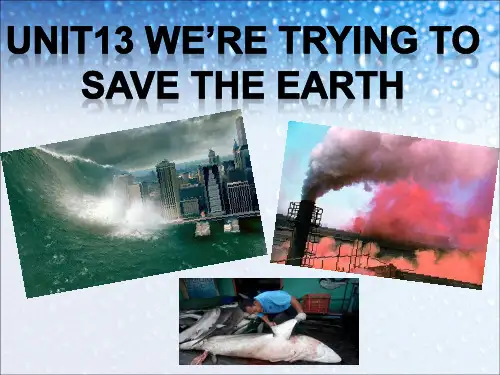
What should we do to save the earth?
What is happening to the earth? Why should we try to save it?
人教版英语九全Unit13SectionA(1b2d)说课稿
(二)教学反思
在教学过程中,可能遇到的问题包括学生听力理解困难、口语表达不自信、课堂参与度不高等。为应对这些问题,我会采取以下措施:
1.针对听力理解困难,提供更多听力练习,并在练习后进行详细讲解;
2.鼓励学生在口语表达时大胆发言,通过小组合作提高他们的自信心;
3.设计互动性强的活动,激发学生的参与热情,提高课堂活力。
4.引导学生进行模仿和跟读,确保他们能够正确发音和运用所学知识。
5.分组讨论,让学生在小组内分享自己的理解和经验,互相学习,共同进步。
(三)巩固练习
为了帮助学生巩固所学知识并提升应用能力,我将设计以下巩固练习和实践活动:
1.单词拼写游戏,让学生在游戏中复习和巩固新词汇。
2.角色扮演活动,让学生模拟不同的天气情景,使用所学句型进行对话。
2.教师提问,引导学生反思学习过程中的困难和收获,如:“你在学习过程中遇到了哪些困难?你是如何克服的?”
3.教师根据学生的表现提供具体的反馈和建议,如:“你在角色扮演中表现得很好,但注意要更加自然地使用所学句型。”
4.鼓励学生相互评价,培养他们的批判性思维和团队合作精神。
(五)作业布置
课后作业的布置情况如下:
(二)学习障碍
在学习本节课之前,学生可能已经掌握了一些基本的天气词汇和简单的日常活动表达,具备一定的英语听说能力。然而,以下学习障碍可能存在:
1.对一般将来时态的理解和应用可能不够熟练,容易与一般现在时态混淆;
2.听力理解能力有限,对于听力材料中的细节信息捕捉不准确;
3.口语表达时,可能因为紧张或词汇量不足而难以流畅表达;
(3)培养学生的听力和口语交际能力。
2.教学难点:
(1)让学生在听力练习中准确理解对话内容;
在教学过程中,可能遇到的问题包括学生听力理解困难、口语表达不自信、课堂参与度不高等。为应对这些问题,我会采取以下措施:
1.针对听力理解困难,提供更多听力练习,并在练习后进行详细讲解;
2.鼓励学生在口语表达时大胆发言,通过小组合作提高他们的自信心;
3.设计互动性强的活动,激发学生的参与热情,提高课堂活力。
4.引导学生进行模仿和跟读,确保他们能够正确发音和运用所学知识。
5.分组讨论,让学生在小组内分享自己的理解和经验,互相学习,共同进步。
(三)巩固练习
为了帮助学生巩固所学知识并提升应用能力,我将设计以下巩固练习和实践活动:
1.单词拼写游戏,让学生在游戏中复习和巩固新词汇。
2.角色扮演活动,让学生模拟不同的天气情景,使用所学句型进行对话。
2.教师提问,引导学生反思学习过程中的困难和收获,如:“你在学习过程中遇到了哪些困难?你是如何克服的?”
3.教师根据学生的表现提供具体的反馈和建议,如:“你在角色扮演中表现得很好,但注意要更加自然地使用所学句型。”
4.鼓励学生相互评价,培养他们的批判性思维和团队合作精神。
(五)作业布置
课后作业的布置情况如下:
(二)学习障碍
在学习本节课之前,学生可能已经掌握了一些基本的天气词汇和简单的日常活动表达,具备一定的英语听说能力。然而,以下学习障碍可能存在:
1.对一般将来时态的理解和应用可能不够熟练,容易与一般现在时态混淆;
2.听力理解能力有限,对于听力材料中的细节信息捕捉不准确;
3.口语表达时,可能因为紧张或词汇量不足而难以流畅表达;
(3)培养学生的听力和口语交际能力。
2.教学难点:
(1)让学生在听力练习中准确理解对话内容;
人教版九年级英语全册 Unit 13 Section A1(1a--2d)课件
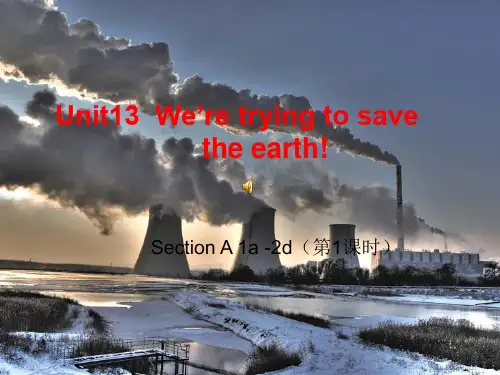
The earth is getting worse because of pollution.
noise pollution air pollution water pollution land pollution
Help save the earth!
We must think of better ways to save our earth in the future.
water pollution
1. What was the problem ? 2. What caused the problem ? 3. How should the problem be solved ?
1b Listen and complete the sentences.
What was the problem?
1. The factories must clean up industrial emissions. 2. People can drive cars less, and take public transportations more. 3. No smoking in our daily life.
The world is facing many problems.
endangered animals desertification
global warming pollution
Pollution
What kind of pollution is it?
noise pollution air pollution water pollution land pollution
problem be
to _c_lo__se__d_o_w__n_ the factories. Everyone should
人教版九年级英语下册unit13课件
2d. 1. Read the conversation quickly, find out the answer to the question.
What kinds of pollution are mentioned in this conversation?
Air pollution and waste pollution.
1b. Listen and complete the sentences
WhБайду номын сангаасt was the problem?
The river was ___________.Even the bottom of the really dirty river was full of _________. There were no more rubbish fish for fishermen to catch. _____
Air pollution
People are throwing ______into the river. litter What caused the problem? Factories are putting ______ waste into the river.
How should the problem be solved?
______(塑料)ones. plastic 5. Could you please tell us another advantage __________(优点) of riding bike to
work?
1a. (Pairwork Write the words related to different kinds of pollution in the box below. or groupwork)
Unit13SectionA课件人教版英语九年级全册
B
D
F
A.But what can I do?B.We get a lot of paper at home.C.You’d better clean your room every day.D.Turn off the shower.E.Can I help you?E. And fifth, take a bag when you go shopping.G.That will save money, too.
used
to
be
二层 培优提升
Ⅴ 补全对话。(2022阜新中考)
A: Hi, Jane. Would you like to help save the environment?B: Yes.19.___A: You can start by turning off the lights.B: Yes, that’s easy. Sometimes I turn on the lights without thinking. What’s next?A: Second, you can ride a bicycle. Don’t take a bus if you don’t have to.B: 20. ___ What else?A: Third, try to recycle paper.
cut down
三、重点句子
1.他小时候常常在这条河里游泳。He _____ ___ swim in the river when he was a child.
used
to
2.它对健康有好处,而且不花任何钱!____ ______ ____ health and it doesn’t _____ anything!
D
F
A.But what can I do?B.We get a lot of paper at home.C.You’d better clean your room every day.D.Turn off the shower.E.Can I help you?E. And fifth, take a bag when you go shopping.G.That will save money, too.
used
to
be
二层 培优提升
Ⅴ 补全对话。(2022阜新中考)
A: Hi, Jane. Would you like to help save the environment?B: Yes.19.___A: You can start by turning off the lights.B: Yes, that’s easy. Sometimes I turn on the lights without thinking. What’s next?A: Second, you can ride a bicycle. Don’t take a bus if you don’t have to.B: 20. ___ What else?A: Third, try to recycle paper.
cut down
三、重点句子
1.他小时候常常在这条河里游泳。He _____ ___ swim in the river when he was a child.
used
to
2.它对健康有好处,而且不花任何钱!____ ______ ____ health and it doesn’t _____ anything!
人教版九年级英语下册Unit13SectionA1a-2d课件
Susan.
Jason: The air has become really polluted around here. I’m getting very worried.
Susan: Yes, I used to be able to see stars
in the sky.
Jason: The problem is that ...
2. Factories that burn coal also __p_o_ll_u_t_e_ the air with a lot of black smoke.
3. There is also too much rubbish and waste. People _a_r_e_t_h_r_o_w_i_n_g_a_w__a_y_ things every day.
b_u_i_ld__in_g__h_o_u_s_es
air pollution water pollution
___fa_c_t_o_r_ie_s__ ____sh_i_p_s_____ __s_m__o_k_in_g___ ___r_u_b_b_i_s_h___ ____c_a_r_s____ ___l_it_t_e_ri_n_g___ bu__il_d_in_g__h_o_u_s_es ___f_a_ct_o_r_i_es___
What caused the problem? People are throwing __li_t_te_r__ into the river. Factories are putting _w__a_st_e_ into the river.
How should the problem be solved? We should write to the _g_o_v_e_r_n_m__e_n_t_ and ask them to _c_l_o_se__d_o_w_n__ the factories. Everyone should help to _c_l_e_a_n__u_p__ the river.
(新人教版)英语九年级全册:Unit 13 全单元ppt课件(223页)
1c
The river was dirty. Even the bottom of the river was full of rubbish.
But it used to be so clean!
Yes, but people are throwing litter into the river.
Yes, everyone in this town should play a part.
We should write to the government and ask them to close down the factories.
What else can we do?
Everyone should help to clean up the river.
bring a bag to go shopping. use chopsticks or forks at home.
throw rubbish in the bins.
Jason and Susan, what are your ideas for solving these problems?
litter和rubbish都可指“垃圾”,用作 不可数名词。 rubbish指“没用的东西(被扔或将要丢 弃的无用的东西)‖不可回收。
litter指“(室内或公共场所)乱扔的废物 (纸屑、不要的包装纸、废瓶等)‖还可 回收。 e.g. Throw the rubbish out. 把垃圾扔出去。 The room is full of rubbish. 房间里堆满了垃圾。 Pick up your litter after a picnic. 野餐后将废弃物收拾好。
The earth is polluted.
安徽省2024九年级英语全册Unit13课时1SectionA1a_2d课件新版人教新目标版
一
二
三
四
五
B: 17. A The Asian elephant is the largest land mammal(哺 乳动物)in Asia. In China, it is a first-class protected wild animal.
A: I see. 18. G
一
二
三
四
五
B: There are an estimated(估计)40,000 to 50,000 of the animals around the world. The number has been falling over the past years. Our work is to try our best to save more elephants.
5. The man is carrying a small red plastic (塑料的)bag which is full of tomatoes.
一
二
三
四
五
二、单项填空。
( D )6.【易错题】A two-day visit to Hong Kong him 3,600 yuan, but he thinks it is
一
二
三
四
五
(A reporter is having an interview with Mr. Bao who is from an elephant reserve in Yunnan.) A: Hello, Mr. Bao. 16. C B: Over 20 years. I started to work here in 2000. A: Could you please give us some information about the Asian elephant first?