
(沪教版)牛津英语教案 6B Module2 Unit3(4)
Where have you been in Shanghai/China/ the world? What are you doing now?
What do you usually do at weekends?
1 Talk with the students about planning a trip to somewhere in the city.
4 Act out
1 Photocopiable page 45 to each student. In groups, the students plan a trip to somewhere in the city. They should decide on: a place, a date, a mode of transport, a start time and a finish time, and a cost.
e.g. Where are we going to visit?
Asking ‘How’ questions to find out price
e.g. How much does it cost?
Key Points: What time are we going to get there?
Difficult Points: How much does it cost?
日常会话的操练,有助于帮助学习有困难的学生增加自信心。
复习巩固,为新授做准备。
由生活经验引出新授内容,学生能很快进入状态。
While-task procedure
Post-task activities
Assignment
2.read
1. About your trip plan
1.Now listen!
e.g. It’s going to be a super afternoon.
Asking ‘How’ questions to find out means
e.g. How are we going to get there?
Asking ‘Wh-‘ questions to find out place
Module 2 Unit 3 Period 4
Teaching Aims:
Asking ‘Wh’ questions to find out time
e.g. What time are we going to get there?
Using ‘going to’ to describe events that will occur quite soon
Teaching Aids:tape、radio、word cards.
Procedures
Contents
Methods
Purpose
Warming
up
Pre-task preparation
Daily talk
1.Revn toBeijingyet?
2 Invite different groups to report back about their plan to the rest of the class. Choose some of the plans for future class outings.
1. Photocopiable page 97 to each student. Listen to Kitty and Eddie’s conversation about what activities they usually do with their cousins.
2 Grammar Practice Book 6B page 30
1. Look and say.
2 .Copy the new words.
3. Make a trip plan.
和生活相联系,来说说活动计划,激发学习兴趣,并积累说话素材。
通过小组练习,在互动中熟练运用句型。
Where are we going to visit? How are we going to get there? When are we going to get there? What time are we going to get there? What time are we going to come back? How much does it cost?
Read and write.
2 Play the recording: Read. Play the recording again. The students listen and repeat.
3 In groups of six, the students read the conversation aloud
牛津沪教版英语六年级上Unit2 Lesson 3 复习教案
牛津沪教版英语六年级上 Unit2 Lesson 3 复习教案六年级上 U2L3Part 1 Vocabulary 词汇1. show [ʃəʊ] v. 给……看,出示 ● Let’s show a picture to our audience. 我们会给观众展示一幅画卷。
【知识拓展】show 也可以作“上演,演出”;“为……带路” “带……到某处”解;还可以作“表示出,显露出,流露出”;“说明,表明”;“呈现”等 ●Where is the film showing? 影片在哪上映? ●It’s on at the Red Star. 在红星影院 ●The first signs of a split were beginning to show. 分裂的初步迹象已经开始显露出来。
●Sadness showed in her face. 她脸上露出哀伤的表情。
【常用搭配】show off 卖弄;炫耀 ●He never shows off. 他从不卖弄自己的才能。
show sth. to sb. = show sb. sth. 给某人看某物(双宾语) ●Please show me your passport. = Please show your passport to me.请出示你的护照。
【词性转换】show n. 显示,表演,演出,展览用 show 的恰当形式填空 →She _________ the technique to her students yesterday. 昨天她向学生演示了那个技巧。
(showed) →She is the star of the _________. 她是演出的主角。
(show)2. around [ə'raʊnd] prep. 环绕,在……周围 ● He runs around the playground. 他在操场上到处跑。
ad. 在周围1 / 20牛津沪教版英语六年级上 Unit2 Lesson 3 复习教案 ● You have 15 minutes to look around. 你有 15 分钟的时间到周围看看。
(沪教牛津版)四年级英语上册教案Module2Unit3Period3-4
沪教牛津版四年级上册英语Module 2 Unit 3 FriendsPeriod 3Teaching aims and demands:Aims and demands:1. Be able to master the word: branch (branches), tooth (teeth)strong – weak , afraid--brave2.Be able to master the phrases: on the branchLanguage Focus:1.Be able to read the text2.Be able to understand the main meaning of the text.3.Be able to ask and answer the questions according to the text.4.Be able to retell the text.5.Be able to say sth about making friends.Emotion objective:1.To make friends and love friends.2.We share joys and sorrows.Steps:Pre-task:1.Chants: Who stole the cookies from the cookie jarFive little monkeys2.Song3.Greetings and quick response: a) Are you ready for English class?b)How are you today?c)Who’s your good friend? Say somethin g about him/her.d)Do you go to the zoo with your good friend on yourholidays?e) If you go to the zoo on holidays,What animal canyou see?f)Have you got small animals in your house?Introduce your favourite animal(chart)4.Revision: Read, choose and fill in the blanksrun friends animals green cat its parrot blackI’m Peter. My good ________ are Susan and Jack. They like _________. Jack has got a _________. _______name is Mimi. It is white and _________. It can ________ fast. It can chase(追赶) the mouse. Susan has got a _________. It is _______ and yellow. It can talk with us. Listen, it is singing .We all like it.While-task:T: I have got a friend,too. He is lovely. He has a big and red mouth. His ears are big andblack. His nose is big, too. His tail is long. Who is he?(Mickey Mouse)T: Who is Mickey Mouse’s girlfriend? (Minnie Mouse)Do you like these two mice? Today we’ll learn a story about another mouse and a lion. Here are some questions for you:a)What can you see? How are they?b)Who is brave on the branch?c)Is the Lion afraid?d)Are they friends?2.Read the story quietly and answer the questions.a)“strong”: not weakThe lion is big. It has big and sharp teeth(tooth) .It is not weakThe mouse is not big.It is small.It is weak. It is much afraid of the lion.( show the picture):The policeman is very strong. He isn’t weak. He is a strong man.b) sharp : Both the mouse and the lion have sharp teeth .What animals have sharp teeth.,too?The pencil is sharp. The knife is sharp,too.c) branch (branches): on the branchWe can see a bird on the branch.d) brave On the branch the mouse is brave. It is biting the net with its teeth.3.Read the story after the tape and think it over:a).The mouse is much afraid :A: Because the lion isn’t hungry.B: Because the lion is strong.C: Because the lion is hungry and it wants to eat it.c) The lion isn’t afraid because _______A: it is big and strong.B: it has sharp teeth.C: the mouse helps it.3.Read the text againPost-task:1. Let students choose one task they can do and finish it:Task 1:Read the text fluently;Task 2: Ask and answer the questions according to the picturesTask 3: Tell the story according to the pictures1.T: The lion can be happy because of the mouse’s help, who is a friend?We share joys and sorrows.2. Rhyme: You are my friendHomework:1.Read the text and retell it.2.Write like this, then try to say:Good Friends______ and I are good friends.We like to be together,Look, we walk to school together.We _______________________We________________________We________________________We________________________……….……….We like each other.We help each other.We share joys and sorrows.M2U3 FriendsPeriod 4Aims and demands:1. Be able to review the sentences :His / My…name is …2. Be able to master the phrases:Eddie and Wendy’s dog3. Be able to master the sentences :Whose dog is that? He is Eddie and Wendy’s dog.4. Act out the dialogue. The Cock and the foxDifficult point : Pos sessive of nouns ‘s’1) Look at Tom’s skateboard.2) My friend’s name is Mary.3) The girls’ schoolbags are nice.4) Mice’s teeth are sharp.5) This is Mike and Tom’s room.Emotion objective:To make friends and love friends.Steps:Pre-task:1. Songs2.Revision:A: Fill in the missing lettersbu__ __ __ __ ock __ __ot __ __rase __ __ood _ _ ind__ __at __ __ide __ __roat __ __ad __ __y _ _ ourB:Fill in the blanks1)Ginger is eating Sam’s food. Sam is very a________.2)Jenny likes her n_____ dress.3) A ladybird is on Kitty’s bed. She is a________.4)Sam is t________. He is on the bed.5)Wendy doesn’t like the football. It’s _____.6)I don’t want to eat the big cake. I am f______.7)Danny is th________ , he’s drinking.8)The mice are w______. Lions are s__________.3. Quick response: The mouse and the lion in the story are good friends.a).Have you a good friend? Who is he ?Good friend______ and I are good friends.We like to be together,we walk to school together.We _______________________We________________________We________________________We________________________……….……….We like each other.We help each other.We share joys and sorrows.b).Is your friend tall?c). Say sentences like this: I have a friend.His / Her/Its name is ….He /she/it has…His /Her/ Its eyes are…His /Her/ Its…is……While-task:1. Our old friend Sam wants to make friends all the time. Today he has a new friend .Who is he ? please read the dialogue quietly .Here are some questions.1)Who is Sam’s new friend?2) Judy is happy, why? Who is Judy’s new friend?3).Is Judy’s new friend a cat? How is it?4).Whose is it?2. Read the story quietly and answer the four questions.3. LearnPossessive of nouns ‘s’Tom’s skateboard.my friend’s namethe girls’ schoolbagsMice’s teethMike and Tom’s room.4.Read and fill in the blanksMy new friend is Mike. ____ (he) father is driver. His _______ (father) car is blue. Alice and Amy are his sisters. Look at ______________ (Alice and Amy) room. It is small, but it is tidy.5.Read the dialogue and divide students to act out it.Post-task:1.Read the story and judgeIt's evening. An old cock is sitting in a tall tree. A fox comes tothe tree and looks at the cock."Hello, Mr Cock.I have good news for you."says the fox."Oh?What is it?""All the animais are good friends. Let's be friends, too.Please comedown and play with me."says the fox."I'm very glad to hear that ."Then he looks up."Look!There is some things over there." "What can you see?"asks the fox."Oh,I see some dog over there. They are coming this way.""What?Dogs?I must go.Goodbye.""Wait,Mr Fox,"says the cock,"Dogs are our friend.""Yes.But they don't know that news."The fox runs away.( ) All the animals are good friends.( ) The fox wants to make a friend with the cock.( ) Dogs are foxes’ friends.( ) The fox runs away because the dogs don't know that news.( ) That’s a clever cock.2. Act out this dialogue.Homework:1. Act out the dialogue.2 Change the sentences1)The mouse is brave. (否定句,句意不变)2)The rabbit’s ears are long. (1换种说法,意思不变,2划线提问)3)She has a red pencil. (换种说法,意思不变)4)You can call him John. (否定句)5) Whose skateboard is that? (Wendy和Eddie的)。
牛津英语上海版六年级上册Module 2 Unit 4 What would you like to be 2课时英文教案

Module 2 Places and activitiesUnit 4 What would you like to be?一.知识与技能:掌握单词:secretary, businesswoman, businessman, bank, clerk, assistant, project, interview, finish, choir, information…理解词组:a bank clerk, a shop assistant, a factory worker, a lorry driver, put out fires, find out, an information board, talk about…应用句型:would like to… What jobs would you like to do?二. 过程与方法:感受:知道每个职业的英文说法,知道如何有礼貌地询问别人的职业,以及询问别人想要做什么职业。
三.情感态度,价值观:感悟:做自己喜欢的工作,并且要做好它,了解人们喜欢自己工作的原因,这样才能更好地完成自己的工作。
Period OneLanguage focus1Using nouns to identify people2Using 'would like to' to express intentions3Asking "Wh-" questions to find out the reason4 Using connectives to give reasonMaterials1Students’ Book 6B, page 43-442Workbook 6A, page 253Grammar Practice Book 6A, page 31-33Pre-task preparationRevision and introduction of the vocabulary of jobsA memory game-- Challenge your memoryStudents can look at the picture for only thirty seconds. In this period of time, try to memorize as many jobs as possible.While-task procedure1Read, think and say on page 44 of the SBa.Introduce and practice the pattern:I would like to be a/an ________ because I want to ________I wouldn't like to be a/an ________ because I don't want to ________.i) Look and the picture and the teacher gives a model first.ii) Look at four groups of pictures and try to practice the pattern in pairs.S1: I would like to be a/an ... because I want to ...S2: I wouldn't like to be a/an ... because I don't want to ...b.The dialogue on page 44 of the SBi) Listen to the recording of the dialogueii) Full-Class Repetition: repeat sentence by sentence after the recording.iii) Individual Repetition: Ss repeat the sentences one by one.iv) Individual S read the list aloud.2More oral practice:The following model dialogues are for Ss to read and act. Use the models as guides to make up their own conversations, using vocabulary of their choices.a) S1: Would you like to be a teacher?S2: Yes, I would.S1: Why would you like to be a teacher?S2: I'd like to be a teacher because I want to teach children.b) S1: Would you like to be a driver?S2: No, I wouldn't.S1: Why?S1: I wouldn't like to be a driver because I don't want to drive a lorry.Post-task activitiesA survey ---- Our ideal joba) Divide the whole class into four large groupsb) The whole group has a discussion to find out which has got the highest vote.c) A group leader will report the result to the class.Consolidation1Workbook page 25, 262Grammar book31-33Period TwoLanguage focus1 Asking 'wh--' questions to find out various kinds of information about a person2 Using connectives to give reasons3 Asking 'wh-' questions to indicate timeMaterials1Students’ Book 6B, page 45-462Grammar Practice Book 6B, page 34-363Some photos of famous peoplePre-task preparationA brainstormingTell students that they are going to interview some people and find out if they like their jobs. Let them try to tell the class which questions they are going to ask. While-task procedure1Look and read on page 45 of the SBa.Listen to the dialogue between Kitty and Samuel Han and complete the1. 422. doctor3. Yes.4. want to make sick people better5. 7:00 a.m.6.8:00 p.m.b) Full-Class Repetition: repeat sentence by sentenceafter the recording.c) Individual Repetition: Students repeat the sentences one by one.e) Do pair work to read the dialogue aloud.2More listening and speaking practice:a Listen to the dialogues between Kitty and Tony Chen, Ben and Amy Li. Fill inthe following two cards.(See the first two cards in Look and read on page 45 of the SB)b Divide the whole class into two groups, group A and group B. The students ingroup A will talk about card A, while the students in group B will talk about card B. Post-task activitiesA talk show. Ask the students to take out the photo. Work in pairs to prepare a talk show, in which the name of the job and the name of the person should not be mentioned. Consolidation1Grammar Practice Book 6B, page 34-362Interview an adult and fill in the card in Find out on page 45 of the SB.。
(沪教牛津版)六年级英语上册教案Module2Unit4(2)

沪教牛津版六年级英语上册教案Unit 4 Rules一、单元分析(Unit Analysis)(一)单元地位(Unit Position)本单元是Module 2的第四个单元。
它围绕着交通规则这一话题展开教学。
通过讲解如何安全地过马路和介绍各种交通标识,让学生在学习英语的同时,学会基本的生活技能,即交通安全常识。
本单元在内容上是上一单元的延伸,在上一单元中出现的关于马路设施的词汇,为本单元的教学打下了基础。
在语法学习上本单元进一步讲解情态动词can的用法;学习并操练现在进行时的肯定句和祈使句的肯定及否定句式。
(二)单元目标(Unit Target)1.语言功能:学会用英语谈论交通安全,用英语解释交通标识的技能2.语法结构: 1)掌握现在进行时的肯定句式2)掌握情态动词can和祈使句的肯定和否定句式(三)单元重点(Unit Focus)1.关键词汇across, left, park, right, turn, way, wrong, on one’s way to, zebra crossing, no buses, no bicycles2.语言功能1)Advice and suggestions 劝告和建议●You can park your car here.●We can’t cross the road here.2)Instruction 指示●Look left! Look right! Look left again!●Cross the road.●Walk quickly!3)Warning 警告●Don’t cross!●Don’t turn right!●Don’t run!●No buses!4)Description 描述●The girl is waiting on the pavement.●The boy is walking across the zebra crossing quickly.3.语法要点1)现在进行时的肯定句:The girl is waiting on the pavement.The boy is walking across the zebra crossing quickly.2)情态动词can的肯定和否定句:You can park your car here.We ca n’t cross the road here.3)祈使句的肯定和否定句:Turn right!Don’t turn right!二、教学设计(Teaching Designs)语法结构任务1 操练现在进行时所需时间:约15 --- 20分钟所需资料:练习册第14页,学生自己的生活照片。
沪教版牛津英语 六年级下册 Module 2Unit3
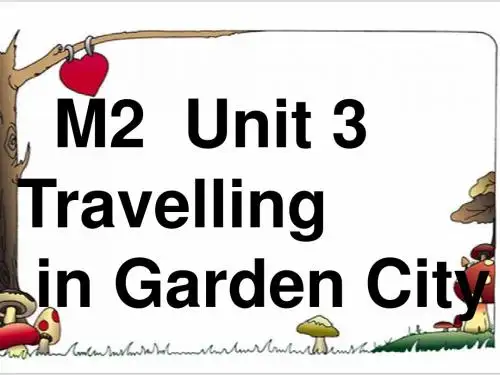
What will travelling in Garden City be like in 10 years time?Perhaps most of the people will travel by nderground.Perhaps there will be fewer traffic jams.Perhaps ther will be more underground stations.
Nowadays,on many buses passengers do not have to buy tickets from a bus conductor. They put their monyere were only singer-decker buses. Nowadays,some buses are duble-decker buses. •In the past,there was no airconditioned buses. •Nowadays,most of them are air-conditioned.
M2 Unit 3 Travelling in Garden City
double-decker single-decker
are
conductor
motorcycle
railway
bridge
没有一个 也许 现今 仍然 在过去 大多数 in the past nowadays most still none peraps 交通阻塞 不多的 人行横道 公共汽车停靠站 bus stop taffic jam crossing car fewpark 停车场
In the past,none of the bus drivers were women. All of them were man. Nowadays,some of the bus drivers are women,but most of them are still men.
沪教牛津版 6B module 3 教案

Module 3 Unit 1 what job do you want to do?Period 1Teaching Aims:Using nouns to identify peoplee.g. a businesswoman, a secretaryKey Points: a businesswoman, a secretaryTeaching Aids: tape、radio 、word cards.Difficult Points: a businesswoman, a secretaryWarming upPre-task preparation 1 Daily talk1.Revision:Plan a trip2. names of jobsWhat do you usually do atweekends?Is your home near school?Is your school far away fromNo. 1 Y aohan?1 Talk about planning a trip tosomewhere in the city.1 Ask different students to readtheir lists of the names of fivejobs they can remember. Writethe jobs on the board as thestudents speak. Do not writedown duplications. When youhave all the students‟ ideas,invite different students to saywhat people do in each job.Encourage other students toprompt where necessary.日常会话的操练,有助于帮助学习有困难的学生增加自信心。
新沪教牛津版六年级上Unit 2教案
Module 1 Getting to know each otherUnit 2 My summer holidayTeaching Aims(教学目标):1.能听、说、读、写本课的核心词汇:famous, during, spend, everyone,countryside2.能熟练掌握核心句型:How was your summer holiday?It was wonderful. We went to the Great Wall.Everyone had a good time.3.读懂有关暑假生活的对话,学会询问别人和介绍自己的暑假生活。
Teaching Importances and Difficulties (教学重难点):1.能在语境中正确运用本单元的核心词汇和句型。
2.能写几句话简单描述自己的暑假生活。
3.在具体的情境中正确运用一般现在时和一般过去时。
4.了解字母e、a及字母组合ea在单词中的发音规律,拼读简单的单词。
Teaching Tools(教学用具):录音机、自制课件、照片等Teaching Procedures(教学过程):StepⅠ.Warm up and revision(热身与复习)1. Greetings.2. Do some warming-up exercises.StepⅡ.Presentation and practice(呈现新语言知识和练习)1. Lead in.T: Do you like the summer holiday or winter holiday?How was your summer holiday?S1: It was wonderful.T: Where did you go?Ss: I went to Beijing.2. Show some pictures and introduce Beijing.3. Learn to say and write the phrases.4. Read and spell the words.5. Choose and say:This is the Great Wall. It’s in Beijing.6. Watch the screen and learn to say the useful sentences.How was your summer holiday?It was wonderful. We went to the Great Wall.7. Ask pupils to practise in groups.Sept Ⅲ. Learn the story (学习课文)1. Watch the cartoon.2. Students follow the recording and repeat the dialogues.3. The pupils read the text carefully. And then try to do some exercises. Step Ⅳ.Consolidation(拓展延伸)The pupils learn to write something about their summer holidays.Unit 7 Helping others教材分析Understand the ideographic functions of different tenses through the situational dialogue of Listen and say. Talk about how to help others.◆教学目标【知识目标】Through the teaching activities of Look and learn, read new words and review the same words in front of them.【能力目标】Help students practice different tenses through the activities of Ask and answer【情感目标】Guide students to realize that helping others is also the source of their own happiness.◆教学重难点【教学重点】Sentence:How can you help others? I can...【教学难点】Help students to practice different tenses.◆课前准备Tape recorder, Multimedia◆教学过程Step 1. Listen and enjoyLead students enjoy and sing along with the tape and know the topic of this Unit.Step 2. Think and discuss1)Did you ever help other people?Did anyone help you before?How do you feel when you help other people?Why do people help each other?Step 3. Ask and answer◆Talk about how to help others in your daily life.help the blind cross the streetpick up rubbish (sweep the floor)read the newspaper to old peoplegive seats to those in need (old people/ the disabled/pregnantwomen/the sick)help tourists find their way◆Make a short dialogueStep 4. Listen and say1) Look and predict: What’s happening in the picture?2) read and answer1. Where are they?2. Why is the boy crying?3. What does the lost dog look like? (explain the new words in Look and learn)4. how did they help the boy?3) Read and fill in the table.Sally and peter cannot find the dog? Please complete the notice about a lost dog.4) read aloud and act it out.Step 5. Read a story1)Read and guess◆I am an insect. I am small and yellow. I fly among flowers.I have a sting on my tail. What am I?◆I am an insect. I am small and black.I live in a nest under the ground.Do you know me?2) Read and answer the questions in page 45.3) Think and answer◆Why do people like the bee instead of the ant?Because the bee works for flowers and people while the ant only works for himself and his queen.◆What do you think of the ant and the bee?◆Do you have any suggestions for the ant?Don’t be selfish.Work for people and plants.Do good things for others.4)Talk and shareWhat do you learn from the story?A selfish person cannot earn people’s respect.Helping other people makes you popular.A kind heart is better than a smart mind.Step 6. Learn the sounds1)Show the flashcards of words in this part and lead students read aloud.2)Find out the rules of pronunciations.Step 7. HomeworkRead the dialogue in Listen and say. Retell the story in Read a story.。
(沪教牛津版)六年级英语上册教案Module4Unit3
沪教牛津版六年级英语上册教案Unit 3 Festivals in China一、单元分析(Unit Analysis)(一)单元地位(Unit Position)1. 本单元为Module 4的第三单元。
它起着承上启下的作用。
与之前Unit 2中的假日安排和之后Unit 4的各种活动(activities)相关。
2. 本单元在前两个单元的基础上,继续围绕一般将来时展开,用于描述将来的活动。
3. 本单元向学生介绍如何描述一个节日,对学生在写作上的提高有所帮助。
对今后继续学习如端午节(7A)、圣诞节(7B)的介绍起到了铺垫的作用。
(二)单元目标(Unit Target)1. 学会用一般现在时描述一般的状态或现在的状态。
2. 学会用一般将来时描述将要发生的事情或打算。
3. 其他需要解决的问题:1)掌握六个主要节日的名称。
2)掌握like … best的用法。
3)学会用简单的段落介绍一个常见的节日。
(三)单元重点(Unit Focus)1. 关键词:Chinese New Year, Dragon Boat Festival, Mid-autumn Festival, Lantern Festival, Qing Ming, Christmas, special, decorations, mooncakes, rice dumplings, race。
对于72页上的那些绘图工具,小学中已经学习过。
在此可以加以复习。
2. 功能1)询问信息(Asking for information)●Which festivals do you like?●Which festival do you like best?3. 语法点本课可作为对一般将来时(will)的复习。
依旧要注意will + 行为动词和will +be +形容词的这一教学难点。
二、教学设计(Teaching Designs)本课的教学内容安排是:春节→端午节/中秋节→各种节日。
沪教牛津版六年级英语上册教案Module2Unit2
沪教牛津版六年级英语上册教案Unit 2 My home一、单元分析(Unit Analysis)(一)单元地位(Unit Position)本单元是Module 2的第二个单元,在内容上介绍了Ben 和Kitty居住的生活小区和他们的家;在语法结构上它继续介绍并操练一般现在时特殊疑问句的用法;在复习形容词比较级的基础上介绍形容词最高级形式;本单元中出现的序数词是在中学阶段首次出现,而“there be”句型的介绍,为unit 3的教学做了铺垫。
(二)单元目标(Unit Target)1.词汇学习:1)掌握表示生活小区中的设施和建筑物的名称2)复习表示不同功能房间的词汇3)学会用介词词组表示不同的方位4)复习序数词的用法2.语言功能: 1)学会根据小区示意图简单介绍居住的生活小区的环境设施2)学会用英语询问和表达地址和电话号码3)学会根据房型图简单介绍居住的房间及描述理想中的房间3.语法结构: 1)熟练掌握一般现在时的特殊疑问句2)复习形容词比较级形式,学习形容词最高级形式的基本用法4.综合运用:模拟More oral practice中第二个对话Moving into a newhousing estate,综合运用本单元所学的内容编写对话并表演(三) 单元重点 (Unit Focus )1. 关键词汇address, kindergarten, room, 7-eleven, tennis, top, tennis court,the tallest, the biggest, live ina housing estate / Block___ , live on the ___ floor , live at(address) 2. 语言功能1) Description 描述居住情况Describing a housing estateDescribing a flat1.Asking for information 询问信息 ● A: Where is the fountain?B: It is in front of Block 1.● A: Where are the tennis courts?B: They are behind the swimming pool.● A: What’s Eddie Chen’s addressB: He lives at Flat 18B, Block2, Rose Garden Estate, Garden City. ● A: What’s his telephone number?B: It’s 6376 9711.● A: How many flats are there in your block?B: There are ….● Which floor do you live on? 2.Comparison进行比较a) Who lives in the tallest block? b) It’s the biggest flat.They live in Block 1. It has 30 floors. They live on the ninth floor.There are shops, a school, … a swimming pool and tennis courts in the housing estate.We live in Flat A. It has eight rooms. It’s the biggest flat.This flat is small. There are … bedrooms , … sitting rooms … in this flat.3.语法要点1)一般现在时的肯定句:They live in Block 1. Eddie lives in Block 2.I live at … (address). He lives at … (address).2)一般现在时的特殊疑问句:Where does Eddie live? Where do Ben and Kitty live?Where is the fountain? Where are the tennis courts?What’s Eddie Chen’s address?What’s your address?What’s his telephone number?What’s your telephone number?How many blocks are there in your housing estate?Which floor do you live in?3)形容词最高级:Who lives in the tallest block?It’s the biggest flat.4)序数词:tenth, eighteenth, ninth5)介词:in, at, in front of, behind, near, on the right of, on the left of二、教学设计(Teaching Designs)词汇学习任务1)词汇归类Classify the words所需时间:约5 --- 8分钟所需资料:活页资料第34,35和36页;课前准备:准备好活页资料34,35和36页把【Words Classification Sheet】分发给每个学生从报刊杂志上收集相关词汇的图片(kindergarten, room, 7-eleven,tennis, tennis court)教学过程:1.用图片介绍新的词汇。
(新沪教牛津版)二年级英语上册《Module 2 Unit 2》优质教案设计3
通过对话问答外型,来猜猜是谁?这个环节有一定的难度,教师要示范清楚。
。
rhyme
Harry has a jar.
Harry has ajar.
Harry has an insect.
An insect in a jar.
an and a
1.Read the rhyme after the tape.
(Danny , Kitty, Eddie)
Ss Boys Girls Groups
Kitty: I’m tall and thin. Who am I?
Elicit: who
a. read: who
b. understandthemeaning of“who”
c. say: Who am I ?
Ss Boys Girls one by one
Learn the letters
Ss Tt
Exercises
a. Read the letter rhyme
1.Learn how to write it.
2.Read the words.
3.A rhyme
Tom’s rabbit is smooth and soft.
Tom’s rabbit sits on the table.
Developing aimsLearn to say: I’m…and…You’re…and…
Main points
1. Using the key patterns to respond appropriately
e.g. You’re…Yes,I’m…/No, I’m…
2. Using wh-questions to communicate with other people