
八年级英语上册教案
1
Unit 1 How often do you exercise ?
Teaching goals:
.Words &phrases: how often , hardly , twice , once , difference , look after ,
although ,etc .
Learn to talk about how often do you do things .
一些表示频率的副词: always , usually , often , never , hardly ever ,
sometimes .
句子结构: What do you usually do on weekends ?
How often ··· ?及回答.
Important and difficult points :
What does she /he do on weekends ?
She often goes to the movies .
How often do you shop ?
Once a week / Twice a week ··· .
Teaching aids : cards , pictures and a tape recorder .
Period 1
Teaching procedures :
Step 1 Leading-in
1.Greetings:Talk about something the students did on summer vacation .
Step 2 Pre-task
Look at the picture (学生识图).
2 Name each activity .
T: What are they doing ?
They are shopping /reading /exercising /watching TV /skateboarding .(Help the
students to answer )
Write the activities on the line .
Check the answers on the Bb .Correct their own activities .
Practise reading .
Focus on the conversation in the box .
Practise reading .
Pairwork : What do you do on weedends ? I ··· .
Groupwork :Divide the class into groups of four or five .Make conversations .
Step 3 While-task
SB Page 1 , 1b .
Look at each picture in 1c.Tell what the person does on weekends .Check the Ss
orally.
Make sure what they will hear and do .
Read these adverbs and explain.
Play the tape twice .Write the letters on the line.
SB Page 2 , 2a & 2b .
read the activities and the answers of ―how often‖ first .
Practise reading .
3 In 2a we should know the activities you hear .In 2b we should know the answers
of how often he does the activities.
Play the tape for a first time .Ss only listen .
Play the tape a second time .Ss do 2a .
Play the tape a third time .Check the answers .
Check the answers .
In this part ,we should pay attention to how often引起的特殊疑问句及回答.
Step 4 Post-task
SB Page 2 , 2c .
Focus on the conversation .
Practice reading .
Read the activities in the left box .
Fill in the chart .
Pairwork: Make conversations .
Homework:
Copy the new words.
Review Section A 1a-2c
prepare 3.
Period 2
Teaching procedures :
Step 1 Leading-in
4 Greetings
Drills:
T: What do you usually do on weekends ?
S1: I usually play soccer .
T: How often do you play soccer ?
S1: I play soccer twice a week .
T: How often does he play soccer ?
The other Ss: He plays soccer twice a week .
Repeat for three times .
Step 2 Pre-task
SB Page 2 ,Grammar Focus .
Review the grammar box .Ss say the questions and answers .
Practise reading .
Step 3 While-task
SB Page 3 , Part 3 .
Call attention to the survey .Make sure the Ss understand the chart .
Review the information in the green box with Ss .
Read the article first by the Ss .
Read it to the class .
Look at the survey and fill in the blanks in the article .
Finish the activity individually .
5 Check the answers .
Practise reading .
Step 4 Post-task
SB Page 3,Part 4 .
T: What can you do to improve your English ?(e.g. read English books, practice
reading and speaking ) How often do you ··· ?
Think of more things you can do to improve your English and write them here .
Ask several Ss each question .
Homework:
1.Revise and copy the new words .
2.Prepare for Section B.
Period 3
Teaching procedures :
Step 1 Leading in
Greetings & free talk .
Practise reading the article in Page 3.
Check the homework.
Step 2 Pre-task
SB Page4 , 1a .
Point out the five phrases .
Make sure the Ss understand what do they mean .
6 Call attention to the pictures .Say something about the pictures .
Match the words with the pictures .
Check the answers .
Practice reading .
Step 3 While-task
SB Page 4 , 1b .
pay attention to the conversation in the box on the right .
Explain : ―be good for‖ means :有益于…,对…有好处.
Pairwork. Choose a new partner .Use the words in Activity 1a to make
conversations .
Share the students’ conversations.
SB Page 4 ,2a&2b .
Read the questions in 2a .
Listen to the tape carefully twice .Circle ―yes‖ , ―no‖ or ―I don’t know‖ in the
chart .
Before we check the answers in 2a,we’ll read through the questions in 2b .Pay
attention to Katrina’s and Bill’s answers .
Play the tape again .This time ,if we have heard one questions and we have a
pause .Make sure Katrina’s and Bill’s answer.
step 4 Post-task
Role-play .
八年级英语上册全册教案(牛津版)
八年级英语上册全册教案(牛津版)
单元一:Meeting New Friends
教学目标:
1. 研究并掌握有关问候和介绍的表达方式;
2. 认识并了解一些中国和国际的传统节日;
3. 培养学生的听、说、读、写能力。
教学内容:
1. 情景对话:问候和自我介绍;
2. 词汇:问候用语、介绍自己的句型;
3. 语法:第三人称单数的一般现在时;
4. 文化知识:中国春节和国际圣诞节。
教学步骤:
第一课时
1. 导入新课,并介绍本单元的教学目标。 2. 向学生介绍中外节日,并讨论他们对节日的认识。
3. 研究常用的问候语,例如:Hello, Hi, How are you, Fine,
thank you. And you?等等。通过角色扮演对话,练问候和回答。
4. 研究自我介绍的句型,例如:My name is Lucy. I'm twelve
years old. I'm from China,等等。学生之间进行自我介绍的练。
第二课时
1. 复上节课学过的问候语和自我介绍的句型。
2. 研究第三人称单数的一般现在时。向学生介绍第三人称单数的规则,并进行一些练。
3. 引入中国春节和国际圣诞节的文化知识,向学生介绍春节和圣诞节的起源、传统俗和庆祝方式。让学生了解不同文化之间的差异。
4. 学生分组讨论,比较中国春节和国际圣诞节的异同。
第三课时
1. 复上节课学过的第三人称单数的一般现在时。 2. 研究和巩固本单元的重点词汇和短语,例如:celebrate,
tradition, festival,等等。通过词汇游戏和练,提高学生的词汇水平。
3. 听力训练:播放录音,让学生听一段对话,然后回答问题。通过听力训练提高学生的听力能力。
4. 朗读训练:让学生分角色朗读课文中的对话,提高学生的口语和阅读能力。
总结:
通过本单元的教学,学生将学会基本的问候和自我介绍的英语表达方式,掌握第三人称单数的一般现在时的用法,了解中国春节和国际圣诞节的文化知识,并通过听、说、读、写的训练,提高学生的英语综合能力。
人教版八年级上册英语全册教案

Unit 1 Where did you go on vacation?
教学课题 第一课时 Section A(1a-2d )
教学目标 【知识目标】
Important words:anyone,anywhere,wonderful,few,most
Important phrases:quite a few,on vacation,anything interesting
Important sentences:
1.Where did you/he/she/they go on vacation?
2.Did you/he/she/they go to Central Park?
【能力目标】
能用目标语言谈论过去发生的事件。
【情感目标】
通过听力训练、角色扮演等方式,学会与他人分享经历,并提高学生的英语听说能力。
教学重难点 重点:动词一般过去时态的应用。
难点:动词过去式的变化规则。
教学过程
◆Step 1 Leading in
1.Guess:Get Ss to guess what the teacher did on vacation:
①Where did I go on vacation?
②What did I do on vacation?
2.Free talk:Guide Ss to talk about their own vacation.
①How was your summer vacation?
②Where did you go on vacation?
③Did you do anything special/great?
④Did you go anywhere interesting/beautiful...?
⑤Did you meet anyone interesting?
设计意图 通过情境设计,从学生身边的问题导入新课,减少难度,从而调动了学生参与课堂教学活动的热情,提高学生的学习积极性。
仁爱版英语八年级上册教案全集整套(详细)

仁爱版英语八年级上册教案全集整套(详细)
教案一:Unit 1 Introduction to English
- 研究目标:通过研究本单元,学生能够了解英语的重要性,掌握一些基本的问候语和自我介绍的方式。
- 教学内容:自我介绍、问候语、英语字母表、数字。
- 教学方法:听说结合,互动交流。
- 教学步骤:
1. 学生自我介绍,老师引导学生使用英语进行自我介绍。
2. 研究基本的问候语,例如:Hello, How are you? I'm fine,
thank you.
3. 研究英语字母表,教师板书字母表,并逐一教授正确的发音。
4. 研究基本数字,从1到10的阿拉伯数字及其对应的英文表达。
5. 练对话,学生分组进行对话练,使用已学的问候语和数字进行简单对话。
- 教学评价:通过观察学生的互动表达和对话练,评价学生的研究情况。
教案二:Unit 2 Making New Friends
- 研究目标:通过研究本单元,学生能够了解交朋友的技巧和方法,掌握一些交际用语。
- 教学内容:介绍自己、询问个人信息、交谈技巧。
- 教学方法:听说结合,角色扮演。
- 教学步骤:
1. 学生分享自己认识新朋友的经历,老师引导学生回顾交朋友的技巧。
2. 研究介绍自己的表达方式,如姓名、年龄、爱好等。
3. 研究询问个人信息的方式,如What's your name? How old are
you?等。
4. 引导学生讨论交谈技巧,如互相倾听、表达尊重等。
5. 进行角色扮演活动,学生分组进行模拟交谈练。
- 教学评价:观察学生的个人介绍和角色扮演表现,评价学生的交际能力和理解程度。
(继续编写其他教案...)
人教版八年级英语上册第一单元教案

人教版八年级英语上册第一单元教案
一、教学目标:
1. 帮助学生掌握本单元的词汇和句型,并能够进行简单的对话。
2.
培养学生听、说、读、写四项基本技能,使其初步具备用英语进行简单日常交流的能力。
3. 帮助学生了解中西方文化差异,拓展视野,培养跨文化意识。
二、教学内容及过程:
1. Greeting(问候)
a. 掌握常见的问候用语:Hello/Hi/Good morning/How are you等。
b. 学会根据不同时间、场合和对象使用适当的问候用语。
c. 了解中西方问候文化的差异。
2. Introduction(介绍)
a. 掌握常见的介绍用语:My name is…/I’m…/This is…等。
b. 学会根据不同情境和目的使用适当的介绍用语。
c. 了解中西方介绍文化的差异。
3. Expressing Feelings(表达情感)
a. 掌握表达情感的常用词汇和短语,如happy/sad/angry等。
b. 学会用英语表达自己的情感,并能够进行简单的情感交流。
c. 了解中西方情感表达方式的差异。
4. Expressing Likes and Dislikes(表达喜欢和不喜欢) a. 掌握表达喜欢和不喜欢的基本句型,如I like…/I don’t like…等。
b.
学会用英语表达自己对某人或某事物的喜欢或不喜欢,并能够进行简单的交流。
c. 了解中西方表达喜好方式的差异。
5. Practicing Dialogues(练习对话)
a. 通过模仿、角色扮演等方式练习本单元所学的对话。
b. 创设情境,让学生根据实际情境运用所学语言进行交流。
c. 鼓励学生大胆开口,积极参与课堂活动。
6. Cultural Corner(文化角)
a. 通过阅读、讨论等方式了解中西方文化差异,拓展视野。
b. 学习一些基本的跨文化交际技巧和方法。
c. 培养学生的跨文化意识和跨文化交流能力。
新人教版八年级上册英语全册教案(51页) 全册
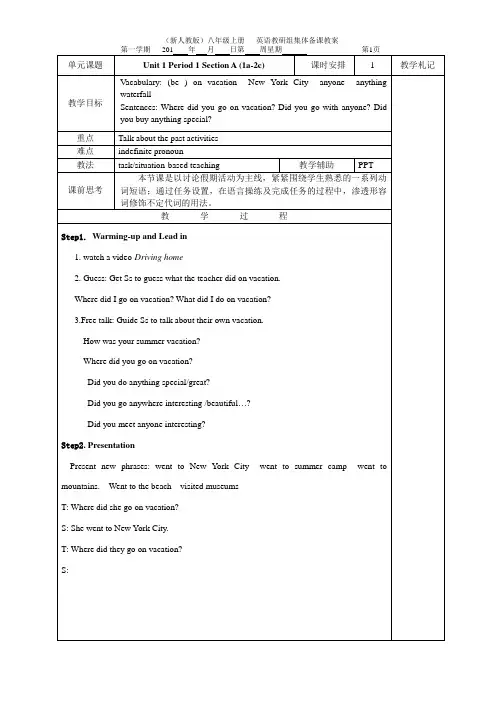
(新人教版)八年级上册 英语教研组集体备课教案
第一学期 201 年 月 日第 周星期 第1页
单元课题 Unit 1 Period 1 Section A (1a-2c) 课时安排 1 教学札记
教学目标 Vacabulary: (be ) on vacation New York City anyone anything
waterfall
Sentences: Where did you go on vacation? Did you go with anyone? Did
you buy anything special?
重点 Talk about the past activities
难点 indefinite pronoun
教法 task/situation-based teaching 教学辅助 PPT
课前思考 本节课是以讨论假期活动为主线,紧紧围绕学生熟悉的一系列动词短语;通过任务设置,在语言操练及完成任务的过程中,渗透形容词修饰不定代词的用法。
教 学 过 程
Step1. Warming-up and Lead in
1. watch a video-Driving home
2. Guess: Get Ss to guess what the teacher did on vacation.
Where did I go on vacation? What did I do on vacation?
3.Free talk: Guide Ss to talk about their own vacation.
How was your summer vacation?
Where did you go on vacation?
Did you do anything special/great?
八年级上册英语第十单元教案(人教版) (1)
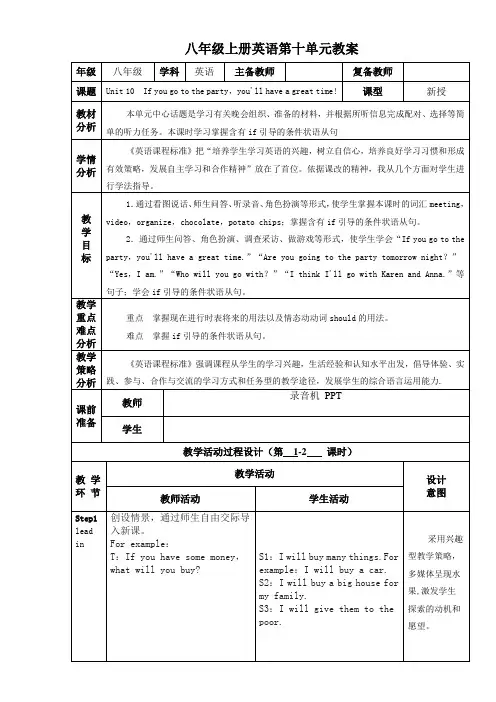
八年级上册英语第十单元教案
年级 八年级 学科 英语 主备教师 复备教师
课题 Unit 10 If you go to the party,you'll have a great time! 课型 新授
教材分析 本单元中心话题是学习有关晚会组织、准备的材料,并根据所听信息完成配对、选择等简单的听力任务。本课时学习掌握含有if引导的条件状语从句
学情分析 《英语课程标准》把“培养学生学习英语的兴趣,树立自信心,培养良好学习习惯和形成有效策略,发展自主学习和合作精神”放在了首位。依据课改的精神,我从几个方面对学生进行学法指导。
教
学
目
标
1.通过看图说话、师生问答、听录音、角色扮演等形式,使学生掌握本课时的词汇meeting,video,organize,chocolate,potato chips;掌握含有if引导的条件状语从句。
2.通过师生问答、角色扮演、调查采访、做游戏等形式,使学生学会“If you go to the
party,you'll have a great time.”“Are you going to the party tomorrow night?”“Yes,I am.”“Who will you go with?”“I think I'll go with Karen and Anna.”等句子;学会if引导的条件状语从句。
教学重点难点分析 重点 掌握现在进行时表将来的用法以及情态动动词should的用法。
难点 掌握if引导的条件状语从句。
教学策略分析 《英语课程标准》强调课程从学生的学习兴趣,生活经验和认知水平出发,倡导体验、实践、参与、合作与交流的学习方式和任务型的教学途径,发展学生的综合语言运用能力.
课前准备 教师 录音机 PPT
学生
教学活动过程设计(第 1-2 课时)
教 学
环 节 教学活动 设计
意图 教师活动 学生活动
人教版八年级英语上册教案及教学反思
人教版八年级英语上册教案及教学反思
Teaching Plan and Reflection on New Curriculum of Grade
Eight English
I. Teaching Objectives
1. Master the rules of Present Perfect Tense and Correct the
mistakes in using the Present Perfect Tense.
2. Learn more about the usage of Present Perfect and use it
correctly in practice.
3. Understand the difference between the present perfect
and the past simple and use them accurately.
4. Develop students' comprehensive ability in listening,
speaking, reading, and writing.
II. Teaching Content
1. Present Perfect Tense: structure, formation, and rules.
2. Comparing the use of Present Perfect Tense and Past
Simple.
3. Practice using Present Perfect Tense in different contexts.
4. Listening, speaking, reading, and writing exercises related
to the theme. III. Teaching Procedures
八年级上册英语教案人教版
八年级上册英语教案人教版
第一章:Unit 1 My school
1.1 教学目标
能够听懂、说出一、二、三个学校的名称。
能够用英语简单描述学校的设施和课程。
能够用英语询问和回答学校相关的问题。
1.2 教学内容
引入新词汇:school, class, teacher, student, library, playground,
subject, sport
学习句型:What's your school like? It's
学习询问和回答学校设施的句子:Is there a? Yes, there is. No,
there isn't.
1.3 教学活动
课堂导入:向学生展示不同学校的图片,引导学生用中文描述。
教授新词汇:通过实物展示、图片、简笔画等方式教授新词汇。
情景模拟:设置情景,让学生模拟询问和回答学校设施的情况。
1.4 作业布置
抄写新词汇,每个词汇写5遍。
制作学校设施的图片,并配以英文描述。
第二章:Unit 2 My family
2.1 教学目标
能够听懂、说出家庭成员的英语名称。 能够用英语简单描述家庭成员的特点。
能够用英语询问和回答家庭成员相关的问题。
2.2 教学内容
引入新词汇:father, mother, brother, sister, grandmother,
grandfather, family
学习句型:This is my He/She is
学习询问和回答家庭成员的句子:How many people are there in
your family? What does your father do?
2.3 教学活动
课堂导入:向学生展示家庭成员的图片,引导学生用中文描述。
教授新词汇:通过实物展示、图片、简笔画等方式教授新词汇。
情景模拟:设置情景,让学生模拟询问和回答家庭成员的情况。
2.4 作业布置
抄写新词汇,每个词汇写5遍。
八年级英语上册-人教版-Unit 1 教案
八年级英语上册-人教版-Unit 1 教案
一. 教材分析
本单元的主题是“My school”,主要介绍学校的基本情况和学校生活。通过本单元的学习,学生能够掌握有关学校的基本词汇,如classroom, teacher, student等,同时能够运用这些词汇进行简单的英语交流。
二. 学情分析
八年级的学生已经掌握了基本的英语语法和一定量的词汇,对英语学习有了一定的兴趣和基础。但部分学生在英语学习中还存在一定的困难,如口语表达能力和听力理解能力。因此,在教学过程中,需要关注学生的个体差异,因材施教。
三. 教学目标
1. 知识目标:学生能够掌握有关学校的基本词汇和句型,如“This is my
classroom. This is my teacher.”等。
2. 能力目标:学生能够用英语简单介绍自己的学校和生活,提高口语表达能力和听力理解能力。
3. 情感目标:培养学生对学校生活的热爱和珍惜,激发学生学习英语的兴趣。
四. 教学重难点
1. 重点:掌握有关学校的基本词汇和句型。
2. 难点:能够用英语进行简单的交流和描述。
五. 教学方法
1. 任务型教学法:通过完成各种任务,激发学生的学习兴趣,提高学生的参与度。
2. 情境教学法:创设各种真实的学校情境,帮助学生理解和运用所学知识。
3. 小组合作学习:鼓励学生相互交流、讨论,提高学生的合作能力和团队精神。
六. 教学准备
1. 教学素材:准备相关的图片、视频、课件等,以便在课堂上进行展示和教学。
2. 教学工具:准备黑板、粉笔、多媒体设备等。 3. 学生活动准备:学生提前预习教材,了解本节课的基本内容。
七. 教学过程
1. 导入(5分钟)
利用图片或视频展示学校的场景,引导学生谈论学校的基本情况,如“This is my school. This is my classroom.”等,激发学生的学习兴趣。
2. 呈现(10分钟)
外研版英语(新标准)八年级上册教案(全册)(完美版)
1 外研版英语(新标准)八年级上册教案
Module 1 How to learn English
Unit 1 Let’s try to speak English as much as possible.
一、学习目标:
A.单词和短语:pair, correct, spelling, word, practice, match, meaning, complete, sentence,
dictionary, grammar, letter, look up, mistake, make a mistake,
understand-understood, advice, should, possible, write down, notebook,
forget-forgot, pronounce, aloud, radio, pronunciation, key, main, excellent,
agree, agree with sb., vocabulary, ask for, improve, basic, time, advise, shy, conversation, quickly, natural, suggest, place
B.交际用语:
1. Ready?
2. That’s a good idea.
3. What else? 4. Thanks a lot!
5. Excellent!
6. We should always speak English in class.
7. Let’s try to speak English as much as possible.
8. Why not write down the mistakes in our notebooks?
9. It’s a good idea to spell and pronounce new words aloud.