
牛津沪教版四上英语Unit 3 Are you happy 教学设计
Module 1 Unit 3 教案1一、教学重点词汇:happy,sad,tired,hungry,full,thirsty句型:I’ m happy.二、教学栏目Look and learn三、教学目标1. 帮助学生学习Look and learn中表示感觉的单词thirsty,happy,sad,tired,hungry,full。
2. 通过猜谜游戏和看图造句活动,帮助学生巩固词汇学习,结合句型I’m happy/ …表达感受,为询问别人的感觉打下基础。
四、教学步骤Pre-task preparations1.播放歌曲Are you happy?的录音或动画,让学生欣赏,借助肢体动作帮助学生理解歌曲大意。
2.教师边做动作边放慢语速唱歌,借助夸张的表情和人物图片来帮助学生理解happy的意思。
T:(smile happily and point to the face) I’m happy. (point to the picture of a child whois smiling) Is he/she happy?Ss: Yes, he/she is.While-task procedures1.出示一些表现出喜悦之情的人物的照片,帮助学生进一步理解happy的含义。
T: (show the picture of a boy who is smiling)The boy is smiling. He is happy.将单词happy写在黑板上,学生看板书拼读单词。
把挂图贴在黑板上,指着不同表情的人物图片,通过问答引出Look and learn中的单词sad,thirsty,hungry,full,tired。
T: (point to the girl crying) Is the girl happy?Ss: No, she isn’t.T: No, she’s not happy. She’s sad. Sad, S-A-D, sad.Ss: Sad. S-A-D, sad.2.出示Look and learn的单词卡片sad,happy,hungry,full,thirsty,tired,请学生认读单词,然后看单词做动作,或一个学生做动作,全班说单词。
把挂图贴在黑板上,让学生根据图片中人物的表情,用He’s/She’s …说一说。
S1: (point to the girl crying) She’s sad.S2:(point to the boy who is eating) He’s hungry.或者教师描述图中的人物,让学生猜测你描述的是谁。
T: He has … He is sad. Who is he?S1: Is he … (name)?T: Yes, he is./No, he isn’t.3.看图造句。
出示单词卡片:thirsty,happy,sad,full,tired,hungry~要求学生看图连续说两句话,要求前后两句话之间要有逻辑关系。
教师可先做示范,并在黑板上写出例句,帮助学生造句。
T: (show the flashcard for thirsty) I am thirsty.I want some juice.S1: I have a new bag. I’m happy.S2: I’m tired. I can’t run.Post-task activities1.头脑风暴。
要求学生四人一组讨论:在什么情况下会感到happy/sad/hungry/thirsty,在这些时候喜欢做什么。
T: I’m happy. I sing a song. I dance. I listen to the music. I go shopping.S1: I can swim very fast. I’m happy.2.请学生完成下列句子,然后说一说。
牛津上海版英语四年级上册知识点整理Unit 1 Meeting new people生词: eleven twelve thirte en fourteen fifteen sixteen newmorning classmate her name sit afternoon his句型:My/His/Her name is ... Nice to meet you. See you.He’s/She’s ... (age) This is my... Good morning/afternoon语法:形容词性物主代词 my, her, his, your在英语中有物主代词,它可以分成名词性的和形容词性的。
形容词性物主代词相当于形容词,置于名词前,在句子中用于修饰名词,做定语,后面必须跟一个名词。
例如:This is my brother. His name is Tom. 这是我的哥哥。
他叫汤姆。
形容词性物主代词有人称和数的变化,单数形式:my 我的,your 你的,his /her/its 他的、她的、它的。
复数形式:our (我们的),your (你们的),their (他们的)。
Unit2 Can you swim?生词:run fast fly draw read write swim jump welcomebut skate dance cat mouse bird rabbit fish elephant句型:I/He/She/Kitty/My sister can ... I/He/She can’t…Can you/he/she…? What can you/he/she do?Welcome to Super Show.A fish can swim. An elephant can ran fast.语法: 1. 情态动词can 意思是“会,能”,表示会做某事。
句子结构:肯定句:主语 + can + do( 动词原形)否定句:主语 + can + not + do( 动词原形)一般疑问句:Can you/he/she/they run fast ?特殊疑问句:What can you/he/she/they do ?例如:My friend can ride a bicycle. I can’t swim.My brother can hear the bird. I can’t draw flowers.注:can 的否定有两种书写形式can’t和 cannot 2. 连词 but But 是个表示转折关系的并列连词,意思是“但是,然而”。
例如: I can run, but I can ’ t swim. 我会跑但是我不会游泳。
My sister can sing, but she can ’ t dance. 我妹妹会唱歌但是不会游Unit 3 Are you happy?生词: happy hungry thirsty sad full tired bird see drink bottle a new kite look at have some water/biscuits.little stones drink the water very thirsty have a good idea语法:I’m/He/She/Peter is happy/hungry.Are you sad/tired? Yes, I am/No, I’m mot.Is Kitty thirsty? Yes, she is/No, she isn’t.How do you feel? I’m/We’re...Module2 Me, my family and friendsUnit 4 Jill ’ s family生词:father mother parent brother sister uncle aunt grandfather grandmother grandparent me cousina big family Uncle John’s son Dan’s father语法:I have two cousins. I don’t have any cousins.Do you have any ...? Yes, I do. /No, I don’t.How old is your brother? He is 11 years old.Who is this/that? This/That is my uncle/me.Welcome to my home.Is this your brother? Yes, he is./No, he isn’t.Unit5 My friends生词: shirt T-shirt skirt shorts dress brown green redwhite black blue pink yellow purple a pair of shortsorange get out tooth/teeth sharp a brown shirt fly a kitean orange dress ride a bike skate afraid语法:I have a black T-shirt. He/She has a pair of brown shortsUnit6 My parents生词: doctor nurse teacher student fire man cook bus driverJill’s father kid help people fire play with语法: What does your father do? He/She is a fireman.What do you/your parents do? I’m/My father is a doctor.Is your sister a nurse? Yes, she is/No, she isn’t.Don’t play with fire. Yes, Mr Xu.Are you afraid of fire? No. I like my job.Module3 Places and activitiesUnit7 At school生词:school office busy computer many library tryPlayground classroom toilet animal pupil forest firstClimb trees teacher’s office an animal school no classroom语法:There be 句型是英语中常用句型,意思是“ 有” ,表示“ 人或事物的存在” 或“ 某地有某物” 。
沪教牛津三起2012英语四年级上册:Unit 3 Are you happy 优质教案设计
Unit 3 Are you happy?教学目标1、帮助学生学习Look and learn中表示感觉的单词thirsty, happy, sad,, tired, full, hungry.2、通过猜谜游戏和看图造句活动,帮助学生巩固词汇学习,结合句型I’m happy/…表达感受,为询问别人的感觉打下基础。
重点难点:词汇:happy, sad, tired, hungry, full, thirsty句型:I’m happy.使用教材构想学生能表达自己的感觉,能询问并转述别人的感觉,能对别人的感觉作出适当的回应。
教学过程一、出示目标:1、能听、说、读、写Look and learn中表示感觉的单词thirsty, happy, sad,, tired ,full, hungry.2、通过猜谜游戏和看图造句活动,巩固词汇学习,结合句型I’m happy/…表达感受。
二、导入:1、播放歌曲Are you happy?让学生欣赏,借助肢体动作帮助学生理解歌曲大意。
2、教师边做动作边借助夸张的表情和人物图片来帮助学生理解happy的意思。
三、自学指导:出示课本11页Look and learn的图片,根据人物的表情来理解单词的意思,然后听录音3次。
先学一:听录音,学生跟读thirsty, happy, sad,, tired ,full, ,hungry.先学后检测练习----利用I’m…来表达自己的感觉。
教师做出各种表情,学生用You’re…来描述老师的感觉。
教师的协学措施:学生已学会后教一活动1、表演:看单词做动作。
教师根据学生的表情提问:Are you…?学生做出表情并说一说活动2、分别利用thirsty, happy, sad,,tired ,full,各写一句话来介绍自己的感觉。
学生各写一句话活动3、小组活动学生两人一组练习词汇和句型。
教学反思本课是选自《英语》(上海教育出版社)小学三年级起点四年级上册Unit 3Are you happy ?第一课时。
四年级上册英语教案-unit3 Are you happy 牛津上海版
Unit 3 Are you happy?一、学情分析:四年级学生处于从中年级向高年级转换的阶段,已逐渐从机械记忆向意义识记发展。
四年级的学生还出现了与学习兴趣、学习成绩相联系的理智感,他们在听说读写各方面都有较好的发展,已经培养起了一定的英语学习兴趣。
在学习本单元之前,学生已接触过一些有关表达情绪的词汇,如:happy,sad 等,也学习过“Are you ...?”的句型来询问他人的年龄、性别、外貌等信息,并能运用Yes./No.对他人的询问进行回答,这对学生学习本单元打下了基础。
二、教材分析本单元是四年级上册第一模块的第三单元,模块主题为Getting to know you,单元话题为Are you happy?,是基于2A、3A中“Are you ...?”话题和语言知识点的进一步升级。
螺旋式上升以及不断复现的模块安排符合学生学习英语的规律,所选话题也非常贴近学生生活。
四年级学生的思维很大程度上仍然与直接的感性经验相联系,课文内容的编排比较合理,是近年来学生学习的语言表达的有机整合(涉及个人以及它人情绪的表达)。
因此,经过综合考虑,结合学生水平,本单元我们设计了与生活联系密切的场景,如:in the park,at the zoo,in the restaurant等,主要涉及到重点句型Are you...? Yes,I am./No,I’m not.的表达,增加了表达情绪的词汇,如:surprised,angry,excited等。
鼓励学生借助语言表达模板,综合运用所学知识,培养初步综合运用语言的能力。
学习完本单元之后,学生将能根据实际情况描述自己的情绪,并能询问他人,给予关心.三、单元设计整体思路和依据四、单元教学安排第一课时:重点词汇:happy, sad, tired, thirsty, hungry, full。
重点句型:Are you…? Yes, I’m… / No, I’m not…。
【优质】小学英语沪教版四年级上册《Are you happy》优质公开课教案

《Are you happy?》教案Topic :Are you happy ?Objectives:happy sad hungry full thirsty tired Structures:I’m happy.“Are you ha ppy?Yes, I am. / No, I’m not.”Teaching Aids :word cards computerProcedure:1)GreetingT: Good morning, boys and girls.S: Good morning,Miss Yao.2) Warm up & RevisionEnjoy a songif you are happy.3) Presentation1. IntroduceToday, there are many teachers in our classroom, so, I feel very happy.Are you happy? (导入)2.New lesson:(授新)T:(show the picture of a boy who is smiling )The boy is smiling. He is happy.(Point to the girl is crying) Is the girl happy?Ss: No, she isn’t.T: No, she’s not happy. She’s sad. S-A-D, sad.Why is she sad? Maybe……She is hungry.……Pupils listen to the radio and read after the tape.The same method granted remaining three words of the new. Activity: boys & girls 、 group 1 &group 2 、two times、one by one大小声吹气球闪卡(操练)3. SentencesI have a new ball. I’m ____.Are you happy?I play my new basketball. I’m ____.Are you tired?I eat two cakes. I’m ____.Are you full?I can’t write. I’m ____.Are you sad?I want a big cake. I’m _____.Are you hungry?I want some water. I’m _____.Are you thirsty?4. Homework1. Tell your parents your feelings.2. Copy these words and sentences.5. Blackboard designAre you happy?happy sad hungry full thirsty tired。
沪教牛津版小学英语三起点四年级上册Unit 3 Are you happy知识点总结教案
Ⅰ、Warm-up
1.Listen to the song. ‘Are you happy’
2.Explain ‘happy’
(smile happily and Point to the face) I’m happy.
Ⅱ、Presentation
1.Learn the words: happy, sad, thirsty, hungry, full, He is happy.
课题
第几 课时 课 时 教 学 目 标 (三 维)
(打印 或手写 补充)
教学 重点 与 难点 (打印 或手写 补充)
课时教学设计首页
沪教牛津版小学英语三起点
Unit 3 Are you happy?
1st
授课
sep. 20th
教具
时间
学具
课型
New
Pictures、tape
1.听、说、读、写表达感觉的单词 happy, sad, tried, hungry, full, thirsty, bird.
2nd
授课
sep. 23th
教具
时间
学具
沪教牛津版小学英语三起点
课型
New
tape
了解 e 在单词中的发音,听、说、读、写单词 bird, see, drink 在情境中理解,并简单讲叙小故事<A thirsty bird> 通过学习任务,帮助学生巩固,综合运用本单元知识。
重点:了解字母 e 在开音节单词中的发音。 难点:祈使句 Have some… 后接名词用法。
2.Copy the words in P11
达标反馈:
课后拓展性作业 Can talk about feelings.
四年级英语上册 Unit 3 Are you happy教案 牛津上海版
give up
ItIitsissosohohto.tI. lIolokokfofrorwwataetrer…
evBeurytw…here. But I can’t find
anI ya.mI atomov…ery thirsty. I don’t
wIadnot nto’t fwlyaannt ytom…oaren.y more.
More about the story:
One by one, he ... Little by little,…. “…”He is ...
More about the story:
Learn from the story:
What do you think of the crow? I think the crow is… What do you learn from the story? I learn …
• Read and retell the story; • Finish the reading report; • Enjoy the Original Edition
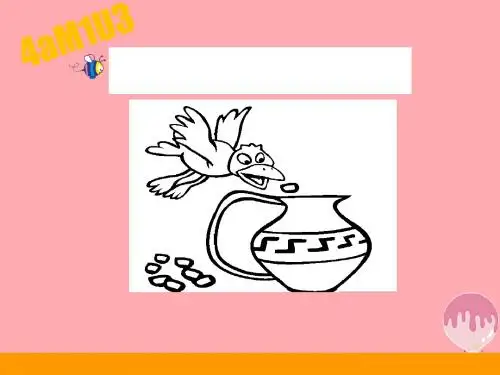
It is hot. A crow is very
A
thirsty. B But he cannot drink it.
He sees some water in
C
the pitcher.
At last, the crow can D drink the water. He is
happy.
Then he has a good
If you have problems, please think Iafboyuotu thhaevecrporwobalendmst,heplepaitscehetrh.ink aSSSSbooooommmmueeteettttiitiimmmmheeeeesssscyyryyooooouuwuu ……a……,,n,,dyyyyootoouuhuueffffeeeepeeieetllllcststhiaiarerdedre.d..d.. WWhheenn yyoouu wwaanntt ttoo ggiivvee uupp,, yyoouu ccaann ssaayy ttoo yyoouurrsseellff,, ““ ______!! YYoouu ________________________,, ddoonn’’tt yyoouu kknnooww??”” Keep trying, and you can do it! Keep trying, and you can do ihot. A crow cannot find any water. He is very thirsty, and wants to give up. But he says to himself, “Go, go, Mr Crow! You are so lucky, don’t you know?” The crow keeps flying.
牛津上海版四上Unit3《Areyouhappy》word教案
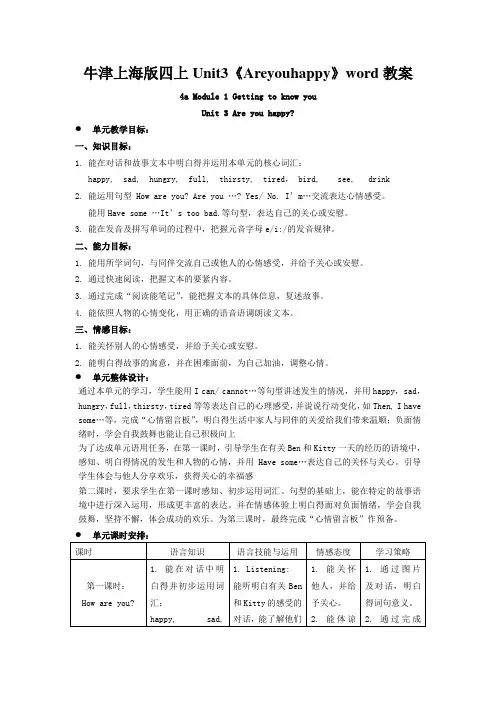
牛津上海版四上Unit3《Areyouhappy》word教案4a Module 1 Getting to know youUnit 3 Are you happy?●单元教学目标:一、知识目标:1. 能在对话和故事文本中明白得并运用本单元的核心词汇:happy, sad, hungry, full, thirsty, tired, bird, see, drink2. 能运用句型 How are you? Are you …? Yes/ No. I’m…交流表达心情感受。
能用Have some …It’s too bad.等句型,表达自己的关心或安慰。
3. 能在发音及拼写单词的过程中,把握元音字母e/i:/的发音规律。
二、能力目标:1. 能用所学词句,与同伴交流自己或他人的心情感受,并给予关心或安慰。
2. 通过快速阅读,把握文本的要紧内容。
3. 通过完成“阅读能笔记”,能把握文本的具体信息,复述故事。
4. 能依照人物的心情变化,用正确的语音语调朗读文本。
三、情感目标:1. 能关怀别人的心情感受,并给予关心或安慰。
2. 能明白得故事的寓意,并在困难面前,为自己加油,调整心情。
●单元整体设计:通过本单元的学习,学生能用I can/ cannot…等句型讲述发生的情况,并用happy,sad,hungry,full,thirsty,tired等等表达自己的心理感受,并说说行动变化,如Then, I have some…等,完成“心情留言板”,明白得生活中家人与同伴的关爱给我们带来温顺;负面情绪时,学会自我鼓舞也能让自己积极向上为了达成单元语用任务,在第一课时,引导学生在有关Ben和Kitty一天的经历的语境中,感知、明白得情况的发生和人物的心情,并用Have some…表达自己的关怀与关心。
引导学生体会与他人分享欢乐,获得关心的幸福感第二课时,要求学生在第一课时感知、初步运用词汇、句型的基础上,能在特定的故事语境中进行深入运用,形成更丰富的表达。
牛津上海版(三起)四年级上册英语Module 1 Unit3 Are you happy 优秀教学设计
I eat two hamburgers. I am ________.
I can't fly a kite. I am __________.
I am__________. I want a big cake.
I am _________. I want some water.
本课导入环节借助一首英文儿歌以及情境填空,在将学生带入英语学习氛围的同时又复习上课所学重点表达feeling的四会单词。在单词学习环节我利用自然拼读规则对单词读音进行归类运用。让孩子们在复习旧知的同时,能拼读出新学词汇。语篇教学方面,我注重了对语篇的整体理解。运用瓶子、小石头、小鸟图片等道具创设情境,让学生在真实语境中感知故事,加深对课文的理解。再示范标准的录音材料,让学生跟读。小组合作环节,让学生先完成教师布置的内容,再选择自己想展示的内容。
Homework:
1. Listen to and read the story on Student’s Book page 12.
2. Tell the story to your friends or parents
在情境中复习重点词汇:happy sad thirsty full hungry tired
3. look 、listen and guess
What is it?
It’s a crow.
This is a _______.
The bird is ______.
He can __________.
While-task procedures:
1.Look and say
Ss watch the picture carefully,and answer the following questions
牛津上海版深圳四年级上册unit 3《are you happy》第2课时优秀教案(重点资料).doc
Unit1第2课时教案教学内容:Listen and say Play a game Culture corner教学目标:1. 通过Listen and say的对话,帮助学生学习句型Are you ... ?及其回答。
2. 通过Play a game猜谜游戏,帮助学生进一步巩固和运用句型Are you ...?一、Warm up1. 教师播放上节课所学歌曲If you’re happy,学生齐唱歌曲。
2. 做游戏What’s missing?,复习上节课所学单词。
二、Presentation1. 教师呈现Listen and say 第一幅情境图,通过与学生展开对话,帮助学生了解课文背景:—Who are they?—They’re Kitty and Ben.—Kitty has a new kite. How does she feel?—She’s happy.—Ben has a new bike. But it’s broken(坏了) How does he feel? —He’s sad.2. 教师播放Listen and say录音,学生回答问题How are they now? They’re tired and hungry.教师呈现第三幅情境图,告知学生,因为Ben和Kitty很饿,妈妈让他们吃了饼干。
Have some biscuits是吃饼干的意思。
3. 教师播放Listen and say动画,学生回答问题How does Ben feel now? He’s full and thirsty.教师呈现第三幅情境图,让学生了解Ben目前的感觉。
三、Practice1. Role play在小组内,扮演对话中人物,练习对话。
小组练习后,上台表演PK。
2. 教师把本部分图片打乱,请学生把图片按照正确的顺序放置。
3. Fill in the blanks:教师呈现各部分图片及内容,空出重点句子,学生填空。
小学英语沪教版四年级上册《3Are you happy》省级名师优质课教案比赛获奖教案示范课教案公开课教案
小学英语沪教版四年级上册Module1 Getting to know you 《3Are you happy?》省级名师优质课教案比赛获奖教案示范课教案公开课教案【省级名师教案】1教学目标知识目标:1.掌握本单元的核心词汇。
2.能根据核心词汇正确运用句型How are you? Are you…?询问别人的感觉,并用I’m hap py/…句型表达自己的情感。
3.能听懂,认读故事“A thirsty bird”,引导学生通过阅读抓住关键信息,了解故事大意。
4.了解字母e在单词中的发音,能准确认读含有字母e的单词。
2学情分析本节课为沪教版牛津英语4A第三单元第一课时Look and learn,主要是掌握happy,sad,th irsty,full,hungry,tired等核心词汇,会用I’m happy/…句型表达自己的情感并能运用Are you…?的句型来询问别人的感觉。
教学单词时,我借助大量直观图片来加强学生对于新词的理解,激发他们说的欲望。
由于新授内容很贴合生活,所以孩子们的理解与接受也都比较快。
可是因为前面新授部分操练的安排过多,造成尾期时间上有点紧,个别活动没能开展到位,后期要看学生的背诵以及作业反馈才能了解的更全面。
3重点难点教学重点: 通过Jill’s feelings来学习本单元的主要单词。
教学难点:1.区别thirsty 和hungry的发音及意思。
2.理解并区分How are you? 在不同情境下的含义和回答。
4教学过程教学活动1【讲授】Are you happy模块:Module 1 Getting to know you 单元:Unit 3 话题:Are you happy?单元教学概述教学目标:知识目标:1.掌握本单元的核心词汇。
2.能根据核心词汇正确运用句型How are you? Are you…?询问别人的感觉,并用I’m hap py/…句型表达自己的情感。
Unit3Areyouhappy?(教案)沪教牛津版(深圳用)英语四年级上册
Unit 3 Are you happy 教学设计教学目标1. 认知目标:四会本单元的核心单词happy, sad, hungry, thirsty, full ,tired和拓展词汇surprised。
2. 能力目标:通过寓言故事的学习和各种游戏活动的组织,让学生能够运用所学的句型I a m… /I feel…进行交流,培养学生的交际能力、合作能力和运用能力。
3. 情感目标:采用寓教于乐的教学,让学生能把所学的内容与实践生活结合起来,在生活中学习英语、使用英语,达到学以致用的目的。
学情分析四年级学生仍有着极强的求知欲,学习积极主动,喜欢直观形象思维大于抽象思维,对新事物充满好奇。
他们的英语知识储备已有三年,具有了一定的自主学习能力,但还存在着学习方法和学习策略经验不足等问题。
同时有少部分学生对英语学习提不起兴趣。
因此在设计本课时,教师利用寓言故事《乌鸦喝水》来呈现主要句式和词汇,更充分的帮助学生在语境中理解语言,并借助现代教育技术激发学生的学习兴趣,满足个体的学习需求,提高学生综合语用能力。
重点难点教学重点:1.能运用词汇happy, sad, hungry, thirsty, full, tired, surprised交流情绪、感受等。
2.能运用句型I am…/ I feel…来表达自己的情绪体验。
3.理解故事情节和内容,接触、理解语言,体验语言在实际中的运用,享受故事带来的乐趣。
教学难点:学生之间能相互配合,完整地表演故事。
教学过程1. 认知目标:四会本单元的核心单词happy, sad, hungry, thirsty, full ,tired和拓展词汇surpr ised。
2. 能力目标:通过寓言故事的学习和各种游戏活动的组织,让学生能够运用所学的句型I a m… /I feel…进行交流,培养学生的交际能力、合作能力和运用能力。
3. 情感目标:采用寓教于乐的教学,让学生能把所学的内容与实践生活结合起来,在生活中学习英语、使用英语,达到学以致用的目的。