
七年级英语下册第二单元
1c Listen and circle the activities
1e
Pairwork
Ask and answer questions about Tom.
What time does Rick run?
He runs at 6 o’clock.
go to school
What time do they usually go to school? They usually go to school at …
3a Write answers or questions. Use always, usually or never.
到下一个钟点”。to是“差”的意思。如:
逆读法: “分钟+ to+钟 点”。
1:55
10:50
five to two
ten to eleven
What time is it?
It’s seven o’clock.
What’s the time? It’s a quarter
fifteen past seven
-- What time do you usually…? -- I usually … at …
do homework 做作业
run
跑
take a walk
散步
clean
打扫
go to bed
睡觉
Review some phrases
A: What time do you usually get up/…? B: I usually get up/… at …
What time is it?
It’s seven-thirty half past seven
What time is it?
It’s three forty-five . a quarter
fifteen to four.
询问时间是几点了 用
What time is it? =What’s the time
in the evening
A: What do you usually
do in the B: I usually … ?
at night
1aWhen do students usually do these
things? Match the activities with the time of day.
3
1
2
4
1b
Pairwork
Check your answers with your partner. Do you agree?
you hear. 1. get up 5:30 ___ 7. clean my room __ 7:15 2. run 6:00 ___ 8. eat dinner ___ 3. eat breakfast____ 7:00 9. take a walk ___ 4. go to school ___ 7:45 10. go to bed ___ 9:00 5. go home ___ 4:15 6. do my homework ___ 5:30 1d Listen again. Write the times next to the activities you circled in 1c.
回答用It’s……
Let’s show some our daily activities.
daily activities 日常活动
get up 起床
eat breakfast 吃早餐
get dressed 穿衣服 brush teeth 刷牙
take a shower 淋浴 go to school 去学校
It has no feet (脚), but it can walk with its hands.It has no mouth(嘴巴), but it can speak to you. It calls Tick(滴答),Tick, and Tick every day.
时间表达法:
*顺读法:“钟点+分钟”
7点15分 seven fifteen
forty8点45分 eight five
逆读法:“分钟+past+钟 点” a.当分钟小于等于30时,用past,表 示几点过几分,past是“过”的意思。 如:
*
2:10 9:30
ten past two half past nine
* b.当分钟大于30时,用to表示“差几分钟
get up
eat breakfast
go to school
run
take a walk
clean the room
take a shower
go to bed
Talk about Miss Li’s Day
— What time does she usually get up? — She usually gets up at seven o’ clock a.m.
Time is money.
Time is life.
Time is flying.
So everybody should make full use of time.
Goodbye!
Get to know the time of the day.
in the morning
in the afternoon
3b Write about something you always do, something you usually do and something you never do.
I always go to school at 7:00. always_________________________________ _______________________________________ I usually go to bed at 9:30. usually_________________________________ _______________________________________ I never exercise in the evening. never__________________________________ _______________________________________
1.What time do you get up on school days? I usually get up at 6:30. ________________________________________ What time does Rick usually get up 2. _______________________________________? Rick always gets up at 6:20. 3. Whaly have breakfast at 6:45. ________________________________________ time does Anna usually eat breakfast? 4. When/What _______________________________________ Anna never eats breakfast. 5. What time does your best friend go to school? He/She always goes to school at 7:15. ________________________________________
七年级下册英语单词第二单元

七年级下册英语单词第二单元get up 起床;站起 [ɡet ʌp] 动词短语dress 穿衣服 [dres] 动词get dressed 穿上衣服 [ɡet ˈdrest] 动词短语brush 刷;刷净 [brʌʃ] 动词tooth 牙齿 [tuːθ] 名词(复数:teeth)shower 淋浴 [ˈʃaʊə(r)] 名词/动词take a shower 洗淋浴 [teɪk əˈʃaʊə(r)] 动词短语usually 通常地;一般地 [ˈjuːʒuəli] 副词forty 四十 [ˈfɔːti] 数词wow (表示惊奇或敬佩)哇;呀 [waʊ] 感叹词never 从不;绝不 [ˈnevə(r)] 副词early 早(的) [ˈɜːli] 形容词/副词fifty 五十 [ˈfɪfti] 数词job 工作;职业 [dʒəʊb] 名词work 工作 [wɜːk] 动词/名词station 电(视)台;车站 [ˈsteɪʃn] 名词radio station 广播电台 [ˈreɪdiəʊˈsteɪʃn] 名词短语o'clock (表示整点)……点钟 [əˈklɒk] 副词night 晚上;夜晚 [naɪt] 名词funny 奇怪的;滑稽好笑的 [ˈfʌni] 形容词exercise 锻炼;练习 [ˈeksəsaɪz] 动词/名词on weekends (在)周末 [ɒn ˌwiːkˈendz] 介词短语best 最好的 [best] 形容词group 组;群 [ɡruːp] 名词half 一半;半数 [hɑːf] 名词/形容词past 晚于;过(时间) [pɑːst] 介词quarter 一刻钟;四分之一 [ˈkwɔːtə(r)] 名词homework 家庭作业 [ˈhəʊmwɜːk] 名词do (one's) homework 做作业 [duː wʌnz ˈhəʊmwɜːk] 动词短语run 跑;奔 [rʌn] 动词clean 打扫;弄干净 [kliːn] 动词/形容词walk 行走;步行 [wɔːk] 动词take a walk 散步;走一走 [teɪk ə wɔːk] 动词短语quickly 很快地 [ˈkwɪkli] 副词either 或者;也(用在否定词组后) [ˈaɪðə(r)] 副词either...or... 要么……要么……;或者……或者…… [ˈaɪðə(r)... ɔː(r)...] 连词lot 大量;许多 [lɒt] 名词lots of 大量;许多 [lɒts ɒv] 介词短语sometimes 有时 [ˈsʌmtaɪmz] 副词taste 有……的味道;品尝 [teɪst] 动词/名词life 生活;生命 [laɪf] 名词(复数:lives)。
初中英语精品资料七年级下册第二单元重点短语和固定搭配归纳(英汉互译)
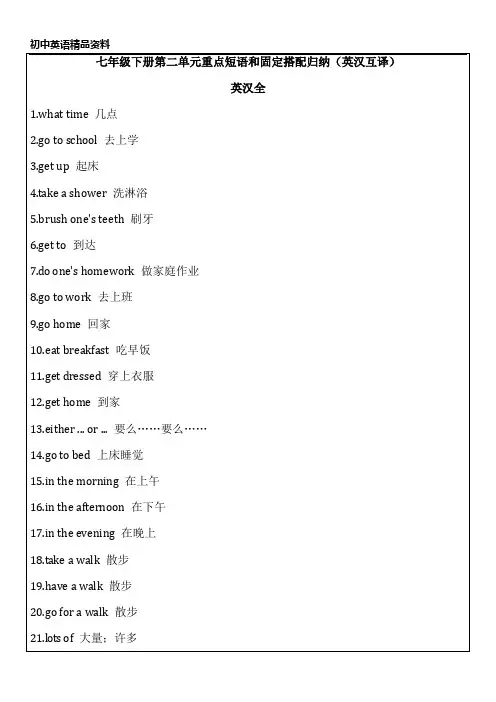
43.taste +形容词尝起来……
七年级下册第二单元重点短语和固定搭配归纳(英汉互译)
英译汉
1.what time
2.go to school
3.get up
4.take a shower
5.brush one's teeth
6.get to
7.do one's homework
18.take a walk散步
19.have a walk散步
20.go for a walk散步
21.lots of大量;许多
22.a lot of大量;许多
23.radio station广播电台
24.at night在晚上
25.be late for迟到
26.eat quickly吃得快
27.play sports做运动
19.have a walk
20.go for a walk
21.lots of
22.a lot of
23.radio station
24.at night
25.be late for
26.eat quickly
27.play sports
28.play computer games
29.be good at
12.到家
13.要么……要么……
14.上床睡觉
15.在上午
16.在下午
17.在晚上
18.散步
19.散步
20.散步
21.大量;许多
22.大量;许多
23.广播电台
24.在晚上
25.迟到
26.吃得快
27.做运动
2024年七年级下册,英语第二单元作文
2024年七年级下册,英语第二单元作文Unit 2 My School Life in 2024Welcome to the second unit of the English textbook for seventh grade in 2024! In this unit, we will be talking about "My School Life". Let's dive into the exciting world of learning English and experiencing school life in the future.First of all, let's talk about some of the changes that have taken place in schools in 2024. With advancements in technology, classrooms have become more interactive and engaging. Virtual reality headsets are now commonly used in classes, allowing students to have immersive learning experiences. Smart boards are also widely utilized, making lessons more interactive and dynamic.In terms of curriculum, there has been a greater emphasis on developing 21st-century skills such as critical thinking, communication, and collaboration. Project-based learning has become a popular teaching method, as it fosters creativity and problem-solving skills. Students are encouraged to work in groups on various projects, allowing them to apply their knowledge in real-life scenarios.Language learning has also evolved significantly in 2024. With the rise of AI-powered language-learning platforms, students now have access to personalized language lessons tailored to their individual needs. These platforms use advanced algorithms to track students' progress and provide targeted feedback to help them improve their language skills.In addition to traditional language classes, schools in 2024 offer a wide range of extracurricular activities to enhance students' language abilities. From language clubs to international exchange programs, students have plenty of opportunities to practice their language skills in real-life settings.Overall, school life in 2024 is more dynamic, engaging, and student-centered than ever before. With the integration of technology, innovative teaching methods, and a focus on21st-century skills, students are better equipped to thrive in an increasingly interconnected and fast-paced world.That's all for now! Stay tuned for more exciting topics in the next unit of our English textbook. Remember to keep practicing your English skills and embracing the wonderful journey of learning a new language. See you in the next unit!。
七年级下册英语书第二单元单词

七年级下册英语书第二单元单词up [ʌp] adv. 向上。
get up 起床;站起。
dress [dres] v. 穿衣服;n. 连衣裙。
get dressed 穿上衣服。
brush [brʌʃ] v. 刷;刷净;n. 刷子。
tooth [tuːθ] n. (pl. teeth[tiːθ]) 牙齿。
shower ['ʃaʊə(r)] n. & v. 淋浴;n. 淋浴器(间)take a shower 洗淋浴。
usually ['juːʒuəli] adv. 通常地;一般地。
forty ['fɔːti] num. 四十。
wow [waʊ] interj. (表示惊奇或敬佩)哇;呀。
never ['nevə(r)] adv. 从不;绝不。
early ['ɜːli] adv. & adj. 早(的)fifty ['fɪfti] num. 五十。
job [dʒəʊb] n. 工作;职业。
work [wɜːk] v. & n. 工作。
station ['steɪʃn] n. 电(视)台;车站。
radio station 广播电台。
o'clock [ə'klɒk] adv. (表示整点)……点钟。
night [naɪt] n. 晚上;夜晚。
funny ['fʌni] adj. 奇怪的;滑稽好笑的。
exercise ['eksəsaɪz] v. & n. 锻炼;练习。
on weekends (在)周末。
best [best] adj. 最好的;adv. 最好地;最。
group [ɡruːp] n. 组;群。
half [hɑːf] n. & pron. 一半;半数。
past [pɑːst] prep. 晚于;过(时间);adj. 过去的。
quarter ['kwɔːtə(r)] n. 一刻钟;四分之一。
七下英语第二单元笔记

七下英语第二单元笔记以下是七下英语第二单元的笔记,涵盖了主要的学习点。
1. 重点单词和短语:go to the movies 去看电影watch TV 看电视read a book 读书play sports 进行体育运动do homework 做作业clean my room 打扫我的房间go to the park 去公园visit grandparents 看望祖父母have a party 举行聚会2. 重点句型:Let's do sth. 让我们做某事吧。
Do you want to do sth.? 你想做某事吗?What do you want to do? 你想要做什么?How about doing sth.? 做某事怎么样?3. 语法点:现在进行时态(Present Continuous Tense):表示正在进行的动作或正在发生的事情。
结构为“be动词(am/is/are)+动词的现在分词(ing形式)”。
例如:I am watching TV.(我正在看电视。
)动词的ing形式的构成:大多数动词在词尾加“-ing”,如“watching”;以不发音的字母e结尾的动词,先去掉e再加“-ing”,如“reading”;以重读闭音节结尾的动词,如果末尾只有一个辅音字母,应先双写这个字母再加“-ing”,如“running”。
4. 学习建议:结合教材中的对话和活动,多练习使用重点单词和短语,提高口语表达能力。
注意现在进行时态的用法,掌握其基本结构和变体形式,以便在实际语境中运用自如。
除了教材中的例句,可以自己尝试造句,锻炼语言组织能力。
结合个人生活实际,思考自己经常做的事情,用英语表达出来,提高实际应用能力。
七年级下册英语第二单元重点句型
七年级下册英语第二单元重点句型1. How many books do you have?2. There are 10 students in the classroom.3. She has three cats.4. There are six apples on the table.5. How many pens do you need?6. I have two brothers and one sister.7. There are 15 chairs in the room.8. How many friends do you have?9. There are four cars in the parking lot.10. She has five dolls in her collection.11. How many pencils do you have?12. There are 20 students in the school.13. He has three dogs.14. There are 12 cookies in the jar.15. How many siblings do you have?16. I have two dogs and one cat.17. There are 30 students in the class.18. How many toys do you have?19. She has four birds.20. There are seven birds in the nest.21. How many computers are in the classroom?22. I have three shirts and two pairs of pants.23. There are 25 students in the entire grade.24. How many chairs do you need?25. She has two rabbits and one hamster.26. There are nine bags in the room.27. How many books are in your bag?28. I have four cousins and one aunt.29. There are 40 students in the school.30. How many pictures do you have?31. She has six fish in her aquarium.32. There are ten soccer balls in the field.33. How many windows are in the house?34. I have two uncles and three aunts.35. There are 50 students in the school yard.36. How many flowers are in the garden?37. She has eight chickens.38. There are fifteen pencils on the desk.39. How many fruits do you have?40. I have three best friends and two close friends.41. There are 60 students in the entire school.42. How many tables are in the room?43. She has ten balloons in her hand.44. There are twenty students in the entire grade.45. How many doors are in the building?46. I have two grandparents and three cousins.47. There are seventy students in the schoolyard.48. How many candies do you have?49. She has twelve cookies in the jar.50. There are twenty-five students in the class.51. How many chairs do you need?。
人教版七年级下册英语第二单元知识点归纳
人教版七年级下册英语第二单元知识点归纳Unit 2 What time do you go to school?一、词汇与短语◆重点单词◆重点短语◆重点句子◆重点单词变形二、语法知识点A部分知识点1、 whattime/when引导的特殊疑问句在询问时间时,我们一般使用when或what time,表示什么时候或什么时间,他们有时能互相通用,但有些地方是不能通用的,区别很大。
◆问做某事的具体时间点(几点几分),两者可互换。
eg:— What time/when does he get up every morning?他每天早上什么时候起床?—At seven o'clock. 七点钟。
◆问钟表所指的具体时间时,就是问单纯的时间,几点几分,与事无关。
只能用what time。
eg:— Excuse me, what time is it?打扰一下,现在几点了?—It's 1 o'clock. 现在是1点钟了。
◆问事件发生的年份、月份、日期等,非钟点性时间,只能用when。
eg:—When is her birthday?她的生日什么时候?—It's on October 19th. 10月19日◆when可作连词,引导状语从语,“当……的时候”,但what time没有这种用法。
eg:My mother was cooking when I came back2、频度副词❶频度副词的含义:表示次数、频率的副词称为频度副词。
常用的频度副词按频率的高低依次为:always﹥usually﹥often﹥sometimes﹥seldom﹥hardly ever﹥nevereg:John always comes late. 约翰总是迟到。
He hardly ever exercises. 他几乎从不锻炼。
❷表示具体的频率、次数时,一次用once,两次用twice,三次及以上用“基数词+ times”表示。
人教版英语七年级下册Unit2【重点短语+词法语法句法精讲】
【课堂笔记】人教版英语七年级下册Unit2一、重点短语1. a lot of/lots of大量;许多2. after (eating) breakfast(吃过)早饭后3. at a quarter past three in the afternoon 在下午三点一刻4. at a quarter to ten in the evening在晚上9:455. at half past six in the morning在早上6:306. at night在晚上7. be good for health 对健康有益. be late for school 上学迟到9. be late for work上班迟到10. brush one's teeth刷牙11. clean one's room打扫房间12. do one's homework做作业13. have breakfast 吃早饭14. have lunch午饭15. have dinner 晚饭16. either... or ...要么……要么……17. from Monday to Friday从周一到周五1. get dressed穿上衣服19. get home from school从学校回到家20. get home from work 从学校回到家21. get to school到校22. get up early起得早23. go to bed late 晚睡24. half an hour半小时25. have a healthy life有健康的生活26. have an interesting job有一份有趣的工作27. take a walk散步2. on school nights在上学的晚上29. take a shower洗淋浴30. work at a radio station在电台工二、重点句型1.—What time/When do you usually exercise?你通常什么时候锻炼?—I usually exercise at five o'clock.我通常在5点锻炼。
七年级英语下册第二单元作文范文译林
七年级英语下册第二单元作文范文译林全文共5篇示例,供读者参考七年级英语单元作文带翻译范例一:favorite holidaymy favorite holiday is new year.it's a very important festival in chinese cultrue.in fact,it's the highlight of the year.everyone returns home for a family reunion.we have a big feast and chat about all the things that have happened in our lives.people also visit each other.we exchange gifts and good wishes for the next year.new year is especially fun for kids.that's because we get presents and treats,including red envelopes filled with money.we also get to set off fireworks.but we never forget that this holiday is a time to give thanks.we feel grateful for our family and the things that we have.finally,we think about the future and the great year ahead.我最喜欢的节日是春节。
它在中国文化中是很重要的节日。
事实上,它是每年的亮点。
每个人都回家与家人团聚。
我们有一个盛大的宴会,聊所有发生在我们生活中的事。
七年级下册英语u2单词
七年级下册英语u2单词以下人教版七年级下册英语第二单元的单词,这些是重点单词:postcard ['pəʊstkɑːd] 明信片office ['ɒfɪs] 办公室;事务所post office 邮局library ['laɪbrəri] 图书馆restaurant ['restrɒnt] 餐馆;饭店bank [bæŋk] 银行supermarket ['suːpəmɑːkɪt] 超市street [striːt] 大街;街道pay [peɪ] 付钱;支付pay phone 投币式公用电话park [pɑːk] 公园ave [ə'veɪ] 大街;林荫道center ['sentə(r)] 中央;中心bridge [brɪdʒ] 桥mail [meɪl] 邮件;邮政there [ðeə(r)] 在那里near [nɪə(r)] 在……附近across [ə'krɒs] 横过;在对面across from 在……对面next [nekst] 紧靠……的旁边;贴近next to 紧靠……的旁边;贴近;最接近between [bɪ'twiːn] 介于……之间front [frʌnt] 前面;前边in front of 在……前面behind [bɪ'haɪnd] 在……之后neighborhood ['neɪbəhʊd] 附近;邻近just [dʒʌst] 直接地;就;只;仅仅straight [streɪt] 径直地;直接地turn [tɜːn] 转弯;转变方向left [left] 向左;左边down [daʊn] 向下;下去;沿着right [raɪt] 向右;右边on the right 在右边open ['əʊpən] 开着的;营业中的market ['mɑːkɪt] 市场;市集clean [kliːn] 清洁的;干净的quiet ['kwaɪət] 宁静的dirty ['dɜːti] 肮脏的house [haʊs] 房子;住宅welcome ['welkəm] 欢迎garden ['gɑːd(ə)n] 花园;菜园district ['dɪstrɪkt] 区域;地区enjoy [ɪn'dʒɔɪ] 享受……的乐趣;欣赏walk [wɔːk] 散步;走take a walk 散步through [θruː] 穿过;通过beginning [bɪ'gɪnɪŋ] 开始tour [tʊə(r)] 旅行;游历visit ['vɪzɪt] 参观;游览place [pleɪs] 地方;地点fun [fʌn] 愉快;开心have fun 玩得开心if [ɪf] (表条件)如果hungry ['hʌŋgrɪ] 饥饿的arrive [ə'raɪv] 到达;抵达way [weɪ] 路;路线;路途take [teɪk] 乘;坐;搭(车、船)taxi ['tæksi] 出租车;的士;计程车airport ['eəpɔːt] 飞机场pass [pɑːs] 通过hope [həʊp] 希望;盼望your [jɔː(r)] 你的;你们的。