
六年级英语过去式ppt课件
go----went do--- did is---- was hope---- hoped stay---- stayed
swim----swam run--- ran
wash----washed read--- read visit---- visited clean--- cleaned study---- studiedwatch--- watched live---- lived read--- read feel---- felt sleep--- slept are--- were write-- wrote
stay---stayed wash---washed clean---cleaned watch---watched
翻译: 昨天下午我和朋友一起踢足球。 I played football with my friends yesterday afternoon.
4
英语句子顺序:
某个人
(主语)
做
(谓语动词)
2.以不发音的字母e结尾,直接加d
hope---hoped live---lived use---used like---liked
翻译: 五年前我在贵阳和父母住一起。 I lived in Guiyang with my parents five years ago.
6
规则变化: 3.以辅音字母+y结尾,先变y为i,再加ed.
study---studied carry---carried worry---worried
翻译: 2012年他在美国学习英语。 He studied English in America in 2012.
注意:元音字母+y结尾,直接加ed. play---played
7
规则变化: 4.末尾只有一个辅音字母的重读闭音 节词,先双写辅音末尾的辅音字母, 再加ed.
13
变一般疑问句
I went to the zoo last week. Did you go to the zoo last week? I stayed at home last night. Did you stay at home last night? I watched TV yesterday. Did you watch TV yesterday?
六年级英语过去式
--Fred
1
什么叫一般过去时? 用来陈述我们说话之前发生的事 情叫一般过去时。
She went to the hospital this morning. 今天早上她去医院了。 I was ten years old when she left. 她离开时我十岁。
2
一般过去时要把动词变成过去式。
某一件事
(宾语)
怎么做(方式)
(方式状语)
在哪里
(地点状语)
什么时候
(时间状语)
昨天晚上他在家里认真地做作业。
He did homework carefully at home last night.
Last night he did homework carefully at home.
5
规则变化:
run---ran
know---knew hear---heard tell---told get---got become---became ride---rode
10
1.我上个星期就坐这里。
I sat here last week.
2.昨天晚上我在家看电视。
I watched TV at home last night.
look---looked use---used see---saw
时间用过去时间。 last night/year/month/week… Three years ago; two weeks ago… 2013/2009/1999/2014…
3
动词过去式变化:
规则变化:
1. 直接在末尾加 ed
stop---stopped plan---planned
翻译: 他在我面前停了下来。
He stopped in front of me.
8
不规则变化:
也就是说不能在词尾加ed. 常见不规则动词:
am/is--- was are----were have/has----had eat----ate
11
用单词正确形式填空 1. What_d_i_d_. (do) you do last night? 2.I __c_le_a_n_e_d_(clean) my room and _w__at_c_h_e_d_(watch) TV last weekend. 3. How__w_a_s__(be) your weekend?
9
give----gave
come----came take----took
swim----swam
bring----brought begin----began stand----stood put----put feel----felt break---broke
sit----sat
do---did teach----taught
3. 上个周末我洗衣服了。
I washed my clothes last weekend.
4. 上个周末他和父母看了一部有趣的电影。
He saw an interesting film with his parents last weekend.
5. 两天前我看了一本无聊的书。
I read a boring book two days ago.
4. Is_t_a_y_e_d_(stay) at home last weekend.
5. I _d__ra_n_k__(drink) some tea last night.
6.She _w_a_s__(be) six when her mother died.
6.We _h_a_d____(have) a good time last holiday.
see----saw
buy----bought
find----found say----said
catch----caught go---went
write----wrote sleep---slept
drive----drove sweep---swept
drink----drank pay---paid
苏教牛津版小学英语六上《Unitunit1Theking-snewcloths》PPT课件

三易教育辅导讲义名词child [tʃaɪld] 孩子sentence [ˈsɛntəns]句子mountain[ˈmaʊntən]大山forest [ˈfɔrɪst]森林turn [tɚn]时机prince[prɪns]||王子princess[ˈprɪnsɪs]公主cowboy [ˈkaʊˌbɔɪ] 牛仔jean [dʒin] 牛仔裤kilt [kɪlt] 苏格兰褶裙副词hard[hɑː(r)d]努力地,费力地介词through[θru]穿过其他Miss [mɪs]小姐Mrs ['mɪsɪz] 夫人二、词组long long ago 很久很久以前turn into 变成make new clothes for you 为你做新衣try on 试穿walk through 穿行,步行穿过look after 照顾walk by 经过,路过look at 注视,看in his new clothes 穿着新衣服point at 指着wear clothes 穿衣服shout at 对……大吼in front of在……前面laugh at 对……大笑a lot of people 很多人think hard 努力思考a little boy 小男孩live in 居住在……tell a story 讲故事live with 与……一起生活On the mountain 在大山上in the street 在街道上be happy/sick 开心/生病三、语法(一)过去时态Long long ago,there was a king.He liked new clothes.很久很久以前,有一个国||王,他喜欢新衣服.There were a lot of people in the street.街道上有许多人.1、概念一般过去时,表示过去某个时间里发生的非持续性动作或存在的状态、习惯、事物,也表示过去经常或反复发生的动作,格言本来用过去时者不可改变其时态.2、一般过去时的用法:1.过去发生的动作.例如:The police stopped me on my way home last night.We worked Did we work? We did not work Did we not work? You worked Did you work? You did not work Did you not work?They worked Did they work? They did notworkDid they not work?4、动词原型变为过去式(二)特殊句式1、Show sb. sth. =show sth. to sb.向某人展示某事物The two men showed the king his new clothes.=2、Tell sb.sth. =tell sth. to sb.告诉某人某事The old man told the boy a story.=3、Give sb.sth. =give sth. to sb.给某人某物You picked a flower. Now give me your child.=4.sb . have to do sth.不得不做某事We have to start the story again.四、音标‘ar ,发音[a:]课本:arm ,card , hard ,park ,party补充:car , cartoon ,far ,farm ,star ,jar,garden,yard三、课后作业一、单词辨音,判断读音是否相同,相同的打"√ 〞,不同的打"×〞1.long point ( ) 2. laugh afternoon ( )3. arm art ( )4. start hard ( )5. flower show ( )6. shout house ( )五、教师评定:1、学生上次作业评价:○好○较好○一般○差2、学生本次上课情况评价:○好○较好○一般○差教师签字:家长签字:___________三易教育教务处。
小学六年级下册英语课件 6Aunit4_then_and_now_过去和现在
主语是第三人称单数
(否定句) He does not go to work by bus every day. She does not watch TV every night. Li Ming does not play basketball on weekends. It does not snow every winter.
主语+does + not+动词原形 +其他
He did not go to work by bus yesterday. She did not watch TV last night. Li Ming did not play basketball 3 days ago. It did not snow last winter.
一般时态的句型转换:
肯定句
否定句
一般疑问句 及回答
动词be
一般现在时 一般过去时
(am, is, are) He is a doctor. He isn't a doctor. Is he a doctor? Yes, he is. /No, he isn't.
(was, were)
He was a doctor.
标志词: ① yesterday及相关短语 昨天上午/下午/晚上 yesterday morning/afternoon/evening ② “last + 时间状语”构成的短语 昨晚/上个月/去年春天/去年 last night/month/spring/year ③ “一段时间+ago”组成的短语 three days ago/ four years ago 三天/四年以前 ④ “介词+ 过去时间名词”组成的短语 在1999年 in 1999 在2010年12月25号上午 on the morning of December 25th, 2010
六年级下册英语第六模块的课文每个的过去式
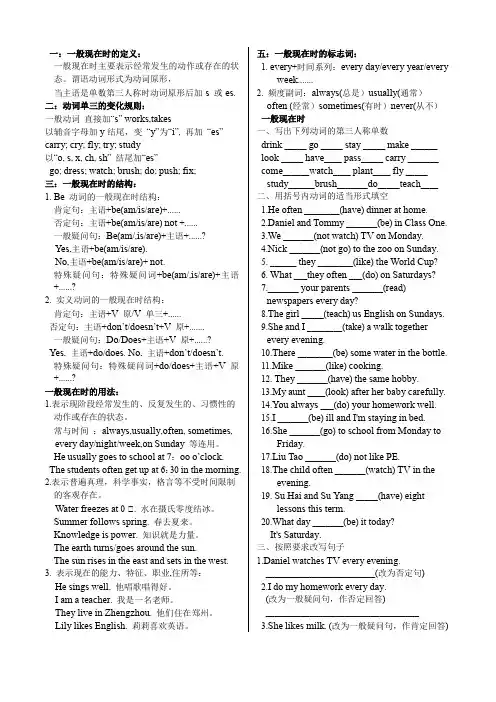
一:一般现在时的定义:一般现在时主要表示经常发生的动作或存在的状态。
谓语动词形式为动词原形,当主语是单数第三人称时动词原形后加-s或-es.二:动词单三的变化规则:一般动词直接加“s” works,takes以辅音字母加y结尾,变“y”为“i”, 再加“es” carry; cry; fly; try; study以“o, s, x, ch, sh” 结尾加“es”go; dress; watch; brush; do; push; fix;三:一般现在时的结构:1. Be动词的一般现在时结构:肯定句:主语+be(am/is/are)+......否定句:主语+be(am/is/are) not +......一般疑问句:Be(am/,is/are)+主语+......?Yes,主语+be(am/is/are).No,主语+be(am/is/are)+ not.特殊疑问句:特殊疑问词+be(am/,is/are)+主语+......?2. 实义动词的一般现在时结构:肯定句:主语+V原/V单三+......否定句:主语+don’t/doesn’t+V原+.......一般疑问句:Do/Does+主语+V原+......? Yes, 主语+do/does. No, 主语+don’t/doesn’t.特殊疑问句:特殊疑问词+do/does+主语+V原+......?一般现在时的用法:1.表示现阶段经常发生的、反复发生的、习惯性的动作或存在的状态。
常与时间:always,usually,often, sometimes, every day/night/week,on Sunday等连用。
He usually goes to school at 7:oo o’clock. The students often get up at 6:30 in the morning.2.表示普遍真理,科学事实,格言等不受时间限制的客观存在。
新牛津译林苏教版六年级英语上册Unit 2 What a day第二课时优质公开课课件.ppt
Unit 2 What a day! Yang Ling’s diary:
Try to recite Yang Ling’s diary!
Unit 2 What a day!
Magic cards
• 13、志不立,天下无可成之事。2020/8/142020/8/142020/8/142020/8/148/14/2020
• 14、Thank you very much for taking me with you on that splendid outing to London. It was the first time that I had seen the Tower or any of the other famous sights. If I'd gone alone, I couldn't have seen nearly as much, because I wouldn't have known my way about.
Unit 2 What a day!
It was … I … in the …
Unit 2 What a day!
It was … I … in the …
Unit 2 What a day!
It was … I … in the …
Unit 2 What a day!
It was … I … in the …
1. 今天上午天气晴朗。 It was sunny in the morning.
2. 天空中有许多乌云。 There are a lot of black clouds in the sky.
(译林版)六年级英语上册动词过去式
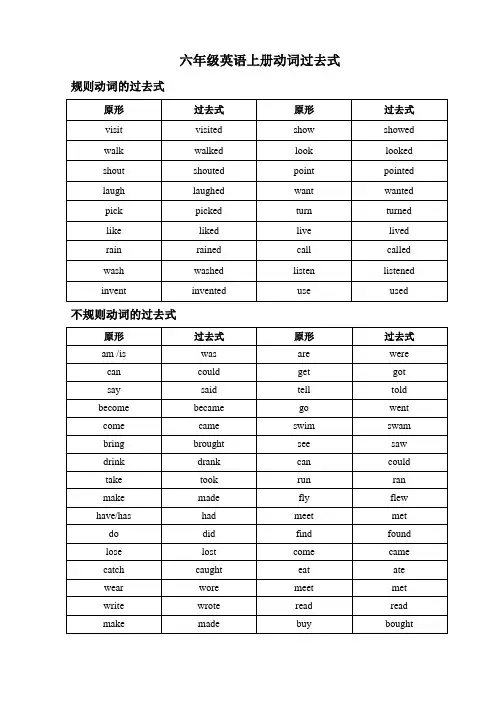
六年级英语上册动词过去式规则动词的过去式不规则动词的过去式动词过去式归类总结一、动词过去式的规则变化1.一般情况下,动词词尾加-ed如:work ---worked, play---played, want----wanted, act----acted2.以不发音的-e 结尾动词,动词词尾加-d 把动词原形最后的e去掉,加e/ed如:live---lived, move----moved, like--liked, hope---hoped二、动词过去式的不规则变化1. 把动词原形中的o改为a,变成过去式。
如:become—became, come—came2.把动词原形中的i改为a,变成过去式。
如:begin—began,drink—drank,give—gave,ring—rang,sing—sang,sit—sat,swim—swam3.把重读开音节中的i改为o,变成过去式。
如:drive—drove,ride—rode,win—won,write—wrote4.动词原形中的e改为o,变成过去式。
如:get—got,forget—forgot5.动词原形中的eep改为ept,变成过去式。
如:keep—kept,sleep—slept,sweep—swept6. 动词原形中的an改为oo,变成过去式。
如:stand—stood,understand—understood7.改动词原形中的aw /ow为ew,变成过去式。
如:draw—drew,grow—grew,know—knew,throw—threw(动词show除外,show—showed)8.动词原形中的eak改为oke,变成过去式。
如:break—broke,speak—spoke9.动词原形中的ell改为old,变成过去式。
如:sell—sold,tell—told10.以ought和aught结尾,且读音是[:t]的过去式。
如:bring—brought,buy—bought,think—thought,catch—caught,teach—taught11.以ould结尾且读音为[ud]的情态动词过去式。
小学六年级英语语法总复习PPT课件
• 小学阶段不规则动词全表
• Infinitive Past tense Infinitive
• 1. am, is
was
2. keep
• 3.are
were
5. make made
4.become
7. blow
blew
8. read
• 9. buy
bought
10. ride
• 11. catch caught
fly-flying walk-walking
jump-jumping sleep-sleeping
climb-climbing fight-fighting
swing-swinging drink-drinking catch-catching pick-picking
watch-watching play-playing
dance danced
变y为 i+ed
study studied
动词的过去式(不规则)
go-went read-read eat-ate sing-sang take-took buy-bought see-saw swim-swam am,is-was do-did are-were have-had get-got leave-left fly-flew stop-stopped(双写)
.
• 一般现在时的变化
1. be动词的变化。
否定句:主语+ be + not +其它。 如:He is not a worker.他不是工人 一般疑问句:Be +主语+其它。 如:-Are you a student? -Yes. I am. / No, I‘m not. 特殊疑问句:疑问词+一般疑问句。如:Where is my bike?
1六年级动词过去式复习课件
头脑风暴:过去时时间状语
last weekend
...
yesterdayt Monday
3 years ago yesterday afternoon two days ago
last night
重读闭音节末尾只有 stop 一个辅音字母,双写 该辅音字母,再加-ed plan
来看看口诀吧!
过去式很简单, 前提必须是动词。 结尾有e只加d, live变成lived 以y结尾也不难, 把y变i加ed Cry变成cried, copy变成copied 目前双写只有俩,shop变成shopped, stop要变stopped。 其他动词很随和,带上ed成过去。
规则动词-ed的读音
清念 /t/, 元浊/d/;
/t/ /d/ 之后念/ɪ d / 说明: 1. 清念 /t/ ,即 ed 在清辅音后面念 /t/ , 如: washed helped passed cooked 2. 元浊 /d/ ,即 ed 在元音,浊辅音后面念 /d/ , 如: learned returned rowed moved 3. /t/ /d/ 之后念 /id/ , 即 ed 在 /t/ /d/ 音后面念 /id/ 如: wanted visited needed counted
1、规则动词过去时的变化规则
构成方法
在动词原形后加-ed
原形 play clean
过去式 played cleaned
以字母e 结尾只加-d
dance prepare
danced prepared studied cried
stopped planned
“ 辅音字母+y ”结尾, study cry 把y 改为i,再加-ed
人教版六年级英语下册《Where did you go》ppt教学课件
--_______________________________.
( B )2.--Where did you go?
A.I went to the park.
--___________________________.
B. I am going to ride a bike.
A.I go to the park. B. I went to the park. C. I'm going to the park. ( C )3.I ________ a bike last Saturday.
Expand
小红帽
小红帽是一个可爱的女孩。她喜欢红帽子,于是 她妈妈就叫她小红帽。
她的祖母很爱小红帽,但现在她生病了。小红帽 的妈妈非常忙,所以她让小红帽去看望祖母。在森林 里,一只狼看见了小红帽。“瞧啊!小红帽。午餐有 小孩子可以吃啦!这是一条去她祖母家的路。” 狼来 到了祖母家并吃掉了祖母。然后他戴上祖母的眼镜, 并穿上祖母的衣服并睡在祖母的床上。
B.ride B.went
C.did C.was
(A)5.A.fall
B.could C.saw
Exercise
单项选择
( A )1.Where did you_________ last Saturday? ( C)4.--What did you do there?
A. go B.goes C. went
feel hurt 感到不快;
Expressions
Where did you go last Saturday? 你上周六去哪儿了?
由where引导的特殊疑问句,用作疑问副词, 在(往、从)哪里, 在什么地方。 eg: Where are you? 你在哪儿?
小学英语教科版六年级上(第81页)过去式
不定式 33 let
中文释义 让 let
过去式 66 catch
不定式
中文释义 抓住
过去式 caught
中文释义 是 是 开始 带来 建筑 买 能 选择 来 切 做 画 喝 开始 吃 倒下 喂养 感觉 找到 飞 忘记 得到 给 去 成长 有 听见 伤害 保存 知道 学习 离开 was were began
Hale Waihona Puke 过去式 34 35 36 37 38 39 40 41 42 43 44 45 46 47 48 49 50 51 52 53 54 55 56 57 58 59 60 61 62 63 64 65 make may mean meet must put
不定式 1 2 3 4 5 6 7 8 9 10 11 12 13 14 15 16 17 18 19 20 21 22 23 24 25 26 27 28 29 30 31 32 am,is are begin briing build buy can choose come cut do draw drink drive eat fall feed feel find fly forget get give go grow have、has hear hurt keep know learn leave
read/ri:d/ ride run say see sell shall shine sing sit sleep smell speak stand swim take teach fell think throw understand wake wear will win write
read/red/ rode ran said saw sold should shone sang sat slept smelf/smelled spoke stood swam took taught told thought threw understood woke wore would wom wrote
小学六年级下册英语小升初时态课件(通用版) 一般过去时总复习2
4.疑问was/were调句首
• Were you at home the day before yesterday﹖ • Was she happy this morning﹖
肯定回答 Yes, 主语+was/were. 否定回答 No, 主语+wasn't/weren't. Were Xiao Qiang and Xiao Long here just now﹖
• yesterday或以其构成的短语: • yesterday morning • yesterday afternoon • yesterday evening • the day before yesterday
three days ago
Miss Zhu went to Tiantian Market three days ago.
其他家族
Long long ago
yesterday Now
一般过去时 yesterday ago just now in the old days in those days in 1980 the other day at that time once upon a time
一般将来时
现在 进行
• 现在学过的常用的表示过去的时间状语有: just now,a moment ago,yesterday,last week,last night, last weekend,last year,last month,three days ago,two weeks ago,five years ago…
• (3)末尾只有一个元音字母和一个辅音字母的重读闭音节,应 双写末尾的辅音字母,再加-ed,如:stop-stopped, shop-