
高中英语必修二《Unit-4-wildlife-教学设计
1
《Unit 4 wildlife protection》教学设计
Topic:
Unit4 Wildlife Protection
Section Ⅰ Warming Up & Reading — Prereading
Teacher:
Teaching contents:
Part1 the Teaching Material
This unit is to introduce to us the importance of wildlife protection. The
reading passage is the center of this unit. It is made up of 3 paragraphs, that is, why
we need wildlife protection, a good example of wildlife protection and what we can
get from wildlife protection. The text is the most important teaching material in this
lesson, which extends the main topic “wildlife protection” and contains most of the
vocabulary and grammar points that students should learn in this unit.
Part2 Analysis of the Students
Although the students have the basic abilities of listening, speaking, reading, and
writing, they still need many opportunities to practice what they have learned, to
express their ideas, feelings, and experience and to develop their autonomous learning
ability and cooperative learning ability.
Most students in Xueda are not good at learning English. However, they are
interested all kinds of interesting topics as well as hobbies. They are fond of animals
which can set up their awareness of protecting animals. They may take an active part
in the discussion.
Part3 Teaching Aims
Knowledge aims:
(1)to help students to understand and master the words, phrases and sentence
patterns.
(2)to know some basic information about the endangered animals and wildlife
situation and protection.
Ability aims:
2
(1) To improve the students’ organizing and using skills of English as the second
language
(2) To understand the main idea, to scan for the needed information and to grasp
the details
Emotional aims:
(1) Help students understand the importance of the wildlife protection and make
them be more active in the helping wildlife.
(2) Develop students’ sense of cooperative learning
Part 4 Teaching Key Points And Difficult Points:
Teaching Key Points:
(1). To help the students get a general idea of the whole passage, and some
detailed information and language points as well.
(2). To understand the importance of wildlife protection and then do something
for wildlife
Teaching difficult points :
(1). The students use their own words to express their own ideas.
(2). the usage of present progressive passive voice.
Part5 Teaching and Learning Methods
Teaching Methods:
a. Communicative Language Teaching
Language is used for communication. It’s learner-centered and emphasizes
communication and real-life situations.
b. Task-based Language Teaching
A task resembles activities which our students or other people carry out in
everyday life, Learners should be given opportunities to reflect on what they have
learned and how well they are doing.
c. Computer Assisted Language Teaching
Language learning needs a context, which can help the learners to understand the
language and then can product comprehensible output, so computer has the
advantages to make the materials attractive
3
Learning Methods:
Task-based, self-dependent and cooperative learning.
Part 6 Teaching Procedure
Step 1 Lead-in
“Interest is the best teacher.” Therefore, at the very beginning of the class, I
should spark the students’ mind to focus on the centre topic “the importance of
wildlife protection”
I’ll ask them the definition of the wildlife and name some animals. Ask them
what they know about those animals. The answers must relate to their present
situation, such as die out, dangerous, decrease and so on.
After this, the students will be eager to something about the endangered wildlife
and this is the very time to naturally lead the class into Step 2.
Step 2 New words
In this step, I will deal with some new words in the class, which can help
students make a better understanding of the passage and get some basic knowledge. I
teach the new words by showing some pictures or songs which are related to the basic
words.
1. die out 灭亡;逐渐消失
die of 因……而死(一般指死于内因,如疾病、
饥饿、情感原因等)
die from 因……而死(一般指死于外因,如外伤、
车祸、污染等)
die away (声音、风、光等)慢慢变弱;渐渐消失
die down (兴奋、火等)渐弱;渐息;平息
2.in peace 和平地;和睦地;安详地
3.in danger 在危险中;垂危
(1)in danger 有危险的;在危险中
out of danger 脱离危险
a danger to 对……有危险;对……是危险的人或物
(2)dangerous adj. 危险的
高中英语必修二Unit 4 Wildlife protection好题精练:Unit4__基础巩固练习 含答案
Unit4基础巩固练习
一、词汇练习:词形变化
1).__________(vi.)回答,响应,做出反应______________ (n)
2).__________(adj.)远的, 远处的。___________(n.)
3).__________ (n.)痛苦减轻或解除。____________(vt.)使减轻或解除。
4)._________(vt.)包含,容纳,容忍。______________(n.)容器
5).___________(vt.)影响,感动,侵袭_______ (n.)喜爱,感情___________(n)影响
6).___________(vt.)接替,继任,成功__________(n.)___________ adj.__________
7)._____________(vt.)雇佣,利用时间精力。________n.雇员,雇工____________
n.雇主。___________ n.雇用使用。
8)._______________(n./ vt.)损害,危害。__________ adj.
9).________________n.胃 __________________(n. pl)
二、重点句式.
1.This is ___________ wildlife protection is all about . 这就是野生动物的保护。
2.Please take me to a distant land __________ ----请带我一个---遥远的地方去。
3.But _____________ an experience ! 但是这是一次多么有趣的经历。
4.When scientists ___________ the bones , they were surprised to find that ---
当科学家们检查那些骨头时,他们惊奇地发现---
人教版高一英语必修二Unit4 写作课 课程教学设计
人教版高一英语必修二Unit4 写作课 课程教学设计
1 / 10 Unit4 写作课 名师教学设计(一)
Module 2 Unit 4 Wildlife protection
Period 5 Using language speaking and writing
宁波市北仑中学 唐静芬
I. 教材分析:
这一部分的教学内容源于必修二第四单元Wildlife protection的using language,该部分糅合了两种语言技能的训练,即说与写。教材要求学生以小组为单位讨论野生动物灭绝的原因,然后以口头报告的形式在班上展示,最后将小组讨论结果写入提交给世界野生动物保护基金会的求助信。通过这样的语言技能训练,学生不仅可以学到相应的语言知识、提升语言运用的能力,还能培养小组合作的能力和提高保护野生动物的意识。学科核心素养要求下的语言能力、思维品质、学习能力和文化品格也可以得到进一步的加强。
II. 学生分析:
来自省一级重点中学的高一学生,通过必修一的学习,已逐渐进入高中英语学习状态且适应了高中英语学习的强度,在课堂上的表现也越来越积极主动活跃。而且同学之间已非常熟悉,应该能较为积极地参与小组讨论活动。本单元前面的内容学习已为这堂课做了很多铺垫,所以学生讨论起濒危动物的面临灭绝的原因和解决对策来也是得心应手。
III. 教学整体设计及意图:
教师通过角色代入,以Daisy(本单元阅读课的女主人公)的名义带领学生阅读野生动物基金会官方网站的新闻,一起探寻书信的写作内容与结构,接着通过Daisy自己的写作尝试让学生总结出写作时的关注点,然后鼓励学生讨论亚洲象濒危的原因和对策,最后要求学生就小组讨论内容写一封给野生动物基金会的求助信。这样的设计就使得写作要求的出现不显得那么得生硬突然,话题引出显得更加自然,每一步骤的衔接也更为直接顺畅。整堂课融合了听说读写四种技能的训练,在乐趣中学习,在学习中培养思维品质和文化品格。
人教版课标必修二 Unit 4 Wildlife protection 学案

Book 2 罗光星 高中英语教学自主学习课本研习材料
Unit 4 Wildlife protection
Warming Up
1、Wild plants and animals have to look after themselves. They need food, a good environment
and safety. If their habitat is threatened or they cannot find enough food, their numbers may
decrease. As a result these endangered animals may even die out. They need help. This is what
wildlife protection is all about.野生植物和动物不得不自己照顾自己。它们需要食物,一个良
好的环境和安全。如果它们的栖息地受到威胁或它们不能找到足够的食物,它们的数量可
能会减少。结果这些濒危的动物甚至可能会消亡。它们需要帮助。这就是野生动物保护所
关乎的一切。
这里作表语的过去分词threatened和作定语的过去分词endangered表示被动已完成。一般
来说,含有“使得”意义的动词的过去分词都有“被动已完成”的意义。 2、loss of bamboo growing areas竹子生长地的丧失
动名词growing作定语修饰areas。
Reading
课文学习
HOW DAISY LEARNED TO HELP WILDLIFE
黛西如何学会帮助野生动物
Daisy had always longed to help endangered species of wildlife. One day she woke up and
found a flying carpet by her bed. "Where do you want to go?" it asked. Daisy responded
英语高一必修二学案:Unit_4_Wildlife_protection_Period_2_Language_points_in_Warming_up_and_Reading
Book 2 Unit 4 Wildlife protection
Period 2 Language points in Warming up and Reading (I)
导学目标
1.熟记学案中所列出的单词和短语: decrease, die out, hunt, in danger of, relief
2.通过对这些词汇的理解能够更深层次地理解课文,同时会用这些词汇造句
自主合作学习
1.decrease vt.& vi.减少;(使)变小;或变少 n.减少,减小
品味典例:
If their habitat is threatened or they cannot find enough food,their numbers may decrease.(P25)
如果它们的栖息地受到威胁或是它们找不到足够的食物,它们的数量就会减少。
They are making every effort to decrease the production cost.他们正尽力降低生产成本。
There's a decrease in the annual birthrate. 年出生率正在下降。
归纳拓展:
decrease to / by ... 减少到/了…… a decrease in...在…方面减少了 decrease from...to...从…减少到…
increase vi. & vt. 增加;增长;增强 n.增加;增加的数量
increase to/by ...增加到/了……
on the decrease/increase 在减少/增加
The price of wheat has decreased by 15%. 小麦价格降低了15%。
小试牛刀: 介词填空
①There has been some decrease _____________ traffic accidents this year.
高中英语吉林同步教学设计:Unit 4 Wildlife protecti
2015-2016高中英语吉林同步教学设计:Unit 4 Wildlife
protection(3)(人教新课标必修2)
Period 3: A sample lesson plan for Using Language
(ABOUT DINOSAURS)
Aims
To read and listen about dinosaurs
To speak about helping the dodo
To write to the dodo
Procedures
I. Warming up by reading to the tape
Let’s warm up by reading aloud to the recording of the text
ABOUT DINOSAURS on page 30.
II. Listening about DINOSAURS
Now I’d like to tell you something about DINOSAURS
■In formation about Dinosaur
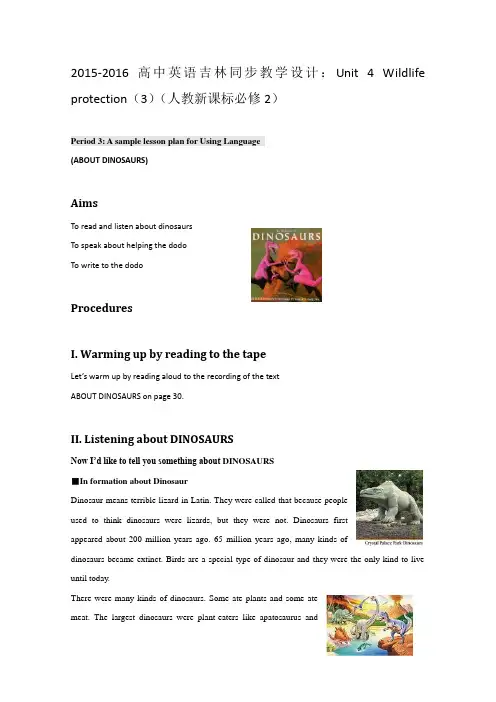
Dinosaur means terrible lizard in Latin. They were called that because people
used to think dinosaurs were lizards, but they were not. Dinosaurs first
appeared about 200 million years ago. 65 million years ago, many kinds of
dinosaurs became extinct. Birds are a special type of dinosaur and they were the only kind to live
until today.
There were many kinds of dinosaurs. Some ate plants and some ate
高一unit 4-wildlife protection

高中英语教学设计高一 ——Unit 4 Wildlife Protection
教学目标:
● 语言知识目标:
(1)理解、掌握并能运用本文出现的重点词汇、短语及句型。
(2)学会用英语表达与"保护野生动物"有关的话题。
● 语言技能目标:
(1)能继续巩固速读、概括、比较等阅读技能,获取有关"野生动物保护"的信息,培养其对所获取信息进行分析、处理和解决问题的能力。
(2)能根据野生动物话题有条理的做简短发言、对话等活动,培养学生用英语进行思维和表达的能力;为学生进一步学习和发展创造必要的条件。
● 情感目标:
(1)激发并提高学生学习英语的兴趣;体现课堂教学主体者的身份,使其积极主动参与教学各环节,成为学习的主人;培养学生的个性和创造能力。
(2)通过小组合作学习,能与同伴用英语进行积极地交流,发展与人沟通和合作的能力;培养学生的合作意识,
(3)能意识到野生动物保护和环境保护的重要性、紧迫性以及对人类生存和发展的非凡意义。能积极热爱生命,关注自然,关注人与自然的和谐,树立保护野生动物的责任感。
● 教学重点和难点:
运用阅读技能,充分理解文章;并能运用所学信息分析问题、解决问题。
教学方法:
本节课我选择使用交际教学法。在具体教学中以情景教学和活动教学相结合,充分利用直观教具和电化教学手段创设情景,利用投影仪等辅助设备,培养学生直接用英语理解、表达和思维的能力。在具体教学过程中贯彻交际教学原则,组织各种课堂活动,如表演、讨论等,培养和强化学生的语言实践能力和自主学习能力。
教学步骤:
procedures teaching activities designing
intention
step1:
warming up
(8 min) 1. brain storming
(some pictures of endangered animals)
2. a video clip: top 10 endangered animals
人教版高中英语必修二Unit 4 Wildlife Protection reading
人教版高中英语必修二Unit 4 Wildlife Protection
reading How Daisy Learned to Help Wildlife
Teaching Aims: (教学目标)
Knowledge aims: (知识目标)
a. help Ss to understand and master the words and expressions in
reading.
b. Let the students know some basic information about the endangered
animals and wildlife situation and protection.
Ability aims: (能力目标 )
a. Train Ss to catch the key words or phrases in the reading.
b. Encourage Ss to think and express their attitude towards the
wildlife and the wildlife protection.
c. Enhance Ss’ reading ability and develop Ss’
ability and skills
of guessing words and reading comprehension.
Emotional aims: (情感目标 )
a. Help Ss understand the importance of the wildlife protection and
make them be more active in the helping wildlife.
b. Develop Ss’ sense of cooperative learning.
● Teaching Key Points:
英语必修二unit4教案
第 1 页 共 32 页 英语必修二unit4教案
(实用版)
编制人:__________________
审核人:__________________
审批人:__________________
编制单位:__________________
编制时间:____年____月____日
序言
下载提示:该文档是本店铺精心编制而成的,希望大家下载后,能够帮助大家解决实际问题。文档下载后可定制修改,请根据实际需要进行调整和使用,谢谢!
并且,本店铺为大家提供各种类型的实用范文,如学习资料、英语资料、学生作文、教学资源、求职资料、创业资料、工作范文、条据文书、合同协议、其他范文等等,想了解不同范文格式和写法,敬请关注!
Download tips: This document is carefully compiled by this editor. I
hope that after you download it, it can help you solve practical problems.
The document can be customized and modified after downloading, please adjust
and use it according to actual needs, thank you!
In addition, this shop provides various types of practical sample
essays, such as learning materials, English materials, student essays,
teaching resources, job search materials, entrepreneurial materials, work
examples, documents, contracts, agreements, other essays, etc. Please pay
高中英语必修二第四单元总结复习
必修二Unit 4 Wildlife Protection
——单元总结课导学案
编写人:王克娜 审核人:王丽娜
【Learning aims】复习巩固并正确运用本单元所学知识
【Important points】 重点词汇和语法的正确运用
【Difficult points】 重点词汇和语法
一.重点短语再现
1. 根据……所说
2. 形成;产生
3. 如释重负
4. 突然笑起来
5. 和平地 6. 灭亡;逐渐消失
7 保护……不受……(危害)
8. 注意
9. 在危险中
10.. 确信
二.典型句式运用
shows the importance of wildlife protection,but I’d like to help as the
WWF
suggests.这表明了野生动植物保护的重要性,不过,我还想按照世界野生生物基金会的建议来帮助你们。
注意 Would you like...?或Would you like to...?是一种委婉客气的语气,因此常用
Yes,please.或Sorry,I’m afraid not.等比较婉转的回答。
what an experience!但是这是一次(多么奇妙的)经历啊!
must be done if wildlife protection is to succeed?野生动物保护要想成功,我们必须做些什么?
is to succeed是一个“be+动词不定式”结构,此处表示 的打算。
is the only home of the red Colobus monkey but there are very few left.这是红色疣猴的唯一栖息地,但是现在所剩无几了。
语法与写作相结合的教学模式尝试——以人教版高中英语教材Module 2 Unit 4 Wildlife Protection为例
以人教版高中英语教材Module 2 Unit 4 Wildlife Protecti0妇为例
宁德第五中学 蔡蜡生
将语法教学与写作教学相结合,是一种理论与实 践相结合的教学模式。在某个语法内容教学时,教师 所使用的例句和让学生进行相关操练的任务均与该单 元的中心话题有关,从而又一次为学生提供使用、巩 固那些与话题有关的词汇、句式和话题信息的机会。 现在进行时的被动语态是人教版高中英语教材必修2 第四单元Wildlife Protection的主要语法。笔者以本 课的语法教学为例,通过引导学生发现、归纳以及演 绎,将语法教学与写作教学相结合,要求学生正确使 用现在进行时的被动语态,以达到提升学生英语表达 能力的目的。 第一步:通过寻找本单元课本书面材料中(课本 第26页)的现在进行时的被动语态,引出本节课的 相关任务。让学生找到这些句子后,笔者把教材中的 句子展示在PPT上,要求学生填出内容。 (1)We are being killed for the w00l beneath
people like you.(第l0行) (3)1 wonder what is bein ̄done (第12行) to help you (4) So good things 篁 g 望宝here to save local wildlife. (第25行) 第二步-要求学生通过比较,共同讨论例句,归 纳现在进行时的被动语态的特征。教师可以给学生呈 现更多的练习,引导学生归纳。 第三步:用对话的形式进行操练。
A.telephone——repair——some workers B.bike—repair—my father C.computer—use—Tom D.TV-watch-my family (2)Where——? Oh. . A.the children——punish——their aunt B.Kate—praise—her manager C.my ear—clean—your daughter D.the flowers-water-my mother 第四步:展示图片和对话内容,让学生积累素 材,为写作作准备 I.Mary:Peter.1ook at these pictures.What is happening? Peter:Oh,nay god.People are being punished by their actions. (1)trees/cut down/villagers(树木被砍光的 图片); (2)rivers/pollute/factories(工厂直接把水排 进河流中的图片); (3)wild animals/kill/people(人类捕杀野生 动物的图片); (4)people/punish/actions(沙尘暴、洪水的 图片)。 通过这些对话和图片,让学生学会如下的表达 (1)Trees are being cut down by the villagers. (2)Rivers are being polluted by some factories. (3)Wild animals are being killed by people. (4)People are being punished by their actions. 1I.Mary:Peter,look at these pictures.What I S happening? Peter:Wel1.Wj】d anjrealS are bein protected bv some or ̄amzatlons (1)trees/plant/people(人们植树的图片), (2)rivers/clean/workers(工人清理河道的图 磊止教 83 r 娼 e a e w S e k a m o d e S L g ,. 一丁 D } 9 第 ” 0 a 叭 2 S r 洲 _1 j 薯 ≯ j | |。 |《 l -=