
萨尔瓦多国际经济学件(20200905081240)
国际经济学英文课件(萨尔瓦多第十版)ch

International investment and multinational corporations
International investment environment
Political environment: stability, policies, and regulations that affect foreign investment.
New trade theory departs from the assumption of perfect competition and focuses on the role of increasing returns to scale and monopolistic competition.
Classical trade theory posits that specialization in production based on comparative advantage results in increased production and consumption in all countries.
关税是一种税收,由政府对进口商品征收,以增加进口成本并保护国内产业。
关税定义
关税种类
关税作用
包括基本关税、附加关税、反倾销关税和报复性关税等。
通过提高进口商品价格,降低国内市场的竞争压力,保护国内产业和就业。
03
02
01
出口补贴是指政府给予出口企业的财政补贴,以降低出口成本,增加出口量。
出口补贴定义
Balance of trade
The balance of trade is a crucial component of the international balance of payments. It measures the value of a country's exports minus the value of its imports. A positive balance of trade indicates that a country is exporting more goods and services than it is importing, while a negative balance of trade indicates the opposite.
经济学考研课后答案资料萨尔瓦多《国际经济学》(第12版)笔记和课后习题
萨尔瓦多《国际经济学》(第12版)笔记和课后习题(含考研真题)详解完整版>精研学习网>无偿试用20%资料全国547所院校视频及题库资料考研全套>视频资料>课后答案>往年真题>职称考试试读(部分内容)隐藏第1章绪论1.1复习笔记考点一:经济全球化▼1经济全球化的含义经济全球化是世界上各国和地区之间通过商品、服务及劳动力、资本、信息、技术、管理等生产要素的跨国界流动,寻求资源最优配置的一个相互联系、相互依赖并不断深化的过程。
2经济全球化的影响经济全球化是一把“双刃剑”,对任何国家来说,它既是机遇,也是挑战。
以发展中国家经济为例,探讨经济全球化所带来的积极和消极影响。
(1)积极影响①由于信息技术使空间距离极大地缩短,世界各地的竞争关系加剧,相互争夺稀缺的生产要素。
不断加剧的竞争也激发了国家的创造力和创新精神,从而使国家富裕起来,社会福利水平不断提高。
②现代通信技术以及复杂的计算机程序,加快了信息的流通,有助于人们消除不同资本市场的时间差。
③全球化意味着世界整体福利水平的增升和机会的增加。
发达国家和发展中国家的国民财富在经济全球化进程中均实现了迅速增长,同时,由于世界范围的国际分工,每个国家都拥有机会参与国际竞争。
④全球化有利于促进资本、技术、知识等生产要素在全球范围内的优化配置,给发展中国家提供了新的发展机遇。
⑤全球化有利于促进世界和平与稳定,使各国经济的发展越来越紧密地联系在一起,促进了国家之间沟通交流,增进了彼此之间的理解与信任。
⑥全球化促使发展中国家的出口商品结构优化。
资本的流入、跨国公司的直接投资活动和本国产业结构的调整,有利于发展中国家出口商品结构的改善。
同时经济全球化有利于发展中国家的整体改革。
(2)消极影响①增大了各国特别是发展中国家经济运行的风险。
受社会历史和经济发展水平的影响,发展中国家在国际竞争中处于不利地位,经济更脆弱。
②各国各地区的发展差异有可能进一步拉大。
国际经济学萨尔瓦多版考试重点整理(含页码)

• 一般情况下,如图所示,美元贬值都将使 美国进口数量减少,进口品的欧元价格下 降,最终导致美国对欧元需求的减少。即 D€曲线斜率为负; • 但若DM弹性为0(垂直),美元贬值不会影 响对欧元的需求。 • 而且,给定SM后, DM弹性越小(越陡), 贬值后美国对欧元需求量的变化就越小, 即美国对欧元需求曲线D€的弹性越小(越 陡)。
P38机会成本与商品价格
• 在没有国际贸易的前提下同时生产两种产 品时,一种商品的机会成本等于其相对价 格。 • 假如美国的全部资源可以用来生产180单位 小麦或120单位布,则小麦的机会成本为 2/3单位布,小麦相对价格就是2/3 。 • 机会成本固定时,相对价格只有生产决定, 没有考虑需求。 • 两国相对商品价格的不同,是国际贸易的 直接原因。
以国家1为例
• X劳动密集型,Y为资本密集型,贸易后X的相对价 格(PX/PY)开始上升 • X产品生产要素投入增加,Y产品要素投入减少 • 但X部门所需要的资本和劳动的比率大于Y部门所释 放的资本和劳动的比率 • 所以,要素相对价格( w/r ),即名义工资上升 • 两个产业都发生资本对劳动的替代,K/L上升 • 劳动的边际生产力MPL上升,实际工资上升 • 由于假设生产要素充分利用,所有劳动的真实收入 及其在国民收入中的比例上升
• 假设货币需求为收入和利率的函数
M d kPY a i b
• 货币供给为外生变量,货币市场的均衡条件为 Ms=Md,即 M kPY a i b
s
kP Y a i b Ms
P k M S R P k M S Y i Y i
– DX富有弹性,S€斜率为正。且DX弹性越小(更 陡峭),S€弹性越小; – DX单位弹性,美元贬值将使美国的欧元供给完 全不变( S€垂直),零弹性; – DX缺乏弹性,S€斜率为负。
萨尔瓦多《国际经济学》笔记和习题及考研真题详解(浮动汇率与固定汇率制度下的价格调节机制)【圣才出品】

十万种考研考证电子书、题库、视频学习平台浮动汇率与固定汇率制度下的价格调节机制16.1 复习笔记一、汇率变动对国际收支的影响1.贬值与跌价(1)贬值贬值意味着汇率是固定的,是指货币当局把汇率从一个固定的或钉住的水平提升到另一水平。
(2)跌价跌价意味着汇率是浮动的,是指以外币表示的本币价格的降低,从汇率的定义出发,此时汇率上升。
(3)两者的联系由于贬值与跌价通常都是对价格操作以调节一国的经常项目和国际收支,它们都是价格调节机制,所以本章对它们一并讨论,即在考虑价格调节机制时,本章不做浮动汇率与固定汇率的区分。
2.贸易或弹性方法该传统的汇率模式假设没有自主的国际间个人资本流(即国际间个人资本流是为了弥补或支付临时贸易不平衡才被动发生的),一国通过变动汇率来削减其经常项目赤字(平衡十万种考研考证电子书、题库、视频学习平台收支)。
(经常项目的修正和国际收支盈余通常需要相反的技术)。
该模式以贸易流为基础,而且调节的速度取决于价格(汇率)的变化如何对进出口(弹性)做出反应,所以称之为贸易或弹性方法。
3.国际收支调节与汇率变动一国通常可以通过使其货币贬值或跌价,来调节国际收支逆差。
外汇供求曲线弹性越大,用来调节固定数额逆差所要求的贬值就越少。
其分析过程如下:如图16-1所示,当R=1美元/1欧元时,美国每年对欧元的需求量为120亿欧元,而供给量为80亿欧元,所以美国的国际收支逆差为40亿欧元(AB)。
从曲线D€和曲线S€可以看出,美元贬值20%将完全消除逆差(E点)。
对于D€*和S€*,要消除逆差,则要求100%的贬值(E*点)。
十万种考研考证电子书、题库、视频学习平台图16-1 国际收支调节与汇率变动4.外汇需求曲线与供给曲线的推导如图16-2所示,在左图中,D M(R=1美元/1欧元)和S M下,P M=1欧元而Q M=120亿单位,所以美国对欧元的需求量是120亿欧元(B′点),这相当于图16-1中的B 点。
萨尔瓦多国际经济学(第十版)
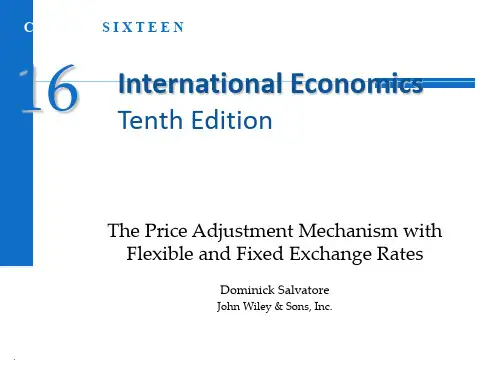
FIGURE 16-1 Balance-of-Payments Adjustments with Exchange Rate Changes.
FIGURE 16-2 Derivation of the U.S. Demand and Supply Curves for Foreign Exchange.
.
Adjustment with Flexible Exchange Rates
Price adjustment mechanism relies on depreciation and devaluation of currency to adjust current account and balance of payments.
.
Effect of Exchange Rate Changes on Domestic Prices and the Terms of Sale
Depreciation of the currency increases prices of both exports and imports in terms of domestic currency.
.
Introduction
Assumptions
International private c responses to cover temporary trade imbalances.
The nation wants to correct a deficit in its current account by exchange rate changes.
Effect of Exchange Rate Changes on Domestic Prices and the Terms of Sale
ch04 国际经济学课后答案与习题(萨尔瓦多)

*CHAPTER 4(Core Chapter)THE HECKSCHER-OHLIN AND OTHER TRADE THEORIESOUTLINE4.1 Introduction4.2 Factor Endowments and the Heckscher-Ohlin Theory4.3 The Formal Heckscher-Ohlin ModelCase Study 4-1 The Revealed Comparative Advantage of Various Countries and Regions4.4 Factor-Price Equalization and Income DistributionCase Study 4-2 Has International Trade Increased U.S. Wage Inequalities?4.5 Empirical Tests of the Heckscher-Ohlin Theory4.6 Economies of Scale and International TradeCase Study 4-3 The New International Economies of Scale4.7 Trade Based on Product DifferentiationCase Study 4-4 Growth of Intra-Industry Trade4.8 Technological Gap and Product Cycle ModelsCase Study 4-5: The United States as the Most Competitive Economy in the World4.9 Transportation Costs and International Trade4.10 Environmental Standards and International TradeAppendix The Specific-Factors Model and Intra-Industry Trade ModelsA4.1 The Specific-Factors ModelA4.2 A Model of Intra-Industry TradeKey TermsInternationalofscaleeconomies pricesRelativefactorproducts Heckscher–Ohlin (H–O) theory DifferentiatedtradeIntra-industryHeckscher–Ohlintheorem(H–O)Factor-proportions or factor-endowment theory Technological gap modelcyclemodelProductFactor–price equalization theoremcostsTransportationStolper-Samuelsontheoremmodel Nontraded goods and services Specific-factorsparadox Environmental standardsLeontiefMonopolisticcompetitionscalereturnsIncreasingtoLecture Guide1. This is one of the most important and difficult chapters in the book. It is also a long chapter andrequires four lectures to cover adequately.2. In the first lecture, I would cover sections 1-3. Section 3 is one of the most important sections inthe book because it presents the H-O model. I would proceed slowly and carefully in explaining Figure 4.1 and compare it to the standard trade model of Figure 3.4.3. In the second lecture, I would cover sections 4 and 5. Section 4 on the factor-price equalizationtheorem and income distribution is a difficult section. Case Study 4-2 should be of great interest to the students and give rise to a great deal of class discussion.4. In third lecture, I would cover sections sections 6-7, paying a great deal of attention to section 7on trade in differentiated products.5. In fourth lecture, I would cover the rest of the chapter.Answers to Review Questions and Problems1. a. The Heckscher–Ohlin (H-0) theorem postulates that a nation will export those commodi- ties whose production requires the intensive use of the nation’s relatively abundant and cheap factor and import the commodities whose production requires the intensive useof the nation’s relatively scarce and expensive factor. In short, the relatively labor-richnation exports relatively labor-intensive commodities and imports the relativelycapital-intensive commodities.b. Heckscher and Ohlin identify the relative difference in factor endowments amongnations as the basic determinant of comparative advantage and international trade.c. The H-O Theory represent an extension of the standard trade model because it explains the basis for comparative advantage (classical economists, such as Ricardo had assumed it) and examines the effect of international trade on factor prices and income distribution (which classical economists had left unanswered).2. See Figure 1 on the next page.3. a. The factor–price equalization theorem postulates that international trade will bring about the equalization of the returns to homogeneous or identical factors across nations.b. The Stopler-Samuelson theorem postulates that free international trade reduces the realincome of the nation’s relatively scarce factor and increases the real income of the nation’s relatively abundant factor.Fig 4.1Fig 4.2XXb. The specific-factors model postulates that the opening of trade (1) benefits the specific factorused in the production of the nation’s export commodity, (2) harms the specific factor used in the production of the nation’s import-competing industry, and (3) leads to an ambiguouseffect (i.e., it may benefit or harm) the mobile factor.c. Trade acts as a substitute for the international mobility of factors of production in itseffect on factor prices. With perfect mobility, labor would migrate from the low-wagenation to the high-wage nation until wages in the two nations are equalized. Similarly,capital would move from the low-interest to the high-interest nation until the rate ofinterest was equalized in the two nations.4. a. The Leontief paradox refers to the original Leontief’s finding that U.S. import substituteswere more K-intensive than U.S. exports. This was the opposite of what the H-O theorempostulated.b. The Leontief paradox was resolved by including human capital into the calculations andexcluding industries based on natural resources. Recent research using data on many sectors, for many countries, over many years, and considering that countries could specialize in aparticular subset or group of commodities that were best suited to their specific factorendowments, provides strong support for the H-O theorem.c. The Hecksher-Olhin theory remains the centerpiece of modern trade theory for explaininginternational trade today. To be sure, there are other forces (such as economies of scale,product differentiation, and technological differences across countries) that provide additional reasons and explanations for some international trade not explained by the basic H-O model.These other trade theories complement the basic H-O model in explaining the pattern ofinternational trade in the world today.5. International trade with developing economies, especially newly industrializing economies (NIEs), contributed in two ways to increased wage inequalities between skilled and unskilled workers in the United States during the past two decades. Directly, by reducing the demand for unskilledworkers as a result of increased U.S. imports of labor-intensive manufactures and, indirectly, byspeeding up the introduction of labor-saving innovations, which further reduced the U.S.demand for unskilled workers. International trade, however, was only a small cause of increased wage inequalities in the United States. The most important cause was technological change.6. a. Economies of scale refer to the production situation where output grows proportionatelymore than the increase in inputs or factors of production. For example, output may morethan double with a doubling of inputs.b. Even if two nations were identical in every respect, there is still a basis for mutually bene-ficial trade based on economies of scale. When each nation specializes in the production of one commodity, the combined total world output of both commodities will be greater thanthan without specialization when economies of scale are present. With trade, each nationthen shares in these gains.c. The new international economies of scale refers to the increase in productivity resultingfrom firms purchasing parts and components from nations where they are made cheaperand better, and by establishing production facilities abroad-26-7. a. Product differentiation refers to products that are similar, but not identical. Intra-industrytrade refers to trade in differentiated products, as opposed to inter-industry trade incompletely different products.b. Intra-industry trade arises in order to take advantage of important economies of scale inproduction. That is, with intra-industry trade each firm or plant in industrial countries canspecialize in the production of only one, or at most a few, varieties and styles of the sameproduct rather than many different varieties and styles of a product and achieve economies of scale.c. With few varieties and styles, more specialized and faster machinery can be developedfor a continuous operation and a longer production run. The nation then imports othervarieties and styles from other nations. Intra-industry trade benefits consumers because ofthe wider range of choices (i.e., the greater variety of differentiated products) available atthe lower prices made possible by economies of scale in production.8. a. According to the technological gap model, a firm exports a new product until imitators incountries take away its market. In the meantime, the innovating firm will have introduced a new product or process.b. The criticism of the technological gap model are that it does not explain the size of techno- logical gaps and does not explore the reason for technological gaps arising in the first place, or exactly how they are eliminated over time.c. The five stages of the product cycle model are: the introduction of the product, expansion of production for export, standardization and beginning of production abroad through imitation, foreign imitators underselling the nation in third markets, and foreigners underselling theinnovating firms in their home market as well.9. See Figure 2 on page 25.10. A nation with lower environmental standards can use the environment as a resource endow-ment or as a factor of production in attracting polluting firms from abroad and achieving acomparative advantage in the production of polluting goods and services. This can lead totrade disputes with nations with more stringent environmental standards.-27-Multiple-Choice Questions1. The H-O model extends the classical trade model by:a. explaining the basis for comparative advantageb. examining the effect of trade on factor prices*c. both a and bd. neither a nor b2. A nation is said to have a relative abundance of K if it has a:a. greater absolute amount of Kb. smaller absolute amount of Lc. higher L/K ratio*d. lower price of K in relation to the price of L3. A difference in relative commodity prices between nations can be based on a difference in:a. technologyb. factor endowmentsc. tastes*d. all of the above4. In the H-O model, international trade is based mostly on a difference in:a. technology*b. factor endowmentsc. economies of scaled. tastes5. According to the H-O theory, trade reduces international differences in:a. commodity pricesb. in factor prices*c. both commodity and factor pricesd. neither relative nor absolute factor prices6. According to the Stolper-Samuelson theorem, international trade leads toa. reduction in the real income of the nation’s relatively abundant factor*b. reduction in the real income of the nation’s relatively scarce factorc. increase in the real income of the nation’s relatively scarce factord. none of the above7. Which of the following is false with regard to the specific factors theorem, international trade *a. harms the immobile factors that are specific to the nation’s export commodities or sectorsb. harms the immobile factors that are specific to the nation’s import-competing commoditiesc. has an ambiguous effect on the nation’s mobile factorsd. may benefit or harm the nation’s mobile factors8. Perfect international mobility of factors of productiona. leads to a reduction in international differences in the returns to homogenous factorsb. acts as a substitute for international trade in its effects on factor pricesc. operates on the supply of factors in affecting factor prices*d. all of the above9. The Leontief paradox refers to the empirical finding that U.S.*a. import substitutes were more K-intensive than exportsb. exports were more L-intensive than importsc. exports were more K-intensive than import substitutesd. all of the above10. From empirical studies, we conclude that the H-O theory:a. must be rejectedb. must be accepted without reservations*c. can generally be acceptedd. explains all international trade11. International trade can be based on economies of scale even if both nations have identical:a. factor endowmentsb. tastesc. technology*d. all of the above12. A great deal of international trade:a. is intra-industry tradeb. involves differentiated productsc. is based on monopolistic competition*d. all of the above13. Intra-industry trade takes place:a. because products are homogeneous*b. in order to take advantage of economies of scalec. because perfect competition is the prevalent form of market organizationd. all of the above14. Which of the following statements is true with regard to the product-cycle theory?a. it depends on differences in technological changes over time among countriesb. it depends on the opening and the closing of technological gaps among countriesc. it postulates that industrial countries export more advanced products to lessadvanced countries*d. all of the above15. Transport costs:a. increase the price in the importing countryb. reduces the price in the exporting countryc. falls less heavily on the nation with the more elastic demand and supply curves of the traded commodity*d. all of the above-30-ADDITIONAL ESSAYS AND PROBLEMS FOR PART ONE1. Assume that both the United States and Germany produce beef and computer chips with the following costs:United States Germany(dollars) (marks)Unit cost of beef (B) 2 8Unit cost of computer chips (C) 1 2(a) What is the opportunity cost of beef (B) and computer chips (C) in each country?(b) In which commodity does the United States have a comparative cost advantage?What about Germany?(c) What is the range for mutually beneficial trade between the United States and Germanyfor each computer chip traded?(b) How much would the United States and Germany gain if 1 unit of beef is exchangedfor 3 chips?Answ. (a) In the United States:the opportunity cost of one unit of beef is 2 chips;the opportunity cost of one chip is 1/2 unit of beef.In Germany:the opportunity cost of one unit of beef is 4 chips;the opportunity cost of one chip is 1/4 unit of beef.(b) The United States has a comparative cost advantage in beef with respect to Germany,while Germany has a comparative cost advantage in computer chips.(c) The range for mutually beneficial trade between the United States and Germany foreach unit of beef that the United States exports is2C < 1B < 4C(d) Both the United States and Germany would gain 1 chip for each unit of beef traded.2. Given: (1) two nations (1 and 2) which have the same technology but different factor costs conditions, and (3) no transportation costs, tariffs, or other obstructions to trade.Prove geometrically that mutually advantageous trade between the two nations is possible.Note: Your answer should show the autarky (no-trade) and free-trade points of production and consumption for each nation, the gains from trade of each nation, and express the equilibrium condition that should prevail when trade stops expanding.)Ans.: See the figure below.Fig 4.3Fig 4.4Nations 1 and 2 have different production possibilities curves and different community indifference maps. With these, they will usually end up with different relative commodity prices in autarky, thus making mutually beneficial trade possible.In the figure, Nation 1 produces and consumes at point A and Px/Py=P A in autarky, while Nation 2 produces and consumes at point A' and Px/Py=P A'. Since P A < P A', Nation 1 has a comparative advantage in X and Nation 2 in Y. Specialization in production proceeds until point B in Nation 1 and point B' in Nation 2, at which P B =P B' and the quantity supplied for export of each commodity exactly equals the quantity demanded for import.Thus, Nation 1 starts at point A in production and consumption in autarky, moves to point B in production, and by exchanging BC of X for CE of Y reaches point E in consumption. E > A since it involves more of both X and Y and lies on a higher community indifference curve.Nation 2 starts at A' in production and consumption in autarky, moves to point B' in production, and by exchanging B'C' of Y for C'E' of X reaches point E'in consumption (which exceeds A').At Px/Py=P B =P B', Nation 1 wants to export BC of X for CE of Y, while Nation 2 wants to export B'C' (=CE) of Y for C'E' (=BC) of X. Thus, P B =P B' is the equilibrium relative commodity price because it clears both (the X and Y) markets.3. (a) Identify the conditions that may give rise to trade between two nations. (b) What aresome of the assumptions on which the Heckscher-Ohlin theory is based? (c) What does this theory say about the pattern of trade and effect of trade on factor prices?Ans. (a) Trade can be based on a difference in factor endowments, technology, or tastesbetween two nations. A difference either in factor endowments or technology results in a different production possibilities frontier for each nation, which, unlessneutralized by a difference in tastes, leads to a difference in relative commodity price and mutually beneficial trade. If two nations face increasing costs and have identical production possibilities frontiers but different tastes, there will also be a differencein relative commodity prices and the basis for mutually beneficial trade between the two nations. The difference in relative commodity prices is then translated into adifference in absolute commodity prices between the two nations, which is the immediate cause of trade.(b) The Heckscher-Ohlin theory (sometimes referred to as the modern theory – asopposed to the classical theory - of international trade) assumes that nations have the same tastes, use the same technology, face constant returns to scale (i.e., a givenpercentage increase in all inputs increases output by the same percentage) but differ widely in factor endowments. It also says that in the face of identical tastes or demand conditions, this difference in factor endowments will result in a difference in relative factor prices between nations, which in turn leads to a difference in relativecommodity prices and trade. Thus, in the Heckscher-Ohlin theory, the internationaldifference in supply conditions alone determines the pattern of trade. To be noted is that the two nations need not be identical in other respects in order for internationaltrade to be based primarily on the difference in their factor endowments.(c) The Heckscher-Ohlin theorem postulates that each nation will export the commodityintensive in its relatively abundant and cheap factor and import the commodityintensive in its relatively scarce and expensive factor. As an important corollary, itadds that under highly restrictive assumptions, trade will completely eliminate thepretrade relative and absolute differences in the price of homogeneous factors amongnations. Under less restrictive and more usual conditions, however, trade will reduce, but not eliminate, the pretrade differences in relative and absolute factor prices among nations. In any event, the Heckscher-Ohlin theory does say something very useful onhow trade affects factor prices and the distribution of income in each nation. Classical economists were practically silent on this point.-33-4. Suppose that tastes change in Nation 1 (the L-abundant and L-cheap nation) so that consumers demand more of commodity X (the L-intensive commodity) and less of commodity Y (the K- intensive commodity). Suppose that Nation 1 is India, commodity X is textiles, and commodi- ty Y is food. Starting from the no-trade equilibrium position and using the Heckscher-Ohlinmodel, trace the effect of this change in tastes on India's (a) relative commodity prices anddemand for food and textiles, (b) production of both commodities and factor prices, and(c) comparative advantage and volume of trade. (d) Do you expect international trade to leadto the complete equalization of relative commodity and factor prices between India and theUnited States? Why?Ans. (a) The change in tastes can be visualized by a shift toward the textile axis in India'sindifference map in such a way that an indifference curve is tangent to the steepersegment of India's production frontier (because of increasing opportunity costs) after the increase in demand for textiles. This will cause the pretrade relative commodity price of textiles to rise in India.(b) The increase in the relative price of textiles will lead domestic producers in India toshift labor and capital from the production of food to the production of textiles. Since textiles are L-intensive in relation to food, the demand for labor and therefore the wage rate will rise in India. At the same time, as the demand for food falls, thedemand for and thus the price of capital will fall. With labor becoming relative more expensive, producers in India will substitute capital for labor in the production of both textiles and food.(c) Even with the rise in relative wages and in the relative price of textiles, India stillremains the L-abundant and low-wage nation with respect to a nation such as theUnited States. However, the pretrade difference in the relative price of textilesbetween India and the United States is now somewhat smaller than before the change in tastes in India. As a result the volume of trade required to equalize relativecommodity prices and hence factor prices is smaller than before. That is, India need now export a smaller quantity of textiles and import less food than before for therelative price of textiles in India and the United States to be equalized. Similarly, the gap between real wages and between India and the United States is now smaller and can be more quickly and easily closed (i.e., with a smaller volume of trade).(d) Since many of the assumptions required for the complete equalization of relativecommodity and factor prices do not hold in the real world, great differences can be expected and do in fact remain between real wages in India and the United States.Nevertheless, trade would tend to reduce these differences, and the H-O model does identify the forces that must be considered to analyze the effect of trade on thedifferences in the relative and absolute commodity and factor prices between Indiaand the United States.-34-5. (a) Explain why the Heckscher-Ohlin trade model needs to be extended. (b) Indicate in what important ways the Heckscher-Ohlin trade model can be extended. (c) Explain what ismeant by differentiated products and intra-industry trade.Ans. (a) The Heckscher-Ohlin trade model needs to be extended because, while generallycorrect, it fails to explain a significant portion of international trade, particularly the trade in manufactured products among industrial nations.(b) The international trade left unexplained by the basic Heckscher-Ohlin trade model canbe explained by (1) economies of scale, (2) intra-industry trade, and (3) trade based on imitation gaps and product differentiation.(c) Differentiated products refer to similar, but not identical, products (such as cars,typewriters, cigarettes, soaps, and so on) produced by the same industry or broadproduct group. Intra-industry trade refers to the international trade in differentiated products.-35-。
萨尔瓦多国际经济学件
In this chapter:
Introduction Import Quotas Other Nontariff Barriers and the New
Protectionism The Political Economy of Protectionism Strategic Trade and Industrial Policies History of U.S. Commercial Policy The Uruguay Round, Outstanding Trade
Problems and the Doha Round
Salvatore: International Economics, 10th Edition © 2010 John Wiley & Sons, Inc.
Introduction
Though tariffs have historically been the most important form of trade restriction, there are many other types of trade barriers.
Import Quotas
Import Quota vs. Equivalent Import Tariff
Import quota limits imports to specified levels with certainty, while the trade effect of an import tariff may be uncertain.
Import tariff:
Higher consumption than quota Higher imports than quota
ch05 国际经济学课后答案与习题(萨尔瓦多)
*CHAPTER 5(Core Chapter)TRADE RESTRICTIONS: TARIFFSOUTLINE5.1 Introduction5.2 Types of TariffsCase Study 5-1 Average Tariff on Industrial Products in Major Developed CountriesCase Study 5-2 Average Tariff on Industrial Products in Some Major Developing Countries 5.3 Effects of a Tariff in a Small Nation5.4 Effect of a Tariff on Consumer and Producer Surplus5.5 Costs and Benefits of a Tariff in a Small NationCase Study 5-3 The Welfare Effects of Liberalizing Trade in Some U.S. ProductsCase Study 5-4 The Welfare Effects of Liberalizing Trade in Some EU Products5.6 Costs and Benefits of a Tariff in a Large Nation5.7 The Optimum Tariff and Retaliation5.8 Theory of Tariff StructureCase Study 5-5 Rising Tariff Rates with Degree of Domestic ProcessingCase Study 5-6 Structure of Tariffs in the United States, EU, and CanadaAppendix: Optimum Tariff and Retaliation with Offer CurvesKey TermsTrade or commercial policies Revenue effect of a tariffsurplustariff ConsumerImportExport tariff Rent or producer surplustariff Protectioncost or deadweight loss of a tariff valoremAdSpecific tariff Terms of trade effect of the tarifftarifftariff OptimumCompoundConsumption effect of a tariff Prohibitive tariffProduction effect of a tariff Rate of effective protectionTrade effect of a tariffLecture Guide1. I would cover sections 1-4 in the first lecture. The most difficult part is Section 4 on themeaning and measurement of consumer and producer surplus. Since a clear understanding of the meaning and measurement of consumer and producer surplus is crucial in measuring the welfare effect of tariffs, I would explain these concepts very carefully.2. I would cover sections 5 and 6 in the second lecture. These are the most difficult sections inthe chapter and also the most important.3. The theory of tariff structure is also difficult and important. I found that the best way toexplain it is by using the simple example in the text on the suit with and without imported inputs. This section is likely to generate a great deal of discussion about the trade relations between developed and developing nations. If you do not plan to cover optional Chapter 8 on growth and development, you could spend a bit more time on this topic here , even though it will come up again in Chapter 6.Answer to Problems1. a. See Figure 1 on the next page.b. Consumption is 70X, production is 50X and imports are 20X.c. The consumption effect is –30X, the production effect is +30X, the trade effectis –60X, and the revenue effect is $30 (see Figure 1).2. a. The consumer surplus is $250 without and $l22.50 with the tariff (see Figure 1).b. Of the increase in the revenue of producers with the tariff (as compared with theirrevenues under free trade), $22.50 represents the increase in production costs andanother $22.50 represents the increase in rent or producer surplus (see Figure 1).c. The dollar value or the protection cost of the tariff is $45 (see Figure 1).3. The dollar value or the protection cost of the tariff is $45 (see Figure 2).4. The dollar value or the protection cost of the tariff is $45 (see Figure 3).5. The optimum tariff is the tariff that maximizes the net benefit resulting from theimprovement in the nation’s terms of trade against the negative effect resulting fromreduction in the volume of trade.X Fig 5.1X Fig 5.2XFig 5.36. a. When a nation imposes an optimum tariff, the trade partner’s welfare declines because ofthe lower volume of trade and the deterioration in its terms of trade.b. The trade partner is likely to retaliate and in the end both nations are likely to lose becauseof the reduction in the volume of trade.7. Even when the trade partner does not retaliate when one nation imposes the optimum tariff,the gains of the tariff-imposing nation are less than the losses of the trade partner, so that theworld as a whole is worse off than under free trade. It is in this sense that free trade maximizesworld welfare.8. a. The nominal tariff is calculated on the market price of the product or service. The rate ofeffective protection, on the other hand, is calculated on the value added in the nation. It isequal to the value of the price of the commodity or service minus the value of the importedinputs used in the production of the commodity or service.b. The nominal tariff is important to consumers because it determines by how much the priceof the imported commodity increases. The rate of effective protection is important fordomestic producers because it determines the actual rate of protection provided by thetariff to domestic processing.9. a. Rates of effective protection in industrial nations are generally much higher than thecorresponding nominal rates and increase with the degree of processing.b. The tariff structure of developed nations is of great concern for developing nationsbecause it discourages manufacturing production in developing nations.10. If a nation reduces the nominal tariff on the importation of the raw materials required toproduce a commodity but does not reduce the tariff on the importation of the finalcommodity produced with the imported raw material, then the effective tariff rates willincrease relative to the nominal tariff rate on the commodity.Multiple-choice Questions1. Which of the following statements is incorrect?a. an ad valorem tariff is expressed as a percentage of the price of the traded commodity.b. a specific tariff is expressed as a fixed sum of the value of the traded commodity.c. export tariffs are prohibited by the U.S. Constitution*d. the U.S. uses exclusively the specific tariff2. A small nation is one:a. which does not affect world price by its tradingb. which faces an infinitely elastic world supply curve for its import commodityc. whose consumers will pay a price that exceeds the world price by the amount of the tariff *d. all of the above3. If a small nation increases the tariff on its import commodity, its:a. consumption of the commodity increasesb. production of the commodity decreasesc. imports of the commodity increase*d. none of the above4. The increase in producer surplus when a small nation imposes a tariff is measured by the area: *a. to the left of the supply curve between the commodity price with and without the tariffb. under the supply curve between the quantity produced with and without the tariffc. under the demand curve between the commodity price with and without the tariffd. none of the above.5. If a small nation increases the tariff on its import commodity:*a. the rent of domestic producers of the commodity increasesb. the protection cost of the tariff decreasesc. the deadweight loss decreasesd. all of the above6. The imposition of an optimum tariff by a small nation:a. improves its terms of tradeb. reduces the volume of tradec. increases the nation's welfare*d. non of the above7. The optimum tariff for a small nation is:a. 100%b. 50%*c. 0d. depends on the elasticity of demand and supply for the import commodity in the nation8. The imposition of an optimum tariff by a large nation:a. improves its terms of tradeb. reduces the volume of tradec. increases the nation's welfare*d. all of the above9. The imposition of an optimum tariff by a large nation:a. improves the terms of trade of the trade partner*b. reduces the volume of tradec. increases the trade partner’s welfared. all of the above10. If two large countries impose an optimum tariff*a. the welfare of the both nations decreaseb. the welfare of the both nations increasec. the welfare of the larger nation will increase and that of the other nation decreasesd. the welfare of the larger nation will decrease and that of the other nation increases11. If one nation imposes an optimum tariff and the other nation does not retaliate*a. the welfare of the first nation increases and that of the welfare of the second nation fallsb. the welfare of the second nation increases and that of the welfare of the second nation fallsc. the welfare of both nations falld. the welfare of both nations increase12. If one nation imposes an optimum tariff and the other nation does not retaliatea. the welfare of the first nation increases more than the fall in the welfare of the secondnation*b. the welfare of the first nation increases more than the fall in the welfare of the secondnationc. the welfare of the second nation increases less than the fall in the welfare of the firstnationd. the welfare of the first nation increases by the same amount as the fall in the welfare of the second nation13. The nominal tariff is the tariff calculated on thea. price of the input used in the production of the commodity*b. price of the commodity or servicec. value addedd. all of the above14. The effective tariff rate is the tariff calculated on thea. price of the input used in the production of the commodityb. commodity or service*c. value added in the nationd. all of the above15. If the nominal tariff on a commodity is higher than the nominal tariff on the imported input used in the production of the commodity, then the rate of effective protection is*a. higher on the commodity than on the inputb. lower on the commodity than on the imported inputc. equal on the commodity and on the imported inputd. any of the above。
[经济学]国际经济学 萨尔瓦多 英文PPTchapter
Nontariff Trade Barriers and the New Protectionism
Introduction
• Tariffs: historically the most important form of trade restriction • other trade barriers: import quotas, voluntary export restraints, and antidumping actions • the importance of nontariff trade barriers was greatly increased
Introduction
• Section 2: examines the effect of an import quota and compares them to those of an import tariff • Section 3: other nontariff trade barriers: voluntary export restraints and other regulations, trade barriers resulting from international cartel, dumping, and export subsidies
Effects of an Import Quota
• the government auctioned off import licenses to the highest bidder in a competitive market • the revenue effect: $30($1 on each of the 30X of the import quota, JHNM) • the import quota of 30X in every respect to =“implicit” 100% import tariff
萨尔瓦多国际经济学(第十版)英文课件ch13
Salvatore: International Economics, 10th Edition © 2010 John Wiley & Sons, Inc.
Balance of Payments Accounting Principles
In balance of payment accounting, each
Balance of Payments Accounting Principles
In balance of payment accounting, each
international transaction is recorded twice – once as a credit, once as a debit.
Salvatore: International Economics, 10th Edition © 2010 John Wiley & Sons, Inc.
Balance of Payments Accounting Principles
Debit transactions (-)
Transactions that involve payment to foreign sources. Major types:
Credit (+) Debit (-)
Financial inflow (purchase of U.S. Treasury bills by foreigner) Financial outflow (reduction in foreign bank balances in U.S.)
Salvatore: International Economics, 10th Edition © 2010 John Wiley & Sons, Inc.