
非谓语动词作定语和状语的区别
A. completed B. to be completed C. being completed D. to complete
Exercise
做状语 1. It rained heavily in the south, ____ serious flooding in several provinces. (2010天津) A. caused B. having caused C. causing D. to cause
S √
O √
P √
Attri. √
Oc √
Adver. √
非谓语动词的功能
to do
S √
O √
P √
Attri. √
Oc √
Adver. √
v.-ing (动名词) v.ing(现在 分词) v.-ed
√
√
√
√
非谓语动词的功能
to do
v.-ing (动名词) v.ing(现在 分词) v.-ed
Non-predictive Verbs
非谓语动词作定语和状语的区别
What are non-predictive verbs?
非谓语动词的功能
S
to do v.-ing (动名词) v.ing(现在 分词) v.-ed
O
P
Attri.
Oc
Adver.
非谓语动词的功能
to do v.-ing (动名词) v.ing(现在 分词) v.-ed
A. hold C. held B. being held D. to be held
Summary:
to do 表将来的动作,与表将来的时间 状语连用, v.-ing表示正在进行的动作,与now 连用; v.-ed 表示已完成的动作,与表过去的 动作连用。
1. His first book ___ next month is based on a true story (2010 陕西). A. published B. to be published C. to publish D. being published
Exercise
2. The building ____ now is for the disabled. A. built B. to be built C. being built D. building
Exercise
3. The bridge ____ half a year ago isis parents died, ____ him an orphan (孤儿). A. leaving B. having left C. to leave D. to have left
Exercise
S √
O √
P √
Attri. √
Oc √
Adver. √
√
√
√
√
√
√ √ √
非谓语动词的功能
to do
S √
O √
P √
Attri. √
Oc √
Adver. √
v.-ing (动名词) v.ing(现在 分词) v.-ed
√
√
√
√ √
√
√ √ √ √ √ √
作定语
D next week 1. The meeting ____ week is important. 2. The meeting ____ C last week was important. B now now is important. 3. The meeting ____
2. The fans ran to the airport, only ___ that the film star had left. A. to tell C. telling B. to be told D. being told
Summary: to do 表示出乎意料的结果; doing 表示意料之中的结果.
1. Yesterday I woke up late. Without breakfast, I hurried to the office, only ____ that it was Sunday. A. finding C. to find B. having found D. to have found
非谓语动词的三种形式及用法区别
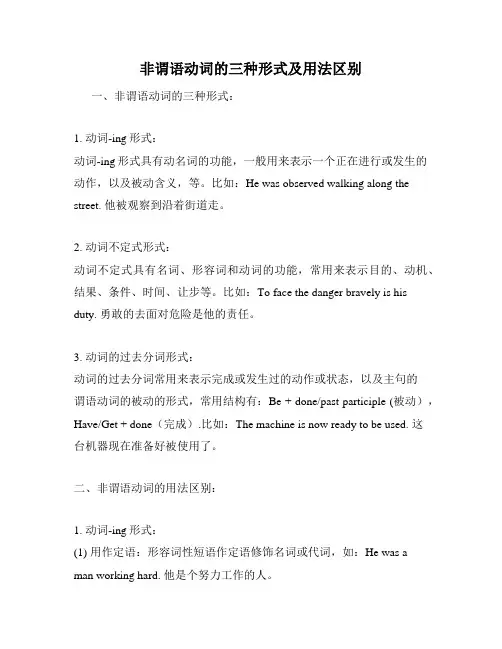
非谓语动词的三种形式及用法区别一、非谓语动词的三种形式:1. 动词-ing形式:动词-ing形式具有动名词的功能,一般用来表示一个正在进行或发生的动作,以及被动含义,等。
比如:He was observed walking along the street. 他被观察到沿着街道走。
2. 动词不定式形式:动词不定式具有名词、形容词和动词的功能,常用来表示目的、动机、结果、条件、时间、让步等。
比如:To face the danger bravely is his duty. 勇敢的去面对危险是他的责任。
3. 动词的过去分词形式:动词的过去分词常用来表示完成或发生过的动作或状态,以及主句的谓语动词的被动的形式,常用结构有:Be + done/past participle (被动),Have/Get + done(完成).比如:The machine is now ready to be used. 这台机器现在准备好被使用了。
二、非谓语动词的用法区别:1. 动词-ing形式:(1) 用作定语:形容词性短语作定语修饰名词或代词,如:He was aman working hard. 他是个努力工作的人。
(2) 用作表语:Ing 形式的短语作表语,表示一个正在进行的动作或状态,如:His job is repairing the machine. 他的工作是修理机器。
2. 动词不定式形式:(1) 作宾补:动词不定式作宾补表示“目的”,“动机”,“结果”,“条件”,“时间”,“让步”等。
如:He came here to do something for us. 他来这里为我们做一些事情。
(2) 作状语:动词不定式作状语,表示“目的”,“动机”,“条件”,“时间”,“让步”等。
如:She always goes out for a walk to relax herself. 她总是出去散步来放松自己。
非谓语动词作定语和状语

A A. add B. to add C. adding D. added
3). The disc, digitally ______ in the studio, sounded fantastic at the party that night.
A. recorded
B. recording
C. to be recorded D. being recorded
C Figure” award, a title _____ to ordinary
people for their contributions to
environmental protection.
A. being given B. is given
C. given
D. was given
不定式(to do)
②The question _b_e_i_n_g__d_is_c_u_s_s_e(ddiscuss) at the
meeting now is of quite importance.
③The question __t_o_b_e__d_i_s_cu__s_se_d(discuss) at the
meeting tomorrow is of quite importance.
A. are bought
B. bought
C. have been bought D. buying
解析:此题学生最易错选的答案为A或C。依据上面 陈述,填入A或C句子都有两个谓语动词,而此 处两个动词并非并列谓语,也不是分别出现在主 从句中,故答案有误。该题正确答案为B, bought through a computer为一过去分词短语作后 置定语,句中只有一个谓语can be lower than。当 然此题如改为Prices of daily goods which have been bought through…也是正确的,因为这一动 作出现在从句中。
非谓语动词作状语(3)

• 规律(二):
• 当v-ing形式作状语时, 要考虑时态与语态若它 所表示的动作发生在谓 语动作之前,需用 having done, • 如果表被动则用
having been done
3. He rushed to the train station, only ____ the train D had gone. A. finding B. found C. finds D. to find 4.European football is played in 80 countries, ____ A it the most popular sport in the world. (NMET1998) A. making B. makes C. made D. to make
三、动名词
动名词也是动词的一种非限定形式, 由动词原形加词尾-ing构成。 与现在分词构成法相同。它同时具有动词及名词特征。 以下主要介绍其做定语及状语的情况。 1. 作定语 None is allowed to smoke in the waiting room. The speeding car came to a stop all of a sudden. 2. 作状语 介词+动名词可以作状语用, 表示时间、原因、目的、让步、方 式等。例如: After finishing the job, he went home. They went to Manchester with the object of winning the World Championship. He was med for having done something wrong.
(二) 作状语 1. 作目的状语: 不定式作状语时, 其动作发生在谓语动词之后, 一般置于句子末 尾。但是, 如果表示强调, 亦可置于句首。 其否定形式为: 在不定式符号前加not。 He went to Shanghai to visit his parents. To save the earth, we must prevent the earth from being polluted. I shut the door quietly, so as not to wake the baby. 2. 作结果状语: We came home after our holiday to find our garden neat and tidy. She left home, never to return again. 3. 作原因状语: 不定式做原因状语时, 一般放在句子末尾。 She burst into laughter to see his funny action. The boy was shocked to see the frightening scene.
非谓语动词作主宾表定状补
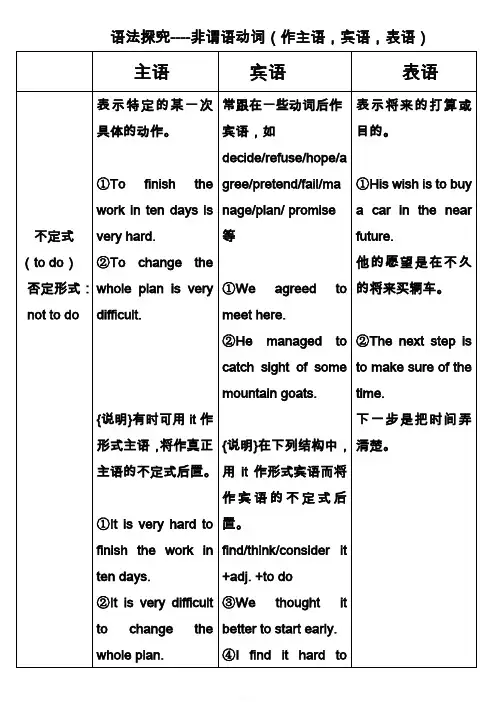
语法探究----非谓语动词(作主语,宾语,表语)主语宾语表语不定式(to do)否定形式:not to do 表示特定的某一次具体的动作。
①To finish thework in ten days isvery hard.②To change thewhole plan is verydifficult.{说明}有时可用it作形式主语,将作真正主语的不定式后置。
①It is very hard tofinish the work inten days.②It is very difficultto change thewhole plan.常跟在一些动词后作宾语,如decide/refuse/hope/agree/pretend/fail/manage/plan/ promise等①We agreed tomeet here.②He managed tocatch sight of somemountain goats.{说明}在下列结构中,用it作形式宾语而将作宾语的不定式后置。
find/think/consider it+adj. +to do③We thought itbetter to start early.④I find it hard to表示将来的打算或目的。
①His wish is to buya car in the nearfuture.他的愿望是在不久的将来买辆车。
②The next step isto make sure of thetime.下一步是把时间弄清楚。
work with him.--ing形式(doing)否定形式:not doing 表示经常性的抽象的行为。
①Swimming is abest sport insummer.②Living without anaim is like sailingwithout acompass(指南针).{说明}在下列句型中唱常用it作形式主语。
非谓语动词用法总结
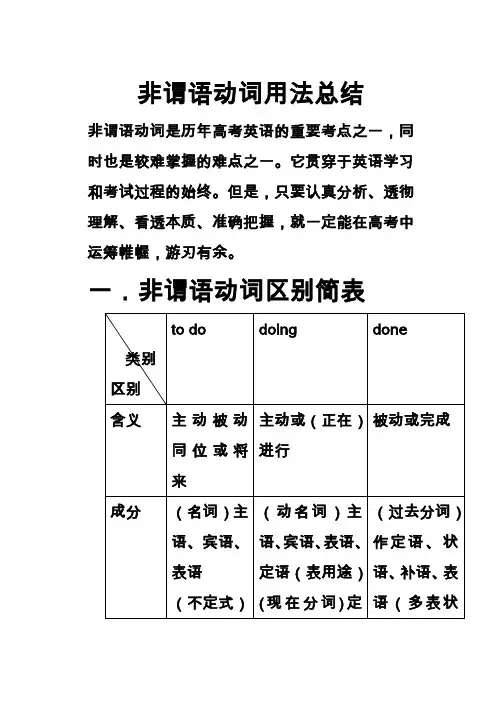
非谓语动词用法总结非谓语动词是历年高考英语的重要考点之一,同时也是较难掌握的难点之一。
它贯穿于英语学习和考试过程的始终。
但是,只要认真分析、透彻理解、看透本质、准确把握,就一定能在高考中运筹帷幄,游刃有余。
一.非谓语动词区别简表二.不定式的用法不定式不可作谓语,但它可以有自己的宾语、状语,构成不定式短语,在句中可以作主语、宾语、表语、定语(表用途)、状语或补足语。
高考对不定式的考查主要有不定式的时态、语态、作用、否定、省略、连词+不定式等。
作主语不定式作主语表示具体的动作,通常指一件已知的事或目的。
不定式作主语时,谓语动词用单数。
eg:To say is a thing,to do is another.(说是一回事,做是另外一回事。
)(2)不定式短语较长时,通常放在谓语之后,用it作形式主语。
eg:①It is important to learn English well.(学好英语是重要的。
)②It is necessary for us to do the job well.(我们做好这项工作是必要的。
)③It is a great honor to be invited to give a speech here.(被邀请在这儿发表演讲是一个极大的荣幸。
)2.作宾语(1)常只用不定式作宾语的动词有:want,wish,hope,long,expect,desire,intend,decid e,ask,promise,aim,offer,agree,plan,learn,choos e,refuse,fail,manage,pretend等。
eg:①He refused to help me.(他拒绝帮助我.)②She has agreed to come tomorrow.(他已同意明天来.)(2) 不定式较长时,作宾语,也可用it代替,放在后面。
eg;I find it difficult to do the job well.(3) “特殊疑问词﹢不定式to do结构”具有名词特征,可作宾语。
作定语和状语的非谓语动词
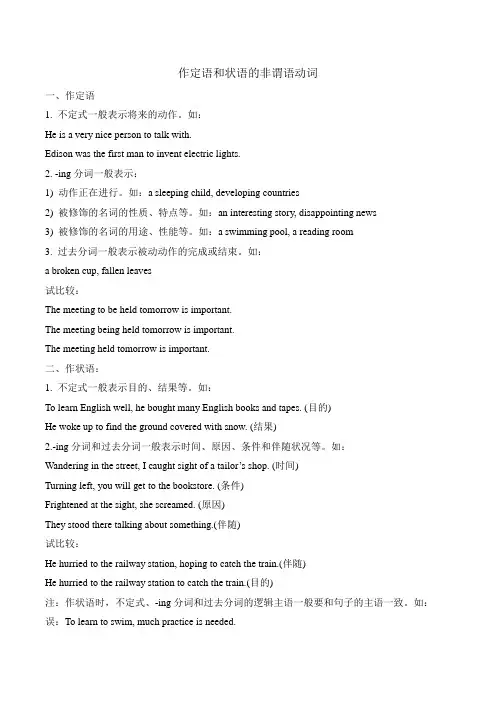
作定语和状语的非谓语动词一、作定语1. 不定式一般表示将来的动作。
如:He is a very nice person to talk with.Edison was the first man to invent electric lights.2. -ing分词一般表示:1) 动作正在进行。
如:a sleeping child, developing countries2) 被修饰的名词的性质、特点等。
如:an interesting story, disappointing news3) 被修饰的名词的用途、性能等。
如:a swimming pool, a reading room3. 过去分词一般表示被动动作的完成或结束。
如:a broken cup, fallen leaves试比较:The meeting to be held tomorrow is important.The meeting being held tomorrow is important.The meeting held tomorrow is important.二、作状语:1. 不定式一般表示目的、结果等。
如:To learn English well, he bought many English books and tapes. (目的)He woke up to find the ground covered with snow. (结果)2.-ing分词和过去分词一般表示时间、原因、条件和伴随状况等。
如:Wandering in the street, I caught sight of a tailor’s shop. (时间)Turning left, you will get to the bookstore. (条件)Frightened at the sight, she screamed. (原因)They stood there talking about something.(伴随)试比较:He hurried to the railway station, hoping to catch the train.(伴随)He hurried to the railway station to catch the train.(目的)注:作状语时,不定式、-ing分词和过去分词的逻辑主语一般要和句子的主语一致。
非谓语动词做定语和状语
to get He is lucky _______ here on time. to see I am happy ______ you again. to do Li Ming seemed willing _____ that. to hear I am sorry _______ that.
(作原因状语时常修饰表感情的形容词,表示 产生这种感情的原因.)
I hurried to get there only to find him out.
After that day they were separated, never to see each other again.
(only/ never to do 表示意料之外的结 果)
非
doing
谓语动词
to do
done
主语 to do done
定语
宾语
表语
状语
宾语补 足语
×
diong
×
. + to do
Li Ming was the first person to arrive. He always has a lot of meetings to attend. He is looking for a room to live in.
语态:主动
时态:正在进行 注意:并不是所有的 doing形式时态意义都很明显。
done作定语
done+ n./ pron. Look at the broken glasses.
n./ pron.+ done短语
I have a radio made in China. 语态:被动 时态意义往往不明显。 注意一些动词的固定用法: The little girl dressed in white is Mary. (be dressed in)
非谓语动词作状语和定语讲义
【知识点拨】1.不定式作定语①不定式的一般式通常表示一个将来或经常性的动作,完成式则表示该动作发生在谓语动词所表示的动作之前。
例如:She is always the first (one) to come and the last to leave.②如果作定语的不定式与被修饰的名词有动宾关系,在不及物动词后通常要加上适当的介词.例如:Let's first to find a room to live in / to put the things in.We have nothing to worry about.(=There is nothing for us to worry about.)2.-ing分词作定语①-ing分词作定语一般要求其动作与谓语动词所表示的动作同时发生或是在说话时该动作正在进行,否则,要用从句作定语。
例如:Do you know the boy talking ( = who is talking ) to the teacher?Did you notice the boy sitting ( = who was sitting ) at this desk yesterday?The man shaking ( = who is now shaking ) hands with Mr. Li visited our class yesterday.比较:误:He is the man visiting our class yesterday.正:He is the man who visited our class yesterday.②单个的-ing分词作定语一般前置,说明名词的性质、特征或用途等,-ing短语作定语一般后置;强调动作的单个-ing分词也常后置。
例如:a sleeping car ( = a car for sleeping )a sleeping child ( = a child who is sleeping )the boy standing there ( = the boy who is standing there )The girl singing is my classmate. 3.-ed分词作定语3. -ed分词作定语一般表示一个被动或已完成动作,-ing分词表示一个主动或正在进行的动作,-ing分词的被动式则表示一个正在被进行的动作。
英语非谓语动词讲解
英语非谓语动词讲解非谓语动词主要包括不定式、动名词和分词。
为了区分这三种不同的非谓语动词的用法和含义,我们将分别从三种非谓语动词在句子中做主语、宾语、宾语补足语、定语、状语、表语以及一些特殊结构句型等角度来区分其用法和细微含义。
★1.不定式和动名词作主语的区别(1)动名词作主语通常表示抽象动作;而不定式作主语表示具体动作。
Smoking is prohibited(禁止)here.这里禁止抽烟。
(抽象)It is not very good for you to smoke so much.你抽这么多烟对你身体很不好。
(具体)(2)动名词作主语时,通常用以表示一件已知的事或经验。
不定式短语通常用来表示一件未完成的事或目的。
Climbing mountains is interesting.爬山很有趣。
(经验)Driving a car during the rush hour is tiring.在高峰时刻开车令人厌烦。
(经验)注意:不定式做主语,一般用it当形式主语,把作主语的不定式短语后置。
①常用不定式做主语的句型有:常用结构:It+be+ adj./n.+ for sb. to do sth.(常见形容词: difficult , important, necessary, impossible, etc.)It+be+ adj. + of sb. to do sth. =sb. be + adj. + to do sth.(常见形容词:clever, silly, foolish, stupid, wise, kind, rude, impolite, careless, cruel, crazy, etc.)②常用动名词做主语的句型有:It’s no good (use, fun) doing sth.It’s (a) waste of time one’s doing sth. It’s worth while doing sth.★2.不定式、动名词和分词作表语的区别(1)不定式作表语1)不定式作表语一般表示具体动作,特别是表示将来的动作。
2020高考英语 高考近5年全国卷真题语法专项-非谓语作定语和状语详解
非谓语——作定语和状语一.考点概述:本考点是近几年高考全国卷中考查的重点也是难点,主要是考查非谓语的三种形式即doing; done; to do在句中的用法;考查形式:语法填空和短文改错;其次就是阅读理解和完型填空中长难句以及书面表达等二.考点聚焦1.作定语功能:相当于形容词,修饰名词,在句中作定语位置:一般位于名词之后,没有逗号隔开例如: She is the girl living in China.(作定语)2. 作状语功能:在句中作为插入语,表示伴随;位置:一般也是位于名词或某个句子后,有逗号隔开;例如:She is the girl , living in China.(作状语)三.考点精讲1.doing: 表示主动,进行,性质;2.done:表示被动,完成,状态;3.to do: 表示目的,将来;1)作定语例如:(1)There is the man standing under the tree.(这里the man与stand之间构成的是主动关系,所以用doing形式即standing)(2) That is the bike repaired by Tom.(这里the bike与repair之间构成是被动关系,所以用done的形式即repaired)(3) There is a party to be held next week.( 这里有next week表示将来,所以用to do 形式)2) 作状语(1)在句中或句尾用逗号隔开的例如:Tom, living in China, invented the bike.(作插入语)There is the man, standing under the tree.That is the bike, repaired by Tom.注意:用done或是doing还是依据句中的某个名词或是整个句子与动词间的关系(2) 在句子的开头,用逗号隔开例如:Knowing that he is a student, we try our best to help him.(这里we与know之间是主动关系,所以是doing形式)Absorbed in painting, John didn’t notice evening approaching.(这里John与absorb之间构成被动关系,所以是done形式)To complete the job in time, the staffs were working on weekends.(这里表示目的关系,用to do形式)(3)with +sth+doing/done/to do的结构,表示伴随(看sth与动词间关系)例如:With the society developing rapidly, +句子。