
人教版九年级英语上册课件 Unit 5 Section A(1a-2d)课件
No, they’re made of steel, and they were made in Korea.
2a
Listen and check (√) the main topic of Nick and Marcunce museum ____ the art and science fair ____ environmental protection ____ a model plane ____ a beautiful painting ____ grass and leaves
past and now. 2. _A_s__fa_r__a_s_ I know, tea plants
_a_r_e_g_r_o_w_n_ on the sides of mountains. 3. When the leaves are ready, they
_a_r_e_p_i_c_k_e_d_ by hand and then _a_r_e_s_e_n_t__ for processing.
2b
Listen again. Write short answers to the questions.
1. Where is the art and science fair? _O_u_t_s_id_e__th__e_s_c_ie_n_c_e_m__u_s_e_u_m__.
2. Do Nick and Marcus have to pay to go? _N_o_._T__h_e_r_e_s_c_h_o_o_l _is__p_a_y_in_g__f_o_r_it_._
How is tea produced?
Well, as far as I know, tea plants are grown on the sides of mountains. When the leaves are ready, they are picked by hand and then are sent for processing.
What is the model plane made of? What is the painting made from?
The plane made of wood and glass. The painting made from grass, leaves and flowers.
2d
Role-play the conversation.
China is famous for tea, right?
Yes, both in the past and now.
Where is tea produced in China?
Well, in many different areas. For example, Anxi and Hangzhou are widely known for their tea.
2c
Make conversations using the
information in 2a and 2b.
What did you see in the art and science fair?
I saw a huge model plane and a really beautiful painting.
Yes, people say that tea is good for both health and business!
3. What is the model plane made of? _U_s_e_d__w_o_o_d__a_n_d_g_l_a_s_s._______
4. What is the painting made from? _G__ra_s_s_,_l_ea_v_e_s__a_n_d_f_l_o_w_e_r_s_. ___
1. What do you know about tea? 2. How many kinds of tea do you
know? 3. What place is famous for
Tieguanyin/Longjing?
Read the conversation and complete the sentences. 1. China _i_s_fa_m__o_u_s__fo_r_ tea both in the
Yes, and it was made in Thailand.
These shirts feel comfortable. Are they made of cotton?
Yes, and they were made in America.
The chopsticks look nice. Are they made of silver?
What’s the fork made of? It’s made of steel.
n. 钢;钢铁
These sheep like grass very much. n. 草
a piece of leaf Kolas like leaves. n. 叶子
pl.
1a
What are these things usually made of?
What happens next?
The tea is packed and sent to many different countries and places around China.
It seems that many people all over the world drink Chinese tea.
g. glass
1b
Listen and match the products with what they are made of and where they were made.
Things
shirts chopsticks ring
Made of
cotton silver steel
Made in
4. The tea _i_s_p_a_c_k_e_d_ and sent to many different countries and places around China.
5. People say that tea _i_s_g_o_o_d_f_o_r_ b__o_th_ health _a_n_d__ business!
This pair of chopsticks are made of bamboo.
n. 筷子
This coin is made of silver.
n. 硬币
n. 银 adj. 银色的
Is this blouse made of
cotton?
n. 棉花
n. 女式衬 衣
No, it isn’t. It’s made of silk.
Korea Thailand America
Practice the conversation in 1a.
1c Then make conversations using the
information in 1b.
This ring looks nice. Is it made of silver?
Match them with the materials. More than
one answer is possible.
1. chopsticks
a. wood
2. window
b. gold
3. coin
c. silver
4. stamp
e. paper
5. fork
f. silk
6. blouse
Unit 5 What are the shirts made of?
Section
Period 1 1a-2d
Is this table made of glass?
Yes, it’s made of glass.
Is butter made of meat?
No, it isn’t. It’s made from milk.
Unit5SectionA1a-2c教案:人教版九年级全册英语

Unit 5 What are the shirts made of?教学设计Section A 1a-2c(Listening & Speaking)【教学背景分析】一、课标要求二、单元教学背景分析本节课选自于人教版新目标九年级U5 What are the shirts madeof ?SA1a-2c。
本单元的教学话题是“Things made in China”, 功能是谈论物品由什么制造而成以及产地和制造者等。
主要语法是一般现在时的被动语态,在后面的U6&U7分别还会继续深入介绍一般过去时被动语态以及含有情态动词的被动语态。
本单元将带领学生了解“中国制造”这一全球流行的现象,领略中国的传统艺术文化,比如:孔明灯、剪纸、泥塑等独特魅力。
本单元教材设置内容丰富,难度适中,很容易引起学生的兴趣,将学生带入独特的艺术世界。
将英语学习和中国特色结合起来,也是本单元教材设置的一大特色。
能够极大地激发学生对于中国传统艺术的热爱,使本单元的语言学习更有文化底蕴。
三、单元学情分析学生在之前学习中已经接触过了被动语态,如:U2中A Christmas Carol is a famous short novel written by Charles Dickens. U4中be used to do等表达,大部分学生已经对被动语态有了一定的认知基础,能够在阅读中辨识出被动语态,因此在本单元让学生掌握被动语态的用法并不困难。
另外,通过本次月考发现学生在听说考试中出现的问题。
听的部分最容易在第二节听问句选应答,因为只有一次机会,所以学生在之前的准备时间应该做好充分的听前预测,以便迅速和准确地找到答案。
说的方面在表达部分普遍分值在3分,分析原因是没有策略,不打草稿,临时想怎么说就怎么说,不会充分利用120秒的准备时间。
学生的能力训练渗透在平时的教学中是尤为重要的,所以钛通过平时的训练来加强和提升听说成绩。
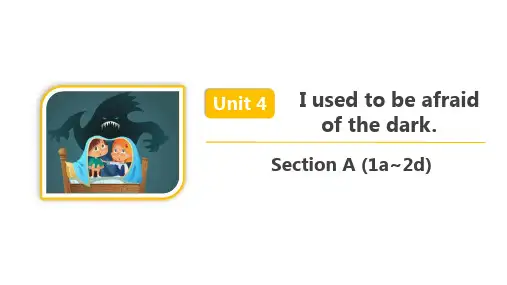
人教版九年级英语 Unit 4 Section A(1a~2d) 精品课件
Now Appearance
3. What do you think of her?/ What is she like?
She is nice, friendly, active, ...
Look and talk
A: Did Mario use to be short? B: Yes, he did. He used to be really short. A: What’s he like now? B: He’s tall now.
Revision Pre-listening While-listening Post-listening Summary
Personality
Revision Pre-listening While-listening Post-listening
Summary
Brainstorm Can you think of more words or expressions about appearance and personality?
Appearance
Height tall, short, of medium height ...
Build heavy, slim, thin, of medium build ...
Other long straight hair, short curly hair, a round features face, big eyes, wear glasses ...
She used to have long straight hair, but now she has short straight hair.
人教版九年级上册英语授课课件Unit 4 Section A (1a-2d)
课文呈现
1c. Lookatthepicturein1aandmakeconversations. A:DidMariousetobeshort? B:Yes, hedid. Heusedtobereallyshort. A:What’shelikenow? ② B:He’stallnow.
Steve: Wow, you’re so active! People sure change.
课文呈现
2c. MakeconversationsaboutPaulausingtheinformationin2b. A:Paulausedtobereallyquiet. B:Iknow. Shewasalwayssilentinclass.
Steve: Oh, wow! You’re Paula, aren’t you? Paula: That’s right. We were in the samescience class during Grade 8. Steve: Yes, now I remember. You used to be really quiet, didn’t you? I rememberyou were always silent in class. Paula: Yeah. I wasn’t very outgoing.
werereally good in music class, too. Wait a minute! Did you use to play the piano? Paula: Yes, I did. But now I’m more interestedin sports.
人教版英语九年级全一册-Unit 11 Section A (1a-2d)(课件)

make him want to leave.
Speed Reading Read the conversation in 2d quickly
and answer the questions.
now better friends with me than with her. Bert: I see. Mmm ... why don’t you ask Alice to join you each time
you do something with Julie? Then she won’t feel left out. Nancy: Oh, good idea! That can make our friendship stronger.
1. The __a_w_f_u_l__ pictures make Amy
Rockin’ Restaurant _u_n_c_o_m__f_o_r_ta_b_l_e_.
Blue Ocean
2. The ___lo_u_d___ music makes Amy _n_e_r_v_o_u_s_. 3. The ___s_o_ft___ music makes Amy ___re_l_a_x__,
but it makes Tina _s_le_e_p_y__.
1c Role-play a conversation between Amy and Tina.
Amy: I’d rather go to Blue Ocean because I like to listen to quiet music while I’m eating.
九年级Unit7_SectionA(1a-2d)听说课课件
1. Anna can go to the shopping center by bus. T F
2. Anna wants to get her ears pierced.
TF
3. Anna wants to choose her own clothes.
TF
Listen again, and fill in the blanks.
too young. • Anna: I agree, but it’s fun to watch. Can I take the bus then? • Mom: Well, OK. • Anna: Great! I want to buy a new skirt, too.
• Mom: _W__h_a_t__k_i_n_d__o_f_s_k_i_r_t _? Maybe I should go with you.
1. Teenagers should not be allowed to smoke.
AD
2. Sixteen-year-olds should be allowed to drive.
ld not be allowed to have part-time jobs.
2.能听懂听力材料中关于青少年是否允许和不允许做某事的细节信 息,独立完成听力任务。
3.能运用阅读策略获取2d对话中关于参观博物馆规定的细节信息, 独立完成相关练习。
4.能用含有情态动词的被动语态描述家庭、学校和社会的行为准则, 进行讨论和评价,并联系实际表达自己的理由和感受。
1. Are you allowed to sleep in class? Do you think you should be allowed to sleep in class? Why?
2024九年级人教英语全一册课件精细版unit12 第1课时(A 1a-2d)
you were only five minutes late for clasห้องสมุดไป่ตู้.
Listen again and fill in the blanks.
1. By the time I got up, my brother _h_a_d_ already _g_o_t_te_n_ in the shower.
2. By the time I got outside, the bus _h_a_d_
already _l_e_ft_. 3. When I got to school, I realized I _h_a_d_
2c
Make up an ending for the story and share it with your partner.
The teacher looked at Mary and...
The teacher looked at Mary and asked her if she had finished the homework. Mary told her the unexpected things she met this morning but the teacher thought it couldn’t be true. She was asked to finish the homework in class. What an unforgettable day it is!
Matt: Then how did you get here?
人教版九年级上册英语课件:Unit 2 Section A(1a-2d)(共10张PPT)
第1课时 Section A(1a-2d)
名师点睛
•词汇冲 • 1.crowded adj.拥挤的。其反关义词为uncrowded(不拥挤的)。短语:
be crowded with挤满了…… • 2.【辨析】believe与believe in。believe表示相信某人的话,而
the races.比尔和玛丽都相信他们明年还会回来观看龙舟比赛。
• 该句包含一个that引导的宾语从句,作动词believe的宾语;在宾语从 句中,to watch the races为动词不定式短语,在句中作目的状语。 【拓展】动词不定式作目的状语既可放在主句前,也可放在主句后。 放在主句之前时,要用逗号与主句隔开。例:To get high grades, he works very hard.=He works very hard to get high grades.为 了取得高分,他努力地学习。
• 9.relative n.亲属;亲戚。【拓展】relative还可作形容词,意为
“相对的;有关系的”。 • 10.throw(threw,thrown)v.扔;掷。短语:throw...at...朝……
扔……,把……洒/抛在……上。throw后接所扔的东西,at后接扔的 对象。
•难句解 • Bill and Mary believe that读they'll be back next year to watch
ut
• 5.Don't eat too much, or you'll p_________ on your weight.
• 6.【2018·浙江杭州中考】The train was vreowrydecd_____________ with passengers, so we had to stand.
最新人教PEP版九年级上册英语精品课件:-Unit 5-Section B (1a-2e)
2. __L___•_第w四• 级第a五n级ts to know more about the kite festival.
3. __Z____ saw many different kinds of kites at the festival.
2019/9/3
19
单击此处编母版标题样式
I saw many different kinds of kites at the festival.
单击此处编母版标题样式
Were the
k• i单te击s 此ni处ce编?辑母版级 • 第五级
Yes, they were beautiful. They
were made of different things like
3
单击此处编母版标题样式
1. We use computers to search
•i单nf击or此m处a编tio辑n母. 版文本样式 _C_•o_第m_•二_p第_级u三_t级_e_r_s _a_r_e_u_s_e_d_t_o__se_a_r_c_h_________ _in_f_o_r_m_• _a第_t四•i_级o第_五n_级b__y_u_s_.
traditional art, like paper cutting?
• 单击此处编辑母版文本样式
•
单击此处编辑母版文本样式
•a第n二sw级ers.
1. Laur• a第•i三s第级t四r级ying to find 2. Zheng Yun tells
out more ab•o第u五t级_____
Laura about ____
A. what Zheng Yun did A. a kite festival
人教版九年级英语上册第一单元Unit 1 Section A 1a-2d精品教学课件
Jack: But I don’t understand many of the words. I have to _u__se__a_d_i_c_ti_o_n_a_r_y.
Jack: That sounds difficult! Annie: Well, be patient. It takes time. You can
adj. 耐心的;n. 病人
Annie: Well, be patient. I_t_t_a_k_e_s_t_im__e_. You can
become betterb_y__r_ea_d__in_g__s_o_m_e_t_h_in__g__
y_o_u__e_n_jo_y_ every day. _T__h_e_m__o_r_e you
Meiping: Yeah, I did OK. Boy: Well, how did you study for it? Meiping: _B_y_m__a_k_i_n_g_w__o_r_d_c_a_r_d_s_. Boy: Maybe I’ll try that. So, how do you study for a test, Peter? Peter:B_y__a_s_k_in__g_t_h_e_t_e_a_c_h_e_r_f_o_r_h_e_l_p. She’s always happy to _a_n_sw__e_r_m__y_q_u__es_t_io_n__s.
Annie: That doesn’t _s_o_u_n_d__to_o__b_a_d. Jack: But I’m a very _s_lo_w__r_e_a_d_e_r. Annie: Just r_e_a_d__q_u_i_ck__ly_ to get the _m__a_i_n_i_d_e_a_s_at first.