
小学英语易混淆单词和词组用法
9
class,classroom
classroom:教室
class:班级,班,课,
in theclass:在班级里
inclass:上课
after class:课后
before class:课前
比如说:
1.在班上我最高I am the tallest in the class.
2.你们班里有多少名学生How many students are there in your class?
3.你们教室里有什么?What’s in your classroom?
4.早上好同学们。Good morning students./Good morning class.
小学英语易混淆单词和词组用法
序号
单词/词组
说明
1
after,
in
这两个介词都可以表示“……(时间)以后”的意思。
after以过去为起点,表示过去一段时间之后,常用于过去时态的句子中?如:She went after three days.她是三天以后走的。
in以现在为起点,表将来一段时间以后,常用于将来时态的句子中?如:She will go in three days.她三天以后要走。
pay主要指主语(某人)买某物(或为某事)付多少钱(给某人)?如:I pay for my rooms by month.我按月支付租金。
6
speak, say, talk
这四个动词都有“说”的意思。speak的意思是“讲话;演讲”,着重指说话的动作,指开口说或连续不断地说,多用作不及物动词;用作及物动词时,其宾语是语言名称。
right,
night,
light
正确,右边
夜里:at night(在夜里)n the evening(在晚上)
光、轻的
17
shirt,short,skirt
shirt衬衫
short短的
skirt裙
18
shoe,show
鞋,给…看
19
sweet甜的
sweat汗水
20
monkey猴子
donkey驴
21
3
few, a few,
little, alittle,
few和little的意思是否定的,表示“很少”或“几乎没有”;a few和a little的意思是肯定的,表示“有一些,有一点儿”? few和a few修饰可数名词;little和a little修饰不可数名词。
4
one…the other,
among的意思是“在……中间,在……之中”,一般指在三个或三个以上的同类事物之中。
8
bring, take
这两个词都是动词,都含有“带”或“拿”的意思,但使用的场合各不相同。bring作“带来,拿来”解。
如:Next time don’t forget to bring me a copy of your work.下次不要忘了把一份你的作品带给我。
How many English lessons do we have in a week?
11
there,they
there:有there be,那里over there
they:他/她/它们
How many apples are there on the desk?There are three.They are red.
10
subject,lesson,class
subject功课:What subject do you…How many subjects do you have……
lesson课:an Art lesson
class课:in class,after class
How many classes do you have in the morning?
如:He can speak Japanese.他会说日语。say的意思是“说;讲”,一般用作及物动词,着重指说话的内容。它的宾语可以是名词、代词等。
如:She says,“Don’t draw on the wall !”她说:“别在墙上画画!”talk的意思是“说;讲;谈话”,与speak意义比较接近,但不如speak正式,着重强调两人之间的相互谈话,也可指单方面的谈话。
12
new,now
新的,现在
13
thirteen,
thirty,
thirsty,
their,
three,
there,
third
14
mouse,
mouth
老鼠
嘴
15
walk,work
15
hear,hair,here
hear听见[hɪə(r)]
here这里[hɪə(r)]
hair头发[heə(r)]
16
2Байду номын сангаас
how long,
how often
how long指多长时间,主要用来对一段时间(如three days, fourweeks等)提问。如:How long ago wasit?这是多久前的事了?
how often指每隔多久,主要用来对频率副词或状语(如once a week等)提问。
如:—How often does he come here? —Once a month/week.他(每隔)多久来一次?每月一次?
如:She is talking with John in English.她正在和约翰用英语交谈。
7
among, between
between的意思是“在……中间,在……之间”,一般指在两者之间。如:There is a table between twowindows.在两扇窗户之间有一张桌子。between有时也表示在多于两个以上的事物之间,但那是指在每二者之间。
22
23
24
25
如:She has taken another of my books.她已经拿了我的另外一本书。
5
spend, take, cost, pay
spend的宾语通常是时间、金钱,在主动语态中,句子的主语必须是人,而且后面不能用动词不定式做它的宾语。
如:She spent the whole evening in reading.她把整个晚上用来读书。
take常常用来指“花费”时间,句子的主语通常是表示事物的词语。如:How long will this job take you?你做这项工作要花多长时间?
cost指花费时间、金钱或力气等,只能用表示事物的词做主语,并且不能用于被动语态。如:How much does the jacket cost?这件夹克多少钱?
one…another
the other指两个人或事物中的“另一个”,表示特指。
如:We stood on one side of the road and they stood on the other.我们站在街这边,他们站在那边。
another着重于不定数目中的“另外一个”,表示泛指,所以常用来指至少三个中的一个。
英语四六级最易混淆词汇150组

英语四六级最易混淆词汇150组英语四六级最易混淆词汇150组词汇是英语四六级考试中最基础的部分,可有些词汇是常常容易让我们混淆的,下面是yjbys网店铺提供给大家关于英语四六级最易混淆词汇150组,希望对同学们的备考有所帮助。
1)quite相当quiet安静地2)affectv影响,假装effectn结果,影响3)adapt适应adopt采用adept内行4)angel天使angle角度5)dairy牛奶厂diary日记6)contend奋斗,斗争content内容,满足的context上下文contest竞争,比赛7)principal校长,主要的principle原则8)implicit含蓄的explicit明白的9)dessert甜食desert沙漠v放弃dissert写论文10)pat轻拍tap轻打slap掌击rap敲,打11)decent正经的descentn向下,血统descendv向下12)sweet甜的sweat汗水13)later后来latter后者latest最近的latelyadv最近14)costume服装custom习惯15)extensive广泛的intensive深刻的16)aural耳的oral口头的'17)abroad国外aboard上(船,飞机)18)altar祭坛alter改变19)assent同意ascent上升accent口音20)champion冠军champagne香槟酒campaign战役21)baron男爵barren不毛之地的barn古仓22)beam梁,光束bean豆beenhave过去式23)precede领先proceed进行,继续24)pray祈祷prey猎物25)chicken鸡kitchen厨房26)monkey猴子donkey驴27)chore家务活chord和弦cord细绳28)cite引用site场所sight视觉29)clash(金属)幢击声crash碰幢,坠落crush压坏30)compliment赞美complement附加物31)confirm确认conform使顺从32)contact接触contract合同contrast对照33)council议会counsel忠告consul领事34)crow乌鸦crown王冠clown小丑cow牛35)dose一剂药doze打盹36)drawndraw过去分词drown溺水37)emigrant移民[微博]到国外immigrant从某国来的移民38)excessn超过exceedv超过excel擅长39)hotel青年旅社hostel旅店40)latitude纬度altitude高度gratitude感激41)immoral不道德的immortal不朽的42)lone孤独的alone单独的lonely寂寞的43)mortal不死的metal金属mental神经的medal勋章model 模特meddle玩弄44)scare惊吓scarce缺乏的45)drought天旱draught通风,拖拉draughts(英)国际跳棋47)assure保证ensure使确定insure保险48)except除外expect期望accept接受excerpt选录exempt 免除49)floor地板flour面粉50)incident事件accident意外51)inspiration灵感aspiration渴望52)march三月,前进match比赛53)patent专利potent有力的potential潜在的54)police警察policy政策politics政治55)protest抗议protect保护56)require需要inquire询问enquire询问acquire获得67)revenge报仇avenge为.。
易混淆动词辨析

建立,设立
Look使高兴
Pick up
捡,偶然学得
Send up
发射
22.off 的词组
词 形
词 意
词 形
词 意
Take off
起飞,脱下
Turn off
关
Put off
推迟
Get off
下车/get on 上车
23.up with 的词组
词 形
词 意
词 形
3. reach
reach+ sp.
7.三个“借”
词 意
区 别
1. borrow
借入 用主语做判断
2. lend
借出
3. keep
延续性动词与段时间连用
8.三个“听”
词 意
区 别
1. listen
听(动作) listen to…
1.hear
hear of
hear from
听见(结果)
听说
收到来信 hear from sb (不出现letter)
词 意
Catch up with
追上
Make up with
和解,与…和好
Put up with
容忍,忍受
Come up with
产生,提出
1. 四个“花费”
词意
区别
1. take
It takes(有时态变化)sb. some time to do sth
2. cost
物cost(人)钱
3. pay
人pay钱for
4. spend
Spend 钱/时 on sth(in)doing sth.
2.四个“穿戴”
闽教版(三起)小学英语三年级下册知识点总结(全册)
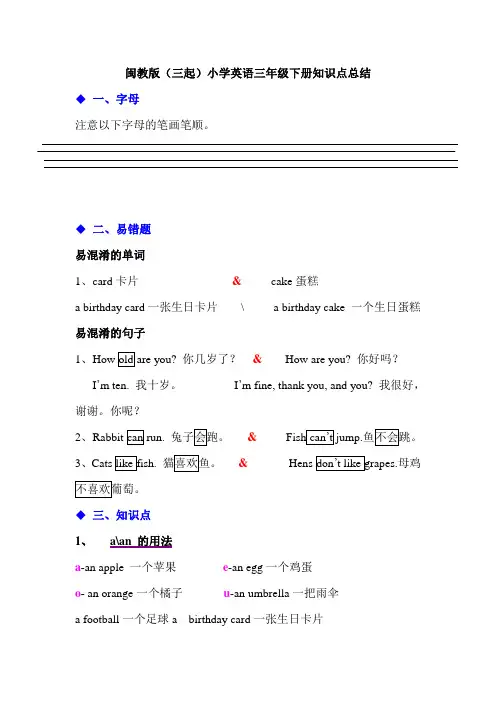
闽教版(三起)小学英语三年级下册知识点总结◆一、字母注意以下字母的笔画笔顺。
◆二、易错题易混淆的单词1、card卡片&cake蛋糕a birthday card一张生日卡片\ a birthday cake 一个生日蛋糕易混淆的句子1、你几岁了?&How are you? 你好吗?I’m ten. 我十岁。
I’m fine, thank you, and you? 我很好,谢谢。
你呢?2、&3、&母鸡◆三、知识点1、a\an 的用法a-an apple 一个苹果e-an egg一个鸡蛋o- an orange一个橘子u-an umbrella一把雨伞a football一个足球a birthday card一张生日卡片a present 一个礼物a dog 一条狗2、 句子的正确书写形式。
What ’s this?It ’s a bird.句子末尾要有标点符号,第一个单词第一个字母要大写。
3、 词组ride a bike 骑自行车 go home 回家 let ’s go. 走吧。
Let’s go home. 让我们回家吧。
4、首字母大写地名:in L ondon\B eijing 在伦敦\北京 人名:Sally \ Lily 尊称:Mr. \ Miss5、单复数重点单词:present 礼物football 足球 card 卡片 cake 蛋糕 bird 鸟(第一单元)swim 游泳aw 画画 run 跑步 ride 骑 bike 自行车 skate 滑冰(第二单元)like喜欢rice米饭hamburger汉堡包grape葡萄jump 跳(第三单元)eleven十一twelve十二home家story故事clock钟mom妈妈(第四单元)重点句子:Can you ride a bike? 你会骑自行车吗?Yes, I can.(ride a bike)是的,我会(骑自行车)。
小升初英语考试必背词语辨析与词组
小升初英语考试必背词语辨析与词组英语词汇的辨析是英语考试的难点之一,尤其是在小升初英语考试中,对词语的理解和运用往往是考生们成功晋级的关键。
本文将介绍小升初英语考试必背的词语辨析和词组,帮助考生们更好地备考和应对考试。
一、词语辨析1.break/brake这两个词在语音上发音相近,但在意义上完全不同。
break是动词,意思是“打断、破裂、毁坏”,例如:•I broke the cup.(我打破了杯子。
)•My leg is broken.(我的腿受伤了。
)而brake则是名词,指的是车辆和机器上的“制动器”,例如:•The car’s brake failed.(这辆车的刹车失灵了。
)•He applied the brakes and stopped the bike.(他使用了刹车,停下了自行车。
)2.weather/whether这两个词同样在语音上很相似,但其实意思完全不同。
weather是名词,指的是天气,例如:•The weather is good today.(今天的天气很好。
)•How’s the weather in Beijing?(北京的天气怎么样?)而whether则是连词,表示“是否”的意思,例如:•I don’t know whether he will come or not.(我不知道他会不会来。
)•Whether you like it or not, we have to do it.(不管你喜不喜欢,我们都得做。
)3.hear/here虽然这两个词在形式上只有一个字母的差别,但它们的意思却完全不同。
hear 是动词,表示“听到、听说”,例如:•I heard you singing.(我听到你唱歌了。
)•Did you hear the news?(你听到那个消息了吗?)而here则是副词,表示“这里、到这里”,例如:•Come here and have a seat.(来这里坐一下。
一到六年级所有英语易错单词
一到六年级所有英语易错单词一到六年级的学生在学习英语过程中经常会遇到一些易错的单词。
这些单词可能因为拼写规则的变化、发音的困难或者是语义的混淆而容易出错。
以下是一些常见的易错单词列表,供学生们参考和复习。
一年级:1. cat-猫2. dog-狗3. hat-帽子4. happy-快乐的5. sad-悲伤的6. bed-床7. man-男人8. woman-女人9. pen-钢笔10. book-书籍二年级:1. apple-苹果2. banana-香蕉3. orange-橙子4. teacher-老师5. student-学生6. car-汽车7. bike-自行车8. home-家9. school-学校10. park-公园三年级:1. elephant-大象2. giraffe-长颈鹿3. lion-狮子4. tiger-老虎5. monkey-猴子6. bird-鸟7. fish-鱼8. panda-熊猫9. rabbit-兔子10. turtle-乌龟四年级:1. computer-电脑2. phone-电话3. table-桌子4. chair-椅子5. pencil-铅笔6. ruler-尺子7. eraser-橡皮擦8. map-地图9. globe-地球仪10. clock-时钟五年级:1. country-国家2. city-城市3. river-河流4. mountain-山5. ocean-海洋6. forest-森林7. desert-沙漠8. island-岛屿9. volcano-火山10. waterfall-瀑布六年级:1. understand-理解2. difficult-困难的3. interesting-有趣的4. favorite-最喜欢的5. different-不同的6. important-重要的7. beautiful-美丽的8. comfortable-舒适的9. dangerous-危险的10. successful-成功的这些单词是学生们在学习英语过程中容易出错的一些例子。
五年级下册英语易错单词

易错的英语单词在五年级下册可能因个体差异而有所不同,但以下是一些常见的、可能在五年级下册英语学习中容易引起困惑的单词,供参考:
1. weather(天气)- 注意拼写和发音,易与"whether"混淆。
2. quiet(安静)- 注意拼写,不要写成"quite"。
3. clothes(衣服)- 注意拼写和发音,易于错写成"close"。
4. beautiful(美丽的)- 注意拼写,其中有两个"u"。
5. bicycle(自行车)- 注意拼写,不要写成"bicylce"。
6. strawberry(草莓)- 注意拼写,易于写成"strawbery"。
7. surprise(惊喜)- 注意拼写,不要漏掉字母"r"。
8. umbrella(雨伞)- 注意拼写,容易写成"umberella"。
9. furniture(家具)- 注意拼写,不要漏掉字母"n"。
10. remember(记得)- 注意拼写,易于与"remind"混淆。
请注意,这只是一个概括,具体的易错单词可能因学校、教材和学生个体而异。
建议根据教材和课程内容,结合学生的具体情况,定期进行单词巩固和复习。
易混淆词辨析1notes
易混淆词辨析11.be used to doing sth. 和used to do sth. 的区别be used to doing sth, 表示习惯做某事,to 后面接v.ing形式used to do sth. 表示过去常常做某事。
I used to get up early. 我习惯早起。
I used to get up at six in the morning. 我过去经常在早上六点起床。
【注意】Be used to do sth.被用来做某事。
Pens are used to write. 钢笔是用来写字的。
2.arrive,get 和reach表示“到达”时的区别。
Arrive in+ 大地点Arrive at+ 小地点Reach是vt.,后面直接跟地点名词。
We arrived at the village at six. 我们六点到达村庄。
When did you arrive in HK?你几点到香港?How do you get to school?你怎样去学校?When I reached school the school gate was shouted. 当我去到学校的时候校门关了。
3.Borrow,lend,keep①borrow“借”,为终止性动词,表示主语“借入”某物,常用短语“borrow sth. from sb.”I borrow a book from the library today. 我今天在图书馆借了一本书。
②lend“借”,为终止性动词,表示主语“借出”某物,常用短语“lend sth. to sb.”Can you lend your pen to me? 你能把你的笔借我吗?③keep“保存,借”,为持续性动词,表示长时间地借How long can I keep the book? 这本书我能借多久?4.Dress, put on, have on, wear, be inDress sb. 给某人穿衣服Dress sb. up 打扮某人Put on 穿上,戴上,强调动作Have on 穿着,表状态Wear 穿着,戴着,表状态,与be in 同义The boy dressed himself quickly. 那个男孩快速地穿上衣服。
150个易混淆的英语单词
1〕 quite 相当 quiet 安静地2〕 affect v 影响,假装 effect n 结果,影响3〕 adapt 适应 adopt 采用 adept 内行4〕 angel 天使 angle 角度5〕 dairy 牛奶厂 diary 日记6〕 contend 奋斗,斗争 content 内容,满足的 context 上下文 contest 竞争,比赛7〕 principal 校长,主要的 principle 原则8〕 implicit 含蓄的 explicit 明白的9〕 dessert 甜食 desert 沙漠 v 放弃 dissert 写论文10〕 pat 轻拍 tap 轻打 slap 掌击 rap 敲,打11〕 decent 正经的 descent n 向下,血统 descend v 向下12〕 sweet 甜的 sweat 汗水13〕 later 后来 latter 后者 latest 最近的 lately adv 最近14〕 costume 服装 custom 习惯15〕 extensive 广泛的 intensive 深刻的16〕 aural 耳的 oral 口头的17〕 abroad 国外 aboard 上〔船,飞机〕18〕 altar 祭坛 alter 改变19〕 assent 同意 ascent 上升 accent 口音20〕 champion 冠军 champagne 香槟酒 campaign 战役21〕 baron 男爵 barren 不毛之地的 barn 古仓22〕 beam 梁,光束 bean 豆 been have 过去式23〕 precede 领先 proceed 进行,继续24〕 pray 祈祷 prey 猎物25〕 chicken 鸡 kitchen 厨房26〕 monkey 猴子 donkey 驴27〕 chore 家务活 chord 和弦 cord 细绳28〕 cite 引用 site 场所 sight 视觉29〕 clash 〔金属〕幢击声 crash 碰幢,坠落 crush 压坏30〕 compliment 赞美 complement 附加物31〕 confirm 确认 conform 使顺从32〕 contact 接触 contract 合同 contrast 对照33〕 council 议会 counsel 忠告 consul 领事34〕 crow 乌鸦 crown 王冠 clown 小丑 cow 牛35〕 dose 一剂药 doze 打盹36〕 drawn draw 过去分词 drown 溺水37〕 emigrant 移民到国外 immigrant 从某国来的移民38〕 excess n 超过 exceed v超过 excel 擅长39〕 hotel 青年旅社 hostel 旅店40〕 latitude 纬度 altitude 高度 gratitude 感激41〕 immoral 不道德的 immortal 不朽的42〕 lone 孤独的 alone 单独的 lonely 寂寞的43〕 mortal 不死的 metal 金属 mental 神经的 medal 勋章 model 模特meddle 玩弄44〕 scare 惊吓 scarce 缺乏的45〕 drought 天旱 draught 通风,拖拉 draughts 〔英〕国际跳棋47〕 assure 保证 ensure 使确定 insure 保险48〕 except 除外 expect 期望 accept 接受 excerpt 选录 exempt 免除49〕 floor 地板 flour 面粉50〕 incident 事件 accident 意外51〕 inspiration 灵感 aspiration 渴望52〕 march 三月,前进 match 比赛53〕 patent 专利 potent 有力的 potential 潜在的54〕 police 警察 policy 政策 politics 政治55〕 protest 抗议 protect 保护56〕 require 需要 inquire 询问 enquire 询问 acquire 获得67〕 revenge 报仇 avenge 为……报仇68〕 story 故事 storey 楼层 store 商店69〕 strike 打 stick 坚持 strict 严格的70〕 expand 扩张 expend 花费 extend 延长71〕 commerce 商业 commence 开始72〕 through 通过 thorough 彻底的〔al〕though 尽管 thought think 过去分词73〕 purpose 目的 suppose 假设 propose 建议74〕 expect 期望 respect 尊敬 aspect 方面 inspect 视察 suspect 疑心75〕 glide 滑翔 slide 使滑行 slip 跌落76〕 steal 偷 steel 钢77〕 strive 努力 stride 大步走78〕 allusion 暗示 illusion 幻觉 delusion 错觉 elusion 逃避79〕 prospect 前景 perspective 透视法80〕 stationery 文具 stationary 固定的81〕 loose 松的 lose 丧失 loss n 损失 lost lose过去式82〕 amend 改正,修正 emend 校正83〕 amoral unmoral immoral 同义不道德的84〕 capitol 大厦 capital 首都85〕 casual 随便的 causal 表原因的86〕 extend 延伸 extent 长度 extant 现存的87〕 inability 没能力 disability 残疾88〕 personnel 人事 personal 个人的89〕 statue 塑像 statute 法令 stature 身长 status 地位90〕 widow 寡妇 window 窗户91〕 socks 短袜 stockings 长筒袜92〕 tax 税 taxi 出租93〕 definite 不定的 infinite 无限的94〕 grim 严酷的 grime 污点95〕 crayon 蜡笔 canyon 山谷96〕 recent 最近 resent 生气97〕 phrase 短语 phase 阶段98〕 mission 使命 emission 散发,发射 mansion 大厦99〕 vision 视觉 version 译本100〕 gasp 上气不接下气 grasp 抓住101〕 delicate 微妙的 dedicate 献身101〕 idle 空闲的 idol 偶像102〕 induce 促使,劝诱 deduce 推测 reduce 减少 seduce 诱使103〕 lapse 流逝 elapse 消逝 eclipse 日食104〕 rude 粗鲁的 crude 天然的105〕 source 水源 sauce 酱油 saucer 茶托 resource 资源 recourse 求援106〕 sled 〔儿童〕雪橇 sledge 雪橇107〕 stripe 条纹 strip 条 trip 旅行108〕 vocation 职业 vacation 假期 evocation 召集 revocation 撤回109〕 ardor 热情 adore 崇拜 adorn 装饰110〕 area 区域 era 时代111〕 resemble 象…… assemble v 集合,装配 assembly n 集合,装配112〕 assume 假定 resume 恢复113〕 attain 到达 obtain 获得 abstain 放弃114〕 award 授予 reward 奖赏115〕 baggage 〔American English〕 luggage 行李116〕 badge 徽章 bandage 绷带117〕 blade 刀刃 bald 秃的 bold 大胆118〕 bloom 开花 blossom 开花〔结果实〕 bosom 胸口119〕blush 脸红 flush 发红〔脸〕120〕 bride 新娘 bribe 贿赂121〕 growl 咆哮 howl 狼叫122〕 depress 使沮丧 suppress 镇压 oppress 压迫123〕 dime 一角 dim 暗淡的124〕 dizzy 眼花缭乱 dazzle 使眼花125〕 brown 褐色 brow 眼眉 blow 打击126〕 bullet 子弹 bulletin 公告127〕 carton 纸板盒 cartoon 动画128〕 chivalry 骑士精神 cavalry 骑兵队129〕 collar 领子 cellar 地窖 color 颜色130〕 vanish 消失 evanish 使消失131〕 intrude 入侵 extrude 逐出 detrude 推下132〕 contort 扭弯 distort 弄弯 retort 反驳133〕 eminent 杰出的 imminent 逼近的134〕 decline 下降 recline 放置 incline 倾斜135〕 exclaim 呼喊 proclaim 宣布 acclaim 欢呼 declaim 朗诵136〕 edict 法令 indict 控告137〕 perfuse 泼洒 profuse 浪费的138〕 reject 拒绝 eject 逐出 inject 注射 deject 使沮丧139〕 literacy 识字 literary 文学的 literature 文学 literal 文字的140〕 median 中央的,中线的 medium 媒体141〕 expel 驱逐 repel 还击 impel 推动 dispel 驱散142〕 rip 撕 ripe 熟的143〕 wench 绞车 wrench 扭伤144〕 confidant 知己 confident 有信心的145〕 dine 吃饭 diner 吃饭人 dinning n 吃饭 dinner 晚饭146〕 dreg 渣滓 drag 拖拉147〕 faint 失去知觉 feint 佯攻148〕 imprudence 轻率 impudence 无耻149〕 specie 硬币 species 种类150〕 hanger 钩子 hangar 棚厂 hunger 饥饿wn 褐色 brow 眼眉 blow 打击。
小学生英文单词考试中的常见错误分析
小学生英文单词考试中的常见错误分析在小学生学习英文的旅程中,英文单词考试是一个重要的评估环节。
然而,许多小朋友在这个过程中常常犯下一些易犯的错误。
让我们以教育者的角度,从拟人的立场出发,分析一下这些常见的错误及其背后的原因。
首先,有些小朋友经常混淆英文单词的拼写。
比如,常常看到他们把“beautiful”误写为“beutiful”,或者把“elephant”写成“elefant”。
这些错误背后可能是因为他们对英文拼写规则的掌握还不够熟练。
英语中的拼写规则是有一定规律可循的,但对于小朋友来说,理解和记忆这些规则可能需要更多的时间和练习。
其次,有些小朋友容易混淆一些看似相似但意义不同的单词。
比如,“weather”和“whether”、“their”和“there”、“its”和“it's”等。
这些混淆往往源于对单词含义和用法理解不够深入,以及在写作时缺乏仔细检查的习惯。
在教学中,可以通过语境和例句来帮助他们更好地理解这些单词的用法,以及区分它们之间的差异。
另外,一些小朋友在考试中常常会出现词汇量不足的问题。
他们可能会用一些简单或者通用的词语来替代更精确的单词,或者在表达上显得有些生硬。
这种情况可能是因为他们在日常学习中缺乏对单词的积极应用和实践,只是停留在课堂上的学习而缺乏实际的语言使用经验。
教育者可以通过课堂上的角色扮演、游戏和实际情境练习来帮助他们更自如地运用所学单词。
此外,有些小朋友在听写和默写单词时常常出现语音错误。
例如,把“thought”读成“thout”,或者“knife”读成“ka-nife”。
这些错误可能是因为他们在英语发音规则和语音练习上的投入不够,或者因为他们的听力训练不足以准确地捕捉和区分英文单词的发音细节。
在教学中,可以通过有声读物、语音训练游戏等方式来帮助他们提高听力和发音的准确性。
综上所述,小学生在英文单词考试中常见的错误往往是可以通过系统的教学和练习来纠正和改进的。
高频易错知识点总结(素材)译林版(三起)英语五年级上册
高频易错知识点1.let:后面用动词原形2.like doing sth 喜欢做某事want to do sth=would like to do sth 想要做某事3.be good at doing 擅长做某事4.情态动词:can注意:情态动词后面用动词原形5.助动词:do/does注意:助动词后面用动词原形,三单用does6.动词三单的变化规律:①直接加s,如:like-likes①以s,x,sh,ch结尾的加es 如:watch-wathces ①以辅音+y结尾的,变为i再加es 如:study-studies ①以辅音+o结尾的动词加es; 如:do-does7.动词搭配①.buy sth for sb①.send sth to sb①.give sth to sb8.动宾结构①teach sb sth①show sb around①push sb后面的人称代词都是用宾格,构成动宾结构9.时间介词on/at的用法区分在圣诞节期间at Christmas在圣诞节当天on Christmas Day10.a nd/with “和”A and B, A,B 都要看A with B, 只看A11.a lot/ a lot of “很多”a lot 修饰动词如:eat a lot, drink a lota lot of 修饰名词如:a lot of flowers, a lot of water12.not any=no “没有”come from= be from “来自”13.i ts和it’sits 意为“它的”it’s 意为“它是”it’s=it is14.基数词变序数词,前面要加the,如the fifth boy15.b oth 和all “都”both 指的是“两者都”all 指的是“三者或三者以上都”【易错语音知识】①c /s/ 字母c在元音字母e, i, y前发[s]音cinema, dance, ice cream, juice, nice, city, juice, pencil, Nancy,①Uu的发音u /Λ/ bus, duck, summer, sun, umbrella, mum, lunch, cup, /ju/ computer,cute,usually/u/ push,put①辅音字母‘y’ 的发音y /ai/ my, fly, by, cry, my, bye, goodbye, buy, butterfly, July /i/ family,story,sorry,city,many,funny/j/ yes,yellow,year,young,you①辅音字母w发/w/ 如:wear, we, window, well, wet, weather辅音字母w也可以不发音如:writer, write, wrong字母组合wh也发/w/ 如:where, what, when字母组合wh也发/h/ 如:who, whose①s的发音s /z/ always、has、his、music、rose、visit、shows、grows、is、sometimes /s/ forest、beside、student、second、first、just、nurse、us①ar的发音ar /a:/ car、card、hard、bar、park、farm、farmer、start/ɔ:/ war、warm。