
外研版(三起点)小学六年级英语上册Module4_Unit1_名师教案
Module4 Unit1教案
【内容来源】外研版三起点(2013年审定)六上Module4 Unit1
【主题】Thanksgiving is my favourite festival.
【课时】此教学设计按单元写,教师可根据实际情况划分课时。
一、教学目标(Teaching aims)
(1)能理解、熟练认读生词:
Thanksgiving Day,Flag Day,Festival,fly,special,meal,sound,football. (2)能理解和认读下面的句子:
(a)Can you tell me more about American festival?
(b)Thanksgiving is my favourite festival.
(c)What do you do on Thanksgiving Day?
(d)We always have a special meal.
(e)We say “thank-you”for our food, family and friends.
(3)能正确、流利地朗读对话。
二、教学重难点(Teaching points and difficulties)
(一)重点(Points)
(1)能理解、熟练认读生词:
Thanksgiving Day,Flag Day,Festival,fly,special,meal,sound,football. (2)学生能理解并正确朗读活动2的对话。
(二)难点(Difficulties)
1. 学生能理解并正确朗读对话。
2. 运用本课所学句子描述相关的节日的主要活动。
三、教学准备(Teaching preparation)
多媒体PPT课件、西方节日相关图片、互动答题器或平板。
四、教学过程
Step 1: Warm-up & Lead in
1. Greetings. (师生间进行愉快的问候。
)
2. Let’s sing
在四年级上册已经学习过了圣诞节,因此教师播放圣诞歌曲《we wish you a merry
Christmas》我祝你圣诞节快乐,请学生一起跟唱,并说出节日Christmas Day。
3. Free talk:western festival
在四年级上册已经学习过了圣诞节、愚人节、万圣节、元旦的相关节日表达,以及在节日当天进行的活动,学生有了一定的语言基础,故歌曲唱完后,老师告诉学生:“刚才我们所学唱的是一首关于圣诞节的歌曲,圣诞节是西方国家最重要的一个节日,你还知道哪些西方节日呢?”以此激活学生旧知。
T:What other western festival do you know?
-- April fool's day (愚人节)Halloween (万圣节) Thanksgiving day (感恩节)教师分别通过ppt呈现相关节日图片,由此引出感恩节,导入课题。
(学生说不出英语,可用汉语表示)
Step 2: Presentation
1. Activity 1 Look, listen and say.
(1)教师在ppt第8页呈现活动1图片,并提问:What do people do on Thanksgiving Day?引发学生讨论,也可看活动1的插图用英语或汉语回答。
(2)教师播放活动1的动画视频,学生观看视频并尝试跟读。
(3)呈现活动1的课文内容及录音,学生跟读,(教师可视学生情况多放几遍)(4)讲解感恩节相关背景知识:
a) Thanksgiving Day感恩节。
b) 节日简介:老师通过ppt第10-15页,结合图片,介绍感恩节的由来、时间、习俗和传统食物。
2. Activity 2 Listen, read and act out
(1)教师呈现活动2的图片,请学生观察图片并提问:What festivals do they talk about? 随后播放活动2课文动画,请学生整体感知会话情境,让学生了解对话的大概内容。
学生观看后回答:The Flag Day and Thanksgiving Day.
(2)老师介绍有关国旗的节日。
出示美国国旗,引出国旗日,简单介绍国旗日的由来。
(3)教师播放活动2对话录音,并出示两个问题,请学生听后回答:
Q1. What festival is it tomorrow?
It is Flag Day.
Q2. What is Simon’s favourite festival?
His favourite festival is Thanksgiving Day.
(4)Read and answer. 教师分别呈现对话第一、第二、第三幅图,同时列出问题,请学生阅读课文,回答问题,同时引导学生掌握在文中找问题答案的阅读技巧。
Q3. What do they do on Flag Day?
They fly the flag and we sing songs.
Q4. What do they do on Thanksgiving Day?
They have a special meal. It’s a big family dinner.
They say “thank-you” for food, family and friends.
Q5. What do they do after Thanksgiving dinner?
They watch a big football game on TV.
(5)Read and complete. 挖空对话的关键单词和词组,让学生填空并朗读出来,加深对课文的理解。
(6)教师再次播放活动2动画,请学生再次观看,并跟读模仿发音。
老师可以在每句话后停顿,请学生模仿跟读,并注意人物所使用的语言。
(7)Make an information table. 请学生一起读一读,提炼关键信息,完成信息表,通过此方法,理清对话思路,为下一步的表演及写作做准备。
(8)以小组为单位练习对话,并表演。
教师在ppt第29页呈现3层评价标准,学生可在其他同学表演后,借助答题器或平板电脑进行评价。
教师可挑选部分学生点评,说出好和不好的地方。
Step 3: Practice
1. 播放活动3句子对话录音,学生跟读,然后教师领读。
2. 利用课件出示几张关于圣诞节的图片,学生看图片,和同桌讨论圣诞节。
(1)Q:What do you do on Christmas Day?
(2)小组合作,根据图片提示尝试描述圣诞节。
Step 4: Consolidation
打开M4U1课堂基础练,学生借助答题器或平板电脑作答,即学即练,检测当堂学习情况。
Step 5: Summary
教师通过提问:“American festival”来引导学生回顾、总结本课主要词汇和句型。
Step 6: Homework
1.登录“优教同步学习网”或“优教信使”APP,完成活动2课文的听读作业,并进行口语评测。
2. 试着介绍一个自己喜爱的节日,不少于5句。
3.登录“优教同步学习网”,预习Module4 Unit2。
五、板书设计
Module 4 Unit 1
Thanksgiving is my favourite festival.
a ) 单词:
Thanksgiving Day感恩节Flag Day国旗日
b) 句子:
What do you do on Thanksgiving Day?
We always have a special meal.
We say ‘thank-you’ for our food, family and friends.。
外研版小学英语(一年级起点)六年级上册Module4 Unit1 参考教案
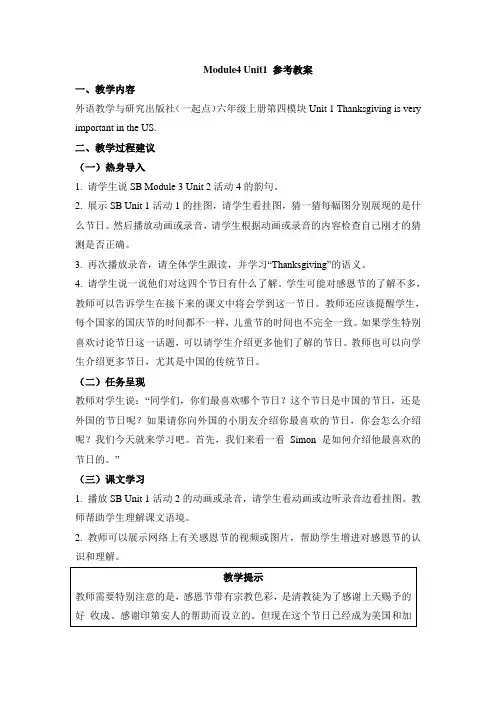
Module4 Unit1 参考教案一、教学内容外语教学与研究出版社(一起点)六年级上册第四模块Unit 1 Thanksgiving is very important in the US.二、教学过程建议(一)热身导入1. 请学生说SB Module 3 Unit 2活动4的韵句。
2. 展示SB Unit 1活动1的挂图,请学生看挂图,猜一猜每幅图分别展现的是什么节日。
然后播放动画或录音,请学生根据动画或录音的内容检查自己刚才的猜测是否正确。
3. 再次播放录音,请全体学生跟读,并学习“Thanksgiving”的语义。
4. 请学生说一说他们对这四个节日有什么了解。
学生可能对感恩节的了解不多,教师可以告诉学生在接下来的课文中将会学到这一节日。
教师还应该提醒学生,每个国家的国庆节的时间都不一样,儿童节的时间也不完全一致。
如果学生特别喜欢讨论节日这一话题,可以请学生介绍更多他们了解的节日。
教师也可以向学生介绍更多节日,尤其是中国的传统节日。
(二)任务呈现教师对学生说:“同学们,你们最喜欢哪个节日?这个节日是中国的节日,还是外国的节日呢?如果请你向外国的小朋友介绍你最喜欢的节日,你会怎么介绍呢?我们今天就来学习吧。
首先,我们来看一看Simon是如何介绍他最喜欢的节日的。
”(三)课文学习1. 播放SB Unit 1活动2的动画或录音,请学生看动画或边听录音边看挂图。
教师帮助学生理解课文语境。
2. 教师可以展示网络上有关感恩节的视频或图片,帮助学生增进对感恩节的认识和理解。
3. 再次播放录音,请学生完整听一遍对话,进一步理解语句。
播放第三遍录音,请学生逐句跟读。
对于学生跟读有困难的语句,教师先带读较难词语,然后按照意群、节奏重点带读,请学生注意模仿语音语调。
4. 在跟读过程中,学习“nearly”的语义并进行运用训练。
5. 完成AB Unit 1练习1。
这是课文阅读理解练习。
教师引导学生理解练习要求:阅读课文,选择与课文内容相符的选项。
外研版(三起点)六年级英语上册《Module1_Unit2_名师教案》

Module1Unit2教案【内容来源】外研版三起点(2013年审定)六上Module1Unit2【主【课题】It’s in the west.时】此教学设计按单元写,教师可根据实际情况划分课时。
一、教学目标(Teaching aims)(1)能听说、认读下列单词:map,country,San Francisco,Houston以及复习方位词east,west, south,north.(2)能听说、认读并运用下列句型:Where is New York?It’s here,in the east.说明地理位置。
(3)感叹句型:What a+形容词+名词!二、教学重难点(Teaching points and difficulties)(一)重点(Points)1. 能听说、认读并运用下列句型:Where is New York? It’s here,in the east.说明地理位置。
2. 学生能讲述某地的地理位置和相关的基本信息。
(二)难点(Difficulties)讲述某地的地理位置和相关的基本信息。
三、教学准备(Teaching preparation)多媒体PPT课件、单词卡片、西湖风景区的明信片若干张。
四、教学过程Step1:Warm-up1.Greetings.(师生间简单地打招呼。
)T:Good morning,boys and girls!S s: Good morning,Miss Li!T:Welcome to back.Nice to meet you.S1:Nice to meet you,too.2.Listen and chant.教师播放上一节课的第一部分即M1U1活动1课文音频,“Listen and chant”,让学生跟唱,活跃课堂气氛。
跟唱完后教师问学生:“Where’s the Great Wall?”It’s in China.随后询问Where’s the Statue of Liberty? 自由女神像在哪?学生回答:It’s in New York. 或It’s in the US.都可以。
(三起点)外研版六年级英语上册《Module4_Unit2_名师教案》
Module4 Unit2教案【内容来源】外研版三起点(2013年审定)六上Module4 Unit2【主题】Our favourite festival is the Spring Festival.【课时】此教学设计按单元写,教师可根据实际情况划分课时。
一、教学目标(Teaching aims)1. 知识目标:(1)能听说认读单词:moon cake, race, lantern, hang, the Dragon Boat Festival, the Mid-Autumn Festival, the Lantern Festival.(2)能听懂会说句型:What’s your favourite festival?My/Our favourite festival is …(3)能正确理解并流利朗读活动1和活动2的句子,能完成活动6和活动7的操练。
(4)简单了解重音和语调,能正确朗读活动4的句子。
2. 技能目标:能够运用Our favourite festival is.... We …介绍自己喜爱的节日并对每个节日所开展的传统活动进行描述。
3. 情感目标:(1)培养学生热爱和宣传中国文化,增强世界意识和跨文化交流的能力。
(2)培养学生对英语学习的兴趣,培养学生的合作能力及大胆展示自我的能力。
二、教学重难点(Teaching points and difficulties)(一)重点(Points)(1)能正确理解并流利朗读活动1和活动2的句子。
(2)学生能够运用Our favourite festival is.... We ....介绍自己喜爱的节日并对每个节日所开展的传统活动进行描述。
(二)难点(Difficulties)学生能够利用所学正确描述各个节日的不同传统习俗。
三、教学准备(Teaching preparation)多媒体PPT课件、西方节日相关图片、互动答题器或平板。
四、教学过程Step 1: Warm-up & Lead in1. Greetings. (师生间进行简单的问候。
外研版(三起)-英语-六年级上册-Module3__Unit1__第1课时教案

Module3 Unit1 第1课时教案一、教学内容外研版小学英语六年级上册第三模块第一单元第一课时:Unit 1 1. Look,listen and say. 2. Listen, read and act out.二、教学目标1. 大多数学生能够听、说、读、写单词或短语:collect, stamp, letter, hobby, collect stamps, toy, any, another。
2. 大多数学生能够听懂并运用句型: I’ve got lots of stamps. The se are stamps from Canada. This stamp is from China. Collecting stamps is my hobby.3. 能够运用所学的语言知识与同伴进行交流。
三、教学重难点重点:1. 听、说、读、写单词和短语:collect, stamp,letter,hobby,collect stamps, toy, any, another。
2. 学习句型:I’ve got lots of stamps. These are stamps from Can ada. This stamp is from China. Collecting stamps is my hobby.难点:1. 用句型“I’ve got…”及v.-ing is my hobby. 来谈论和介绍个人的爱好。
2. “have/has got+名词”表示拥有什么东西。
四、教学准备1.单词卡片。
2.同步课文动画。
3.第1课时教学课件。
4.人物大明和西蒙的头饰。
五、教学设计Step 1 Warm-up1. Have a dictation of the new words of Module2.2. Let’s sing.Let the students sing the song of Page 12 together.【设计思路】通过听写复习了前面所学到的知识,通过歌曲让学生快速地进入学习状态。
外研版小学英语六年级上册《Module1Unit1TheGreatWall》(三起点)教案
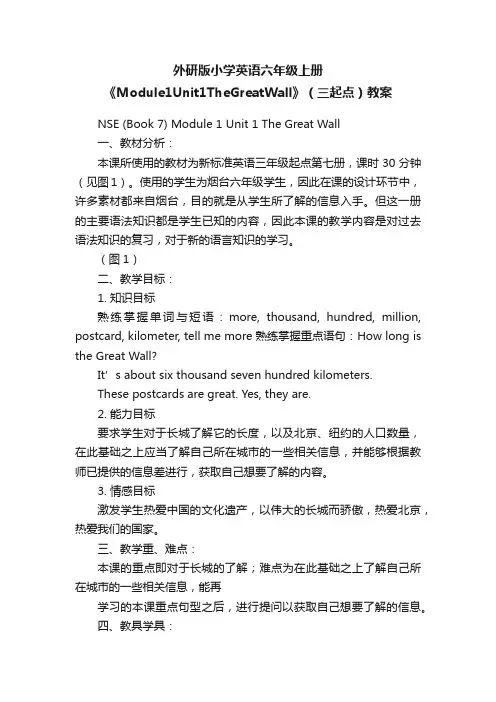
外研版小学英语六年级上册《Module1Unit1TheGreatWall》(三起点)教案NSE (Book 7) Module 1 Unit 1 The Great Wall一、教材分析:本课所使用的教材为新标准英语三年级起点第七册,课时30分钟(见图1)。
使用的学生为烟台六年级学生,因此在课的设计环节中,许多素材都来自烟台,目的就是从学生所了解的信息入手。
但这一册的主要语法知识都是学生已知的内容,因此本课的教学内容是对过去语法知识的复习,对于新的语言知识的学习。
(图1)二、教学目标:1. 知识目标熟练掌握单词与短语:more, thousand, hundred, million, postcard, kilometer, tell me more 熟练掌握重点语句:How long is the Great Wall?It’s about s ix thousand seven hundred kilometers.These postcards are great. Yes, they are.2. 能力目标要求学生对于长城了解它的长度,以及北京、纽约的人口数量,在此基础之上应当了解自己所在城市的一些相关信息,并能够根据教师已提供的信息差进行,获取自己想要了解的内容。
3. 情感目标激发学生热爱中国的文化遗产,以伟大的长城而骄傲,热爱北京,热爱我们的国家。
三、教学重、难点:本课的重点即对于长城的了解;难点为在此基础之上了解自己所在城市的一些相关信息,能再学习的本课重点句型之后,进行提问以获取自己想要了解的信息。
四、教具学具:课本,单词卡片,明信片,课件,教学配套光盘。
五、教学过程:Step 1 Warming upFree talk between the teacher and the students. Make the students ask teacher some questions according to the words and pictures on the screen. (见图2)And it’s also a competition.(在整节课中,只要学生回答对问题,老师会奖励这组学生一张拼图。
六年级英语上册Module3Unit1教案外研版三起
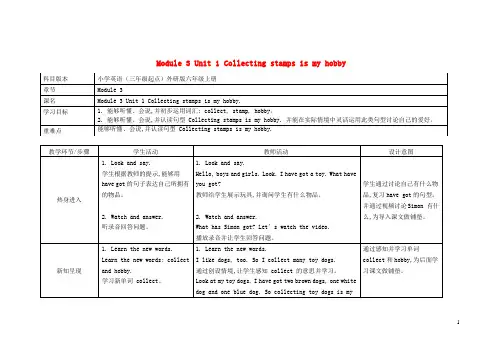
Askthe students tolisten tothe video andrepeat sentence by sentence.
再次播放视频并让学生跟读。
通过感知并学习单词collect和hobby,为后面学习课文做铺垫。
听录音初步感知课文,并了解Simon的爱好,同时学习新单词stamp。
通过创设情境,让学生感知hobby的意思并学习。
2.Listen and answer.
播放录音,请学生回答。
Look. This is Daming. This is Simon. Now let’s listen and try to answer: What’s Simon’s hobby?
听录音并了解Simon的爱好。
What are on these stamps?
这些邮票上有什么图案呢?教师引导学生用
They have got ______ on them. 的句型表达。
3. Guess.
Where are these stamps from? And how do you know that?
教师组织学生看图片,并完成句子练习。
通过练习,了解学生对重点单词和句型的掌握情况。
1. Talk abouthobbies.
学生观察图片,表达个人爱好。
2. Say and act.
学生练习句型并表演自己的爱好。
1. Talk abouthobbies.
教师引导学生用 _________ is my hobby. 表达个人的爱好。
2.Say and act.
Askthe students tosay and act their hobbies.
英语外研版(三起)六年级上册Module 1 Unit 1 g教案
Unit 1 It' s more than twenty thousand kilometers long.第一课时[教学目标] :知识与技能:1. These postcards are great .2. It' s a picture of the Great Wall .3. How long is the Great Wall ?It' s about six thousand seven hundred kilometers .过程与方法: 讲述关于某个地方或某件事物的情况。
情感、态度和价值观:[重点] : words and phrase: postcard more thousand kilometer million Mexico Canada [难点] : Sentences: Tell me more about the Great Wall. It' s a picture of great wall. [课时安排] : 1课时[教学过程] :(一)导入:老师热情地问候学生们,欢迎他们在暑假过后回到学校。
老师可以询问学生们在假期里都去了哪些地方,做了哪些事情,有没有特别有趣的经历。
建议他们通过展示图片和照片介绍相关的情况,可以使用句型"It’s a picture of... Its very.."等。
(二)探究新知:1.让学生欣赏一些长城的图片,并学习chant。
1.让学生看书,听听Daming和Simon的对话,听完之后,让学生说一说: Who is Simon ? Where is Daming ? What are they doing?2.让学生打开书,放录音,学生边听边看书,勾画出课文中的生词。
教师讲解单词: postcard more thousand kilometre million3.再放录音,让学生勾出文中的重要信息,引导学生回答以下问题:Are the postcards beautiful?Is the Great Wall short?How long is the Great Wall?How big is Beijing?How big is New York?4.再放录音两遍,让学生跟读。
新版外研版英语(三起点)六年级上学期_Module1_Unit1_课件
8,000,000
20,000,000
• Read and write
Simon and Daming are talking about some_p_o_s_t_c_a_rd_s.One of them is a picture of __th_e__G_re_a_t_W_a_l_l .The Great Wall is about more than twenty th_o_u_s_a_n_d_ _k_il_o_m_e_t_re_s. • Daming tells Simons that Beijing is a big
• Qingdao • 87 000 000
How big is …? It’s got …
the Changjiang River 6397 kilometres
How long is …? It’s … kilometres.
the Yellow River 5464 kilometres.
(明信片)
postcard
more postcards These postcards are great!
• Listen and answer
What is the picture on the postcard? How long is the Great Wall? How big is Beijing? How big is New York?
• How long is …? • It’s … kilometres.
Look at my postcard. It’s a picture of the Mount Tai.
Mount Tai 1545m
How high is Mount Tai? It’s one thousand five hundred fourtyfive metres.
外研版(三起点)小学六年级英语上册Module1_Unit1_优秀课件
>>Presentation
What do you know about the Great Wall? Tell me more.
>>Presentation
Listen and read
Listen and read, then underline the sentences
>>Presentation
It’s a picture of Beijing.
>>Presentation
Listen and chant.
This is the Great Wall. It’s very beautiful. It’s long and old. And we love it all.
1.登录“优教同步学习网”,观看课文动画, 按照正确的语音、语调朗读课文对话。 2.运用本课所学句型向朋友介绍一个你熟悉的 地方。 3.登录“优教同步学习网”预习Module1 Unit2。
close
kilogram = 1000 grams
>>Practice
Can you say more numbers in English?
6,844
3,200
895
six thousand eight hundred and forty four
eight hundred and ninety five
>>Presentation
Listen and read
How big is New York?
It has got more than eight million people.
>>Presentation
外研版(三起点)小学六年级英语上册Module2_Unit1_名师教案
Module2 Unit1教案【内容来源】外研版三起点(2013年审定)六上Module2 Unit1【主题】There’s Chinese dancing.【课时】此教学设计按单元写,教师可根据实际情况划分课时。
一、教学目标(Teaching aims)(1)学生能理解对话,并学会运用句型There be:There’s a Chinatown in New York.There are lots of Chinese shops and restaurants there.There’s Chinese dancing.(2)学生能听懂,会说,会用dancing, Chinatown, sometimes, shop, then.(3)学生能够听懂、会说、会表演课文内容。
二、教学重难点(Teaching points and difficulties)(一)重点(Points)能听说读写新单词;能运用“There be”句型进行交际。
(二)难点(Difficulties)过“There be”句型描述图片及事物。
三、教学准备(Teaching preparation)多媒体PPT课件、互动答题器或平板。
四、教学过程Step 1: Warm-up & Lead in1. Greetings. (师生间进行简单的问候。
)T: Good morning, boys and girls!Ss: Good morning, Miss Li!T: Welcome to back .Nice to meet you.S1: Nice to meet you, too.2. Look and say.(1)教师出示第2页ppt,学生观察图片,请学生猜一猜这是哪里。
引出Chinatown。
What is Chinatown? 学生相互讨论并自由发言来说一说。
(2)老师问学生What do you know about Chinatown? Tell me more about it, please.然后出示关于唐人街的相关图片,并学习出现的新单词。