
六年级英语单词和句子PEP版
六年级上册Unit 1一、单词science 科学museum 博物馆bookstore 书店bookstore书店cinema 电影院hospital 医院crossing 十字路口turn 转弯left 左straight 笔直地right 右ask问sir先生interesting有趣的Italian意大利的restaurant餐馆Pizza披萨饼street大街,街道get到达GPS卫星定位系统Gave(give的过去式)提供,交给feature特点follow跟着far较远的tell告诉二、重点句型1.问路(1)——Where is the cinema, please? 请问电影院在哪儿?next to the hospital. 在医院的旁边。
in front of the school.在学校的前面.——It’s behind the park .near the zoo. 在动物园的附近.far from here. 离这儿很远.(2)——Excuse me, is there a cinema near here. 请问这附近有电影院吗?——Yes, there is. /No,there isn’t.有./没有。
(3)——How can I/we get there? 我怎样到那儿?——Turn left at the bookstore. 到书店左转(4)——How can I get to the hospital? 我该怎样到达医院呢?——Take the No.57 bus. 乘坐第57路公汽。
2.指引路(1)You can take the No.32 bus.你可乘坐312路公交车去那儿.【注意:You can go by the No.32 bus.与上句意思一样,只是说法不同。
】(2)Go straight and turn left at the bookstore. 先直行然后在书店那儿左转弯。
(3)Turn right/ left at the …在…地方向右/ 左转.(4)——Is it far from here? 离这儿远吗?——Yes, it is. / No, it isn’t. 是的很远/ 不是很远。
一、单词by(表示方式)乘 bus公共汽车 plane飞机 taxi出租汽车 ship(大)船subway 地铁 train 火车 slow 慢的 down 减少;降低 stop 停下Mrs夫人 early早到的 helmet头盔 must必须 wear戴 attention注意traffic交通 Munich慕尼黑 Germany德国 Alaska阿拉斯加sled雪橇 fast快的 ferry轮渡 Papa Westray帕帕威斯特雷岛Scotland苏格兰二、固定搭配on foot 步行slow down 慢下来pay attention to 注意traffic lights 交通信号灯三、重点句型1. 询问交通方式用疑问代词how(1)—— How do you go/come to school ? 你怎样去/来上学?——Usually I go/come to school on foot. 通常我走路去/来上学。
(2)——How does he/she/ Peter go /come to school? 他/她/皮特怎样去/来上学?——He/She usually goes/comes to school by bike.他/她通常骑自行车去/来上学。
(3)—— How does your father go to work ? 你父亲怎样去上班?——He goes to work by subway. 他坐地铁去上班。
3.询问地点,用疑问代词where(1)——Where is your home ? 你家在哪里?——It’s near the post office. 在邮局旁边。
(2)——Where are the teachers ? 老师们在哪儿?——They are in the teacher’s office .在老师的办公室。
4.问路——How can/do I get to the Fuxing Hospital? 我怎么到福星医院? ——You can take the No .1 bus .5.交通规则(traffic rules )Slow down and stop at a yellow light. 黄灯面前要减速并停下来。
Stop and wait at a red light. 红灯面前停下来并等待。
Go at a green light. 绿灯行。
六年级下册Unit 1tall —— taller dinosaur 恐龙高的 ---- 更高的 hall 大厅short ------ shorter than 比矮的/短的----更矮的/更短的 both 两个都long ---- longer meter 米长的 ---- 更长的 kilogram千克;公斤strong ----- stronger countryside乡村强壮的 ---- 更强壮的 shadow 影子;阴影old ---- older become变成;开始变得老的/旧的----更老的/更旧的young ---- younger small ---- smaller年轻的----更年轻的小的 ---- 更小的thin ---- thinner heavy --- heavier瘦的 ---- 更瘦的重点 ---- 更重的low ----- lower smart----smarter低地---- 更低地聪明的----更聪明的二、重点句型1.——How tall are you? 你有多高?——I’m 164 cm tall. 我164 厘米高。
2.You’re shorter than me. 你比我矮。
3.You’re 4 cm taller than me.你比我高4厘米。
4.——How heavy are you? 你有多重?——I’m 48 kg. 我48千克。
5. That’s the tallest dinosaur in this hall. 那是这个厅里最高的恐龙。
6. It’s taller than both of us together. 它比我俩加起来还高。
7. Your feet are bigger than mine. 你的脚比我的大。
8. There are more dinosaurs over there. 那儿有更多的恐龙。
9. Who is taller than you? 谁比你高?10. You are becoming a big beautiful bird. 你将要变成一只美丽的大鸟。
11. The sun gets lower and lower, but my shadow gets longer and longer.太阳变得越来越低,我的影子变得越来越长。
三、语法知识1、表示两者之间有所比较时,句子中的形容词要用比较级形式。
形容词变为比较级的变化规则:(1)一般情况下,在形容词的词尾直接加er。
如: tall—taller short—shorter.(2)以字母e结尾的形容词,在词尾直接加r,如:nice—nicer. late—later(3)以重读闭音节结尾,且结尾只有一个辅音字母的词,先双写这个辅音字母,再加er.如:big—bigger thin—thinner fat—fatter(4)以辅音字母加y结尾的双音节形容词,先变y为i , 再加er。
如:easy—easier heavy—heavier funny—funnier.【形容词比较级的变化口诀:原级变为比较级,通常er加上去。
若是结尾辅元辅,辅音双写要牢记。
辅音加y结尾时,把y变i 是必须。
原级若以e结尾,直接加r不后悔。
】(5)部分形容词比较级的不规则变化:good—better well—better bad—worse badly—worsemany—more much—more little—less far—farther2、同义句:How tall are you? = What’s your height?How heavy are you? = What’s your weight?3、以How开头的问句(仅限小学阶段):How are you? 问身体状况。
How old…? 问年龄How tall…? 问身高How long…? 问长度How bi g…? 问大小(指外型、形体的大小)How heavy…? 问体重、重量How many…? 问多少,物体的数量How much…? 问价格4、it’s 与its:这两个词发音相同但意义不同。
it’s是it is的缩写,汉语意思是“它是”,如:it’s a fat cat. 它是一只肥猫。
its是代词,意思是“它的”,如:that is its tail. 那是它的尾巴。
Unit 2一、单词clean打扫-- cleaned打扫stay停留——stayed 停留wash洗—— washed 洗watch看—— watched看have患病——had 患病sleep 睡觉——slept睡觉read读——read 读see 看见——saw看见drink喝——drank喝fix修理——fixed修理last 上一个的yesterday 昨天before在…之前show演出magazine杂志hotel旅馆broken破损的lamp台灯loud大声的enjoy享受...乐趣,喜爱stay暂住,逗留have a cold感冒【其他疾病:have a fever 发烧have a sore throat喉咙疼have a toothache 牙疼have a headache 头疼】二、重点句型1.——How was your weekend?你周末过得怎么样?——It was good/fine/OK,thank you.很好,谢谢!2.——What did you do last weekend?你上个周末干了什么?——I stayed at home with your grandma.我和你奶奶呆在家里.(with和谁)3.——Did you do anything else?你还做了其他什么事吗?——Yes,I cleaned my room and washed my clothes.是的,我扫了房间,还洗了衣服。
六年级上册英语pep版单词表
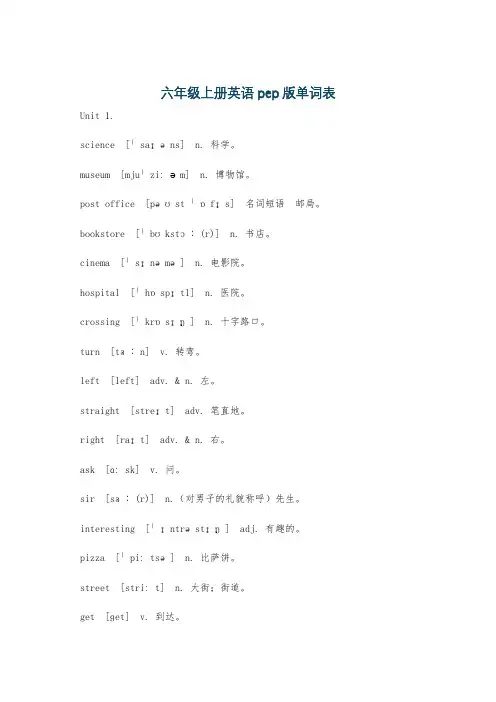
六年级上册英语pep版单词表Unit 1.science [ˈsaɪəns] n. 科学。
museum [mjuˈziːəm] n. 博物馆。
post office [pəʊst ˈɒfɪs] 名词短语邮局。
bookstore [ˈbʊkstɔː(r)] n. 书店。
cinema [ˈsɪnəmə] n. 电影院。
hospital [ˈhɒspɪtl] n. 医院。
crossing [ˈkrɒsɪŋ] n. 十字路口。
turn [tɜːn] v. 转弯。
left [left] adv. & n. 左。
straight [streɪt] adv. 笔直地。
right [raɪt] adv. & n. 右。
ask [ɑːsk] v. 问。
sir [sɜː(r)] n.(对男子的礼貌称呼)先生。
interesting [ˈɪntrəstɪŋ] adj. 有趣的。
pizza [ˈpiːtsə] n. 比萨饼。
street [striːt] n. 大街;街道。
get [ɡet] v. 到达。
GPS [ˌdʒiː piːˈes] 名词缩写全球(卫星)定位系统。
gave [ɡeɪv] (give 的过去式)v. 提供;交给。
feature [ˈfiːtʃə(r)] n. 特点。
follow [ˈfɒləʊ] v. 跟着。
far [fɑː(r)] adj. 远。
Unit 2.on foot [ɒn fʊt] 短语步行。
by [baɪ] prep.(表示方式)乘。
bus [bʌs] n. 公共汽车。
plane [pleɪn] n. 飞机。
taxi [ˈtæksi] n. 出租汽车。
ship [ʃɪp] n. (大)船。
subway [ˈsʌbweɪ] n. 地铁。
train [treɪn] n. 火车。
slow [sləʊ] adj. 慢的。
down [daʊn] adv. 减少;降低。
六年级上册英语pep重点单词句子

六年级上册英语pep重点单词句子Unit 1: Welcome back!1. again [əˈɡen] adv. 再次- Let's try again.让我们再试一次。
2. each [i:tʃ] pron. 每个,各自的- Each student needs a pencil.每个学生都需要一支铅笔。
3. game [ɡeɪm] n. 游戏- We played a fun game at the party.我们在聚会上玩了一个有趣的游戏。
4. room [ru:m] n. 房间- My brother has his own room.我弟弟有自己的房间。
5. wall [wɔːl] n. 墙壁- The pictures hang on the wall.照片挂在墙上。
6. window [ˈwɪndoʊ] n. 窗户- I like to look out of the window.我喜欢从窗户外面看。
7. floor [flɔːr] n. 地板- Please sweep the floor before you leave.请在你离开之前扫地。
8. desk [desk] n. 书桌- Tom sits at the front desk in class.汤姆坐在教室的前排书桌上。
9. chair [tʃeər] n. 椅子- There are six chairs around the table.桌子周围有六把椅子。
10. lamp [læmp] n. 台灯- I need to buy a new lamp for my bedroom.我需要给我的卧室买一盏新台灯。
Unit 2: Nice to meet you!1. cat [kæt] n. 猫- She has a cute cat as a pet.她养了一只可爱的猫。
2. dog [dɔːɡ] n. 狗- My friend has a loyal dog named Max.我的朋友有一只忠诚的狗,名叫马克斯。
PEP六年级英语上册四会单词、句子及语法点整理
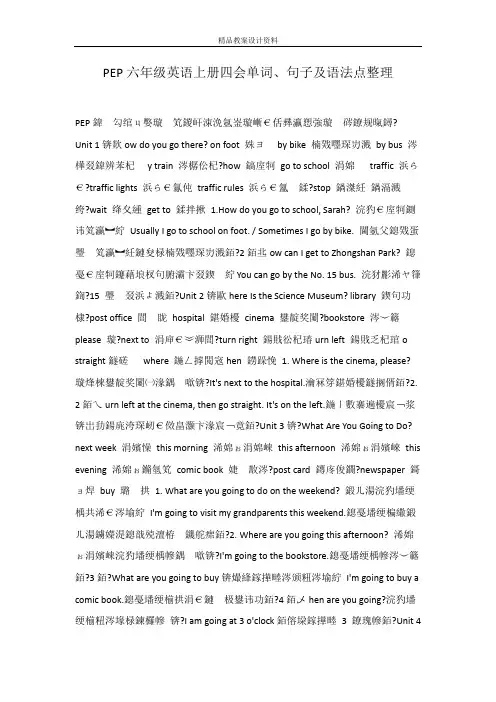
PEP六年级英语上册四会单词、句子及语法点整理PEPц?Unit 1锛欻ow do you go there? on foot by bike 楠戣嚜琛岃溅by bus 涔y train 涔樼伀杞?how 鎬庢牱go to school traffic 浜ら€?traffic lights 浜ら€氱伅traffic rules ?stop 鍋滐紝鍋滆溅绔?wait 绛夊緟get to 鍒拌揪 1.How do you go to school, Sarah? 浣犳€庢牱鍘讳笂瀛︼紵Usually I go to school on foot. / Sometimes I go by bike. 閫氬父鎴戣蛋?2銆丠ow can I get to Zhongshan Park? 鎴You can go by the No. 15 bus. 浣犲彲浠ヤ箻鍧?15 ?Unit 2锛歐here Is the Science Museum? library 鍥句功棣?post office hospital 鍖婚櫌cinema 鐢靛奖闄?bookstore 涔﹀簵please 璇?next to 涓庘€︾浉閭?turn right 鍚戝彸杞瑃urn left 鍚戝乏杞琯o straight where 鍦ㄥ摢閲宼hen 鐒跺悗1. Where is the cinema, please??It's next to the hospital.瀹冧笌鍖婚櫌鐩搁偦銆?2. 2銆乀urn left at the cinema, then go straight. It's on the left.鍦ㄧ數褰遍櫌宸﹁浆锛岀劧鍚庣洿琛屻€傚畠灏卞湪宸﹁竟銆?Unit 3锛?What Are You Going to Do? next week 涓嬪懆this morning 浠婂ぉ涓婂崍this afternoon 浠婂ぉ涓嬪崍this evening 浠婂ぉ鏅氫笂comic book ?post card 鏄庝俊鐗?newspaper 鎶ョ焊buy 1. What are you going to do on the weekend? 鍛ㄦ湯浣犳墦绠楀共浠€涔堬紵I'm going to visit my grandparents this weekend.鎴戞墦绠楄繖鍛?2. Where are you going this afternoon? 浠婂?I'm going to the bookstore.鎴戞墦绠楀幓涔﹀簵銆?3銆?What are you going to buy锛熶綘鎵撶畻涔颁粈涔堬紵I'm going to buy a comic book.?4銆乄hen are you going?浣犳墦绠椾粈涔堟椂鍊欏幓锛?I am going at 3 o'clock銆傛垜鎵撶畻 3 鐐瑰幓銆?Unit 4锛?I Have a Pen Pal hobby 鐖卞ソride a bike--riding a bike 楠戣嚜琛岃溅dive--diving 璺虫按play the violin鈥昿laying the violin 鎷夊皬鎻愮惔make kites 鈥昺aking kites 鍒朵綔椋庣瓭collect stamps鈥昪ollecting stamps 闆嗛偖live 锟紺lives 灞呬綇teach--teaches 鏁?go--goes 鍘?watch--watches 鐪?read--reads 璇伙紝鐪?does doesn鈥檛=does not 1. What's your hobby?涔堬紵I like collecting stamps.?2銆丠e likes collecting stamps, too. ?3銆丏oes she teach math? --- Yes, she does.?Does she teach English?-- No, she doesn't.涓嶏紝濂逛笉鏁欍€?She teaches math.?Unit 5锛?What Does She Do? singer 姝屽敱瀹讹紝姝屾墜writer actor 鐢锋紨鍛?actress 濂虫紨鍛?artist TV reporter ?engineer 宸ョ▼甯?accountant policeman ?salesperson cleaner 娓呮磥宸?where 鍦ㄥ摢閲岋紝鍒板摢閲?work 宸ヤ綔 1.What does your mother do? What si your mother??She is a TV reporter.濂规槸涓€浣嶇數瑙嗗彴璁拌€呫€?2銆乄hat does your father do? 浣犵埜鐖告槸骞蹭粈涔堢殑锛烪e is an accountant.浠栨槸涓€浣嶄細璁°€?3銆乄here does she work? ?She works in a car company.濂瑰湪灏忔苯杞﹀叕鍙稿伐浣溿€?4銆丠ow does she go to work? She goes to work by bus.?Unit 6锛?The Story of Rain rain 闆?cloud 浜?sun stream 娌筹紝婧?come from 鏉ヨ嚜锛?浠庘€︽潵seed 绉嶅瓙soil 鍦熷¥sprout 鑻楋紝鑺?plant 妞嶇墿锛?should 搴then 鐒跺悗1. Where does the rain come from? --- It comes from the clouds.?2銆乄here does the cloud come from? 浜--- It comes from the vapour.?3銆乄here does the vapour come from? --- It comes from the water in the river.?4銆丠ow can the water become vapour?姘存€庢牱鍙樻垚姘磋捀姘旓紵--- The sun shines and the waterbecomes vapour.闃冲厜鐓ц€€锛屾按鍙樻垚钂告皵銆?5.銆丠ow do you do that? 浣犳€庢牱鍋氬憿? 6銆?What should you do then?鐒跺悗浣犲簲璇ュ共浠€涔堬紵鍔ㄨ瘝鍙樺寲褰㈠紡锛?鍔ㄨ瘝鐨勭幇鍦ㄥ垎璇嶏紝鐢ㄤ簬鐜板湪杩О+be(am is are)+1ng: reading flying looking cooking eating鈥?2銆佸姩璇嶆湯灏炬槸涓嶅彂闊崇殑e,鍘绘帀e,鍐嶅姞ing: take-taking come-coming ride-ridinghave-having make-making 鈥?3ing:run-running sit-sitting put-putting begin-beginning swimming鈥?渚嬶細I am reading a comic book. 鍚屾椂鍔ㄨ瘝鐜板湪鍒嗚瘝缁撴瀯杩樺彲浠ョ敤浜巐ike/enjoy I like swimming./I enjoy swimming.绉板崟鏁板舰寮忥紝鐢ㄤ簬always,often,usually,sometimes every dayО1銆佸姩璇嶆湯灏惧姞s: says asks sings answers looks makes鈥?2銆佷互s銆亁銆乧h 銆乻h缁撳熬鐨勫姩璇嶅姞es: teaches brushes鈥?3銆佷互杈呴煶瀛楁瘝+y缁撳熬鐨勶紝鍘粂鍙榠,鍐嶅姞es: fly-flies try-tries鈥?4.es锛?go-goes do-does have-has he has a book. 鐗规畩鐤戦棶鍙??璇㈤棶骞撮緞锛岀敤how old How old is Jenny? She is eleven. 璇㈤棶棰滆壊锛岀敤what colour What colour is your hair? It鈥檚black. 璇㈤棶浠锋牸锛岀敤how much How much is a stamp? 2 yuan. 璇㈤棶琛屼负鏂瑰紡锛岀敤how How do you go to school? By bus. 璇㈤棶鏁伴噺锛岀敤how many How many books do you have? I have twelve books. 璇㈤棶鏃堕棿锛岀敤when When is Teacher鈥檚Day?It鈥檚September tenth. 璇㈤棶鍏蜂綋鏃跺埢锛岀敤what time What timeis it now? It鈥檚6:30. 璇㈤棶鍦版柟锛岀敤where Where is the book? It鈥檚on the desk. 璇㈤棶浜猴紝鐢╳ho Who is she ?She is my sister. /灞?澶?..锛夛紝鐢╳hich Which season do you like ?I like summer. 璇㈤棶鑱屼笟锛岀敤what What do you do?I am a teacher. What are you?I am a teacher. 璇㈤棶鐖卞ソ锛岀敤what What is your hobby?I like swimming./My hobby is swimming. What do you like to do?I like swimming. 鏃舵€侊細1. (琛ㄧ粡甯革? 锛?锛?be鍔ㄨ瘝鐨勫彞瀛?I am a girl.(鑲? Are you a girl锛焂es,I am./No,I am not.() What is she锛?鐗规畩鐤戦棶鍙?She is a teacher./She is not a student.(鍚? 锛?锛?瀹炰箟鍔ㄨ瘝鐨勫彞瀛?A锛彞鍊熷姪鍔╁姩璇峝o I often read comic books and clean the room on Saturday.锛堣偗锛?I do not (don鈥檛) read comic books and clean the room on Sunday.(鍚? Do you often read comic books and clean the room on Saturday?Yes, I do./No,I don鈥檛.() What do you often do on Saturday?(鐗规畩鐤戦棶鍙? B:浜虹О紡锛屽湪鐤戦棶鍙ュ拰鍚﹀畾鍙ヤ腑鍔╁姩璇嶇敤does锛屽疄涔夊姩璇嶅彉涓哄師褰?She often reads comic books and clean the room on Saturday.锛堣偗锛?She does not (doesn鈥檛) read comic books and clean the room on Sunday.(鍚? Does she often read comic books and clean the room on Saturday?Yes, she does./No,she doesn鈥檛.() What does she often do on Saturday?(鐗规畩鐤戦棶鍙? 2. 為檯杩樻病鍋氾級閫氬父浼氭湁琛ㄥ皢鏉ョ殑鏃堕棿缁撴瀯锛氫汉绉?be锛坅m/is/are锛塯oing to +鍔ㄨ瘝鍘熷舰+鏃堕棿锛堣〃鎵撶畻锛?My mother is going to clean the room this weekend.(鑲? My mother is not going to clean the room this weekend.(鍚? Is your mother going to clean the room this weekend?Yes,she is ./No,she isn鈥檛.(涓) What is your mother going to do this weekend?(鐗规畩鐤戦棶鍙?3. 缁撴瀯锛氫汉绉?be锛坅m/is/are锛?鍔ㄨ瘝鍒嗚瘝缁撴瀯+(now) My uncle is making kites now.(鑲? My uncle is not making kites now.(鍚? Is your uncle is making kites now?Yes,he is./No,he isn鈥檛.( ) What is your uncle doing now?(鐗规畩鐤戦棶鍙?4. 鎯呮€佸姩璇峜an I can swim.(鑲? I can not swim.(鍚? Can you swim?Yes,I can./No,I can鈥檛.(涓€鑸) What can you do?(鐗规畩鐤戦棶鍙?。
2020年PEP人教版英语六年级上册 各单元重点词汇句型归纳整理
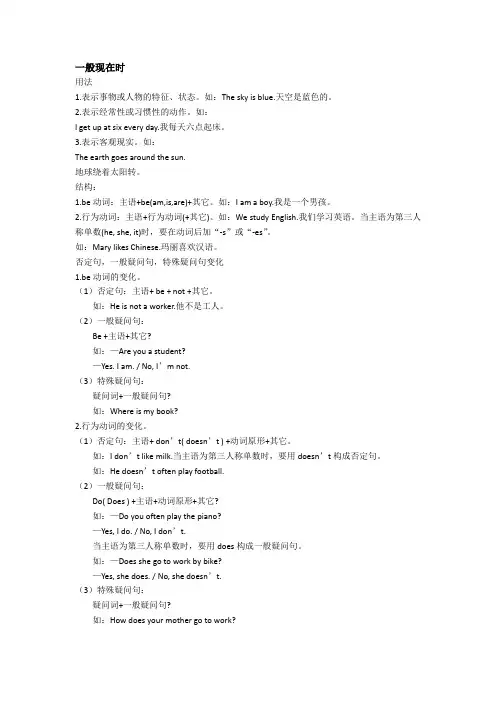
用法1.表示事物或人物的特征、状态。
如:The sky is blue.天空是蓝色的。
2.表示经常性或习惯性的动作。
如:I get up at six every day.我每天六点起床。
3.表示客观现实。
如:The earth goes around the sun.地球绕着太阳转。
结构:1.be动词:主语+be(am,is,are)+其它。
如:I am a boy.我是一个男孩。
2.行为动词:主语+行为动词(+其它)。
如:We study English.我们学习英语。
当主语为第三人称单数(he, she, it)时,要在动词后加“-s”或“-es”。
如:Mary likes Chinese.玛丽喜欢汉语。
否定句,一般疑问句,特殊疑问句变化1.be动词的变化。
(1)否定句:主语+ be + not +其它。
如:He is not a worker.他不是工人。
(2)一般疑问句:Be +主语+其它?如:—Are you a student?—Yes. I am. / No, I’m not.(3)特殊疑问句:疑问词+一般疑问句?如:Where is my book?2.行为动词的变化。
(1)否定句:主语+ don’t( doesn’t ) +动词原形+其它。
如:I don’t like milk.当主语为第三人称单数时,要用doesn’t构成否定句。
如:He doesn’t often play football.(2)一般疑问句:Do( Does ) +主语+动词原形+其它?如:—Do you often play the piano?—Yes, I do. / No, I don’t.当主语为第三人称单数时,要用does构成一般疑问句。
如:—Does she go to work by bike?—Yes, she does. / No, she doesn’t.(3)特殊疑问句:疑问词+一般疑问句?如:How does your mother go to work?一、一般过去时的概念一般过去时表示过去某个时间发生的动作或状态。
(完整版)PEP小学英语六年级下册词汇句子汇总
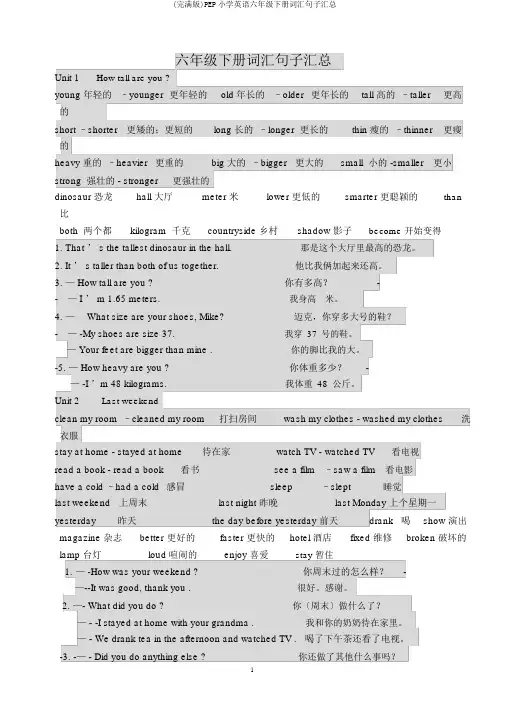
六年级下册词汇句子汇总Unit 1How tall are you ?young 年轻的–younger更年轻的old 年长的–older更年长的tall 高的–taller更高的short –shorter更矮的;更短的long 长的–longer 更长的thin 瘦的–thinner更瘦的heavy 重的–heavier更重的big 大的–bigger更大的small 小的 -smaller更小strong 强壮的 - stronger更强壮的dinosaur 恐龙hall 大厅meter 米lower 更低的smarter 更聪颖的than 比both 两个都kilogram 千克countryside 乡村shadow 影子become 开始变得1. That ’ s the tallest dinosaur in the hall.那是这个大厅里最高的恐龙。
2. It ’ s taller than both of us together.他比我俩加起来还高。
3. — How tall are you ?你有多高?-- — I ’ m 1.65 meters.我身高米。
4. —What size are your shoes, Mike?迈克,你穿多大号的鞋?- — -My shoes are size 37.我穿37号的鞋。
— Your feet are bigger than mine .你的脚比我的大。
-5. — How heavy are you ?你体重多少?-— -I ’m 48 kilograms.我体重48公斤。
Unit 2Last weekendclean my room –cleaned my room打扫房间wash my clothes - washed my clothes洗衣服stay at home - stayed at home待在家watch TV - watched TV看电视read a book - read a book看书see a film–saw a film看电影have a cold –had a cold感冒sleep–slept睡觉last weekend上周末last night 昨晚last Monday 上个星期一yesterday昨天the day before yesterday 前天drank喝show 演出magazine 杂志better 更好的faster 更快的hotel 酒店fixed 维修broken 破坏的lamp 台灯loud 喧闹的enjoy 喜爱stay 暂住1. — -How was your weekend ?你周末过的怎么样?-—--It was good, thank you .很好。
人教版六年级pep三年级起点英语单词及重点句子
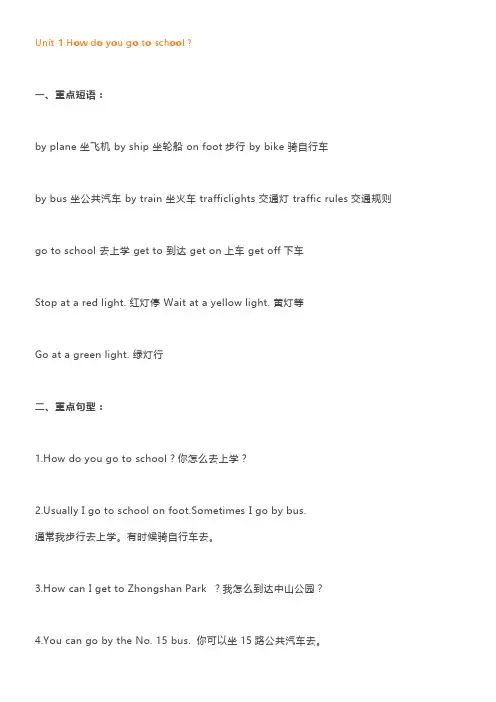
Unit 1 How do you go to school?一、重点短语:by plane 坐飞机 by ship 坐轮船 on foot步行 by bike 骑自行车by bus 坐公共汽车 by train 坐火车 trafficlights 交通灯 traffic rules交通规则go to school 去上学 get to 到达 get on上车 get off下车Stop at a red light. 红灯停 Wait at a yellow light. 黄灯等Go at a green light. 绿灯行二、重点句型:1.How do you go to school?你怎么去上学?ually I go to school on foot.Sometimes I go by bus.通常我步行去上学。
有时候骑自行车去。
3.How can I get to Zhongshan Park ?我怎么到达中山公园?4.You can go by the No. 15 bus. 你可以坐15路公共汽车去。
三、重点语法:1、There are many ways to go somewhere.到一个地方去有许多方法。
这里的ways一定要用复数。
因为there are是There be句型的复数形式。
2、on foot 步行。
乘坐其他交通工具大都可以用介词by…,但是步行只能用介词on 。
3、go to school的前面绝对不能加the,这里是固定搭配。
4、USA 和US 都是美国的意思。
另外America也是美国的意思。
5、go to the park 前面一定要加the. 如果要去的地方有具体的名字,就不能再加the ,如果要去的地方没有具体名字,都要在前面加the. (go to school除外。
)6、How do you go to…?你怎样到达某个地方?如果要问的是第三人称单数,则要用:How does he/she…go to …?7、反义词:get on(上车)—get off(下车) near(近的)—far(远的) fast(快的)—slow(慢的)because(因为)—why(为什么) same(相同的)—different(不同的)8、近义词:see you—goodby esure—certainly—of course9、频度副词:always 总是,一直 usually 通常 often经常 sometimes 有时候 never 从来不Unit 2 Where is the science museum?一、重点短语:library 图书馆 post office 邮局 hospital医院 cinema 电影院bookstore书店 science museum科学博物馆 turnleft向左转turn right 向右转 go straight 直行 north北 south南east东west西next to靠近、与……。
pep小学英语六年级上册重点单词英译汉
pep小学英语六年级上册重点单词英译汉下面是PEP小学英语六年级上册中的重点单词以及它们的英译汉解释。
1. apple - 苹果例句:I like to eat a red apple.我喜欢吃一个红苹果。
2. ball - 球例句:Let's play ball in the park.让我们在公园里玩球吧。
3. cat - 猫例句:The black cat is sleeping on the chair.黑猫正在椅子上睡觉。
4. dog - 狗例句:My dog likes to play fetch with me.我的狗喜欢和我玩接球游戏。
5. egg - 鸡蛋例句:I boiled an egg for breakfast.我煮了一个鸡蛋作早餐。
6. fish - 鱼例句:Can I have some fish for dinner?晚餐可以给我一些鱼吗?7. grape - 葡萄例句:These grapes are sweet and juicy.这些葡萄又甜又多汁。
8. hat - 帽子例句:She always wears a big hat in summer.她夏天总是戴一顶大帽子。
9. ice cream - 冰淇淋例句:Let's go to the park and eat ice cream.我们去公园吃冰淇淋吧。
10. juice - 果汁例句:Do you want orange juice or apple juice?你想要橙汁还是苹果汁?11. kite - 风筝例句:The children are flying kites in the park.孩子们在公园里放风筝。
12. lion - 狮子例句:The lion is the king of the jungle.狮子是丛林之王。
13. monkey - 猴子例句:The monkey is swinging from tree to tree.猴子正在树上荡秋千。
PEP版英语六年级上下册重点单词+句型整理
六年级上册册重点单词+句子归纳一.重点单词六年级上册:Unit 1science ['saɪəns] 科学museum [mjuː'zɪəm] 博物馆post office 邮局bookstore [ˈbʊkstɔː] 书店cinema [ˈsɪnəmə] 电影院hospital [ˈhɒspɪtl] 医院crossing ['krɔːsɪŋ] 十字路口turn [tɜːn] 转弯left [left] 左straight [streɪt] 笔直的right [raɪt] 右Unit 2on foot 步行by [baɪ] 乘bus [bʌs] 公共汽车plane [pleɪn] 飞机taxi ['tæksi] 出租汽车ship [ʃɪp] 船subway ['sʌbweɪ] 地铁train [treɪn] 火车slow [sləʊ] 慢的down [daʊn] 减少;降低slow down 慢下来stop [stɒp] 停下Unit 3visit ['vɪzɪt] 拜访film [fɪlm] 电影see a film 看电影trip [trɪp] 旅行take a trip 去旅行supermarket ['sjuːpəˌmɑːkɪt] 超市evening ['iːvnɪŋ] 晚上;傍晚tonight [tə'naɪt] 在今晚tomorrow [tə'mɔːrəʊ] 明天next week 下周dictionary ['dɪkʃəneri] 词典comic [ˈkɒmɪk] 滑稽的comic book 连环画册word [wɜːd] 单词word book 单词书postcard ['pəʊstˌkɑːd] 明信片Unit 4studies 学习puzzle [ˈpʌz(ə)l] 谜hiking [haɪkɪn] 远足pen pal 笔友hobby [ˈhɒbi] 业余爱好Unit 5factory ['fæktəri] 工厂worker ['wɜːkə] 工人postman ['pəʊstmən] 邮递员businessman ['bɪznɪsmæn] 商人police office 警察fisherman [ˈfɪʃəmən] 渔民scientist ['saɪəntɪst] 科学家pilot [ˈpaɪlət] 飞行员coach [kəʊtʃ] 教练Unit 6angry ['æŋgri] 生气的afraid [ə'freɪd] 害怕sad [sæd] 难过的worried ['wʌrɪd] 担心的;发愁的happy ['hæpi] 高兴的see a doctor 看病wear [weə] 穿more [mɔː] 更多的deep [diːp] 深的breath [breθ] 呼吸take a deep breath 深呼吸count [kaʊnt] 数数count to ten 数到十六年级下册Unit 1younger [ˈjʌŋɡə] 更年轻的(young)older 更年长的(old)taller 更高的(tall)shorter 更矮的;更短的longer 更长的(long)thinner 更瘦的(thin)heavier 更重的(heavy)bigger 更大的(big)smaller 更小的(small)stronger 更强壮的(strong)Unit 2cleaned 打扫(clean的过去式)stayed 停留;呆(stay)washed 洗(wash)watched 看(watch)had [hæd] 患病;得病(have)had a cold 感冒slept 睡觉(sleep)read [riːd] 读(read)saw [sɔː] 看见(see)last [lɑːst] 最近的;上一个的yesterday ['jestədi] 昨天before [bɪ'fɔː] 在……之前Unit 3went [went] 去(go)camp [kæmp] 野营went camping 野营fish [fɪʃ] 钓鱼went fishing 去钓鱼rode [rəʊd] 骑hurt [hɜːt] 受伤(hurt)ate [eɪt] 吃(eat)took [teɪk] 拍照(take)took pictures 照相bought [bɔːt] 买(buy)gift [ɡɪft] 礼物Unit 4dining hall 饭厅grass [grɑːs] 草坪gym [dʒɪm] 体育馆ago [ə'gəʊ] 以前cycling [ˈsaɪklɪŋ] 骑自行车运动go cycling 去骑自行车ice-skate 滑冰badminton [ˈbædmɪntən]羽毛球运动二.重点句型六年级上册1. How do you go to school, Sarah? ------- Usually I go to school on foot. Sometimes I go by bike.你怎样去上学的,萨拉? 我经常步行去上学.有时候骑自行车去.2. How can I get to Zhongshan Park? ------ You can go by the No.15 bus.我怎样能到达中山公园? 你可以坐十五路公共汽车去.3. Where is the cinema, please? ------ It’s next to the hospital.请问电影院在哪? 它在医院的旁边.4. Turn left at the cinema, then go straight. It’s on the left.在电影院那左转,然后直走.它就在左边.5. What are you going to do on the weekend? ------ I’m going to visit my grandparents this weekend.你周末打算去做什么? 我这个周末打算去看望我的爷爷奶奶.6. Where are you going this afternoon? ------ I’m going to the bookstore.你今天下午打算去哪? 我打算去书店.7. What are you going to buy? ------ I am going to buy a comic book.你打算去买什么? 我打算去买一本漫画书.8. What is your hobby? ------ I like collecting stamps. He likes collecting stamps,too.你的爱好是什么? 我喜欢收集邮票. 他也喜欢收集邮票.9. Does she teach English? ------ No, she doesn’t. ------ Yes, she does.她教英语吗? 不,她不是. 是的,她是.10. What does your mother do? ------ She is a TV reporter.你妈妈是做什么的? 她是一个电视台记者.11. Where does she work? How does she go to work?她在哪工作? 她怎样去工作的?12. Where does the rain come from? ------ It comes from the clouds.雨来自哪里? 它来自云.13. How do you do that? What should you do then?你是怎样做的. 然后你应该做什么?六年级下册1. How tall are you? ------ I’m 164 cm tall.你有多高? 我164厘米高.You’re shorter than me. You’re 4 cm taller than me.你比我矮. 你比我高4厘米.2. How heavy are you? ------ I’m 48 kg. I’m thinner than you, and shorter.你有多重? 我48千克.我比你要更瘦,更矮.3. What’s the matter? ------ My throat is sore. My nose hurts.怎么了? 我的喉咙痛.我的鼻子不舒服.4. How are you, Liu Yun? You look so happy.你怎么了,刘云? 你看起来很高兴.How are you, Sarah? You look sad today.你怎么了,萨拉?你今天看起来很伤心.5. What did you do last weekend? ------ I played football.你上周末在做什么? 我在踢足球.6. Did you read books? ------ Yes, I did. ------ No, I didn’t.你看过书了吗? 是的,我是. 不,我没有.7. Where did you go on your holiday? ------ I went to Xinjiang.你假期去了哪? 我去了新疆.8. How did you go there? ------ I went by train.你怎样去的? 我乘火车去的.。
(完整版)新版PEP小学英语六年级词汇表(含常用表达法和不规则动词)
六年级上册单词表Unit 1science科学[ˈsaɪəns]museum博物馆[mjuˈzi:əm]post office邮局[pəust ˈɔfis] bookstore书店['bʊkstɔ:(r)] cinema电影院/ 'sinəmə/ hospital 医院[ˈhɒspɪtl] crossing十字路口[ˈkrɒsɪŋ]turn转弯/ tə:n/left 左/ left/straight笔直地/ streit/right右/ rait/ask 问[ɑ:sk]interesting 有趣的[ˈɪntrəstɪŋ] Italian意大利的[ɪ'tælɪən] restaurant餐馆[ˈrestrɒnt]pizza比萨饼[ˈpi:tsə]street大街;街道/ stri:t/get 到达/ get/GPS全球(卫星)定位系统[ˌdʒi: pi: ˈes] gave(give的过去式)提供;交给/ geiv/ feature 特点[ˈfi:tʃə(r)]follow跟着[ˈfɒləʊ]far较远的 [fɑ:(r)]tell 告诉/ tel/ Unit 2on foot步行[ɔn fut]by(表示方式)乘[baɪ]bus 公共汽车[bʌs]plane飞机[pleɪn]taxi 出租汽车[ˈtæksi]ship(大)船[ʃɪp]subway地铁[ˈsʌbweɪ]train火车[treɪn]slow慢的[sləʊ]down减少;降低[daʊn]slow down慢下来[sləu daun]stop停下[stɒp]Mrs夫人['mɪsɪz]early早到的[ˈɜ:li]helmet头盔[ˈhelmɪt]must必须[məst] [mʌst]wear戴[weə(r)]attention注意[əˈtenʃn]pay attention to注意[pei əˈtenʃən tu:] traffic交通[ˈtræfɪk]traffic lights交通信号灯[ˈtræfik laits] Germany德国['dʒɜ:mənɪ]fast快的[fɑ:st]ferry 轮渡 [ˈferi]Munich 慕尼黑(德国城市)['mju:nɪk] Alaska 阿拉斯加州(美国州名)[əˈlæskə] sled 雪橇[sled]PaPa Westray 帕帕韦斯特雷岛Scotland苏格兰['skɒtlənd]Unit 3visit 拜访[ˈvɪzɪt]film电影[fɪlm]see a film看电影[si: ə film]trip旅行[trɪp]take a trip去旅行[teɪk ə trɪp] supermarket超市[ˈsu:pəmɑ:kɪt] evening 晚上;傍晚[ˈi:vnɪŋ]tonight在今晚[təˈnaɪt]tomorrow明天[təˈmɒrəʊ]next week下周[nekst wi:k] dictionary 词典dictionarycomic滑稽的[ˈkɒmɪk]comic book [ˈkɔmik buk](儿童的)连环画册word 单词[wɜ:d]word book单词书postcard明信片[ˈpəʊstkɑ:d]lesson 课[ˈlesn]space太空[speɪs]travel(尤其长途)旅行[ˈtrævl]half一半[hɑ:f]price价格[praɪs] Mid-autumn Festival[mɪd ˈɔ:təm ˈfestɪvl] 中秋节together一起[təˈgeðə(r)]get together聚会[ɡet təˈɡeðə] mooncake月饼['mu:nkeɪk]poem诗[ˈpəʊɪm]moon月亮[mu:n]Unit 4studies ['stʌdɪz](study的第三代称单数形式)学习puzzle谜[ˈpʌzl]hiking远足[ˈhaɪkɪŋ]pen pal 笔友[ˈhaɪkɪŋ]hobby业余爱好[pen pæl]idea想法;主意[aɪˈdɪə]amazing令人惊奇的 [əˈmeɪzɪŋ] shall表示征求意见[ʃəl]goal射门[gəʊl]join加入[dʒɔɪn]club俱乐部[klʌb]share分享[ʃeə(r)]Canberra['kænbərə]堪培拉(澳大利亚首都)Unit 5factory工厂[ˈfæktri]worker 工人[ˈwɜ:kə(r)]postman邮递员[ˈpəʊstmən] businessman[ˈbɪznəsmæn]商人;企业家police officer警察[pəˈli:s ˈɔfisə] fisherman渔民[ˈfɪʃəmən] scientist科学家[ˈsaɪəntɪst] pilot飞行员[ˈpaɪlət]coach教练[kəʊtʃ]country 国家[ˈkʌntri]head teacher校长[hed ˈti:tʃə] sea 大海[si:]stay保持[steɪ] university大学[ˌju:nɪˈvɜ:səti] gym体育馆[dʒɪm]if如果[ɪf]reporter记者[rɪˈpɔ:tə(r)] use使用[ju:s]type 打字[taɪp]quickly快速地[ˈkwɪkli] secretary秘书[ˈsekrətri]Unit 6angry生气的[ˈæŋgri]afraid害怕[əˈfreɪd]sad 难过的[sæd]worried 担心的;发愁的[ˈwʌrid] happy高兴的[ˈhæpi]see a doctor看病[si: əˈdɔktə] wear穿[weə(r)] more更多的[mɔ:(r)]deep深的[di:p]breath呼吸[breθ]take a deep breath[teik ədi:p breθ]深深吸一口气count数数[kaʊnt]count to ten数到十[kaʊnt]chase追赶[tʃeɪs]mice(mouse的复数)老鼠/ mais/ bad邪恶的;坏的[bæd]hurt(使)受伤[hɜ:t]ill有病;不舒服[ɪl]wrong 有毛病[rɒŋ]should应该[ʃʊd]feel 觉得;感到[fi:l]well 健康;身体好[wel]sit坐[sɪt]grass草坪[grɑ:s]hear听见[hɪə(r)]ant 蚂蚁[ænt]worry 担心;担忧[ˈwʌri]stuck 陷住;无法移动[stʌk]mud 泥[mʌd]pull 拉;拽 [pʊl]everyone 每人[ˈevriwʌn]六年级英语上册常用表达法Unit1-- Where is the museum shop?博物馆的商店在哪儿?--It`s near the doo.r 在大门附近--How can we get there?我们怎么到那儿?--Turn left at the bookstore. 到书店左转Unit2-- How do you come to school?你怎么来学校的?--Usually, I come on foot.通常我走路来In the USA people on bikes must wear one.在美国骑自行车的人必须戴头盔Don’t go at the red light! 别闯红灯I must pay attention to the traffic lights.我必须注意交通信号灯Unit3--What are you going to do tomorrow?你明天打算做什么?--I’m going to have an art lesson.我要上美术课We’re going to draw some pictures in Renmin Park.我们要到人民公园去画画--Where are you going? 你们打算去哪儿?--We’re going to the cinema.我们打算去电影院 When are you going? 你们什么时候去?Unit4--What are Peter `s hobbies?彼得有什么爱好?--He likes reading stories 他喜欢读故事--Does he live in Sydney? 他住在悉尼吗?--No, he doesn’t 不,他没有--Does he like doing word puzzles and going hiking? 他喜欢猜字谜和远足吗?--Yes, he does 是的,他喜欢Unit5--What does he do? 他是做什么的?--He is a businessman. 他是商人--Where does he work? 他在哪儿工作?-- He works at sea. 他在海上工作。
pep小学六年级英语重点句子和单词
pep版小学英语句型汇总1. "What's your name?"This simple sentence pattern is often one of the first things students learn in English. It is used to ask someone's name. For example, "What's your name?" "My name is Emma."2. "How old are you?"This sentence pattern is used to ask someone's age. Students learn to respond with their age using the pattern "I am __ years old." For example, "How old are you?" "I am seven years old."3. "Where are you from?"This sentence pattern is used to ask someone about their nationality or place of origin. Students learn to respond using the pattern "I am from __." For example, "Where are you from?" "I am from China."4. "What do you like?"This sentence pattern is used to ask someone about their preferences. Students learn to respond using the pattern "I like __." For example, "What do you like?" "I like playing soccer."5. "Can I have...?"This sentence pattern is used to make requests or ask for permission. Students learn to respond using the pattern "Yes, you can" or "No, you can't." For example, "Can I have a pencil?" "Yes, you can."6. "Do you have...?"This sentence pattern is used to ask someone if they possess something. Students learn to respond using the pattern "Yes, I do" or "No, I don't." For example, "Do you have a pet?" "Yes, I have a cat."7. "What time is it?"This sentence pattern is used to ask for the time. Students learn to respond using the pattern "It's __ o'clock." For example, "What time is it?" "It's three o'clock."8. "How are you feeling?"This sentence pattern is used to ask about someone's well-being or emotions. Students learn to respond using the pattern "I am __." For example, "How areyou feeling?" "I am happy."9. "Where is it?"This sentence pattern is used to ask for the location of something. Students learn to respond using the pattern "It's __." For example, "Where is the library?" "It's next to the school."10. "What are you doing?"This sentence pattern is used to ask about someone's current activity. Students learn to respond using the pattern "I am __." For example, "What are you doing?" "I am reading a book."11. "How do you spell...?"This sentence pattern is used to ask for the spelling of a word. Students learn to respond by spelling the word. For example, "How do you spell'elephant'?" "E-L-E-P-H-A-N-T."12. "What does...mean?"This sentence pattern is used to ask for the meaning of a word or phrase. Students learn to respond with the meaning. For example, "What does 'bicycle' mean?" "It means a two-wheeled vehicle."13. "Can you help me...?"This sentence pattern is used to ask for assistance. Students learn to respond using the pattern "Yes, I can" or "No, I can't." For example, "Can you help me carry this?" "Yes, I can."14. "I like to..."This sentence pattern is used to express personal preferences or hobbies. Students learn to share their interests using this pattern. For example, "I like to draw pictures."15. "I can..."This sentence pattern is used to express abilities or skills. Students learn to talk about what they are capable of doing using this pattern. For example, "I can swim."16. "I have..."This sentence pattern is used to talk about possessions. Students learn to describe what they own using this pattern. For example, "I have a blue backpack."17. "I am going to..."This sentence pattern is used to talk about future plans or intentions. Students learn to discuss their upcoming activities using this pattern. For example, "I am going to the park."18. "I am looking for..."This sentence pattern is used to express a search for something. Studentslearn to indicate what they are trying to find using this pattern. For example, "I am looking for my shoes."19. "I am sorry..."This sentence pattern is used to apologize. Students learn to use this pattern when they need to express regret for something they have done. For example, "I am sorry for being late."20. "Thank you for..."This sentence pattern is used to express gratitude. Students learn to use this pattern when they want to show appreciation for something someone has done.For example, "Thank you for helping me."21. "Please..."This sentence pattern is used to make polite requests. Students learn to use this pattern when they want to ask for something in a respectful way. For example, "Please pass me the salt."22. "May I...?"This sentence pattern is used to ask for permission. Students learn to usethis pattern when they want to be polite and respectful in their request. For example, "May I go to the bathroom?"23. "Let's..."This sentence pattern is used to make suggestions or invitations. Students learn to use this pattern when they want to propose an activity that they can do together with others. For example, "Let's play tag."24. "Would you like...?"This sentence pattern is used to offer something to someone. Students learn to use this pattern when they want to be polite and considerate in their offer. For example, "Would you like some water?"25. "I don't understand..."This sentence pattern is used to express confusion or lack of understanding. Students learn to use this pattern when they need clarification or further explanation. For example, "I don't understand this math problem."。