
Unit 3 How do you get to school
Unit 3 How do you get to school (Section A)教学重难点突破预设方案
一、Teaching material analysis 《新目标英语》的语言教育理念是:知识用于行动,强调“语言应用”,培养“创新、实践、能力”,发展“学习策略”。
那么本节课作为unit4的Section A,教材以How do you get to school?为中心话题,围绕“traffic way”展开,运用一般现在时。
Section A与学生的实际密切相关,易于引发学生用英语进行交际交流,完成听说读写的任务活动,我将灵活运用这些活动,将其中的一些活动进行变化或整合。
通过对本课的仔细诊断,把教学策略重点地位在三个教学环节上,即Presentation ,practice and production
上,将“激发兴趣,激活思维,轻松导入,读后仿说,逐层训练,强化能力,创设情景,迁移知识,实现目标”作为本课的设计导向。
二、Teaching aims: 1、技能目标:学生能听懂本课录音;能听懂师生之间就本课内容而展开的一切形式的问答;会和别人展开对话,了解和传递信息;能将本课重难点理解透彻,灵活恰当运用;无大的语言错误;就类似话题创造性地自编对话,掌握比较级的用法。
2、知识目标:take subway train How do you get to school? 3、情感目标:让学生感受到他们学习英语是为了在现实生活进行交流,而不单纯是为了英语课和应付考试而学习;让学生感受到他们是英语学习活动中的主体和中心,以此来激励他们在英语课上积极参与,追求创新,使学生爱学英语,爱说英语,想说口语。
4、学习策略目标:改变传统的死记硬背,积极主动的投入到语言的实践中去,用英语去思考问题,在实践中提高语言的综合使用能力,加深对基础知识的掌握和记忆,学会使用brains storing 。
5、文化意识目标:中外交通规则差异
三、Difficult and important points: How do you get to school? I take the …/ride …/ walk…
四、Teaching method 1 交际法和情景法教学。
2 以学生为中心和任务型教学,并辅助于TPR全身反应教学法及猜谜活动,调动各层次学生的自主能动性。
3 阅读文段的practice方法是:①表层分析---复述应答:要求学生机械重复文段中的内容,使课文信息再现(是非题,课后问答题,图表填空题等)②深层剖析---推断应答:要求学生利用信息凭借经验理解读物的“弦外之音”(指导性问题和细节性问题)③整体评价---自由交际:要求学生用所学知识,对新情景进行交际(教师选恰当的与课文相关和有关社会热点Topics)
五、Teaching tools:卡片、录音机、多媒体注:
1、课前已分好组,已形成合作竞争探究的教学模式。
2、多媒体辅助:用flash软件将本课所要的动画、录音、图片、文字、图表和音乐制成课件,使抽象变得直观,实现生生互动,师生互动,人机互动多向交流。
六、教学步骤: Step 1 Warming up 1. Enjoy an English song. 《Over The Mountains》
2.Ask them”Do you remember? what transportations are in the song?” Show the words: ride a horse, take a ship, take the train, take a car.
(通过看flash短片,听英语歌曲,来引入一些交通工具,让学生积极主动的思考总结,多媒体增加趣味性,效果事半功倍)
Step 2 Guessing game: (进一步学习交通工具)
T:What kind of transportation is it?
①--- It is very useful. You may ride it to
school .
--- A bike.
②--- Many people take it to work and home in
the city. It’s just like a big box.
--- A bus.
③--- It is a car, and you can take it to many
places. But you should pay the money.
--- A taxi.
④--- It is like a train but goes under the
ground.
--- A subway.
通过有趣的猜词活动,让学生在热闹的课堂气氛中学
会并掌握新词。
Step3 Presentation 1.T:There are some
transportations. How do you get to school?(板书) Ss:
I take the bus /plane/ boat / ship / car / taxi to
school
2.Look at some pictures and have the students
learn some more words and expressions about some
transportations such as“take a car,by car ,ride
a bike,by bike... Step 4 Game
1.Show the pictures of film or sing stars and
get to guess how they get to work.
T: How does Yaoming / Liuyifei /
Zhoujielun...get to work?
S1: Yaoming rides the bike to work every day.
2.Get to ask and answer in pairs by using the pictures below
How does …get to …?
She/He gets to …by…通过给学生展示喜闻乐见的明星图片,激发学生猜的兴趣,从而无形的让学生将所学的知识脱口而出,不但操练了句型和词汇,也增加学生的语言熟练程度,同时浓厚了课堂的气氛。
Step 5 Practice 1.Listen and mark of 1a in books, after that , get to ask and answer in pairs from the picture.
2.Listen and write the number of 1b in the book,get to say the answers
3. Watch a short movie and choose the right order they hear the transportations. 通过看电影短片,学生又进一步牢固地掌握了所学交通工具。
利用多媒体复习所学单词,是网络与英语的经典整合。
Step 6 Make a survey Ask the classmates : “How do yo u get to school?” Then
fill in the form.
classmates How do you get to school?
2. Make a report Bob takes the bus to school and Yang Lan rides her bike to school. But I get to school on foot.
在调查环节,学生尽情的参与活动,将本节课推向高潮。
Step 7 General training Ⅰ.Phrases
乘公共汽车步行
____________________
乘飞机乘地铁
________________________
骑车乘火车
________________________
Ⅱ.Fill in the blanks with the words give
already.
ride take get to by
1) How do you ________ school in the morning?
2) When it rains, I _______ a taxi.
3) I like to ______ my bike on the weekend.
4) Mary’s mother gets to work
car.
5)My math teacher the bus to
work.
Step 8 Homework 1) Collect more pictures
of transportations.
(收集交通工具的照片)
2) Make a survey--- How do your family members
get to school or work?And give a report.
3)Write a composition:
Where are you going for vacation? How are you
getting there? Who are you going with? What are you doing there? How long are you staying?。
初中英语人教版七年级下册Unit 3 How do you get to school知识点

七年级英语下册Unit3知识点Section A1.Take the train/bus/subway “坐火车/公共汽车/地铁”句型:乘坐某种交通工具去...Take a 交通工具 to 地点= go to 地点 by 交通工具= walk/drive/fly ... to 地点= go to 地点 on/in a(an/the) 交通工具Eg: I will take a plane to Beijing.= I will go to Beijing by plane.= I will fly to Beijing.= I will go to Beijing in a plane.“我将坐飞机去北京。
”注意:1)subway在英式英语中意为“地下通道”。
英式英语的“地铁”是underground 2)train作名词时,意为“火车”Train作动词时,意为“训练”Eg: They trained the dog to sniff out drugs.“他们训练狗嗅出毒品。
”2.Ride a bike to 地点= go to 地点 by bike= ride to 地点“骑自行车去某地”Eg: Tony rides a bike to school every day.= Tony goes to school by bike every day.= Tony rides to school every day.“托尼每天骑自行车去学校。
”注意:ride 作动词时,意为“乘车,搭乘”ride也可作名词,意为“(乘车或骑车的)短途旅行”;常用词组:give sb. a ride “让......搭车”;go for a ride “去兜风”Eg: Can you give me a ride?“你能让我搭一下车吗?”3.Walk作动词时,意为“步行;行走”,常用短语walk to ... “走路去......”Eg: They walk to the park.“他们走路去公园。
how-do-you-get-to-school超精品ppt课件
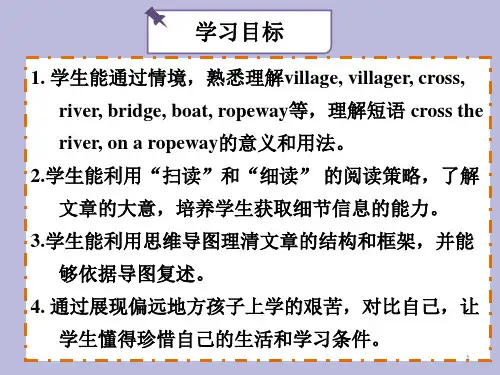
school.
ropeway
3.Many of the students and villagers never leave the village. It
is their dream to have a bridge. Can their dreatmo csocmheotorlu.e? 7
Match
OdaLnye.iaB11nu-tygehlaeirai-snonlgdotbaofyr, aLidiaI.nt“g’Ilailaobnvgoe,utcortoptslhsaeyes wthitehrTmivheyrecelasvstesurmydasectenhso.tosl AlnidkIelsovheims y teacher. Hvei’lslalikgeearsfa’ther to mge.o” on a
Ath.eTrihveeryrunsswtoiomq(u游ick泳ly f)o.r boats. So these
students go on a ropeway to cross the river to
sBch.ooTl.hey go on a ropeway.
One 11-year-old boy, Liangliang, crosses the river every school
七年级下册英语Unit-3-How-do-you-get-to-school-教案
实用文档七年级下册英语Unit 3 How do you getto school 教案和介绍后,老师可以通过展示一些图片或视频,引导学生谈论不同的出行方式,如乘坐公交车、地铁、骑自行车、步行等。
XXX1.首先,老师可以通过展示图片或视频,教授新单词和短语,如train、bus、subway、ride、bike、sixty、XXX、eighty、y、hundred、far、minute、kilometer、new、every、every day 等。
2.然后,老师可以模拟对话,让学生研究如何用英语谈论出行方式。
例如,老师可以问学生“How do you get to school?”,学生可以回答“I ride my bike”,或者老师可以问“How does Mary get to school?”,学生可以回答“She takes the subway”。
3.接下来,老师可以教授特殊疑问句,如“How far is it from…to…”和“How long does it take?”,并且教授如何回答这些问题。
例如,当学生被问到“How far is it from your home to school?”时,学生可以回答“It's 5 kilometers”,或者当学生被问实用文档到“How long does it take to get to school?”时,学生可以回答“It takes 40 minutes”。
Ⅲ。
Practice1.老师可以让学生进行小组讨论,讨论在不同情况下应该选择哪种出行方式,并且给出理由。
2.老师可以让学生进行角色扮演,模拟在不同场景下的出行方式和对话。
3.老师可以让学生完成一些练,如填空、选择题等,以检验他们对所学知识的掌握程度。
XXX1.老师可以引导学生了解不同国家的出行方式和交通规则,让学生了解和尊重不同文化和惯。
2.老师可以教授一些有关交通安全和礼仪的知识,让学生养成良好的交通惯和安全意识。
人教版七年级英语下册Unit3Howdoyougettoschool单元整体说课稿
2.过程与方法目标:
(1)通过情境创设,让学生在实际语境中学习交通方式的表达。
(2)引导学生通过观察、模仿、实践等途径,掌握交际对话的技巧。
(3)培养学生合作学习的能力,提高课堂参与度。
3.情感态度与价值观目标:
(1)培养学生热爱生活、关注环保的意识,提倡绿色出行。
4.常用短语:usually, often, sometimes, by bus, on foot等。
5.交际对话:询问和回答别人上下学的交通方式。
(二)教学目标
1.知识与技能目标:
(1)学生能够听懂、会说、会写本单元所学的交通方式词汇和句型。
(2)学生能够运用所学知识进行简单的交际,询问和回答别人的交通方式。
1.师生互动:通过提问、回答、对话等形式,教师引导学生积极参与课堂讨论,及时反馈学生的学习情况,并提供必要的帮助。
2.生生互动:组织小组活动,让学生在小组内进行角色扮演、讨论和游戏,鼓励他们互相纠正错误,共同完成任务。
3.小组竞赛:通过设定竞赛规则,激发学生的竞争意识,增强团队合作精神,同时也能够提高学生的参与度。
人教版七年级英语下册Unit3Howdoyougettoschool单元整体说课稿
一、教材分析
(一)内容概述
本节课为“人教版七年级英语下册Unit3 How do you get to school”单元整体说课稿。本单元在课程体系中属于第三单元,是学生在学习了基础词汇和简单句型后的一个重要单元。它旨在帮助学生掌握交通方式的表达方式,并在此基础上培养学生的交际能力。
(2)通过本单元的学习,让学生学会关心他人,关注他人的出行方式。
(3)培养学生积极向上的学习态度,增强自信心。
Unit_3_How_do_you_get_to_school知识点总结

Unit 3 How do you get to school?知识点总结1.get to school 到校2.take the subway 乘地铁3.take the train 坐火车4.leave sw 离开某地 leave for sw 去某地leave sw for sw离开某地去某地5. be afraid 害怕6.look like=be like看起来像 7 上一份邮件8村民的梦想. 9.think of 想到起 10.every one 每一个 11.everyone 每个人 12. how far 多远 13.take the train to school 乘火车去上学 14.an8 -year-old boy一个8岁的男孩 15.go to school by boat乘船去上学 16.on the school bus乘坐校车 17.be different from和……不同 18.worry about 担忧心 19. take sb. some time to do sth. 花费某人某些时间去做某事20. thanks for因……感谢你 21 two hundred students二百名学生 22. hundreds of studengs数百名学生 23. stop listening to music停止听音乐 24. stop to listen to music停下去听音乐 25. bus station 汽车站 26. dream to do sth梦想做某事 27. live in a small village住在一个小村子里 28.cross the river 过河 29. 20minutes‟ ride二十分钟的车程 30. have to 不得不31.between…and在…..和……之间 e true 实现,成为现实 33.I'm not sure. 我不能确信。
【精品课件】Unit 3 How do you get to school初中英语人教版七年级下册
by bike 5 km
Mary from home to the by bus library
15 km
How does Tony get to school?
_H_e_g_e_t_s_t_o_s_c_h_o_o_l_b_y__b_i_k_e_. ____________
How long 20 minutes
to my classmates.
What about you? How do you get to school?
Tom
Write an e-mail to Tom and tell him
3b how you get to school. These question
may help you. 1. When do you leave home? 2. How do you get to school? 3. How far is it from your home to school? 4. How long does it take you to get to school? 5. Do you like your trip to school?
40 minutes
1. How far is it from Tony’s home to school? _I_t’_s_f_i_v_e_k_i_lo_m__e_te_r_s_.__________
2. How long does it take Tony to get to school? _It__ta_k_e_s_a_b__o_u_t _t_w_e_n_t_y__m_i_n_u_t_e_s _b_y__b_ik_e_.___
表达储备
关于上学方式的句型:
七年级下册英语Unit3Howdoyougettoschool?《setionA2e-3c》听课记录
2024七年级下册英语Unit 3 How do you get to school? Section A 2e-3c 听课记录一、教师行为1.1 导入1.教师首先回顾上节课所学的交通方式词汇和句型,如“How do you get toschool?” “I get to school by bike/bus/etc.”2.教师通过提问的方式引出本节课的主题:“What about your friends? Howdo they get to school?” 激发学生讨论朋友交通方式的兴趣。
1.2 教学过程(一)听力理解2e1.教师简要介绍2e部分的内容,即一段关于学生讨论上学交通方式的听力材料。
2.教师播放录音,要求学生边听边记录关键信息,如学生姓名、交通方式等。
3.播放录音后,教师核对答案,并引导学生讨论听力材料中提到的各种交通方式的优缺点。
(二)口语实践2f1.教师展示2f部分的图片,每张图片上都有一位学生和一个交通方式。
2.教师引导学生根据图片内容编写对话,如“What’s the best way for Tom toget to school? Why?”3.学生分组进行对话练习,教师巡视指导,纠正发音和语法错误。
4.每组选出一名代表进行对话展示,全班进行评价和反馈。
(三)语法聚焦与写作练习3a-3c1.教师引导学生回顾本单元的重点语法结构,即如何询问和回答交通方式。
2.教师展示3a部分的写作要求,即描述一位朋友上学的方式,并给出一些提示词和句型结构。
3.学生根据要求独立完成写作练习,教师巡视指导,提供帮助和反馈。
4.教师选择几篇学生作品进行点评,指出优点和不足,并给出改进建议。
5.学生根据教师的点评修改自己的作品,并准备进行展示。
6.学生展示修改后的作品,全班共同欣赏和学习。
(四)板书设计(提纲式)•交通方式词汇回顾•询问和回答交通方式的句型•听力材料中的关键信息•口语对话示例•写作练习提示词和句型结构(五)作业布置1.要求学生复习本节课所学的交通方式词汇和句型。
Unit 3 How do you get to school-初中英语人教版七年级下册单元书面表达
Presentation
审题格式
①时态: 主要使用一般现在时 ②人称: 第一人称 ③框架结构: 书信格式 Dear Tom,
Thank you for your letter. Now I am writing to tell you about how I go to school…… …… Yours, friend
句型
1. Sb. go(es) to school by... 某人乘 …… 去上学。 2. It takes sb. some time to do sth. 某人花费多少时 间做某事。
3. It’s about ... kilometers from my home to school. 从我家到学校大约 …… 千米。
Unit3 How do you get to school? 单元话题写作
话题Pres分ent析ation
本单元以“谈论如何到达某地”为话题,要求同学们能描 述人们去上班或学生去上学所用的交通方式、路程、所花费 的时间、感受及对未来出行方式的憧憬。 写作要求:
1.能用“take the train/walk/ride a bike/drive a car/by subway/on foot…”描述使用的交通工具;
Dear Tom, How are you? Thank you for your last e-mail. I know how you
get to school. Now let me tell you how I get to school. I usually leave home at half past seven. First, I walk to the
(完整版)Unit3_How_do_you_get_to_school知识点
Unit3 How do you get to school?二、重点知识详解1。
take +a/an/the+表示交通工具的名词乘……去某地是动词短语在句中作谓语.He takes the train。
take the subway 乘地铁take a walk 散步take a bath 洗个澡take a rest 休息一会take a seat 坐下take some medicine 吃药2.get表示“到达”后接名词需加to接地点副词不加to.reach 表示到达是及物动词其后直接接宾语.arrive in+大地点 arrive at +小地点后接副词不需介词。
5。
It takes sb some money/time to do sth.花费某人多少时间/钱做某事Sb pay some money for sth 某人为某物花费多少钱Sb spend some time/money on sth 某人在做某事或某物上花费时间/钱Sb spend some time/ money (in)doing sth Sth cost sb some money 某物花费某人多少钱3. How far is it from A to B?=How far is B from A?答语有两种1It’s…meters/miles/kilometers(away)有……米/英里/千米远2It ‘s about ten minutes' walk/ ride. 大约有十分钟步行/骑车的路程。
4.have to 后加动词原形侧重客观的需要有“不得不被迫”之意有多种时态形式否定式为don’t have to(needn’t)意为“不必”.Must 侧重于说话者的主观看法认为有必要或有义务做某事只有现在时一种形式,否定式must't意为“一定不要不允许禁止”反意词为“needn’t”。
5。
人教版七年级下册英语Unit 3 How do you get to school语法总结
It takes him 20 minutes to do his homework. (对话线部分
提问)
→How long d oes it take him to do his homework?
2)How long也可以询问某事物的具体长度。
如:
---How long is the desk?这张桌子有多长?
---It’s 1.2 meters. 它1.2米。
四、How far 引导的特殊疑问句
How far“多远”,询问路程、距离。
如:
How far is it from here to school? 从这儿到学校有多远?
答语有两种表达方式:
1)用长度单位。
如:It is five kilo meters. 五公里
2)用时间表示如:It is twenty minutes’walk. 二十分钟的步行路程。
五、句型:It takes sb. some time to do sth. (做某事花费某人多长时间)
注:It在此句型结构中为形式主语,真正的主语是不定式短语。
take 意为“花费”并且只能表示花费----时间
eg: It takes me half an hour to do my homework.(写作业花费了我半个小时)。