
外研版九年级上册Module3Unit1课件
外研版九年级英语上册:Module1Unit1课件(共49张PPT)
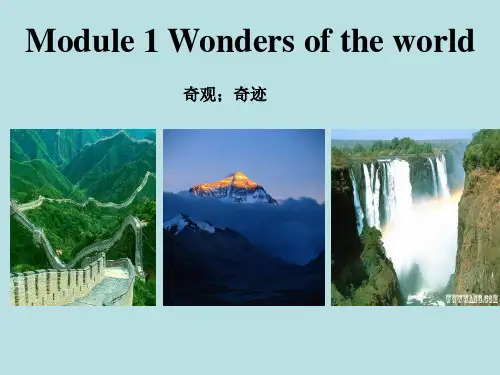
Words and expressions
• • • • • • • • • • in five minutes 5分钟后(常用于一般将来时) look down to 向下看,俯视 get out of (从……内) 出来 walk along 沿着…… 走 = go along one of … · · · · · ·之一 at the bottom of 在· · · · · ·底部 look over 查看;检查;调查 have gone to 到某地去了 because of 因为 faster and faster 越来越快
fall away and down to …降到……/ 落到 …... 山那边地势向河边陡然倾斜。 falls away Beyond the hill, theto land __________ down sharply and ________the river.
9. I looked down to the Colorado River, a silver stream nearly one mile below me. a) look down 俯视 look up and down 上下打量 look down on / upon sb. / sth. 鄙视或瞧不起 某人/某物 当我在街上遇见我的朋友时,他上下打量我。 looked me and up and down My friend _________________________ when he met me in the street. 我看不起那些只爱钱的人。 look down / upon people who only I ________________ love money.
Words and expressions
外研版九年级英语下册内文课件:Module3Unit1(共30张PPT)
常考短语
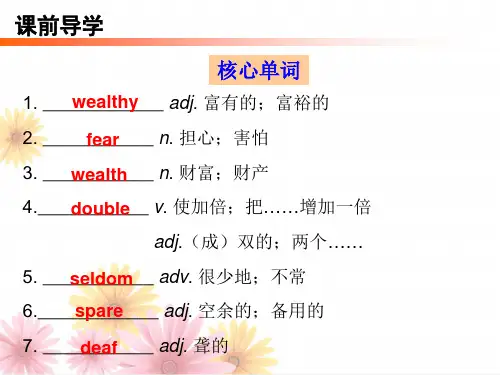
1. _____in__t_h_e_p_a_s_t___ 在过去 2. ____o_f__co__u_rs_e_____ 当然 3. _____d_e_a_l _w_i_th_____ 应付;处理 4. _____u_s_e_d__to______ 过去 5. _____t_h_e_n_u_m__b_e_r_o_f__.._. ______ ……的数量 6. ____s_p_a_r_e_t_im__e____ 业余时间;闲暇 7. _____r_e_m_e_m__b_e_r_t_o_d_o______ 记得要做…… 8. _____s_p_e_a_k__u_p____ 大点声说
4 seldom的用法 【教材例句】People seldom say they have enough spare time. 人们很少说他们有充足的业余时间。(教材第 18页) 【用法】seldom是频度副词,用在系动词或助动词之后, 实义动词之前,意为“很少地;不常”,相当于hardly。 【举例】John seldom gets together with his friends.约 翰很少与朋友聚在一起。
13、He who seize the right moment, is the right man.谁把握机遇,谁就心想事成。2021/9/82021/9/82021/9/82021/9/89/8/2021 •14、谁要是自己还没有发展培养和教育好,他就不能发展培养和教育别人。2021年9月8日星期三2021/9/82021/9/82021/9/8 •15、一年之计,莫如树谷;十年之计,莫如树木;终身之计,莫如树人。2021年9月2021/9/82021/9/82021/9/89/8/2021 •16、教学的目的是培养学生自己学习,自己研究,用自己的头脑来想,用自己的眼睛看,用自己的手来做这种精神。2021/9/82021/9/8September 8, 2021 •17、儿童是中心,教育的措施便围绕他们而组织起来。2021/9/82021/9/82021/9/82021/9/8
[外研版]九年级英语上册Module 3 Unit 2优质课件
![[外研版]九年级英语上册Module 3 Unit 2优质课件](https://360docs-1393072327.cos.ap-beijing.myqcloud.com/65f0997f76a20029bc642d1b.webp)
那时候 In 1938, Dr Bethune came to China and helped treat the wounded during the Anti-Japanese War. At that time, there were few doctors, so he had to work very hard on his own. His experience of treating people in Spain独wa自s 一us人eful in China.
work without treating it. In the end, he died of his
wound.
死于……
Dr Bethune’s work for the Chinese people made him a hero in China. There are many books and films about him, and he is still remembered in both China and Canada today.
so that与so···that
(1) so that 主要引导目的状语从句,“目的 是······”。 从句中的谓语动词常和can, may, should等连用
例:你最好大声说话,以便我们能听到。 You’d better speak aloud so that we can hear you.
on one’s own
意为“独自的;独立的;主动的”。
例:我能独立把工作完成。 I am able to finish the work on my own.
continue
(1) continue 作动词,“继续”。 常用短语:continue to do/doing sth. 继续从事某事 相当于go on doing sth
外研版九年级英语上册课件 Module3 Unit2

inventions saved many lives.
In 1938, Dr Bethune came to China and helped treat the wounded during
the Anti-Japanese War. At that time, there were few doctors, so he had to work
Module 3 Herw doctors, so he had to work very hard on his own.
Dabai is a hero.
Why do you Ctahninkyotuhenyamaereanhyerootehse?r heroes? ...
3. In 1938, Dr Bethune came to China and helped treat the wounded
The clue (线索): time Elucidation(分)
during the Anti-Japanese War. At that time, there were few doctors, so he had to work very hard on his own. His experience of treating people in
以便于
She gave all her life to looking after people. She was British.
She is a Chinese. She plays tennis very well. She dressed as a man fighting in the army.
He is Chinese. He has a daughter and a wife. He is from Shanghai. He is very tall. He is the best basketball player in China.
Module 1 Wonders of the worldUnit 1 外研版九年级英语上册
【例句】 We had a discussion with them about the differences between the UK and the US.
【例】I wonder if he will come to see me. 我想知道他是否会来看我。 ❷wonderful是形容词,意为“精彩的,令人高 兴的,绝妙的”。 【例】We had a wonderful time last weekend. 我们上周末过得非常愉快。
2 Let's call Wonders of the World and join in the discussion. 我们给《世界奇观》节目打电话,加入讨论吧。
【例句】My hair soon grew back to its natural colour.我的头发很快又恢复了本色。 We enjoyed the beauties of nature. 我们欣赏了自然美景。
【要点2】 wonder此处为可数名词,意为“奇观;奇迹”。 【例句】The Great Wall is a great man- made wonder. 长城是一个伟大的人造奇迹 。 【知识拓展】 ➊wonder 还可作动词,意为“想知道”,其后常接宾语从句。
【要点1】
join in 意为“参加;加入(某一活动)”,后面一般接表示竞赛、娱乐、游戏等活动的
名词或动词ing形式作宾语。
【例句】I don't want to join in the game. 我不想加入这个游戏。
外研版九年级英语上册 Module 3 Unit 1 She trained hard,so she became a great player later教案

Unit1 She trained hard, so she became a great player later一、教学内容: Unit1 She trained hard, so she became a great player later.二、课型:Listening and speaking三、教学目标:1、能正确运用词汇:including, medal, attend, abroad, once again, doctor, degree, whatever , give up, amazing, will, victory, simply, tell sb. about sth./sb. , as well as, start doing sth.2、掌握重点句型:(4)Deng says that she isn’t cleverer than anyone else, but she has a very strong will.3、能听懂包含状语从句的对话和课文,了解有关名人的生平事迹。
4 、能运用所学的知识对人物进行介绍。
5、情感目标:通过对话学习,培养学生具有吃苦耐劳、自强不息和自力更生的精神。
四教学重难点:1、熟练运用文中出现的日常交际用语谈论自己心中喜欢的英雄。
2、了解原因状语从句。
五教学准备:查找资料,制作多媒体课件六预习要求:根据音标自学本课新单词。
教学步骤教师活动学生活动设计意图Step One Warming-up (3’)Lead in1. Let the students watch avideo about the hard life of thesports champions.Ask Is it easy to get a goldmedal in the Olympic Games?H ow can we call these people?2.Then introduce the title.1 Students watch a videoabout the hard life of thesports champions.AnswerNo, it isn’t. They get thegold medals by traininghard.Heroes.通过展示有关奥运冠军艰苦训练及获奖时泪流满面的视频,来引起学生的共鸣,自然导出本课话题。
外研版-英语-九年级上册-外研版九上英语:Module1 1单元 参考课件
Kevin is looking for his glasses. Have you seen them? 凯文正在找他的眼镜,你看到过它们吗? (them=his glasses)
Her interests are different from those of her childhood. 她的兴趣爱好跟孩提时的不一样了。 (those=interests)
应用
( C )1.The population of China is larger than ________ of Japan.
A.those
B.it
C.that
D.ones
( B )2. I planted a lot of roses in my garden. Among them, the ________ in white are my
( A )3. ________(He)he is old enough, ________
he keeps learning everything new.
A./; but
B.Although; however
C.Though; but D./; and
3 millions of的用法
教材例句 It produces electricity for millions of people in China. 它为中国无数人提供电力。 (教材第2页)
favourite.
A.one
B.ones
C.those
D.them
常用句型精讲
句型“主语+… metre(s)/kilometre(s) long/wide/high. ”的用法
外研版九年级下Module1 Unit3课件(共21张PPT)
sit down
stand up
write on the blackboard
readபைடு நூலகம்books
Around the world
Family name Given name
姓
名
In Chinese, the family name is first
and the given name is last.
Module 1 Nice to meet you
Unit 3 Language in use
Language practice
Work in pairs. Ask and answer. 1) What’s your name? 2) Where are you from? 3) Nice to meet you. 4) How old are you? 5) What class are you in?
A : She’s Britney Spears. B : Where is she from? A : She’s from America. B : How old is she? A : She is twenty-three.
Britney Spears, America, American, twenty-three
Work in pairs.
Talk about you and your friend to your group.
I’m Liu Bing. He’s my friend, Zhang Hai. I’m 12 years old. He’s 13 years old. We’re Chinese and we’re in Class Two.
外研版九年级英语上册Module 3 Unit 1 教学设计 教案
外研版九年级英语上册Module 3 Unit 1 教学设计教案篇1一、教学目标(一)知识与技能1. 学生能够掌握本单元的重点单词,如allow、deal等,以及重点短语,像be allowed to do sth.等。
2. 熟练运用一般现在时的被动语态,能够根据不同的语境正确使用该语法结构进行句子的构建。
3. 提高学生的听力、阅读能力,能听懂和读懂关于规则与允许相关话题的英语材料。
(二)过程与方法1. 通过小组合作讨论的方式,让学生分享自己所知道的规则,锻炼学生的口语表达能力。
2. 在阅读课文的过程中,引导学生运用略读、精读等阅读技巧,提高阅读理解能力。
(三)情感态度与价值观1. 培养学生遵守规则的意识,让学生明白规则在生活中的重要性。
2. 鼓励学生积极参与课堂活动,增强学生学习英语的自信心。
二、教材分析1. 本单元在整册书中的地位:本单元是外研版九年级英语上册Module 3的第一个单元,主要围绕规则与允许这一话题展开。
这一话题与学生的日常生活息息相关,能够引起学生的学习兴趣。
2. 与前后单元的联系:前一单元为后面的话题做了一定的铺垫,本单元在此基础上进一步深入探讨规则相关内容,而后一单元则会在本单元的基础上进行拓展延伸。
3. 重点语法:一般现在时的被动语态是本单元的重点语法内容。
重点词汇包括allow、deal等,这些词汇在表达规则与允许的语境中经常使用。
三、教学重难点(1)教学重点1. 掌握本单元的重点词汇,如allow, deal with, worry about等,能够正确运用这些词汇进行书面和口头表达。
2. 理解并掌握含有情态动词must, can, could的句子用法,例如在表达请求、许可、义务等语义时的正确用法。
3. 能够理解课文内容,提高阅读理解能力,并能根据课文内容进行简单的复述。
(2)教学难点1. 情态动词在不同语境下的细微差别及灵活运用,对于学生来说比较容易混淆,这是语法学习上的一个难点。
外研版九年级上册英语Module 1 Wonders of the world Unit 3 教案
Unit 3 Language in useⅠTeaching modelRevision and applicationⅡTeaching methodFormal and interactive practice, task-based approach.ⅢTeaching aims1. To review and check the words learned in this module;2. To summarise and consolidate tenses learned before.ⅣTeaching aidsRecorder, OHP, handoutsⅤTeaching StepsStep 1 RevisionShow some pictures to review the text of Unit 1 and Unit 2 Step 2 Language practice1. Read through the example sentences in the box with the whole class.1) I visited the Giant’s Causeway two years ago.2) It produces electricity for millions of people in China.3) I’ve never seen it, so I’m not sure I agree with you.4) I looked to the east-the sky was becoming grey.5) You’ll get there in five minutes.6) Am I going the right way?2. Ask the students to repeat the sentences in the bomar.时态复习到目前为止,我们已经学过了英语中常用的时态,包括一般现在时、一般过去时、现在进行时、过去进行时、一般将来时和现在完成时。