
新外研版七年级上册 Module6 A trip to the zoo Unit 1课件
外研英语七年级上Module6重要词句讲解 习题 有答案

1 / 7 Unit 6 A trip to the zoo
课内基础
必背词汇
bear [beə] n. 熊
elephant ['elifənt] n. 象
giraffe [dʒi'rɑ:f] n. 长颈鹿
lion ['laiən] n. 狮子
monkey ['mʌŋki] n. 猴子
panda ['pændə] n. 熊猫
tiger ['taiɡə] n. 老虎
zebra ['zi:brə] n. 斑马
zoo [zu:] n. 动物园
guide [ɡaid] n. 导游
animal ['æniməl] n. 动物
come [kʌm] vi. 来
different ['difərənt] adj. 不同的
country ['kʌntri] n. 国家;故乡
other ['ʌðə] adj. 其他的
dangerous ['deindʒərəs] adj. 危险的
also ['ɔ:lsəu] adv. 也;而且
plant [plɑ:nt, plænt] n. 植物
look [luk] vt. 看,瞧
tall [tɔ:l] adj. 高的
leaf [li:f] n. 叶子
sure [ʃuə] adv. 当然;的确
bamboo [bæm'bu:] n. 竹
cute [kju:t] adj. 可爱的
them [ðem, ðəm] pron. 他们;它们;她们
which [hwitʃ] pron. 哪/那一个
over ['əuvə] prep. 越过;在…上方
funny ['fʌni] adj. 有趣的
call [kɔ:l] vi. 把••叫做;称呼••为
Africa ['æfrikə] n. 非洲
Asia ['eiʃə] n. 亚洲
Europe ['juərəp] n. 欧洲
外研版-英语-七上-外研版Module6 A Trip to the zoo 1单元 课时训练
初中-英语-打印版
初中-英语-打印版 Module 6 Unit 1 Does it eat meat?【外研版】【课时训练】
【课时基础巩固】
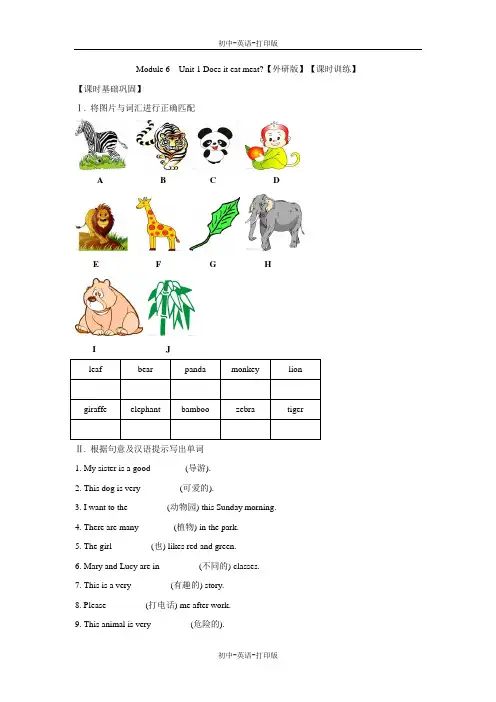
Ⅰ. 将图片与词汇进行正确匹配
A
B
C D
E
F
G H
I J
leaf bear panda monkey lion
giraffe elephant bamboo zebra tiger
Ⅱ. 根据句意及汉语提示写出单词
1. My sister is a good _______ (导游).
2. This dog is very ________ (可爱的).
3. I want to the ________ (动物园) this Sunday morning.
4. There are many _______ (植物) in the park.
5. The girl ________ (也) likes red and green.
6. Mary and Lucy are in ________ (不同的) classes.
7. This is a very ________ (有趣的) story.
8. Please ________ (打电话) me after work.
9. This animal is very ________ (危险的). 初中-英语-打印版
初中-英语-打印版 10. How many ________ (国家) are there in the world?
Ⅲ. 用所给词的适当形式填空
1. the panda (live) in China?
2. There (be) a pen and two books on the desk.
石狮市第五中学七年级英语上册Module6AtriptothezooUnit1Doesiteatme

1 Unit 1 Does it eat meat
A: Hi, Bob. A new zoo in our city is open. There are different animals from
other countries, such as bears, elephants, tigers, lions, monkeys…
B: Do they have giraffes and zebras?
A: Sure! Do you like them?
B: Yes. They are funny and tall. They are also not dangerous and they eat
plants.
A: Why not go and see them in the zoo?
B: Good idea! Shall we go now?
A: Let’s go.
(Thirty minutes later, they get to the zoo.)
B: Look at the zoo map. Which animals do you want to see first?
A: Pandas. They come from China. They eat bamboo. They only live in China. They
are so cute. Chinese people call them “national treasure(国宝)”.
B: You know so much.
A: Thanks. Ugh! The guide is over there. Let’s go and meet her.
1. bear n. 熊
2. elephant n. 大象
3. giraffe n. 长颈鹿
4. lion n. 狮子
外研版英语七年级上册M6-2《Atriptothezoo》说课稿

外研版英语七年级上册M6-2《A trip to the zoo》说课稿
一. 教材分析
《A trip to the zoo》是人教版英语七年级上册Module 6的第二课时,本节课的主要内容是谈论动物以及它们的特点。通过本节课的学习,学生能够掌握动物的名称以及一些描述动物特点的词汇和句型。教材内容丰富,插图生动有趣,能够激发学生的学习兴趣。
二. 学情分析
七年级的学生已经掌握了一些基本的英语语法和词汇,他们对学习英语有浓厚的兴趣。但部分学生可能对一些动物的名称和特点不够了解,因此在教学中,我需要注重引导学生运用英语描述动物的特点,提高他们的语言表达能力。
三. 说教学目标
1. 知识目标:学生能够掌握本节课的生词和短语,正确运用所学的句型描述动物的特点。
2. 能力目标:学生能够听懂、会说、会读关于动物的对话,提高他们的口语表达能力。
3. 情感目标:培养学生关爱动物、保护生态环境的意识。
四. 说教学重难点
1. 重点:学生能够掌握动物的名称和描述动物特点的句型。
2. 难点:学生能够运用所学的句型熟练地进行口语交流,描述动物的特点。
五. 说教学方法与手段
1. 采用任务型教学法,让学生在完成任务的过程中,自然而然地学习英语。
2. 运用多媒体教学手段,如图片、视频等,激发学生的学习兴趣,帮助学生更好地理解教材内容。
3. 小组活动,鼓励学生相互交流、合作,提高他们的口语表达能力。
六. 说教学过程
1. 导入:展示一些动物的图片,引导学生谈论他们喜欢的动物,激发学生的学习兴趣。 2. 新课呈现:通过展示动物园的场景,引入本节课的主题。教师引导学生观察图片,回答有关动物的问题。
3. 单词和短语学习:学生跟读单词和短语,教师解释单词和短语的意思,并进行简单讲解。
4. 句型学习:教师示范句型,引导学生进行口语练习,学生两人一组进行对话练习。
5. 小组活动:学生分组进行角色扮演,运用所学的句型描述动物的特点。
Module 6 A Trip To The Zoo 知识点总结 外研版七年级英语上册

MODULE 6 A Trip To The Zoo
序号 英文 词性和释文 拓展
1 bear n. 熊
2 elephant n. 大象 an elephant一头大象
3 giraffe n. 长颈鹿
4 lion n. 狮子
5 monkey n. 猴子 复数形式:monkeys
6 panda n. 熊猫
7 tiger n. 老虎
8 zebra n. 斑马
9 zoo n. 动物园 复数形式:zoos
10
guide n. 导游 under sb. 's guidance
在某人的指导下
guidebook旅游指南
11 animal n. 动物
12 such adj. 这样的;如此的
13 as prep. 像……一样
14 such as 例如
15 come v. 来 来这儿come here
来到学校come to school
16 come from 来自
17
different adj. 不同的 difference n. 差异;不同
与……不同be different from
Eg: I am different from you.
我与你不同。
18 country n. 国家 复数形式:countries
19 other adj.其他的 彼此,互相each other
20 dangerous adj. 危险的 danger n. 危险
in danger 在危险中
21 ugh int.啊,哎呀
22 also adv. 也、而且 23 plant n. 植物 v.种植
24 look v. 看,瞧
25 look at 看
26 tall adj. 高的
27 sure adv. 的确,当然 确定某事be sure of sth.
确定做某事be sure to do sth.
Module6_Unit1教学设计

1 外研版七年级上Module 6 A trip to the zoo
教学设计
一、 教学内容:Unit1 Does it eat meat?
二、 课型:Listening and speaking
三、 教学目标:
1、能正确运用本单元的词汇及短语: bear, elephant,giraffe, lion, monkey, panda, tiger,
zebra, zoo, guide, animal, such as, come from, different, country, other, dangerous, also,
plant, look at, tall, sure, bamboo, cute, shall we…?funny, called等.
2、能听懂关于动物和动物喜欢吃什么的对话。
3、能掌握第三人称的一般疑问句及其回答。
4、能谈论自己喜欢的动物,它喜欢吃什么,喜欢的原因。
四、教学重难点:
掌握第三人称的一般疑问句及其回答。 并能运用一般现在时的第三人称句型来
简单陈述朋友们喜爱的动物。
五、教学准备:
本课指导学生通过听力获取信息,培养学生听力技能。课堂上采用多媒体手段辅助教学,在轻松愉快的氛围中,在较真实的语境下,并联系学生生活实际,结合已有的知识和经验,运用所学的语言基础知识自我学习、互相学习,让学生在语言实践中相互启发、生成,体验成功。培养学生的合作精神,发展其思维和想象等能力。在教学过程中,采用多媒体手段辅助教学,利用各种图片和习题任务贯穿整个教学过程。因此,本节课需准备:PPT课件、挂图、跟挂图有关的某些实物、录音机、课堂练习表格、奖品。
六、预习要求:
根据音标自学本课新单词;
七、教学过程:
教学
步骤 教师活动 学生活动 设计意图
Step 1
Warming-up (3’)
Lead in
1.Free talk:
初中英语《Module6Atriptothezoo》单元教学设计以及思维导图
Module 6 A trip to the zoo 适用年
级 初一年级上
所需时
间 课内共用3课时;课外共用1课时。
主题单元学习概述
简述主题单元在课程中的地位和作用,单元的组成情况:本模块共分
三个单元。从话题上讲,第一单元让学生初步接触了野生动物的名称并浅显地谈论了野生动物的某些习性等内容。第二单元承接了这一话
题并在深度和广度上做了进一步的延伸和扩充。通过课文教学,本课
复习了野生动物的名称并详细地谈论了动物的习性等内容。同时也使第三单元就此话题进行更深一步的探讨顺理成章。从语言功能上讲,
模块训练的是一般现在时态第三人称单数的一般疑问句形式。第一单元已经对该语法功能项目进行了教授,第二单元则进行进一步的训练
和强化,巩固第一单元所学的语法知识,同时为第三单元的综合语言
知识的复习和运用以及综合语言能力的培养作好铺垫。 教学重点
(1)重点句型:一般现在时(主语第三人称单数)的一般疑问句以及肯定和否定形式。
(2)重点话题:Talk about one’s favourite animal.
教学难点 (1)有关动物的名词及它们在句中的正确运用。 (2)掌握一般现在时(主语第三人称单数)的一般疑问句以及肯定
和否定形式。 (3)能用恰当地道的英语问答有关动物的问题以及介绍自己的最喜
爱的动物
依据语言学习 的认知规律,将本单元的学习划分为三个专题。专
题一:如何让学生初步接触了野生动物的名称并浅显地谈论野生动物
的某些习性等内容专题二:如何运用一般现在时态第三人称单数的一般疑问句形式,对专题一进一步的延伸。专题三是综合语言知识的复
习和运用以及综合语言能力的培养。教学中要注意小学到初中的方法
的衔接,即教学是要面向全体学生的教学,必须保证全体学生达到衔接目标;教学是要面向基础的教学,主要教授基础知识、培养基本能
力;结合小学的教学,把形象思维与抽象思维整合的教学方法;养成适合初中的有效学习态度与策略。深度分析学生现状,找到足以建立
外研社七年级上册Module 6 A trip to the zoo.doc Unit 2教案
Module 6 A trip to the zoo
Unit 2 The tiger lives in Asia.
课题 Unit 2 The tiger lives in Asia. 课型 New 第 3 课时
教学
目标 1. To get information about animals from the reading material.
2. To learn to find specific information in the reading.
3. To learn to use capital letters.
内容
分析 教学重点 Key vocabulary: Africa, Asia, Europe, little, only, kilo (=
kilogram ), people, African, grass, large,
教学难点 To improve the Ss’ reading ability.
教法
学法 Interactive approach 教具学具 Multi-Media (or Tape
recorder, OHP)
教
学
过
程 教材处理 二次备课
Step 1 Warming-up
1. Review the text of Unit 1.
2. Introduce the new words.
3. Read the new words.
Step 2 Find these places on the map.
1. Show a map of the world.
2. Find these places (Africa, America, Asia, Europe)on the
map.
Step 3 Reading.
1. Play the recording.
2. Ask the students to read through the passage.
外研社七年级上册 Module 6 A trip to the zoo Unit 3教案
Module 6 A trip to the zoo
Unit 3 Language in use
课题 Unit 3 Language in use 课型 New 第 4 课时
教学
目标 1. To summarise and consolidate Present simple questions.
2. To know something about animals in China.
3. To have teamwork and make a poster of one’s favourite animal.
内容
分析 教学重点 Key structures: It doesn’t eat meat. Does it eat meat ?
No, it doesn’t. It eats plants.
教学难点 To improve the Ss’ writing ability.
教法
学法 Interactive approach 教具学具 Multi-Media (or Tape
recorder, OHP)
教
学
过
程 教材处理 二次备课
Step 1 Revision
Show some pictures to review the text of Unit 1 and Unit 2 .
Step 2 Language practice
1. Read through the example sentences in the box with the
whole class.
2. Ask the students to repeat the sentences in the box.
3. Grammar : The present simple
Step 3 Work in pairs
1. Look at the pictures. Ask: What can you see?
外研版七年级上册Module 6 A trip to the zoo同步练习(无答案
Module 6 A trip to the zoo
一、根据首字母及中文提示写单词
1. The elephants like to eat g .
2.
Daming and Li Lei are from d cities.Daming is from Beijing and Li
Lei is from Shanghai.
3. Egypt (埃及) is an A country and Japan is an Asian country.
4.
The lion is d . Don't go close to it.
5.
Both her parents are out. So she is at home a .
6. Hello, everyone! I'm your g and I'm very happy to take you to visit
many places of interest in Beijing.
7. China is a strong c in the world.
8. —What does a p eat?—It eats bamboo.
9. Mr. Green has no son. He o has a daughter.
10. The Smiths visited six countries in E during the summer holiday.
11. They come from (不同的) cities.
12. The (狮子) is very unfriendly. I don't like it.
13. —Can you help me, Kate?— (当然). I'm coming. 14. It's very (危险的) to drive after you drink wine (酒) .