
形容词副词的比较级和最高级ppt
形容词副词的比较级和最高级与用法
.
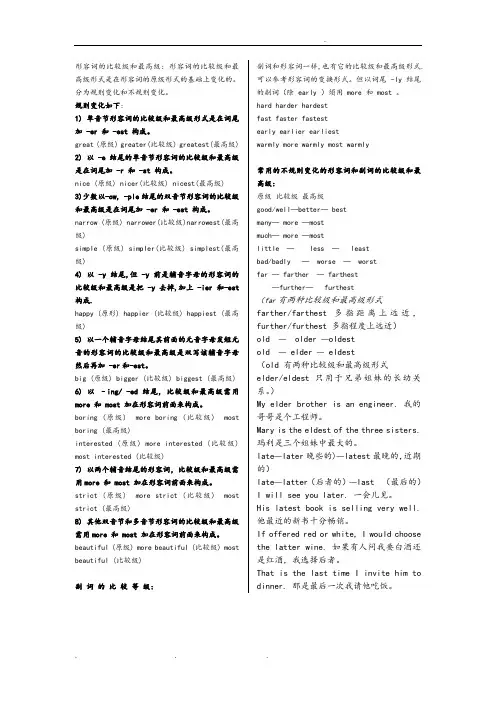
. . . 形容词的比较级和最高级: 形容词的比较级和最高级形式是在形容词的原级形式的基础上变化的。
分为规则变化和不规则变化。
规则变化如下:
1) 单音节形容词的比较级和最高级形式是在词尾加 -er 和 -est 构成。
great (原级) greater(比较级) greatest(最高级)
2) 以 -e 结尾的单音节形容词的比较级和最高级是在词尾加 -r 和 -st 构成。
nice (原级) nicer(比较级) nicest(最高级)
3)少数以-ow, -ple结尾的双音节形容词的比较级和最高级是在词尾加 -er 和 -est 构成。
narrow (原级) narrower(比较级)narrowest(最高级)
simple (原级) simpler(比较级) simplest(最高级)
4) 以 -y 结尾,但 -y 前是辅音字母的形容词的比较级和最高级是把 -y 去掉,加上 -ier 和-est
构成.
happy (原形) happier (比较级) happiest (最高级)
5) 以一个辅音字母结尾其前面的元音字母发短元音的形容词的比较级和最高级是双写该辅音字母然后再加 -er和-est。
big (原级) bigger (比较级) biggest (最高级)
6) 以 –ing/ -ed结尾, 比较级和最高级需用more 和 most 加在形容词前面来构成。
boring (原级) more boring (比较级) most
boring (最高级)
形容词、副词的比较级与最高级(初中用)
形容词、副词的比较级与最高级
1 形容词、副词的比较级与最高级
一、什么是形容词
用来修饰名词,表示事物的特征的词,在句子中作定语、表语。
二、什么是副词
用来修饰动作、形容词或者整个句子的词,在句子中作状语。
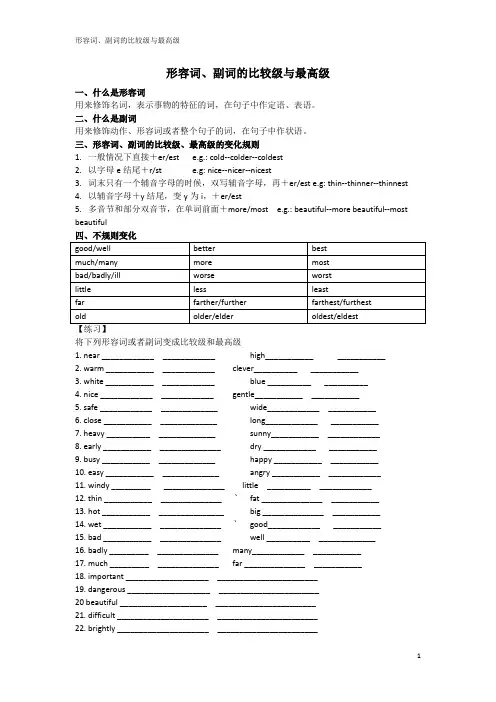
三、形容词、副词的比较级、最高级的变化规则
1. 一般情况下直接+er/est e.g.: cold--colder--coldest
2. 以字母e结尾+r/st e.g: nice--nicer--nicest
3. 词末只有一个辅音字母的时候,双写辅音字母,再+er/est e.g: thin--thinner--thinnest
4. 以辅音字母+y结尾,变y为i,+er/est
5. 多音节和部分双音节,在单词前面+more/most e.g.: beautiful--more beautiful--most
beautiful
四、不规则变化
good/well better best
much/many more most
bad/badly/ill worse worst
little less least
far farther/further farthest/furthest
old older/elder oldest/eldest
【练习】
将下列形容词或者副词变成比较级和最高级
1. near ____________ ____________ high___________ ___________
2. warm ___________ ____________ clever__________ ___________
3. white ___________ ____________ blue __________ __________
4. nice ____________ ____________ gentle___________ ___________
英语中形容词副词的比较级和最高级
英语中形容词副词的比较级和最高级
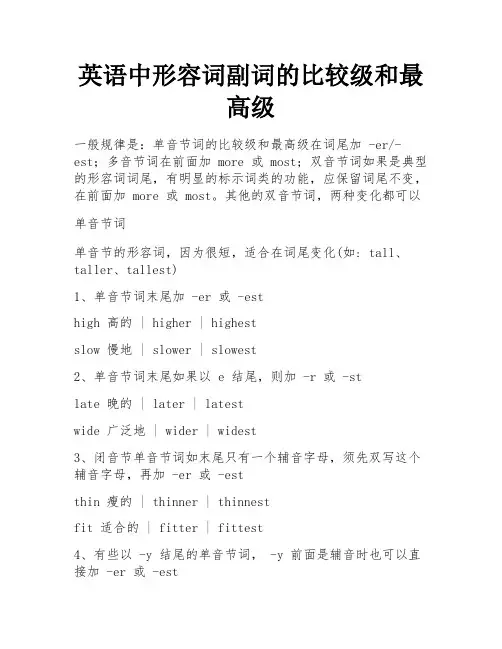
一般规律是:单音节词的比较级和最高级在词尾加 -er/-est;多音节词在前面加 more 或 most;双音节词如果是典型的形容词词尾,有明显的标示词类的功能,应保留词尾不变,在前面加 more 或 most。其他的双音节词,两种变化都可以
单音节词
单音节的形容词,因为很短,适合在词尾变化(如: tall、taller、tallest)
1、单音节词末尾加 -er 或 -est
high 高的 | higher | highest
slow 慢地 | slower | slowest
2、单音节词末尾如果以 e 结尾,则加 -r 或 -st
late 晚的 | later | latest
wide 广泛地 | wider | widest
3、闭音节单音节词如末尾只有一个辅音字母,须先双写这个辅音字母,再加 -er 或 -est
thin 瘦的 | thinner | thinnest
fit 适合的 | fitter | fittest
4、有些以 -y 结尾的单音节词, -y 前面是辅音时也可以直接加 -er 或 -est shy 害羞的 | shyer | shyest
sly 狡猾的 | slyer | slyest
wry 讽刺的 | wryer | wryest
多音节词
三个音节以上的多音节词已经很长,不适合再加词尾变化,因而在前面加 more 或 most,表示更(最)...,或者加 less 或
least ,表示更(最)不...
interesting 有趣的 | more interesting | most
interesting
important 重要的 | less important | least important
carefully 认真地 | more carefully | most carefully
双音节词
形容词和副词的比较级和最高级(完美版)
形容词和副词的比较级和最高级(完美版)
1. 形容词的比较级和最高级
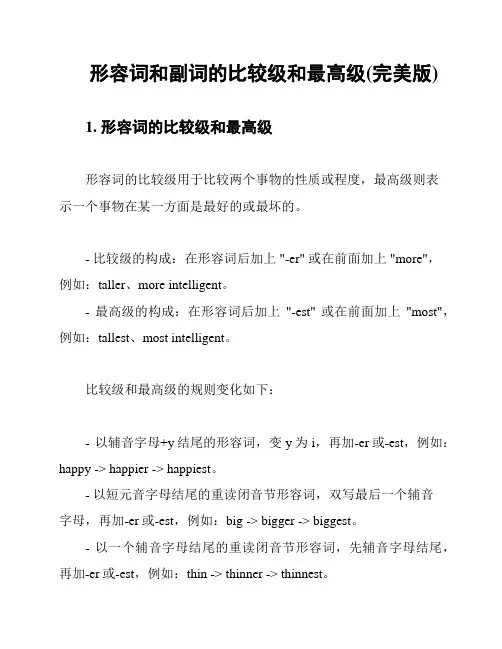
形容词的比较级用于比较两个事物的性质或程度,最高级则表示一个事物在某一方面是最好的或最坏的。
- 比较级的构成:在形容词后加上 "-er" 或在前面加上 "more",例如:taller、more intelligent。
- 最高级的构成:在形容词后加上 "-est" 或在前面加上 "most",例如:tallest、most intelligent。
比较级和最高级的规则变化如下:
- 以辅音字母+y结尾的形容词,变y为i,再加-er或-est,例如:happy -> happier -> happiest。
- 以短元音字母结尾的重读闭音节形容词,双写最后一个辅音字母,再加-er或-est,例如:big -> bigger -> biggest。
- 以一个辅音字母结尾的重读闭音节形容词,先辅音字母结尾,再加-er或-est,例如:thin -> thinner -> thinnest。 - 多音节和部分双音节形容词前加more或most,例如:beautiful -> more beautiful -> most beautiful。
2. 副词的比较级和最高级
副词的比较级和最高级的构成方式与形容词类似,只是在形容词的基础上加上 "-ly" 构成副词。
- 比较级的构成:在副词后加上 "-er" 或在前面加上 "more",例如:faster、more quickly。
- 最高级的构成:在副词后加上 "-est" 或在前面加上 "most",例如:fastest、most quickly。
与形容词类似,副词的规则变化也遵循相同的规律。
3. 形容词和副词的比较级和最高级示例
- 比较级示例:
- 形容词:tall(高的) -> taller(更高的)
- 副词:quickly(快速地) -> more quickly(更快地)
形容词和副词的比较级和最高级
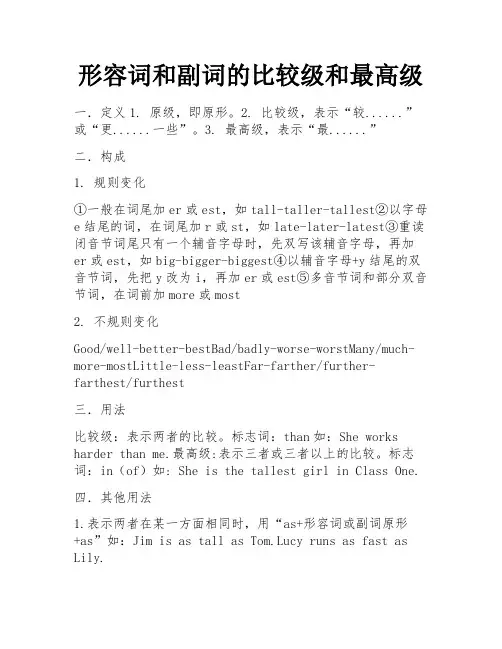
形容词和副词的比较级和最高级
一.定义1. 原级,即原形。2. 比较级,表示“较......”或“更......一些”。3. 最高级,表示“最......”
二.构成
1. 规则变化
①一般在词尾加er或est,如tall-taller-tallest②以字母e结尾的词,在词尾加r或st,如late-later-latest③重读闭音节词尾只有一个辅音字母时,先双写该辅音字母,再加er或est,如big-bigger-biggest④以辅音字母+y结尾的双音节词,先把y改为i,再加er或est⑤多音节词和部分双音节词,在词前加more或most
2. 不规则变化
Good/well-better-bestBad/badly-worse-worstMany/much-more-mostLittle-less-leastFar-farther/further-farthest/furthest
三.用法
比较级:表示两者的比较。标志词:than如:She works
harder than me.最高级:表示三者或三者以上的比较。标志词:in(of)如: She is the tallest girl in Class One.
四.其他用法
1.表示两者在某一方面相同时,用“as+形容词或副词原形+as”如:Jim is as tall as Tom.Lucy runs as fast as
Lily. 2.表示一方在某方面不如另一方时,用“not as/so+形容词或副词原形+as”如:Jim is not as/so smart as Tom.
3.比较级+and+比较级,more and more+原级,译为越来越......如:The weather is getting colder and
colder.She bees more and more beautiful.
4.the+比较级,the+比较级。意思是越......越......如:The harder you are,the luckier you are.
形容词和副词的比较级和最高级

路漫漫其修远兮,吾将上下而求索 -
百度文库
11 形容词和副词的比较级和最高级
一、形容词和副词的比较级和最高级的变化方法如下
(1) 符合规则的:
(2)几个不规则的形容词和副词的比较级和最高级如下表:
二、形容词和副词比较级的用法
路漫漫其修远兮,吾将上下而求索 -
百度文库
22
注意:有些形容词,如 dead, empty, round, sure, woolen 等受本身含义的限制,没有比较级。
例题解析
1. He has ________ friends than I.
A. much more B. many more C. very more D. too more
解析: 后面有可数名词复数时, many的比较级形式为many more 修饰。 应选B.
2. Which is the _________ country, Japan or Australia?
A. more developed B. more developing C. most developed D. most
developing
解析: 两者比较用比较级, 表示"发达"用 developed, 而developing 是 "发展中的" 意思
3. There were _______ shops in the city in 1982 than in 1990.
A. little B. few C. fewer D. less
解析:little 不能修饰可数名词,两者比较需用比较级, 所以应选C.
4. The Huang River is the second __________ river in our country.
形容词和副词的比较级和最高级 2
第 1 页 形容词与副词的比较级与最高级
大多数形容词(性质形容词)与副词有比较级与最高级的变化,即原级、比较级与最高级,用来表示事物的等级差别。原级即形容词的原形,比较级与最高级有规则变化与不规则变化两种。
一. 形容词的比较级与最高级变化:
1) 规则变化
音节数量 比较级 最高级
单音节 + -er + -est
tall taller tallest
以一个辅音字母结尾的闭音节单音节词,双写结尾的辅音字母,再加-er,-est:
fat fatter fattest
big bigger biggest
sad sadder saddest
音节数量 比较级 最高级
双音节 + -er OR more +
adj + -est OR most
+ adj
以 -y, -ly, 结尾的词,"以辅音字母+y"结尾的双音节词,改y为i,再加-er,-est 第 2 页 以 -le, 或者 -ure结尾的词,加-r;以-er,-ow结尾的双音节词未尾加-er,-est
happy happier/ more
happy happiest/ most
happy
yellow yellower/ more
yellow yellowest/
most yellow
simple simpler/ more
simple simplest/ most
simple
tender tenderer/ more
tender tenderest/
most tender
如果你不确认, 用 MORE + OR MOST +
注意:"以辅音字母+y"结尾的双音节词,改y为i,再加-er,-est
busy busier busiest
音节数量 比较级 最高级
三个以上的音节 more + adj most + adj
important more important most important
形容词和副词的比较级、最高级
形容词和副词的比较级和最高级
soft softer softer
large larger largest
wide wider widest
big bigger biggest
thin thinner thinnest
healthy healthier healthiest
funny funnier funniest
happy happier happiest
heavy heavier heaviest
noisy noisier noisiest
easy easier easiest
easily more easily most easily
slowly more slowly most slowly
interesting more interesting most interesting
excited more excited most excited
expensive more expensive most expensive
good better best
many/much more most
bad/badly/ill worse worst
little less least
far farther/further farthest/furthest
old older/elder oldest/eldest
形容词和副词的转换
good well
easy easily
terrible terribly
complete completely
true truly
gentle gently
happy happily
angry angrily
wide widely
不规则动词
am, is was been
(完整版)形容词和副词的比较级和最高级
(完整版)形容词和副词的比较级和最高级
1
一、形容词和副词的概念
形容词:是修饰名词(人或事物),表示名 词的性质,特征或属性一种词类.
它在句中作定语、表语和宾语补足语。
副词:用来修饰动词、形容词及其他副词的 词叫副词.副词在句中多作状语。
二、形容词和副词的用法
①形容词作定语一般放在被修饰 的名词之前。
如: a new book, two big trees 等.
②形容词放在系动词be , get, turn, become, keep, stay, look, smell, feel, taste,
sound, 等之后.
如:1。I am short。
2。She looks fine.
3.They turn green.
③如果形容词修饰不定代词something,
anything, everything, nothing等时,要放在不定代词后面。
如:something interesting nothing new
④副词放在所修饰的动词之后、形容词和副 词之前.如果前面是行为动词,则后面用副词。
如: 1.She works hard .(修饰动词)
2.I am very busy.(修饰形容词)
3。He runs too quickly .(修饰副词)
4。We play happily。 (修饰动词)
⑤通常在形容词后加-ly变成副词。 (完整版)形容词和副词的比较级和最高级
2
形容词副词比较级最高级变化形式归纳
大多数形容词和副词有比较级和最高级的变化,即原级、比较级和最高级,用来表示事物的等级差别。原级即形容词的原形,比较级和最高级有规则变化和不规则变化两种。
规则变化
1.单音节以及少数双音节的词后面直接加-er 或 —est
形容词、副词的比较级和最高级
形容词、副词的原级、比较级和最高级
一、形容词、副词的比较级和最高级的构成规则
1.一般情况在原级词尾加-er,加-est;
如:small→smaller→smallest short→shorter→shortest tall→taller→tallest
great→greater→greatest clever→cleverer→cleverest narrow→narrower→narrowest
2.以不发音e结尾的单音节词,比较在原级后加-r,最高级在原级后加-st;
如:large→larger→largest nice→nicer→nicest
3.在重读闭音节(即:辅音+元音+辅音)中,先双写末尾的辅音字母,比较级加-er,最高级加-est;
如:big→bigger→biggest hot→hotter→hottest fat→fatter→fattest red→redder→reddest
wet→wetter→wettest thin→thinner→thinnest sad→sadder→saddest
4.以“辅音字母+y”结尾, 变y为i,加-er,或加-est;
如:easy→easier→easiest heavy→heavier→heaviest busy→busier→busiest
happy→happier→happiest
5.双音节词或多音节词,比较级在前面加more,最高级在前面加most;
如:beautiful→more beautiful→most beautiful different→more different→most different
easily→more easily→most easily dangerous→more dangerous→most dangerous