
五年级下册英语Module 8 Unit 2 I made a kite. 外研版
小学英语-五年级下册《Module 8 Unit 2 I made a kite》教案、教学设计
小学英语-五年级下册《Module 8 Unit 2 I made a kite》阅读课教案、教学设计Teaching aims:Knowledge aims:Students can master the rules of changing verbs into past tense and they can use simple past tense to describe an experience that happened in the past.Ability aims:Students will acquire the knowledge of making a kite and they can share an experience of their own.Emotional aims:Students will be willing to work with others and join in the class activities actively.Teaching key points and difficult points:Key points:Students can master the rules of changing verbs into past tense and they can use simple past tense to describe an experience that happened in the past.Difficult points:Students can apply simple past tense correctly in their daily life.Teaching procedures:Step 1 Lead-inGreet students and sing the chant in part 1.(Justification: the chant can build a nice atmosphere of an English class, and it also contains the verbs with –ed form, so it is a good way to help students review the knowledge that they have learned before.)Step 2 Pre-readingGive students some original verbs and invite 4 students to change them into past tense.draw-drew cut-cut make-made can-could(Justification: students’knowledge of simple past tense will be greatly enriched and they will be more willing to learn English grammar.)Step 3 While-reading1. Fast readingRead part 2 for the first time and then answer the question: If you want to make a kite, what tools should you prepare?(Justification: students may have the experience of flying a kite, which made the reading much easier, so they will share their answers actively.)2. Detailed readingRead part 2 for the second time and then fill in the blanks:(1) I _____ a dragon on a piece of yellow paper.(2) I _____ the paper.(3) I _____ sticks on it.(4) I _____ strings to it.(Justification: filling the blanks can help students have a thorough understanding of the poem. It is also a good way to improve students’reading ability.)Step 4 Post-ReadingFour students in a group, try to recite the poem to your partners and share an unforgettable experience with them.5minutes will be given to them. After that, several groups will be invited to give a presentation in front of the class.(Justification: this activity can help students improve their speaking ability, and can provide them a chance to memorize the content that they have learned in this class.)Step 5 Summary and homeworkSummary: Invite one student to summarize what we have learned today.Homework: make a poster of an interesting experience in holiday.Blackboard design:。
2015外研版五年级下册Module8--Unit2-I-made-a-kite原创、实用课件
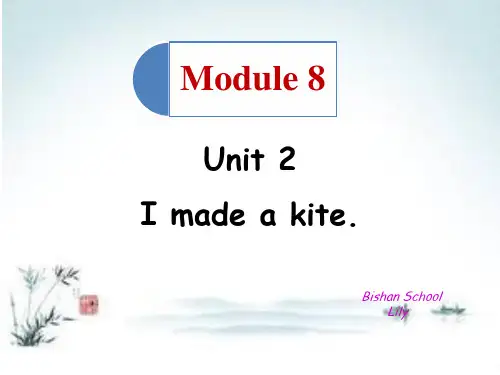
do homework go to the zoo fly a kite
A: What did you do yesterday? B: I …
went swimming made a cake
watched TV
played table tennis
went to the library played football
I painted it.
painted
I cut the paper.
cut
I put the sticks on it .
put
sticks
I tied strings to it .
tied
strings
Then I could fly my kite.
Put sticks on it. Draw a dragon. Paint it. Tie strings to it. Cut the paper.
long
finger bank
连词成句。
made, kite, I , a , my , for, sister. I made a kite for my sister.
I , of, paper, a , a, dragon, piece, on, drew.
She made a piece of paper-cut.
paper-cut
Read and match
She put the paper-cut on the window.
She had a piece of red paper.
She drew a picture on a piece of red paper.
She cut the paper with scissors.
外研版五年级下册英语Module 8《Unit 2 I made a kite.》教案

外研版五年级下册英语Module 8《Unit 2 I made a kite.》教案一、教材分析:本节课是外研版五年级下册的Module 8 Unit 2 I made a kite.,主要围绕制作风筝的话题展开。
通过学习本单元,学生将学会使用过去式动词、描述制作风筝的过程,并且认识到英语学习的乐趣。
二、教学目标:1. 知识与技能:能够听、说、读、写词语:drew (draw的过去式)、piece、paper 和scissors。
能够运用句型"I drew a dragon on a piece of yellow paper"进行表达。
掌握一般将来时的构成形式:主语 + will + 动词原形 + 其他。
培养学生的听、说、读、写和制作的能力。
2. 过程与方法:倡导合作学习、小组学习和交往式学习,促进学生互动和合作。
3. 情感态度和价值观:培养学生对学习、参与、合作和竞争的乐趣。
让学生了解如何准备礼物的方法和重要性。
三、教学重难点教学重点:掌握四个四会单词。
用英语描述大明制作风筝的过程。
教学难点:动词的过去式。
了解词语"sticks"和"strings"的意思。
四、学情分析:学生已经学习了一些基本的英语单词和句型,并具备一定的听说能力。
他们对于制作风筝这个主题可能有一些实际经验,可以通过互动和合作学习来激发学生的学习兴趣。
五、教学过程Step 1: Warm-up (热身活动)Teacher: Good morning, everyone! Today, let's talk about kites. Who here has ever flown a kite before?Student 1: I have flown a kite at the park with my family!Teacher: That's wonderful! Can you describe what a kite looks like?Student 2: A kite usually has a diamond shape with a long tail.Teacher: Excellent! What materials do we need to make a kite?Student 3: We need paper, sticks, strings, and sometimes decorations like colorful ribbons.Teacher: Perfect! Now that we have an idea about kites,let's move on to learning some new words.Step 2: Vocabulary (词汇学习)Teacher: Today, we will learn some words related to making a kite. Look at the screen, and repeat after me: drew, piece, paper, scissors, sticks, strings.Students: (Repeat the words after the teacher)Teacher: To help you remember the words, let's do some actions. When I say "scissors," let's pretend to cut with scissors.Students: (Pretend to cut with imaginary scissors)Step 3: Presentation (呈现新知)Teacher: Now, I will show you an example sentence. Pay attention to the words we just learned. Look at this yellow paper. I drew a dragon on a piece of yellow paper.Students: (Repeat after the teacher) "I drew a dragon on a piece of yellow paper."Teacher: Great job! Now, let's learn how to talk about future actions. We use the structure "will + verb" to describe something we will do. For example, "I will draw a dragon on a piece of paper."Students: (Repeat after the teacher) "I will draw a dragon on a piece of paper."Step 4: Practice (练习活动)Teacher: Now, I will divide you into small groups. Each group will choose a representative to describe the process of making a kite. The other group members can add more details or ask questions. Take turns, and remember to use the words and sentence patterns we just learned. You can also act out the steps if you'd like.(Group formation and practice activity)Student A: First, we need a piece of paper. Then, we draw a design on it using different colors.Student B: After that, we cut out the shape of the kite using scissors. We also prepare sticks and strings.Student C: Next, we attach the sticks to the paper, forming the frame of the kite. We tie the strings to the frame, and the tail is attached too.Other group members: That sounds interesting! How long should the tail be? Can we decorate the kite with ribbons?(Student representatives answer the questions and continue describing the process)Step 5: Consolidation (知识巩固)Teacher: Let's check how well you've learned. I will give you some sentences with missing words. Fill in the blanks withthe correct words we learned today.1. I ______ a dragon on a ______ of yellow paper.2. We need ______, sticks, and ______ to make a kite.(Students individually or in groups fill in the blanks) Teacher: Now, let's go over the answers together.Step 6: Extension (拓展延伸)Teacher: In this extension activity, each group will prepare a short video or presentation showing how they made a simple kite. Be creative and use the vocabulary and sentence patterns we've learned today. Then, you will present your kite-making process to the other groups. You can also ask questions or give feedback to each other.(Group preparation and presentation)Student A: Our group made a video demonstrating the steps of making a kite. We first drew colorful patterns on the paper, then cut out the kite shape. We attached the sticks and strings, and finally added a long tail. Here's our video!(Student A plays the video, and other groups watch and ask questions or give feedback)Teacher: Great job, everyone! We've learned a lot about making kites and practiced using new vocabulary and sentence patterns. Keep up the good work!六、板书设计:Vocabulary:drewpiecepaperscissorssticksstringsSentence Pattern:I drew a dragon on a piece of yellow paper.I will draw a dragon on a piece of paper.七、教学反思:在教学过程中,通过师生互动、师生对话和实际例子的呈现,学生能够更好地理解和记忆新词汇和句型。
五年级下册英语教案-Module8Unit2Imadeakite∣外研版(三起)

五年级下册英语教案Module 8 Unit 2 I made a kite | 外研版(三起)教学内容本节课我们将学习外研版五年级下册英语第八模块第二单元《I made a kite》。
本单元主要围绕制作风筝的话题展开,通过描述制作风筝的过程,学习一般过去时态的用法。
教学内容包括单词学习、语法理解、听力训练和口语表达。
教学目标1. 知识与技能:学生能够掌握本课的生词和短语,如“kite”、“paper”、“string”等,并能用一般过去时态描述制作风筝的过程。
2. 过程与方法:通过听力练习和角色扮演,学生能够提高英语听说能力,并学会在实际情境中运用所学知识。
3. 情感态度与价值观:培养学生对英语学习的兴趣,增强合作意识,同时通过制作风筝的过程,培养学生的动手能力和创造力。
教学难点1. 时态理解:一般过去时态是本节课的语法难点,学生需要理解并掌握其用法。
2. 词汇记忆:本课涉及的生词和短语较多,学生需要通过多种方式记忆和运用。
3. 口语表达:学生需要学会用英语描述制作风筝的过程,这要求他们能够灵活运用所学词汇和语法。
教具学具准备1. 教材:外研版五年级下册英语教科书。
2. 多媒体:PPT课件,包含单词、短语、语法点和听力材料。
3. 教具:风筝制作材料,如纸张、竹签、线等。
4. 学具:学生自备笔记本和文具。
教学过程1. 导入:通过展示风筝图片,引导学生谈论他们对风筝的了解,激发学生的学习兴趣。
2. 新授:介绍本课的生词和短语,通过实物展示和图片辅助记忆。
3. 练习:进行听力练习,让学生听懂并跟读课文对话。
4. 巩固:组织学生进行角色扮演,模拟制作风筝的过程,并运用一般过去时态描述。
板书设计1. Module 8 Unit 2 I made a kite2. 重点单词和短语:kite, paper, string, glue, stick, fly3. 语法点:一般过去时态的构成和用法4. 课文对话:简化的课文对话,用于听力练习和角色扮演作业设计1. 书面作业:完成课后练习题,巩固单词和语法。
2015外研版五年级下册Module8--Unit2-I-made-a-kite原创、实用课件
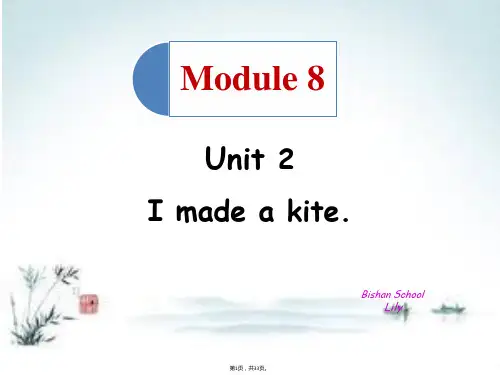
Read and learn
I drew a dragon on
一张、块
a piece of yellow paper. 把…放在…上
I painted it.
I cut the paper.
I put sticks on it.
I tied strings to it.
Then I could fly my kite.
第19页,共33页。
She made a piece of paper-cut.
第20页,共33页。
paper-cut
第21页,共33页。
Read and match
She put the paper-cut on the window.
She had a piece of red paper.
Module 8
Unit 2
I made a kite.
第1页,共33页。
Bishan School
Lily
review Will you …?
wash clothes
At this weekend:
Yes, I will.
no, I won’t.
fly a kite
play football play computer
watched TV
played table tenniws ent to the library played football
did homework
went to the zoo 第25页,共33页。
flew a kite
Listen and say.
ll
tell will
[l]
ng
Module8 Unit 2 I made a kite(教学设计)外研版(三起)英语五年级下册
Module8 Unit 2 I Made a Kite - 教学设计教学目标1.学生能够听懂并正确掌握词汇:kite, tail, ribbon, sth.累计运用的相关语言知识点。
2.学生能够理解并运用本单元所学习的动词短语:make a kite, fly a kite。
3.学生能够口头表达并书面表达制作风筝的步骤。
4.通过制作风筝的活动,培养学生与团队协作,表达自己的能力。
教学重难点1.通过本课学习,能够掌握本单元所学的词汇和动词短语。
2.能够理解并运用“make a kite, fly a kite”等短语。
3.能够说出制作风筝的步骤,并在小组内完成任务。
教学准备1.风筝制作器材(纸张、竹条、彩带)等。
2.推出风筝的场地。
3.单元词汇和相关语言知识点。
教学过程Step 1 温故知新,导入重点内容1.回顾上节课所学的内容 - 十二生肖的形象特点。
2.带读本单元短文,让学生预习相关知识点。
3.通过短文导入本节课的重点内容:学会制作自己的风筝。
Step 2 学习本单元的相关语言知识点1.带读本节课的生词 - kite,tail,ribbon。
2.通过图片、示范和动画等方式向学生展示这些单词的含义和发音。
3.引导学生对于生词的记忆和理解。
Step 3 带领学生口头说出制作风筝的步骤1.利用PPT和实物教具的方式提供参考:纸张成风筝的形状,用竹条制作风筝的骨架和插入纸张,然后用彩带装饰风筝的尾巴。
2.在提供了具体步骤的情况下,引导学生分组团队进行自我组织,设计并制作他们自己的风筝。
Step 4 小组比赛演练1.在风筝制作后,带领学生一起到宽敞的操场展示他们的作品。
2.利用比赛的形式,分组展示和飞行自己的风筝。
最后评选成果最佳团队。
总结在这节课中,学生们在实际的操作中掌握了制作风筝的方法和步骤。
同时,也锻炼了自己的协作和表达能力,在学习语言知识点的同时,他们也体验到了享受创造与完成的乐趣。
五年级英语下册Module8unit2imadeakite教案1外研版一起
Module 8 Unit 2 I made a kite教案1新设计本课是新标准一年级起点第十册第八模块,其次单元的内容,本模块主要围绕制作风筝送给将要去探望的亲人这一主题绽开,本课呈现了大明如何制作风筝的步骤。
要求学生能够正确理解、朗读课文,能够依据短文的内容正确回答老师提出的问题。
在教学的过程中,老师通过再现课文的真实情景,加强学生在真实情景下学问的实际运用,在培育学生语言运用实力的同时,通过一系列的听、说、读、写活动进一步培育学生初步阅读的实力。
2教学目标Knowledge target:1. Students can master four skill words: draw---drew, piece, paper, scissors.2. Students can use past tense to express how they made a thing.Ability target:1. Students can express the things they need for making a thing.2. Students can express how they made a thing step by step.Moral target:1. Students enjoy a lot from learning English.2. Students try to think in different ways and be creative.3学情分析本册书的教授对象是小学五年级的学生,他们已经学习了四年半的英语。
他们对英语学习有肯定的爱好,并具备肯定的英语学问,也具有了肯定的自学实力和语言组织实力,但是在敏捷应用上还有欠缺;这一年龄阶段的孩子好胜心强,集体荣誉感也强,因此在设计上采纳了任务型教学从听说入手,创设情景,设计嬉戏等激发学生学习爱好;同时为了满意不同层次学生的需求,内容设计面对全体学生,做到由易到难,让学生在开心、民主、宽松的氛围中得到不同程度的提升。
五年级英语下册 Module 8 unit 2 i made a kite课件1
He put sticks on it.
stick---棍,棒(n.) stick---粘上(vt.)
He tied strings to it. tie--- tied 系上
Let’s read and recite the text
Fill in the blanks I __d_r_e_w__ a dragon on a piece of yellow paper. I _p_a_i_n_t_e_d__ it. I __c_u_t__ the paper. I __p_u_t__ sticks on it. I __ti_e_d__strings to it . Then I __c_o_u_l_d_ fly my kite.
Module 8 Unit 2
I made a kite.
Listen and chant.
Listen and find: What did Daming use?
a piece of yellow paper scissors
sticks
strings
Listen and answer:How did Daming make a kite ?
She drew the Chinese character fu on the paper.
She cut the paper with scissors.
What did Lingling do ?
She took out a piece of red paper.
She drew the Chinese character fu on the paper. She cut the paper with scissors.
五年级下册英语教案-Module8Unit2Imadeakite
五年级下册英语教案Module8Unit 2 I made a kite. (2) 外研版(一起)教学目标1. 让学生能够理解并运用一般过去时态,描述过去发生的事情。
2. 培养学生听、说、读、写的综合语言运用能力。
3. 培养学生的动手操作能力和团队协作能力。
教学内容1. 词汇:kite, stick, paper, string等。
2. 句型:I made a kite. I used sticks, paper and string.教学重点与难点1. 教学重点:学生能够熟练运用一般过去时态描述过去发生的事情。
2. 教学难点:学生能够正确运用一般过去时态,以及掌握相关的词汇和句型。
教具与学具准备1. 教具:PPT,录音机,教学卡片。
2. 学具:学生自带的彩纸、剪刀、胶水等手工制作材料。
教学过程1. 导入:通过播放一首关于制作风筝的歌曲,激发学生的学习兴趣。
2. 新课呈现:通过PPT展示风筝的制作过程,引导学生学习新的词汇和句型。
3. 练习:通过听录音、模仿跟读、角色扮演等方式,让学生熟练掌握新的词汇和句型。
4. 应用:让学生分组,每组制作一个风筝,并描述制作过程。
板书设计1. Module8Unit 2 I made a kite.2. 重点词汇:kite, stick, paper, string等。
3. 重点句型:I made a kite. I used sticks, paper and string.作业设计1. 让学生用自己的话描述制作风筝的过程,并写下来。
2. 让学生画出自己理想中的风筝,并标注出风筝的各个部分。
课后反思通过本节课的教学,我发现学生在运用一般过去时态描述过去发生的事情方面还存在一定的困难,需要在今后的教学中加强练习。
同时,学生在手工制作风筝的过程中,表现出了很高的热情和团队协作能力,这也是我今后教学中需要继续保持和发扬的。
重点关注的细节是“教学过程”,因为这个部分涵盖了课堂活动的具体安排和实施步骤,是教学设计中最为关键的部分,直接影响到学生的学习效果和参与度。
Module8 Unit 2 I made a kite(教案)-2022-2023学年英语五年级下
Module 8 Unit 2 I Made a Kite教案1. Teaching Aims(教学目标)Language Goals(语言目标)1.To learn and master new vocabulary related to kite making.2.To learn and use appropriate sentence structures to talk aboutkite making.3.To be able to write a short paragraph about kite making.Skill Goals(技能目标)1.To develop students’ listening and speaking skills by practicing asking and answering questions about kite making.2.To develop students’ reading skills by learning new vocabulary words related to kite making and reading a short text about kite making.3.To develop students’ writing skills by writing a short paragraph about kite making.Emotional Goals(情感目标)1.To encourage team building and collaboration by working together to make a kite.2.To inspire students’ creativity and imagina tion by allowing them to design their own kites.2. Teaching Key Points(教学重点)1.Vocabulary related to kite making.2.Appropriate sentence structures to talk about kite making.3.Writing a short paragraph about kite making.3. Teaching Difficulties(教学难点)1.Developing students’ listening and speaking skills by practicing asking and answering questions about kite making.2.Encouraging team building and collaboration by working together to make a kite.4. Teaching Methods(教学方法)1.Discussion.2.Group work.3.Demonstration.5. Teaching Procedures(教学过程)Step 1: Warm-up Activity(热身活动)1.Greet the students.2.Ask the students if they have ever made a kite. If they have, ask them to share their experiences.3.Introduce the vocabulary words related to kite making.Step 2: Vocabulary(词汇)1.Review vocabulary words related to kite making.2.Introduce new vocabulary words related to kite making.Step 3: Reading(阅读)1.Read a short text about kite making.2.Ask the students to answer questions based on the text.Step 4: Group Work(小组活动)1.Divide the students into groups.2.Instruct the groups to design and make their own kites using the materials provided.3.Walk around the classroom and offer assistance as needed.Step 5: Presentations(展示)1.Ask each group to present their kite to the class.2.Instruct the students to ask each group questions about their kite.Step 6: Writing(写作)1.Instruct the students to write a short paragraph about their kite.2.Walk around the classroom and offer assistance as needed.Step 7: Conclusion(总结)1.Review the vocabulary words related to kite making.2.Ask the students to share what they learned about kite making.3.Bid farewell to the students.6. Homework(作业)1.Ask the students to write a short essay about their most memorable experience making a kite.2.Encourage the students to include the new vocabulary words they learned in class.7. Blackboard Design(板书设计)Vocabulary Sentence Structurestail I made a kite.frame The kite has a tail.fabric The kite has a frame.string The kite has fabric.kite The kite has a string.8. Teaching Media(教学媒体)puter2.Projector3.Whiteboard and markers4.Pictures of different kites.。