
人教版七年级英语下册Unit11 SectionB 1a-2c
新目标七年级下英语英语Unit11 Section A(1a-2c)课件

-What do you think of Jay? can’t stand him. - I _________
不能忍受
love
like don’t mind
don’t like can’t stand
Look! They are TV shows. What kind of TV shows do you like best? Let’s discuss together!
Unit 11 What do you think of game shows?
Section A (1a - 2c)
Free talk:
-What do you think of the song?
love it. - I _____
Free talk:
-What do you think of Yao Ming? - I _____ like him.
Free talk:
-What do you think of Zhu Tao? don’t mind - I ________ him. 不在乎
艺术人生
Free talk:
-What do you think of He Wei? don’t like him. - I _________
Free talk:
love
opinions
What do you think of …
likes and dislikes
Write a passage about what different people think of TV shows?
B. C.
D.
E.
A.
1. love 2. like 3. don’t mind 4. don’t like 5.can’t stand
人教版七年级英语下册教学课件(RJ) Unit 12 Section B ( 1a-2c)

6.I lost my keys two days a_g_o___. 7.The m_o_o_n___ goes around the earth (地球). 8.I am a student and I study in a hh_ig__h__ school now. 9.The box is so heavy that the boy can't m_o_v_e___ it. 10.There are many kinds of animals living in the ff_o_r_e_s_t_.
1.How was Lisa’s weekend? It was interesting but scary.
2. Where did Lisa and her family go last weekend? They went to a small village in India.
3. How did Lisa feel when she saw the snake? She was so scared that she couldn’t move.
4. What did Lisa and her sister do? They shouted to their parents.
5. What did their parents do? Why did they do that? Her father jumped up and down to scare the snake.
fly to...意为“乘飞机去……”。 eg:Sometimes they fly to Shanghai.有时他们乘飞机去上海。 ③fly还可作可数名词,意为“苍蝇”。
2023年人教版七年级英语下册《Unit 11 How was your school trip》句
Unit 11 How was your school trip?句型设计Learning Objectives一、Topics(话题):School trips二、Functions (功能)Talk about past events三、Structures (结构)1. Simple past tense (I)2. How questions3. Yes/No questions and short answers4. Adjectives of description四、Target Language (目标语言)How was your school trip?It was great.Did you go to the zoo?No, I didn’t. I went to the farm.Were the strawberries good?Yes, they were.五、Vocabulary (词汇)countryside, cow, horse, farm, farmer, flower, sun, museum, fire, robot, guide, gift, feed, grow, pick, excellent, lovely, slow, fast, expensive, cheap, dark, exciting, interested, anything, everythinggo for a walk, milk a cow, ride a horse, feed chickens, take some photos, talk with a farmer, grow apples, be interested in …六、Skills (技能)Listening for key informationScanning in reading七、Recycling (复习巩固)great, terrible, interesting, boring, large, cool, hot, lucky, delicious八、教材分析本单元的话题是谈论学校郊游,要求学生学会使用一般过去式讲述过去发生的事情,学会用一般过去时写日记。
2020年人教版英语七年级下册Unit11 Section A (1a-2d) 教案

2020年人教版英语七年级下册Unit 11 How was your school trip?Section A (1a-2d)Knowledge Goals:Key words:milk, cow, horse, feed, farmer, quite, anything, grow, farm, pick, excellent, countryside,Key phrases:milk a cow, ride a horse, feed chickens, in the countryside, quite a lotKey sentences:How was your school trip? It was great!Did you go to the zoo? No, I didn’t. I went to a farm.Did you see any cows? Yes, I did. I saw quite a lot.Did Carol ride a horse? No, she didn’t. But s he milked a cow.Were the strawberries good? Yes, they were. No, they weren’t.Ability Goals:Can use past past to describe past events.Moral Goals:Learn to express your views objectively and cultivate an optimistic personality. Teaching important points:The judgement and selection of simple past tense.Teaching difficult points:To use of simple past tense correctlyTeaching aids:a tape player,some pictures,CAITeaching proceduresStep 1 Warming upShow some pictures and talk about the present events and past events.1. What d o es he/she often do on weekends?2. What did you do last weekend?Step 2 Presentation1. Show a picture and tell Ss:Yesterday Carol and his classmates went to the farm. What didn’t they do on the farm? 2. Show some pictures again and try to get the past tense verbs expressions according to the pictures.rode a horse/milked a cow/fed chickens/talked with farmers …Step 3 Listening and speaking1. Work on1a.Match the phrases with the pictures.went for a walk milked a cow rode a horsefed chickens talked with a farmer took some photos2. Listen to the tape and answer the question.Where did Carol go on her school trip? Did Carol see any chickens?3. Work on 1b.Listen and circle the three things Carol did on her school trip in 1a.went for a walk milked a cow rode a horsefed chickens talked with a farmer took some photos4. Role-play the conversation.Bob: Hi, Carol. How was your school trip yesterday?Carol: It was great!Bob: ____ you go to the zoo?Carol: No, I didn’t. I went to a _____. Look, here are my photos.Bob: Did you see any _____?Carol: Yes, I did. I saw _________.Bob: ____ you ride a horse?Carol: No, I didn’t. But I ______ a cow.Bob: Did you feed any chickens?Carol: Well, I ____ some chickens but I ______ feed them.Bob: What ____ did you do?Carol: My friends and I ___ for a walk around the farm and ____ with a farmer.5. Work on 1c.Ask and answer questions about Carol’s school trip.①Work on 2a. Listen and check the questions you hear.②Work on 2b. Listen again. Circle T for true or F for false.Check the answer.③Work on 2c. Ask and answer questions about Carol’s visit to the farm.Step 4 Role- play the conversation in 2d.1. Read the conversation in 2d and answer the questions.Where did Eric go last weekend?Why did he go there?What did he do?How was the weather there?What did he do at night?How did Eric feel about the trip?2.Role-play the conversation.Step 5 Exercises用适当的单词填空。
人教版七年级下册英语Unit 11 SectionA (1a-2d)
e.g. It’squite/verynecessarytostopschoolbullying. 阻止校园欺凌很有必要。 MybrotherthinksWangFengsingsquite/verywell. 我哥哥认为汪峰唱得非常好。 Shequitelikesswimming. 她非常喜欢游泳。 Tomisaverygoodboy. =Tomisquiteagoodboy. 汤姆是个很好的男孩。
We grow flowers in our
及物动词,“种植;
garden.
栽培”,过去式是 我们在我们的花园里
grew。
种花。
In spring, everything
gro
begins to grow. 在春天,
w
万物开始生长。
典例 —Whydoyouwanthimtojoinus? —Becauseheis________. B A. goodaquiteplayerB. quiteagoodplayer C. aquitegoodplayerD. quitegoodaplayer
【点拨】本题考查quite的用法。quite同形容词连用修饰名 词时,放在不定冠词之前。quiteagoodplayer意为“一位 相当好的运动员”。
2b
Listenagain.CircleTfortrueorFforfalse.
1.ThefarmershowedCarolaroundthefarm. T F6 2.Carollearnedalotaboutfarming. T F 3.Thefarmersgrowstrawberriesfrom DecembertoJune. T F 4.Thefarmersdon'tgrowapples.T F 5.Carolpicked❼somestrawberries andtookthemhome. T F
人教版七年级下册英语unit 11Section A 1a-2d课件
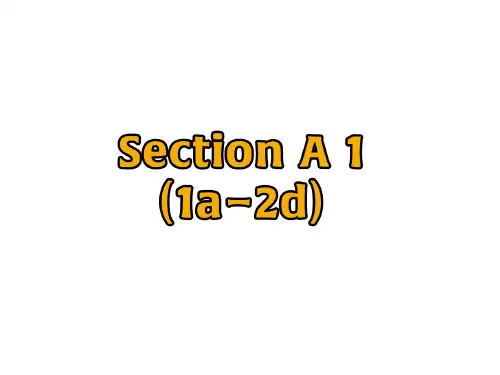
Bob: Did you ride a horse? Carol:பைடு நூலகம்No, I didn’t. But I milked a cow. Bob: Did you feed any chickens? Carol: Well, I saw some chickens but I
didn’t feed them. Bob: What else did you do? Carol: My friends and I went for a walk
A: What did Carol do? B: She picked some strawberries. A: Was the farmer friendly? B: … A: What did Carol see? B: …
A: Do they grow apples? B: … A: When do they pick apples? B: … A: What did Carol pick on the farm?
1. I visited my grandparents in the countryside.
名词country和countryside都有“乡村; 农村”的意思, 往往与限定词“the”搭配 连用, 尤其是country。 e.g. We spent a pleasant day in the
1a Match the phrases with the pictures.
1. went for a walk e 2. milked a cow b 3. rode a horse a 4. fed chickens c 5. talked with a farmerf 6. took some photos d
人教版英语七年级下册Unit2SectionB1a—2c说课稿
-学生能够听懂关于笔友来自哪个国家的提问,并能准确回答;
-学生能够阅读理解关于笔友的个人信息,并能回答相关问题;
-学生能够用英语介绍自己的笔友,包括国家、地理位置、文化风俗等。
2.过程与方法:
-通过听力练习,培养学生获取和加工信息的能力;
-通过阅读理解,提高学生分析和解决问题的能力;
四、教学过程设计
(一)导入新课
新课导入是激发学生兴趣和注意力的重要环节。我将采用情境导入法开始本节课的教学。具体方式如下:首先,我会利用多媒体播放一段关于不同国家风土人情的短视频,让学生在观看的过程中感受不同国家的魅力。视频结束后,我会提出一些引导性的问题,如“你们看到了哪些国家?”,“这些国家的特色是什么?”等,以此来引导学生思考和讨论。接着,我会自然过渡到本节课的主题“Where is your pen pal from?”,并告诉学生今天我们将学习如何用英语介绍自己的笔友及其来自的国家。这种方式能够快速吸引学生的注意力,激发他们的学习兴趣,为新课的学习奠定良好的基础。
1. 1a部分:听力练习,要求学生听懂并回答关于笔友来自哪个国家的问题。
2. 1b部分:阅读理解,让学生阅读一段关于笔友的个人信息,理解文章内容并回答问题。
3. 2c部分:口语练习,要求学生根据所给信息,用英语介绍自己的笔友。
主要知识点有:国家名称、地理位置、文化风俗、个人信息介绍等。
(二)教学目标
3.然后,我会通过阅读理解练习,让学生在语境中进一步学习和巩固这些知识点,同时培养他们的阅读技巧。
4.在讲解过程中,我会适时提出问题,鼓励学生思考,如“你们认为为什么不同的国家会有不同的文化?”等,以促进学生的深入理解。
5.最后,我会通过实例分析和总结,帮助学生梳理和归纳所学知识,确保他们对新知识的掌握。
七年级英语下册人教版Unit1 Section B 1a-2c 教学设计
七年级英语下册人教版Unit1 Section B 1a-2c 教学设计教学目标•学习七年级英语下册Unit1 Section B的词汇和句型。
•通过听力和口语练习培养学生的听说能力。
•培养学生的合作与协作能力。
•培养学生的归纳总结和运用所学知识的能力。
教学重点•学习并掌握与家庭成员相关的英语词汇。
•学习并掌握询问家庭成员信息的句型。
教学准备•PPT课件•教材和教辅资料•黑板、白板和彩色粉笔•学生练习册教学过程1. 导入新课(5分钟)•引导学生回顾上一节课的内容,复习与家庭成员相关的英语词汇。
•向学生介绍本节课的主题,引起学生的兴趣。
2. 学习词汇(15分钟)•利用PPT呈现单词及其图片,让学生逐个学习和认读。
•引导学生通过图片来记忆和理解词汇的含义。
•使用示意图或手势帮助学生记住词汇。
3. 听力训练(15分钟)•播放录音,学生跟读并理解录音内容。
•听录音,学生通过听力练习来巩固所学词汇。
4. 情景对话(20分钟)•将学生分为小组,进行情景对话练习。
示例对话:A: Who’s that?B: He’s my older brother.A: What’s his name?B: H is name is Tom. He’s a doctor.A: What does he look like?B: He’s tall and strong.•各小组轮流展示对话,教师进行点评和改进。
5. 综合练习(25分钟)•学生打开教材,完成1a和1b的练习。
练习1a: 根据图片和提示填写句子。
Example:A: Who’s that?B: He’s my _______.A: What does he do?B: He’s a ________.练习1b: 听录音并填写缺少的信息。
Example:A: Who’s the woman, Bob?B: She’s my ________, my ________.•学生小组内互相检查答案,并向全班展示他们的答案。
人教版七年级下Unit2 Section B(1a-2c)课件(共45张PPT)
1b Ask and answer with your partner.
They usually eat past six in the morning. breakfast?
1b Ask and answer with your partner.
do homework eat dinner eat breakfast
in the morning in the afternoon
in the evening
go to bed
1b Ask and answer with your partner.
They usually go to bed at a When do students quarter to ten in usually go to bed? the evening.
1e Ask and answer questions about Tom.
When does Tom usually get up?
He usually gets up at half past five.
1e Ask and answer questions about Tom.
When does Tom usually ……?
unhealthy healthy
eat ice-cream
unhealthy
eat hamburgers
unhealthy
eat vegetables
healthy
2a Talk about the activities you think are healthy.
√ eat ice-cream __ eat quickly __ go to bed early__
最新人教版新目标初中英语七年级下册《Unit 10 Section B(1a-2c)第四课时教学设计及教学反思》精品教案
前言:该教学设计(教案)由多位一线国家特级教师根据最新课程标准的要求和教学对象的特点结合教材实际精心编辑而成。
实用性强。
高质量的教学设计(教案)是高效课堂的前提和保障。
(最新精品教学设计)Unit 10I'd like some noodles.第四课时 Section B(1a-2c)Target Navigation【目标导航】Key words and phrases:dumpling,porridge,onion,fish,pancake,world,answer,different,cake,ca ndle,age,blow,if,will,candy,lucky,popular,idea,around the world,make a wish,the UK,get popular,cut up,bring good luck to…Key sentences:1.—I like dumplings,fish and orange juice.—I don't like onions,green tea or porridge.2.What would people like to eat on their birthday?3.The birthday person must make a wish and blow out the candles.4.All of these birthday foods may be different,but the ideas are the same.Skills:阅读短文,摘录关键信息,提高阅读能力。
Emotion:积极参与小组活动,大胆展示。
培养热爱生活,关爱他人,团结协作精神。
The guidance of learning methods【学法指导】让学生围绕着课堂任务在小组中分工合作,在活动中相互探讨、相互交流、相互合作。