
人教版小学英语五六年级动词
矿产资源开发利用方案编写内容要求及审查大纲
矿产资源开发利用方案编写内容要求及《矿产资源开发利用方案》审查大纲一、概述
㈠矿区位置、隶属关系和企业性质。
如为改扩建矿山, 应说明矿山现状、
特点及存在的主要问题。
㈡编制依据
(1简述项目前期工作进展情况及与有关方面对项目的意向性协议情况。
(2 列出开发利用方案编制所依据的主要基础性资料的名称。
如经储量管理部门认定的矿区地质勘探报告、选矿试验报告、加工利用试验报告、工程地质初评资料、矿区水文资料和供水资料等。
对改、扩建矿山应有生产实际资料, 如矿山总平面现状图、矿床开拓系统图、采场现状图和主要采选设备清单等。
二、矿产品需求现状和预测
㈠该矿产在国内需求情况和市场供应情况
1、矿产品现状及加工利用趋向。
2、国内近、远期的需求量及主要销向预测。
㈡产品价格分析
1、国内矿产品价格现状。
2、矿产品价格稳定性及变化趋势。
三、矿产资源概况
㈠矿区总体概况
1、矿区总体规划情况。
2、矿区矿产资源概况。
3、该设计与矿区总体开发的关系。
㈡该设计项目的资源概况
1、矿床地质及构造特征。
2、矿床开采技术条件及水文地质条件。
人教版(PEP)小学英语-(三、四、五、六年级)-单词表(附注音标)

人教版小学英语•三年级上册•单词表Unit 1pen [pen]钢笔pencil ['pensəl]铅笔pencil-case ['pensəlkeis]铅笔盒ruler ['ru:lə]尺子eraser [i'reizə]橡皮crayon ['kreiən]蜡笔book [buk]书bag [bæɡ]书包sharpener['ʃɑ:pənə]卷笔刀school [sku:l]学校Unit 2head[hed] 头face[feis] 脸nose[nəuz] 鼻子mouth ]mauθ]嘴eye [ai]眼睛ear [iə]耳朵arm[ɑ:m] 胳膊finger['fiŋɡə] 手指leg [leɡ]腿foot [fut]脚body ['bɔdi]身体Unit 3red [red]红色的yellow ['jeləu]黄色的green [ɡri:n]绿色的blue [blu:]蓝色的purple ['pə:pl] 紫色的white [hwait] 白色的black [blæk]黑色的orange ['ɔrindʒ] 橙色的pink [piŋk]粉色的brown [braun]棕色的Unit 4cat [kæt] 猫dog [dɔɡ, dɔ:ɡ]狗monkey ['mʌŋki]猴子panda ['pændə]熊猫rabbit ['ræbit]兔子duck dʌk] 鸭子pig [piɡ]猪bird [bə:d]鸟bear [bεə]熊elephant ['elifənt]大象mouse ]maus, mauz]老鼠squirrel ['skwə:rəl] 松鼠Unit 5cake [keik] 蛋糕bread [bred]面包hot dog 热狗hamburger ['hæmbə:ɡə]汉堡包chicken ['tʃikin]鸡肉French [frentʃ] Fries 榨薯条Coke [kəuk] 可乐juice [dʒu:s] 果汁milk[milk]牛奶water['wɔ:tə] 水tea[ti:]茶coffee ['kɔfi]咖啡Unit 6one [wʌn]一two [tu:]二three[θri:] 三four [fɔ:]四five [faiv] 五six[siks] 六seven['sevən] 七eight [eit]八nine[nain] 九ten[ten]十doll [dɔl]玩具娃娃boat [bəut]小船ball [bɔ:l]球kite[kait] 风筝balloon ]bə'lu:n] 气球car [kɑ:]小汽车plane [plein] 飞机人教版小学英语•三年级下册•单词表Unit 1boy [bɔi]男孩girl [ɡə:l] 女孩teacher ['ti:tʃə] 教师student ['stju:dənt]学生this [ðis, 弱ðəs] 这个my 我的friend [frend] 朋友I’m=I am 我是nice [nais]好的;愉快的good morning ['mɔ:niŋ] 早上好good afternoon [,ɑ:ftə:'nu:n]" 下午好meet [mi:t]遇见;碰见goodbye [,ɡud'bai] 再见too [tu:] 也;太Unit 2father ['fɑ:ðə] 父亲;爸爸dad 爸爸口语mother ['mʌðə]母亲;妈妈mom 妈妈口语man [mæn] 男人woman ['wumən]女人grandmother ['ɡrænd,mʌðə] 外祖母grandma ['ɡrændmɑ:](口语(外)祖母grandfather ['ɡrænd,fɑ:ðə](外)祖父grandpa ['ɡrændpɑ:](口语(外)祖父sister ['sistə] 姐妹brother ['brʌðə] 兄妹let’s=let [let] us [ʌs] 让我们great [ɡreit] 太好了really ['riəli, 'ri:li] 真地;确切地and ænd, 和;并且how [hau] 多么;怎么样Unit 3eleven [i'levən]十一twelve [twelv] 十二thirteen 'θə:'ti:n]十三fourteen ['fɔ:'ti:n]十四fifteen ['fifti:n]十五sixteen ['siks'ti:n] 十六seventeen [,sevən'ti:n] 十七eighteen ['ei'ti:n] 十八nineteen [,nain'ti:n] 十九twenty ['twenti] 二十how [hau] many ['meni]多少can [kæn, kən] 能够;可以look [luk] at [强æt, 弱ət]看;瞧Unit 4peach [pi:tʃ]桃pear [pεə]梨orange ['ɔrindʒ] 橙子watermelon ['wɔ:təmelən]西瓜apple ['æpl] 苹果banana [bə'nɑ:nə] 香蕉strawberry ['strɔ:bəri]草莓grape [ɡreip]葡萄like [laik]喜欢some [sʌm, 一些;某些thanks 多谢Unit 5bus [bʌs]公共汽车bike [baik] 自行车taxi ['tæksi] 出租车jeep [dʒi:p]吉普车desk [desk]课桌chair [tʃεə]椅子Walkman 随身听lamp [læmp]台灯your [jɔ:, jəu, 弱jə] 你的;你们的zoo [zu:] 动物园Unit 6small [smɔ:l] 小的big [biɡ]大的long [lɔŋ, lɔ:ŋ] 长的short [ʃɔ:t] 短的;矮的tall [tɔ:l] 高的giraffe [dʒi'rɑ:f] 长颈鹿deer [diə] 鹿小学英语四年级单词表Unit1window[ ' windəu ]窗户board [ bɔ:d ]写字板light ['lait ]灯;管灯picture[ 'piktʃə ]画;图画door[ dɔ: ]门.floor[ flɔ: ] 地板.classroom[ 'klɑ:srum ]教室many[ 'meni ]许多的our[ 'auə ] 我们的. classmate[ 'klɑ:smeit ]同学have a look[ luk ]看一看seat[ si:t ] 座位.near[ niə ]在…的旁边new[ nju: ]新的where[wεə ]在哪里computer[ kəm'pju:tə ]计算机teacher’s desk[ desk ]讲台wall[ wɔ:l ]墙fan[ fæn ]扇子;电扇clean[ kli:n ]打扫;清洁;擦干净的unit2good idea [ ɡud ] [ ai'diə]好主意all right[ ɔ:l ] [ rait ]好吧;好的good job [dʒɔb]干得好Chinese book [ buk ]语文书English book英语书math book[ mæθ]数学书schoolbag [ 'sku:lbæɡ]书包story -book['stɔ:ri ]故事书notebook [ 'nəutbuk ]笔记本colour [ 'kʌlə ]颜色fat [ fæt ]胖的may [ mei ]可以sure [ ʃuə] 当然可以.here you are[ hiə ]给你twenty [ 'twenti ]-one二十一thirty [ 'θə:ti ] 三十.thirty-one三十一forty [ 'fɔ:ti ]四十forty-on四十一fifty[ 'fifti ]五十too many太多了heavy [ 'hevi ] 重的;沉重的.sorry [ 'sɔ:ri ]对不起.unit3long hair [ lɔŋ] [ hεə ] 长头发.short hair[ ʃɔ:t ]短头发thin[ θin ]瘦的strong[ strɔŋ ]强壮的quiet[ 'kwaiət ]安静的.friend[ frend ] 朋友.Chinese [trai'ni:z] n.中文,汉语;中国人adj. 中国的,中国人的;photo[ 'fəutəu ] 照片. .music[ 'mju:zik ]音乐science[ 'saiəns ] 科学.sports[ spɔ:ts ] 体育运动.painting[ 'peintiŋ ]绘画computer game[ kəm'pju:tə][ ɡeim ]电脑游戏her[ hə: ]她的right [ rait ]对的;正确的unit4study [ 'stʌdi ]书房.bathroom [ 'bɑ:θrum ]卫生间bedroom [ 'bedrum ]卧室living [ 'liviŋ ] room起居室kitchen [ 'kitʃin ]厨房fish [ fiʃ]鱼. .room [ ru:m ]房间open [ 'əupən ]打开close [ kləuz ] 关上.phone [ fəun ]电话sofa [ 'səufə ]沙发shelf [ ʃelf ] 书架. .fridge [ fridʒ]冰箱unit5rice [ rais ]米饭noodle(s)['nu:dl]面条(复数)soup [ su:p ]汤vegetable [ 'vedʒitəbl ] 蔬菜.beef [ bi:f ]牛肉dinner [ 'dinə ] 晚餐;正餐.wait [ weit ] 等.hungry [ 'hʌŋɡri ]饥饿的knife [ naif ]刀chopstick(s)['tʃɔpstik ]筷子spoon [ spu:n ]勺子plate [ pleit ]盘子plane [ plein ]飞机fork [ fɔ:k ]叉子pass [ pɑ:s]传递ready[ 'redi ] 准备好了.try[ trai]尝试helpyourself[ help ] [jɔ:'self]随便吃show[ ʃəu ]展示yummy[ 'jʌmi ] 好吃的.use[ ju:z ]使用unit6family[ 'fæmili ]家庭parents['pɛərənts]父母uncle[ 'ʌŋkl ] 叔叔;舅舅.aunt[ ɑ:nt ]姨;姑姑;婶;.baby[ 'beibi ] 婴儿. .people[ 'pi:pl ]人member[ 'membə ]成员.only[ 'əunli ]只有;仅仅puppy[ 'pʌpi ]小狗baseball player ['beisbɔ:l] [ 'pleiə ]棒球运动员driver[ draivə ] 司机.doctor[ dɔktə ]医生farm[ fɑ:m ]农场farmer[ 'fɑ:mə ]农民nurse[ nə:s ]护士四年级下学期Unit1playground['pleiɡraund ]操场garden ['ɡɑ:dn ]花园teacher,s-office['ɔfis]教师办公室library[ 'laibrəri ]图书馆. canteen[ kæn'ti:n ]食堂first[ fə:st ]第一.visitor[ 'vizitə ]客人;参观者there[ ðεə ]哪儿;那里lunch[ lʌntʃ]午餐this way[ wei ]这边that [ðæt]那;那个.art room[ɑ:t] [ru:m]绘画教室computer room 计算机教室washroom['wɔʃrum]卫生间music room['mju:zik]音乐教室.gym[ dʒim ]体育馆.TV room电视机房second[ 'sekənd ]第二cool [ ku: ]订好的;酷的. Unit2English class英语课music class[ klɑ:s ]音乐课breakfast[ 'brekfəst ] 早餐. . P.E. class体育课over[ 'əuvə ]结束go to the playground[ 'pleiɡraund ] . 去操场just a minute['minit]再多一会go home[ həum ]回家kid[ kid ]小孩;孩子run[ rʌn ]跑.get up [ ɡet ][ ʌp ]起床go to school [sku:l]上学go to bed上床睡觉ready[ 'redi ]准备好的hurry[ 'hʌri ]抓紧;赶快. math[ mæθ]数学Chinese['tʃai'ni:z]n. 中文,汉语;中国人adj. 中国的,中国人的;中国话的china['tʃainə] n. 中国;瓷器England['iŋglənd]n.英格兰;英国English [ 'iŋgliʃ]a.英国的;英国人的;英语的n.英语;英国人P.E.体育class[ klɑ:s]班级;课程music[ 'mju:zik ] 音乐.for[ fɔ: ] 为;给.Unit3jacket[ 'dʒækit ]夹克衫.shirt[ ʃə:t ]衬衫.T-shirt T恤衫skirt[ skə:t ]裙子.dress[ dres ] 连衣裙.sweater [ 'swetə ]毛衣. .whose[ hu:z ]谁的no [nəu]不;不是not[ nɔt ]不;不是的jeans[dʒi:nz]牛仔裤pants[ pænts ]长裤parents ['pɛərənts]父母亲socks[sɔks]袜子shoes [ʃuːz]鞋子shorts[ʃɔ:ts]短裤these[ ði:z ]这些. .those[ ðəuz ] 那些. .what .for[ wɔt ]为什么neighbour[ 'neibə ]邻居colour[ 'kʌlə ]颜色unit4warm[ wɔ:m ]暖和的cold[ kəuld ]寒冷的cool[ ku:l ]凉爽的;酷的hot[ hɔt ]炎热的.weather[ 'weðə ] 天气.weather report[ ri'pɔ:t ] 天气预报.wear[ wεə ]穿football['futbɔ:l]足球.put on穿上. put on 动词,表示穿上衣服的动词,强调动作例: I get up and put on my coat.wear 动词,表示穿上衣服的动作,也可表示穿着衣服的状态,强调状态例: Today, he wears a red hat.rain[ rein ]n.雨vi.下雨rainy[ 'reini ] 下雨的.now[ nau ]现在snow[ snəu ]n.雪;vi.下雪snowy[ 'snəui ]下雪的.wind[ wind ]n.风windy[ 'windi ]有风的cloud[ klaud ]云cloudy[ 'klaudi ]多云的sun [ sʌn ] 太阳.sunny[ 'sʌni ]晴朗的not much[ mʌtʃ]没什么New York纽约matter[ 'mætə ]事情;麻烦have to必须;不得不unit5colourful['kʌləful ]色彩丰富的pretty[ 'priti ]漂亮的;可爱的cheap[ tʃi:p ] 便宜的.expensive[iks'pensiv]昂贵的.sixty[ 'siksti(:) ]六十seventy[ 'sevənti ] 七十.hundred[ 'hʌndrəd ]百how much多少钱ninety-nine[ 'nainti ]九十九sneakers ['sni:kəz]胶底帆布鞋;网球鞋slippers ['slipə]拖鞋sandals ['sandl]凉鞋boots[ bu:ts ]靴子want[ wɔnt ]想要.pair[ pεə ] 一双;一对.a pair of一双son[ sʌn ]儿子sun[ sʌn ]太阳size[ saiz ]尺码take [ teik ]买.them[ ðem ]它(他、她)们unit6sheep[ ʃip ]绵羊horse[ hɔ:s ]马hen[ hen ]母鸡lamb[ læm ]小羊;羔羊goat[ ɡəut ]山羊.cow[ kau ]奶牛.donkey[ 'dɔŋki ]驴子key[ ki: ]钥匙.rabbit[ 'ræbit ]兔子.pig[ piɡ]猪duck[ dʌk ]鸭子tomoto[ tə'ma:təu]西红柿cucumber[ 'kju:kʌmbə ]黄瓜potato[ pə'teitəu ]土豆onion[ 'ʌnjən ] 洋葱.carrot[ 'kærət ]胡萝卜fresh[ freʃ]新鲜的there [ ðεə ] .be 有人教版小学英语•五年级上册•单词表Unit 1Young [jʌŋ] (年轻的)funny ['fʌni] (滑稽可笑的)tall [tɔ:l] (高的strong [strɔŋ, strɔ:ŋ] (强壮的)kind [kaind](和蔼的、亲切的)old [əuld](年老的)short [ʃɔ:t](矮的)thin [θin] (瘦的)Mr (先生)from 从;来自Canada ['kænədə]加拿大like [laik] (像、喜欢)know [nəu] 知道principal ['prinsəpəl] 校长university [,ju:ni'və:səti] student ['stju:dənt, 'stu:-] 大学生strict [strikt](严格的)smart [smɑ:t] (聪明的、巧妙的)active['æktiv] (积极的、活跃的)Miss 小姐lady['leidi] 女士;小姐;夫人so much 很;非常fun[fʌn] 有趣;逗笑quiet ['kwaiət](安静的、文静的)very['veri](很、非常)but[强bʌt, 弱bət, bʌt] (但是)Unit 2Monday['mʌndi, 'mʌndei](星期一)Tuesday ['tju:zdi](星期二)Wednesday ['wenzdi; -dei] (星期三)Thursday ['θə:zdi; -dei](星期四)Friday ['fraidi] (星期五)Moral ['mɔrəl, 'mɔ:-] Studies 思想品德课Social ['səuʃəl] Studies 社会课Saturday ['sætədi; -dei] (星期六)Sunday ['sʌndei; -di] (星期天)day [dei] (天)wait [weit] 等等;等待tomorrow [tə'mɔrəu, -'mɔ:-] 明天often ['ɔfən, 'ɔftən, 'ɔ:-] 经常love [lʌv] 爱;热爱have (有、吃)on (在…..时候)do homework (做作业)watchTV (看电视)read[ri:d] books (读书)Unit 3cabbage[['kæbidʒ]] 洋白菜;卷心菜pork[pɔ:k] 猪肉mutton['mʌtən] 羊肉eggplant'eɡplɑ:nt,-plænt] (茄子)fish[fiʃ] (鱼)green[ɡri:n] beans[bi:n] (青豆)tofu (豆腐)potato[pə'teitəu (土豆)tomato[tə'mɑ:təu, -'mei-] (西红柿)for (为)lunch [lʌntʃ](中餐)we(我们)menu ['menju:, mə'nju:]菜单sound [saund]听起来Mew Mew 猫咪healthy['helθi] 健康的tasty ['teisti](好吃的)sweet [[swi:t]] (甜的)sour ['sauə](酸的)fresh [freʃ](新鲜的)salty ['sɔ:lti] (咸的)favourite ['feivərit] (最喜欢的)they are (他们是)fruit [fru:t](水果)grape [ɡreip](葡萄)now [nau] 现在have to 不得不eat [i:t]吃Unit 4empty ['empti] the trash [træʃ] 倒垃圾cook the meals [mi:ls (烧饭)water the flowers ['flauə] (浇花)sweep [swi:p] the floor [flɔ:] (扫地)clean [kli:n] the bedroom['bedru(:)m] (打扫卧室)helpful ['helpful] 有帮助的at home 在家里ill [il]有病的wash [wɔʃ, wɔ:ʃ] the windows['windəu] 擦窗户just [dʒʌst] do it 就这么干吧do housework ['hauswə:k] 做家务make [meik] the bed(铺床)set[set] the table (摆饭桌)wash[wɔʃ, wɔ:ʃ] theclothes[kləuðz] (洗衣服)do the dishes [diʃ](洗碗碟)put away[ə'wei] the clothes 收拾衣服have a try 试一试robot['rəubɔt, -bət, 'rɔbət] 机器人play[plei] chess[tʃes] 下棋use[ju:z] a computer[kəm'pju:tə](使用计算机)Unit 5air-conditioner['εəkən,diʃən] 空调curtain['kə:tən](窗帘)trash bin (垃圾箱)closet['klɔzit] (壁橱)mirror['mirə](镜子)end [end] table ['teibl] (床头柜)look at 看一看own [əun] 自己的flat [flæt] 公寓third [θə:d]第三的bedroom ['bedru(:)m] (卧室)kitchen ['kitʃin] (厨房)bathroom ['bɑ:θrum](卫生间)living ['liviŋ] room (客厅)in (在…里面)on(在…上面)under ['ʌndə] (在…下面)near [niə](在..旁边)behind [bi'haind] (在…后边)over ['əuvə] 在…上面clothes [kləuðz] (衣服)work [wə:k] 工作tell [tel]告诉;说Unit 6sky [skai]天空cloud [klaud] 云mountain ['mauntin]山;山脉river['rivə] (河流)flower['flauə] (花)grass [ɡrɑ:s, ɡræs](草)lake [leik](湖泊)forest['fɔrist](森林)path[pɑ:θ, pæθ] (路)park[pɑ:k](公园)nature['neitʃə] park 自然公园farm[fɑ:m] 农场holiday ['hɔlədi]假期picture['piktʃə] (照片)village ['vilidʒ]乡村;村庄city ['siti]城市house[haus, hauz](房子)bridge[bridʒ] (桥)tree[tri:] (树)road[rəud] (公路)building ['bildiŋ](建筑物)clean [kli:n](干净的)air [εə]空气run 跑;奔跑any['eni] 任何的;所有的人教版小学英语•五年级下册•单词表Unit 1do morning exercises ['eksəsaiz](晨练)eat breakfast(吃早饭)have English class(上英语课)play sports(进行体育运动)eat dinner(吃晚饭)when(什么时候)about [ə'baut] 关于;大约policeman [pə'li:smən]警察work [wə:k]工作evening(夜晚;晚上)get up(起床)at(在……点钟)usually(通常;一般)noon(中午)tell 告诉;说climb mountains ['mauntin](爬山)go shopping ['ʃɔpiŋ](购物;买东西)play the piano [pi'ænəu, pi'ɑ:-](弹钢琴)visit ['vizit] grandparents ['ɡrænd,pεərənt](看望祖父母)go hiking[haiking](去远足)weekend[,wi:k'end, 'wi:kend](周末)often['ɔfən, 'ɔftən, 'ɔ:-](经常)sometimes['sʌmtaimz](有时候)rain [rein]下雨either['aiðə, 'i:-] 也next[nekst] 下一个Unit 2spring[spriŋ](春天)summer['sʌmə](夏天)fall[fɔ:l](秋天)winter['wintə](冬天)season['si:zən](季节)which[hwitʃ](哪一个)best[best](最;极)always['ɔ:lweiz, -wiz] 总是play with 玩…snow [snəu]雪leaf[li:f](复数leaves)叶子up[ʌp] 至北方或北方城市north 北方;向北方Halloween [,hæləu'i:n]万圣节之前夕Thanksgiving ['θæŋks,ɡiviŋ; ,θæŋks'ɡ-]感恩节swim [swim](游泳)fly kites(放风筝)skate [skeit](滑冰;滑冰鞋)make a snowman ['snəumæn](堆雪人)plant [plɑ:nt, plænt] trees [tri:](种树)why [hwai](为什么)because [bi'kɔz](因为)sleep [sli:p](睡觉)Unit 3Jan./January ['dʒænjuəri](一月)Feb./February ['dʒænjuəri](二月)Mar./March [mɑ:tʃ](三月)Apr./April ['eiprəl](四月)May [mei](五月)June [dʒu:n](六月)July [dʒʊˈlaɪ](七月)Aug./Augest(八月)Sept./September [sep'tembə](九月)Oct./October[ɔk'təubə](十月)Nov./November[nəu'vembə](十一月)Dec./December[di'sembə](十二月)chart [tʃɑ:t]图表birthday['bə:θdei](生日)uncle['ʌŋk l](叔叔;舅舅)cousin['kʌzən]堂(表)兄弟;堂(表)姐妹first [fə:st]第一second['sekənd] 第二third[θə:d] 第三forth[fɔ:θ] 第四fifth[fifθ] 第五eighth [eitθ, eiθ]第八ninth [nainθ]第九twelfth[twelfθ] 第十二twentieth['twentiiθ] 第二十send[send] 寄;发送e-card 电子卡片her(她的)able 能everybody ['evri,bədi] 每个人then [ðen] 那么date [deit](日期)Unit 4draw [drɔ:] pictures ['piktʃəz](画画)cook [kuk] dinner ['dinə](做饭)read a book(看书)answer ['ɑ:nsə, 'æn-] the phone(接电话)talk [tɔ:k] 讲话Children’s Center 儿童活动中心see you later 再见listen ['lisən] to music ['mju:zik](听音乐)clean [kli:n] the room [ru:m, rum](打扫房间)write [rait] a letter ['letə](写信)write an e-mail(写电子邮件)mom(妈妈)grandpa ['ɡrændpɑ:](爷爷;外公)speak [spi:k] to 和…讲话call[kɔ:l] 打电话study['stʌdi](书房)Unit 5fly[flai](飞)jump[dʒʌmp](跳)walk[wɔ:k](走)run[rʌn](跑)swim[swim](游泳)kangaroo[,kænɡə'ru:](袋鼠)trunk [trʌŋk]象鼻sleep[sli:p](睡觉)climb[klaim](往上爬)fight[fait](打架)swing[swiŋ](荡;荡秋千)drink[driŋk] water['wɔ:tə, 'wɔ-](喝水)climber['klaimə] 攀登者Unit 6take pictures['piktʃəz](照相)watch[wɔtʃ, wɔ:tʃ]insects['insekt](观察昆虫)pick[pik] up leaves[li:vz](采摘树叶)do an experiment [ik'speriment,ek's-](做实验)catch [kætʃ] butterfly ['bʌtəflai](捉蝴蝶)woods [wuds] 树木ant [ænt] 蚂蚁interesting [ˈɪntrɪstɪŋ,ˈɪntrəstɪŋ] 有趣的honey ['hʌni](蜂蜜)thing [θiŋ] 东西;物count [kaunt] insects ['insekt](数昆虫)collect [kə'lekt] leaves [li:vz](收集树叶)wtite a report [ri'pɔ:t](写报告)play chess(下棋)have a picnic ['piknik](举行野餐)him 他(宾格)leave ['piknik] 离开us 我们(宾格)over there 在那边人教版小学英语•六年级上册•单词表Unit 1by [bai] (经,乘)foot[fut] (脚)bike [baik] (自行车)bus [bʌs] (公共汽车)train [trein] (火车)plane [plein]飞机ship [ʃip] 船;舰subway ['sʌbwei] 地铁how [hau] (怎样)go to school(上学)fifth [fifθ] 第五traffic ['træfik](交通)traffic light ['lait](交通灯)traffic rule [ru:l](交通规则)stop [stɔp](停,停车站)wait [weit](等待)remember [ri'membə] 记住get to(到达)find [faind]寻找;找到difference ['difərəns]不同;区别same [seim]相同的every ['evri] 每个;所有的country ['kʌntri] 国家always ['ɔ:lweiz, -wiz] 总是mean [mi:n]意思是drive [draiv]驾驶right [rait] 右边的side [said] 边England ['iŋɡlənd] 英国Australia [ɔ'streiljə]澳大利亚however [hau'evə]但是left [left]左边的if 如果must 必须know 知道Unit 2library['laibrəri] (图书馆) post[pəust] office['ɔfis, 'ɔ:-] (邮局) hospital ['hɔspitəl] (医院)cinema['sinəmə] (电影院)bookstore['bukstɔ:] (书店)science ['saiəns] museum[mju:'ziəm] 科学博物馆excuse[ik'skju:z, ik'skju:s]me 对不起where(在哪里,到哪里)please(请)next to(与…相邻)far 远supermarket['sju:pə,mɑ:kit]超市bank [bæŋk]银行after school 放学以后want 想要buy 买a pair of 一双shoe store 鞋店get off 下车minute['minit] 分钟north [nɔ:θ]北south [sauθ, sauð]南east [i:st]东west[west] 西turn[tə:n] (转弯)right (右边)left(左边)straigh [streit]t(成直线地)then [ðen] (然后)twelfth [twelfθ] 第二十party ['pɑ:ti] 聚会;晚会tell 告诉start [stɑ:t] 开始take [teik]乘坐look for 寻找Unit 3next week(下周)this morning(今天上午)this afternoon(今天下午)this evening (今天晚上)tonight [tə'nait]今晚tomorrow [tə'mɔrəu]明天take a trip [trip] 去旅行read a magazine [,mæɡə'zi:n] 阅读杂志go to the cinema ['sinəmə] 去看电影theme [θi:m] park [pɑ:k] 主题公园the Great [ɡreit] Wall [wɔ:l]长城busy ['bizi] 忙碌的together [tə'ɡeðə] 一起地comic ['kɔmik] book(漫画书)post [pəust] card [kɑ:d] (明信片)newspape ['nju:s,peipə, 'nju:z-]r(报纸)magazine [,mæɡə'zi:n] 杂志dictionary ['dikʃənəri] 词典;字典buy [bai] (购买)fruit stand [stænd]水果摊pet shop 宠物商店need[ni:d] 需要plant[plɑ:nt, plænt] 植物else[els] 其他;另外shop[ʃɔp] 商店Unit 4hobby['hɔbi] (爱好)ride a bike--riding a bike(骑自行车)dive--diving(跳水)play the violin—playing theviolin[,vaiə'lin] (拉小提琴)make kites—making kites(制作风筝)collect[kə'lekt]stamps[stæmp]—collectingstamps(集邮)show[stæmp] 展览pen pal 笔友dear[diə] 亲爱的twin[twin] 双胞胎之一something ['sʌmθiŋ]某事物must 一定;肯定fun 快乐;乐趣with 同…TV reporter电视台记者live –lives(居住) teach--teaches(教) go--goes(去) watch--watches(看) read--reads(读,看)does doesn’t=does not different['difərənt] 不同的week [wi:k] 星期;周say [sei] 说soon [su:n]不久excited [ik'saitid] 兴奋的;激动的Unit 5singer ['siŋə] (歌唱家,歌手) writer ['raitə] (作家)actor ['æktə] (男演员)actress ['æktris] (女演员)artis ['ɑ:tist] t(画家)TV reporter [ri'pɔ:tə] (电视台记者)Hong Kong 香港engineer [,endʒi'niə] (工程师) accountant [ə'kauntənt] (会计) policeman [pə'li:smən] (男警察) salesperson ['seilz,pə:sən] (销售员) cleaner['seilz,pə:sən] (清洁工)company ['kɔmpəni] 公司where [hwεə](在哪里,到哪里)work [wə:k](工作)factory ['fæktəri] 工厂design [di'zain]设计tip [tip] 有用的小建议help [help]帮助money ['mʌni]钱well 好;对;满意地enjoy [in'dʒɔi]从…获得乐趣touris['tuərist] t 旅行者;way [wei]路;道motor cycle['saikl] 摩托车police[pə'li:s] 警方;警察部门Unit 6rain[rein] (雨)cloud[klaud] (云)vapour['veipə] 蒸汽;水汽sun[sʌn] (太阳)stream[stri:m] (河,溪)come from(来自,从…来)shine [ʃain]照耀become [bi'kʌm]变成little ['litl]小的drop [drɔp]一滴wake[weik] up 醒来feel ['fi:l]感觉到think[θiŋk] 想;思考meet[mi:t] 遇见high[hai] 高的other ['ʌðə]其他的fall [fɔ:l]落下down[daun] 向下into ['intu:]进入come out 露出again[ə'ɡen] 又seed[si:d] (种子)soil[sɔil] (土壤)sprout[spraut] (苗,芽)plant[plɑ:nt, plænt] (植物,种植)should (应该)then(然后)garden ['ɡɑ:dn]花园easy['i:zi] 简单的put[put] 放several['sevərəl] 一些day 天see 看见pot [pɔt]锅碗瓢盆lovely['lʌvli] 可爱的make sure[ʃuə, ʃɔ:] 核实month[mʌnθ] 月份still[stil] 仍然hardly ['hɑ:dli]几乎不11人教版小学英语•六年级下册•单词表Unit 1tall—taller更高的short—shorter 更矮的strong—stronger更强壮的old—older 年龄更大的young—younger 更年轻的cm(centimeter) 厘米than 与…相比较funnier 更滑稽的big—bigger更大的heavy—heavier 更重的long—longer 更长的thin—thinner 更瘦的small—smaller(体型)更小feet ['fi:t, fi:t]脚(复数)size [saiz]号码;尺码wear[wεə] 穿meter[mi:tə] 米ton[tʌn, tuŋ] 吨each[i:tʃ] 各自;每个squid[skwid] 鱿鱼lobster['lɔbstə] 龙虾shark[ʃɑ:k] 鲨鱼deep[di:p] 深的seal[si:l] 海豹sperm[spə:m] whale[hweil] 抹香鲸killer['kilə] whale 虎鲸even ['i:vən]甚至Unit 2have a fever['fi:və] 发烧have a sore[sɔ:] throat[θrəut]喉咙疼have a cold[kəuld]感冒have a toothache['tu:θeik] 牙疼have a headache['hedeik] 头疼matter['mætə]事情,麻烦sore 疼的feel 感觉sick[sik] 不舒服的;有病的hurt[hə:t]疼痛nose[nəuz] 鼻子people['pi:pl] 人们flu[flu:] 流感know[nəu] 知道might [mait]可以;能worry['wʌri, 'wə:ri] 烦恼;担忧medicine['medisin] 药drink [driŋk]饮料stay[stei] 在;逗留better 更好的soon 立刻;不久tired['taiəd]疲劳的,累的excited[ik'saitid]兴奋的angry['æŋɡri]生气的happy['hæpi]高兴的bored[bɔ:d]无聊的,烦人的sad[sæd] 忧伤的,悲伤的trip[trip] 旅行fail [feil]不及格;失败test [test]测试hear[hiə] 听见match[mætʃ] 比赛between[bi'twi:n] 在…之间pass[pɑ:s, pæs] 传递kick[kik] 踢a little 有些goal[ɡəul] 得分bounce[bauns] 反弹off 距;离;离开another[ə'nʌðə] 另一个gues s[ɡes] 猜测win[win](过去式won)赢game [ɡeim]比赛laugh [lɑ:f, læf] at 因…而发笑Unit 3watch—watched 看wash—washed 洗clean—cleaned打扫play—played玩visit—visited 看望do—didlast weekend上一个周末go—went去12go to a park—went to a park 去公园go swimming—went swimming去游泳go fishing—went fishing去钓鱼read—read 读go hiking—went hiking 去郊游yesterday['jestədi,-dei] 昨天study['stʌdi](过去式studied)学习tongue[tʌŋ] twister['twistə] 绕口令fiy(过去式flew) 飞return[[ri'tə:n]] 送回;归还swim[swim](过去式swam)游泳Unit 4learn[lə:n] Chinese—learned Chinese学汉语sin g[siŋ] and dance[dɑ:ns, dæns]—sang[sæŋ] and danced 唱歌和跳舞eat good food—ate[et,eit] good food吃好吃的食物take pictures—took[tuk] pictures 照相climb—climbed 爬have—hadbuy presents['prezənts, pri'zents]—bought[bɔ:t] presents买礼物row[rəu] a boat[bəut]—rowed a boat 划船see[si:] elephant['elifənt]—saw[sɔ:] elephant 看大象go skiing—went skiing 去滑雪go ice-skating—wentice-skating 去滑冰how怎么,如何get—got 到达last上一个的,仅余的,留在最后的cousin 堂(表)兄弟;堂(表)姐妹relax[ri'læks] 放松prepare[pri'pεə] 准备13。
人教版小学英语五六年级动词

人教版小学英语五六年级动词〔五年上册〕1. Wait 〔等待〕〔有,吃〕have a friend have dinner have math class3.do homework( 做功 ) do morning exercises 〔晨〕 do housework 〔做家〕4.watch TV 〔看〕5.read books〔〕6.love() like( 喜 )7.play computer games〔玩游〕play football 〔踢足球〕 play basketball( 打球 )〔吃〕 eat lunch〔吃午〕 9.empty the trash〔倒垃圾〕 10.cook the meal〔做〕11.water the flowers 〔花〕 12.sweep the floor 〔地〕 13.clean the bedroom〔打卧室〕14.wash the windows 〔檫窗〕 15 make the bed〔床〕 16.set the table〔桌〕17.do the dishes〔洗碗碟〕 18.put away the dishes 〔收拾衣服〕 19.play chess〔下棋〕e a computer〔使用〕 21.look at 〔看一看〕 22.work 〔工作〕 23.tell 〔告〕〔跑〕〔五年下册〕1.eat breakfast〔吃早餐〕2.have English class(上英 )3.play sports 〔行体育活〕4.eat dinner〔吃晚〕5.get up〔起床〕6.climb mountains 〔爬山〕7.go shopping〔物〕8.play the piano 〔琴〕 9.visit grandparents 〔看望〔外〕祖父母〕10.go hiking 〔去足〕11.play with 〔玩耍〕〔游泳〕 13.fly kites 〔放筝〕〔溜冰〕15.make a snowman〔堆雪人〕 16.plant trees〔种〕〔睡〕 18.send an e-card19.draw pictures 〔画画〕 20.cook dinner 〔做〕 21.read a book(read books)22.answer the phone〔接〕 23.talk 〔〕 24.see you later〔再〕 25listen to music26.clean the room( 打房 )27.write a letter( 写信 )28.write an e-mail( 写子件 )29.fly( ) 30.jump( 跳 )31.walk( 走 )32.run( 跑 )33swim( 游泳 )34.sleep(睡 )35.climb( 往上爬 ) 36.fight( 打架 )37.swing( 秋千 )38.drink water( 喝水 ) 39.take pictures( 照相 )40.watch insects(察昆虫 ) 41.pick up leaves( 采摘叶 )42. do an experiment( 做 )43catch butterflies( 捉蝴蝶 )44.have a look( 看一看 )45.count insects( 数昆虫 )46.collect leaves( 收集叶 )47.write a report( 写告 )48.play chess(下棋 )49.leave(离开 )50.have a picnic( 行野餐 )六年〔上册〕1 .go to school〔去上学〕go to work 〔去上班〕go home〔回家〕go to bed 〔去睡〕2.stop at a red light 〔灯停〕3.wait at a yellow light〔黄灯等〕go at a green light〔灯走〕4.remember the traffic rules5.get to 〔到达〕〔找〕 7.drive the car〔汽〕 8.turn left〔向左〕 9.turn right 10.take the bus 〔乘汽〕 11.look for 〔找〕 12.take a trip 〔去旅行13.read a magazine 14.go to the cinema〔去看影〕15.plant trees〔种〕16.ride a bike 〔自行〕 17.dive 〔跳水〕 18.play the violin 〔拉小提琴〕19.make kites〔制作筝〕20.collect stamps〔集〕 21.look at 〔看〕 22.live 〔居住〕〔教〕 24work hard 〔真工作〕 25.be excited〔〕 26.clean the streets〔打街道〕27.design() 28.help 〔帮助〕 29.enjoy 〔从⋯得趣〕 30 e from 〔来自〕〔成〕 32.wake up〔醒〕 33.feel 〔感到〕 34.think 〔思考〕〔遇〕36.fall 〔落下〕 37 e out〔露出〕 38.be easy〔的〕〔放〕〔看〕41.make sure〔核〕 42come on 〔鼓励某人做某事〕。
人教版小学五年级上册英语知识点【1-6单元】
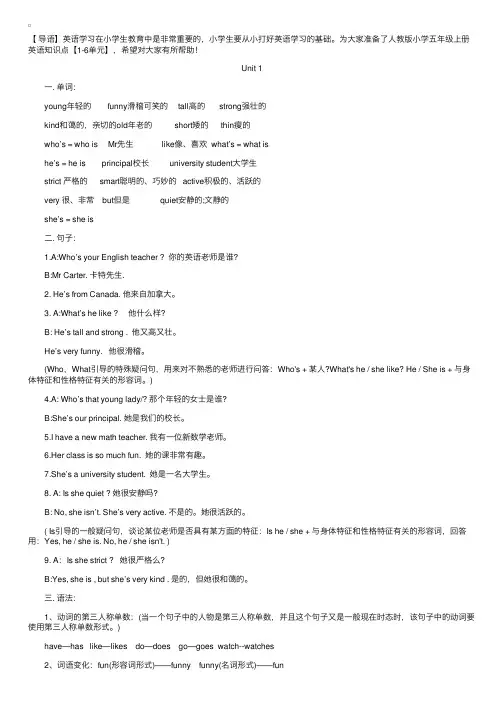
【导语】英语学习在⼩学⽣教育中是⾮常重要的,⼩学⽣要从⼩打好英语学习的基础。
为⼤家准备了⼈教版⼩学五年级上册英语知识点【1-6单元】,希望对⼤家有所帮助!Unit 1⼀. 单词:young年轻的 funny滑稽可笑的 tall⾼的 strong强壮的kind和蔼的,亲切的old年⽼的 short矮的 thin瘦的who’s = who is Mr先⽣ like像、喜欢 what’s = what ishe’s = he is principal校长 university student⼤学⽣strict 严格的 smart聪明的、巧妙的 active积极的、活跃的very 很、⾮常 but但是 quiet安静的;⽂静的she’s = she is⼆. 句⼦:1.A:Who’s your English teacher ? 你的英语⽼师是谁?B:Mr Carter. 卡特先⽣.2. He’s from Canada. 他来⾃加拿⼤。
3. A:What’s he like ? 他什么样?B: He’s tall and strong . 他⼜⾼⼜壮。
He’s very funny. 他很滑稽。
(Who,What引导的特殊疑问句,⽤来对不熟悉的⽼师进⾏问答:Who's + 某⼈?What's he / she like? He / She is + 与⾝体特征和性格特征有关的形容词。
)4.A: Who’s that young lady/? 那个年轻的⼥⼠是谁?B:She’s our principal. 她是我们的校长。
5.I have a new math teacher. 我有⼀位新数学⽼师。
6.Her class is so much fun. 她的课⾮常有趣。
7.She’s a university student. 她是⼀名⼤学⽣。
8. A: Is she quiet ? 她很安静吗?B: No, she isn’t. She’s very active. 不是的。
常用表达(知识清单)-2023-2024学年人教PEP版英语5-6年级
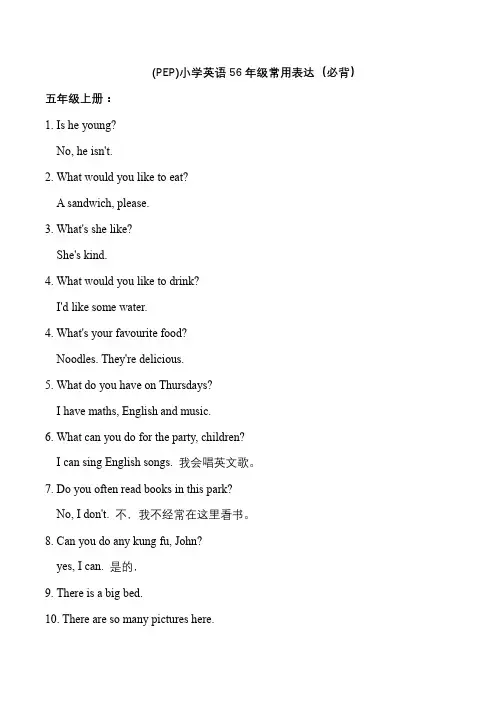
(PEP)小学英语56年级常用表达(必背)五年级上册:1. Is he young?No, he isn't.2. What would you like to eat?A sandwich, please.3. What's she like?She's kind.4. What would you like to drink?I'd like some water.4. What's your favourite food?Noodles. They're delicious.5. What do you have on Thursdays?I have maths, English and music.6. What can you do for the party, children?I can sing English songs. 我会唱英文歌。
7. Do you often read books in this park?No, I don't. 不,我不经常在这里看书。
8. Can you do any kung fu, John?yes, I can. 是的,9. There is a big bed.10. There are so many pictures here.11. Is there a river in the forest, Miss White?No, there isn't.12. Are there any tall buildings in the nature park?No, there aren't.五年级下册:1.When do you finish class in the morning?We finish class at 1 o’clock.2.What do you do on the weekend?I often watch TV and play pingpong with my father.3.–Which season do you like best, Mike??winter.4.–Why?Because I like summer vacation.5.When is the party?It’s in April.6.When is the trip this year?It’s in October. We’ll go to the Great Wall.7.When is the art show?It’s on May 1st.8.When is your birthday?It’s on April 4th.9.The yellow picture is mine.10.Are these all ours?11.–Whose is it?It’s Zhang Peng’s.12.Is he drinking water?No, he isn’t. He’s eating.13.What are they doing?They are eating lunch.14.What is the little monkey doing?It’s playing with its mother.15.Shhh, talk quietly.16.Keep your desk clean.六年级上册:17.Where is the museum shop?It's near the door.18.How can we get there?Turn left at the bookstore.19.How do you e to school?Usually, I e on foot.20.In the USA people on bikes must wear one.21.Don't go at the red light!22.I must pay attention to the traffic lights.23.What are you going to do tomorrow?I'm going to have an art lesson.24.We're going to draw some pictures in Renmin Park. 我25.Where are you going?We're going to the cinema.26.When are you going?27.What are Peter's hobbies?He likes reading stories.28.Does he live in Sydney?No, he doesn't.29.Does he like doing word puzzles and going hiking?Yes, he does. 是的,30.What does he do?He's a businessman.31.Where does he work?He works at sea.32.How does he go to work?He goes to work by bike.33.They're afraid of him.34.The cat is angry with them.35.What's wrong?Your father is ill.36.He should see a doctor this morning.37.Don't be sad.六年级下册:38.It was good, thank you.39.That's the tallest dinosaur in this hall.40.It's taller than both of us together.41.How tall are you?I'm 1.65 metres.42.What size are your shoes, Mike?Your feet are bigger than mine. My shoes are size 37.43.How heavy are you?I'm 48 kilograms.44.How was your weekend?It was good. Thank you.45.What did you do?I stayed at home with your grandma. We drank tea in the afternoon and watchedTV.46.Did you do anything else?Yes, I cleaned my room and washed my clothes.47.I want to buy the new film magazine.48.What did you do last weekend? Did you see a film?No, I had a cold. I stayed at home all weekend and slept.49.What happened?50.Are you all right?I'm OK now.51.Where did you go?52.It looks like a mule!53.Did you go to Turpan?Yes, we did.54.How did you go there?We went there by plane.55.There was no library in my old school.56.Tell us about your school, please.57.How do you know that?58.There were no puters or Internet in my time.59.Before, I was quiet. Now, I'm very active in class.60.Sounds great!61.I was short, so I couldn't ride my bike well. Now. I go cycling every day.。
人教版小学英语5-6年级单词表

c l a s s:__________n am e:________六年级英语总复习资料---------单词汇总五年级上册单词表Unit 1young (年轻的) funny (滑稽可笑的) tall (高的) strong (强壮的)kind (和蔼的、亲切的) old (年老的) short (矮的)thin (瘦的)Mr (先生) like (像、喜欢) strict (严格的) smart (聪明的、巧妙的)active (积极的、活跃的) quiet (安静的、文静的)very (很、非常)but (但是)1. Who’s your math teacher?? ?? ?? ???Mr Carter.2. What’s he like?? ?? ?? ?? ?? ?He’s t all and strong.3. Is she quite?? ?? ?? ?? ?? ???No, she isn’t. She’s very active.4. Is she strict?? ?? ?? ?? ?? ? Yes, she is, but she’s very kind.Unit 2Monday (星期一) Tuesday (星期二) Wednesday (星期三)Thursday (星期四) Friday (星期五) Saturday (星期六)Sunday (星期天) day (天) have (有、吃) on (在…..时候)do homework (做作业) watch TV (看电视) read books (读书)1. What day is it today?? ?? ?? ?? ?? ? It’s Wednesday.2. What do you have on Thursdays? ----We have English, math and science on Thursdays.3. What do you do on Saturdays???--- I often watch TV on Saturdays.4. What about you?? ?? ???I do my homework, too.Unit 3eggplant (茄子) fish (鱼) green beans (青豆) tofu (豆腐)potato (土豆) tomato (西红柿) for (为) lunch (中餐) we (我们)tasty (好吃的) sweet (甜的) sour (酸的) fresh (新鲜的)salty (咸的) favourite (最喜欢的) they are (他们是) fruit (水果)grape (葡萄)1.What do you have for lunch on Mondays? ----We have tomatoes ,tofu and fish.2. What’s your favourite f ruit?? ?? ? I like apples. They’re sweet.3. I like fruit . But I don’t like grapes.??They’re sour.Unit 4cook the meals (倒垃圾) water the flowers (浇花) sweep the floor (扫地) clean the bedroom (打扫卧室) make the bed (铺床) set the table (摆饭桌)wash the clothes (洗碗碟) do the dishes (收拾衣服) use a computer (使用计算机)1. What can you do?? ?? ?? ?? ???I can sweep the floor.2.Can you make the bed ?? ?? ????No, I can’t.3. Can you use a computer ? Yes, I can.?Unit 5curtain (空调) trash bin (垃圾箱) closet (壁橱) mirror (镜子)end table (床头柜) bedroom (卧室) kitchen (厨房) bathroom (卫生间) living room (客厅) in (在…里面) on (在…上面) under (在…下面)near (在..旁边) behind (在…后边) clothes (衣服)1.There are two bedrooms , a kitchen , a bathroom and a living room .2.There is a mirror, a bed and a big closet.3. The closet is near the table . Many clothes are in the closet. The trash bin is behind the door .Unit 6river (河流) flower (花) grass (草) lake (湖泊) forest (森林)path (路) park (公园) picture (照片) house (房子) bridge (桥)tree (树) road (公路) building (建筑物) clean (干净的)1. Is there a forest in the park?? ?? ?? ?Yes, there is.2. Is there a river ? No, there isn’t.3. Are there any pandas in the mountains ?? ?? ?? ??No, there aren’t.4. Are there any fish in your rivers?? ??Yes, there are.五年级下册单词表Unit 1eat breakfast吃早饭 have English class 上英语课 play sports进行体育运动eat dinner 吃晚饭 when 什么时候 evening 夜晚;晚上 get up 起床at在……点钟 usually 通常;一般 noon 中午 climb mountains 爬山go shopping购物;买东西 play the piano 弹钢琴 visit grandparents看望祖父母go hiking去远足 weekend 周末 often 经常 sometimes 有时候When do you eat dinner? 你几点吃晚饭I eat dinner at 7:00 in the evening.晚上七点When do you get up?你几点起床I usually get up at 12:00 noon.我通常十二点起床What do you do on the weekend? 周末你在干什么Usually l watch TV and go shopping.通常我在看电视或去逛街Sometimes l visit my grandparents.有时候我会去看我的祖父母I often play football. Sometimes l go hiking.我一般踢球。
人教版小学六年级英语上册《第五单元》知识点

人教版小学六年级英语上册《第五单元》知识点及复习题Unit 5 What dose he do一、单元词汇factory工厂 worker工人 postman邮递员 businessman商人police officer警察 Fisherman渔民 scientist科学家飞行员科学家 pilot飞行员coach 教练country国家 head teacher校长校长 sea大海 stay保持(动词) university大学gym体育馆 if如果 reporter记者 use使用(动词) type打字(动词)quickly迅速地(副词) secretary秘书二、Part A课文导入Sarah:Is your father here【1】 today? s in Australia. Oliver:No. He’ s in Australia. Sarah:What does he do【2】? Oliver:He’s a businessman. He often goes to other countries.Sarah:And what does your mother do?Oliver:She’s a head teacher.Sarah:That’s nice.Oliver:Yeah. She ’ll be【3】 here today!Sarah:Do you want to be a head teacher,too?【4】Oliver:No,I want to be a businessman. 1、here,副词,意为“这里” ,其反义词为“there”那里Come here,kids. Let’s go to the nature park!孩子们,到这里来,我们一起去自然公园!2、What does he do?他做什么的??他做什么的?What do/does+主语+do?这是用来询问职业的常用句型,意为“某人做什么的?” ,当主语为第三人称单数时,助动词用does。
小学六年级重点英语单词
小学六年级重点英语单词一、动词(Verbs)1. study(学习)- I study English every day.2. play(玩耍)- We often play soccer in the park.3. do(做,干)- What do you do in your free time?4. go(去)- They go to school by bus.5. like(喜欢)- She likes to read books.二、名词(Nouns)1. book(书)- Can I borrow a book from the library?2. school(学校)- My sister goes to school on weekdays.3. friend(朋友)- I have many friends at school.4. family(家庭)- I live with my family in a big house.5. teacher(老师)- Our English teacher is very kind.三、形容词(Adjectives)1. happy(快乐的)- We are all very happy to see you.2. small(小的)- He has a small dog as a pet.3. big(大的)- Their apartment is big and spacious.4. tall(高的)- The basketball player is very tall.5. smart(聪明的)- Lily is a very smart student.四、副词(Adverbs)1. always(总是)- She is always late for class.2. carefully(仔细地)- Please read the instructions carefully.3. quickly(快速地)- The rabbit runs quickly in the forest.4. well(好地)- He plays the piano very well.5. loudly(大声地)- The children are laughing loudly.五、介词(Prepositions)1. in(在……里面)- The cat is sleeping in the box.2. on(在……上面)- There is a book on the table.3. at(在……处)- I will meet you at the park later.4. with(和……一起)- She goes to the movies with her friends.5. for(为了)- They bought a cake for their teacher's birthday.六、冠词(Articles)1. a(一个,一)- I saw a beautiful flower in the garden.2. an(一个,一)- An elephant is a big animal.3. the(定冠词)- The sun rises in the east every morning.七、代词(Pronouns)1. I(我)- I love to eat ice cream.2. you(你)- Do you want to play with me?3. he(他)- He is my best friend.4. she(她)- She has a beautiful smile.5. they(他们)- They are going to the beach tomorrow.八、颜色(Colors)1. red(红色)- My favorite color is red.2. blue(蓝色)- The sky is blue on a sunny day.3. green(绿色)- The grass is always green in the park.4. yellow(黄色)- The sunflower is yellow and bright.5. pink(粉色)- She has a pink dress for the party.九、数字(Numbers)1. one(一)- There is only one apple left.2. two(二)- I have two cats as pets.3. three(三)- The dog has three puppies.4. four(四)- We need four chairs for the guests.5. five(五)- There are five birds in the tree.十、时间(Time)1. morning(早上)- We have English class in the morning.2. afternoon(下午)- I usually play soccer with my friends in the afternoon.3. evening(晚上)- They have dinner together every evening.4. night(夜晚)- The stars shine brightly at night.5. weekend(周末)- I love weekends because there is no school.十一、地点(Places)1. home(家)- I feel happy when I am at home.2. park(公园)- We often go for a walk in the park.3. library(图书馆)- I can borrow books from the library.4. zoo(动物园)- I visited the zoo and saw many animals.5. museum(博物馆)- We learned a lot from the museum exhibit.十二、食物(Foods)1. apple(苹果)- An apple a day keeps the doctor away.2. banana(香蕉)- My sister likes to eat bananas.3. rice(米饭)- Rice is a staple food in our country.4. bread(面包)- I eat bread for breakfast every morning.5. cake(蛋糕)- We had a delicious cake for dessert.十三、动物(Animals)1. cat(猫)- The cat is lying on the sofa.2. dog(狗)- My dog is very loyal to me.3. fish(鱼)- There are many fish in the aquarium.4. bird(鸟)- The bird is singing in the tree.5. elephant(大象)- Elephants are the largest land mammals.十四、职业(Jobs)1. doctor(医生)- My uncle is a doctor.2. teacher(老师)- She wants to be a teacher when she grows up.3. engineer(工程师)- My father is an engineer.4. nurse(护士)- Nurses take care of patients in the hospital.5. pilot(飞行员)- He dreams of becoming a pilot.十五、交通工具(Transportation)1. car(汽车)- We went for a drive in the countryside.2. bus(公交车)- I take the bus to school every day.3. train(火车)- We traveled by train to visit our grandparents.4. airplane(飞机)- They are going on vacation by airplane.5. bicycle(自行车)- Riding a bicycle is a great form of exercise.十六、天气(Weather)1. sunny(晴朗的)- It's a sunny day, perfect for a picnic.2. cloudy(多云的)- The sky is cloudy, it might rain later.3. rainy(下雨的)- Don't forget to bring an umbrella, it's rainy today.4. windy(有风的)- The wind is blowing strongly, be careful.5. snowy(下雪的)- It's snowy outside, let's build a snowman.十七、身体部位(Body Parts)1. head(头)- I hit my head on the door.2. eyes(眼睛)- She has beautiful blue eyes.3. ears(耳朵)- My ears are sensitive to loud noises.4. nose(鼻子)- I have a runny nose.5. mouth(嘴巴)- She has a cute smile with dimples on her cheeks.十八、衣物(Clothing)1. shirt(衬衫)- He wears a white shirt to work.2. pants(裤子)- These pants are too tight for me.3. dress(裙子)- She looks beautiful in that dress.4. shoes(鞋子)- I need a new pair of shoes.5. hat(帽子)- He wears a hat to protect himself from the sun.十九、季节(Seasons)1. spring(春天)- Spring is the season of renewal.2. summer(夏天)- Summer is the hottest season of the year.3. autumn(秋天)- Autumn is the season of harvest.4. winter(冬天)- Winter is the coldest season of the year.5. season(季节)- Each season has its own beauty.二十、日常用品(Daily Necessities)1. pen(钢笔)- I lost my pen, can I borrow yours?2. pencil(铅笔)- I need a sharpener for my pencil.3. ruler(尺子)- The ruler is made of plastic.4. eraser(橡皮)- I made a mistake, I need an eraser.5. backpack(背包)- My backpack is heavy because it's full of books.。
新人教版小学六年级英语下册动词表
新人教版小学六年级英语下册动词表1. 动词的定义动词是表示人、事物的动作、状态和发生的词语。
动词可以分为实义动词和系动词两种类型。
2. 动词的分类2.1 实义动词实义动词是具有实际意义的动词,可以表示人或事物的动作或状态。
常见的实义动词有:- run(跑)- eat(吃)- play(玩)- sleep(睡觉)- jump(跳)- swim(游泳)- read(阅读)- write(写作)- speak(说话)- dance(跳舞)2.2 系动词系动词是用来连接主语和宾语的动词,不能单独使用。
常见的系动词有:- am(是)- is(是)- are(是)- was(是)- were(是)- feel(感觉)- look(看起来)- smell(闻起来)- taste(尝起来)- sound(听起来)3. 动词的用法动词可以根据时态、语态、人称和数的不同变化形式,具体用法如下:3.1 时态时态表示动作发生的时间,常见的时态有:- 一般现在时(Simple Present Tense)- 一般过去时(Simple Past Tense)- 一般将来时(Simple Future Tense)3.2 语态语态表示动作的主体与发出者之间的关系,常见的语态有:- 主动语态(Active Voice)- 被动语态(Passive Voice)3.3 人称和数人称和数表示动作发出者和受事者的身份,常见的人称和数有:- 第一人称单数(First Person Singular)- 第二人称单数(Second Person Singular)- 第三人称单数(Third Person Singular)- 第一人称复数(First Person Plural)- 第二人称复数(Second Person Plural)- 第三人称复数(Third Person Plural)以上是新人教版小学六年级英语下册动词表,希望对您有所帮助!。
2023年人教版小升初总复习小学英语3-6年级必背短语
小学3-6年级必背短语1.动词短语get up 起床 go to school 去上学 go home 回家go to bed 上床睡觉 go for a walk 散步 go shopping 去购物go swimming 去游泳 go fishing 去钓鱼 go on a picnic 去野餐go camping 去野营 go cycling 去骑自行车 go ice skate 滑冰go hiking 去远足 go to the supermarket 去超市do morning exercises 做早操 do kung fu 练武术 do homework 做作业do word puzzles 猜字谜 do more exercise 多做锻炼pick apples 摘苹果 play sports 进行体育运动 play the pipa 弹琵琶play football 踢足球 play basketball 打篮球 play ping-pong 打乒乓球play badminton 打羽毛球eat dinner 吃晚饭 eat lunch 吃午饭 eat breakfast 吃早饭clean my room 打扫我的房间 listen to music 听音乐 watch TV 看电视wash my clothes 洗我的衣服 stay at home 待在家里 had a cold 感冒see a film 看电影 take a trip 去旅行 take pictures 拍照eat fresh food 吃新鲜的食物 read a book=read books 读书have…class 上课 take a dancing class 上舞蹈课 make a snowman 堆雪人speak English 说英语 sing English songs 唱英文歌 draw cartoons 画漫画study Chinese 学习中文 buyt gifts 买礼物 see a doctor 看病cook Chinese food 烹饪中国食物 visit my grandparents 拜访我的祖父母wear warm clothes 穿暖和的衣服 take a deep breath 深呼吸ride a horse 骑马 ride a bike 骑自行车 hurt my foot 弄伤我的脚count to ten 数到十2.动词过去式(不规则变化)go—went do—did eat—ate see—saw have—had read—read take—took ride—rode hurt—hurt buy—bought sleep--slept3.特殊疑问词what 什么 where 哪里 when 什么时候 which 哪一个 why 为什么 how 怎样who 谁 whose 谁的 what time 几点 what colour 什么颜色 what day 星期几how many 多少 how much 多少钱 how old 多大 how tall 多高 how heavy 多重一、写出你的周末、暑假计划:一般将来时be going to+动词原形例文1:Summer holiday is coming.I have a nice plan.The first week,I am going to stay at home to finish my homework and watchTV.Then,my family and I are going to Yunnan.We are going to visit Lijiang and Shangri-la.At last,I am going to the countryside and stay with my grandparents.I can go fishing there.I think I will have a very happy holiday.二、写写你上周末你做了什么:一般过去时例文2:My weekendI was busy last weekend.On Saturday morning,I cleaned my room and washed my clothes,then I went fishing with my father.In the afternoon,I read some books and did my homework.On Sunday morning,I saw a film with my mother.We visited my grandparents in the afternoon.We watched TV in the evening and went to bed at 10:00.。
小学英语动词过去式表五六年级
41运送carry carried carried
42试try tried tried
43哭cry cried cried
44担忧worry worried worried
45停止s46掉落drop dropped dropped
25获胜win won won
26遇见meet met met
27有have had had
28制作make made made
29握住,举行hold held held
30站stand stood stood
31明白understand understood understood
32听写hear heard heard
55将shall should
56将will would
57挂,掉着hang hung hung
hanged hanged
58照耀,发光shine shone shone
A A A形式
1让let let let
2花费,值cost cost cost
3放put put put
4读read read read
16感觉feel felt felt
17闻smell smelt smelt
18睡觉sleep slept slept
19扫地sweep swept swept
20保持keep kept kept
21丢失lose lost lost
22得到get got got
23做sit sat sat
24挖dig dug dug
小学英语不规则动词过去式表五--六年级
A B C形式
1喝drink drank drunk