
冀教版英语八年级上册第24课课件
Luckily, a lady showed me the way.
luckily 副词,用来修饰句子。
Luckily, he didn’t hurt badly. 幸运的是他伤的不重。
拓展
luck n. 幸运,运气 lucky adj. 幸运的 luckily adv. 幸运地
3.WIt hisatahbaopupteonnede
mile. to Brian
yesterday?
4.WHheagt owtillol sBt.rian do tomorrow? Why?
5.WHheawt dilildbBuryiaanmdoaponofTthhaenkcsitgyi.vBinegcaDuasye?he doesn't want to get lost again.
—How are you doing these days? — I’m doing well.
This wBiblioteka ek, I got to know my neighbourhood. 这周我逐渐了解我的社区。
get to know 逐渐了解
get to know 强调动作,指“从不认识到认识的渐进过程”。
Let’s do it.
1)Listen and answer the questions.
1.What did Jenny and Brian do on Monday? They walked to school on Monday.
2.How far is the school from Uncle David's home?
He met all of his Canadian cousins.
听力音频
Dear Mum and Dad, How are you? I’m doing well. I have to tell you that I had the flu. But don’t worry, I’m better now. This week, I got to know my neighbourhood. Jenny and I walked to school on Monday. The school is about one mile from Uncle David’s home. Jenny showed me her favourite places. There’s a bakery near our house. When we walk to school, we go by the bakery.
He sits across from him. There is a school across from my house. 在我房子的对面有一个学校。
We go by the bakery. go by 经过 = pass by = go past
On my way to school, I went by a bookstore. 在我上学的路上经过了家书店。
A.lose B.losing C.to lose D.lost
3. I fell off the bike on my way to school. ___A_____, I wasn't hurt.
A.Luckily B.Suddenly C.Politely D.Recently
二.根据汉语意思完成下列句子,每空一词。
know
强调状态,指“认识,了解,知道”。是延续性动词,可以 和表示一段时间的状语连用。
例句
She is very nice when you get to know her. 你了解她以后就会觉得她非常好。 I have known him for 3 years. 我认识他已经有三年了。
Across from the bookstore, there’s a beautiful park. 在书店的对面有一个漂亮的公园。 across from 在…对面
________________________________________________________ 5.has, to, her, look, Ann, sister, after (.)
Lesson 24 I need a map!
By- Vivian
What will you do if you get lost ?
I’m doing well. 我很好。
I’m doing well, 常用于书信中描述自己的近况。 用来回答how are you doing?/How are you getting along?
一,单选
课后练习
B
1. I ______ Ms.Liu very well.I ______ her five years ago.
A.know; know
B.know; got to know
C.get to know; know D.get to know; get to know
D
2. Peter, don't enter the forest alone, or you will get ______ in it.
sth. happens to sb. 某人发生某时
What happened to them?
sb. happens to do sth. 某人碰巧做某事
I happened to meet an old friend yesterday.
You don’t look happy. What happened _______ you? A, in B, on C, at D, to
三、连词成句
1.Cyaonuyo, ua,shmowe,mceaan,mmapa?p, show (?) _______________________________________________________
2.Iwwrililtew,rIit,etoto, ysoouonso, owni.ll, you (.) __Th_e_r_e_is_a__be_a_u_t_ifu_l_p_a_rk_._____________________________________
He is so lucky that he has a chance to go abroad. 他如此幸运能有机会出国。
What happened to Brian yesterday? 昨天布莱恩发生了什么事?
happen
例题
sth happens + 时间/地点
An car accident happened in the street yesterday.
1.你是怎么认识她的?
How did you ______g_e_t_t_o__k_n__o_w________her?
2.他虽然得了流感但考得很好。
He had the flu but he _______d_id__w__e_l_l_i_n________ the exam.
3.他们住在我们对过。
3.is, park, there, a, beautiful (.)
It is two miles from my school.
_______________________________________________________ 4.Amnnilheass, tmo ylo,oskcahftoeor lh,etrwsiost,eirt., from, is (.)
4.Th从ey这liv儿e到__海__a边_c_大r_o_约s_s_有f_r_两o__m英__里u的s. 路程。
It's about________ ________ from here to the seaside.
5.我有很多要做2 的m工ile作s。 I have a lot of work _____t_o__d_o_______.
冀教版八年级下册英语课件 Unit 4 Lesson 24 An E-mail to Grandpa
A句.用is了fin祈e;使r句ain,s 从句用一般B现. i在s f时in;e;第w二il个l riaf引in C导. 宾wi语ll 从be句fi,ne宾; r语ai从ns句“这D周. 六wi是ll b否e下fin雨e;”w,ill rain
用一般将来时。故选B。
A. picked up
B. put up
C. set up
课后巩固
5. —I wonder ____D____ the students have a physical
examination.
—Once a year.
【中考•安徽】
A. how far
B. how soon
C. how long
先练后背
8. 我们交谈时能彼此看见对方将会很有趣。 It would be ____a____ ____lo_t___ of fun ___t_o____ ___s_e_e___ each other as we talk.
先练后背
9. 我们能约定一个时间一起上网吗? Can we ____se_t___ ___u_p____ ____a____ ___ti_m__e__ to go online together?
D. how often
课后巩固
二、语法专练(if引导的条件状语从句)
6. —Let's go climbing if it ____B____ this Saturday. 【—点G拨oo】d句id意ea为. B“ut—no—b如od果y k这no个w星s i期f i六t _天__气__好__,_. 我们就去爬山。——好主意。但没人【知中道考星期•咸宁】
八年级上册英语冀教版第13~24课知课知识点

八年级上册英语冀教版第13~24课知课知识点第一单元1. advise sb. to do sth. 建议某人做某事2. between...and... 在...和...之间3. would like to do =want to do 想搞某事4. write down 写出记下5. go for walks=go for a walk:去散步6. get out of bed = get up起床7. go ahead 说吧,请吧8. think of 想要出来/指出/考量 think about 考量/思索 9. one...the other 一个...另一个...10. agree with sb.同意某人 agree to do 同意做… 11. it's fun to do sth. 做某事很有趣12. encourage sb to do sth:引导某人搞某13. to one’s surprise 使某人深感惊讶地就是, 14. stop to do sth. 停下回去搞…stop doing sth. 停止做…15. play the violin/ piano 扎小提琴/弹钢琴 16. two more questions= another two questions另两个问题17. be up to … 由… 而定18. be ready to do sth. = get ready to do sth. 准备工作搞某事 19.introduce … to sb. 把……了解给某人20. have been a…for + 一段时间成为…有一段时间了21. a girl named mary 一个名叫玛丽的女孩22. see a movie = see a film = watch a movie看看电影 23. get to know 逐渐重新认识24. buy sb. sth. = buy sth. for sb. 给某人买某物 25. wear clothes = be in clothes 穿着衣服 put on clothes 穿上衣服 26. dress up 打扮,装扮27. feel lucky to do sth. 搞某事深感幸运地 28. have the pleasure of doing… 很高兴搞… 29. make a deal 达成协议30. invite sb. to do sth. 邀请某人做某事第二单元1. do well in = be good at 在……做得好2. have a cough 咳嗽3. be late for:...迟到4. have a math exan:展开一次数学考试5. not… at al l 一点也不…6. learn about:学会介绍7. in two minutes 两分钟后(将来时) 8. too much sth. 太多的某物(事) 9. make sb. do sth. 使某人做某事 10. see sb. do sth. 看见某人做了某事see sb. doing sth. 看到某人正在搞某事 11. the best way to do sth. 搞某事的最佳方式 12. lots of = a lot of 许多的13. help sb. with sth. = help sb. (to) do sth 帮助某人做某事14. turn off/ on the light 关上/关上灯turn down 把…调小 turn up 把…调大 15. half an hour 半小时 half past ten 十点半 a quarter = fifteen minutes 一刻钟 a quarter to three 差一刻三点three thirty 三点三十分 = half past three 三点半 a quarter past three 三点一刻= a quarter after three 16. on time 按时;按时(时间点) in time 及时(时间范围内)17. look for:寻找(强调动作) find 找到(强调结果) 18. may be =maybe = perhaps 可能(是),大概;或许; 19. children's day 儿童节 mother's day 母亲节father's day 父亲节 teachers' day 教师节 20. give sb. a talk = give a talk to sb. 给某人做报告 21. remind sb. of sth. 使某人想起…22. has been to 去过某地 has gone to 回去了某地 has been in 睡在某地 23. in the future 在将来24. be convenient for… 对…方便第三单元1. national day 国庆节mid-autumn festival 中秋节thanksgiving day = thanksgiving 感恩节 2. make a wish 许愿3. such as / for example 比如说,比如4. be the same as:与...一样5. blow out:点燃6. get together:聚在一起7. around the world=all over the world:全世界 8. be in fashion:盛行9. in early october 十月上旬in late november 十一月下旬 10. try (it/ them) on 穿起(它/它们) 11. add… to… 把… 重新加入… 12. face to face 面对面13. give sb a big hug = hug sb. 拥抱某人14. stay in touch with… 与… 保持联系 15. as usual 像往常一样16. find out (通过各种途径)找到;找出 17. send sth. to sb. 把某物递/赠送给某人18. pass sb. sth. = pass sth. to sb. 把某物递给某人 19. best wishes to sb. 向某人致以最美好的祝愿20. on one's thirteenth birthday 在某人十三岁生日之际 21. on the top of 在……的上面22. a seven-day holiday 一个七天的假期 23. have no luck 不走运24. many thanks for sth. 非常感谢你的某物thanks a lot for doing sth. 非常感谢你做了某事 give thanks to... for ... 为... 感谢… 25. fit sb. very well 非常合某人身26. send sth. to sb. = send sb. sth. 给某人寄送某物 27. have to = must 必须;不得不;not have to = needn't 不必28. have fun doing sth. 搞某事很高兴29.forget to do sth. 忘记要做某事 forget doing sth. 忘记已做过某事 30. take a deep breath 做一个深呼吸。
八年级英语上册 Unit 4 Lesson 24 I Need a Map教案 (新版)冀教版

Unit 4 Lesson24 I Need a MapⅠ. Knowledge aims1. Mastery words and expressions: keep, envelope.2. Known words and expressions: get to know; It isn’t easy to live in a new neighbourhood.Ⅱ. Ability aimsTrain students’ listening and speaking reading and writing abilities.Ⅲ. Moral aimsExpress one’s feeling in English.Ⅳ. Important points1. Predict what Brian wrote in his diary.2. Pronouns.3. Retell one’s experience.Ⅴ. Difficult pointsRetell one’s experience.Ⅵ. Teaching methods1. Task-based and listening, speaking, reading and writing methods.2. Pair works.Ⅶ. Teaching toolsA map and a recorder.Ⅷ. Teaching procedureStep 1Greet the class and free talk.The topic is “Show the envelope.”Step 2Design the aims. (Raising the questions)1. Who did Brian write to?2. Who helped Brian get to know the new neighbourhood?3. What places did Jenny show Brian?4. Is there a bookstore on their way to school?5. Do you think it was easy for Brian to live in the new neighbourhood? Why?Step 3Prepare to answer the questions above by themselves.Let students read the dialogue and talk about the questions in groups.Step 4Act in groups.Ask for volunteer pairs to act it out in front of the class.Step 5Listen to the tape. Play the tape the first time. Students only listen.Play the tape a second time. This time student can follow it. Then ask some volunteers to read the dialogue and sentences.Step 6Finding out the difficult points.(Teachers can help students to find them out .Let students consult the reference books by themselves after class.)1. I’m doing very well.2. I’m working very hard at school.3. This week, I got to know my neighbourhood.4. Jenny and I walked to school on Monday.5. I’ll keep it in my backpack.Step 7Blackboard Design.Lesson24 I Need a Map!1. I’m doing very well.2. I’m working very hard at school.3. This week, I got to know my neighbourhood.4. Jenny and I walked to school on Monday.5. I’ll keep it in my backpack.Ⅸ. Homework1. Remember the new words.2. Study the difficult points by your reference books after class.。
冀教版八年级上册英语 现在完成时(共24张PPT)
二.现在完成时态句型转换
A. He died ten years ago. 1.--- He has been dead for ten years. 2.--- It has been ten years since he died. 3.--- It is ten years since he died 4.--- Ten years has passed since he died. 5.--- He has been dead since ten years ago. B. I joined the League 2 years ago. 1.--- I have been in the League for 2 years. 2.--- I have been a League member for 2 years. 3.--- It has been 2 years since I joined the League. 4.--- It is 2 years since I joined the League. 5.--- 2 years has passed since I joined the League.
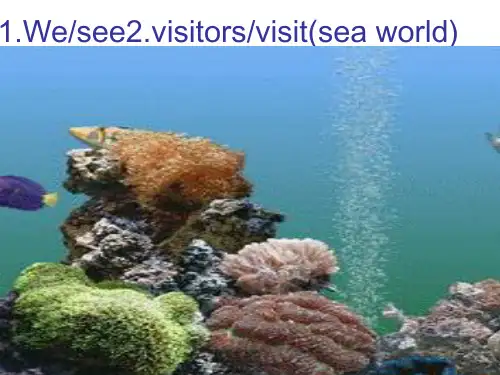
1.We/see2.visitors/visit(sea world)
•
Tourists/see/visit
1.They/enjoy2.He/watch(waterfall)
1.Sun/set/ 2.We/watch(sunset)
1.It/rain 2. trees/get
1.train/arrive 2.trains/leave
• 2) He left Fuzhou just now.
• He _______ ________ ________ _________ Fuzhou for five minutes.
冀教版八年级英语下册:Lesson 24课件

I know you like reading. I know how to download Ebooks online. I will send some to you!
I even learned how to find my way around the city. I found a map program on the Internet. It can give me directions to anywhere I want to go. It’s amazing. If I want to go to some new places,I can easily find my way.
At school this week,I did a report about Easter. My new computer made it fun and interesting. I did all of my research on the Internet. How did I do it?I just typed the right questions into the search engine. It is quite easy to find information on the web.
Christmas.
(F)
4.Wang Mei will download some e-books foDear Grandpa, How are you these days? I am writing this e-mail on my new laptop. It is really nice and
things on a computer and with the Internet.
冀教版英语八年级下册Unit 4:Lesson 24 An Email to Grandpa. 课程
冀教版八年级下册Lesson 24 An E-mail to Grandpa 教学设计一、课题:冀教版八年级下册Unit 4 Lesson24 An E-mail to Grandpa二、课型:新授课三、整体设计思路、指导依据说明本课为一篇语篇教学课,在本话题的教学中,采用通过幻灯片说、写训练——知识呈现——任务输入——巩固练习——写文本的五步教学流程,遵循以学生为主体的教学理念,引导、激励学生积极思考、主动参与,构建开放、合作、创新的课堂教学模式。
针对“An E-mail to Grandpa ”这一中心话题,介绍自己使用网络的情况,导入新课,让学生学会用英语表达在互联网上所做的事情。
在巩固、练习教学内容时,创设真实的语言情境,以听说写训练为主,引导学生参与到教学内容及活动中来。
依据本课的教学重、难点设计了由易到难、由浅入深的学习任务(任务一:以复述的形式,表达使用互联网的情况;任务二:以自述形式,表达使用互联网的看法),通过协作、展示,培养学生合作和竞争的意识。
最后,通过综合评价和课后任务的延续,搭建学生学习成果展示平台,增强学生学习英语的兴趣和积极性。
在整个教学过程中,坚持“两基”目标的实现,即:基础知识——词汇、句型的理解和掌握;基本技能——听力、口语的训练和提高。
指导依据说明:新课程理念倡导任务——合作——探究式学习,本课主要运用任务型教学法及小组活动法,并采用多媒体课件进行教学,旨在提高英语课堂教学的实效性,很好地激发学生的英语学习兴趣,拓展学生的英语思维,提高英语综合实践运用能力。
按照任务型教学的基本理念,课堂任务的设计选择贴近学生生活实际,提供符合真实生活的学习情景,引导学生采用情景交际和小组合作学习模式,创设语言的学习环境和生活情境,让学生主动参与、自主学习,既培养了合作意识,也培养了实践能力和创新精神。
四、教学背景分析:1. 教材分析本单元围绕网络和生活这一话题展开教学。
此话题容易被学生接受,学生能够主动、积极地探究学习。
冀教版八年级英语上lesson24 I need a map
填空:
1.It rained heavily outside,so he (have to) stay at home. 2. Christmas Eve is a lot of (fun) 3. My house is (mile) from my school. 4. Museumn is. (across from) the bank. 5. They got (know)each other. 6. There’s a lake up there,about ten m long. 7.We can’t go a the street when the lights are red. 8.A from the school is a small shop. 9.The w is very deep. 10.I hope you have fun l English this year.
1.I don’t have enough time. I have to finish my homework ten o’clock. 2.She is sitting the window and drinking orange juice. 3.Go the street, and you will see the bookstore the right. 4.Sue is sitting Cara and Gina. 5.He is pointing the river. ['envələʊp; ] 6.I will put my letter an envelope and post it. 7.Did you meet Jill on your way_________the store? 8.How do they go to work_______Monday? 9.Lisa does well _____all her subjects at school. 10.Jenny’s Chinese is poor and she is working hard ______it.
冀教版八年级英语下册Lesson 24 Unit Review精品课件
4)昨晚九点时你在看电视吗?
Were you watching TV at nine last night? 5) 妈妈在洗衣服,爸爸在读书。
While my mother was washing clothes, my father was reading.
Brainstorm the reminding(提醒) and warning(警告) sentences: 1. Danger! 2. No photos! 3. No smoking! 禁止抽烟! 4. No parking! 禁止停车! 5. Don’t feed the animals! 6. Don’t forget to water your plant!
Lesson 24
Unit Review
第八课时
目标; 1掌握本单元的重点词和短语 2在听说读写四个方面掌握本单元的重点
Correct the mistakes:
1. One of the world’s z_o_o was in Egypt. zoos 2. Egypt is famous for _it_’s pyramids. its
Another task: Try to remember the words about animals.
汉译英: 1) 埃及以金字塔而著名。
Egypt is famous for its pyramids.
2) 你愿意和他交个朋友吗? Would you like to make friends with him?
3) 你们应该保护这些植物不受冻。 You should protect the plants from the cold.
冀教版英语八年级上册Lesson24INeedaMap!教学设计
在教学过程中,教师要注重引导学生积极参与,关注学生的学习需求,及时给予鼓励和反馈,使学生在轻松愉快的氛围中学习英语。同时,教师还要关注学生的学习进步,不断调整教学策略,提高教学质量。
二、学情分析
八年级学生经过前一阶段的学习,已经具备了一定的英语基础,掌握了基本的语法知识和词汇量。在此基础上,他们对英语学习有了更深入的了解和兴趣。然而,学生在实际应用中仍存在一些问题,如口语表达能力有限,听力理解能力有待提高,对方向和地点的描述不够准确等。
-学生分享自己在课堂活动中的收获和感悟。
2.教学实施:
-教师通过提问方式,帮助学生巩固所学知识,查漏补缺。
-鼓励学生发表自己的观点,对课堂活动进行评价和反思,培养学生的自我评价能力。
五、作业布置
为了巩固本节课的学习内容,培养学生的自主学习能力和实际应用能力,特布置以下作业:
1.词汇练习:请学生将本节课所学的生词和短语整理成词汇卡片,包括单词、音标、词性和例句。要求学生在课后进行复习,加强记忆。
4.学生能够在口语交流中,使用本课所学的句型,如"I need a map.", "Can you show me the way to the museum?", "Go straight and turn left."等。
5.学生能够通过小组合作,绘制简单的地图,并用英语描述路线。
(二)过程与方法
4.强化学生对方向和地点描述的训练,通过绘制地图等实践活动,提高学生对地理知识的理解和应用能力。
5.关注学生的学习情感,鼓励学生克服困难,增强自信心,使学生在英语学习中不断取得进步。
三、教学重难点和教学设想
(新)冀教版八年级上册 Lesson 24(公开课)教案
Lesson 24 I need a map一,教材分析1.单元及课文分析本单元的日常用语主要围绕“社区生活〞为话题。
教材为学生提供日常生活中“社区生活〞的场景,帮助学生学习理解并掌握社区生活的英语表达方式。
在教学过程中,教师应创设“社区生活〞的情景,围绕这一话题谈论社区里不同职业的人们不同的生活方式。
二..教学目标1.语言知识〔1〕掌握词汇:flu, miles,(2)短语及句型:have the flu, across from,get lost2.语言技能掌握指路句型,并能谈论居民区里人们问路与指路的方式。
情感态度采取小组活动和评价的形式,加强学生的合作意识。
三教学重点:学习有关指路的新单词,稳固和扩充学生的词汇。
教学难点:利用所学词汇描述自己的居民区的人们问路与指路的方式。
四.教学步骤Step anizationFirst the teacher greets students “ Good morningStep2. Warming upShow some pictures about the a baby and learn some new words.Step 3.Listen and answerPlease listen to the tape carefully and answer the following questions.(T or F )1.Brian had the flu.( )2. The school is two miles from Uncle David’s home.( )听的环节是“输入〞的过程,带着问题听,让学生在听的过程中有的放矢,有效捕捉信息,同时又提醒学生注意观察并发现需要注意的表达方式,为后面的语言实践准备实用句型。
这种让学生在具体的语境中发现新句型的教学方法,能有效地提高学生分析问题和解决问题的能力,防止了传统的教师为主体的抽象的语法说教,调动了学生思维积极性,给学生提供了提高观察能力,分析能力和归纳总结能力的开展平台。